Żejtun | Exploring Malta
Żejtun is a historic town located in the South Eastern Region of Malta, a few kilometers from the coast. The town is also known by its title, Città Beland. This was a name granted to it in the 18th century by Ferdinand von Hompesch zu Bolheim, the last Grand Master of the Knights of St. John in Malta. With a population of approximately 11,300 residents, it is one of the larger towns in this part of the island. The name Żejtun has its origins in Arabic and is related to the word for olive (zaytun), reflecting the area’s long history of olive cultivation.
The character of Żejtun is that of a traditional, inland Maltese town with a very rich and proud history. Its identity is defined by its impressive Baroque parish church, which dominates the town’s skyline, and its well-preserved historic core. The town has a strong local identity and hosts one of the most important annual festivals on the island. While not a primary tourist resort, it offers a more authentic look into the daily life of a large Maltese town. It is surrounded by a rural landscape of fields and historic farmhouses.
Blog Posts From our visits to Żejtun


The History of Żejtun
The history of Żejtun is one of the longest in Malta, with its origins stretching back to the Phoenician and Roman eras. For centuries, the parish of Żejtun controlled a much larger part of the southeastern corner of the island, including the coastlines of what are today Marsaskala and Marsaxlokk. The story of Żejtun is one of a major agricultural center that played a key role in the defense of the island and grew into one of the most important towns outside the main harbor area.
Ancient Origins
The history of settlement in the Żejtun area dates back to at least the Phoenician and Roman periods. Archaeological remains of a large Roman villa have been discovered here, indicating that it was a significant agricultural estate during Roman times. During the medieval period, the area was a major agricultural center. The parish was historically split into two communities, an upper and a lower village, which were finally joined with the construction of the new parish church in the late 17th century.
Città Beland and the Knights
The development of the modern town of Żejtun accelerated during the time of the Knights of St. John. The construction of the current, magnificent parish church began in 1692. A pivotal moment in the town’s history came in 1797, when it was granted city status by Grand Master Ferdinand von Hompesch zu Bolheim. It was at this time that the town was given the title Città Beland, after the surname of the Grand Master’s mother.
Modern Conflicts and Growth
Żejtun was not spared from the many wars that have affected Malta. It was the first town in Malta to be captured by invading forces during Napoleon’s invasion in 1798. However, the town’s inhabitants are hailed for their bravery in the subsequent insurrection against the French. The town was not spared during the Second World War either. It was heavily bombed in 1942 due to its proximity to the dockyards, with 27 people killed. In the modern era, the town has continued to grow as a major residential and commercial center.


Sights in Żejtun
There are many historical buildings in Żejtun, with the most important and prominent being of a religious nature. There are several very old buildings as well, but it is the overall atmosphere while walking the streets that a visitor might enjoy. Many of the buildings are not higher than two floors and have the traditional Maltese balconies known as gallarija.
Parish Church of Saint Catherine
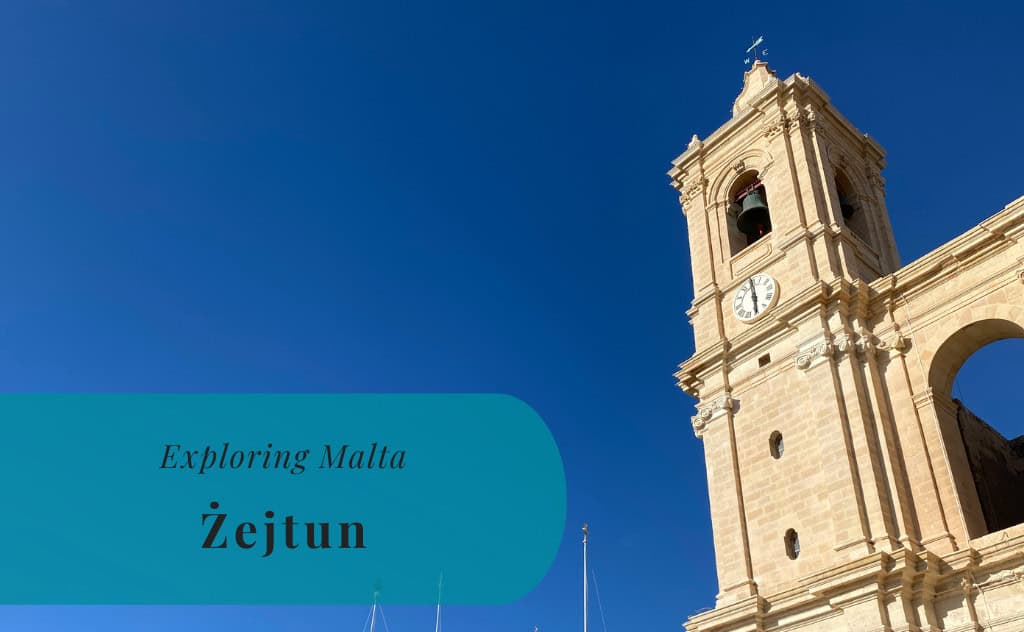
The Parish Church of Saint Catherine, known in Maltese as Knisja Arċipretali ta’ Santa Katerina, is the main church in Żejtun. The large Baroque church was designed by the famous Maltese architect Lorenzo Gafà. Its foundation stone was laid in 1692, and the building was largely completed by 1729. It is dedicated to Saint Catherine of Alexandria. The church is considered one of the finest examples of Baroque architecture in Malta and its large dome is a key landmark in the region’s skyline.
Saint Gregory’s Church
Saint Gregory’s Church, also known as Saint Catherine’s Old Church, is located on the outskirts of the town and is the former parish church. The church itself was likely built in the mid-15th century, making it a key medieval landmark. It is dedicated to St. Catherine but has its current name due to an annual pilgrimage to the site in honor of Pope Gregory I. The church has a unique design with a large, high nave and a distinctive facade.
The Village Core
The historic village core of Żejtun is the area surrounding the main parish church. This part of the town retains the character of a traditional Maltese village. It features a network of narrow, winding streets lined with traditional Maltese houses. Many of these houses feature the classic enclosed wooden balconies (gallarija). A walk through the old part of the town provides a look at the daily life of the community.
Żejtun Parish Museum
The Żejtun Parish Museum is located in a building next to the main parish church. The museum has a collection of various kinds of arts and crafts connected with the local heritage of the town and its churches. The collection includes religious art, historical artifacts, and items related to the many traditions of the parish. It provides a deeper insight into the long and rich history of Żejtun.
Jesus of Nazareth Institute
The Jesus of Nazareth Institute is a large and impressive building in Żejtun. The building dates back to 1924. It is run by the Jesus of Nazareth Sisters and has historically served as an orphanage. Following the Second World War, over 200 orphans had their homes here. The large building, which has the appearance of a church, is a key social and architectural landmark in the town.
Żejtun with Kids
Żejtun is a relatively calm town, but it still has a lot of traffic in its center and very narrow pavements, which might make it hard to explore with kids in a stroller. However, the town has several large parks and playgrounds along its outskirts, which are more suitable for kids and allow them to roam more freely. These green spaces are a key part of the local community life for families.
Playgrounds in Żejtun
There are a few playgrounds in Żejtun that are good destinations for families. The two main ones offer different experiences for children of different ages.
Ġnien il-Qawsalla
The Ġnien il-Qawsalla (“Rainbow Garden”) is a small playground in the western part of Żejtun. Its attractions are most suitable for smaller children. The playground is an enclosed area, which makes it a safe space for toddlers to play.
Ġnien iż-Żgħożija
The Ġnien iż-Żgħożija (“Youth Garden”) is one of the larger parks in the area. It includes a playground, a skate park, and a small football pitch. The park was built in the 1980s and can be found in the northern part of Żejtun. The variety of facilities makes it suitable for children and teenagers of all ages.


Sports in Żejtun
The sporting life in Żejtun is focused on its local football club. The club is a key part of the local identity and has a large and passionate following from the town.
Football
Football is a major sport in Żejtun, as it is throughout Malta. The local club has a history of competing at the highest level of Maltese football. The club is an important part of the community, with a focus on youth development.
Żejtun Corinthians F.C.
The main football club is Żejtun Corinthians F.C. The club was founded in 1943. They have a history that includes several seasons competing in the Maltese Premier League, the top tier of Maltese football. They play their home games at the Żejtun Ground. The club’s colors are blue and white.


Getting Around in Żejtun
Navigating the town of Żejtun and its immediate surroundings is best done on foot or by local bus. The town’s historic core is a maze of narrow streets, while the main commercial streets are often busy with traffic.
On Foot: The Town Center
Walking is a suitable way to explore the central part of Żejtun. The main square, the parish church, and the surrounding historic streets are all located within a compact area. Comfortable shoes are recommended for exploring the old town.
Local Buses
The public transport in Malta is based on an extensive network of buses operated by Malta Public Transport. Several bus routes pass through Żejtun, connecting it with the main bus terminal at Valletta, the airport, and the nearby coastal towns of Marsaskala and Marsaxlokk.
How to Get to Żejtun
Reaching the town of Żejtun is straightforward, as it is centrally located in the southeastern part of the island of Malta. The country’s single international airport is a very short drive away, and the town is well-served by the national bus network.
The Open Road: Driving to Żejtun
Driving is a common way to reach Żejtun. The town is connected by a network of local roads to the main road system of Malta. From the area around the airport, the drive takes only about 10-15 minutes, depending on traffic. Be aware that the streets within the historic town center can be very narrow, and parking can be difficult to find.
Arriving by Air: Malta International Airport
The primary and sole gateway to the country is Malta International Airport (MLA). It is located in the town of Luqa, approximately 4 kilometers from Żejtun. The airport is well-connected to major cities across Europe, the Middle East, and North Africa. From the airport, a taxi, a ride-sharing service, or a direct local public bus service can be used to reach Żejtun in a very short amount of time.
Connecting by Coach
There are no major long-distance coach services in Malta due to the small size of the island. The entire country is served by the integrated national bus network operated by Malta Public Transport. The main bus terminal is located just outside the city gates of Valletta. Numerous routes from this terminal, as well as from the airport, serve Żejtun directly.
On Track: The Absence of Rail
There is no train service in Malta. The country does not have a railway network. Therefore, it is not possible to reach Żejtun by train. All overland travel on the island must be done by road.
An International Ferry Approach
It is possible to arrive in Malta by ferry. The main ferry terminal is located at the Valletta Waterfront. There are regular car and passenger ferry services that connect Malta with the port of Pozzallo in Sicily, Italy. From the ferry terminal in Valletta, it is a short journey by bus or taxi to reach the nearby town of Żejtun.
Driving Distances
The driving distance from 10 regional cities, according to Google Maps:
- Marsaxlokk, Malta – 3 kilometers (0 h 10 min)
- Birgu, Malta – 4 kilometers (0 h 10 min)
- Paola, Malta – 4 kilometers (0 h 10 min)
- Marsaskala, Malta – 4 kilometers (0 h 10 min)
- Valletta, Malta – 8 kilometers (0 h 20 min)
- Sliema, Malta – 11 kilometers (0 h 30 min)
- St. Julian’s, Malta – 12 kilometers (0 h 30 min)
- Mosta, Malta – 12 kilometers (0 h 30 min)
- Mdina, Malta – 15 kilometers (0 h 30 min)
- Mellieħa, Malta – 23 kilometers (0 h 50 min)
Looking to Explore more of Malta and Europe?

This post was first published 2023-03-19 and was updated 2025-07-26