
Marsaskala | Exploring Malta
Marsaskala, also known by its Maltese name Wied il-Għajn, is a seaside town in the South Eastern Region of Malta. The town is situated around the long, narrow inlet of Marsaskala Bay, with its urban area extending south to the shores of St. Thomas Bay. With a population that has now surpassed 15,000 residents, Marsaskala has experienced rapid growth in recent decades. The population is estimated to triple during the peak summer tourist season. The town is located on the eastern coast of the island, a short distance from the Three Cities and the Malta Freeport.
The character of Marsaskala is that of a former Sicilian fishing village that has transformed into a thriving residential town and a popular local resort. Its identity is deeply connected to its long waterfront promenade, which stretches around the entirety of Marsaskala Bay. This promenade is the social and commercial heart of the town, lined with numerous restaurants, cafes, and bars. This modern, active atmosphere exists alongside the quieter, more traditional areas of the town and the natural landscapes of the surrounding coastline, which includes a national park and scenic bays.
This combination of a lively resort town, a growing residential community, and a traditional fishing harbor gives Marsaskala its specific character. The town is particularly popular with Maltese residents from other parts of the island, who own summer homes here. It offers a more relaxed and less intensely tourist-focused environment compared to the main northern resorts like Buġibba and St. Julian’s. Its name, Marsaskala, is believed to be a combination of “Marsa,” the Arabic word for port, and “Sqalli,” meaning Sicilian, reflecting its ancient origins as a harbor used by Sicilian fishermen.
Blog Posts From our visits to Marsaskala
- Marsaskala, Malta – A Week When the Coronavirus Strikes
- Malta Highlights – November 2021
- Malta Highlights – December 2022



The History of Marsaskala
The history of Marsaskala is that of a strategic harbor that was vulnerable to attack for centuries before developing into a safe summer retreat and finally into a large, modern town. Its story is one of a small fishing community whose importance grew with the construction of major coastal defenses by the Knights of St. John. The town’s modern history has been defined by a massive population boom in the late 20th and early 21st centuries, which has transformed its landscape and its identity.
Ancient Port and Knight’s Defenses
The sheltered bays of Marsaskala have been used as a harbor since at least the Roman period. Archaeological remains suggest the existence of a Roman port in the area. For centuries, the unprotected nature of the bay made it a frequent landing point for pirate raids and invasions. The most significant of these events occurred in 1614, when a large fleet of 60 Turkish ships landed around 6,000 soldiers in the bay, who then proceeded to raid the surrounding region.
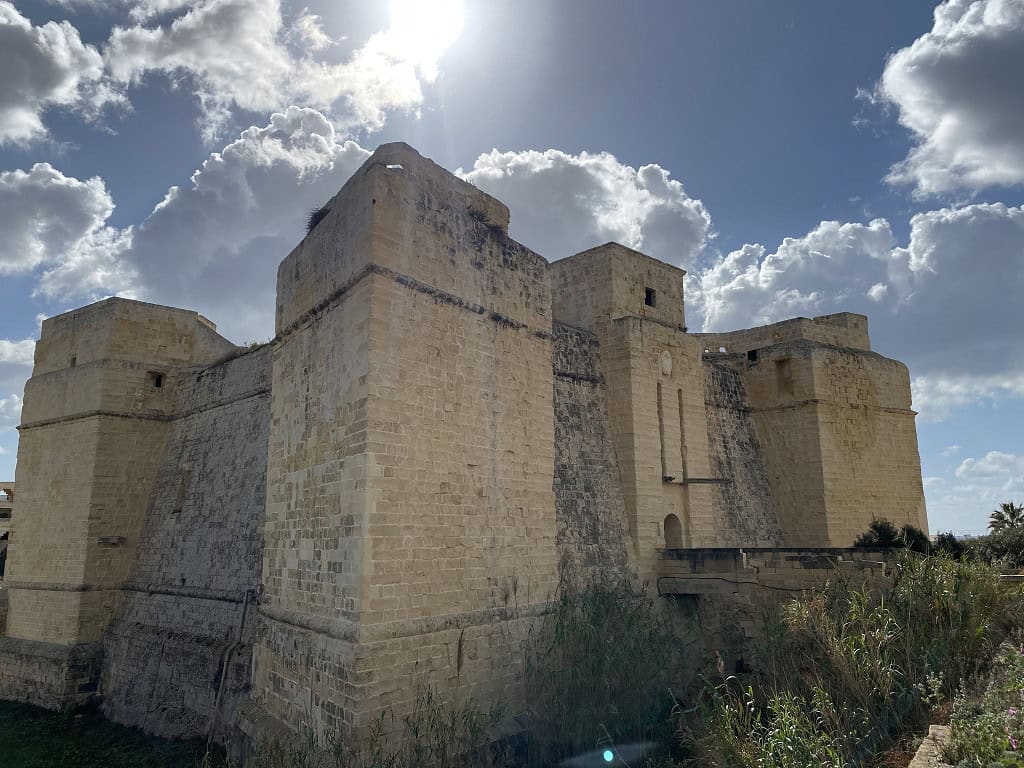
This major attack prompted the Knights of St. John, who ruled Malta at the time, to strengthen the defenses of the area. Grand Master Alof de Wignacourt commissioned the construction of Saint Thomas Tower, a large, fortified watchtower, at the entrance to St. Thomas Bay. This tower was one of the largest and most important in the network of coastal defenses that the Knights built around the islands. It provided security for the local fishing community and helped to deter future attacks.
A Resort for the Nobility
For a long time after the construction of the tower, the area remained a small and sparsely populated fishing village. At the beginning of the 20th century, the population of Marsaskala was just around 50 inhabitants. Its transformation into a residential town began in the 19th century and the first half of the 20th century, during the British period. Wealthy families from the nearby Cottonera, or the Three Cities, began to build their large summer residences along the shores of Marsaskala Bay.
These grand houses were used as a retreat from the crowded cities during the hot summer months. Gradually, many of these summer residences became permanent homes, and the town of Marsaskala began to develop around them. The establishment of the local parish in 1949 was a key moment in the formalization of the town’s identity as a distinct community. This period laid the foundation for the massive growth that was to come in the latter half of the century.
Modern Resort Town
The most significant period of growth for Marsaskala began in the late 20th century. The opening of the large Jerma Palace Hotel in 1982 was a pivotal moment. This hotel, which was an investment by the Libyan government, turned Marsaskala into one of Malta’s major resort towns. This spurred a massive construction boom in the town. The population grew exponentially, with an increase of about 400% in the 20 years between 1993 and 2014.
New, large residential areas were built to accommodate the growing population. The waterfront was developed with a long promenade and numerous new restaurants and businesses. The Jerma Palace Hotel itself was closed in 2007 and has since fallen into a state of ruin, becoming a well-known modern landmark. In the modern era, the town continues to be one of the fastest-growing localities in Malta, balancing its role as a residential community with its function as a popular local resort.



Sights in Marsaskala
The sights in Marsaskala and its immediate surroundings are a mix of historical fortifications, natural parks, and scenic coastal landscapes. The main points of interest are spread out along the coastline, from the northern side of Marsaskala Bay to the southern end of St. Thomas Bay. These attractions offer a look into the region’s history of coastal defense and its modern role as a recreational center.
A visit to Marsaskala provides an experience that is different from the main tourist hubs of Valletta or Sliema. The sights here are more focused on the natural environment and local life. The long waterfront promenade is the central artery of the town and connects many of the main points of interest. The area also includes a national park, several historic towers, and one of the few sandy beaches in the southern part of the island.
Saint Thomas Tower
The St. Thomas Tower is the town’s main historical site. It is known in Maltese as the Torri ta’ San Tumas. The tower was built by the Knights of St. John in 1614. It is the largest of the many coastal watchtowers that the Knights built around Malta. The tower has a massive, fortified base and was designed to house a large garrison and artillery. Its defensive duties continued until the 19th century. In modern times, the tower was handed over to a local heritage foundation in 2008 and is currently undergoing a long process of restoration with the aim of converting it into a museum.
Marsaskala Bay
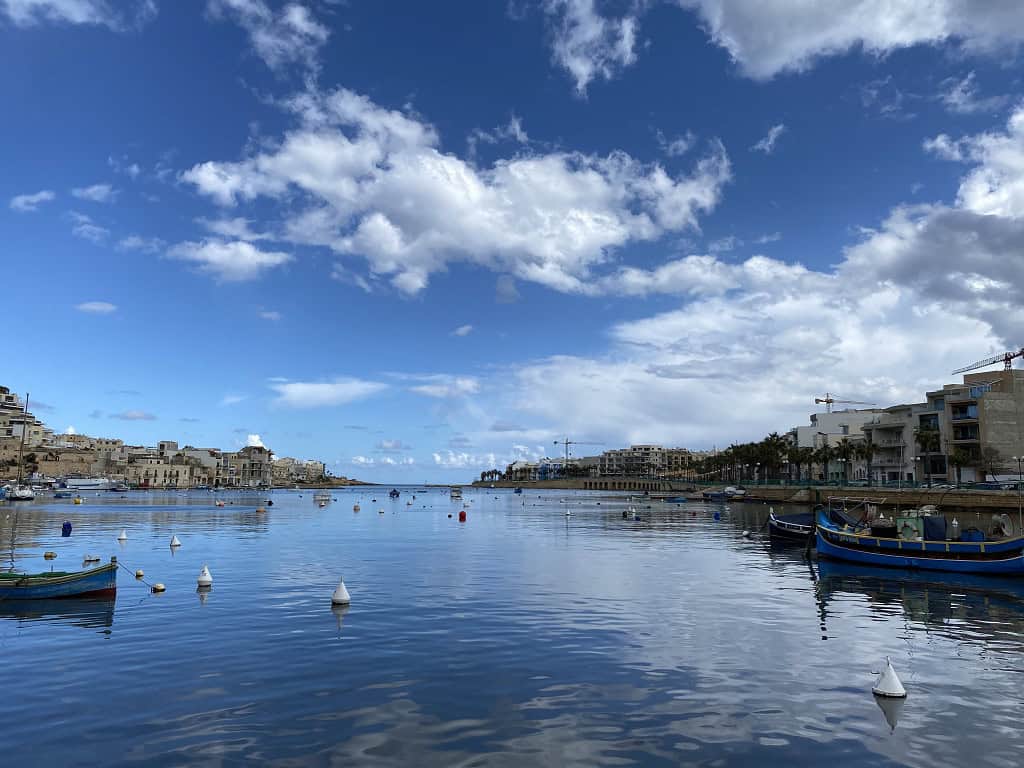
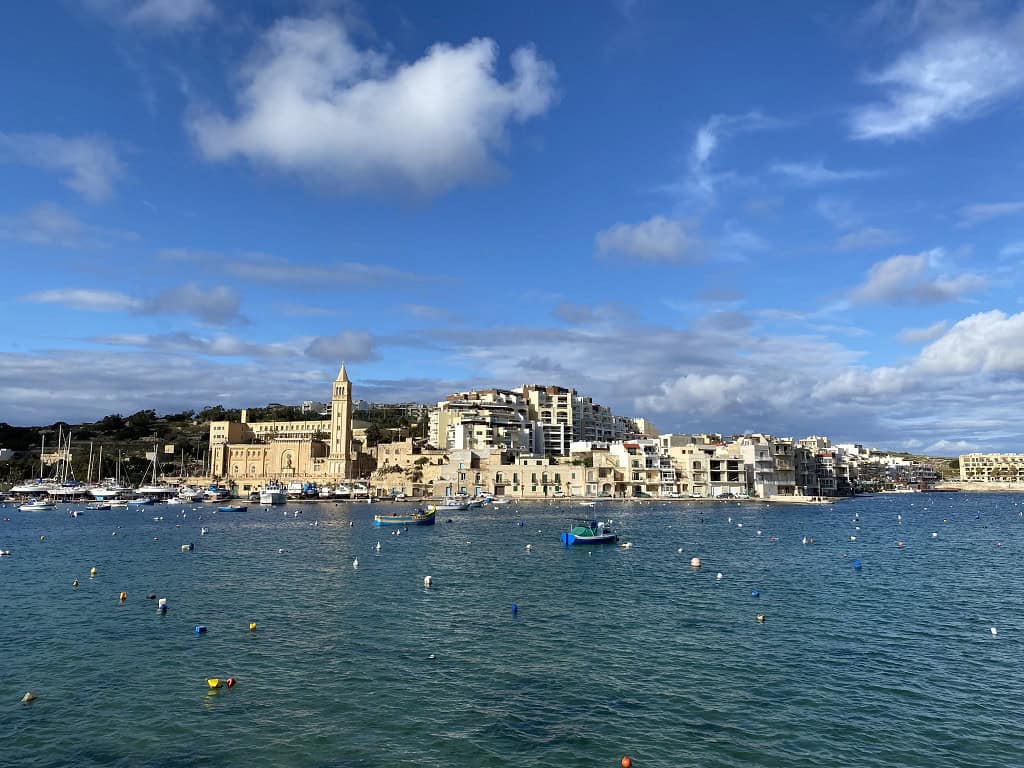
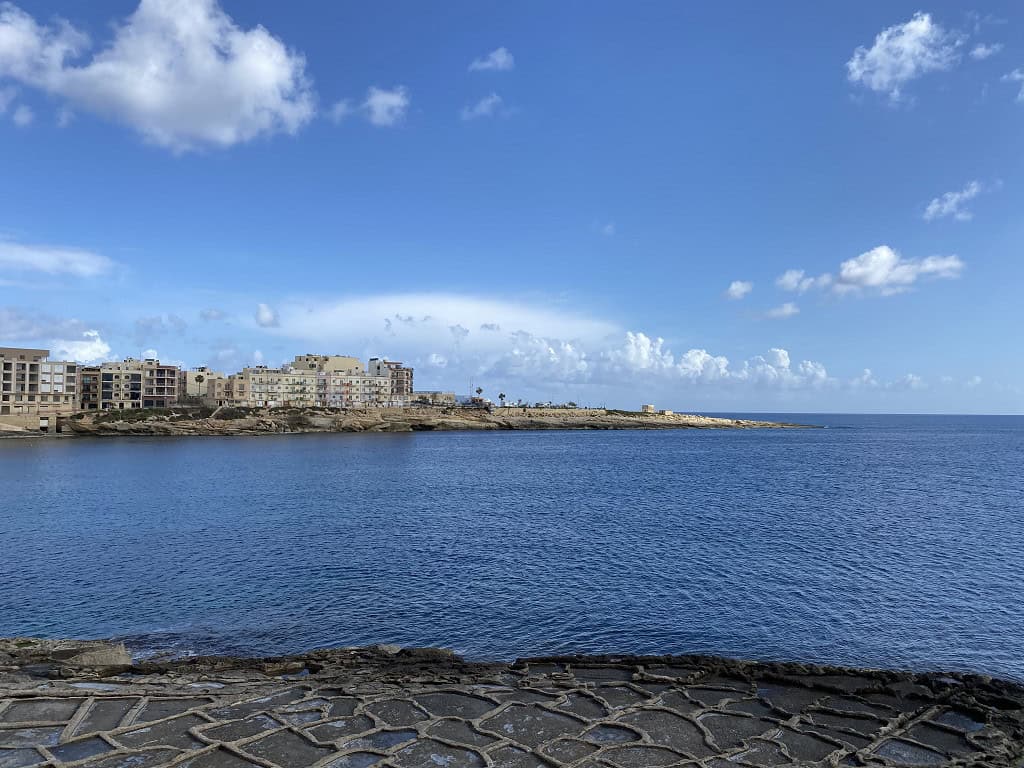
Marsaskala Bay is the long, narrow inlet around which the town has grown. The heart of the town is located at the innermost part of the bay. This area is a hub of activity and is where most of the town’s restaurants are located. The bay is characterized by its long waterfront promenade, which is one of the longest in Malta. The promenade is a perfect place to get a feel for the town. A walk along the promenade offers views of the parish church, the historic salt pans, and the many traditional Maltese fishing boats that are moored in the bay.
Saint Thomas Bay
St. Thomas Bay lies on the southern shores of Marsaskala and has developed into a major recreational area. The bay was historically part of the nearby town of Żejtun but was incorporated into Marsaskala as the town grew. Today, the bay includes one of the few sandy beaches in this part of Malta. It also has a large children’s playground and an outdoor gym. These are all connected by a seaside promenade path. The area is served by several cafes and restaurants located close to the shoreline.
Church of Saint Anne
The Marsaskala parish was established in 1949. The present main church was built a few years later in 1953. The church is known as the Church of Saint Anne and is dedicated to Saint Anne, the mother of the Virgin Mary. Its location on a high point on the northern shores of Marsaskala Bay means that its tower is easily visible from the waterfront promenade. The church is the spiritual center of the community and is the main focus of the annual village festa.
Inwadar National Park
The Inwadar National Park is located just to the north of Żonqor Point, on the border between Marsaskala and the neighboring localities of Żabbar and Xgħajra. The park is known as Il-Park Nazzjonali tal-Inwadar in Maltese and was established in 2016. Inwadar National Park covers an area of just under one square kilometer and protects a landscape of traditional agricultural land, natural garrigue habitat, and a historic salt marsh. The park offers walking trails and provides great views of the sea and the coastline towards Valletta.
Żonqor Point
The Żonqor Point is the peninsula that forms the northern side of Marsaskala Bay. The area is a popular destination for snorkeling and fishing. Along the waterfront of Żonqor Point, there are also a large number of historic salt pans. These rectangular pools were carved into the limestone rock and are used to produce sea salt through the process of evaporation. Żonqor Point was also once the home of a Wignacourt-era watchtower, which was demolished by the British military in 1915. A World War II pillbox now stands in its place.
Mamo Tower
Located to the west of St. Thomas Bay is the Mamo Tower. This is a small, fortified residential building that was built by the Mamo family in 1657. The tower has a unique shape, with sixteen sides. It was built by the family as a fortified residence to protect them from pirate raids. It was later integrated into Malta’s coastal defense network by the Knights of St. John. Today, the tower is owned by the national heritage trust, Din l-Art Ħelwa, and is open to the public on certain days.
Munxar Path
The Munxar Hill is a small peninsula located to the south of Marsaskala, right next to St. Thomas Bay. This hill separates the bay from the neighboring town of Marsaxlokk. A scenic hiking path, known as the Munxar Path, runs along the top of the white cliffs of this peninsula. The path offers panoramic views of the sea and the coastline of southeastern Malta. It is a popular route for walkers and provides a way to hike between the two towns of Marsaskala and Marsaxlokk.
Jerma Palace Hotel Ruins
A prominent and unusual landmark at the entrance to St. Thomas Bay is the ruin of the Jerma Palace Hotel. This was once one of the largest and most luxurious hotels in Malta. It was opened in 1982 and was an investment by the Libyan government. The hotel was a key part of Marsaskala’s development as a major resort town. It was in operation until 2007 and has since fallen into a state of disrepair. The large, derelict building is now a well-known modern ruin that dominates the headland.
Sports in Marsaskala
The sporting life in Marsaskala is focused on its local community clubs. The main organized sports are football and water polo, both of which have a strong following in the town. The clubs are a key part of the local community and represent the town in the Maltese national league systems. The town has modern facilities for these sports. The town’s deep connection to the sea is also reflected in its participation in the traditional sport of regatta racing.
Football
Football is a popular sport in Marsaskala, as it is throughout Malta. The local club is a key part of the community, with a strong focus on youth development. The club provides a platform for local players to compete in the national league system.
Marsaskala F.C.
The main football club is Marsaskala F.C. The club was founded in 2010. They compete in the lower divisions of the Maltese football league system. They play their home games at the Marsaskala Sports Ground. The club is an important institution for the local community, particularly for its large youth academy, which provides training for hundreds of children from the area.
Water Polo
Water polo is a very popular sport in Malta, especially in the coastal towns, and Marsaskala has a successful team. The club is a central part of the summer life in the town. The sport has a dedicated following, with home games attracting large and enthusiastic crowds to the local water polo pitch.
Marsaskala Sports Club
The Marsaskala Sports Club is the main club for water polo in the town. The club’s senior team, Marsaskala Solid-ale, competes in the Maltese Water Polo Premier League, the top tier of the sport in the country. They have a history of winning national titles. They play their home games at their own water polo pitch, which is located on the waterfront at Żonqor Point.


Marsaskala Activities
The town of Marsaskala and its immediate surroundings offer a wide range of activities for visitors. The activities are primarily focused on the outdoors, taking advantage of the town’s scenic coastal location and its proximity to some of Malta’s most important historical and cultural sites. The main categories of activities include enjoying the local beaches, hiking along the scenic coastline, and making day trips to nearby historical towns and cities. The long waterfront promenade serves as the central artery for many of these pursuits, providing a hub for leisure and recreation. This makes Marsaskala an excellent base for exploring the southeastern part of the island of Malta.
Beaches in Marsaskala
While Malta is more famous for its rocky coastline than for large sandy beaches, the Marsaskala area offers several options for swimming and sunbathing. The main attraction is the sandy beach at St. Thomas Bay, which is one of the few in the southern part of the island. In addition to this, the long coastline features numerous flat, rocky areas that are popular with locals for swimming and snorkeling in the clear Mediterranean waters. These spots provide a more traditional Maltese seaside experience, away from the more crowded sandy beaches.
St Thomas Bay Beach
The main beach in the area is located at St. Thomas Bay. This is one of the few sandy beaches in the southeastern part of Malta. The beach is situated in a sheltered bay, which generally provides calm and shallow waters, making it a very popular destination for families with children. The beach is accompanied by a range of other activities in the area, including a large children’s playground and an outdoor gym. A seaside promenade path connects these facilities. The area is also served by several cafes and restaurants located close to the shoreline, making it a full-service destination for a day at the sea.
Hiking to and from Marsaskala
Marsaskala’s location on the coast makes it an excellent starting point for several scenic coastal hikes. The trails in this area typically follow the limestone coastline, offering continuous views of the Mediterranean Sea. The landscape is characterized by traditional agricultural land, natural garrigue habitat, and historical sites such as coastal watchtowers and salt pans. These hikes provide a way to experience the natural and historical landscape of the region on foot. The routes are part of a wider network of coastal trails that circumnavigate much of the island.
To Xgħajra and the Three Cities
Leaving Marsaskala from Żonqor Point and heading north takes you on a hike through the Inwadar National Park. This coastal path leads first to the small seaside town of Xgħajra. From there, it is possible to continue along the coastline towards the fortifications of the Three Cities. This route offers impressive views across the entrance of the Grand Harbour towards the capital city, Valletta. It is possible to extend this hike even further by taking the ferry from Senglea across to Valletta and continuing from there.
From our hike: Marsaskala, Malta – A Hike to Senglea
To Marsaxlokk and Birżebbuġa
Leaving Marsaskala from St. Thomas Bay and heading south will take you on a hike across the Munxar Hill peninsula. This scenic path runs along the top of the white cliffs and provides panoramic views of the sea. The trail leads towards the famous fishing village of Marsaxlokk. There are many short and long options to choose between when finding your route. From Marsaxlokk, it is also possible to continue the hike further along the coast to the town of Birżebbuġa, passing by scenic bays and historical sites.
From our hikes:
Excursions from Marsaskala
Even though Marsaskala is at one of the easternmost points of Malta, the whole island is still within easy reach for day trips. The town’s location in the densely populated southern harbor region makes it an excellent base for exploring many of the island’s most important historical and cultural sites. The efficient Malta Public Transport bus system makes it easy to reach these destinations without a car, with frequent services connecting to the capital, Valletta, and other key towns.
Birżebbuġa
The town of Birżebbuġa is located a short distance south of Marsaskala. The town is home to the large Malta Freeport, one of the most important container terminals in the Mediterranean. It is also the location of several important historical sites. Here you will find two major prehistoric sites: Għar Dalam, a cave that contained the fossilized bones of prehistoric animals, and Borġ in-Nadur, the remains of a megalithic temple and a Bronze Age village. The town also has a large sandy beach, Pretty Bay.
Read More Here: Birżebbuġa | Exploring Malta
Fgura
Fgura is a large residential and commercial town located along the main road from Marsaskala to Valletta. The main street of the town has many small shops that are primarily oriented towards local residents rather than tourists. It provides a look into the daily life of a modern Maltese town. For visitors, Fgura serves as a convenient transit point. It is just a short walk from Fgura down to the Three Cities, from where it is possible to take the ferry across the Grand Harbour to Valletta.
Marsaxlokk
The village of Marsaxlokk is the immediate southern neighbor of Marsaskala. It is one of the main tourist attractions in the eastern part of Malta. The village is an old fishing port and is famous for its large fleet of traditional, colorful Maltese fishing boats known as Luzzu. The waterfront is lined with a daily market that sells souvenirs and local products, and it is particularly large on Sundays. The village is also renowned for its numerous fresh seafood restaurants. It is very easy to reach from Marsaskala, either on foot via the Munxar Path or by a short local bus ride.
Read More Here: Marsaxlokk | Exploring Malta
The Three Cities – Birgu, Cospicua, and Senglea
The Three Cities of Birgu, Cospicua, and Senglea are a collection of fortified cities located on the peninsulas across the Grand Harbour from Valletta. They are famous for their extensive fortifications, which were the headquarters of the Knights of St. John during the Great Siege of 1565. The area features historic buildings, impressive marinas filled with yachts, and key landmarks such as Fort St. Angelo in Birgu. The Three Cities are very close to Marsaskala and are easily accessible by bus.
Read More Here:
- Birgu (Vittoriosa) | Exploring Malta
- Cospicua (Bormla) | Exploring Malta
- Senglea (Isla) | Exploring Malta
Valletta
Valletta, the capital city of Malta, is a UNESCO World Heritage site and one of the places that most people visiting the country will try to see at least once. Its high bastion walls and other fortifications make it an impressive sight. The city was built by the Knights of St. John in the 16th century. It is known for its grid street plan and its collection of Baroque architecture, including the famous St. John’s Co-Cathedral. From Marsaskala, it is a short and direct bus journey to the main bus terminal just outside the city gates.
Read More Here: Valletta | Exploring Malta
Żabbar
The town of Żabbar is located just inland from Marsaskala and is a short bus ride away. While it is not one of the main tourist towns on the island, it offers a look into a large, traditional Maltese town. The streets are lined with houses featuring the traditional Maltese wooden balconies, the Gallarijas. With fewer tourists, it is easier to stroll around and experience the local atmosphere. The fortifications of the Three Cities are right at the outskirts of the town, as is the large Park ta’ San Klement, which has a playground for children.
Marsaskala with a Kid
Marsaskala is a very suitable destination for a visit with children. The town has several large, modern playgrounds and a family-friendly atmosphere. Walking with a stroller here can be as difficult as it is anywhere else in Malta, especially in the mornings before the garbage bags have been collected from the narrow pavements. The bags often occupy the curbs all over the island and force pedestrians to share the street with the cars. This is a common problem across Malta.
However, in Marsaskala, there are some areas where it is easier to walk. This is especially true of the long waterfront promenade, which is wide and relatively flat in most sections. This makes it possible to let children walk a bit more freely. One still needs to be mindful of the stairs that connect the different levels of the promenade. In many ways, Marsaskala is a quieter alternative for a family stay in comparison to the more intensely tourist-attracting areas of Buġibba, Sliema, and St. Julian’s.
Read more: Malta with a Toddler
Playgrounds in Marsaskala
Marsaskala has several excellent playgrounds, making it one of the better towns in Malta in regards to activities for children. The town has invested in large, modern, and well-equipped play areas that are popular with local families and visitors alike. These playgrounds are a key part of the town’s family-friendly amenities and provide a focus for community life.
Read more from Our Visit: Marsaskala, Malta | Exploring the Playgrounds
Marsaskala Bay Playground
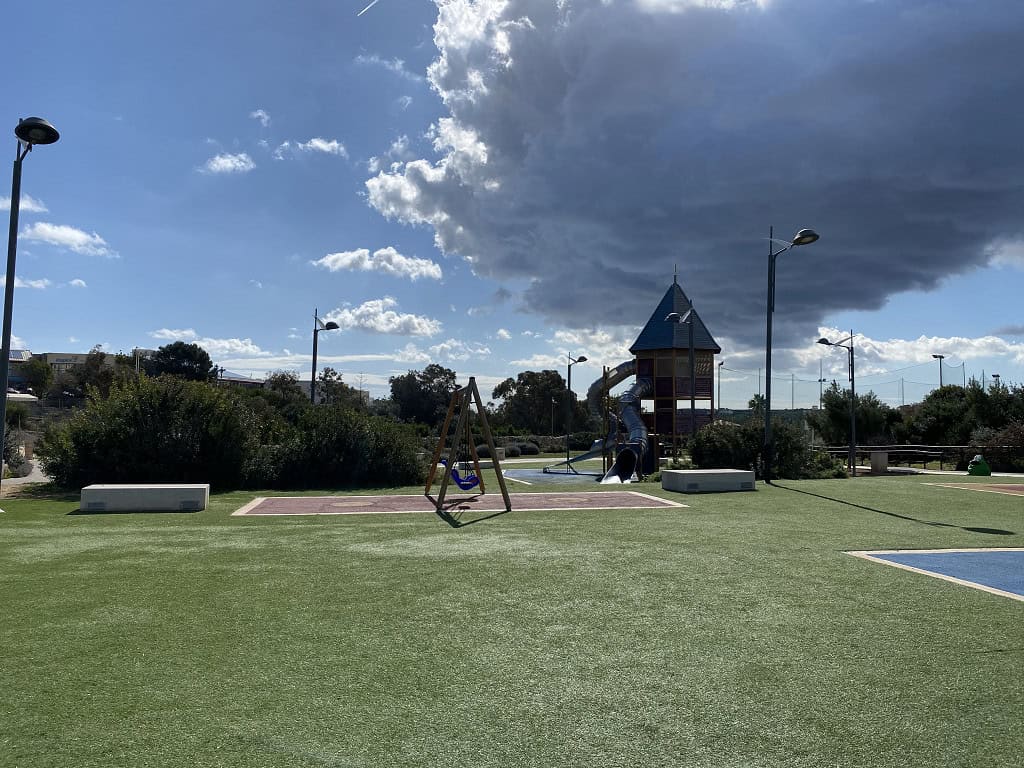
The playground in the center of Marsaskala is large and is a major meeting point for local children in the afternoons and evenings. It is located directly on the waterfront at the innermost part of the bay. The playground has several different sections with equipment suitable for different age groups. There is something for everyone here, from swings and slides for toddlers to more challenging climbing structures for older children.
Sant’Antnin Family Park
The Sant’Antnin Family Park is a very large park located just a few minutes’ walk from the center of Marsaskala. The park was built on the site of a former waste recycling plant. It contains several separated sections specialized for different activities and games. This includes different playgrounds for different age groups, an outdoor gym, and a dedicated dog park. No matter the age of the child, there is most likely an area fitted for the needs of a day of playing.
Read More from our visit: Marsaskala, Malta | Sant’Antnin Family Park
St Thomas Bay Playground
The playground at St. Thomas Bay is a lot smaller than the other two, but its location directly next to the sandy beach makes it very popular. The playground is a well-fenced-off area. This makes it possible to always have an eye on the children and still let them explore a bit on their own while enjoying the nearby cafe. The combination of a playground and a safe, sandy beach makes this a key destination for families in the summer.




Getting Around in Marsaskala
Navigating Marsaskala is best done with a combination of walking and the local bus system. The town is spread out along two large bays, so walking the entire length can be time-consuming. The public transport system provides convenient connections between the different parts of the town and to the rest of the island. For travel to the capital, Valletta, the harbor ferry from the nearby Three Cities is also a scenic option.
The public transport system is operated by Malta Public Transport. Tickets can be purchased on board the bus or with a prepaid Tallinja Card, which offers lower fares. The main bus stops are located along the main road that runs through the center of the town. Ride-sharing apps like Uber and Bolt are also widely used and are a convenient way to travel.
On Foot: The Promenade
Walking is the best way to explore the central parts of Marsaskala. The long waterfront promenade that runs around Marsaskala Bay is a wide, pedestrian-friendly zone. This allows visitors to walk from the town center out to the Żonqor Point peninsula. A separate promenade runs along the shore of St. Thomas Bay. Walking is the ideal way to access the many restaurants and cafes along the waterfront.
Local Buses
An extensive network of public buses connects Marsaskala with all other parts of Malta. Several bus routes run frequently from Marsaskala to the main bus terminal at Valletta. Buses also provide connections to the airport and to the nearby Three Cities. The bus is the primary mode of public transport for traveling longer distances across the island. The schedules and routes can be checked online in advance.
How to Get to Marsaskala
Reaching the town of Marsaskala is straightforward, as it is located in the southeastern part of the main island of Malta. The country’s single international airport is a very short drive away, and the town is well-served by the national bus network. Its coastal location means it is also accessible by private boat.
The Open Road: Driving to Marsaskala
Driving is a common way to reach Marsaskala. The town is connected by a network of local roads to the main road system of Malta. From the area around the airport, the drive takes approximately 15-20 minutes, depending on traffic. Be aware that the roads in the inner harbor area can be very congested, especially during the summer. Parking in the center of the town can be difficult to find during peak hours.
Arriving by Air: Malta International Airport
The primary and sole gateway to the country is Malta International Airport (MLA). It is located in the town of Luqa, approximately 10 kilometers from Marsaskala. The airport is well-connected to major cities across Europe, the Middle East, and North Africa, with numerous flights operated by both legacy carriers and low-cost airlines. From the airport, a taxi, a ride-sharing service, or a direct local public bus service can be used to reach Marsaskala.
Connecting by Coach
There are no major long-distance coach services in Malta due to the small size of the island. The entire country is served by the integrated national bus network operated by Malta Public Transport. The main bus terminal is located just outside the city gates of Valletta. Numerous routes from this terminal, as well as from the airport, serve Marsaskala directly. This is the most economical way to reach the town.
On Track: The Absence of Rail
There is no train service in Malta. The country does not have a railway network. Therefore, it is not possible to reach Marsaskala by train. A railway line did exist during the British period, but it was closed in the early 20th century. All overland travel on the island must be done by road.
An International Ferry Approach
It is possible to arrive in Malta by ferry. The main ferry terminal for international arrivals is located at the Valletta Waterfront. There are regular car and passenger ferry services that connect Malta with the port of Pozzallo in Sicily, Italy. The port is also a major terminal for international cruise ships. From the ferry terminal in Valletta, it is a short journey by bus or taxi to reach the nearby town of Marsaskala.
Driving Distances
The driving distance from 10 regional cities, according to Google Maps:
- Birgu, Malta – 6 kilometers (0 h 20 min)
- Paola, Malta – 6 kilometers (0 h 20 min)
- Marsaxlokk, Malta – 7 kilometers (0 h 20 min)
- Valletta, Malta – 12 kilometers (0 h 30 min)
- Sliema, Malta – 15 kilometers (0 h 40 min)
- St. Julian’s, Malta – 16 kilometers (0 h 40 min)
- Mosta, Malta – 17 kilometers (0 h 40 min)
- Mdina, Malta – 19 kilometers (0 h 40 min)
- Buġibba, Malta – 23 kilometers (0 h 50 min)
- Mellieħa, Malta – 29 kilometers (1 h 00 min)
Looking to Explore more of Malta and Europe?

This post was first published 2021-12-05 and was updated 2025-07-25



I do thank you for your research. Very interesting. Presently the population is that of 15,000 in winter and more than doubles up in Summer.
St Thomas play groun has just been refurbished.
Ex jerma will soon be demolished and rebuild in a 60% 5 star hotel and 40% luxury apartments.
Next week new administrative offices will be opened together with a new Police station.
A new primary school was lately built in St. Thomas area together with a new football pitch near the family park.
Ty
Thank you Mario, much appreciated:)