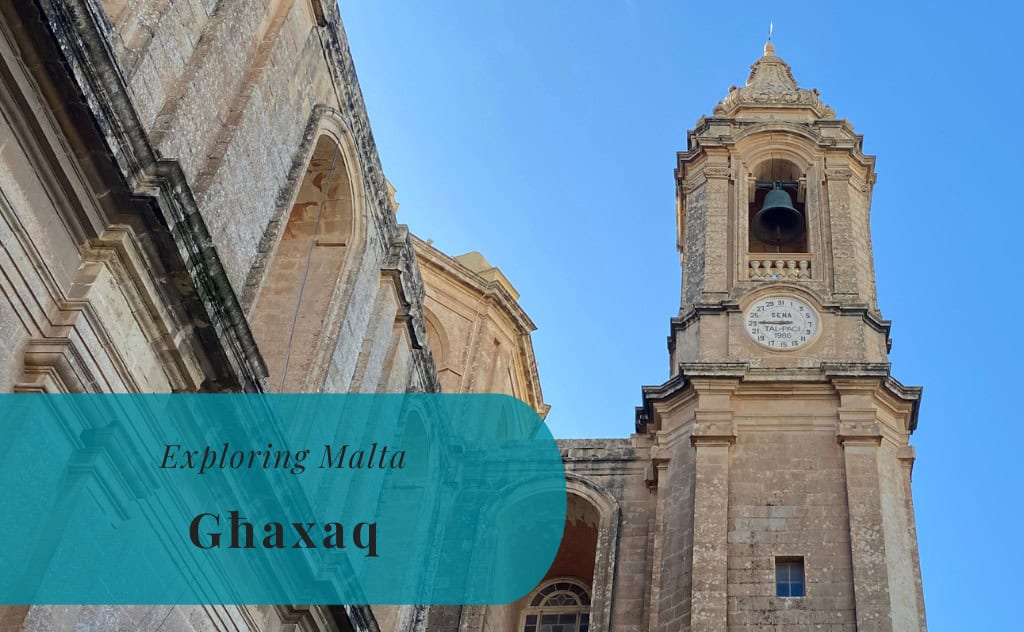
Għaxaq | Exploring Malta
Għaxaq is a village in the South Eastern Region of Malta. It is located in the southern part of the island, a few kilometers inland from the coast. With a population of approximately 4,800 residents, Għaxaq is a traditional Maltese village that is situated near the larger town of Żejtun and the Malta International Airport. The village is known for its strong community traditions, particularly its two rival band clubs. The name Għaxaq is believed to be derived from a noble family name meaning “delight.”
The character of Għaxaq is that of a quiet, traditional Maltese village. Its identity is defined by its impressive Baroque parish church and the lively rivalry between its two band clubs, which is a central part of the village’s social and cultural life. The village has a well-preserved historic core with narrow, winding streets and traditional Maltese houses. It has a calmer atmosphere compared to the nearby coastal towns. This provides a look into the daily life of a typical inland village in the southern part of Malta.
Blog Posts From our visits to Għaxaq


The History of Għaxaq
The history of Għaxaq is that of a rural parish that has been a center for religious devotion and strong community traditions for centuries. For a long time, it was a part of the larger neighboring parish of Żejtun. The story of Għaxaq is one of its development into an independent community, with its identity being shaped by the establishment of its parish and the rise of its two famous band clubs in the 19th century. This has created a village with a unique and passionate local culture.
A Rural Parish
The history of settlement in the Għaxaq area is long, but for centuries it remained a small, rural community of scattered farms. The first chapel in the area was built in 1511. For a long time, the area was administratively and religiously a part of the large parish of Żejtun. The growth of the community in the early 17th century led to the decision to establish it as its own independent parish. Għaxaq officially became an independent parish in 1626.
The Rise of the Band Clubs
A key development in the village’s modern history and identity was the establishment of its two local band clubs. The Saint Mary Band Club was established in 1873, and the Saint Joseph Band Club was established in 1874. These social and musical religious societies became the center of public life in the village. They are responsible for organizing the two main annual village festas, which are dedicated to their respective patron saints. The passionate, but friendly, rivalry between these two clubs is a defining characteristic of the village.
Modern Era
Throughout the 20th century, Għaxaq continued its existence as a traditional Maltese village. It experienced gradual growth as a residential community. The village has managed to preserve much of its historic character. In the modern era, the village has become particularly known for the Għaxaq Music Festival, which is organized by one of the local band clubs and has grown into a major national event. This has brought a new, modern dimension to the village’s traditional cultural calendar.


Sights in Għaxaq
The sights in Għaxaq are focused on its historic church and its unique local architecture and institutions. The main points of interest are concentrated in the village’s small, walkable core. These sights offer a look into the traditions and history of a classic Maltese village.
Saint Mary’s Parish Church
The Saint Mary’s Parish Church is the main church in Għaxaq. It is a large Baroque Roman Catholic church that stands at the center of religious life in the village. The construction of the current church began in 1723 and it was completed in 1760. With its large dome and two high bell towers, it is the most prominent building in the village and a key landmark. The church is dedicated to the Assumption of Mary.
Dar tal-Bebbux
The Dar tal-Bebbux, which translates to “The Snail House,” is one of the most interesting and unique buildings in Għaxaq. The house dates back to the 19th century. One of the former owners, Indri Dimech, began to decorate the entire facade of the building with seashells in 1898. The intricate patterns created by the shells cover the walls, balconies, and window frames. The house is today a protected building by the Maltese Planning Authority and is a famous example of folk art.
Għaxaq Semaphore Tower
The Għaxaq Semaphore Tower is a historic tower that was built by the British military in 1848. A semaphore tower is a form of optical telegraph that was used to send visual messages over long distances using large, movable arms. The tower in Għaxaq was one of three such towers that were built in Malta. It formed part of a communication line that connected the Grand Harbour with the rest of the island.
Saint Mary Band Club
The Saint Mary Band Club was established in 1873 and is one of the two local band clubs in Għaxaq. The band club is the main organizer of the Għaxaq Music Festival, which has been held in August each year since 1998. Historically, it is the feast of Saint Mary on the 15th of August that the band has and is organizing each year. The club’s premises are a major social hub in the village.
Saint Joseph Band Club
Established in 1874, the Saint Joseph Band Club is the second of the two local band clubs. The club is one of the organizers of the feast of Saint Joseph, which is held on the first Sunday of June each year. The band club is housed in a large Baroque-style villa located close to the parish church. Like its rival, it is a key social and cultural institution in the village.
Għaxaq with Kids
Għaxaq is a lot calmer and more slow-moving than some of the larger towns and tourist resorts in Malta. This can make it easier to walk around and explore the village with kids. However, the lack of major sights that are specifically of interest to children might make it a bit harder to keep them entertained for a long period. The main activity for children would be a visit to the local playground.
Playgrounds in Għaxaq
The village has a main public park and playground that is a key recreational area for local families. The park is located near the center of the village and provides a safe, enclosed space for children to play.
Ġnien Dawret Ħal-Għaxaq
The main park in the village is the Ġnien Dawret Ħal-Għaxaq. The park contains a small playground that is suitable for younger children. The park is adjoined by a small football pitch. Ġnien Dawret Ħal-Għaxaq is surrounded by some of the village’s larger roads, but the play area is enclosed.
Sports in Għaxaq
The sporting life in Għaxaq is focused on its local football club and the traditional Maltese sport of boċċi. The clubs are a key part of the local community.
Football
Football is a popular sport in Għaxaq, with a local club that represents the village in the national league system. The club is an important part of the community, with a focus on youth development.
Għaxaq F.C.
The main football club is Għaxaq F.C. The club was founded in 1950. They compete in the lower divisions of the Maltese football league system. They play their home games at the Għaxaq Ground. The club is a key institution for community sports in the village.
Boċċi
Boċċi is a traditional Maltese sport that is a variation of the game of boules. The sport is played in dedicated clubs, known as klabb tal-boċċi, which are found in many towns and villages. Għaxaq has its own local Boċċi Club, which is located next to the square Pjazza Santu Rokku. The club is a social hub for its members.


Getting Around in Għaxaq
Navigating the village of Għaxaq and its immediate surroundings is best done on foot or by local bus. The village is small, and its main points of interest are located close to each other in the historic core.
On Foot: The Village Core
Walking is the best way to explore the central part of Għaxaq. The parish church, the main square, and the surrounding narrow streets are all located within a compact, walkable area. Comfortable shoes are recommended for exploring the old town.
Local Buses
The public transport in Malta is based on an extensive network of buses operated by Malta Public Transport. Several bus routes pass through Għaxaq, connecting it with the main bus terminal at Valletta, the airport, and other nearby towns like Żejtun and Birżebbuġa. The bus is the primary mode of public transport for traveling around the island.
How to Get to Għaxaq
Reaching the village of Għaxaq is very straightforward, as it is located in the southeastern part of the main island of Malta, very close to the airport. The village is well-served by the national bus network.
The Open Road: Driving to Għaxaq
Driving is a common way to reach Għaxaq. The village is connected by a network of local roads to the main road system of Malta. From the area around the airport, the drive takes only about 5-10 minutes. Be aware that the streets within the historic village center can be very narrow, and parking can be difficult to find.
Arriving by Air: Malta International Airport
The primary and sole gateway to the country is Malta International Airport (MLA). It is located in the town of Luqa, just 2 kilometers from Għaxaq. The airport is well-connected to major cities across Europe, the Middle East, and North Africa. From the airport, a taxi or a ride-sharing service can reach Għaxaq in just a few minutes.
Connecting by Coach
There are no major long-distance coach services in Malta due to the small size of the island. The entire country is served by the integrated national bus network operated by Malta Public Transport. The main bus terminal is located just outside the city gates of Valletta. Several routes from this terminal, as well as from the airport, serve Għaxaq directly.
On Track: The Absence of Rail
There is no train service in Malta. The country does not have a railway network. Therefore, it is not possible to reach Għaxaq by train. All overland travel on the island must be done by road.
An International Ferry Approach
It is possible to arrive in Malta by ferry. The main ferry terminal is located at the Valletta Waterfront. There are regular car and passenger ferry services that connect Malta with the port of Pozzallo in Sicily, Italy. From the ferry terminal in Valletta, it is a short journey by bus or taxi to reach the nearby village of Għaxaq.
Driving Distances
The driving distance from 10 regional cities, according to Google Maps:
- Żejtun, Malta – 2 kilometers (0 h 10 min)
- Paola, Malta – 4 kilometers (0 h 10 min)
- Marsaxlokk, Malta – 4 kilometers (0 h 10 min)
- Birgu, Malta – 5 kilometers (0 h 10 min)
- Valletta, Malta – 7 kilometers (0 h 20 min)
- Sliema, Malta – 10 kilometers (0 h 30 min)
- St. Julian’s, Malta – 11 kilometers (0 h 30 min)
- Mosta, Malta – 11 kilometers (0 h 30 min)
- Mdina, Malta – 13 kilometers (0 h 30 min)
- Mellieħa, Malta – 22 kilometers (0 h 40 min)
Looking to Explore more of Malta and Europe?

This post was first published 2023-03-23 and was updated 2025-07-26