
Rabat | Exploring Malta
Rabat is a large town in the Northern Region of Malta. It is located in the central part of the island and is adjoined to the historic former capital of Malta, the fortified city of Mdina. With a population of around 11,500 inhabitants, Rabat is a significant residential and commercial center. In many ways, Rabat is the modern suburb to the ancient capital, a suburb that has long since outgrown the city it once served. The town is known for its extensive and important historical sites, which date back to the Roman period and the early Christian era.
The character of Rabat is that of a historic town that is a hub of daily Maltese life. Its identity is deeply connected to its neighbor, Mdina, but it is a major destination in its own right. The town is famous for its connection to the Apostle St. Paul and for its large complexes of early Christian catacombs. It has a charming historic core with narrow, winding streets and traditional Maltese houses with colorful wooden balconies. This traditional atmosphere exists alongside its function as a busy commercial town with numerous shops, cafes, and restaurants.
Blog Posts From our visits to Rabat
- Blue Grotto, Malta – A Hike to Dingli Cliffs and Mdina
- Mdina, Malta – Exploring the Old Capital of Malta


The History of Rabat
The history of Rabat is the story of a large suburb that once formed part of a great ancient city. The area has been inhabited for thousands of years. Its development is inextricably linked with that of Mdina. The story of Rabat reflects the changing fortunes and boundaries of the ancient capital, from its time as a large Roman city to its reduction into a medieval fortress. This has left Rabat with a rich legacy of archaeological and historical sites that are located outside the walls of Mdina.
Roman Melite
The history of Rabat begins in the Roman period. At that time, the Roman city of Melite was much larger than the current fortified city of Mdina. It encompassed both modern Mdina and a large part of modern Rabat. Rabat was essentially the main part of the Roman city, where the residential and commercial life was centered. The famous Domus Romana, or Roman Villa, which is located in Rabat, is a testament to the wealth of the city during this period. According to tradition, it was in a grotto in this area that the Apostle St. Paul lived after being shipwrecked on the island in 60 AD.
The Arab Suburb and the Knights
The current boundaries between Mdina and Rabat were established after the fall of the Western Roman Empire. It is believed that either the Byzantines or the Arabs reduced the size of the city to its current defensible fortified area. The area outside the walls became known as Rabat, which is an Arabic word for “suburb.” During the medieval period and the time of the Order of St. John, Rabat continued its role as the suburb of Mdina. It was home to several religious orders and was an important agricultural center.
The British Period and Modern Growth
During the British period, from 1800 onwards, Rabat continued to develop. The British introduced many modern services to the village, including building the first primary school and establishing a postal service. A key development was the construction of the Malta Railway, which had its terminus station in Rabat, connecting the area with the capital, Valletta. Rabat’s major expansion came after the Second World War, when new residential areas were built and the population grew significantly, making it the large, modern town it is today.


Sights in Rabat
While the main sight in the area is often considered to be the former capital of Mdina, there is a lot to explore and enjoy in Rabat itself. The town is home to some of Malta’s most important archaeological and religious sites. The narrow streets, the many 18th-century buildings, and the traditional Maltese balconies known as gallarija are also impressive.
Read More About Mdina Here: Mdina | Exploring Malta
St. Paul’s Catacombs
St. Paul’s Catacombs are a large complex of interconnected, underground Roman cemeteries that were in use up to the 4th century AD. Located on the outskirts of Rabat, this is the largest complex of its kind in Malta, with over 30 hypogea, of which around 20 are open to the public. These catacombs are the earliest and largest archaeological evidence of Christianity in Malta. They were used by Christians, Jews, and pagans, as Roman law forbade burials within the city walls. The site is managed by Heritage Malta and is a key historical attraction.
Domus Romana (Roman Villa)
The Domus Romana, or Roman Villa, is an open-air museum built around the remains of a 1st-century BC aristocratic Roman townhouse. The most important feature of the site is its well-preserved and intricate mosaic floors, which are considered some of the finest in the central Mediterranean. The museum was built in the 19th century to protect these mosaics after their accidental discovery. The museum also displays a collection of other Roman-era artifacts, including statues and everyday objects, that provide insight into the life of a wealthy Roman family in Malta.
Wignacourt Museum and St. Paul’s Grotto
The Wignacourt Museum is a large museum complex that is a major religious and historical sight. The museum is housed in a grand Baroque building that was once the residence of the chaplains of the Order of St. John. The museum’s collection includes religious art, a large art gallery, and a massive underground complex of World War II air-raid shelters. The museum also provides access to St. Paul’s Grotto, a sacred cave where the Apostle St. Paul is believed to have lived and preached during his three-month stay in Malta in 60 AD.
Basilica of Saint Paul
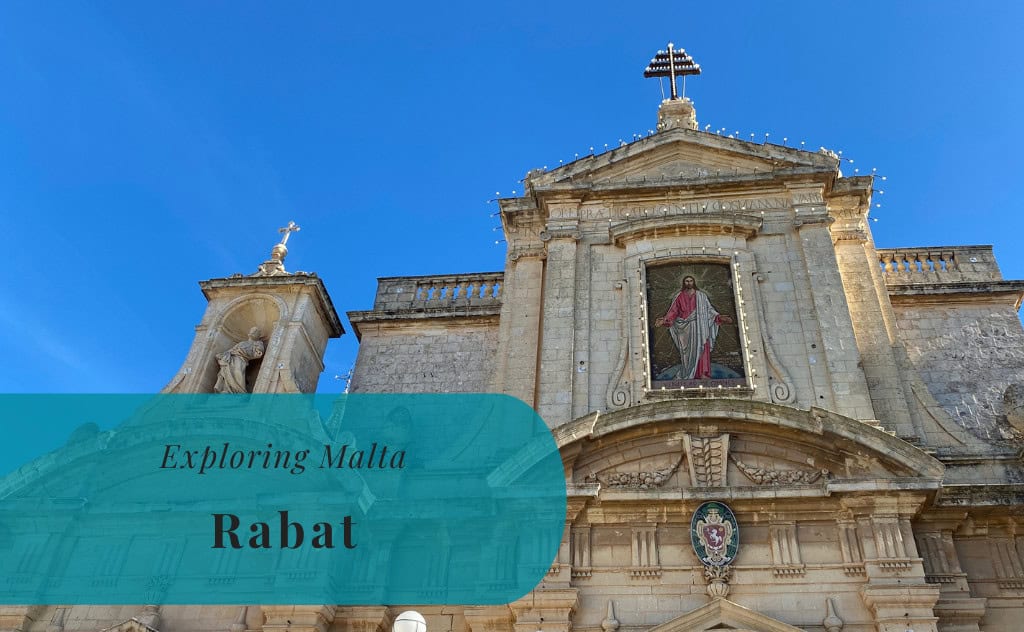
The Basilica of Saint Paul is the main church in Rabat and is a major landmark. It stands at the central square, Pjazza San Pawl. This Roman Catholic Parish church dates back to the 18th century and was completed in 1783. The church is built in the Baroque style. It is named after Saint Paul and is built on a site that is directly above the famous St. Paul’s Grotto. The church was elevated to the status of a minor basilica in 2020.
Casa Bernard
The Casa Bernard is a historic private palazzo that is open to the public for guided tours. The palace is a blend of medieval and 16th-century architecture. It was once the home of Salvatore Bernard, who was in the 18th century the personal physician for the Grand Master. The palace is still a private family home, and the guided tours are often conducted by the owners themselves. A visit provides a unique look into the life of the Maltese nobility.
Rabat with Kids
There are a few streets in Rabat that are easy to explore on foot with kids. The distances between the main sights are not too long. There are also playgrounds nearby for when children need a break from exploring the historical sites. Some of the other streets, however, can have more traffic with limited space for pedestrians, which can be challenging with a stroller or pram.
Playgrounds in Rabat
There are at least two playgrounds in the vicinity of Rabat. The first is the playground located right between Rabat and Mdina, which is a perfect stop while taking a break from exploring the historical sights. The second one is located to the west of the town at the Għajn National Water Conservation Centre.
Rabat Playground
Squeezed in between the moat of Mdina and the town of Rabat is a medium-sized playground. Its location is perfect when you are waiting for your bus or taxi after visiting the city. The playground has a slide, swings, and other attractions for the kids. The surrounding Howard Gardens also provide a large green space.


Sports in Rabat
The sporting life in Rabat is focused on football. The town is home to one of Malta’s historic football clubs. The club is a key part of the local identity.
Football
Football is a popular sport in Rabat. The local club has a long and successful history in Maltese football, including winning the national championship.
Rabat Ajax F.C.
The main football club is Rabat Ajax F.C. The club was founded in 1930. They had their golden era in the 1980s, when they won the Maltese Premier League twice, in 1985 and 1986. They were the last team to win the league before the current dominance of clubs from Valletta, Floriana, and Hibernians. The club currently competes in the lower divisions of the Maltese football league system.


Getting Around in Rabat
Navigating the town of Rabat and its neighbor Mdina is best done on foot. The historic core of the town is a maze of narrow streets, and the main tourist sites are all located close to each other.
On Foot: The Town and Suburb
Walking is the best way to explore Rabat. The main square, Pjazza San Pawl, the catacombs, and the Domus Romana are all within a short walking distance of each other. It is also just a few minutes’ walk from the center of Rabat to the main gate of the fortified city of Mdina.
Local Buses
Rabat is a major bus hub for the central and western parts of the island. The main bus interchange is located just outside the walls of Mdina. Numerous bus routes operated by Malta Public Transport connect Rabat with the capital city of Valletta, the airport, and the main coastal resorts. The bus is the primary mode of public transport for reaching the town.
How to Get to Rabat
Reaching the town of Rabat is very straightforward, as it is one of Malta’s primary tourist destinations and is well-served by the national bus network. The town’s central location on the island makes it accessible from all other parts of the country.
The Open Road: Driving to Rabat
Driving to Rabat is possible from all other parts of the island. The town is located on the main road that runs through the center of Malta. However, be aware that the streets within the historic town center can be very narrow. It is highly recommended to use the large public car parks located on the outskirts of the town, particularly the large car park in the moat below the Mdina bastions.
Arriving by Air: Malta International Airport
The primary and sole gateway to the country is Malta International Airport (MLA). It is located in the town of Luqa, approximately 10 kilometers from Rabat. The airport is well-connected to major cities across Europe, the Middle East, and North Africa. From the airport, a taxi, a ride-sharing service, or a direct public bus service (Route X3) can be used to reach Rabat.
Connecting by Coach
There are no major long-distance coach services in Malta due to the small size of the island. The entire country is served by the integrated national bus network operated by Malta Public Transport. The main bus terminal is located just outside the city gates of Valletta. Numerous routes from this terminal, as well as direct routes from the airport and other major towns, serve Rabat directly.
On Track: The Absence of Rail
There is no train service in Malta. The country does not have a railway network. Therefore, it is not possible to reach Rabat by train. The historic Malta Railway, which ran from Valletta to Rabat, was closed in 1931. The old station building in Rabat is now used as a cafe.
An International Ferry Approach
It is possible to arrive in Malta by ferry. The main ferry terminal is located at the Valletta Waterfront. There are regular car and passenger ferry services that connect Malta with the port of Pozzallo in Sicily, Italy. From the ferry terminal in Valletta, it is a journey by bus or taxi to reach the city of Rabat.
Driving Distances
The driving distance from 10 regional cities, according to Google Maps:
- Mdina, Malta – 1 kilometer (0 h 10 min)
- Mosta, Malta – 4 kilometers (0 h 10 min)
- Buġibba, Malta – 10 kilometers (0 h 20 min)
- Valletta, Malta – 11 kilometers (0 h 20 min)
- Sliema, Malta – 11 kilometers (0 h 30 min)
- St. Julian’s, Malta – 11 kilometers (0 h 30 min)
- Paola, Malta – 12 kilometers (0 h 30 min)
- Mellieħa, Malta – 12 kilometers (0 h 30 min)
- Birgu, Malta – 14 kilometers (0 h 30 min)
- Marsaxlokk, Malta – 17 kilometers (0 h 40 min)
Looking to Explore more of Malta and Europe?

This post was first published 2023-08-11 and was updated 2025-07-27



There’s also Rabat, Morocco, at the Atlantic coast. Also worth a visit.