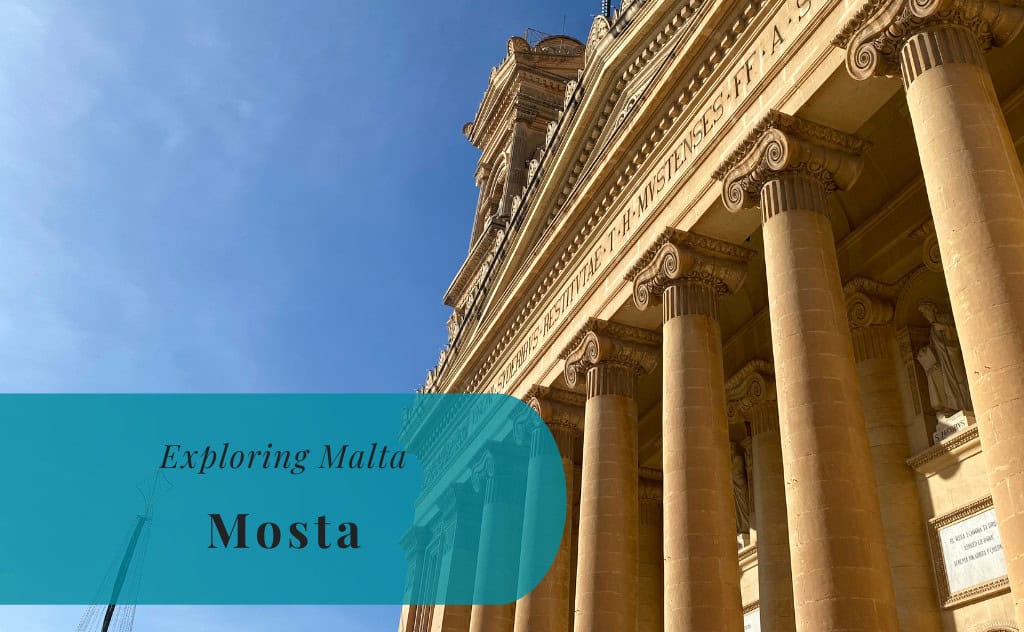
Mosta | Exploring Malta
Mosta is a large inland city in the Northern Region of Malta. It is one of the most populous cities in the country, with a population that has now surpassed 23,000 residents. The city is located in the central part of the island, a few kilometers from the coast, making it a key residential and commercial hub. Mosta is most famous for its impressive parish church, the Sanctuary Basilica of the Assumption of Our Lady, which is commonly known as the Rotunda of Mosta. This church has one of the largest unsupported domes in the world.
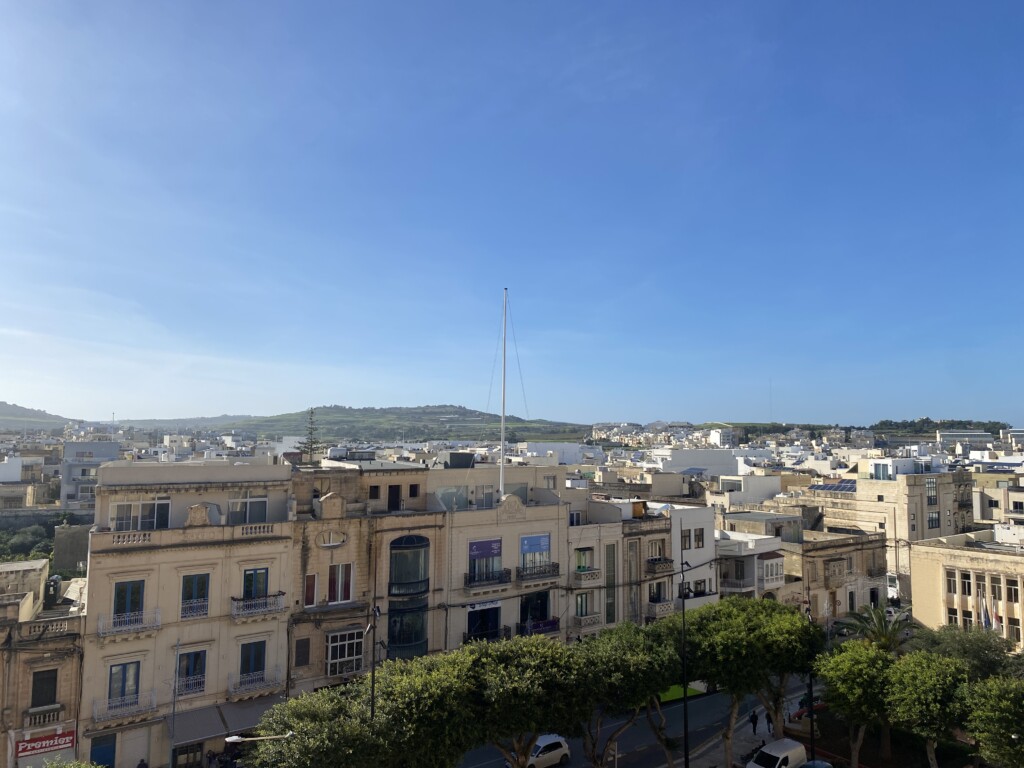
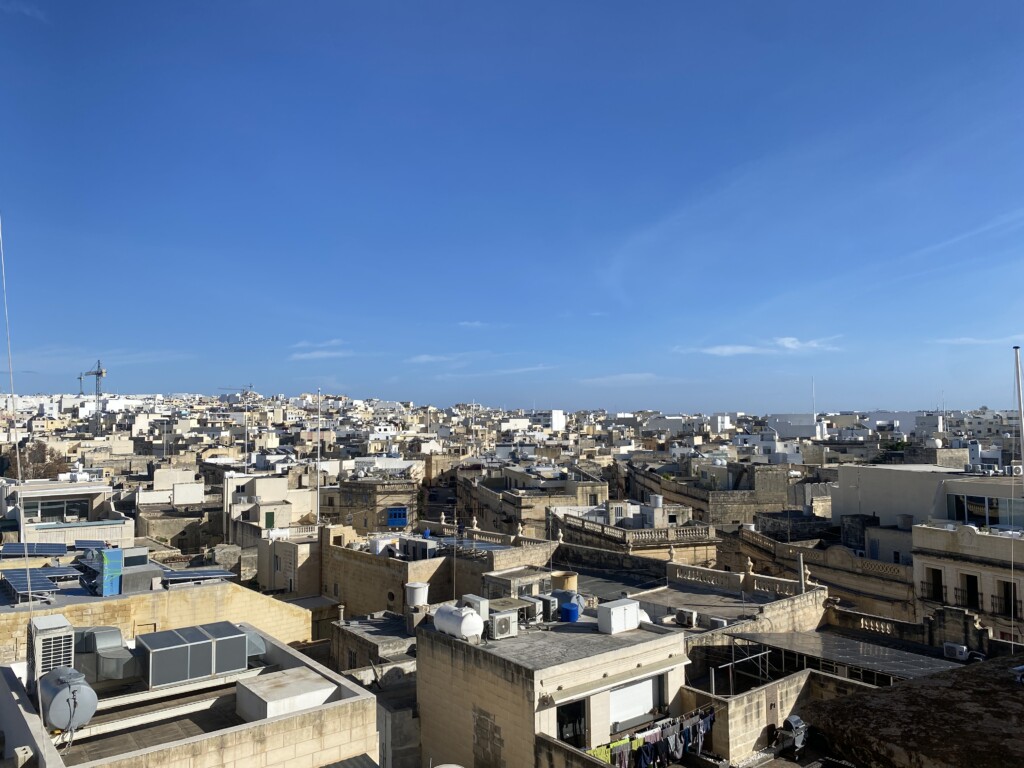
The character of Mosta is that of a bustling and active modern city that has grown around a historic core. Its identity is overwhelmingly defined by its monumental Rotunda, which is a major landmark and tourist attraction. The city serves as a key commercial center for the surrounding region, with a busy town center filled with shops and services. This modern, urban atmosphere exists alongside its deep historical roots, which are visible in its prehistoric catacombs and its connection to the historic Victoria Lines defensive wall.
Blog Posts From our visits to Mosta


The History of Mosta
The history of Mosta is that of a small farming settlement that grew into a major parish and later into one of Malta’s largest cities. The area has been inhabited for thousands of years. The story of the modern town is one of religious devotion, demonstrated by the community’s ambitious construction of its massive church in the 19th century. Its history also includes a famous miracle during World War II, which has become a central part of the city’s identity.
An Ancient Farming Settlement
The lands around what is today Mosta have been inhabited for a very long time, with evidence of human activity stretching back to prehistory. The nearby Ta’ Bistra Catacombs show that a significant community existed here during the Roman period. For centuries, however, Mosta was a small farming settlement. During the medieval period and the time of the Knights of St. John, it was a rural community that was administratively a part of the parish of Naxxar.
A New Parish and the Rotunda
Mosta became its own independent parish in 1608. A first parish church was built in the 17th century. As the population of the town grew, a decision was made in the 19th century to build a new, much larger church. The current Rotunda of Mosta was built between 1833 and 1871. The church was a massive undertaking, largely funded and built by the local residents themselves. It was famously built around the old church, which continued to be used during the construction and was only dismantled when the new church was almost complete.
World War II and Modern Growth
The many wars that have affected Malta have also impacted Mosta. The Victoria Lines, a major line of British fortifications, was built on the ridge just to the north of the town in the late 19th century. During World War II, the city experienced a famous event that is often referred to as a miracle. In 1942, during a German bombing raid, a large bomb pierced the dome of the Rotunda during a church service with 300 people inside, but the bomb failed to detonate. This event has become a key part of the city’s modern folklore. After the war, Mosta continued to grow rapidly into the large residential and commercial city it is today.



Sights in Mosta
The main sight in Mosta is the famous Rotunda. However, the city and its immediate surroundings are also home to several other historical and cultural points of interest. These sights range from prehistoric catacombs to 19th-century British fortifications.
Rotunda of Mosta
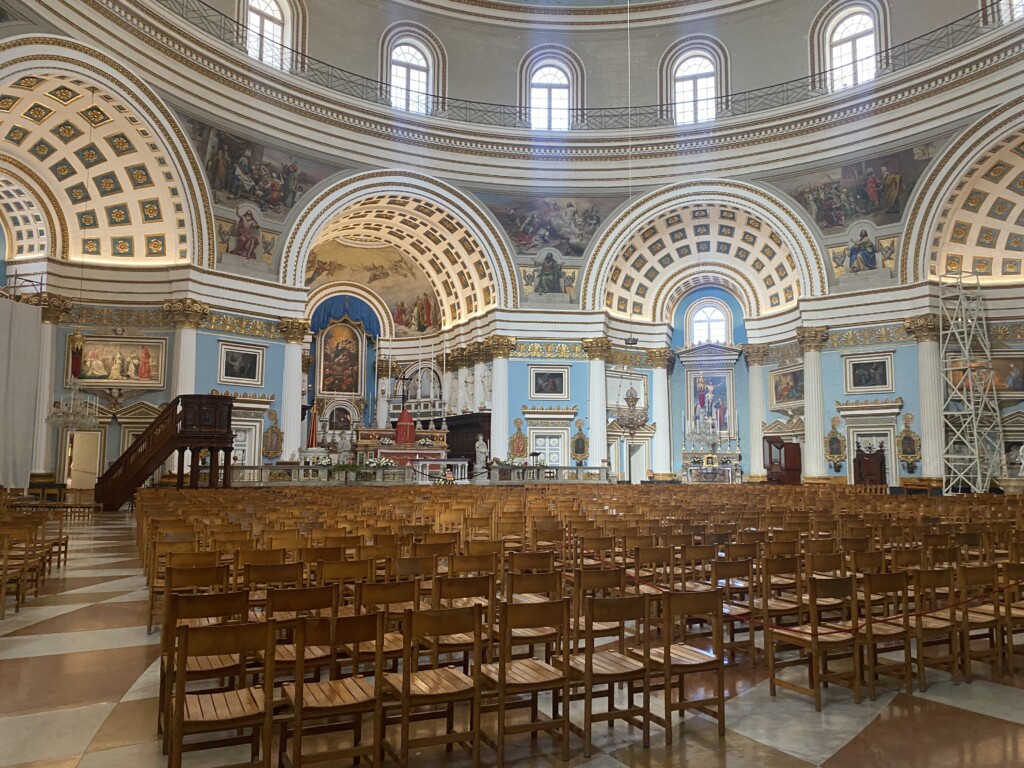
The Sanctuary Basilica of the Assumption of Our Lady, commonly known as the Rotunda of Mosta, is the primary attraction in the city. The church was completed in the 1860s and was designed by the Maltese architect Giorgio Grognet de Vassé. It was inspired by the Pantheon in Rome. The church is famous for its massive unsupported dome, which is the third-largest in the world. The interior of the church is also impressive. A key part of a visit is seeing the replica of the German bomb that pierced the dome during World War II but failed to explode.
Ta’ Bistra Catacombs
The Ta’ Bistra Catacombs are the largest set of ancient catacombs in Malta outside of the main complex in Rabat. This large network of early Christian burial tombs is located on the outskirts of Mosta. Information about the catacombs was first documented at the end of the 19th century, and they have been extensively excavated and studied since. The site is today managed by Heritage Malta and is open to the public. It provides a look into the burial customs and the early Christian communities in Malta during the late Roman period.
The Victoria Lines
The Victoria Lines are a line of fortifications that were built by the British military in the late 19th century. The line, which includes a continuous wall and several forts, stretches for 12 kilometers across the width of the island of Malta. It was designed to separate the more populated southern part of the island from the rural north. A significant portion of the Victoria Lines runs along the ridge just to the north of Mosta. Fort Mosta, a large polygonal fort, is a key part of these defenses, although it is not accessible to the public. Sections of the wall are popular for hiking.
Cumbo Tower
The Cumbo Tower is one of the more historical sights in the area. It is today a private villa, but it has played the part of a stronghold in its long history. It is believed to have been built in the 16th century as a fortified residence. The tower stands as a reminder of the era when rural areas in Malta were vulnerable to raids, and wealthy families built fortified homes for protection.
World War II Shelter
Located right next to the Rotunda is a large underground air-raid shelter from the Second World War. The shelter has been restored and is now open to the public as a museum. A visit to the shelter takes you through the narrow, hand-dug tunnels. The exhibition provides information about life underground for the Maltese population during the heavy bombing raids of the Siege of Malta. This provides a direct and powerful look into the hardships that the civilian population endured during the war.
Mosta with Kids
Mosta has a slower pace compared to the main coastal tourist areas around Sliema and Valletta. This can make it a bit easier to bring children while exploring the city. The fact that there is a playground in the center of Mosta also makes it easier to activate the children when taking breaks from exploring the main sights. The main attraction, the Rotunda, is also impressive for children due to its immense size.
Playgrounds in Mosta
The main playground in Mosta is located right next to the Rotunda. This central location makes it very convenient for families visiting the city’s main sight.
Gnien Reggie Cilia
Right next to the Rotunda is a small park with a playground called Gnien Reggie Cilia. There are plenty of trees offering shade from the often-strong sun. The playground has a good variety of attractions for children to explore. Its location in the very heart of the city makes it a perfect spot for a break for families with children.


Sports in Mosta
A lot of the sports coverage in Malta seems to center around football. Mosta is no exception, with a professional club that represents the city at the highest level of Maltese football. The city is also home to a successful cycling club.
Football
Football is a major sport in Mosta. The local professional club is a key part of the community and has a dedicated following from the town and the surrounding areas.
Mosta F.C.
Mosta F.C. is the local football club. It was founded in 1935 and currently plays in the top-tier league in Malta, the Maltese Premier League. The team has been playing in the Premier League consistently since 2011. They play their home games at the Charles Abela Memorial Stadium. The stadium was opened in 2010 and has a capacity of 700 spectators.
Cycling
Cycling is another sport with a strong presence in the town. Mosta is home to one of Malta’s oldest and most successful cycling clubs. The club is an important institution for the development of the sport in the country.
Mosta Cycling Club
The Mosta Cycling Club was founded in 1953. The team has had several cyclists who have competed for Malta in major international competitions, such as the Commonwealth Games. The club is very active in the local racing scene. It provides a platform for both youth and senior riders to develop their skills and compete at a national level.


Getting Around in Mosta
Navigating the city of Mosta is best done on foot in the central area. The city is a major hub on the national bus network, which makes it easy to travel to from other parts of the island.
On Foot: The City Center
Walking is the best way to explore the central part of Mosta. The Rotunda, the main square, and the surrounding commercial streets are all located within a compact, walkable area. The Ta’ Bistra Catacombs are also located within a reasonable walking distance of the city center.
Local Buses
The public transport in Malta is based on an extensive network of buses operated by Malta Public Transport. Mosta is a major bus hub for the central part of the island. Numerous bus routes pass through the city, connecting it with the capital city of Valletta, the main tourist resorts of Sliema and Buġibba, and the ferry terminal at Ċirkewwa.
How to Get to Mosta
Reaching the city of Mosta is straightforward, as it is centrally located on the island of Malta. The country’s single international airport is a short drive away, and the city is a major hub on the national bus network.
The Open Road: Driving to Mosta
Driving is a common way to reach Mosta. The city is located at the junction of several major arterial roads that connect it with all other parts of the island. From the area around the airport, the drive takes approximately 15-20 minutes, depending on traffic. Parking in the center of the city, especially near the Rotunda, can be difficult to find.
Arriving by Air: Malta International Airport
The primary and sole gateway to the country is Malta International Airport (MLA). It is located in the town of Luqa, approximately 9 kilometers from Mosta. The airport is well-connected to major cities across Europe, the Middle East, and North Africa. From the airport, a taxi, a ride-sharing service, or a direct public bus service can be used to reach Mosta.
Connecting by Coach
There are no major long-distance coach services in Malta due to the small size of the island. The entire country is served by the integrated national bus network operated by Malta Public Transport. The main bus terminal is located just outside the city gates of Valletta. Numerous routes from this terminal, as well as direct routes from the airport and other major towns, serve Mosta.
On Track: The Absence of Rail
There is no train service in Malta. The country does not have a railway network. Therefore, it is not possible to reach Mosta by train. All overland travel on the island must be done by road.
An International Ferry Approach
It is possible to arrive in Malta by ferry. The main ferry terminal is located at the Valletta Waterfront. There are regular car and passenger ferry services that connect Malta with the port of Pozzallo in Sicily, Italy. From the ferry terminal in Valletta, it is a journey by bus or taxi to reach the city of Mosta.
Driving Distances
The driving distance from 10 regional cities, according to Google Maps:
- Mdina, Malta – 5 kilometers (0 h 10 min)
- Buġibba, Malta – 7 kilometers (0 h 20 min)
- Sliema, Malta – 8 kilometers (0 h 20 min)
- St. Julian’s, Malta – 8 kilometers (0 h 20 min)
- Valletta, Malta – 9 kilometers (0 h 20 min)
- Mellieħa, Malta – 10 kilometers (0 h 20 min)
- Paola, Malta – 11 kilometers (0 h 30 min)
- Birgu, Malta – 11 kilometers (0 h 30 min)
- Marsaxlokk, Malta – 16 kilometers (0 h 40 min)
- Marsaskala, Malta – 17 kilometers (0 h 40 min)
Looking to Explore more of Malta and Europe?

This post was first published 2023-03-28 and was updated 2025-07-26