
Exploring South Africa

Exploring South Africa
South Africa, officially the Republic of South Africa, is a country located at the southernmost tip of the African continent. It is known for its long and varied coastline that stretches along both the South Atlantic and Indian Oceans. The country is unique in that it has three capital cities: Pretoria serves as the executive capital, Cape Town as the legislative capital, and Bloemfontein as the judicial capital. The nation’s largest city and primary economic hub is Johannesburg.
The cultural identity of South Africa is defined by its immense diversity. It is often referred to as the “Rainbow Nation,” a term coined by Archbishop Desmond Tutu to describe the country’s multicultural society after the end of the apartheid era. This diversity includes a wide range of African ethnic groups, such as the Zulu and Xhosa, as well as significant populations of European, Asian, and mixed-race descent. This is reflected in the country’s 11 official languages, which is among the highest number for any country in the world.
For the traveler, South Africa offers a wide spectrum of experiences, often described as “a world in one country.” It contains cosmopolitan cities like Cape Town and Johannesburg. These stand in contrast to vast wilderness areas and world-famous game reserves, including Kruger National Park. The country’s landscapes range from the dramatic Drakensberg mountains and the semi-arid Karoo to the lush coastline of the Garden Route and the wine-producing regions of the Western Cape.
Population of South Africa
The population of South Africa is approximately 61.5 million people. It is one of the most populous countries in Africa. This population is ethnically and culturally diverse, and its distribution across the country is uneven. The most densely populated province is Gauteng, which contains the largest city, Johannesburg, and the administrative capital, Pretoria.
Other major population centers are located along the coast. These include the metropolitan area of Cape Town in the Western Cape province and the city of Durban in the KwaZulu-Natal province. The interior of the country, particularly the arid northwestern region, is much more sparsely populated. The country has experienced significant urbanization in recent decades, with a large percentage of the population now living in cities and towns.
Location of South Africa
South Africa is located at the southernmost tip of Africa. Its long coastline, stretching more than 2,800 kilometers, borders the South Atlantic Ocean to the west and the Indian Ocean to the southeast. The country shares land borders with six other nations. To the north, it is bordered by Namibia, Botswana, and Zimbabwe. To the northeast, it shares borders with Mozambique and Eswatini (formerly Swaziland).
A unique geographical feature of South Africa is that it completely surrounds the independent kingdom of Lesotho, making Lesotho an enclave. The country’s strategic location at the southern end of the continent has been historically important for sea trade routes between Europe and Asia, particularly before the construction of the Suez Canal. This position has also influenced its political and economic history.
Geography of South Africa
The geography of South Africa is highly diverse, featuring a range of climates and landscapes, from deserts and savannas to high mountain ranges and subtropical coastlines. The country’s interior is dominated by a large, relatively flat plateau, which is separated from the coast by a major escarpment.
The Highveld
The Highveld is a large interior plateau that covers a significant portion of the country. This high-altitude grassland region is where the city of Johannesburg is located, at an elevation of over 1,700 meters. The Highveld is generally characterized by a dry, sunny climate with summer rainfall. It is a major agricultural and mining region of the country.
The Great Escarpment
Separating the high interior plateau from the lower-lying coastal areas is the Great Escarpment. This is a dramatic series of mountains and cliffs that runs down the eastern side of the country. The most well-known section of this escarpment is the Drakensberg mountains. This range contains the highest peaks in Southern Africa and is known for its dramatic cliffs, waterfalls, and rock formations.
The Coastal Plain
Along the country’s eastern and southern edges is a coastal plain of varying width. This region has a more humid, subtropical climate, particularly in the east around the city of Durban. In the south, the coastal plain includes the famous Garden Route, a stretch of coast known for its indigenous forests, lakes, and scenic coastline.
The Cape Fold Mountains
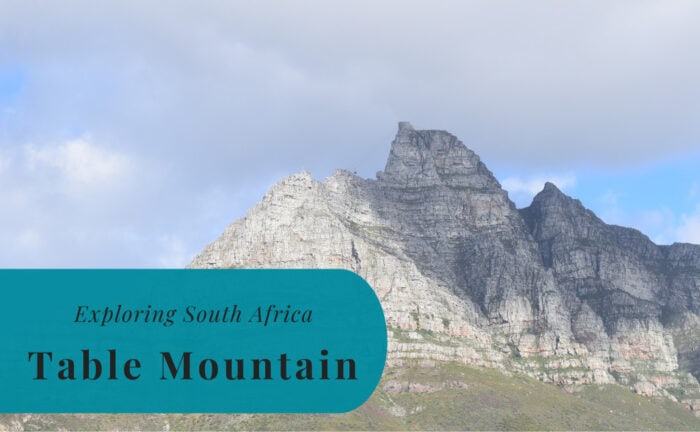
In the southwestern corner of the country is the Cape Fold Belt. This is a series of mountain ranges that includes the iconic Table Mountain, which overlooks the city of Cape Town. This region has a Mediterranean climate, with dry summers and wet winters. It is the heart of South Africa’s wine-producing industry.
The Karoo and Kalahari
The western and northwestern parts of the country are dominated by arid and semi-arid landscapes. The Karoo is a vast semi-desert region in the interior. Further north lies the southern portion of the Kalahari Desert. This area is characterized by red sand dunes and sparse vegetation and is shared with neighboring Botswana and Namibia.
Entry Points to South Africa
As a major economic and tourist hub on the African continent, South Africa has several key entry points for international travelers. The primary points of entry are the country’s major international airports, particularly in Johannesburg and Cape Town. Land border crossings with its six neighboring countries are also important, especially for regional and overland travel.
Major International Airports
South Africa is served by a network of modern international airports. The primary gateway to the country and the busiest airport in Africa is O. R. Tambo International Airport (JNB) in Johannesburg. It handles most of the long-haul international flights from Europe, North America, Asia, and other parts of Africa. Cape Town International Airport (CPT) is the second-busiest airport and a major hub for tourism. King Shaka International Airport (DUR) in Durban also serves some international routes.
Land Border Crossings
South Africa shares land borders with six countries, and there are numerous official border crossings. The Beitbridge crossing with Zimbabwe and the Ressano Garcia/Lebombo crossing with Mozambique are two of the busiest in Africa. There are also multiple crossings with Namibia, Botswana, Eswatini, and Lesotho. These borders can be crossed by car or by long-distance bus services, making overland travel within the Southern African region common.
Sea Ports
The main seaports in the country are located in Durban and Cape Town. The Port of Durban is the busiest port in sub-Saharan Africa, primarily for cargo. The Port of Cape Town is also a major cargo hub. For international travelers, these ports are major destinations for cruise ships. Many cruises traveling around Africa or on world voyages include Cape Town and Durban as key ports of call.
Join Us in Exploring South Africa




Exploring More of the World?
Join us in exploring more of what the World has to offer.