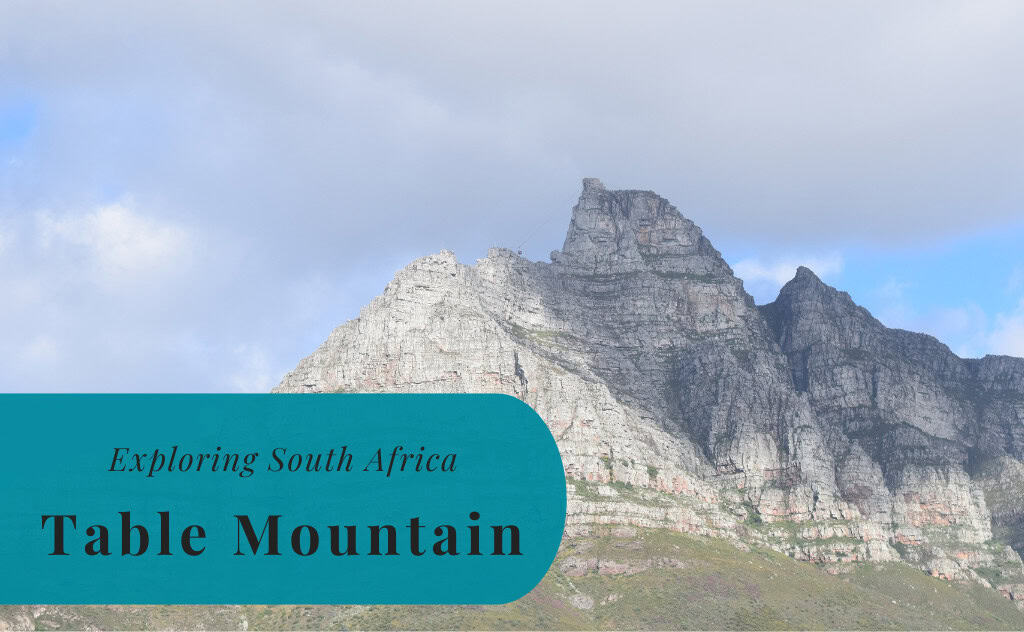
Table Mountain | Exploring South Africa
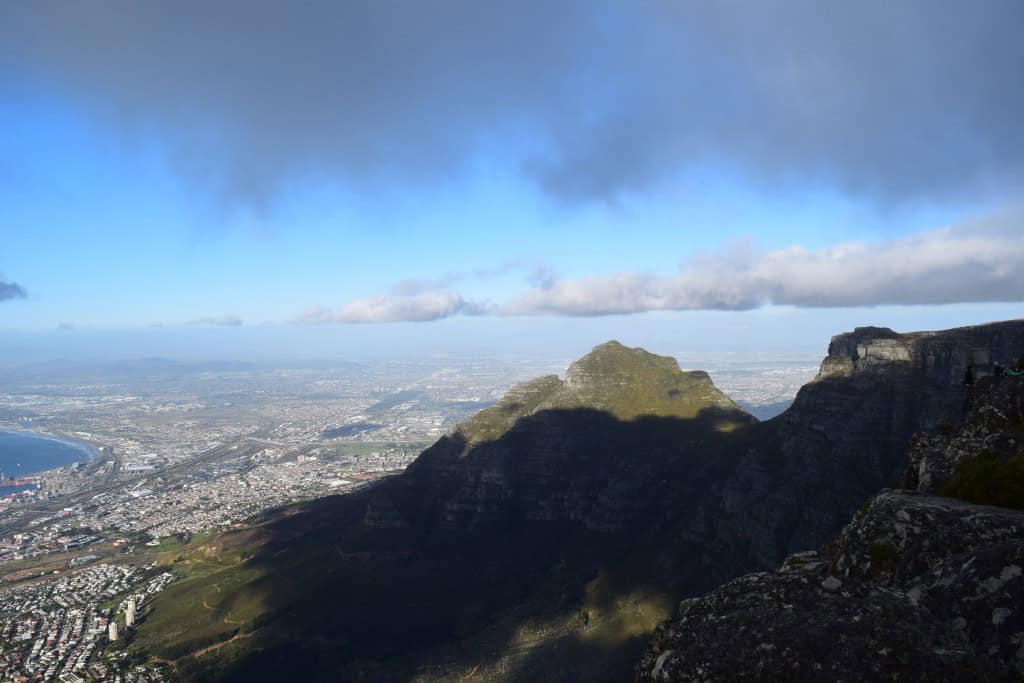
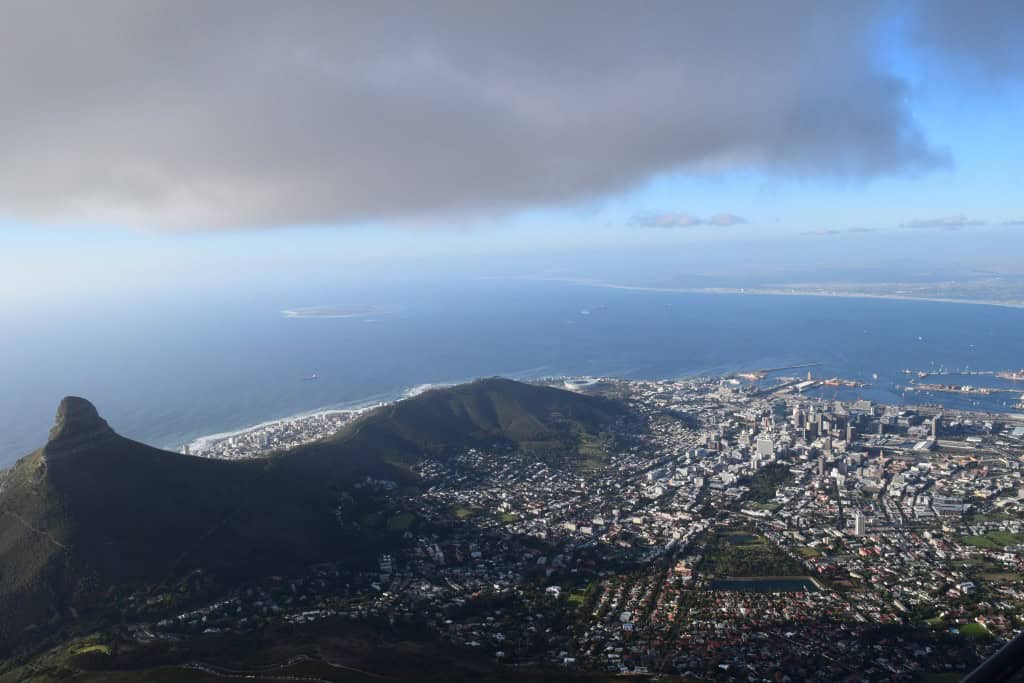
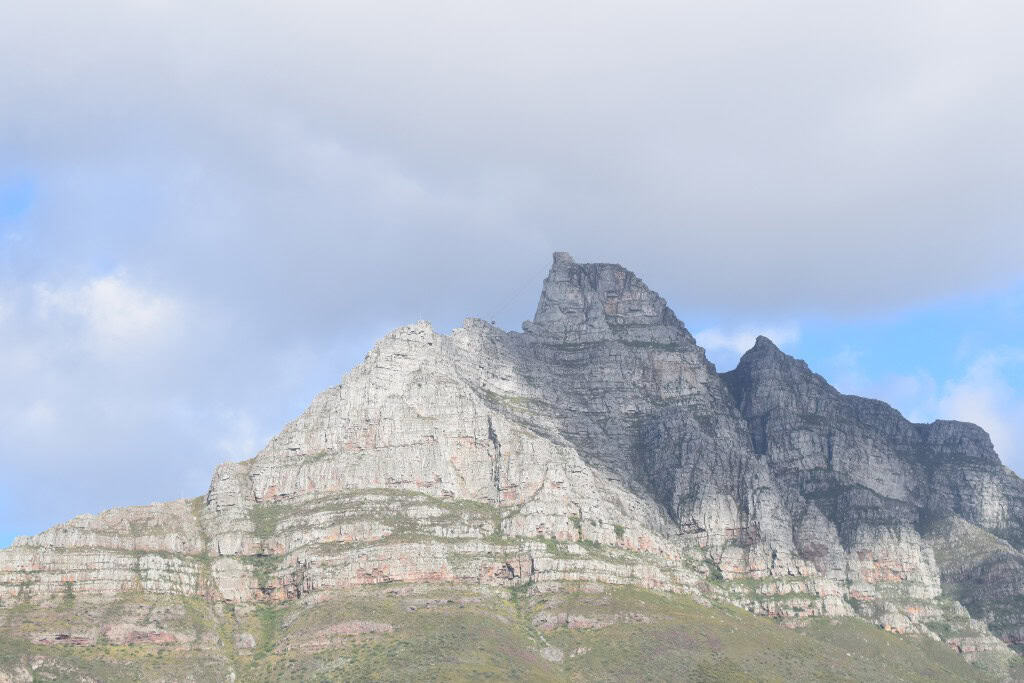
Table Mountain, known in Afrikaans as Tafelberg and in the Khoikhoi language as Hoerikwaggo (“Mountain in the Sea”), is a flat-topped mountain that is the most famous natural landmark of Cape Town, South Africa. It is a key feature of the Table Mountain National Park, a UNESCO World Heritage Site. The mountain is not a town, but rather a vast, protected wilderness area that rises directly from the city, providing a spectacular and ever-present backdrop. Its main feature is a level plateau that stretches for approximately three kilometers from side to side, and this is flanked by the peaks of Devil’s Peak to the east and Lion’s Head to the west.
The identity of Table Mountain is defined by its dramatic visual impact and its rich biodiversity. For centuries, it has been a beacon for sailors and a symbol of the city of Cape Town, which is often called the “Mother City.” The mountain is home to an incredible diversity of plant life, much of which is unique to the area. In 2011, it was voted as one of the New 7 Wonders of Nature. Today, it is a major international tourist attraction, and it offers visitors a unique combination of accessible wilderness, outdoor recreation, and breathtaking panoramic views.
The mountain is also a place rich in local legends and mythology. One of the most famous stories is the tale of the Dutch pirate Jan van Hunks. According to the legend, he would often go to the mountain to smoke his pipe. One day, he met a stranger, who was actually the Devil, and they engaged in a smoking contest. The clouds of smoke they created formed the famous “table cloth,” the layer of clouds that often covers the top of the mountain. This local myth adds a layer of cultural history to the mountain’s impressive natural presence.
History of Table Mountain
The history of Table Mountain is a story that spans millions of years, from its geological formation to its role as a sacred site for the indigenous Khoikhoi people and its modern status as a global icon. The mountain’s distinctive flat top is the result of millennia of erosion. It has been a silent witness to the entire history of human settlement in the Cape Peninsula. The first recorded ascent by a European was in the 16th century, and the mountain has been a source of inspiration and a major landmark ever since.
Geological Formation
The rocks that make up Table Mountain are ancient, and they were formed over 500 million years ago. The upper part of the mountain is composed of a very hard and erosion-resistant layer of quartzitic sandstone, known as the Peninsula Formation. This hard layer rests on a base of softer granite and shale. The mountain’s distinctive flat top is the result of the erosion of a once much higher, folded mountain range. Over millions of years, the softer layers were eroded away, leaving the hard, flat layer of sandstone that forms the famous “table.”
A Sacred Mountain
For the indigenous Khoikhoi people who lived in the Cape Peninsula, Table Mountain was a sacred place. They called the mountain Hoerikwaggo, which means “mountain in the sea.” The mountain played an important role in their spiritual beliefs. The first European to record seeing the mountain was the Portuguese explorer Bartolomeu Dias in 1488. The first recorded ascent of the mountain by a European was made in 1503 by another Portuguese admiral, António de Saldanha, who named it Taboa do Cabo, or “Table of the Cape.”
A Modern Icon
In the modern era, Table Mountain has become the defining symbol of Cape Town. The city has grown up in the natural amphitheater formed by the mountain and its adjacent peaks. The establishment of the Table Mountain Aerial Cableway in 1929 made the summit easily accessible to the general public for the first time. In the 20th century, a growing awareness of the mountain’s unique and threatened biodiversity led to increased efforts to protect it. In 1998, the Table Mountain National Park was established, ensuring the preservation of this iconic landmark for future generations.

Sights in Table Mountain
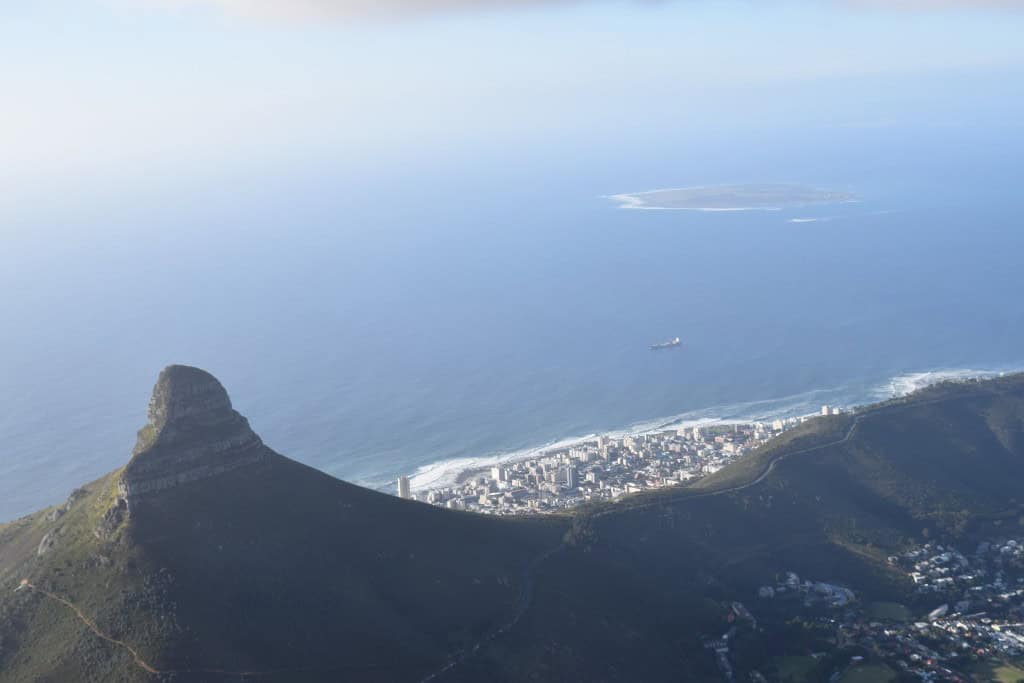
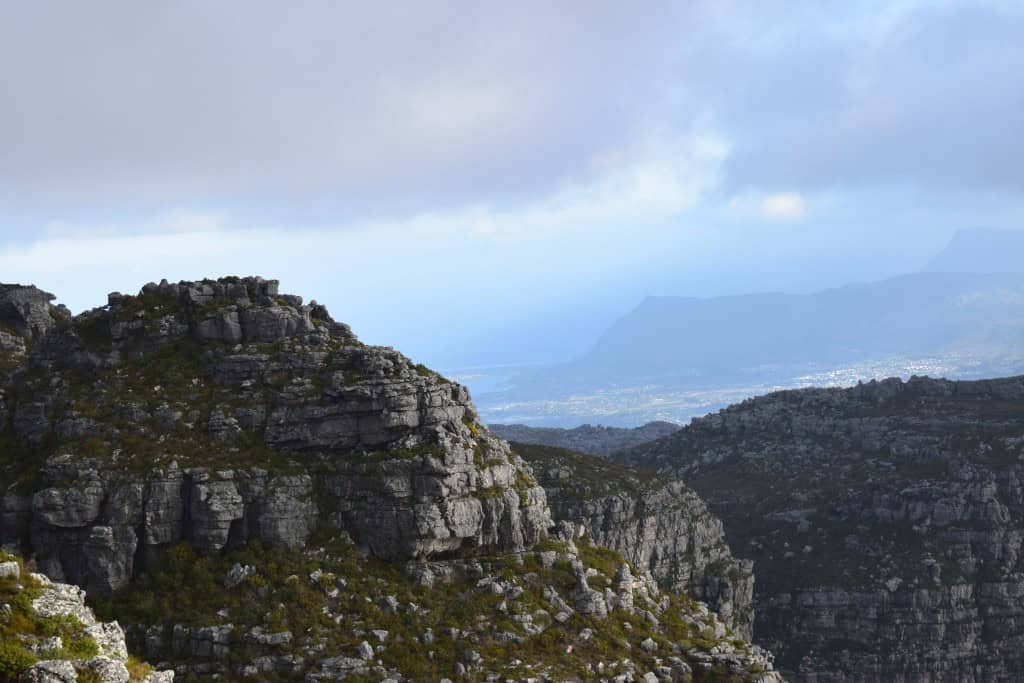
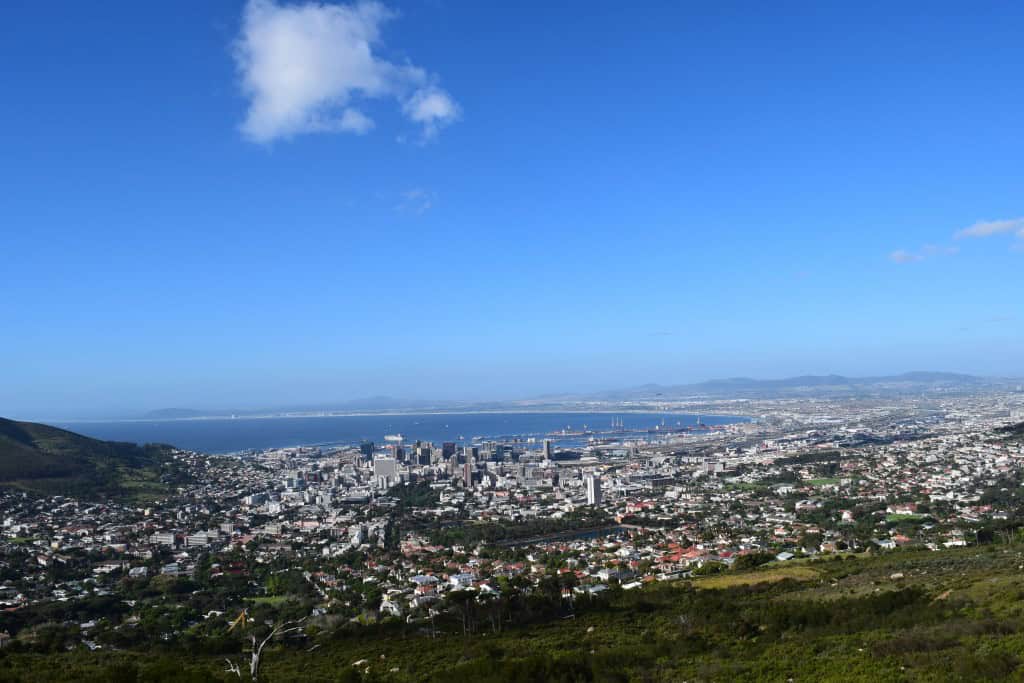
The sights on Table Mountain are centered around its spectacular panoramic views and its unique natural environment. The main attraction for most visitors is the experience of reaching the summit, either by hiking or by taking the famous Aerial Cableway. The flat top of the mountain is a large nature reserve with a network of walking trails, offering breathtaking views in all directions. A key landmark on the summit is Maclear’s Beacon, the highest point on the mountain. The mountain is also a paradise for nature lovers, with an incredible diversity of unique and beautiful plant life.
The Summit and the Views
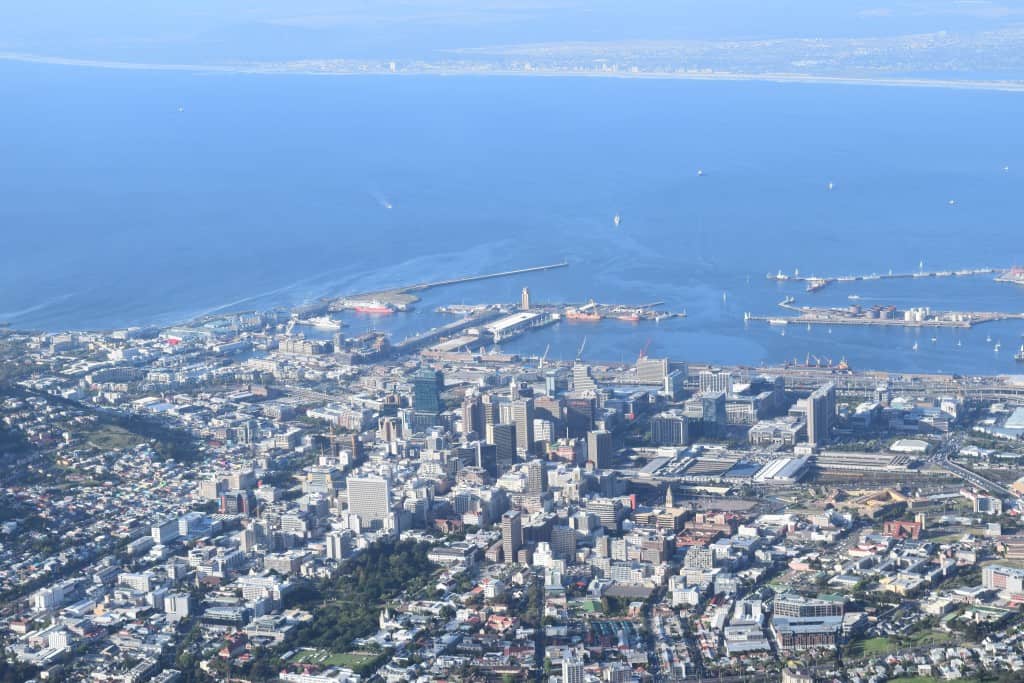
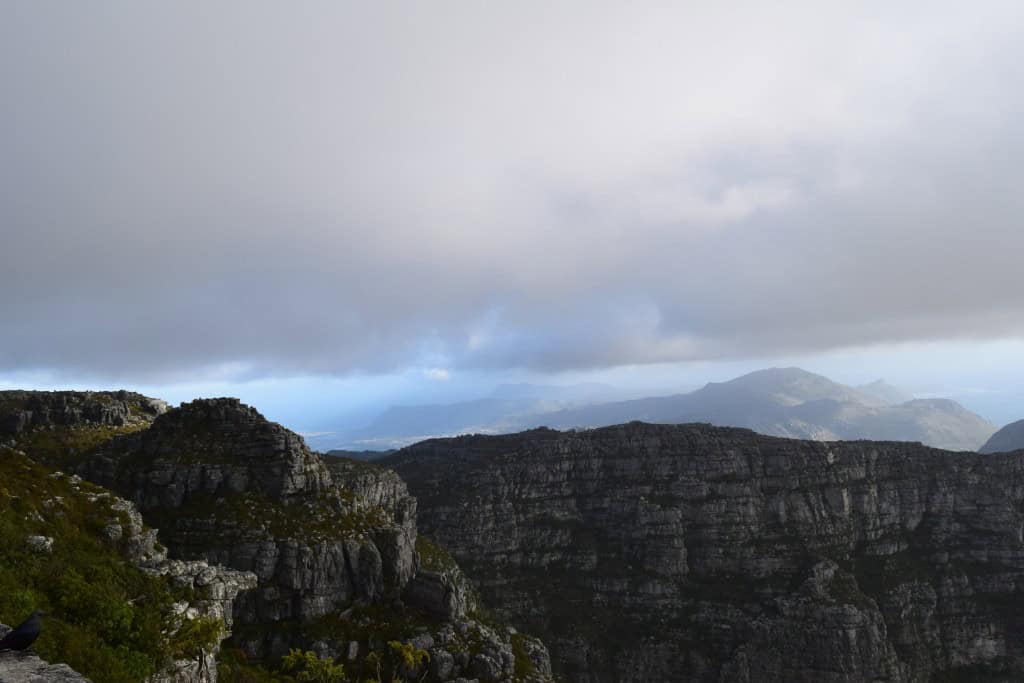
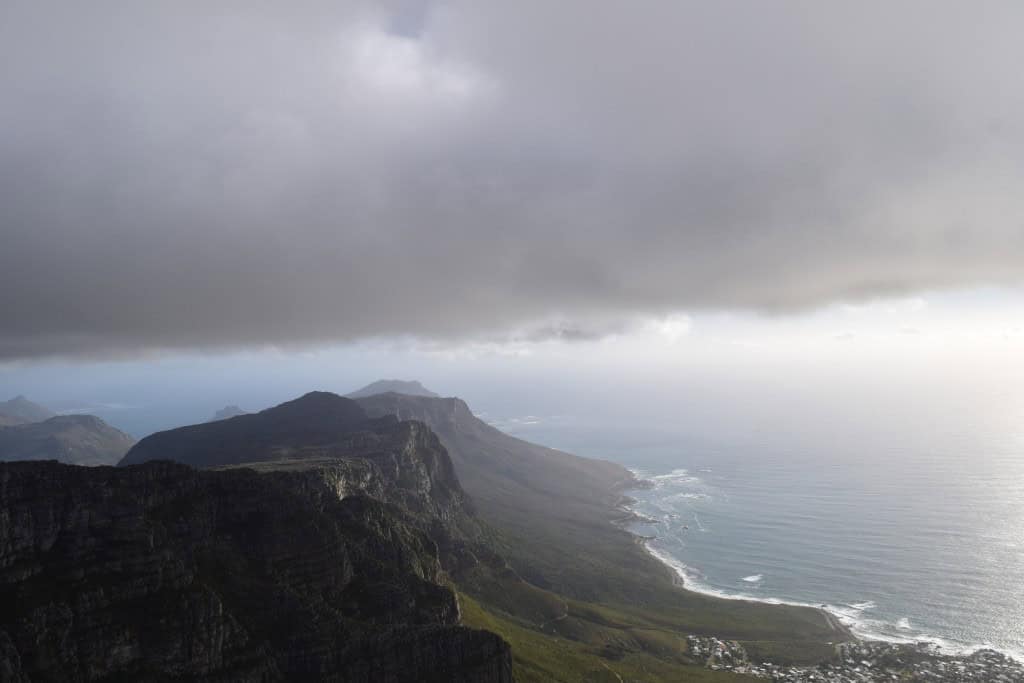
The main attraction of Table Mountain is the experience of being on its summit. The flat plateau at the top is over 1,000 meters above sea level. From here, you have breathtaking 360-degree panoramic views of the city of Cape Town, the bustling harbor in Table Bay, and the historic site of Robben Island. You can also see the entire Cape Peninsula stretching out to the south and the vast expanse of the Atlantic Ocean. The views are particularly spectacular at sunrise and sunset.
Table Mountain Aerial Cableway
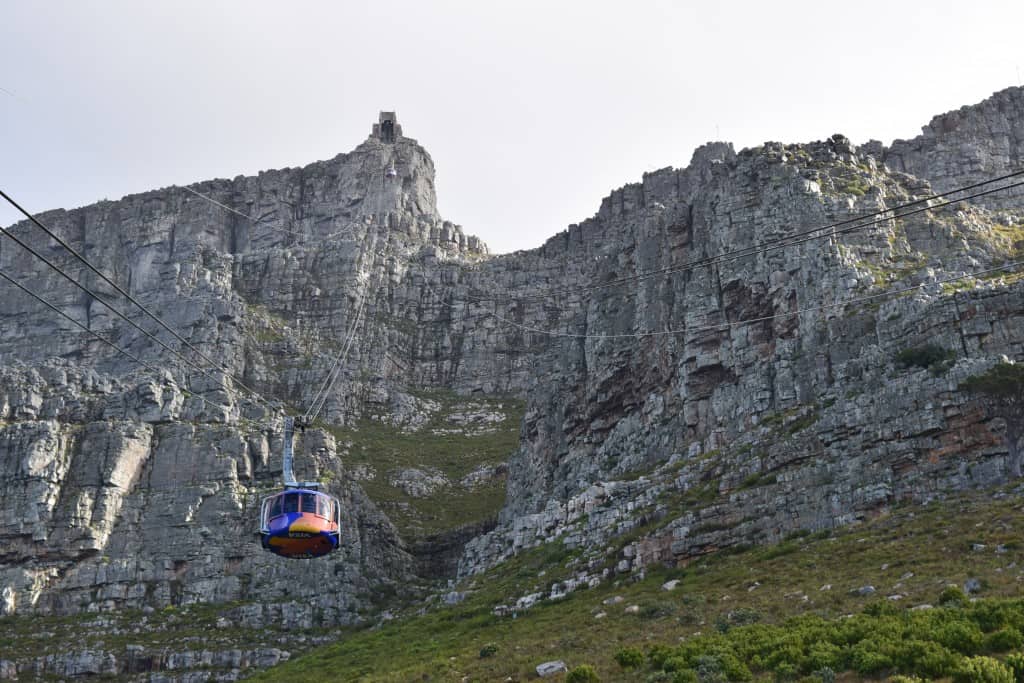
The Table Mountain Aerial Cableway is a famous attraction in itself. The cableway offers a thrilling five-minute ride from the lower station on Tafelberg Road to the summit of the mountain. The modern cable cars rotate 360 degrees during the ascent and descent, providing passengers with incredible panoramic views. The cableway was first opened in 1929 and has been upgraded several times since then. It is the most popular and easiest way to reach the top of the mountain.
Maclear’s Beacon
Maclear’s Beacon is a stone cairn that marks the highest point on Table Mountain. It is located on the northeastern edge of the plateau, and it stands at an altitude of 1,086 meters. The beacon was built in 1865 by the famous astronomer Sir Thomas Maclear for use in a trigonometrical survey to measure the curvature of the earth. A pleasant and relatively flat walking trail, about 5.5 kilometers long, connects the upper cableway station with Maclear’s Beacon.
Flora and Fauna (Fynbos)
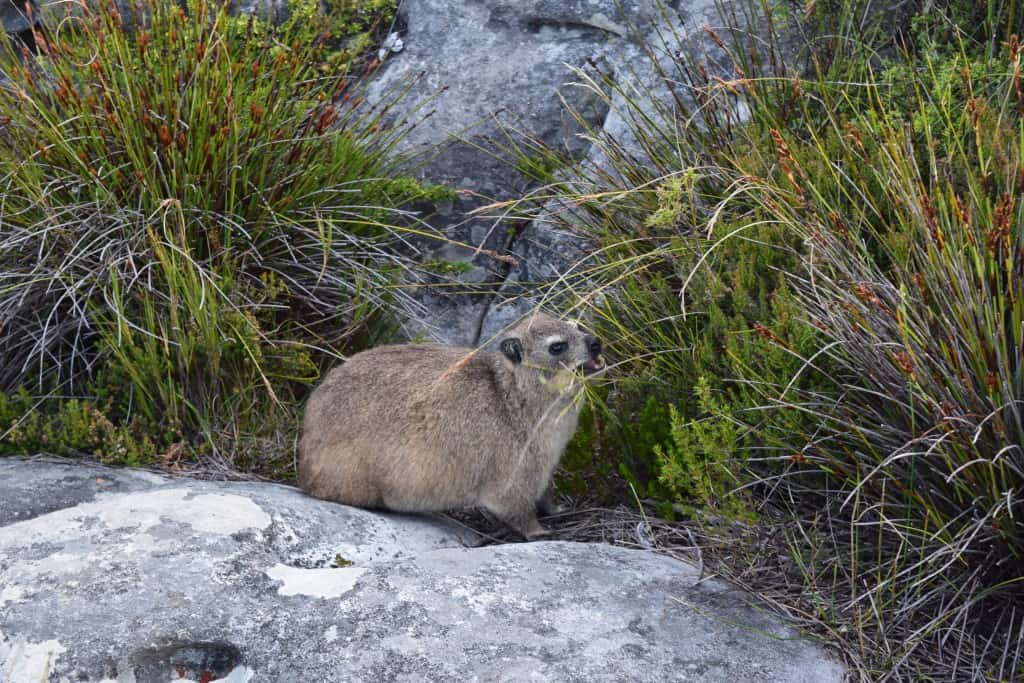
Table Mountain is located in the heart of the Cape Floral Kingdom, a UNESCO World Heritage Site. The mountain is home to an incredible diversity of plant life, with over 2,200 different species found on its slopes. This is more than the total number of plant species found in the entire United Kingdom. The main vegetation type is fynbos, a unique and beautiful type of shrubland. The mountain is also home to a variety of animals, including the rock hyrax, also known as the “dassie,” which is a small, furry mammal that is often seen sunbathing on the rocks.
Getting Around at Table Mountain?
The summit of Table Mountain is a large, flat plateau that is explored entirely on foot. A network of well-maintained and mostly flat walking paths connects the upper cableway station with the various viewpoints. The main way for most visitors to get to the top of the mountain is by using the Table Mountain Aerial Cableway. For the more adventurous, a variety of hiking trails also lead to the summit.
Exploring on Foot
Once you are at the top of the mountain, walking is the only way to get around. There are three easy, signposted walking trails that start from the upper cableway station. These are the Dassie Walk, the Agama Walk, and the Klipspringer Walk. These short, circular routes take you to the best viewpoints on the western part of the plateau. A longer and very popular walk is the trail to Maclear’s Beacon, the highest point on the mountain.
The Aerial Cableway
The Table Mountain Aerial Cableway is the main mode of transport for getting to the summit of the mountain. The cableway runs continuously throughout the day, weather permitting. The ride takes only about five minutes. It is very important to check the weather and the operational status of the cableway before you go, as it closes during periods of strong wind. It is also highly recommended to book your tickets online in advance to avoid the very long queues that can form at the ticket office.

How to Get to Table Mountain?
Table Mountain is located in Cape Town, South Africa, and its lower cableway station is situated on Tafelberg Road, on the slopes of the mountain just above the city center. The main gateway for international visitors is Cape Town International Airport (CPT). From the city center and the main tourist areas, the base of the mountain can be easily reached by car, by the MyCiTi public bus system, or by the popular City Sightseeing hop-on-hop-off bus.
Arriving by Air
The main airport for the region is Cape Town International Airport (CPT). It is the second-busiest airport in South Africa. From the airport, the easiest way to get to the base of Table Mountain is to rent a car or to take a taxi or a ride-sharing service. The drive from the airport to the lower cableway station takes about 20-30 minutes, depending on traffic.
Driving to the Cableway
Driving to the lower cableway station on Tafelberg Road is straightforward. From the city center, you follow the signs for Table Mountain. The road winds its way up the slopes of the mountain to the lower cable station. However, parking at the lower cable station is very limited and can be extremely difficult to find, especially during the peak tourist season. It is often more practical to park in the city and to use public transport or a taxi to get to the cableway.
Connecting by Bus
The MyCiTi public bus system provides a convenient and affordable way to reach the Table Mountain Aerial Cableway. Route 107 runs from the city center to the top of Kloof Nek. From the Kloof Nek bus stop, a free MyCiTi shuttle bus, route 110, runs up Tafelberg Road directly to the lower cableway station. The popular red City Sightseeing hop-on-hop-off bus also has a dedicated stop at the lower cableway station.
Driving Distances
The driving distance from 20 regional cities, according to Google Maps:
- Stellenbosch, South Africa – 50 kilometers (0 h 45 min)
- Paarl, South Africa – 60 kilometers (0 h 50 min)
- Hermanus, South Africa – 120 kilometers (1 h 40 min)
- Swellendam, South Africa – 220 kilometers (2 h 20 min)
- Cape Agulhas, South Africa – 225 kilometers (2 h 40 min)
- Mossel Bay, South Africa – 390 kilometers (4 h 00 min)
- Oudtshoorn, South Africa – 420 kilometers (4 h 30 min)
- George, South Africa – 430 kilometers (4 h 30 min)
- Beaufort West, South Africa – 460 kilometers (4 h 45 min)
- Plettenberg Bay, South Africa – 520 kilometers (5 h 20 min)
- Springbok, South Africa – 560 kilometers (5 h 30 min)
- Graaff-Reinet, South Africa – 670 kilometers (6 h 45 min)
- Gqeberha, South Africa – 750 kilometers (7 h 30 min)
- Upington, South Africa – 800 kilometers (8 h 00 min)
- Kimberley, South Africa – 950 kilometers (9 h 30 min)
- Bloemfontein, South Africa – 1000 kilometers (10 h 00 min)
- East London, South Africa – 1050 kilometers (10 h 30 min)
- Johannesburg, South Africa – 1400 kilometers (13 h 30 min)
- Pretoria, South Africa – 1450 kilometers (14 h 00 min)
- Durban, South Africa – 1650 kilometers (16 h 00 min)
Looking to Explore more of South Africa and Africa?