
Exploring America

Exploring America
The Americas represent a landmass of immense geographical scale, stretching from the Arctic Circle to the tip of Tierra del Fuego. A journey through these continents offers an experience of a vast spectrum of environments and landscapes. The region contains everything from towering mountain ranges and dense rainforests to arid deserts. It also features sprawling coastlines on both the Atlantic and Pacific oceans, contributing to its incredible diversity.
The cultural tapestry of the Americas is as varied as its geography. It is woven from the deep historical foundations of ancient indigenous civilizations, whose legacies are still visible in numerous archaeological sites. This pre-existing world was profoundly altered by centuries of European colonization, which introduced new languages and social structures. Subsequent waves of migration from across the globe have further enriched the cultural landscape. This has created a complex and dynamic “New World” identity with a mix of languages, including English, Spanish, and Portuguese.
For the modern traveler, this history has created a continent of endless possibilities and striking contrasts. The Americas contain some of the world’s largest megacities, such as New York, Mexico City, and São Paulo. These are global hubs of finance, art, and culture. These dense urban centers stand in sharp contrast to vast areas of wilderness, including the Amazon Rainforest, the Patagonian plains, and the Rocky Mountains.
Exploring America’s Diverse Regions
The vastness of the Americas can be best understood by dividing the landmass into distinct geographical and cultural regions. While borders are fluid and cultures often overlap, this regional approach provides a framework for understanding the different experiences a traveler might encounter. Each region presents its own unique character, shaped by its own history and geography. From the developed nations of the north to the tropical environments of the center, the continents provide a comprehensive journey.
North America: The United States and Canada
The northern part of the Americas is dominated by the United States and Canada. These two nations share many characteristics, including immense geographical size and a high level of economic development. The region contains an incredible diversity of landscapes. These range from the historic East Coast and the Appalachian Mountains to the agricultural Great Plains. Further west, the Rocky Mountains offer high-altitude wilderness, while the Pacific Coast is known for its major cities. The distinct cultures of the American South and the French-speaking province of Quebec also contribute to the region’s character.
Mexico and Central America
Serving as a land bridge between North and South America, the region of Mexico and Central America is defined by its rich pre-Columbian history. It is the heartland of the ancient Maya and Aztec civilizations, and numerous archaeological sites are major attractions. The geography is characterized by a spine of volcanic mountain ranges running through its center. This is flanked by coastal plains on the Pacific Ocean and the Caribbean Sea. This region, which includes countries like Guatemala, Belize, and Costa Rica, is home to dense rainforests and a strong Spanish colonial heritage.
The Caribbean
The Caribbean is an archipelago of thousands of islands that arcs from the coast of Florida to the northern coast of South America. The region is known for its tropical climate and its complex cultural history. This history is a blend of Indigenous, African, Spanish, French, Dutch, and English influences. The geography of the islands varies greatly, from the flat, coral-based islands like Barbados to the large, mountainous islands of Cuba and Jamaica. The region’s beaches and coral reefs make it a major center for international tourism.
The Andean West
The western edge of South America is defined by the immense spine of the Andes Mountains. This region, which includes countries like Peru, Bolivia, and Ecuador, was the heartland of the ancient Inca Empire. The legacy of the Inca is still present in the local culture and at archaeological sites. The geography here is one of dramatic contrasts. It features high-altitude plateaus, deep river canyons, and the arid Atacama Desert along the Pacific coast. The ruins of Machu Picchu in Peru are a key landmark of this region.
The Amazon Basin and Brazil
The central and northern part of South America is dominated by the Amazon Basin. This area contains the world’s largest tropical rainforest and the Amazon River system. The region is known for its immense biodiversity. The dominant country here is Brazil, the largest nation on the continent, which has a distinct Portuguese-speaking culture. Brazil’s geography includes not only a large portion of the Amazon Rainforest but also the vast Pantanal wetlands and a long Atlantic coastline with major cities like Rio de Janeiro and São Paulo.
The Southern Cone
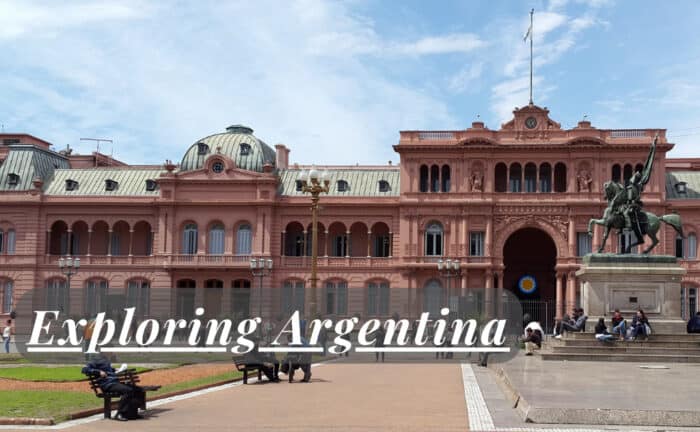
The southernmost part of South America is known as the Southern Cone. This region primarily includes Argentina, Chile, and Uruguay and is characterized by a more temperate climate. Its geography includes the vast, fertile grasslands of the Pampas in Argentina. It also features the wine-producing regions of Chile and Argentina and the glacier-carved landscapes of Patagonia. The Southern Cone is known for its strong European cultural influence, particularly from Spain and Italy, which is reflected in its major cities like Buenos Aires and Santiago.
Join us in Exploring North America!


Join us in Exploring South America!

Exploring the World – All the Places
Join us in exploring more of what the World has to offer.