
Bratislava | Exploring Slovakia
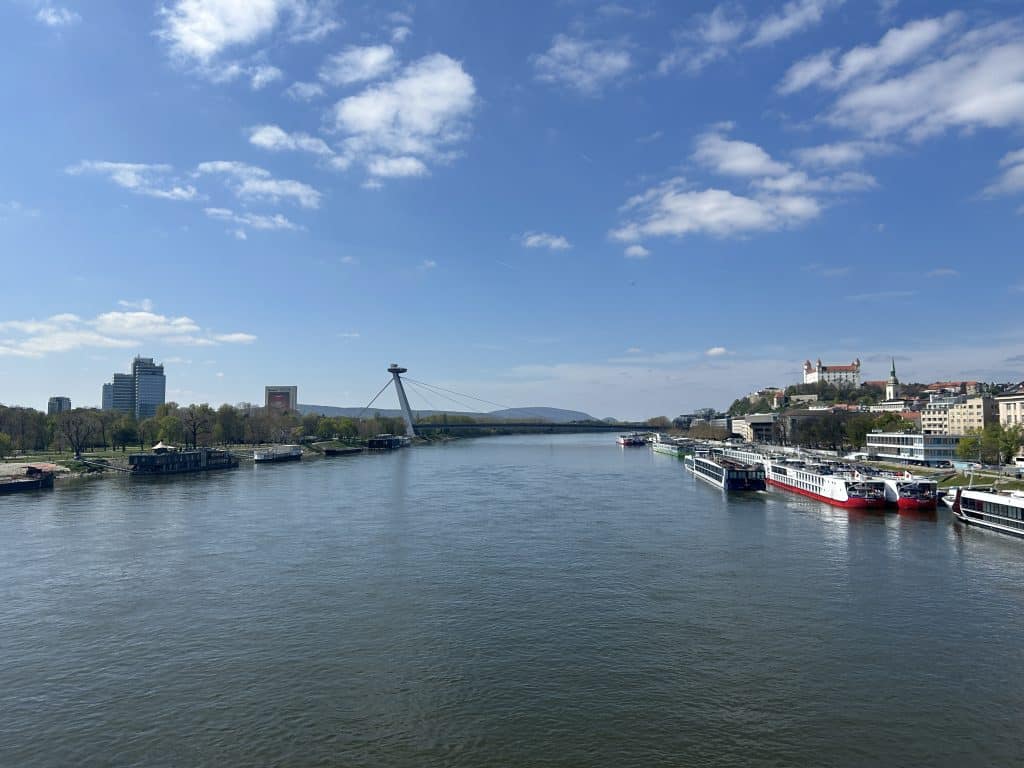
As the capital and largest city of Slovakia, Bratislava is located in the country’s southwestern corner on the banks of the Danube River. Historically known by other names, including Pressburg in German and Pozsony in Hungarian, it reflects a deep multicultural past. With a population of around 480,000 people, it holds the unique distinction of being the only national capital that borders two independent countries: Austria and Hungary.
The city is situated at the foothills of the Little Carpathians mountain range, occupying the fertile Danubian Lowland. This strategic position in the heart of Central Europe is further emphasized by its close proximity to other capitals. Bratislava lies approximately 60 kilometers from Vienna, 200 km from Budapest, and 330 km from Prague, forming a dense cluster of major European cities. The city is also built upon numerous thermal mineral springs, a feature that has been utilized since Roman times.
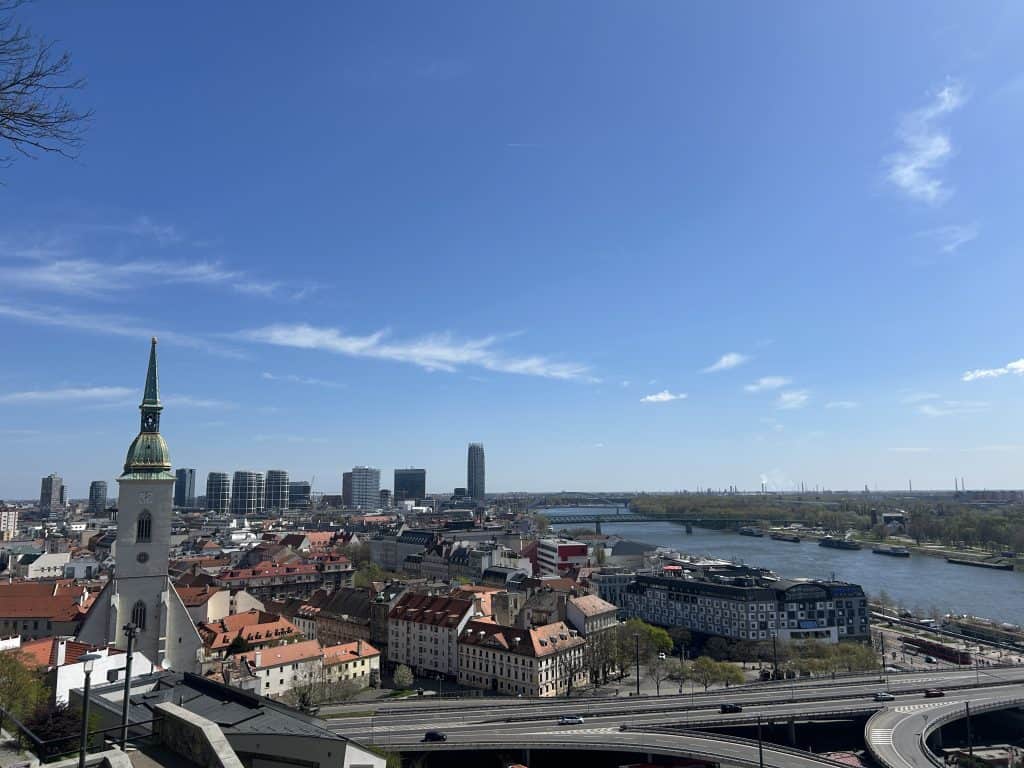
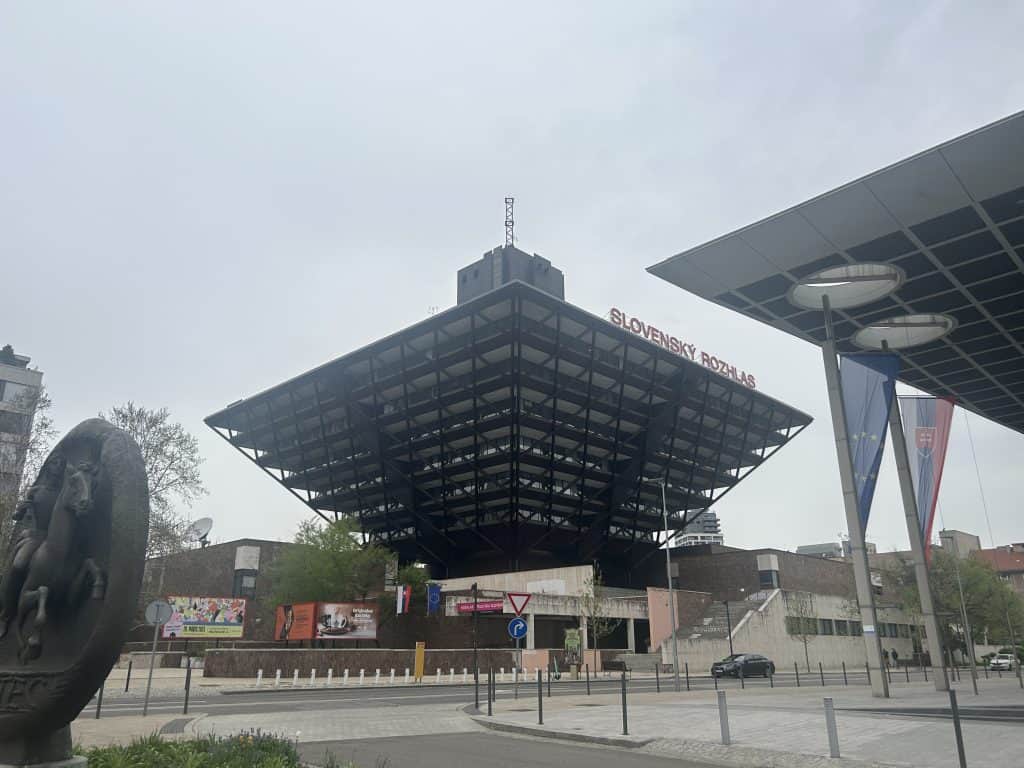
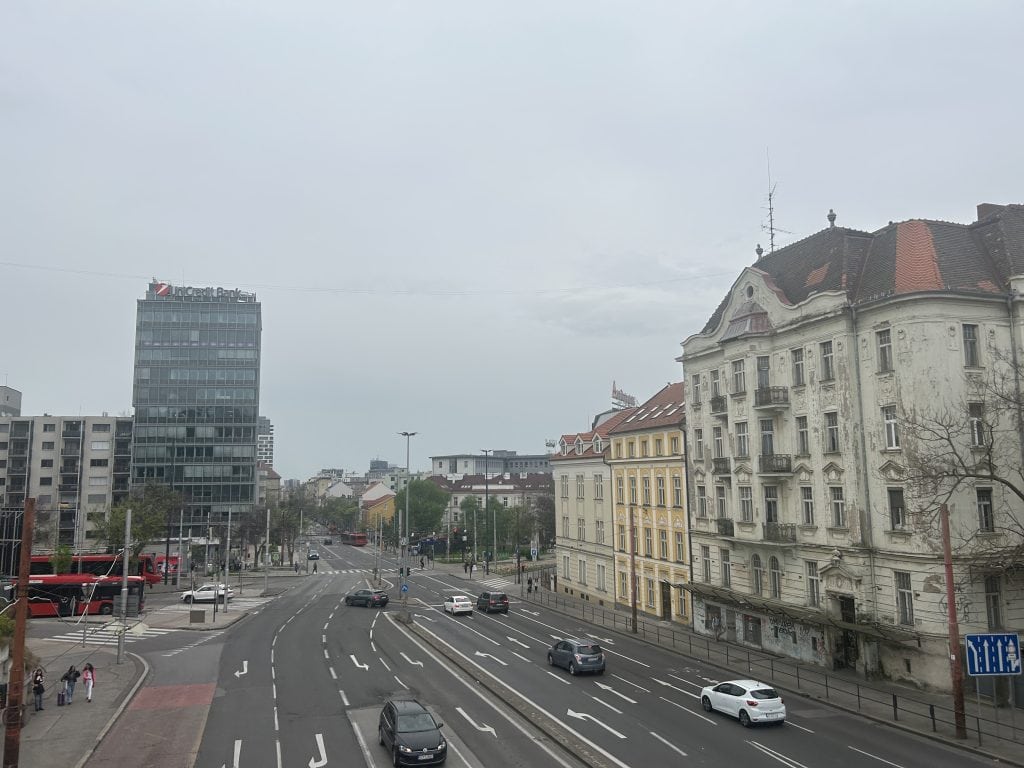
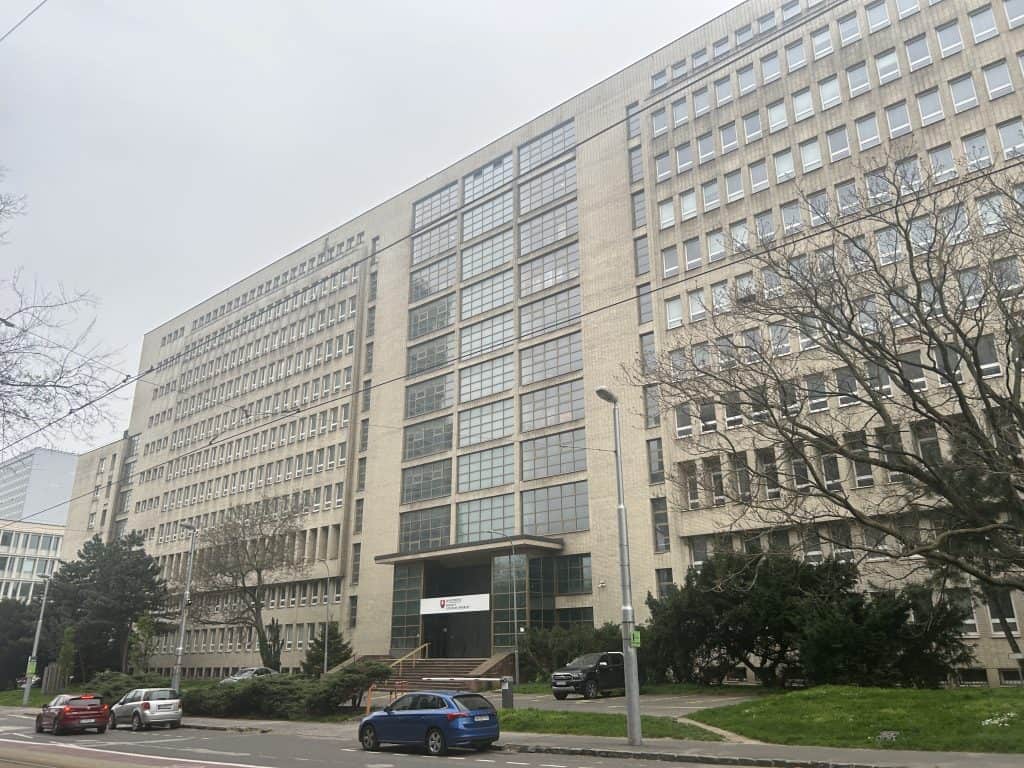
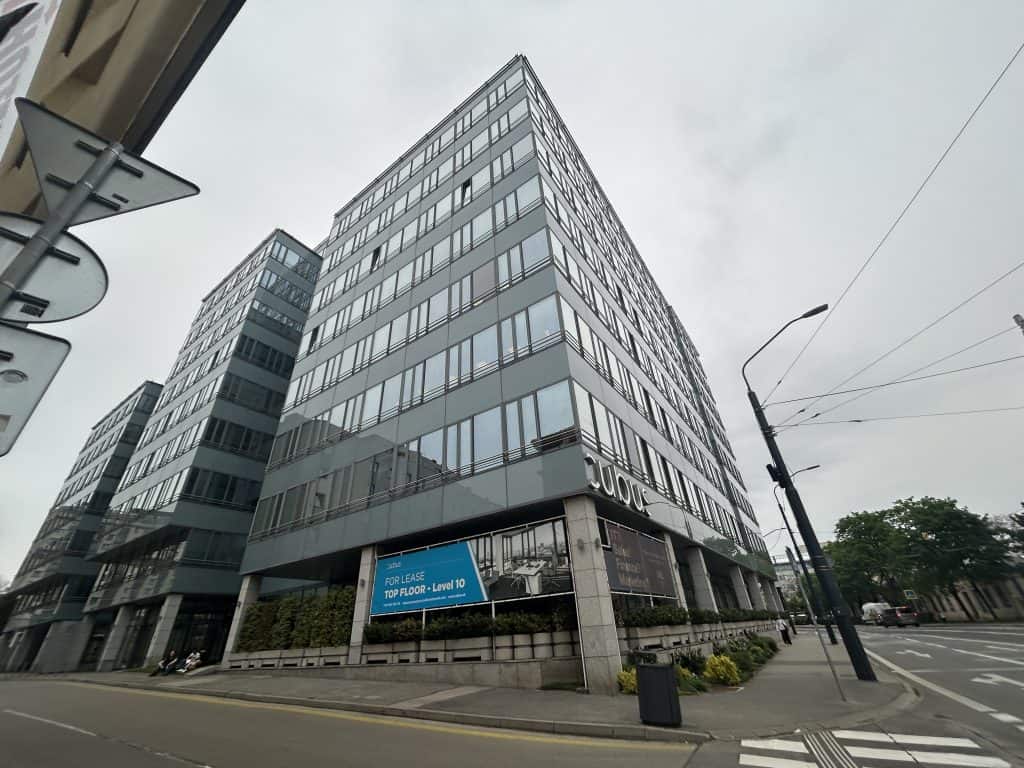
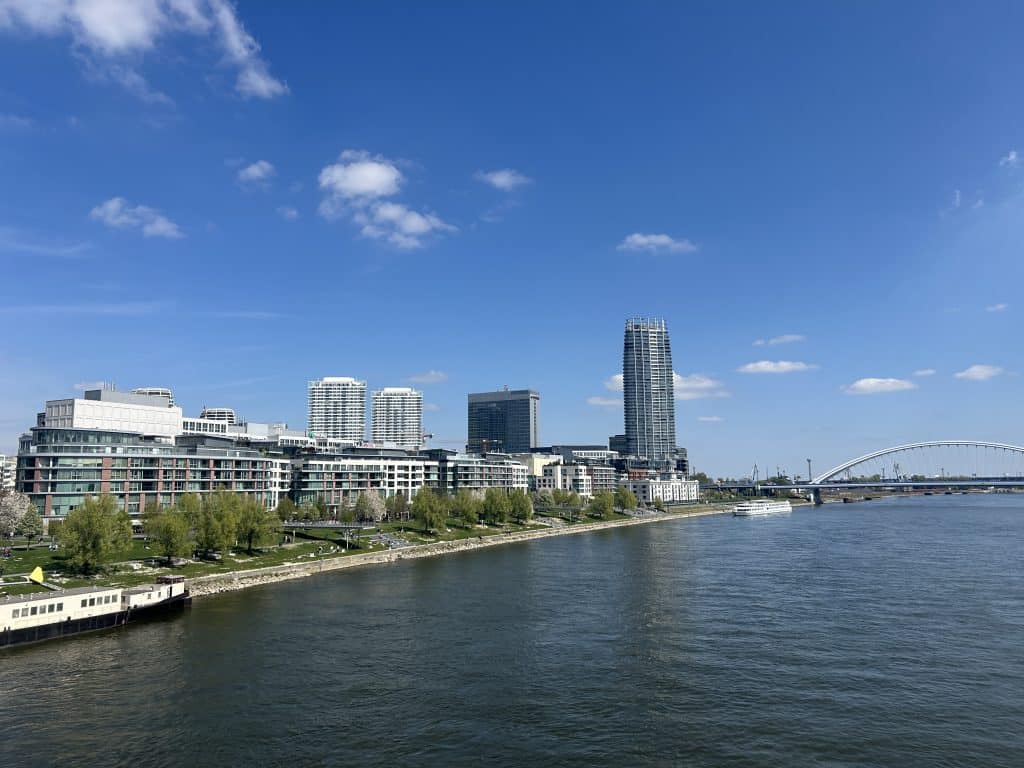
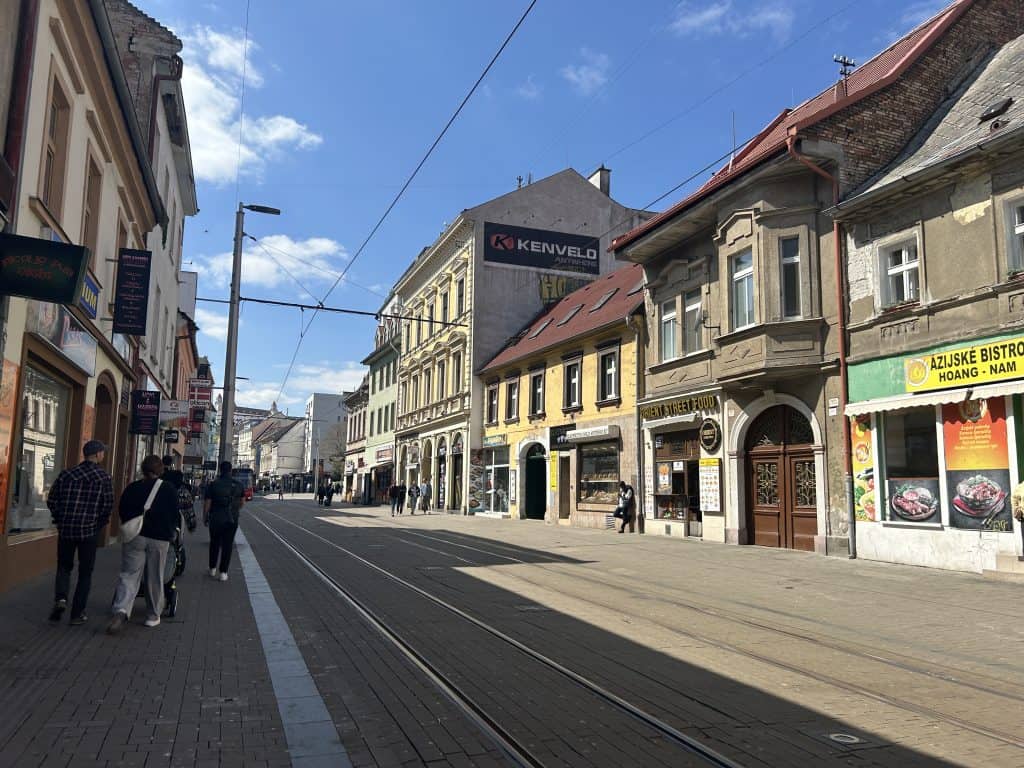
Bratislava’s character is defined by a visible contrast between its preserved historic center and its modern development. The Old Town, or Staré Mesto, contains a high concentration of medieval and Baroque buildings. This historic core exists alongside a modern city with contemporary architecture and the large-scale residential housing of the Petržalka district across the Danube. As a major center for higher education and with a growing economy focused on services and technology, the city combines its imperial history with a forward-driven aspiration.




Good to Know When Visiting Bratislava
To help with planning a visit, here are several practical points covering daily essentials, timing, and efficient exploration of the city. Understanding these details can make a trip to Bratislava more convenient and enjoyable.
The Daily Essentials
The official currency used in Bratislava is the Euro (EUR). While credit and debit cards are widely accepted in most hotels, restaurants, and larger shops, it is advisable to carry some cash for smaller cafes or markets. The official language is Slovak. However, English is widely spoken in tourist areas and by younger generations. Due to the city’s proximity to Austria and Hungary, German and Hungarian are also commonly heard. Tipping is customary for good service, with 10% considered a standard amount in restaurants. The tap water in Bratislava is safe to drink. The electrical system uses Type E sockets with a standard voltage of 230V.
Planning Your Calendar
Bratislava is a year-round destination, though the best time to visit often depends on personal preference. The spring months (April-June) and autumn months (September-October) generally offer mild weather suitable for exploring the city on foot. The summer can be warm and is a popular time for festivals and enjoying the riverside cafes. The winter brings a festive atmosphere with Christmas markets in the Old Town, typically from late November through December. For a first-time visitor, two to three days is generally sufficient time to see the main sights within the city center at a comfortable pace.
A Tourist’s Toolkit for Exploration
The historic city center of Bratislava is compact and almost entirely pedestrianized, making it very easy to explore on foot. Most major sights within the Old Town are within a 10-15 minute walk of each other. For accessing sights further afield like Devin Castle or Slavín, the city’s public transport system is efficient. Visitors planning to use public transport and visit multiple museums should consider purchasing the Bratislava CARD. This card offers free travel on the public transport network, free admission to several city museums, and other discounts. It is always a good idea to check the opening hours for specific museums in advance, as many are closed on Mondays.


A Short History of Bratislava
The history of Bratislava is a record of its development at the heart of Central European events. The city’s identity was shaped by its role as a border settlement, a royal coronation capital, and a multicultural center of the Habsburg Empire, followed by the political shifts of the 20th century. Its story is one of changing names, shifting borders, and enduring importance. It has grown from a Roman frontier post to a major industrial center during the communist era, and finally to the modern capital of an independent Slovakia.
From Ancient Settlement to Coronation City
The story of Bratislava begins with early settlements by the Celts and later the Romans, who used the Danube as a frontier for their empire. The Slavs arrived in the 6th century, and the settlement was eventually incorporated into the Kingdom of Hungary. Devín Castle, now on the city’s outskirts, was a key fortress for the preceding Great Moravian Empire. Under its German and Hungarian names, it grew into a key administrative and economic city. Its most significant period began in 1536 when it became the capital of the Kingdom of Hungary. For nearly 250 years, St. Martin’s Cathedral was the site where Hungarian kings and queens were crowned.
The Habsburg Golden Age
The 18th century, particularly under the rule of Queen Maria Theresa, was a period of significant development. After she was crowned in St. Martin’s Cathedral in 1741, she ordered the renovation of Bratislava Castle into a grand Rococo residence. During her reign, the city’s defensive walls were removed, allowing for urban expansion with the construction of new Baroque palaces and public buildings. Bratislava became a hub of culture, science, and social life, a multicultural city where Slovak, German, and Hungarian communities coexisted. This period cemented its status as an important center of the Habsburg Empire.
The Turbulent 20th Century and Independence
The 20th century brought dramatic changes to the city. After World War I, it was officially named Bratislava and became part of the new nation of Czechoslovakia in 1919. The city endured the hardships of World War II and the subsequent four decades of communist rule, when it sat on the edge of the Iron Curtain. The Velvet Revolution in 1989 brought an end to the communist government. On January 1, 1993, following the peaceful dissolution of Czechoslovakia, Bratislava became the capital of an independent Slovakia, and today functions as the country’s modern political and cultural center.




Things to Do and See in Bratislava
Bratislava’s sights are a direct reflection of its long and varied history, with landmarks from the medieval, Baroque, and modern eras. The attractions are spread across several distinct districts, but the historic core contains the highest concentration of sights. The castle sits on a hill just above the Old Town, while across the Danube, the large district of Petržalka is home to specific modern landmarks. Other key attractions, like Devin Castle, are located further afield in the city’s boroughs.
The city’s historical layers are visible everywhere, from the Roman remains to the grand palaces of the Habsburg era. The 20th century also left its mark with monumental structures like the Slavín War Memorial and the UFO Bridge. The proximity of the Danube River and the Little Carpathian mountains provides a natural backdrop to the urban landscape. The city’s museums, galleries, and public squares offer insight into its cultural life. Its main landmarks offer a journey through the different chapters of Central European history.
Bratislava Castle
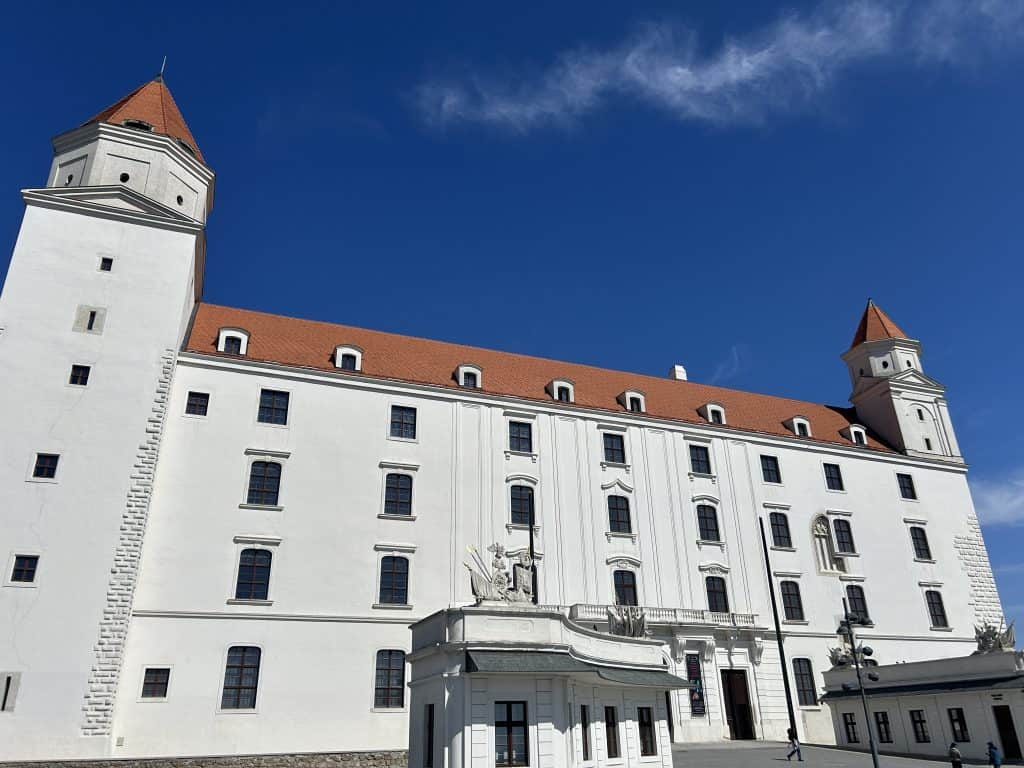
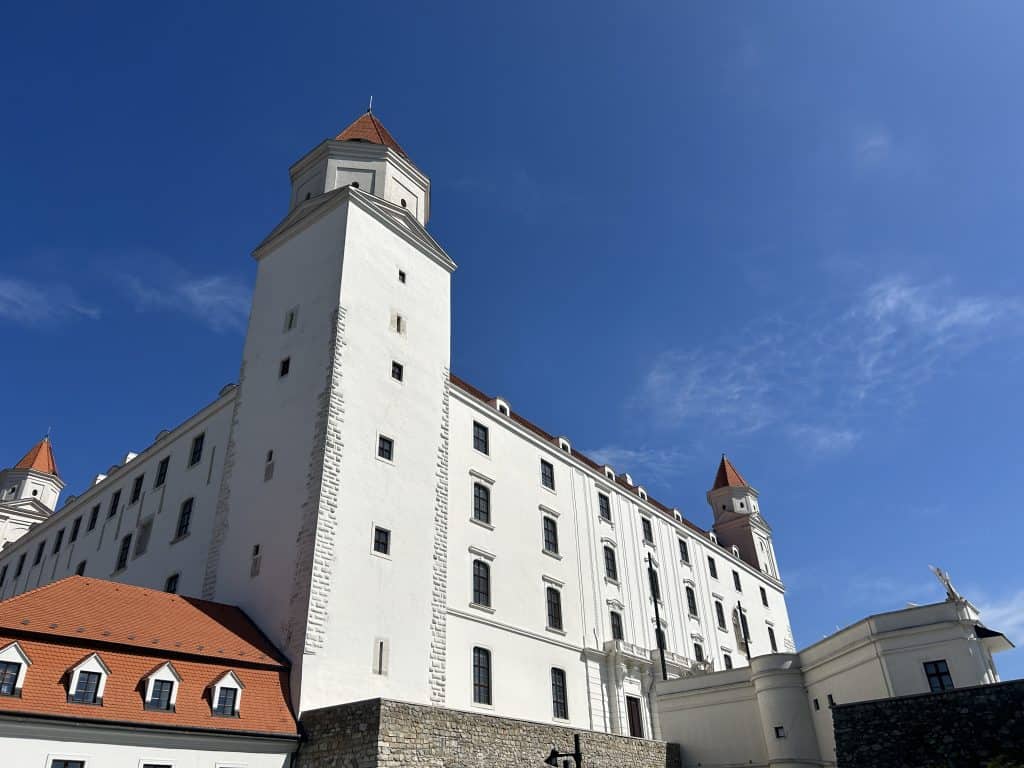
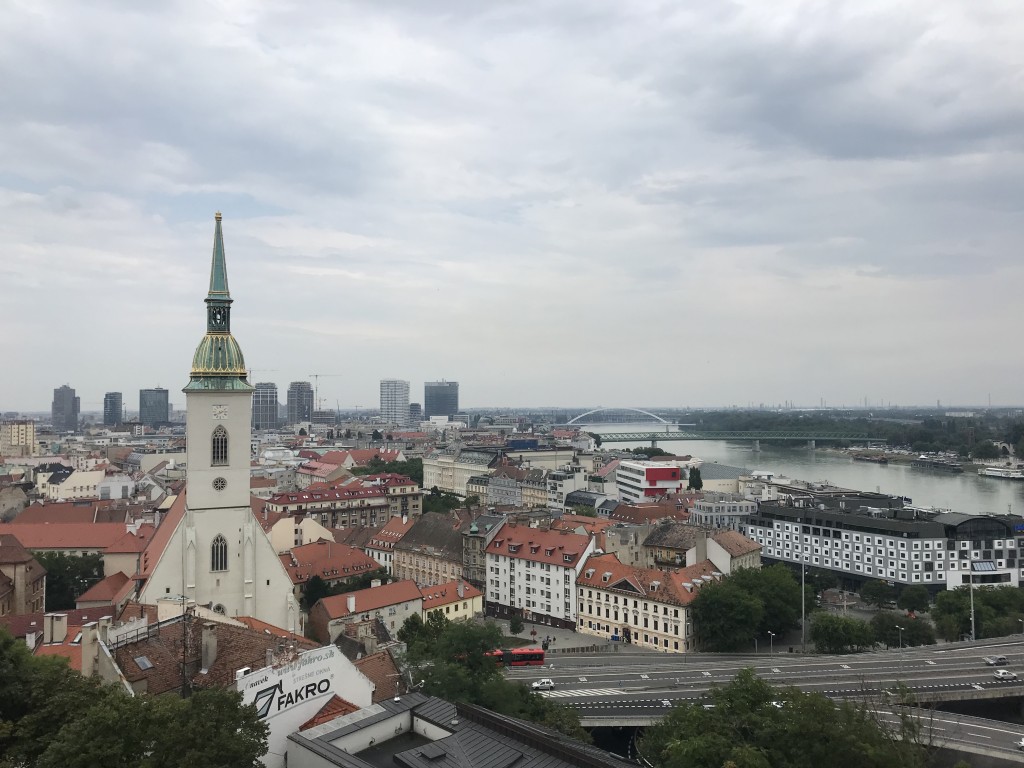
The Bratislava Castle (Bratislavský hrad) is a primary feature of the city’s skyline. It is a large, four-towered rectangular fortress perched on a rocky hill above the Danube River. This strategic site has been inhabited since the Celtic and Roman eras. The current structure was largely developed under the Kingdom of Hungary and was later rebuilt into a Rococo residence by Queen Maria Theresa in the 18th century. After a major fire in 1811, it lay in ruins until it was reconstructed in the mid-20th century. Today, it houses branches of the Slovak National Museum, including historical and archaeological exhibitions, as well as the Treasury. The castle grounds also contain a Baroque garden and offer panoramic views of the city.
Read more here: Bratislava Castle
Devin Castle
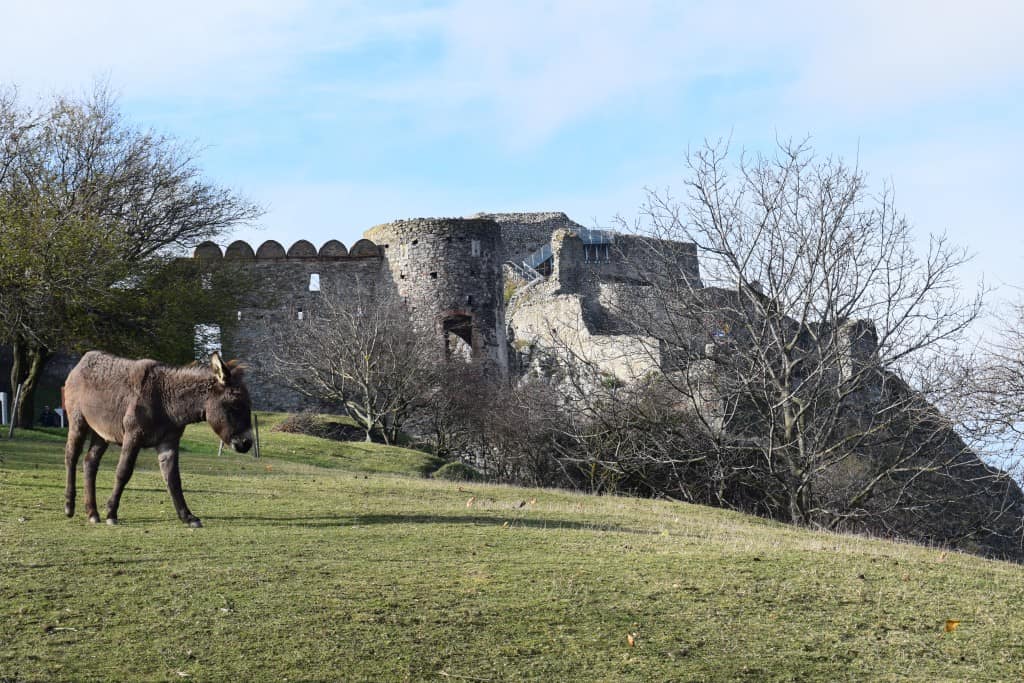
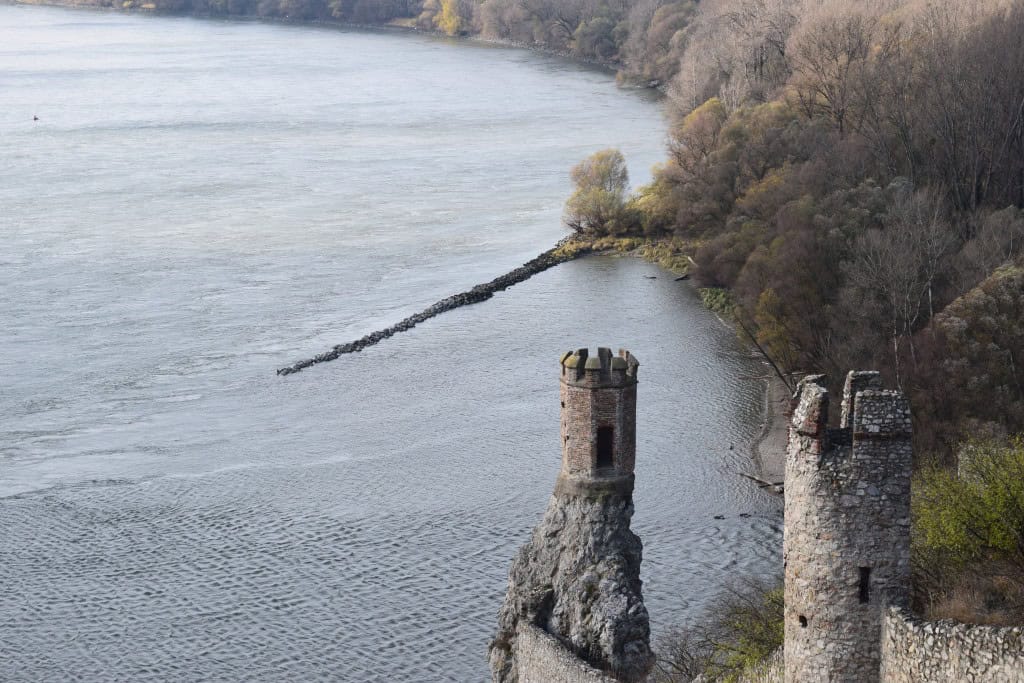
Located where the Morava River meets the Danube, Devin Castle (Hrad Devín) is one of Slovakia’s most important archaeological sites. Now mostly in ruins, this castle has a history dating back to the 5th century BC. It was a key fortress for the Great Moravian Empire and later served as a border castle for the Kingdom of Hungary. A key feature of the ruins is the slender “Maiden Tower,” which is perched on a rock above the confluence of the two rivers. In 1809, Napoleon’s army intentionally destroyed the castle with explosives. Today, its ruins and natural setting make it a popular destination for a day trip from the city, and it is a designated National Cultural Monument.
Read more here: Devín Castle
St. Martin’s Cathedral
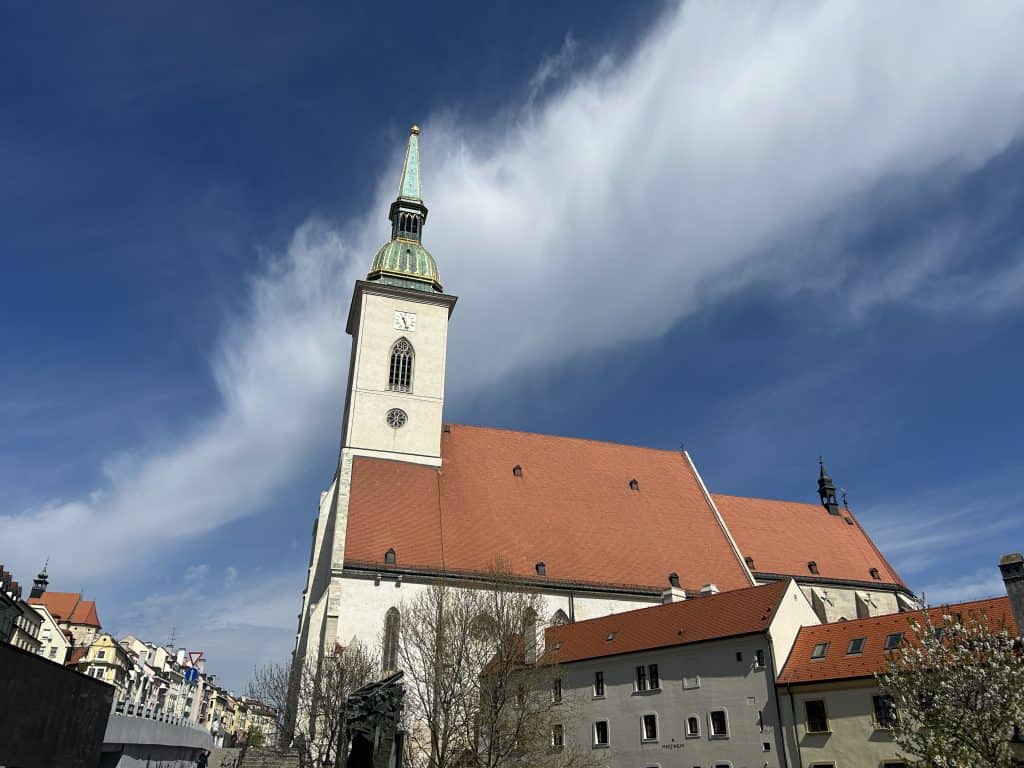
St. Martin’s Cathedral (Katedrála svätého Martina) is the largest and one of the most important churches in Bratislava. For over 250 years, from 1563 to 1830, it was the coronation church for the kings and queens of the Kingdom of Hungary. A total of 11 kings and 8 royal consorts were crowned here, including Maria Theresa. A large, gilded replica of the Crown of St. Stephen, weighing 150 kg, sits atop its 85-meter-high tower to commemorate this history. The Gothic cathedral’s interior contains several chapels and artworks, as well as extensive catacombs. It remains a powerful symbol of the city’s past as a royal capital.
Read more here: St Martin’s Cathedral
Michael’s Gate
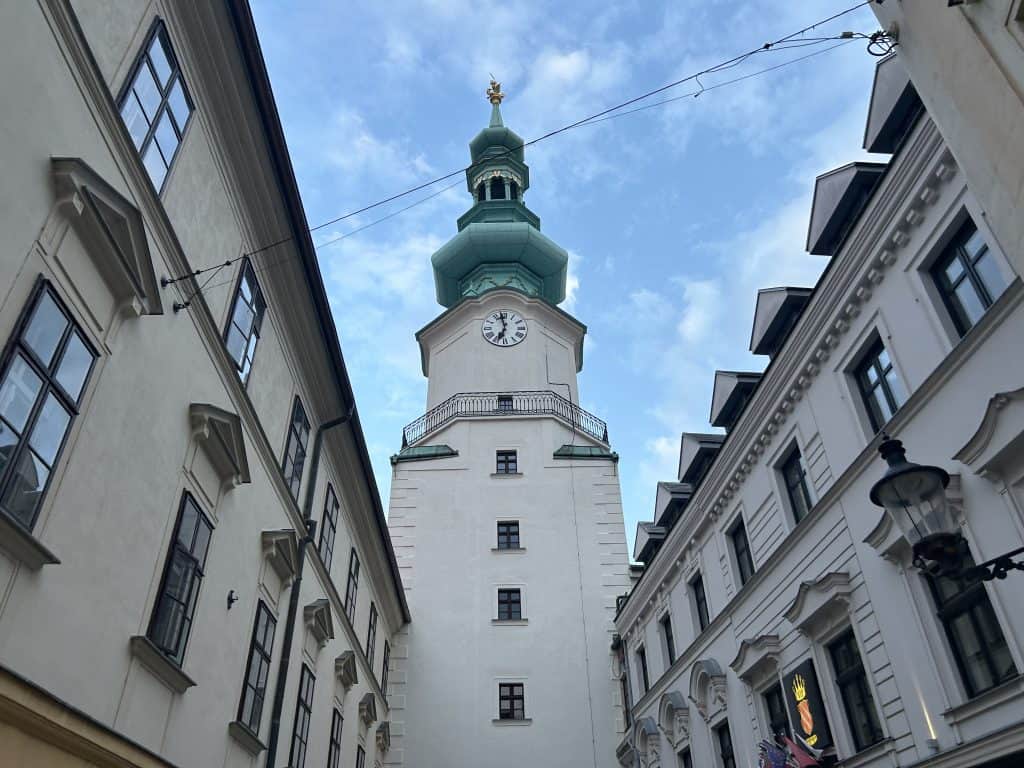
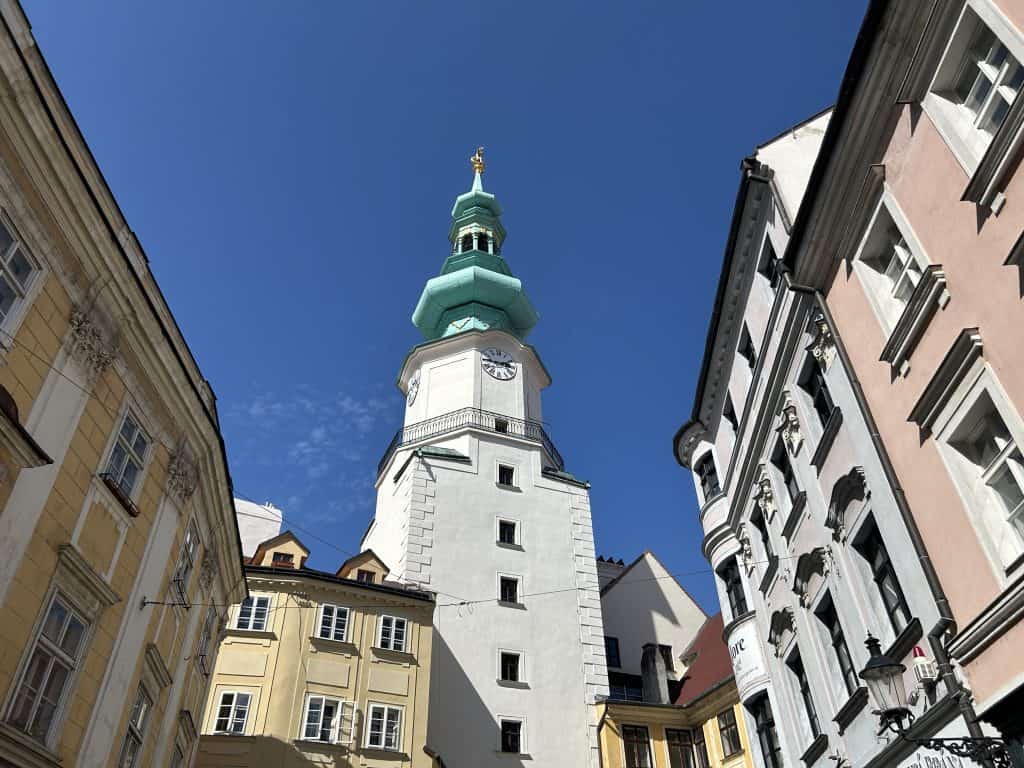
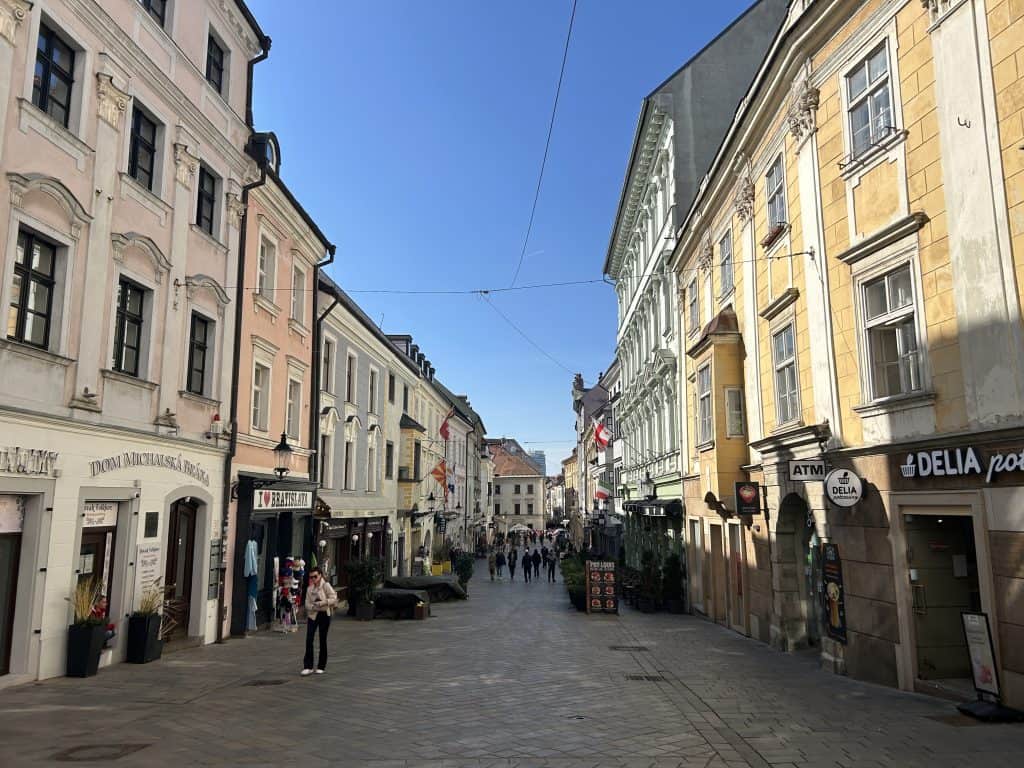
Michael’s Gate (Michalská brána) is the only city gate that has been preserved from the medieval fortifications of Bratislava. The 51-meter-tall tower was given its current Baroque form in the 18th century. It is one of the oldest town buildings. Visitors can climb the seven floors of the tower for a view of the Old Town’s streets. Housed within the tower is a Museum of Arms, a branch of the Bratislava City Museum, which showcases the history of the city’s defenses and fortifications. Below the gate, a “zero-kilometer” plaque is set into the pavement, listing the distances from Bratislava to 29 other world capitals.
Read more here: Michael’s Gate
The Old Town Hall
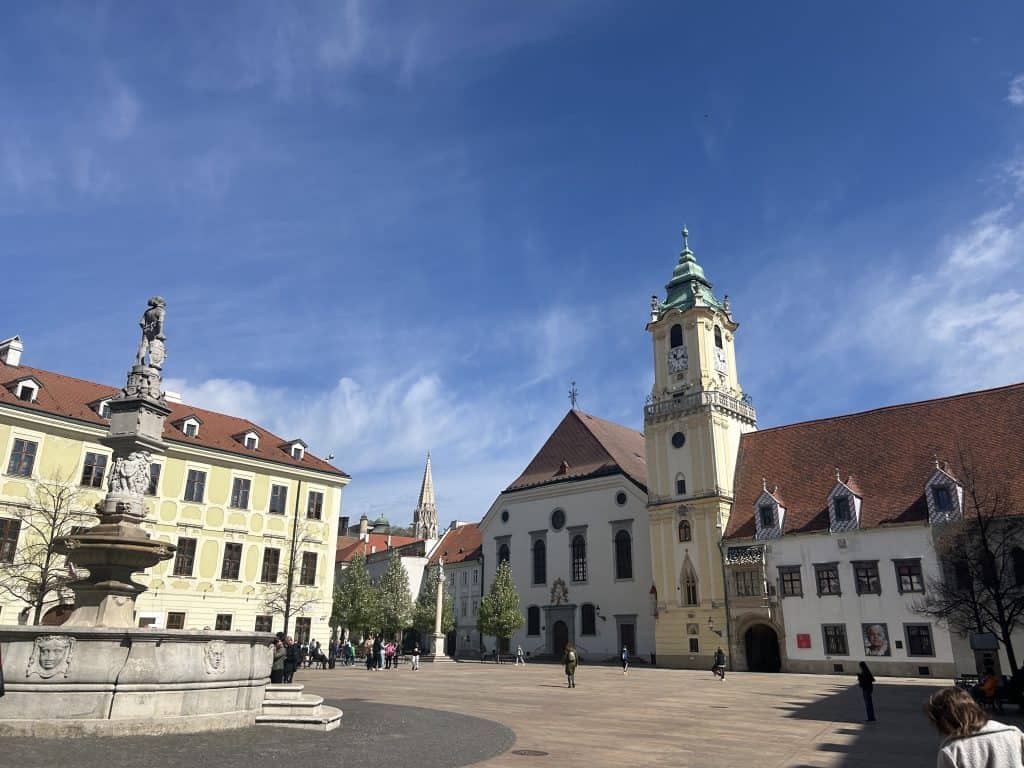
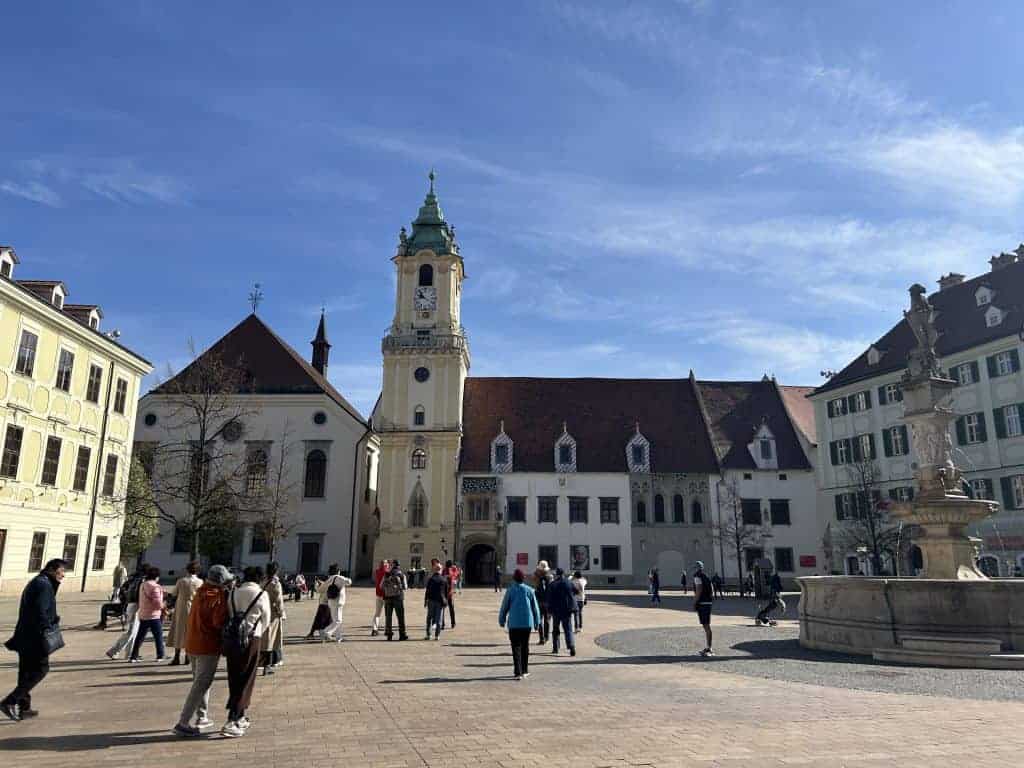
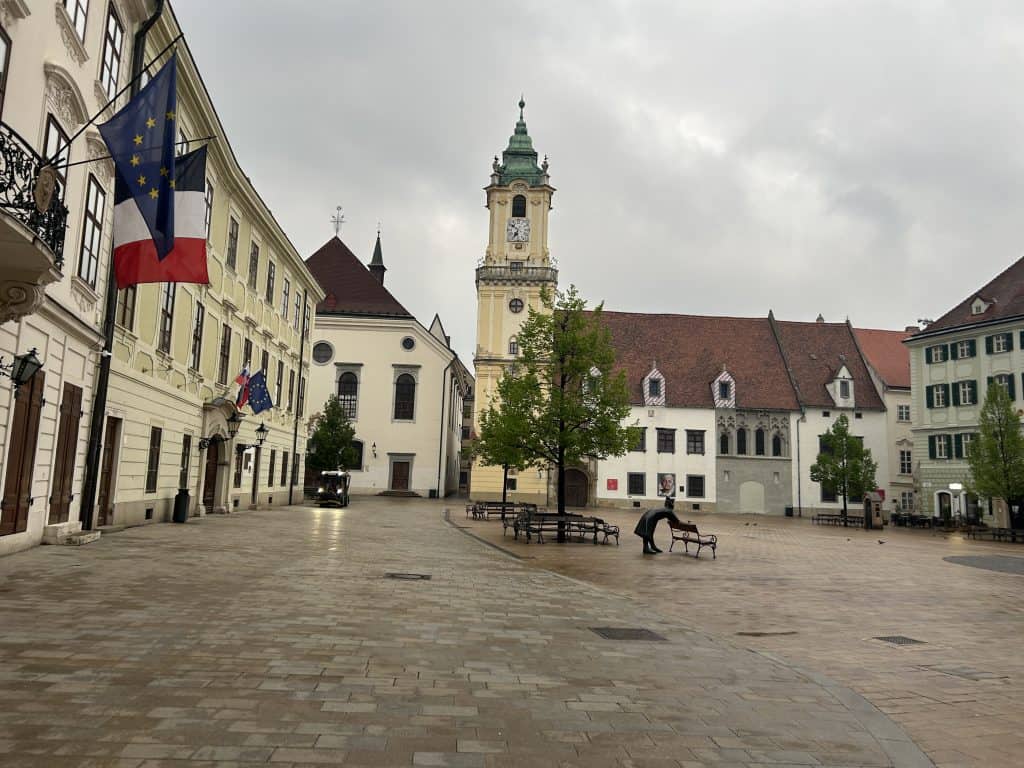
Located in the Main Square, the Old Town Hall (Stará radnica) is a complex of buildings constructed over different centuries, with its clock tower originally being a 13th-century private house and is one of the oldest stone buildings in the city. The complex was used as the seat of the city’s government for centuries, from the 15th century until the late 19th century. Today, it is home to the Bratislava City Museum, the oldest museum in Slovakia, founded in 1868. Inside, visitors can explore exhibitions on the city’s history and climb the tower for a view of the square.
Read more here: Old Town Hall
Primate’s Palace
The Neoclassical Primate’s Palace (Primaciálny palác) is located just off the Main Square in the Old Town. The palace was built in the 1780s for Archbishop József Batthyány. It is most known for its historic Hall of Mirrors. It was in this hall that the Peace of Pressburg was signed in 1805 between France and Austria after Napoleon’s victory at the Battle of Austerlitz. The palace also houses a collection of rare 17th-century English tapestries. These were discovered hidden in a wall during a renovation in the early 20th century. Today, the palace serves as the seat of the Mayor of Bratislava.
Read more here: Primate’s Palace
The Blue Church (Church of St. Elizabeth)
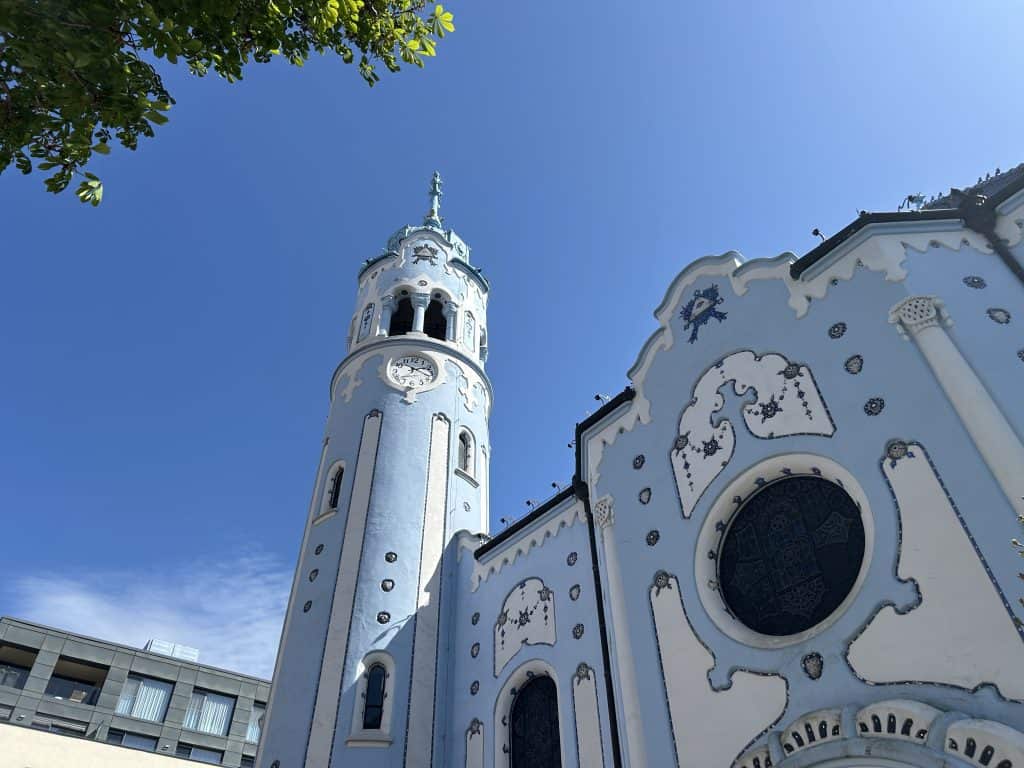
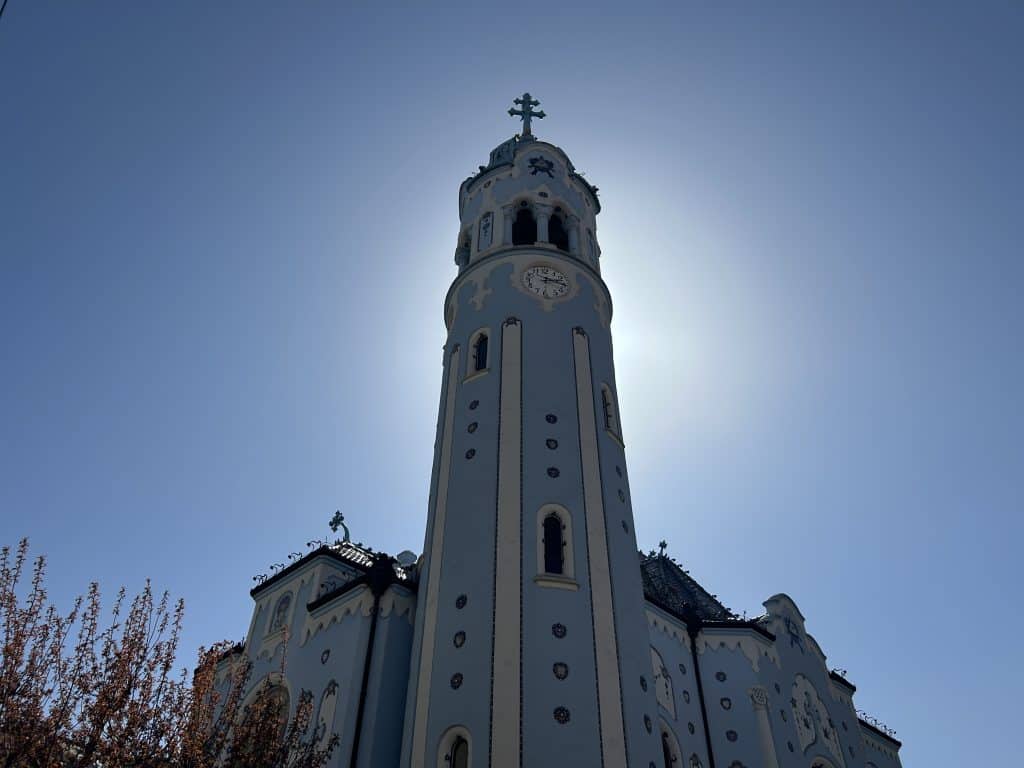
The Church of St. Elizabeth (Kostol svätej Alžbety), universally known as the Blue Church, is a key example of the Hungarian Art Nouveau style. Located just east of the Old Town, the church was designed by the architect Ödön Lechner. It was completed in 1913. The church is known for its blue color, which covers its facade, mosaics, and even the interior benches. The design makes it one of the most photographed buildings in the city. It is an active Catholic church.
Read more here: Little Blue Church
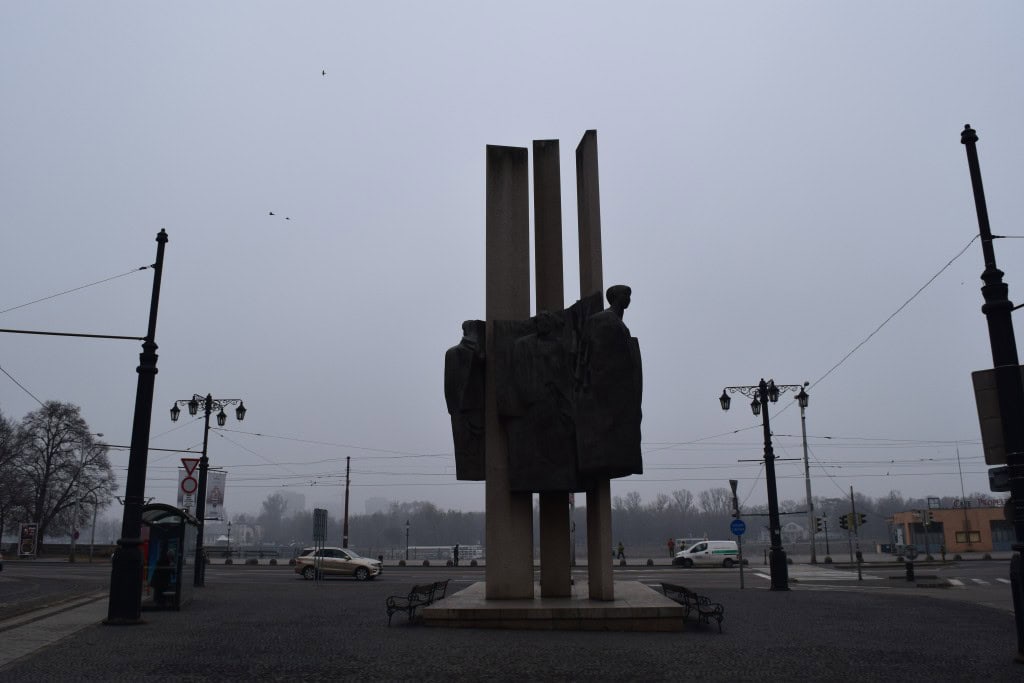
Slavín War Memorial
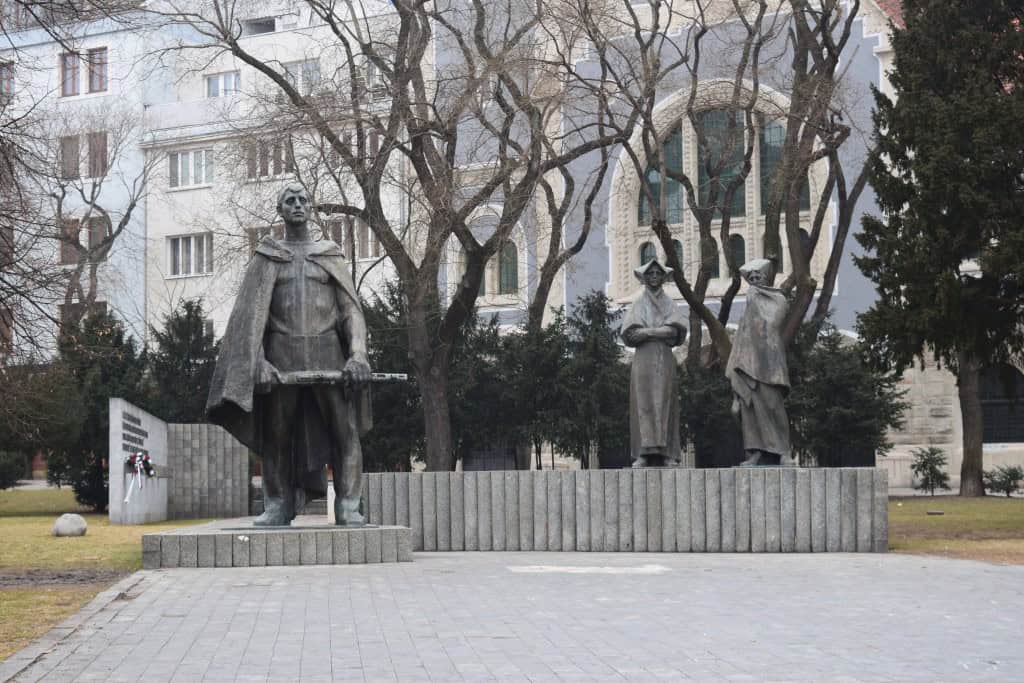
Slavín is a war memorial and military cemetery located on a hill overlooking the city. The site honors the 6,845 Soviet soldiers who died while liberating the city from German forces in April 1945. It was constructed between 1957 and 1960 and declared a National Cultural Monument in 1961. The central monument stands 39 meters tall and is topped by a statue of a Soviet soldier. The park-like setting contains six mass graves and numerous individual graves, offering expansive views of Bratislava.
Read more here: Slavín
The UFO Bridge
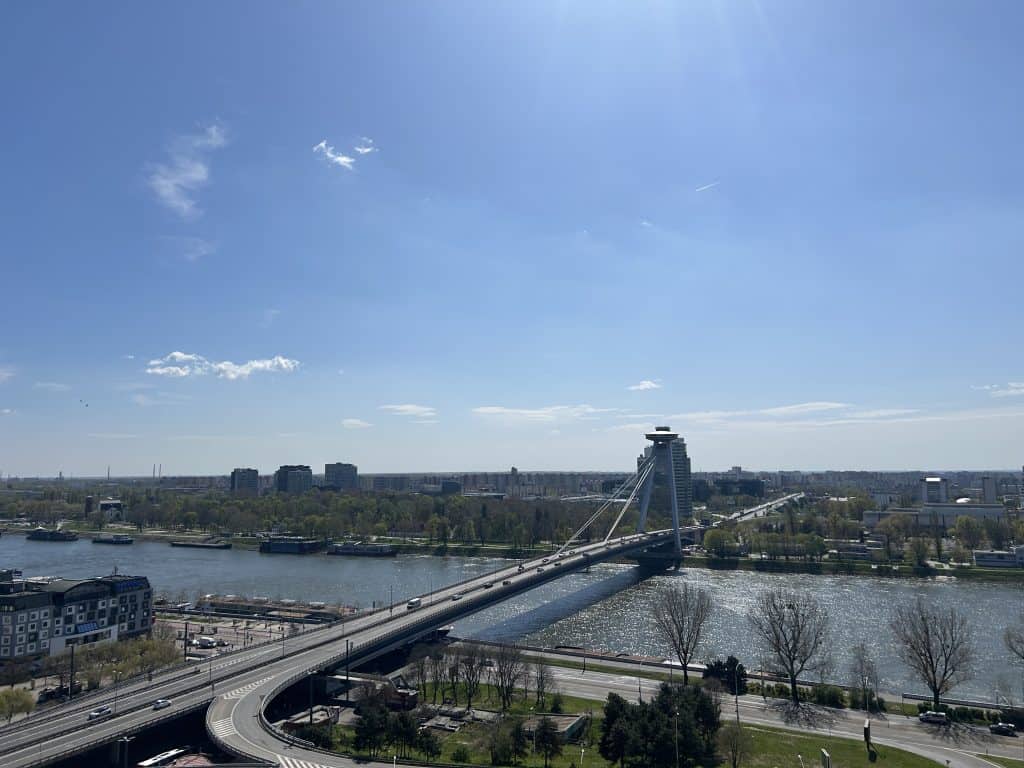
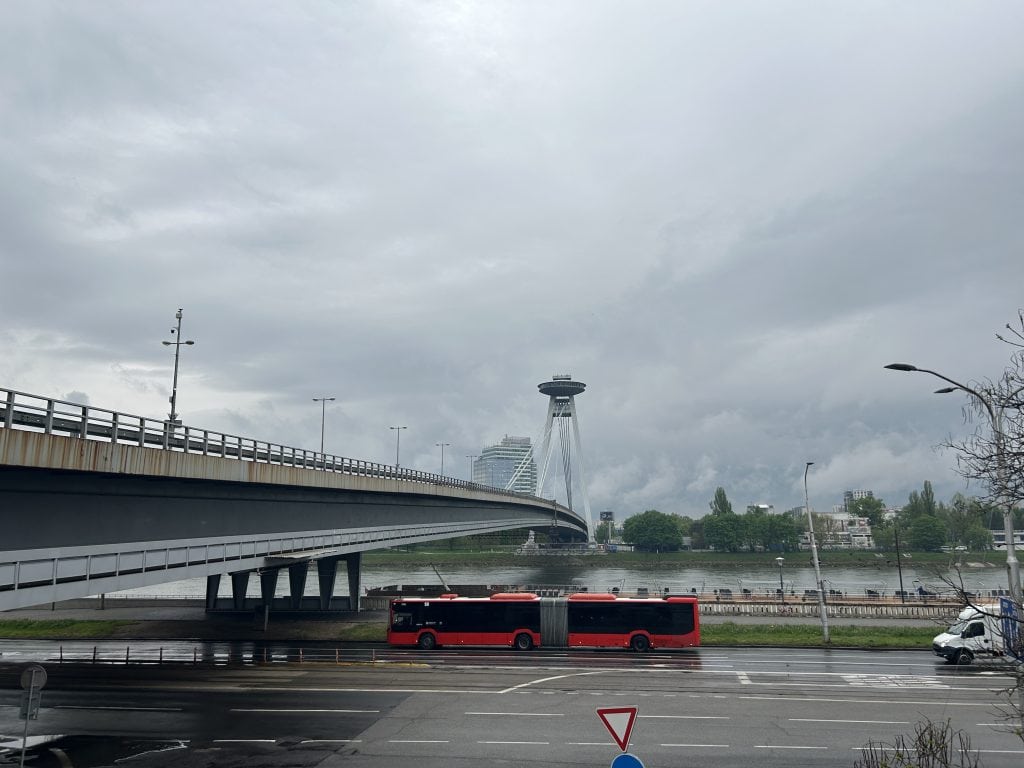
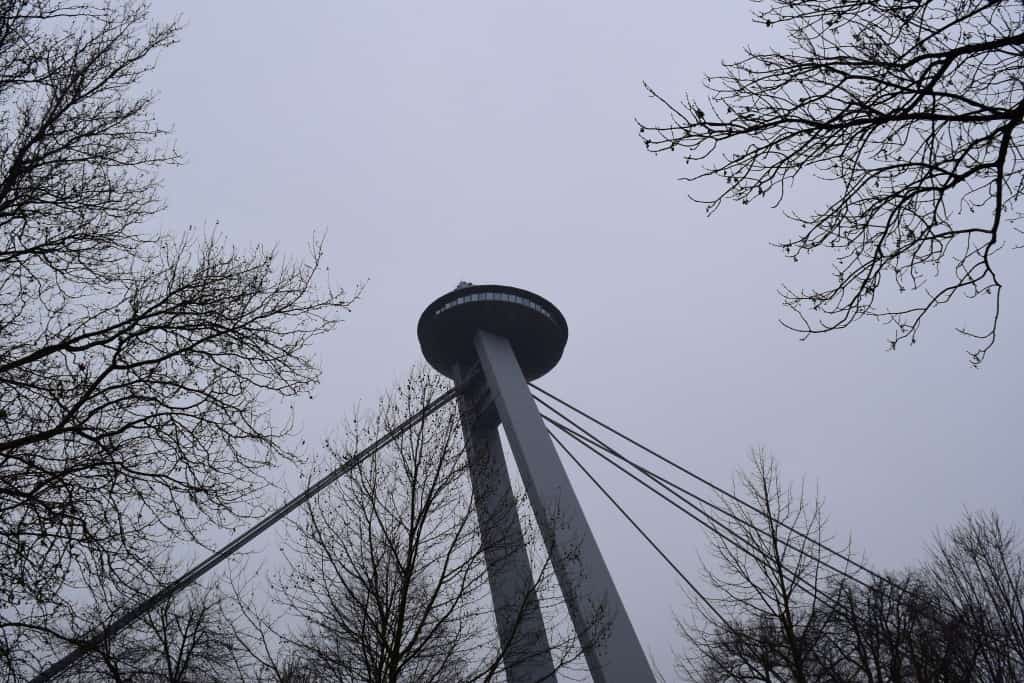
The Most SNP (Bridge of the Slovak National Uprising), commonly called the UFO Bridge, is a feature of Bratislava’s modern skyline. Opened in 1972, this single-pylon suspension bridge spans the Danube. Its main attraction is the saucer-shaped structure perched atop its 85-meter-high pylon, which houses an observation deck and a restaurant. An elevator takes visitors to the top for a 360-degree view of the city, the castle, and the Petržalka district. The bridge is the world’s longest cable-stayed bridge in the category with one pylon.
Read more here: Most SNP
Grassalkovich Palace
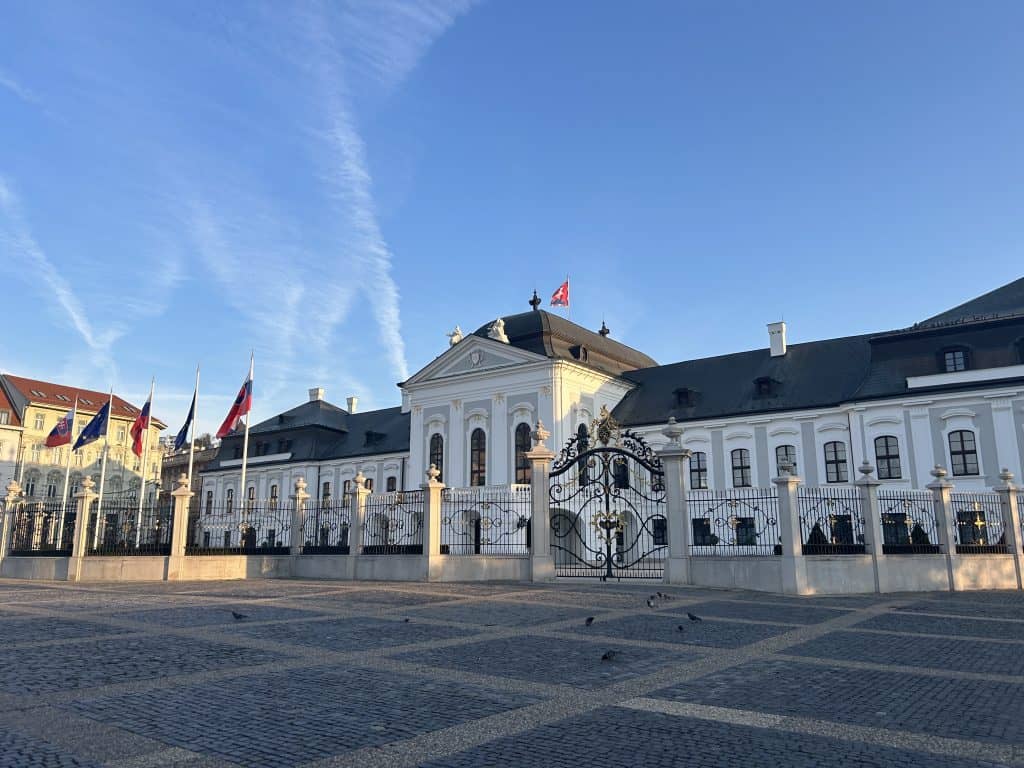
The Rococo-style Grassalkovich Palace (Grasalkovičov palác) is the official residence of the President of Slovakia. The palace was built in the 1760s for Antal Grassalkovich, a Hungarian aristocrat. It became a center of Baroque musical life in the city, with Joseph Haydn performing here. While the palace itself is not open to the public, visitors can observe its architecture from the outside. Behind the palace is a large public park designed in the French style.
Read more here: Grassalkovich Palace
Petržalka WWII Bunkers
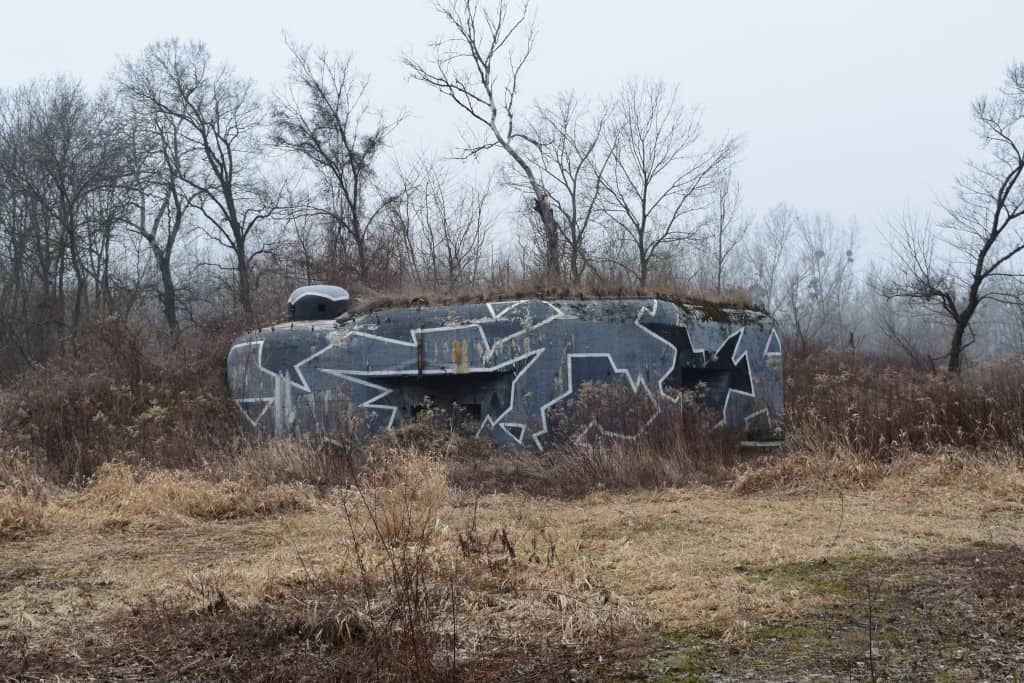
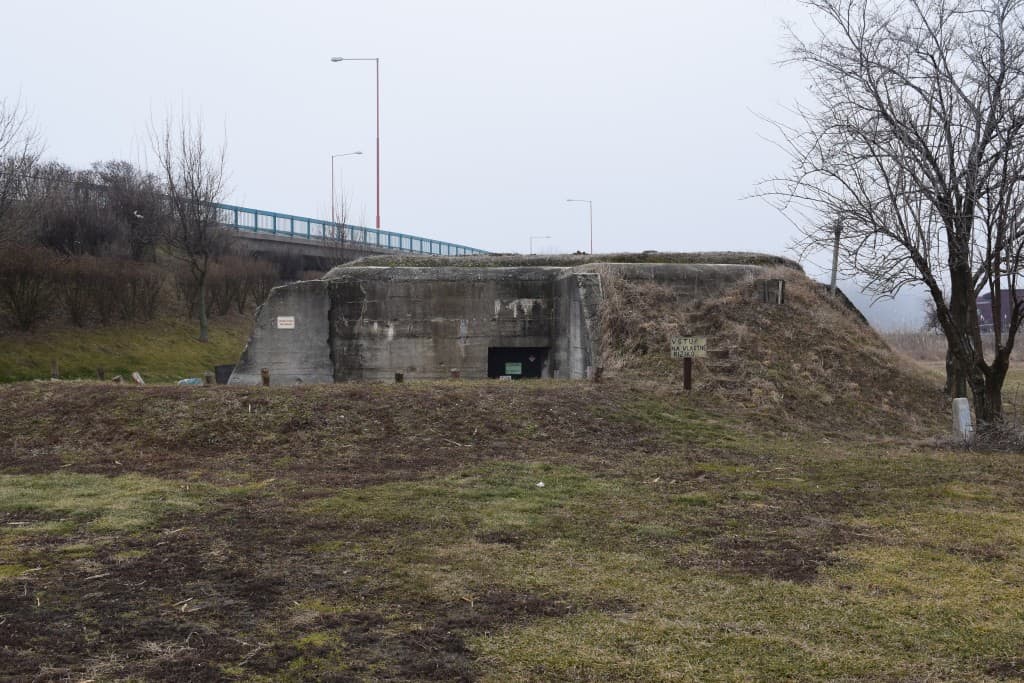
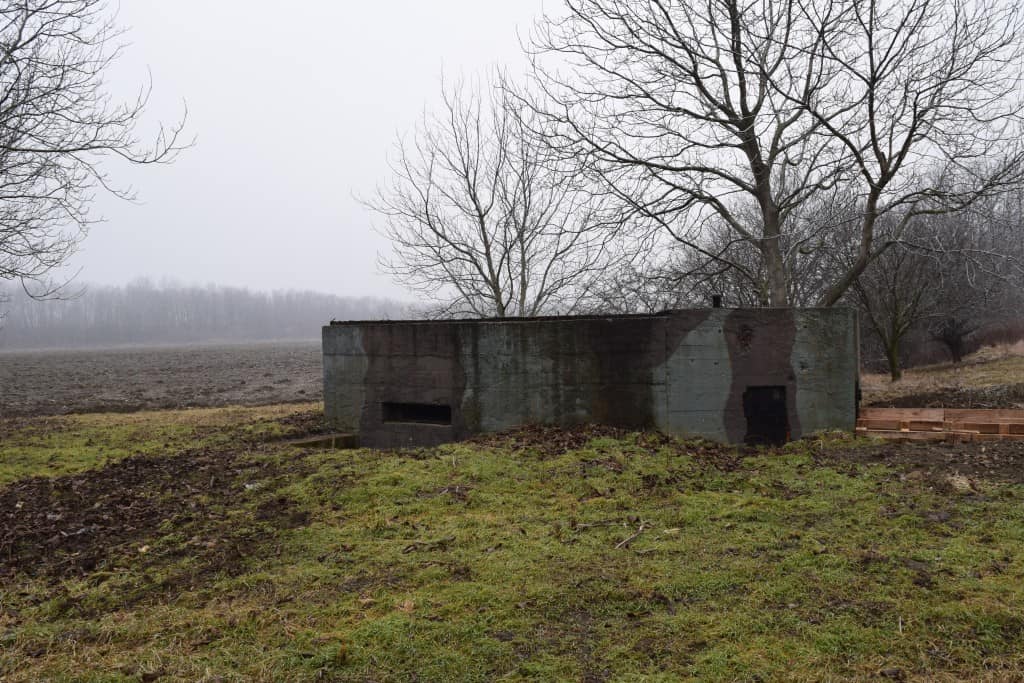
The district of Petržalka, across the Danube from the Old Town, is home to a line of WWII-era military bunkers. These concrete fortifications were built by Czechoslovakia between 1935 and 1938 as a defense line against potential aggression from Nazi Germany. The line was part of the larger Czechoslovak border fortification system. Several of these bunkers have been restored by private organizations and function as small museums. One of the most well-known is the B-S 8 “Hřbitov” bunker.
Read more here:
- Bunker BS-2 “Mulda”
- Bunker BS-3 “Paseka”
- Bunker BS-4 “Lány”
- Bunker BS-6 “Vrba”
- Bunker BS-8 “Hřbitov”
- Bunker BS-9 “Kittsee”
The Border Tripoint (Trojmedzie)
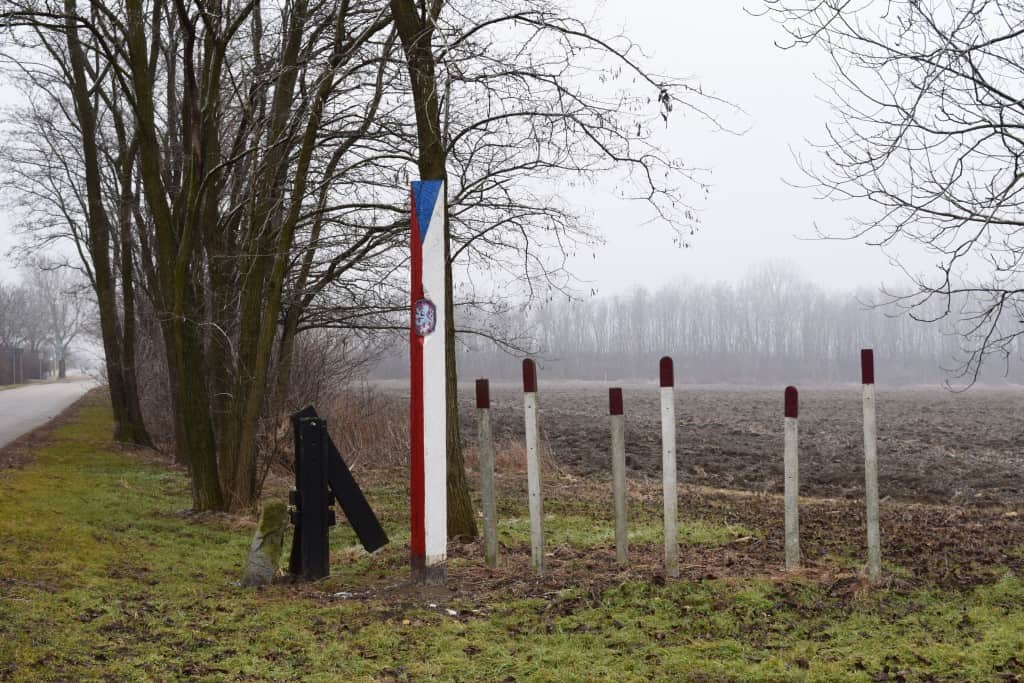
Just a short journey from the city center, one can stand in three countries at once. The Border Tripoint (Trojmedzie) is where the borders of Slovakia, Austria, and Hungary meet. The site is located near the Bratislava borough of Čunovo. It is marked by a triangular sculpture, with each side featuring the coat of arms of the respective country. It is a specific geographical point located in a natural area suitable for cycling or walking. The spot is a symbol of the fall of the Iron Curtain.
Read more here: The Border Tripoint
Bratislava Zoo
Located in the forested environment of Mlynská dolina, the Bratislava Zoo (Bratislavská ZOO) is a destination for families and animal lovers. The zoo first opened in 1960. It is home to over 1,000 animals from around the world. The exhibits include a DinoPark, which features life-sized models of dinosaurs in a natural setting. The zoo also contains enclosures for white tigers, lions, giraffes, and a new enclosure for wolves.
Read more here: Zoo Bratislava
Slovak National Theatre
The Slovak National Theatre (Slovenské národné divadlo) has two homes in the city. The historic building, located at the edge of the Old Town, is a Neo-Renaissance structure built in 1886 by the Viennese architects Fellner & Helmer. The modern new building, opened in 2007, is located closer to the riverfront. It is a large glass-and-stone structure that houses the opera, ballet, and drama ensembles of the national theatre. It contains three separate stages and has a total capacity of over 1,700 seats.
Read more here: Old Slovak National Theater
The Main Square (Hlavné námestie)
The Main Square has been the historical heart of Bratislava’s Old Town for centuries. It is surrounded by restored burgher’s houses and historic palaces. The square is dominated by two key landmarks: the Old Town Hall and the Roland Fountain, which is a popular meeting point. This open space is the social hub of the city. It hosts the annual Christmas and Easter markets, as well as concerts and festivals throughout the year.
Čumil – Man at Work
One of Bratislava’s most photographed landmarks is the bronze statue known as Čumil. Located at the corner of Laurinská and Panská streets in the Old Town, the statue was created by the artist Viktor Hulík and installed in 1997. It depicts a figure, often interpreted as a sewer worker, resting in an open manhole and looking out at street level. The name ‘Čumil’ can be translated as ‘The Watcher’. Due to its location on the ground, a dedicated traffic sign that reads ‘Man at Work’ was installed next to it to alert drivers.
Read more here: Čumil – Man at Work



Sports in Bratislava
Bratislava has an active sports culture with successful professional teams in the nation’s most popular sports. The city is home to several major venues, including the Ondrej Nepela Arena for ice hockey and the Tehelné pole national football stadium. These facilities allow the city to host major international events in addition to the regular seasons of its domestic clubs. The city’s sporting landscape is defined by the intense rivalries between its major clubs, which have long histories and dedicated fanbases. Beyond team sports, Bratislava’s location on the Danube and at the foot of the Little Carpathians provides many opportunities for recreational activities like running and cycling.
Ice Hockey
As a national sport in Slovakia, ice hockey holds a special place in Bratislava. The city serves as a major hub for the professional game, with its top club drawing a large and dedicated fanbase. Competing consistently for national honors, the team’s high standard of play draws significant crowds. The atmosphere in the city’s modern arena is a key part of the local sporting experience. The city has also co-hosted the IIHF World Championships multiple times, most recently in 2019, further cementing its role in the sport.
HC Slovan Bratislava
The city’s professional ice hockey club is HC Slovan Bratislava. Founded in 1921, the club has a long and successful history. They are the only team to have won a championship in the former Czechoslovak Extraliga (1979). Since the formation of the Slovak Extraliga, they have won nine championships, with the most recent being in 2022. The team also won the IIHF Continental Cup in 2004. They play their home games at the Ondrej Nepela Arena, which has a capacity of over 10,000. For several years, the club also competed in the international Kontinental Hockey League (KHL).
Football
Football has a deep and historic tradition in Bratislava. It is the most widely played sport in the country and has a large following in the capital. The city’s clubs have been central to the development of football in Slovakia for over a century. The main rivalry in the city, between ŠK Slovan and historically Inter, can generate intense local interest. Football is a constant topic of conversation in the city, showing its deep cultural roots. The national football stadium is also located here.
ŠK Slovan Bratislava
ŠK Slovan Bratislava is the city’s most famous and successful football club. Founded in 1919, the team has a history of domestic dominance. They have won the top Slovak league more than 20 times. The club also won the top Czechoslovak league eight times. Their greatest success was winning the UEFA Cup Winners’ Cup in 1969, when they defeated FC Barcelona in the final. Their home ground is the modern Tehelné pole stadium, which also serves as the national stadium. The club regularly competes in the qualifying rounds of major UEFA competitions.
FC Petržalka
The story of FC Petržalka includes one of the most memorable moments in modern Slovak football. The club, formerly known as Artmedia Bratislava, qualified for the UEFA Champions League group stage in 2005. During this run, they famously defeated Scottish champions Celtic FC 5-0 at home. They also earned a historic 3-2 away victory against Portuguese champions FC Porto. Though the team now competes in the lower leagues of Slovak football, this achievement remains a high point for the club. They maintain a loyal local following in the Petržalka district.
Inter Bratislava
Inter Bratislava, known by its traditional yellow and black colors, is another club with a long history in the city. Founded in 1940, the club was a significant force during the Czechoslovak era. They won the Czechoslovak First League title in 1959. After the formation of the Slovak league, they won two consecutive league titles in 2000 and 2001, achieving the “double” by winning the Slovak Cup in both of those seasons as well. While no longer in the top division, the club continues to operate with a focus on its youth academy.
Handball
Handball is another popular sport in Bratislava, with a following for both the men’s and women’s games. The game is known for being fast-paced and physical. School and university teams are common, which helps to ensure a steady stream of new talent for the local clubs. The sport has solid support and is a key fixture in the city’s indoor sports scene, with several clubs competing at a national level. The city has also hosted matches for the European Men’s Handball Championship.
ŠKP Bratislava
ŠKP Bratislava is the city’s main representative in the top Slovak handball league. The club’s name reflects its historical association with the police sports organization (Športový klub polície). The club has a long history of competing at the highest level of both Czechoslovak and Slovak handball. They have won the national championship multiple times. They have also participated in numerous European competitions over the years. Their home matches are fast-paced events that draw dedicated local crowds.
Floorball
Floorball has seen a surge in popularity in Bratislava over the last two decades. It is especially popular among young people and at the university level. The sport is fast and accessible, which has allowed it to grow rapidly. Numerous amateur leagues and school tournaments take place across the city throughout the year. For many young athletes, it has become a popular alternative to more traditional sports. Bratislava is represented by several clubs in the top national floorball league.
ŠK Lido Prírodovedec
One of the capital’s main teams is ŠK Lido Prírodovedec. The club is well-represented in the top Slovak Floorball Extraliga. The team is closely connected to the university environment in the city, specifically the Faculty of Natural Sciences at Comenius University. They have established themselves as a competitive force in the league. Their games are known for their high energy and constant action. The club is a key part of the growing floorball scene in Bratislava.
Tsunami Záhorská Bystrica
Another prominent team in the Bratislava region is Tsunami Záhorská Bystrica. They also compete at the highest level in the Slovak Floorball Extraliga. This creates a strong local rivalry with other Bratislava-based teams. The club is based in the Záhorská Bystrica borough of the city. Their presence in the top league confirms Bratislava’s status as a major hub for the sport. Their matches contribute to the competitive local floorball calendar.
Running
Running is a popular individual sport and recreational activity in Bratislava. The city’s parks, riverfront paths, and nearby forests provide suitable settings for runners. Throughout the year, people of all ages can be seen jogging along the Danube or through Železná studnička park in the Little Carpathians. This interest in running culminates in several organized races that bring the community together.
The Bratislava Marathon
The annual Bratislava Marathon is the premier running event in Slovakia. Held every spring since 2006, it attracts thousands of runners from dozens of countries. The event has grown significantly, with recent participation numbers exceeding 10,000 runners across all disciplines. The course is famously flat and takes participants past major landmarks like Bratislava Castle and the UFO Bridge. The race weekend also includes a half marathon, a 10k race, and children’s runs. The entire city is active during the marathon weekend.



Getting Around in Bratislava
Navigating Bratislava is a relatively straightforward task for visitors. The city has a compact historic center that is largely pedestrianized and easy to explore on foot. For travel to wider districts, the city has an efficient public transport system that connects all parts of the city. This system, known as MHD (Mestská hromadná doprava), includes trams, buses, and trolleybuses. Understanding the ticketing system is key to using the network effectively. It is part of a larger integrated transport system for the entire Bratislava Region, known as IDS BK.
Tickets for public transport are based on time and zones. They must be purchased before boarding from orange vending machines at many stops, at official transport offices, or via a mobile app. A single ticket can be valid for 15, 30, or 60 minutes, allowing for transfers between different lines and vehicle types within that time. Tourist passes for 24, 72, or 168 hours are also available. Remember to validate your paper ticket in the small red machines inside the vehicle immediately upon boarding to avoid a fine.
On Foot: The Best Way to See the Old Town
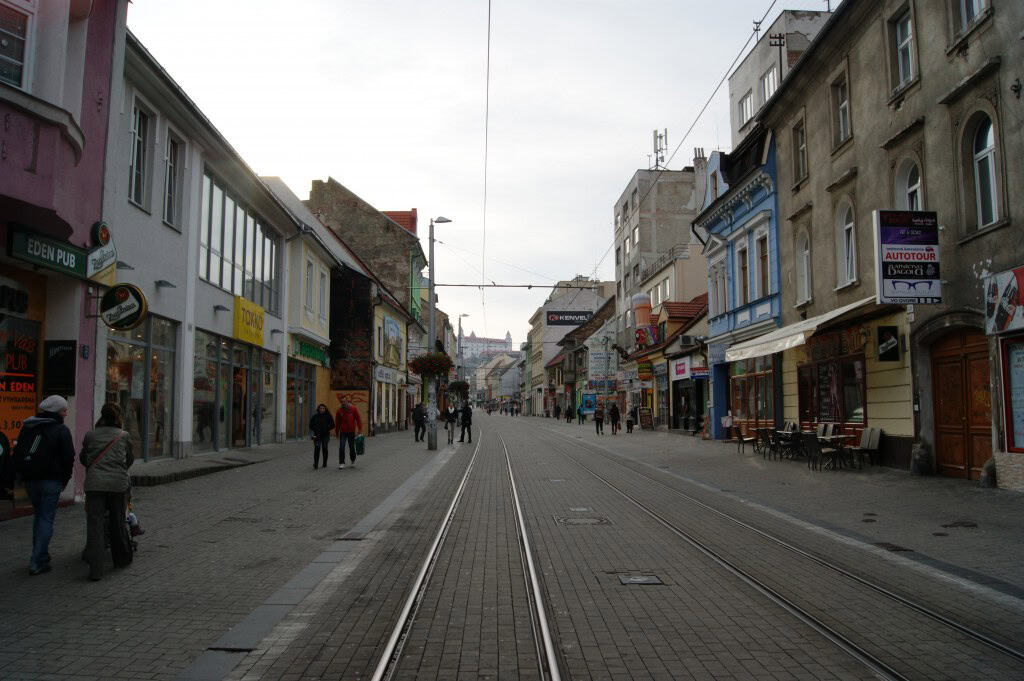
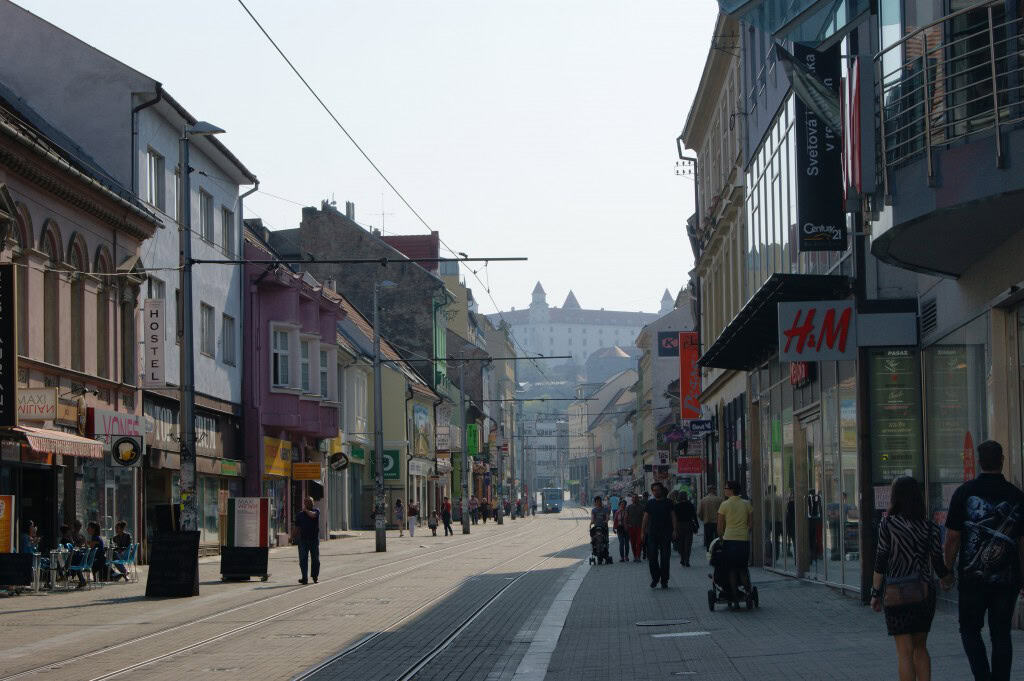
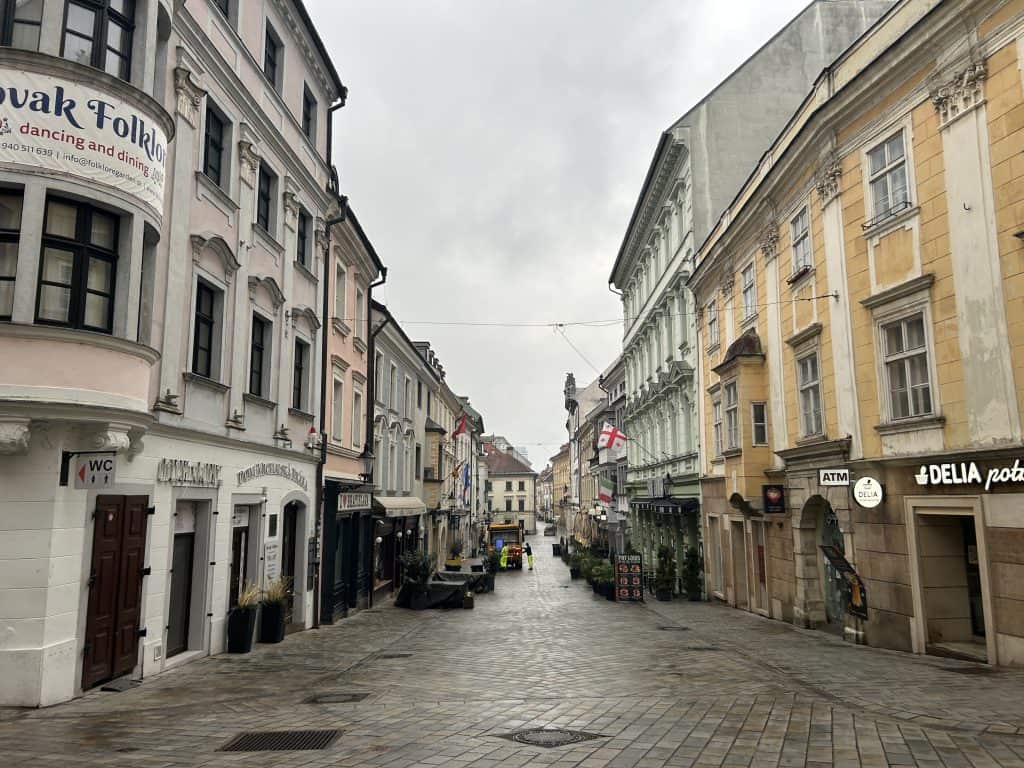
Walking is the best way to explore Bratislava’s historic heart. The entire Old Town is a pedestrian-only zone. This makes it a safe and pleasant area to wander. Its cobblestone streets, alleyways, and squares are made for exploration on foot. Most of the city’s main historical sights, including St. Martin’s Cathedral, Michael’s Gate, and the Primate’s Palace, are within a 15-minute walk of each other. This allows visitors to move at their own pace and discover hidden courtyards and cafes. Comfortable footwear is recommended.
Riding the Reds: Trams and Buses
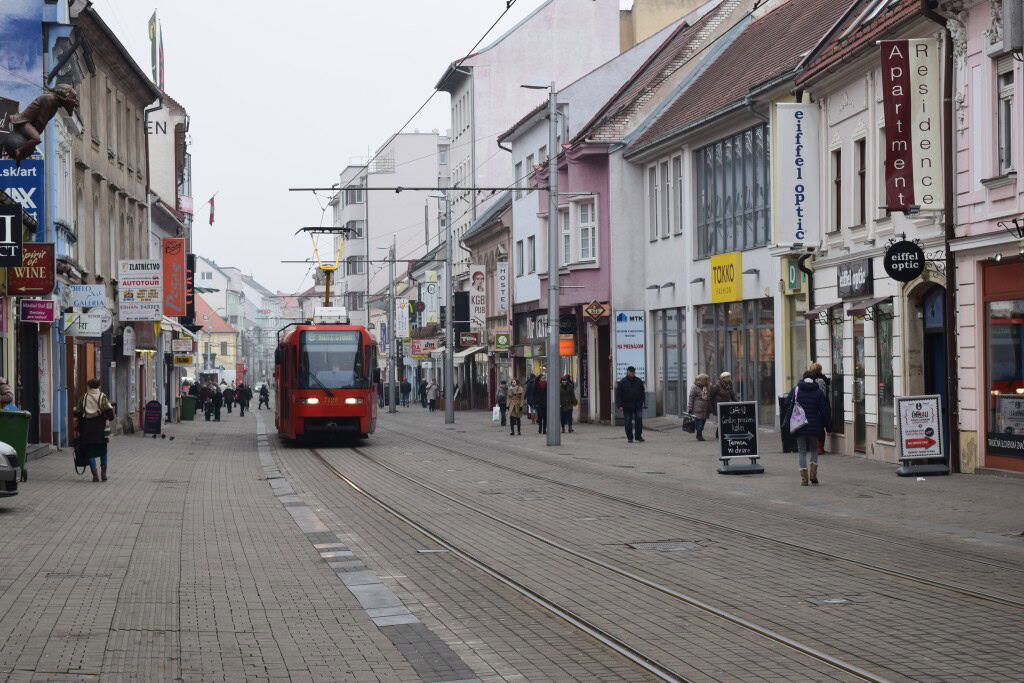
For journeys outside the Old Town, Bratislava has an effective public transport system. The network consists of trams, buses, and trolleybuses, which are recognizable by their red color scheme. The system is reliable and covers the entire city, including connections to Devin Castle, the main train station, and the airport. Trams are generally the quickest way to travel along the main city corridors. Buses and trolleybuses serve the wider residential districts and hilly areas of the city. The main transport hub where many lines converge is under the UFO Bridge.
A Lift at Your Fingertips: Taxis and Ride-Sharing
Finding a ride in Bratislava is easy thanks to modern technology. Popular ride-sharing apps like Bolt and Uber operate extensively throughout the city. They are often cheaper than hailing a traditional taxi on the street. Using an app provides a clear price upfront and a simple payment process. If you opt for a traditional taxi, it is best to order one by phone from a reputable company. It is generally not recommended to take taxis waiting at the train station or in tourist areas without a fixed price agreement.
Two Wheels on the Danube: Cycling the City
Bratislava is becoming an increasingly bike-friendly city. There are well-marked cycle paths, especially along the banks of the Danube river. The EuroVelo 6 long-distance cycling route runs directly through the city. This allows people to ride from the city center to Devin Castle or even across the border into Austria. The city offers a bike-sharing service called Slovnaft BAjk. These yellow bikes are available at docking stations across the city and can be rented via a mobile app.


How to Get to Bratislava
Bratislava’s location in Central Europe makes it exceptionally easy to reach. Its close proximity to several other major cities means it is well-served by air, road, rail, and even river. This connectivity makes it a suitable hub for a wider regional trip. The city is a major junction for motorways and international railway lines. It also benefits from being located just a short distance from one of Europe’s largest airports in Vienna. This provides a huge range of flight options for travelers.
Arriving by Air: The Twin Airport Advantage
Bratislava has its own airport, M. R. Štefánik Airport (BTS), which is served by several low-cost airlines like Ryanair. However, the city’s biggest advantage is its proximity to Vienna International Airport (VIE). Vienna’s airport is a major international hub located only 60 kilometers away. Frequent and direct bus lines, operated by companies like FlixBus and Slovak Lines, connect Vienna’s airport to Bratislava’s main bus station in under an hour. This gives travelers a wide range of flight options from carriers all over the world when planning a trip to the Slovak capital.
Euro Roadtrip: Driving to Bratislava
Driving to Bratislava is a good option for those exploring the region by car. The city is connected to the European highway network by several motorways. The D1 motorway connects Bratislava to the east of Slovakia. The D2 motorway is a major north-south route that connects the city with Prague in the Czech Republic and Budapest in Hungary. The A6 motorway connects Bratislava directly to Vienna and the Austrian motorway system. To use Slovak motorways, you must purchase a digital road toll sticker called a vignette, which can be bought online in advance.
Connecting by Coach: Europe’s Bus Network
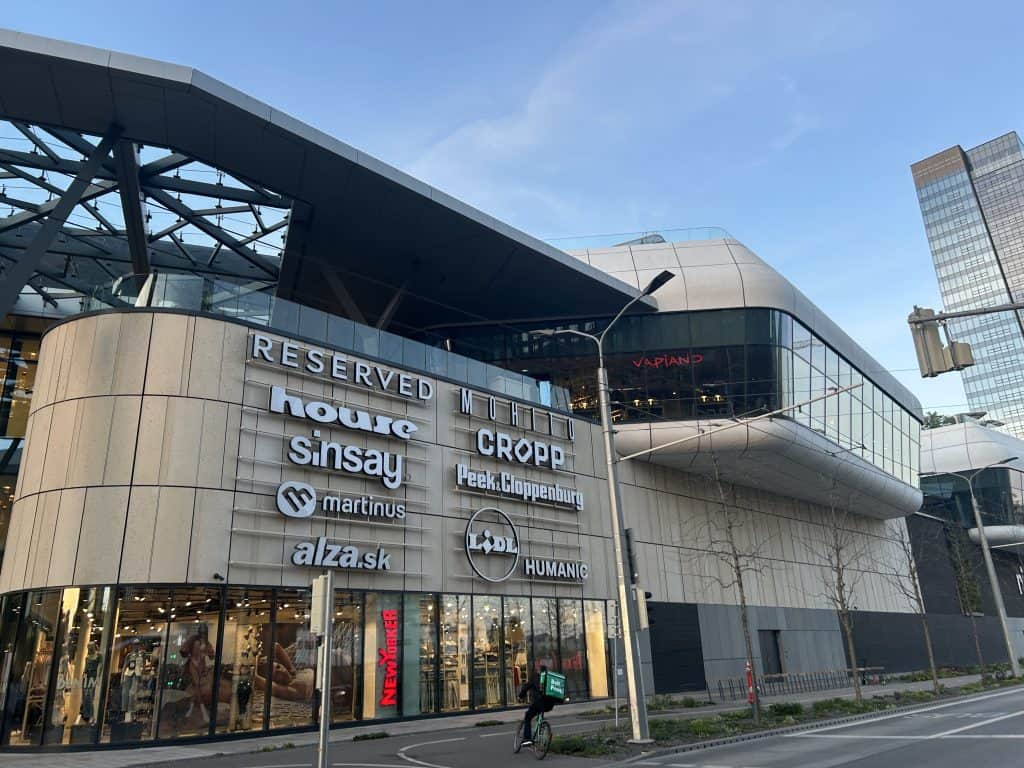
The bus is one of the most economical ways to travel to Bratislava from nearby cities. The city’s modern main bus station, Nivy Station, is a state-of-the-art facility combined with a shopping center. It is located close to the city center and serves as a major hub for international carriers like FlixBus and Slovak Lines. You can find frequent and affordable connections from Vienna, Budapest, and Prague, with journey times often under four hours. The station itself contains shops, food courts, and a large green roof.
On Track: A Grand Arrival by Rail
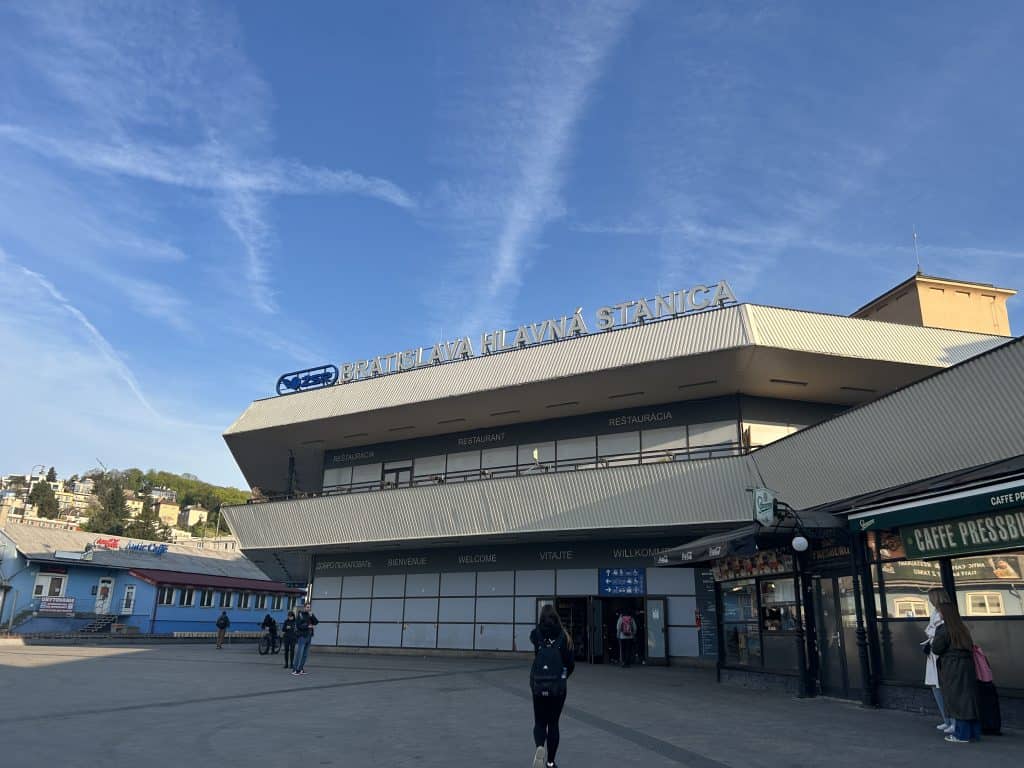
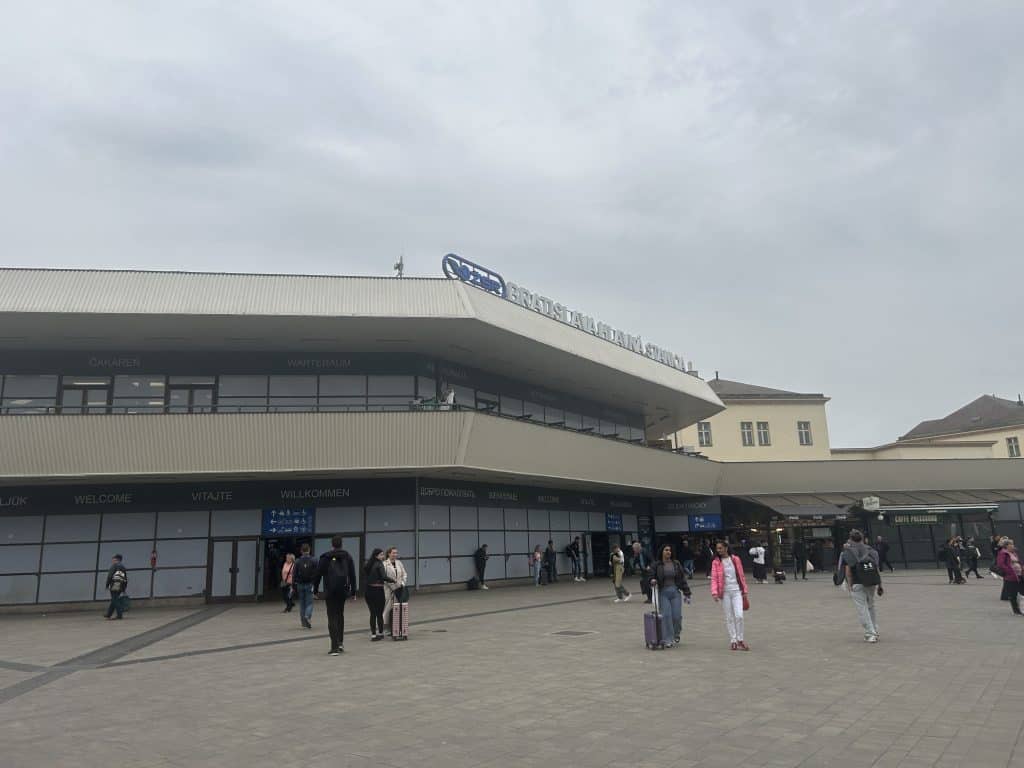
Arriving by train is a convenient European travel experience. Bratislava’s main train station is called Hlavná stanica. It is located just north of the city center, with good connections to the public transport network. It is also important to know about the city’s second station, Bratislava-Petržalka. This station is situated across the Danube and primarily serves as the arrival point for regional trains from Vienna, Austria. If traveling by train from Vienna, it is important to check your ticket to see which of the two stations is your final destination.
The Danube Passage: A Scenic River Journey
For a different travel experience, you can travel to Bratislava by boat. A high-speed catamaran service, the Twin City Liner, connects Bratislava with Vienna via the Danube River. The journey takes around 90 minutes. It offers views of the riverside landscapes, forests, and Devin Castle along the way. While it is more expensive than the bus or train, it is another travel option, especially during the summer months. Regular river cruises on the Danube also often include Bratislava as a key stop on their itineraries.
Driving Distances
The driving distance from 20 European cities, according to Google Maps:
- Vienna, Austria – 80 kilometers (1 h 10 min)
- Brno, Czech Republic – 131 kilometers (1 h 30 min)
- Budapest, Hungary – 201 kilometers (2 h 10 min)
- Žilina, Slovakia – 203 kilometers (2 h 10 min)
- Banská Bystrica, Slovakia – 210 kilometers (2 h 20 min)
- Prague, Czech Republic – 330 kilometers (3 h 30 min)
- Katowice, Poland – 335 kilometers (3 h 20 min)
- Zagreb, Croatia – 379 kilometers (4 h 00 min)
- Krakow, Poland – 394 kilometers (4 h 20 min)
- Košice, Slovakia – 402 kilometers (4 h 30 min)
- Ljubljana, Slovenia – 454 kilometers (4 h 30 min)
- Munich, Germany – 493 kilometers (5 h 00 min)
- Belgrade, Serbia – 584 kilometers (5 h 40 min)
- Warsaw, Poland – 671 kilometers (6 h 40 min)
- Berlin, Germany – 689 kilometers (6 h 50 min)
- Kyiv, Ukraine – 1,123 kilometers (13 h 10 min)
- Rome, Italy – 1,294 kilometers (12 h 50 min)
- Paris, France – 1,321 kilometers (13 h 00 min)
- Amsterdam, Netherlands – 1,335 kilometers (13 h 00 min)
- Vagnhärad, Sweden – 1,607 kilometers (18 h 40 min)
Looking to Explore more of Slovakia and Europe?