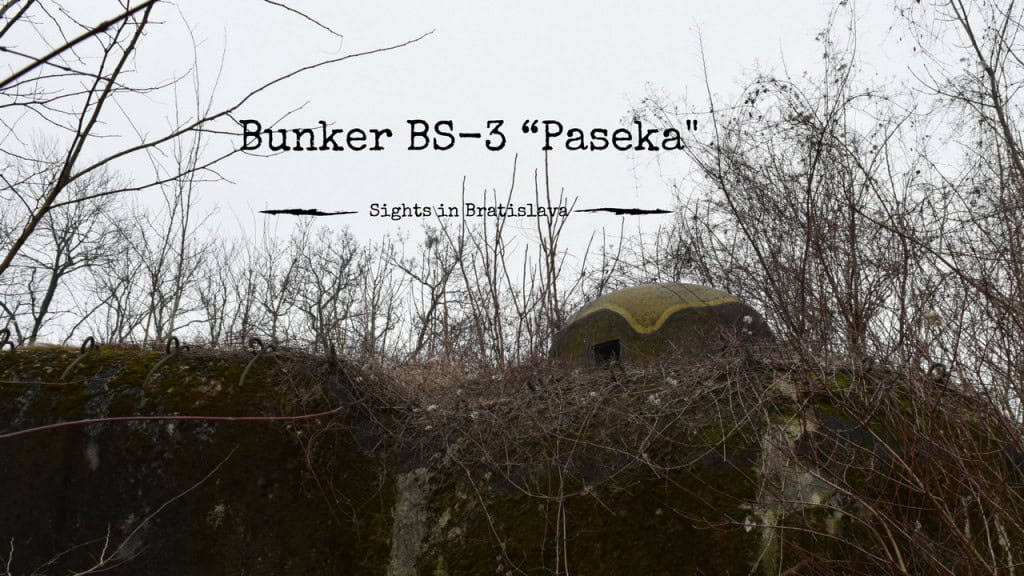
Bunker BS-3 “Paseka” | Sights in Bratislava
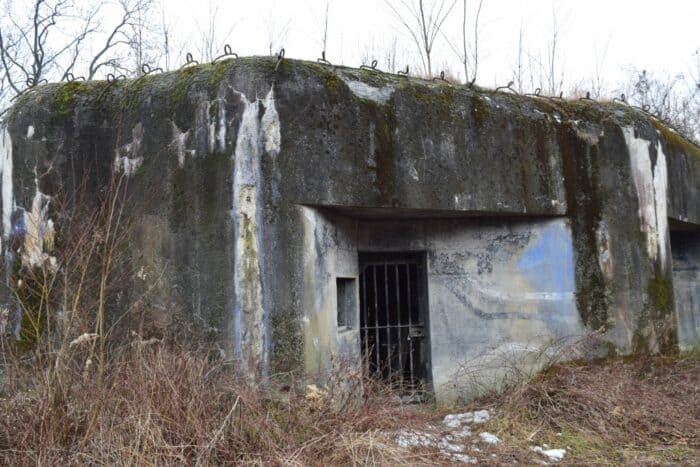
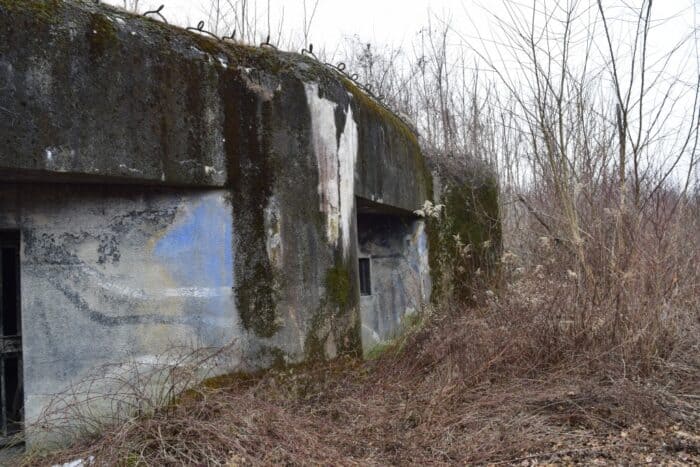
Slightly before the Second World War, Czechoslovakia built several fortifications along its borders. A key section of this defensive line ran very near Bratislava. These fortified parts were along the Slovak-Austrian border, just a few kilometers from the capital’s center. It was during this time of great uncertainty that Bunker BS-3 was built, and its construction took place between 1936 and 1937. Today, this concrete fortress lies abandoned within the dense Pečniansky les forest. It is located on the Petržalka side of the Danube River. Some of the other bunkers are now museums, and they are open to the public. BS-3, however, remains a forgotten piece of history, slowly being reclaimed by nature.
The bunker’s nickname, “Paseka,” is a Slovak word that means “glade” or “clearing,” and this name is quite suitable for its current state. Unlike its restored counterparts, the current state of the building now bears witness to neglect. This is a pity, for it is an important part of the region’s history. The bunker tells a story of a nation preparing for a conflict that would change Europe forever. Finding the bunker today involves a journey through the forest, so it feels like a genuine discovery. It was once a state-of-the-art fortress, but now it is a silent, concrete ghost. Its overgrown and hidden location adds to the powerful sense of abandonment and history.

Bunker BS-3 “Paseka” and the Border Fortifications
Bunker BS-3 “Paseka” was an infantry blockhouse built to the second-highest level of resistance, and it was constructed between 1936 and 1937. A crew of 21 men would have manned the bunker during a conflict, and the structure was built in two stories. Its main armament consisted of two heavy machine guns, and these were protected by armored cupolas. The bunker’s primary purpose was to provide flanking fire, and its machine guns would have created a deadly crossfire zone. This would have protected the anti-tank barriers and the other nearby fortifications. The bunker never saw combat against its intended enemy, and it stands today as a silent witness. It is a powerful reminder of the tensions that gripped Europe in the years leading up to the war.
The bunker was part of a massive system of border fortifications, and this system was built by Czechoslovakia in the 1930s. This defensive line was intended to protect the country from a potential invasion from Nazi Germany. The fortifications in the Bratislava section were particularly strong, and they were designed to defend the capital city. The entire system was a remarkable feat of military engineering, but its fate was decided by politics. Following the Munich Agreement in September 1938, Nazi Germany annexed the Petržalka district in October of that year. As a result, this powerful defensive line was surrendered without a fight, and the bunkers never fulfilled their intended purpose.


How to Find Bunker BS-3 “Paseka”?
This might be the place for you if you like history, and you find yourself in Bratislava. At the same time, you will have the chance to get some fresh air, for the bunker is in a forest. Bunker BS-3 hides in the woods close to the Most Lafranconi bridge, and it requires some orienteering to find. You can cross the bridge from the northern side of the Danube, and then you must continue for a few hundred meters along the bike road. Eventually, on your right, you will have a dirt road that leads into the forest. This is where you will find both Bunker BS-3 and its sister, Bunker BS-2. Another option is to walk along the border path, and then you must turn into the forest when you are close by.
Looking to Explore More of Bratislava and Slovakia?


This post was first published 2017-06-21 and was updated 2025-07-31