
Bunker BS-2 “Mulda” | Sights in Bratislava
In the years leading up to the Second World War, Czechoslovakia constructed a massive line of fortifications. This defensive system followed its borders, and a key section ran very near Bratislava. These defenses were built along the Slovak-Austrian border between 1936 and 1937. Bunker BS-2, also known by its nickname “Mulda,” was one of these concrete fortresses. It is the second bunker in the defensive line counting south from the Danube River. The bunker stands today in the Pečniansky les forest, and it is one of the fortifications that are the most difficult to reach.
Unlike some of the other nearby bunkers that are now restored museums, Bunker BS-2 lies hidden and abandoned in the forest. It is in a better state of preservation than its neighbor, Bunker BS-3, but it has certainly seen better days. The bunker is a silent monument to a turbulent period in European history, and it tells a story of a nation preparing for a conflict that ultimately came in a way no one expected. Its overgrown and remote location makes finding it an adventure, and it offers a direct connection to the pre-war era. This concrete structure is a powerful reminder of the tensions that once gripped this border region.
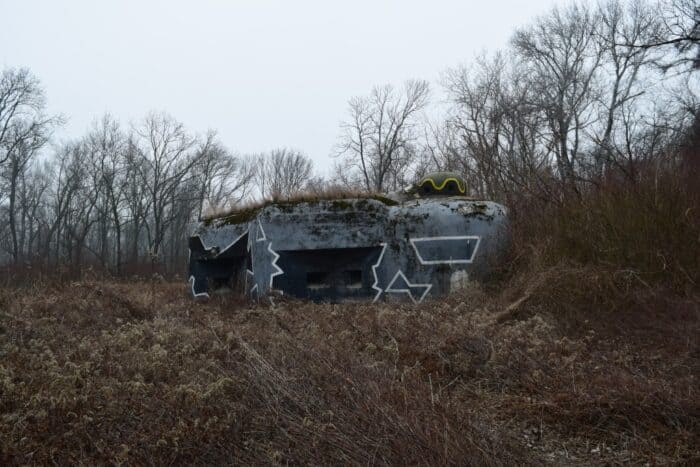
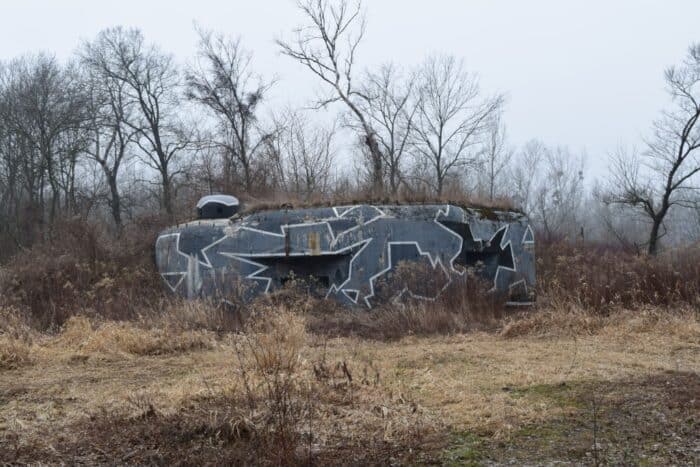
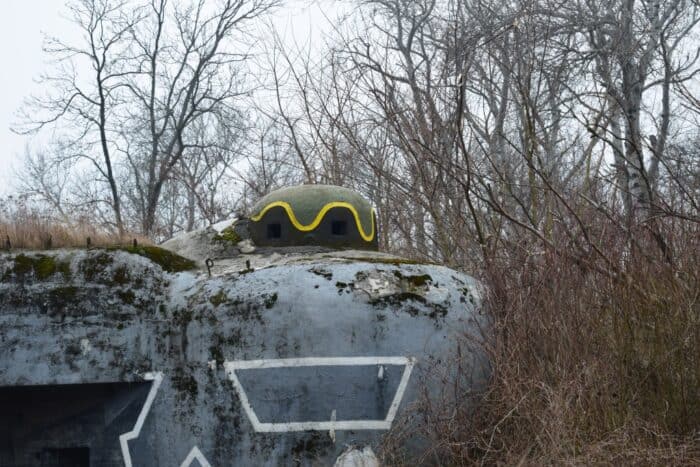
Bunker BS-2 “Mulda” and the Border Fortifications
Bunker BS-2 “Mulda” was a heavy infantry blockhouse, and its construction took place between 1936 and 1937. A crew of 21 men would have manned the bunker during a conflict, and the structure was built in two stories. Its main armament consisted of two heavy machine guns, and these were protected within armored cupolas. The bunker’s primary purpose was to provide flanking fire, and its machine guns would have created a deadly crossfire zone to protect the anti-tank barriers. The name “Mulda” is the German word for “trough” or “hollow,” likely referring to its specific position in the terrain.
The bunker was part of a massive system of border fortifications, and this system was built by Czechoslovakia in the 1930s. This defensive line was intended to protect the country from a potential invasion from Nazi Germany. The fortifications in the Bratislava section were particularly strong, and they were designed to defend the capital city. The entire system was a remarkable feat of military engineering, but its fate was decided by politics. Following the Munich Agreement in September 1938, Nazi Germany annexed the Petržalka district in October of that year. As a result, this powerful defensive line was surrendered without a fight.
How to Find Bunker BS-2 “Mulda”?
A visit to this bunker is recommended if you like history, and it also offers a chance to get some fresh air. Bunker BS-2 is hidden in the forests close to the Most Lafranconi bridge. Cross the bridge from the northern side of the Danube, and then you must continue for a few hundred meters along the bike road. Eventually, on your right, you will see a dirt road leading into the forest, and this is the path to the bunker. You will find both Bunker BS-2 and its neighbor Bunker BS-3 in this area. Another option is to walk along the border path, but the bunker is not easy to locate from that direction. The walk to the bunker from the Bratislava Castle is approximately 5.5 kilometers.
Looking to Explore More of Bratislava and Slovakia?


This post was first published 2017-05-24 and was updated 2025-07-31