
Clervaux | Exploring Luxembourg
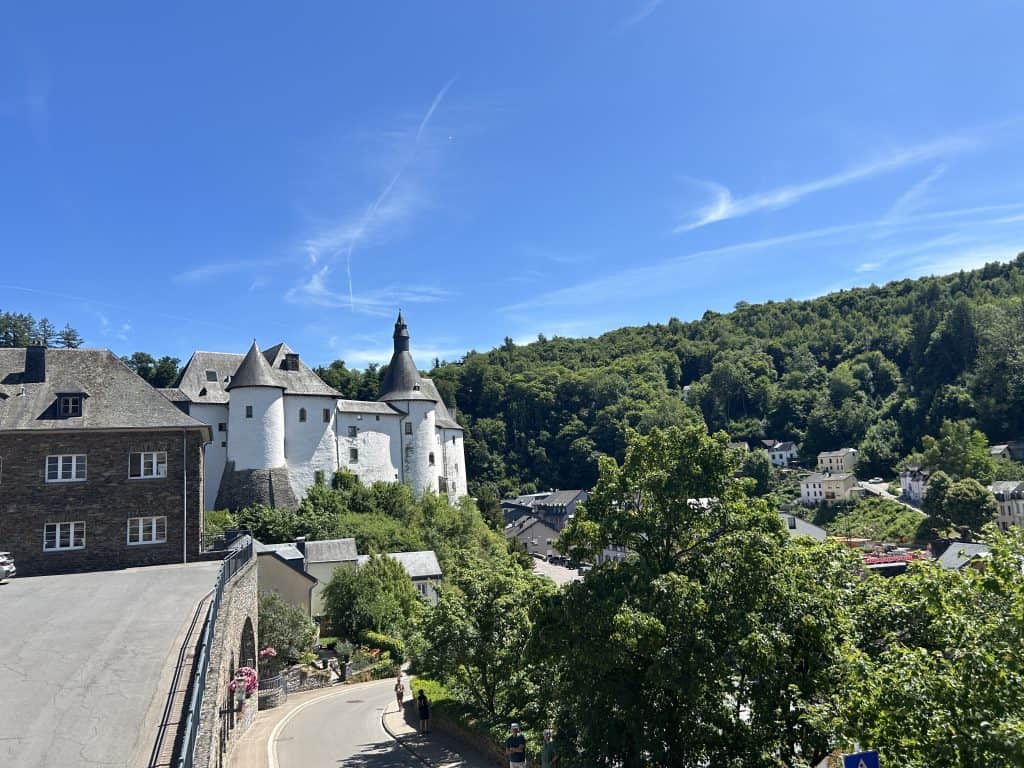
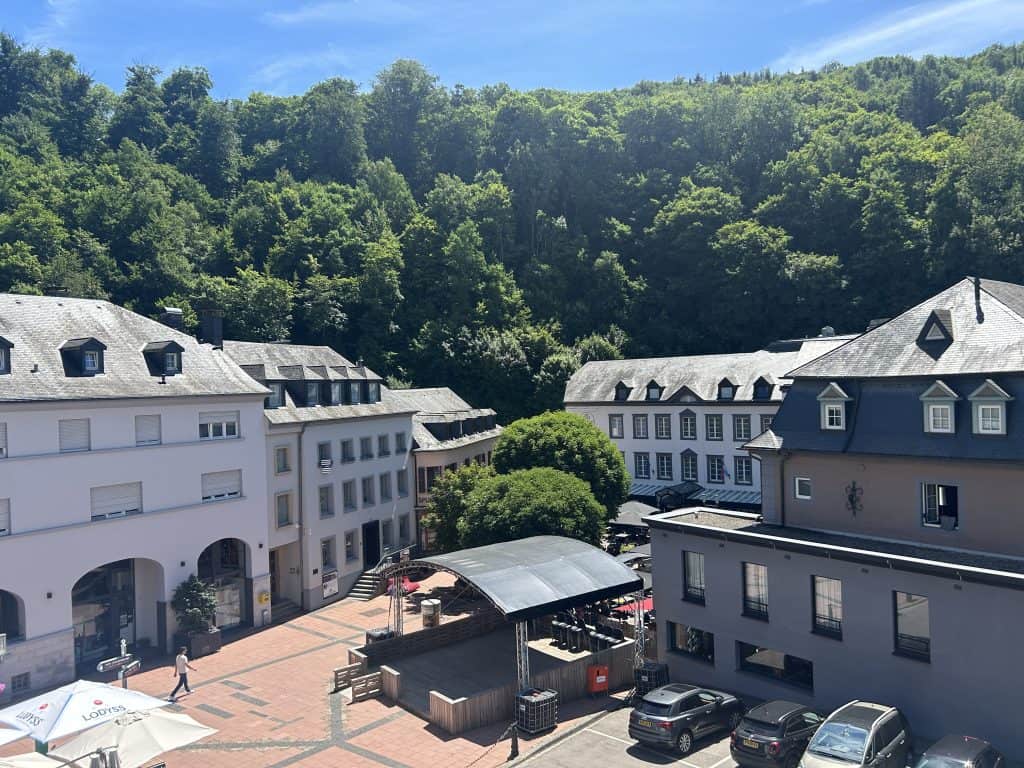
Clervaux is a commune and town in northern Luxembourg. It is the capital of the Canton of Clervaux and is located in the Éislek region, which forms the Luxembourgish part of the Ardennes. The town is situated in a deep, narrow valley on the banks of the Clerve River. With a population of approximately 1,500 residents in the town itself, Clervaux is known for its dramatic natural setting. Its skyline is defined by the prominent white castle, a large Benedictine abbey on the hill above, and the parish church.
The character of Clervaux is that of a historic and cultural center in a tranquil, rural landscape. Its identity is profoundly shaped by two key features: its role in the Battle of the Bulge during World War II, and its status as the permanent home of the world-renowned photography exhibition, “The Family of Man.” The town was almost completely destroyed during the war and was subsequently rebuilt. Today, it combines its function as a site of historical remembrance with its role as a major tourist destination for visitors exploring the Ardennes region of Luxembourg.


A Short History of Clervaux
The history of Clervaux is centered on its medieval castle, which has been the focal point of the town for centuries. The story of the town is one of a small feudal center that was later transformed by the establishment of a major monastery and the devastating impact of World War II. Its post-war reconstruction and its new identity as a home for a major international art collection have defined its modern era. This journey from a medieval stronghold to a center of peace and culture is a key part of its history.
Medieval Origins and the Castle
The history of Clervaux begins with the construction of its castle in the 12th century. The castle was built on a rocky promontory and was the seat of the Counts of Clervaux, a branch of the powerful House of Sponheim from the neighboring Eifel region. The town grew in the valley below this feudal stronghold. For centuries, its development was tied to the fortunes of the noble families who controlled the castle. It remained a small but strategically important town in the northern part of the County of Luxembourg.
Monastic Life and a Growing Town
A new chapter in the town’s history began in the early 20th century. In 1910, a community of Benedictine monks from the Abbey of Solesmes in France established the Abbey of St. Maurice and St. Maur on a hill overlooking the town. The construction of this large neo-Romanesque monastery complex added another major landmark to the town’s skyline. The presence of the monastic community brought a new spiritual and cultural dimension to the town. The monks became known for their Gregorian chant and their scholarly work.
The Battle of the Bulge and Post-War Recovery
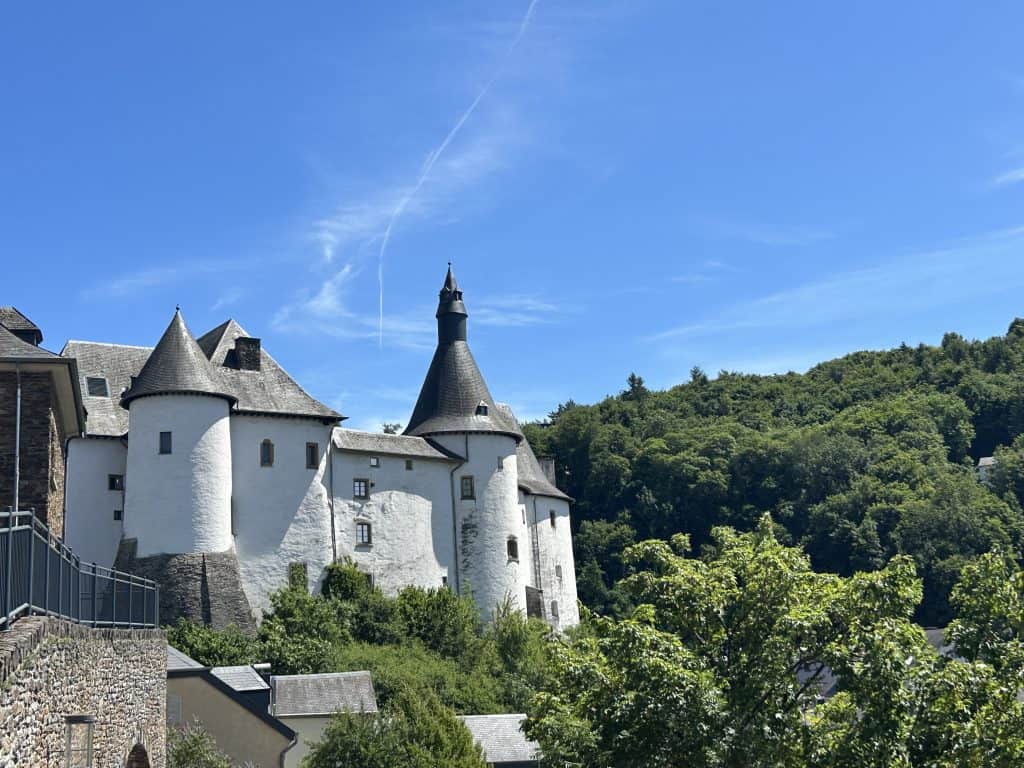
The defining event in Clervaux’s modern history was the Battle of the Bulge in December 1944. The town was the site of intense fighting between American and German forces during the initial German offensive. The American soldiers put up a fierce resistance, but the town and its castle were eventually captured and almost completely destroyed. After the war, the town and the castle were painstakingly rebuilt. This post-war recovery was crowned by the installation of “The Family of Man” photography exhibition in the restored castle in the 1990s, transforming the site of a major battle into a center for humanistic art.

Things to Do and See
The sights in Clervaux are concentrated in its small, scenic valley. The main attractions are its three main architectural landmarks: the castle, the abbey, and the parish church. The town is also the home of a world-famous photography exhibition. The surrounding Ardennes landscape provides a natural backdrop to these cultural and historical sites.
Clervaux Castle
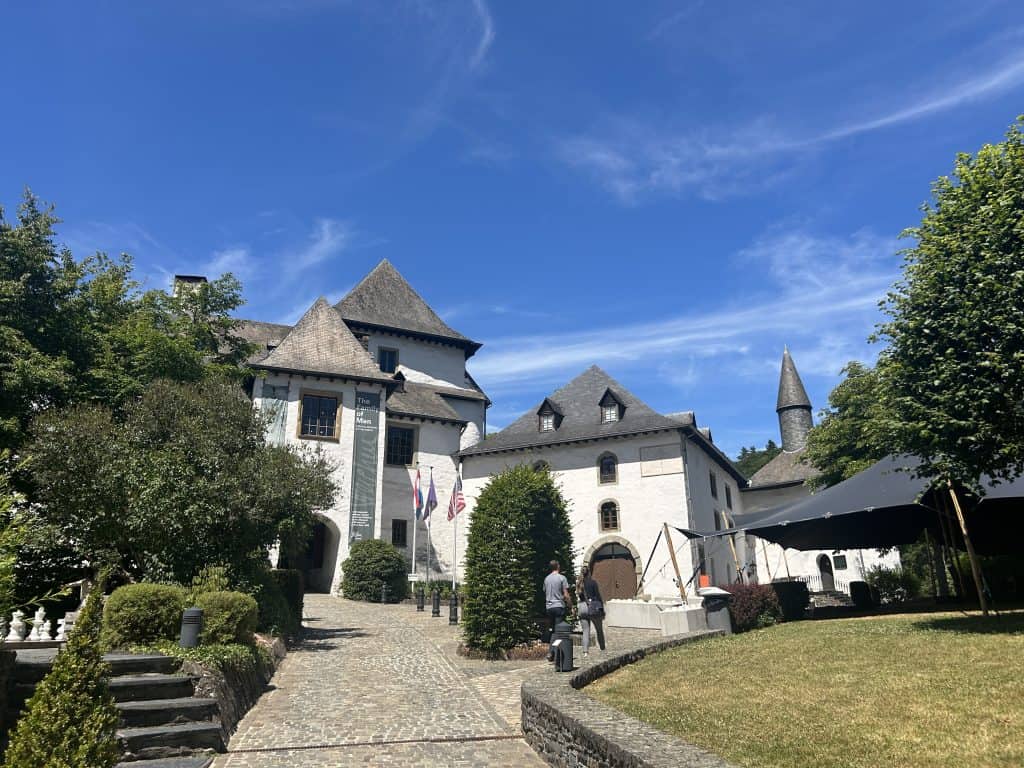
The Clervaux Castle (Schlass Klierf) is the primary landmark of the town. The oldest parts of the castle date back to the 12th century. The large western wing and the main towers were constructed around 1400. The castle was heavily damaged during the Battle of the Bulge and was rebuilt after the war. Today, it houses several different institutions. This includes the offices of the local administration, a museum dedicated to the Battle of the Bulge, a museum of models of Luxembourg’s castles, and the famous “The Family of Man” exhibition.
The Family of Man
The “The Family of Man” is a major photography exhibition that is permanently housed in Clervaux Castle. The collection was curated by the Luxembourg-born American photographer Edward Steichen for the Museum of Modern Art in New York in 1955. The exhibition consists of over 500 photographs from around the world that explore the common themes of human experience. It was gifted to Luxembourg by the U.S. government and has been on display in Clervaux since 1994. The collection is inscribed in the UNESCO Memory of the World Register.
The Abbey of St. Maurice and St. Maur
The Abbey of St. Maurice and St. Maur is a large Benedictine monastery that stands on a hill overlooking the town of Clervaux. It was founded in 1910 by monks from the Abbey of Solesmes in France. The large complex was built in the neo-Romanesque style. The monastic community is known for its focus on a traditional Benedictine life of prayer and work, including the practice of Gregorian chant. An exhibition in the abbey’s crypt details the history and daily life of the monastic community.
Parish Church of Saints Cosmas and Damian
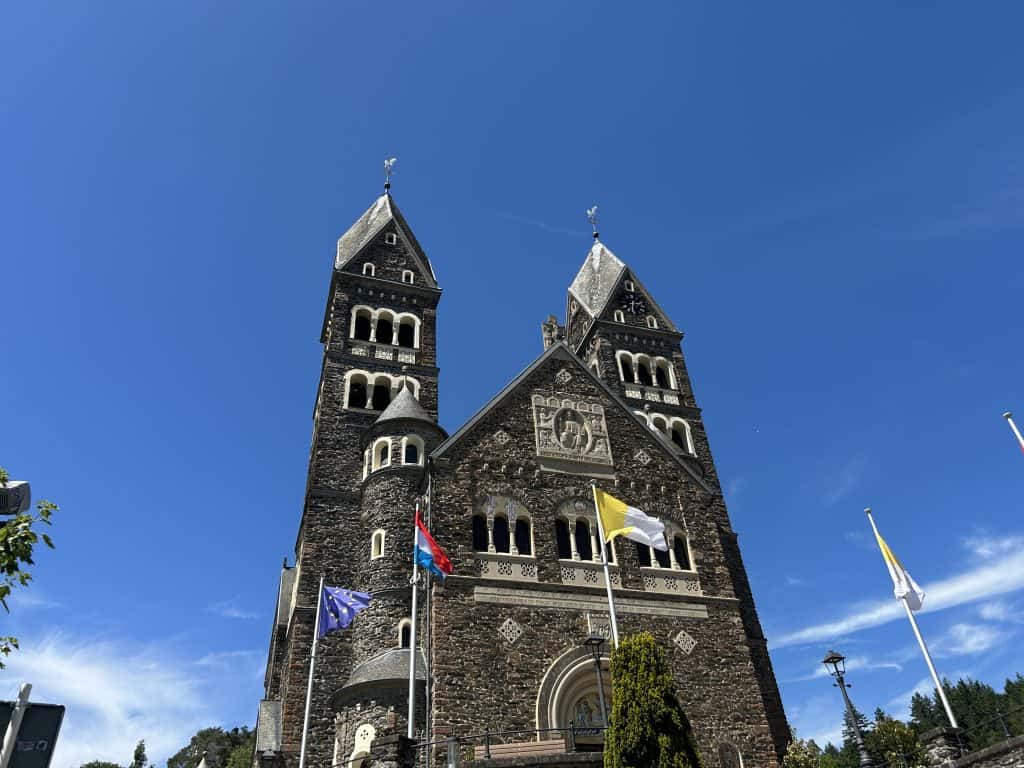
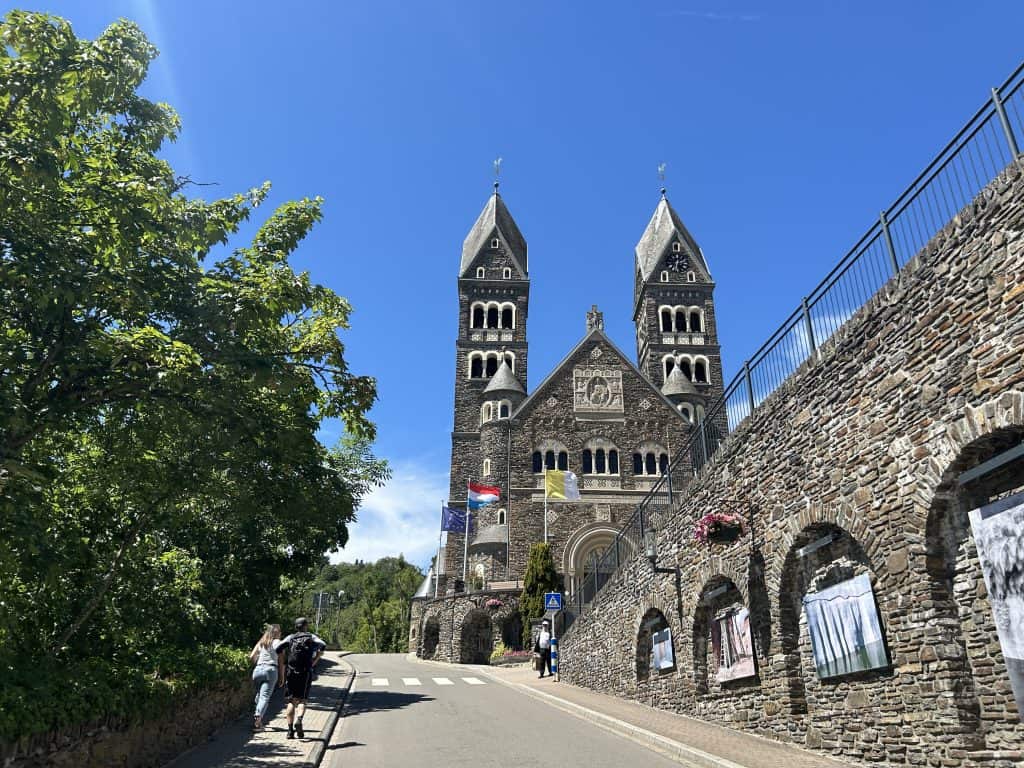
The Parish Church of Saints Cosmas and Damian is the main church in the town of Clervaux. It is located near the castle in the center of the town. The church was built between 1910 and 1912 in the Rhenish-Romanesque style. It was built on the site of an older church. Like the castle, the church was heavily damaged during the Battle of the Bulge and was rebuilt after the war. Its twin towers are a key feature of the town’s skyline.
Hiking Trails
The region around Clervaux is a major destination for hiking. The town is located in the heart of the Éislek region, which is the Luxembourgish part of the Ardennes. The area is characterized by its deep, wooded valleys and high plateaus. A dense network of well-marked circular hiking trails starts from the town. Clervaux is also a key point on the Escapardenne Éislek Trail, a long-distance trail that connects Luxembourg and Belgium.

Sports in Clervaux
The sporting life in Clervaux is centered on its local community clubs and a major golf course that serves as a key recreational attraction for the region. While the surrounding Ardennes landscape is a primary draw for outdoor activities, the town itself supports organized sports, particularly football. The main clubs provide a platform for local residents, especially youth, to participate in regular training and competitions. The town’s sports facilities are an important part of the local social infrastructure. These organized sports offer a different dimension to the town’s character, which is otherwise dominated by history and tourism.
Football
Football is the most popular team sport in Clervaux, with a local club that is central to the community. The club has a long history in the town and is an important part of its social fabric. It provides opportunities for participation for hundreds of children and adults. The senior team represents the town in the national football league system of Luxembourg. Home matches are important local events that draw supporters from the town and the surrounding villages.
FC Claravallis Clervaux
The town’s main football club is FC Claravallis Clervaux. The club was founded in 1935 and has a long history of competing in the Luxembourgish football leagues. They play their home games at the Stade “An der Neie Géig”. The senior team competes in the lower divisions of the Luxembourg football league system. The club is a key institution for community sports in the northern part of Luxembourg, with a significant number of youth teams for different age categories.
Golf
Golf is a major recreational sport in the Clervaux area, attracting both local players and international visitors. The region’s hilly and forested landscape provides a scenic and challenging setting for the sport. The local golf course is a major piece of tourism infrastructure for the town. It is known for its well-maintained facilities and its integration into the natural environment of the Ardennes. The course hosts both club competitions and events for visiting golfers.
Golf de Clervaux
The Golf de Clervaux is located on the plateau just outside the town. It is an 18-hole championship golf course that is a major recreational facility in the region. The course is known for its scenic location and its challenging layout, with holes that wind through the natural landscape of the Ardennes. The facility also includes a hotel and a restaurant, making it a destination for golf holidays. It is a popular venue for both local members and international visitors.
Getting Around in Clervaux
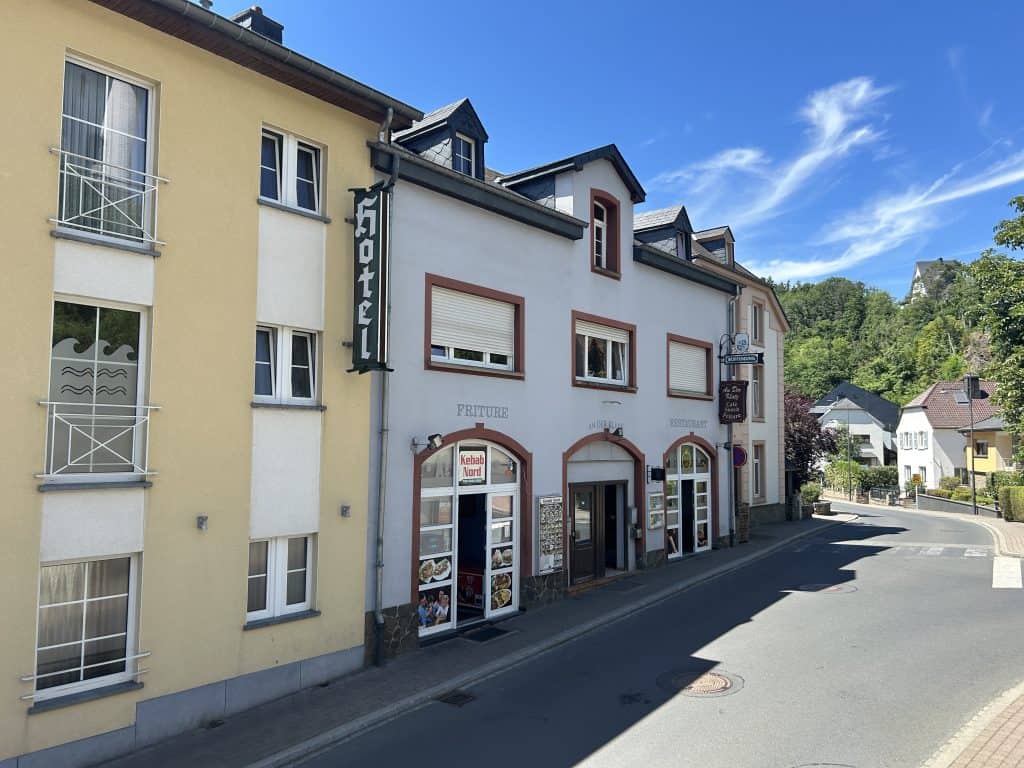
Navigating the town of Clervaux is best done on foot. The town center is very small and is located in a deep, narrow valley. However, the different sights, such as the abbey and the train station, are located at different elevations. Public transport in Luxembourg, including buses and trains, is free of charge for all users.
On Foot: The Valley Town
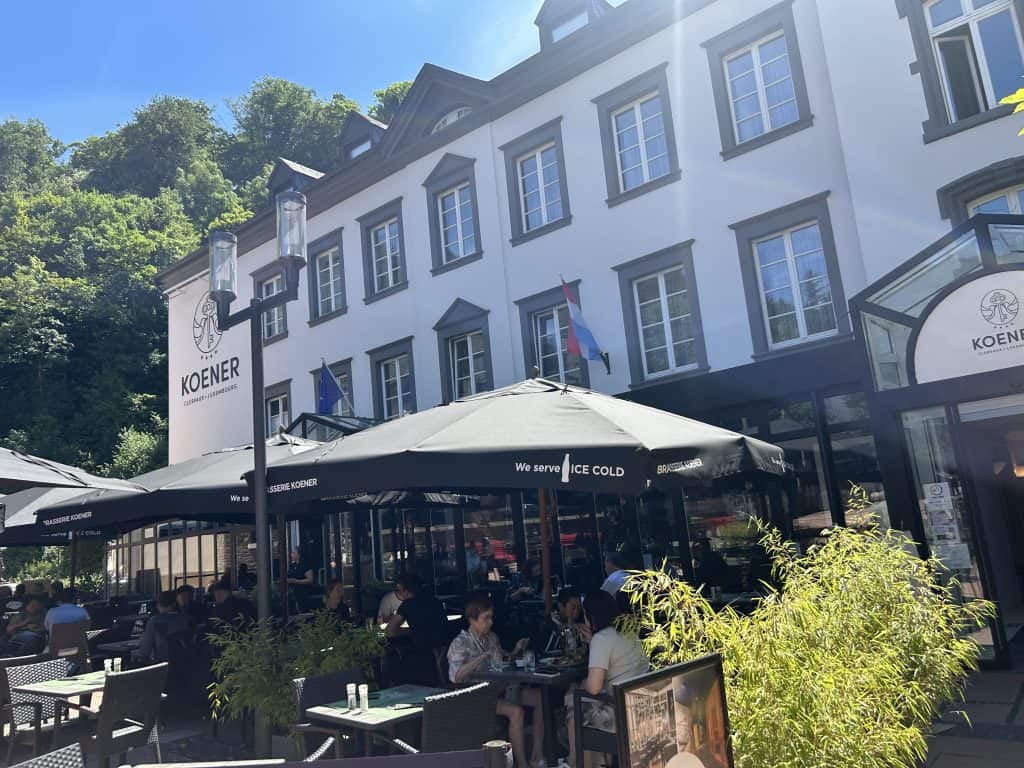
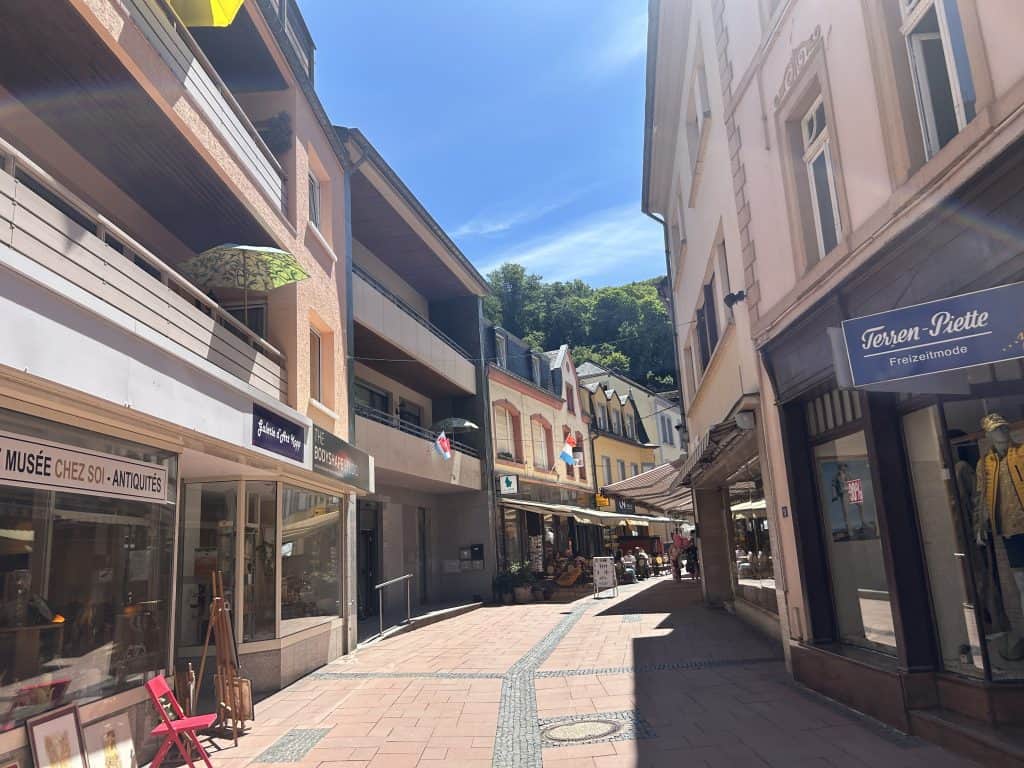
Walking is the best way to explore the central part of Clervaux. The castle, the parish church, and the main commercial street are all located within a short walking distance of each other in the valley floor. However, a steep walk is required to reach the Abbey of St. Maurice on the hill above the town. Comfortable shoes are highly recommended for the town’s hilly terrain.
Local Buses and Trains
The public transport in Luxembourg is operated under the Mobiliteit.lu system. A network of regional buses connects Clervaux with the surrounding villages. The town also has a train station. This station is on the main railway line that connects Luxembourg City with Liège in Belgium. The train provides the most efficient way to travel between the north and south of the country.


How to Get to Clervaux
Reaching Clervaux requires travel to the northern part of the Grand Duchy of Luxembourg. The town is well-connected by the national road and rail networks, making it an accessible destination.
The Open Road: Driving through the Ardennes
Driving to Clervaux offers flexibility for exploring the scenic Ardennes region. The town is located on the N7, which is the main national road running north-south through Luxembourg. The country has a modern motorway network. The A7 motorway connects Luxembourg City with the northern part of the country. From the end of the motorway, the N7 continues to Clervaux. The drive from Luxembourg City takes approximately one hour.
Arriving by Air: Luxembourg Airport
The primary international gateway to the country is Luxembourg Airport (LUX). It is located near the capital, Luxembourg City. The airport is a major hub for the cargo airline Cargolux and the national passenger airline Luxair. It offers connections to many major European cities. From the airport, a combination of bus and train is required to reach Clervaux. This typically involves taking a bus to the main train station in Luxembourg City and then a direct train north.
On Track: A Key Railway Line
Traveling to Clervaux by train is a very efficient and scenic option. The Clervaux station is located on the main international railway line that connects Luxembourg City and Liège, Belgium. The national railway company, CFL, operates frequent and direct train services. The journey from Luxembourg City to Clervaux takes approximately one hour. Public transport, including these train journeys, is free of charge in Luxembourg.
Connecting by Coach
There are limited direct long-distance international bus services to the small town of Clervaux. Travel by coach would typically involve taking a service from a company like FlixBus to the main bus station in Luxembourg City. From there, travelers would need to transfer to the national train service to complete the journey to Clervaux.
Driving Distances
The driving distance from 10 regional cities, according to Google Maps:
- Luxembourg City, Luxembourg – 61 kilometers (1 h 00 min)
- Trier, Germany – 67 kilometers (1 h 10 min)
- Liège, Belgium – 75 kilometers (1 h 10 min)
- Metz, France – 125 kilometers (1 h 40 min)
- Cologne, Germany – 148 kilometers (2 h 00 min)
- Brussels, Belgium – 180 kilometers (2 h 10 min)
- Frankfurt, Germany – 262 kilometers (3 h 10 min)
- Strasbourg, France – 283 kilometers (3 h 10 min)
- Amsterdam, Netherlands – 389 kilometers (4 h 20 min)
- Paris, France – 432 kilometers (4 h 40 min)
Looking to Explore more of Luxembourg and Europe?