
Karlsborg, Västergötland | Exploring Sweden
Karlsborg is a locality and the seat of Karlsborg Municipality, and it is located in Västra Götaland County, Sweden. With a population of around 3,500 inhabitants, the town is situated on the western shore of Lake Vättern, on a peninsula known as Vanäs. The town’s entire existence and development are intrinsically linked to the construction of the large Karlsborg Fortress in the 19th century. This has given the locality a distinct character as one of Sweden’s most prominent garrison towns. The settlement is also a key point along the historic Göta Canal, which connects to Lake Vättern at this location.
The identity of Karlsborg is defined by its dual role as both a historic tourist destination and an active military garrison. The town grew up around the fortress, which was conceived as Sweden’s reserve capital, and it was a place where the government and royal family could retreat in times of war. The fortification was intended to be a central defensive stronghold, safeguarding the nation’s leadership and gold reserves. Today, the fortress is a major attraction, but it also houses active military units, including the elite Life Regiment Hussars (K 3) and the Swedish Parachute Ranger School. This ongoing military function is a central part of the town’s daily life.
Taking Photos in Karlsborg?
Visitors should be aware that the active military presence in Karlsborg has implications for photography. Large parts of the fortress and the surrounding areas are designated as protected military sites (skyddsobjekt), where photography is strictly prohibited. There are clear signs indicating these restricted zones, and the rules are enforced to protect national security interests. This can make documenting a visit challenging in certain areas. It is crucial for all visitors to pay close attention to and respect all signage regarding photo restrictions to ensure a safe and respectful experience while exploring this unique historic and military environment.

History of Karlsborg
The history of Karlsborg is the history of its fortress. The town did not exist before the massive construction project began in the early 19th century. Following the loss of Finland to Russia in 1809, Sweden’s military strategy shifted to a “central defense” principle. This new doctrine required a major inland fortress to serve as a safe haven for the country’s leadership. The decision was made to build this stronghold on the shores of Lake Vättern, a strategic location connected to the rest of the country by the newly constructed Göta Canal.
A Central Defense
The idea for a central fortress was championed by Baltzar von Platen, the main architect of the Göta Canal. The loss of Finland meant that Stockholm was suddenly vulnerable to attack from the east. The new strategy dictated that in the event of an invasion, the King, government, parliament, and even the national gold reserves would be moved to a secure, central location. King Charles XIV John approved the plan in 1819, and the Vanäs peninsula was chosen for its strategic position on Lake Vättern and its proximity to the canal, which would be vital for transportation and supply. The fortress was designed to be one of the largest in Europe, a true symbol of the nation’s will to defend itself.
A 90-Year Construction
The construction of Karlsborg Fortress was a monumental undertaking that began in 1819. The original plan estimated a construction time of ten years, but it would ultimately take 90 years to fully complete the fortress, with the final works finishing in 1909. The project was immensely expensive and faced numerous delays and funding reductions over the decades. The workforce consisted of a mix of enlisted soldiers, local farmers, skilled craftsmen, and even prisoners. As the fortress walls rose, a civilian town began to grow outside its gates, initially to house the many workers and their families, but it soon developed into a permanent settlement.
The Modern Garrison
By the time the fortress was finally completed, military technology, especially artillery, had advanced so much that the central defense concept was largely obsolete. The fortress never had to serve its intended purpose as a reserve capital. In 1918, its official role as a central defensive stronghold was decommissioned. However, the fortress continued to be a vital military site, and it has served as a garrison for various Swedish Army units ever since. Today, it is home to elite units such as the Life Regiment Hussars (K 3) and the Swedish Parachute Ranger School, continuing its long and proud military tradition into the 21st century.

Sights in Karlsborg
The sights in Karlsborg are centered around the large Karlsborg Fortress. This structure is the primary attraction and the reason for the town’s existence. Within the fortress walls, visitors can find a museum, a church, and take part in guided tours that present the history of the site. The town’s location on the shores of Lake Vättern and on the Göta Canal also provides a specific natural setting for this historic destination. Just outside the main town, the industrial heritage site of Forsviks Bruk and the landscape of Tiveden National Park offer further attractions for visitors to the region.
Karlsborg Fortress
Karlsborg Fortress is one of the largest historic fortifications in northern Europe. The construction of the fortress began in 1819 and took 90 years to complete. The limestone walls are several kilometers long, and they enclose a vast area that was planned to function as a self-sufficient town in times of war, complete with its own hospital, workshops, and residential quarters. Today, the fortress is open to the public year-round, and visitors are free to walk around the extensive ramparts and explore the grounds. The fortress area contains numerous historic buildings, including barracks, officer’s housing, and the main central building known as the “Slutvärnet.”
A visit to the fortress provides an insight into 19th-century military engineering, and it offers a variety of experiences for visitors. The fortress is still an active military garrison, which is a key characteristic of the site. Several guided tours are available that take visitors through the underground passages and into the historic buildings, telling the story of the fortress and the soldiers who lived here. The fortress has been a listed historic building in Sweden since 1935. Its combination of historical significance, architectural scale, and ongoing military presence makes it a unique destination.
The Garrison Church
The Karlsborg Garrison Church is a specific sight located within the fortress. The church is situated on the second floor of the central and most heavily fortified building, the “Slutvärnet.” This large hall was originally designed to serve as the assembly hall for the Swedish Parliament, the Riksdag, in the event of a war. The most noted feature of the church is its central chandelier. Instead of traditional crystal prisms, the chandelier is made from 276 polished bayonets, a direct symbol of the fortress’s military purpose. The church’s gilded interior provides a distinct contrast to the limestone walls of the fortress.
Karlsborg Fortress Museum
The Karlsborg Fortress Museum is located on the ground floor of the “Slutvärnet,” the central keep of the fortress. The museum provides a detailed presentation of the history of the fortress and the military units that have been stationed here. The exhibits cover the entire history of the fortress, from the initial plans in the early 19th century to its role as a modern military garrison today. The museum showcases a wide variety of historical artifacts. These include uniforms, weapons, and personal items belonging to the soldiers who lived and worked within the fortress walls.
The Göta Canal
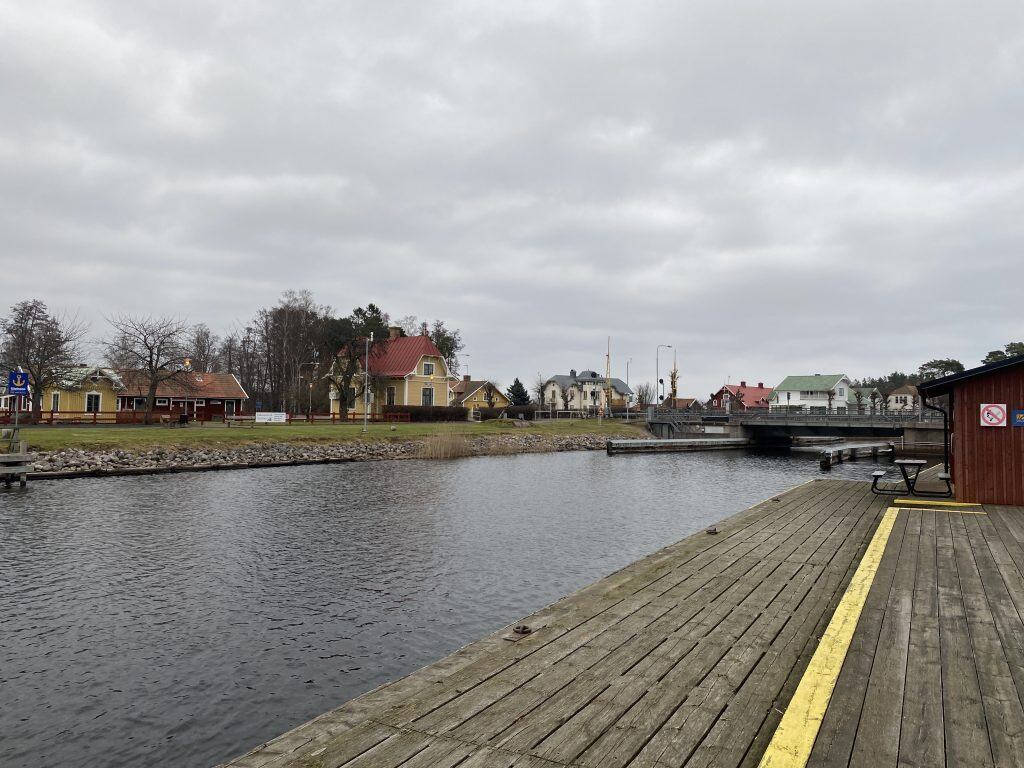
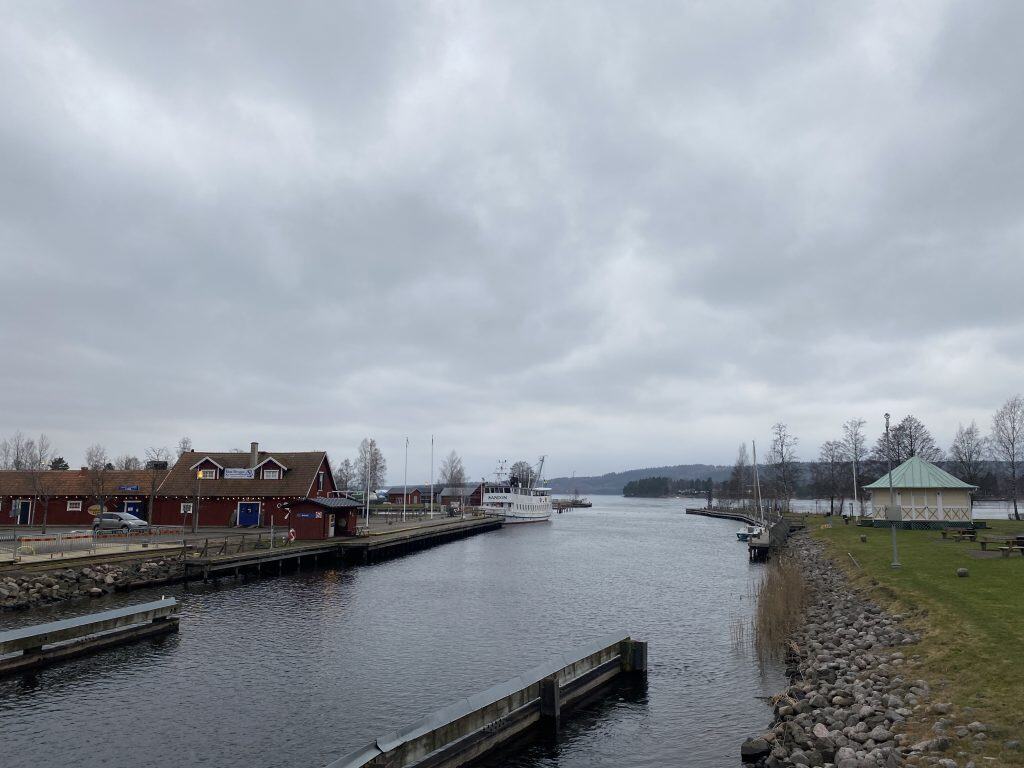
The town of Karlsborg is a key location on the Göta Canal, which is one of the largest construction projects in Swedish history. The canal connects Lake Vänern with the Baltic Sea. In Karlsborg, the canal enters the large freshwater body of Lake Vättern. The harbor area is a very active part of the town, especially during the summer months when it is filled with leisure boats that are traveling along the canal. A walk along the canal and the harbor is a popular activity for visitors, as it offers a chance to see the boats and to enjoy the lakeside setting.
Forsviks Bruk
Forsviks Bruk is one of Sweden’s notable industrial heritage sites, and it is located just a short drive from Karlsborg. Forsvik is the site of the oldest lock on the Göta Canal, which was completed in 1813. The “bruk,” or mill, has a history of industrial activity that stretches back over 600 years. The site includes a historic iron foundry, a sawmill, and a flour mill. Today, Forsviks Bruk is a living museum where visitors can see the old industrial machinery. The setting, with the canal and the historic buildings, makes it a significant and picturesque destination.
Tiveden National Park
For those seeking a nature experience, Tiveden National Park is located a short drive from Karlsborg. The national park is known for its specific landscape of ancient forests, large boulders, and clear lakes. It is considered one of the wildest and most rugged forest areas in southern Sweden. The park has an extensive network of well-marked hiking trails that take visitors through this unique landscape. A visit to Tiveden offers a contrast to the man-made structure of the fortress, and it showcases the natural environment of the region.

Sports in Karlsborg
The sports scene in Karlsborg is primarily focused on community-based clubs and outdoor activities that take advantage of the town’s location on the shores of Lake Vättern and its proximity to the Tiveden forests. The main local sports club is IFK Karlsborg, which is a multi-sport organization that is central to the town’s athletic life, particularly in the sports of handball and football. The primary venue for these sports is the Moliden sports facility, which includes both indoor halls and outdoor pitches. Given its lakeside setting, recreational boating and fishing are also very popular activities among residents and visitors. The surrounding natural landscape provides extensive opportunities for hiking and other outdoor pursuits. The town’s sports culture is very much that of a traditional Swedish smaller community, with a strong focus on local club participation and youth activities.
IFK Karlsborg (Handball)
Handball is one of the most prominent sports in Karlsborg, with the local club IFK Karlsborg having a long and notable history in the sport. The club has competed at high levels in the Swedish league system over the years, and it is a major institution within the town. The team plays its home matches at the Moliden sports hall, which is the main indoor arena in Karlsborg. The club has a strong youth program, and it plays a key role in providing sporting activities for the young people of the municipality. The handball team is a source of local pride and its matches are popular community events.
IFK Karlsborg (Football)
The football section of the multi-sport club IFK Karlsborg is another central part of the local sports landscape. The club’s football teams compete in the regional divisions of the Swedish football league system. The club has both men’s and women’s teams, as well as an extensive youth program that involves a large number of local children and teenagers. The team plays its home matches at the outdoor pitches at the Moliden sports facility. The football club is a key social and recreational hub for the community throughout the summer months.
Vätternrundan (Cycling)
The town of Karlsborg is a significant point on the route of the Vätternrundan, which is the world’s largest recreational cycling event. The 315-kilometer race takes place annually in June, and it involves tens of thousands of cyclists who ride around the entire circumference of Lake Vättern. The route passes directly through Karlsborg, and the town becomes a lively and important checkpoint for the many participants. This major international event brings a festival atmosphere to the town and highlights its beautiful location on the shores of the great lake.
Karlsborgs IBF (Floorball)
Floorball, or “innebandy” as it is known in Swedish, is a very popular sport in Karlsborg, as it is throughout the rest of the country. The main local club is Karlsborgs IBF. The club has a strong focus on youth development, and it has teams for both boys and girls of various age groups. The teams compete in the regional leagues of the Västergötland Floorball Federation. The club plays its home matches at the Moliden sports hall, and it is an important part of the local winter sports scene.
HC Wettern (Ice Hockey)
Ice hockey is another popular winter sport in the region. The main local club is HC Wettern. The club is based in Karlsborg, and it plays an important role in the local community, particularly in providing an organized sports activity for the youth of the town. The team competes in the lower divisions of the Swedish ice hockey league system. The club plays its home matches at the local ice rink, and its games are popular events for local sports fans during the winter months.


How to Get to Karlsborg?
Karlsborg is located on the western shore of Lake Vättern in the province of Västergötland. The main gateway for international visitors is Gothenburg-Landvetter Airport (GOT), although Stockholm Arlanda Airport (ARN) is also a viable option. The town is situated in a relatively rural part of Sweden, so a car is the most convenient mode of transport for reaching the destination. However, it is also possible to reach the town by using a combination of the national train network and the regional public bus service, which provides a reliable connection for those traveling without a private vehicle.
Driving into the Town
Driving to Karlsborg is a straightforward journey through the Swedish countryside. The town is located on Route 49, which is a major regional road that connects the cities of Skövde and Askersund. For travelers arriving from the main population centers of Stockholm or Gothenburg, the primary route is the E20 motorway. From the E20, motorists would take the exit at Skövde and then follow the clear signage for Route 49 directly to Karlsborg. The drive from the E20 motorway to the town takes approximately 45 minutes and passes through the scenic agricultural landscape of the Västergötland region.
Connecting by Train and Bus
The nearest major train station to Karlsborg is located in the city of Skövde, which is approximately 45 kilometers away from the town. Skövde is a major hub on the main western railway line (Västra Stambanan) that runs between Stockholm and Gothenburg, and it is served by frequent high-speed and regional train services. From the Skövde train station, visitors can take a direct and regular public bus service, which is Route 400, to Karlsborg. The bus journey takes approximately one hour to complete. This combination of train and bus is the most practical option for those who are traveling to Karlsborg by public transport.
Driving Distances
The driving distance from 20 regional cities, according to Google Maps:
- Skövde, Sweden – 45 kilometers (0 h 45 min)
- Jönköping, Sweden – 100 kilometers (1 h 20 min)
- Örebro, Sweden – 100 kilometers (1 h 20 min)
- Linköping, Sweden – 110 kilometers (1 h 30 min)
- Norrköping, Sweden – 140 kilometers (1 h 50 min)
- Gothenburg, Sweden – 195 kilometers (2 h 20 min)
- Västerås, Sweden – 215 kilometers (2 h 30 min)
- Stockholm, Sweden – 290 kilometers (3 h 20 min)
- Uppsala, Sweden – 320 kilometers (3 h 40 min)
- Helsingborg, Sweden – 350 kilometers (3 h 40 min)
- Malmö, Sweden – 410 kilometers (4 h 20 min)
- Kalmar, Sweden – 320 kilometers (3 h 30 min)
- Gävle, Sweden – 375 kilometers (4 h 00 min)
- Karlstad, Sweden – 160 kilometers (2 h 00 min)
- Sundsvall, Sweden – 580 kilometers (5 h 50 min)
- Umeå, Sweden – 830 kilometers (8 h 30 min)
- Luleå, Sweden – 1100 kilometers (11 h 00 min)
- Kiruna, Sweden – 1420 kilometers (14 h 30 min)
- Copenhagen, Denmark – 440 kilometers (4 h 40 min)
- Oslo, Norway – 330 kilometers (4 h 00 min)
Explore More of Västergötland and Sweden