
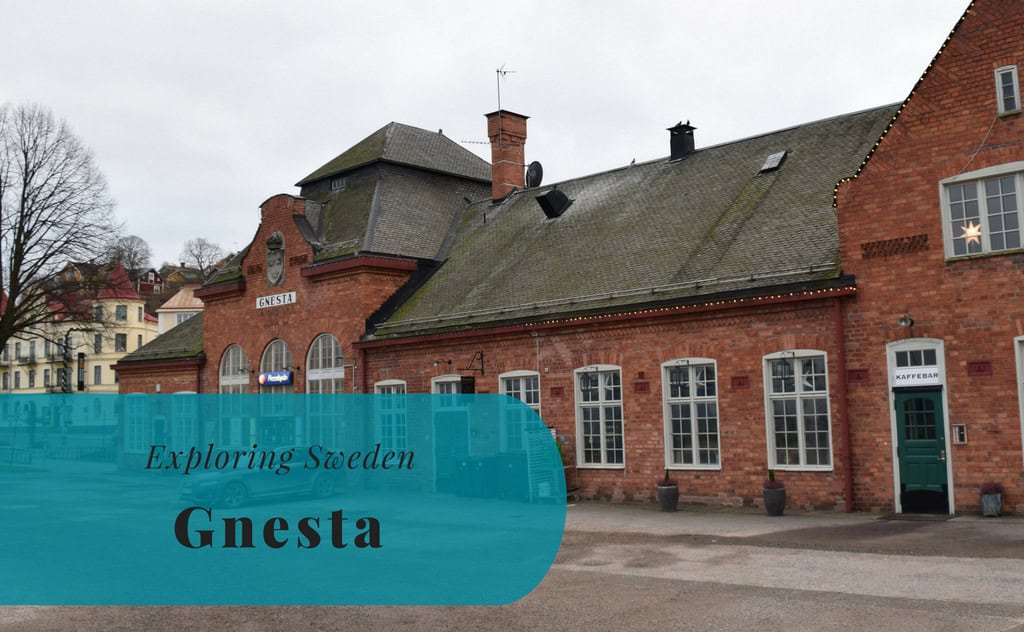
Gnesta, Södermanland | Exploring Sweden
Gnesta is a locality and the seat of Gnesta Municipality, located in the county of Södermanland, Sweden. The town is situated in the historic province of Södermanland. With a population of approximately 6,400 residents as of 2025, Gnesta is a key residential community and service center for the surrounding rural area. The town is located on the shore of Lake Frösjön. It is a major stop on the Western Main Line railway (Västra stambanan), which connects Stockholm and Gothenburg.
The character of Gnesta is that of a historic railway town that has evolved into a popular commuter hub for the greater Stockholm region. Its identity is deeply connected to the railway, which was the catalyst for its modern development. The town has a small, pleasant center with a mix of historic wooden houses and modern buildings. This exists alongside its location in the scenic Södermanland countryside, with lakes and forests in its immediate vicinity. This combination of excellent transport links and a small-town, nature-oriented atmosphere defines its appeal.


A Short History of Gnesta
The history of Gnesta is the story of a small rural village that was rapidly transformed into a thriving town by the arrival of the railway in the 19th century. For centuries, it was a minor settlement. The establishment of a major train station here turned it into a hub for transport, commerce, and small-scale industry. The town’s modern identity as a commuter town is a direct continuation of this history.
A Small Village
The first known written mention of Gnesta dates back to 1383. At that time, its name was Gnytistum. Before the construction of the railway, the village was very small, consisting of only a few farms. It was a minor agricultural settlement within the local parish. Its location near several lakes was its main geographical feature, but it was not a significant commercial or administrative center.
The Railway Boom
The most significant event in Gnesta’s history was the arrival of the Western Main Line railway. The station in Gnesta was opened in 1861. This was the pivotal moment that resulted in the creation of the modern town. The new station became a major junction and a key service point for the steam locomotives. The town grew rapidly around the station, with new houses, services, and industries being established. This included the production of cigars and brushes.
A Modern Commuter Town
Throughout the 20th century, Gnesta continued its development as a service center and a residential community. In the modern era, its excellent train connections have made it a popular commuter town for people working in the nearby cities of Södertälje and Stockholm. The town has also gained some international recognition as one of the filming locations for the 2009 film adaptation of the Stieg Larsson novel The Girl with the Dragon Tattoo. Today, it is a prosperous small town that has managed to combine its historic character with modern living.


Sights in Gnesta
The sights in and around Gnesta are focused on its history as a railway town, its historic buildings, and the surrounding natural landscape of Södermanland. The main points of interest offer a look into the town’s development and provide access to the scenic countryside.
The Old Water Tower
The Old Water Tower is the most prominent symbol of the town of Gnesta. The 28-meter-high tower was built in 1914 and stands on a hill overlooking the town center. It was built to supply water to the steam locomotives at the railway station. A new water tower replaced the old one in 1977, but the original tower was preserved as a historic landmark. The area around the tower contains many of the old houses where the railway workers once lived. A staircase of 129 steps leads back down to the town center.
The Railway Station
The Gnesta Railway Station is a key historical and functional landmark. The first station building was constructed in 1861 and became a model for other station buildings in Sweden. The current, larger station building was built in 1907 from stone and brick. It is still a major hub for both regional trains and the Stockholm commuter rail system. Located near the station is one of Sweden’s few remaining water cranes, which was used to fill the old steam locomotives with water.
Art Lab Gnesta
Located near the town center in a former beer brewery from the end of the 19th century is Art Lab Gnesta. The historic three-story brick building was used as a brewery until 1963. It has since been repurposed and now houses Art Lab Gnesta, a local organization for experimental art and culture. The center hosts a regular program of contemporary art exhibitions, workshops, and other cultural events. It is a key part of the town’s modern cultural life.
Gnesta Distillery
The Gnesta Distillery (Gnesta Bränneri) is located a short distance from the town. The distillery is known for its production of handcrafted spirits, such as vodka and snaps. The business focuses on using locally sourced and organic ingredients. The distillery offers pre-booked tours where visitors can learn about the production process, from the raw ingredients to the final bottled product. The tours often include a tasting of the distillery’s products.
Södertuna Castle
Located a short drive from Gnesta is Södertuna Castle (Södertuna Slott). This is a large and well-preserved historic castle with its origins in the Middle Ages. The current main building dates to the 17th century. The castle is situated in a scenic location on the shore of Lake Frösjön. Today, the castle operates as a hotel and a conference center. It is a major landmark in the region.
Read more about Södertuna Castle here: Södertuna, Södermanland | Exploring Sweden
Sports in Gnesta
The sporting life in Gnesta is centered on its active community sports clubs, which provide opportunities for residents of all ages to participate in a variety of organized sports. The most popular sports in the town are football, ice hockey, and floorball, each with a dedicated local club that is a key part of the social fabric. These clubs have a strong focus on youth development and are central to community life. The town has several sports facilities, including an ice rink, sports halls, and outdoor pitches, that serve as hubs for these clubs. Home games for the local teams are important community events that draw support from across the municipality.
Football
Football is a popular sport in Gnesta, with a local club that has a long history in the town. The club is an important part of the community, with a strong focus on developing players of all ages. It represents the town in the regional leagues of the Södermanland Football Association. Home games at the local sports ground are well-attended community events. The club is a key institution for the sport in the region, with numerous youth teams.
Gnesta FF
The main football club is Gnesta FF. The club’s senior team competes in the lower divisions of the Swedish football league system. They play their home games at the Hagstumosse IP, the main sports ground in the town. The club is a central part of the community, with a large and active youth section that provides training for hundreds of children and teenagers.
Ice Hockey
Ice hockey is a key winter sport in Gnesta, with a dedicated club that is a central part of the community. The sport has a strong following in the town, and the local ice rink is a hub of activity throughout the winter season. The club has a history of competing in the national league system. It provides a platform for local players to develop their skills. Home matches are popular events for local sports fans.
Gnesta IK
The local ice hockey club is Gnesta IK. The club has a long history and has had periods of competing at a high level, including in Hockeyettan, the third tier of Swedish ice hockey. They play their home games at the local ice rink (ishall). The club has a very important youth program that is considered one of the strongest in the Södermanland region.
Floorball
Floorball (innebandy) is another of the most popular sports in Gnesta, as it is throughout Sweden. The local club has a large number of active members, particularly in its youth sections. The sport is a key part of community life, especially during the indoor season. The club has teams for both boys and girls across all age groups. They compete in the regional league system of Söderman-land.
Gnesta IBF
The main floorball club is Gnesta IBF. The club provides training and competition for numerous teams, from young children to senior squads. They play their home games at the Frejahallen, the main indoor sports hall in the town. The club is an important part of the local sports landscape and is a key social hub for many of the town’s families.


Getting Around in Gnesta
Navigating the town of Gnesta is straightforward. The town center is compact and can be easily explored on foot. For travel to the surrounding areas, a network of regional buses is the primary mode of public transport. The town is also very bike-friendly.
On Foot: The Town Center
Walking is the best way to explore the central part of Gnesta. The railway station, the main shopping street, and the area around Lake Frösjön are all within a short walking distance of each other. This allows visitors to see the town and access local shops and cafes on foot.
Local Buses and Trains
The public transport in the region is operated by Sörmlandstrafiken. A network of regional buses connects Gnesta with other nearby towns and villages. The town’s train station is a major hub for both the Stockholm commuter rail (pendeltåg), which provides a frequent service to Södertälje and Stockholm, and for regional trains.
How to Get to Gnesta?
Reaching the town of Gnesta is very convenient by rail and road due to its location on a major railway line and its proximity to the E4 motorway. This makes it highly accessible from the Stockholm region and other parts of Sweden.
The Open Road: Driving to Gnesta
Driving to Gnesta is a common option. The town is located on Route 57, a major regional road. This road connects to the E4 motorway at the town of Järna, about 20 kilometers away. The E4 is the main north-south highway in Sweden. The drive from central Stockholm is approximately 67 kilometers and takes about one hour. A car provides flexibility for exploring the surrounding Södermanland countryside.
Arriving by Air: Stockholm Skavsta Airport
The closest airport with regular international connections is Stockholm Skavsta Airport (NYO). It is located near Nyköping, approximately 60 kilometers to the south, and is a hub for low-cost carriers. Sweden’s main international airport, Stockholm Arlanda Airport (ARN), is located about 100 kilometers away. From either of these airports, a combination of airport bus and train is required to reach Gnesta.
On Track: A Key Railway Station
Traveling to Gnesta by train is highly efficient. The Gnesta station is a key stop on the Western Main Line. It is served by both SJ regional trains and the Stockholm commuter rail (pendeltåg) system. The commuter train provides a frequent, direct service to Södertälje and central Stockholm. This makes Gnesta a very accessible destination for a day trip from the capital.
Connecting by Coach
There are limited direct long-distance bus services to Gnesta itself. Travel by coach would typically involve taking a service to the main bus terminal in Stockholm or Södertälje. From these cities, travelers would then need to transfer to the commuter train service to complete the journey to Gnesta.
An International Ferry Approach
The closest major international ferry ports are located in Nynäshamn and Stockholm. These ports have frequent connections to Finland, Estonia, Latvia, and Poland. From either of these ports, the journey to Gnesta must be completed by car or by a combination of public transport, typically via Stockholm.
Driving Distances
The driving distance to Gnesta from 10 regional cities, according to Google Maps:
- Södertälje, Sweden – 30 kilometers (0 h 30 min)
- Nyköping, Sweden – 51 kilometers (0 h 40 min)
- Stockholm, Sweden – 61 kilometers (1 h 00 min)
- Norrköping, Sweden – 111 kilometers (1 h 20 min)
- Linköping, Sweden – 143 kilometers (1 h 40 min)
- Gothenburg, Sweden – 417 kilometers (4 h 20 min)
- Oslo, Norway – 472 kilometers (5 h 20 min)
- Malmö, Sweden – 556 kilometers (5 h 30 min)
- Copenhagen, Denmark – 598 kilometers (6 h 00 min)
- Luleå, Sweden – 964 kilometers (10 h 20 min)
Explore More of Södermanland and Sweden
This post was first published 2017-01-17 and was updated 2025-07-25


I’ve never been to Europe, but my father was half Swedish and half Norwegian. I have that nice, pale Scandinavian skin LOL. You’ve provided some nice pictures. I love looking at pics of old buildings. I especially like the distillery. Thanks for sharing your travels.
Thanks for your comment 🙂 You should come to Scandinavia someday if you get the chance!
Beautiful country!!! I would like go someday if I get the chance.
Hopefully, we will all be able to travel again soon. 🙂
We all hope and long for the day when we once more can extend our wings and head back out into the world. 🙂
I discovered your blog when planning my trip to the area next summer. My grandfather Axel was born and lived on a farm nearby in Frustuna. His father was in the Swedish Navy. The family emigrated to America when he was 11 in 1889. I will be the first in the family to return to the area. If possible, I would like to find the farm.