
Järna, Södermanland | Exploring Sweden
Järna is a locality in Södertälje Municipality, located in the county of Stockholm, Sweden. It is situated in the historic province of Södermanland. With a population of around 6,200 inhabitants, Järna is a significant residential community and is often considered a suburb of the much larger city of Södertälje. The locality is surrounded by a rural landscape where agriculture is still an important part of the region. The E4 motorway, the main highway in Sweden, passes directly by Järna, with the large tower of the Saltå Kvarn mill being a prominent landmark for travelers.
The character of Järna is defined by its role as a commuter town with a strong connection to the surrounding countryside. Its identity is also closely linked with the wider area’s reputation as the center of the anthroposophy movement in Sweden, which is primarily based in the neighboring parish of Ytterjärna. The town has a functional center that has grown around its train station. This provides essential services for the local population. This combination of a modern commuter hub, a traditional agricultural landscape, and a unique cultural and philosophical presence nearby gives Järna its specific character.
A Short History of Järna
The history of Järna is that of two ancient rural parishes that were transformed into a modern community by the arrival of the railway and the establishment of the anthroposophy movement. For centuries, the area was a quiet agricultural landscape with a few small industries. The story of Järna is one of its growth as a transport hub and its subsequent development into a unique cultural and social center in the 20th century. This has given the town a history that is distinct from most other communities in the region.
Medieval Parishes and Early Industry
The history of settlement in the Järna area is long, and for centuries it has been divided into two separate parishes: Ytterjärna and Överjärna. Both of these parishes were established in the Middle Ages and have their own historic churches. The inhabitants of these parishes focused for centuries on farming. Iron ore was found in the area in the 17th century, which resulted in the establishment of several small mines that were active until the 1940s. In addition, several sawmills and brickyards were also established in the area.
The Arrival of the Railway
A pivotal moment in the town’s modern history was the arrival of the Western Main Line railway in 1862. The railway line between Stockholm and Gothenburg passed through the area, and a station was built here. The presence of the station led to the growth of a new central community, which became the modern locality of Järna. The railway improved the transport of goods from the local industries and made the area more accessible for both residents and businesses. This laid the groundwork for its development in the 20th century.
The Anthroposophy Movement
The most defining event in the wider area’s modern history was the establishment of the anthroposophy movement in the 1930s. This movement, which is based on the ideas of the Austrian philosopher Rudolf Steiner, established its main Swedish center in the neighboring parish of Ytterjärna. The movement has had a major impact on the surrounding community. Numerous anthroposophical institutions have been established here, including schools, healthcare facilities, and biodynamic farms, such as the famous Saltå Kvarn. This has made the Järna area an international center for anthroposophy.

Sights in Järna
There is a limited number of traditional sights in the center of Järna itself. However, the wider municipality and the surrounding countryside have several culturally important buildings and large nature reserves. The main attractions are focused on the area’s medieval churches, its industrial heritage, and the natural beauty of the Södermanland landscape.
Överjärna Church
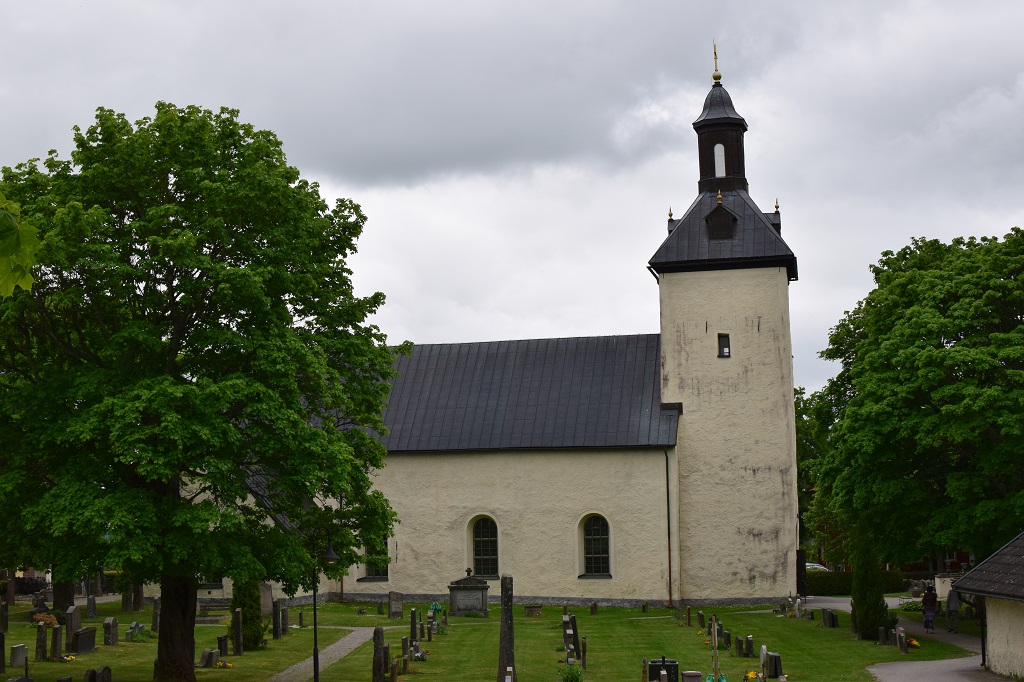
The Överjärna Church (Överjärna kyrka) is the historic parish church of the area and a key landmark. The church has its origins in the 12th century, making it a significant medieval building. It is a well-preserved Romanesque stone church. It is located in the heart of the historic parish, a short distance from the modern town center of Järna. The church is surrounded by a historic cemetery and stands as a testament to the area’s long history as a settled agricultural community.
Järna Station
The Järna Station building is a key historical and functional landmark. The original station opened in 1861 with the arrival of the railway. The current station is a stop for the Stockholm commuter rail (pendeltåg) system. It provides a vital transport link for the many residents who commute to Södertälje and Stockholm. The station area is the heart of the modern locality of Järna, with the main commercial services located nearby.
Moraåns Dalgång Nature Reserve
Located along the valley of the Moraån river is a 68-hectare large nature reserve. The reserve protects an important natural and cultural area for Järna. It covers a landscape of both forests and grazed fields. Over one hundred ancient remains have been registered within the reserve, including burial mounds. The white-tailed eagle is also known to be seen along the river. The reserve has marked walking trails and is a popular area for local recreation.
Farstanäs Nature Reserve
The Farstanäs Nature Reserve is a large protected area located to the east of Järna, on the coast of the Baltic Sea. The reserve is owned by Södertälje Municipality. The area includes the popular Farstanäs Camping and the sandy beach Farstanäsbadet. The reserve covers an area of 383 hectares. It also includes the historic estate of Farsta Säteri, with buildings dating back to the 18th century.
Sports in Järna
The sporting life in Järna is dominated by the large, local multi-sport association, Järna SK. This single club is the heart of the community’s organized sports, providing activities in many of the town’s most popular sports, including football, ice hockey, and floorball. The town’s main sports venues, such as the Järna IP sports ground and the local ice rink (ishall), are the central hubs for the club’s activities. Järna SK plays a crucial role in the social fabric of the community, especially through its extensive youth programs that involve hundreds of local children and teenagers.
Järna SK – Football
The football section of Järna SK is the primary focus of the town’s sporting life during the summer months. The club has a long history, dating back to its founding in 1921. The senior football team competes in the middle divisions of the Swedish football league system. They play their home games at Järna IP, earlier known as Ljungbackens IP, the main sports ground in the town. The club is particularly known for its large and active youth program, which provides training for numerous teams across all age categories and is a central part of community life for many local families.
Järna SK – Ice Hockey
The ice hockey section of Järna SK is the main local club for one of Sweden’s most popular winter sports. The club is a key part of the community, providing an important outlet for youth and adult players during the long winter season. They play their home games at the local ice rink (ishall), which is a hub of activity from autumn to spring. The senior team competes in the lower divisions of the regional ice hockey league system, such as Hockeytrean or Hockeyfyran. The club has a strong focus on its youth academy, developing young hockey players from the Södermanland region.
Järna SK – Floorball
The floorball (innebandy) section of Järna SK is another of the club’s large and active departments. Floorball is one of Sweden’s biggest participation sports, and the club in Järna reflects this popularity. The club has teams for various age groups, for both boys and girls. They compete in the regional league system of Södermanland. The teams use the local indoor sports halls for their training and matches, making the sport a key part of the indoor season.


Getting Around in Järna
Navigating Järna is best done with a combination of walking and local transport. The central part of the locality is compact and can be explored on foot. For travel to the surrounding areas, the commuter train and a network of regional buses provide service.
On Foot: The Town Center
Walking is a suitable way to explore the central part of Järna. The train station and the main commercial streets are all within a short walking distance of each other. The paths in the nearby nature reserves are the main areas for recreational walking.
Local Buses and Trains
The public transport in the region is operated by Stockholm Public Transport (SL). A network of regional buses connects Järna with the surrounding rural areas and with the main city of Södertälje. The Stockholm commuter rail (pendeltåg) system is the primary mode of public transport. The commuter trains provide a frequent and direct connection north to Södertälje and Stockholm, and south to Gnesta.
How to Get to Järna
Reaching Järna is very convenient by road and rail, as it is located on the main transport corridor between Stockholm and southern Sweden. Its location in the greater Stockholm region makes it highly accessible.
The Open Road: Driving the E4
Driving is a very common and practical way to reach Järna. The locality is located directly on the E4 motorway, which is the main north-south highway in Sweden. The drive from central Stockholm is approximately 47 kilometers and takes about 40 minutes. A car provides the flexibility to explore the surrounding Södermanland countryside.
Arriving by Air: Stockholm Airports
The closest airport with regular international connections is Stockholm Skavsta Airport (NYO). It is located near Nyköping, approximately 62 kilometers to the south. Sweden’s main international airport, Stockholm Arlanda Airport (ARN), is located about 88 kilometers to the north. From either of these airports, a combination of airport bus and train is the most common way to reach Järna.
On Track: A Key Railway Station
Traveling to Järna by train is highly efficient. The Järna station is a key stop on both the main Western Main Line railway and the Stockholm commuter rail (pendeltåg) network. The commuter trains provide a very frequent service to Södertälje and central Stockholm. Regional trains also provide connections to other parts of Sweden.
Driving Distances
The driving distance from 10 regional cities, according to Google Maps:
- Södertälje, Sweden – 14 kilometers (0 h 20 min)
- Stockholm, Sweden – 47 kilometers (0 h 40 min)
- Nyköping, Sweden – 58 kilometers (0 h 40 min)
- Norrköping, Sweden – 119 kilometers (1 h 20 min)
- Linköping, Sweden – 156 kilometers (1 h 40 min)
- Gothenburg, Sweden – 425 kilometers (4 h 40 min)
- Oslo, Norway – 495 kilometers (5 h 30 min)
- Malmö, Sweden – 569 kilometers (5 h 30 min)
- Copenhagen, Denmark – 611 kilometers (6 h 10 min)
- Kiruna, Sweden – 1,280 kilometers (14 h 40 min)
Explore More of Södermanland and Sweden
This post was first published 2021-01-14 and was updated 2025-07-27




Jag fick leta runt på nätet ett tag innan jag begrep att det som hette Rudolf Steiner-seminariet nu är så gott som nedlagt och att det nu heter Kulturhuset. Gjorde ett studiebesök där för evigheter sedan och imponerades av den mycket speciella arkitekturen, skönheten och lugnet.
Jag visste faktiskt inte att det hade haft ett annat namn tidigare. Vi har faktiskt inte besökt själva Kulturhuset, men det är svårt att inte lägga märket till byggnaden när man passerar. Arkitekturen sticker ju verkligen ut i jämförelse med något annat som man kan hitta inom forna Öknebo härad, eller Södermanland för den delen.