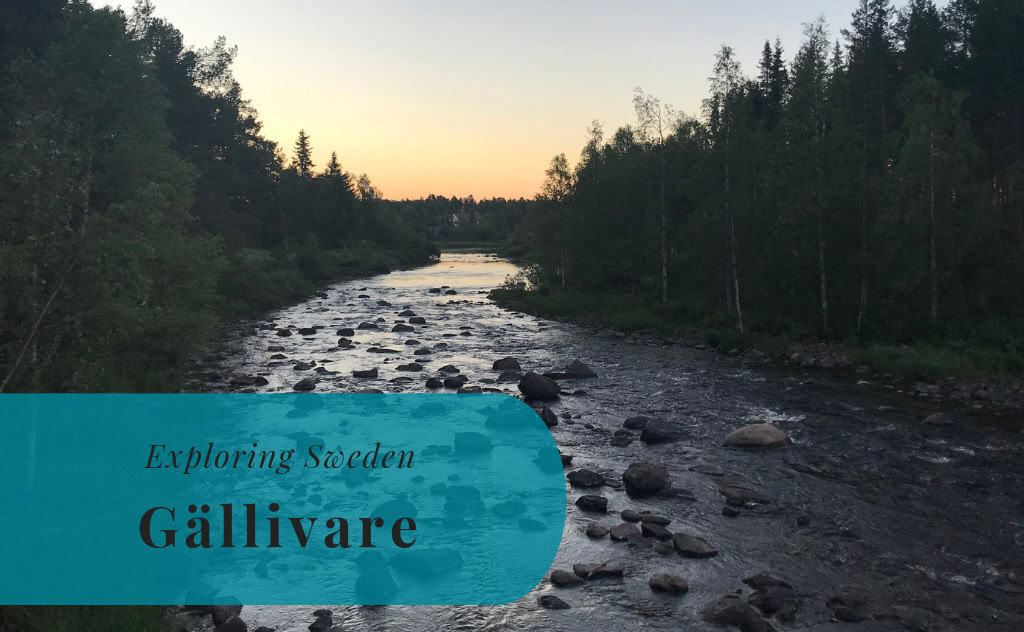
Gällivare, Lappland | Exploring Sweden
Gällivare is a locality and the seat of Gällivare Municipality, located in the county of Norrbotten, Sweden. It is situated in the historic province of Lappland, approximately 100 kilometers north of the Arctic Circle. With a population of around 8,400 residents in the urban area, Gällivare is a key mining and administrative center for the region. The town is located in one of Sweden’s major iron ore regions and lies within Sápmi, the cultural region of the indigenous Sámi people. Its name is believed to be derived from a Sámi word.
The character of Gällivare is defined by its long history as a mining town and its close relationship with the surrounding Arctic nature. The town’s identity is inextricably linked to the iron ore mining in the adjacent mountain of Malmberget. This industrial heritage exists alongside its role as a gateway to the vast wilderness areas of northern Swedish Lapland, including the Laponia UNESCO World Heritage Site. The town is currently undergoing a major urban transformation due to the expansion of the mine, which is reshaping the community’s landscape.


A Short History of Gällivare
The history of Gällivare is that of a remote Sámi landscape that was transformed into a major industrial center by the discovery and exploitation of massive iron ore deposits. The development of the town was driven by the industrial revolution and the construction of the Iron Ore Line railway. The story of Gällivare is one of a classic subarctic mining town, built to support one of Sweden’s most important industries. This history continues to shape the town today, with the ongoing relocation of its neighbor, Malmberget.
A Sámi Landscape and a New Parish
The first known written mention of the Gällivare area dates back to the 17th century. Before the arrival of Swedish settlers, the region was part of the traditional lands of the Sámi people. The first mining for iron ore took place in 1735. A few years later, in the 1740s, the first church, known as the “Ettöreskyrkan” (One-öre Church), was built in the area. The primary purpose of the church was to introduce Christianity to the Sámi population. For a long time, the settlement remained very small and remote.
The Iron Ore Rush
The major development of the town occurred with the construction of the Iron Ore Line (Malmbanan) railway at the end of the 19th century. The railway was built to transport the high-quality iron ore from the mines in Gällivare and Kiruna to the ice-free port of Narvik in Norway and the port of Luleå on the Baltic Sea. The arrival of the railway made large-scale mining operations possible. The town of Gällivare grew rapidly as a service and residential center for the miners and their families.
The Urban Transformation
Since the start of the mining operations, most activities have occurred around the mine in the mountain of Malmberget, located a few kilometers from Gällivare. The mine greatly affects the region. The expansion of the underground mine has caused massive ground subsidence, making the town of Malmberget unsafe. As a result, a major urban transformation project is underway, similar to the more famous move of Kiruna. Large parts of the town of Malmberget are being demolished, and many of its historic buildings and residents are being relocated to new districts in Gällivare.


Sights in Gällivare
There is a lot to do in and around Gällivare, much of which is connected with the mining industry and the magnificent surrounding nature. The main attractions are focused on the nearby Dundret mountain, the local museum, and the unique opportunity to witness a town in transformation.
Dundret
Dundret is a large mountain that overlooks the town of Gällivare. The name is a local Swedish form of the Lule Sámi word for mountain. It is a nature reserve, with its highest point reaching 823 meters above sea level. Dundret is a major recreational hub for the city. There is a ski resort on one of its slopes, and there are multiple hiking paths in the area. The peak is also accessible by car, and from the top, you can experience the midnight sun in the summer and see one-eleventh of Sweden’s total area.
The Urban Transformation
It is not many times that you will get the opportunity to see a whole town being moved. The urban transformation of Gällivare and Malmberget is a unique, ongoing process. Signs of the move are visible both in Gällivare, where new residential areas are being built, and in Malmberget, where entire neighborhoods are being fenced off and demolished. It is sometimes even possible to see historic wooden houses being transported on large trucks from Malmberget to their new locations in Gällivare.
Gällivare Museum
The Gällivare Museum is located in the center of Gällivare, in the old parish schoolhouse. The museum’s exhibitions offer a glimpse into the history of the town and the surrounding region. It focuses on three main themes: the history of the indigenous Sámi people, the history of the colonist settlers, and the history of the iron mining industry that has shaped the modern community. The museum provides a comprehensive look at the cultural heritage of the area.
Vassaraälven
The Vassaraälven is a stream that runs along the western side of Gällivare. The area along the stream provides great paths for walking and is one of the easiest ways to access nature when you are in the center of town. If you cross the stream from the main part of Gällivare, you will be in the area known as “Andra sidan.” The name is quite suitable; it simply means “the other side.” The riverside paths are a popular recreational area for local residents.
Laponia World Heritage Site
Gällivare is a major gateway to the southern part of the Laponia World Heritage Site. Laponia is a vast, 9,400-square-kilometer area of mountains and forests that was designated a UNESCO World Heritage Site in 1996 for both its natural and cultural value. The site consists of four national parks, including Stora Sjöfallet and Muddus, which are accessible from Gällivare. The Naturum Laponia visitor center at Stora Sjöfallet is a key attraction.
Traveling with Kids in Gällivare
Gällivare is a good destination for families with children who are interested in nature and outdoor activities. The town is small and safe. The main attraction for families is the nearby Dundret mountain, which offers activities year-round.
Family-Friendly Attractions
The Dundret mountain is a large playground for families. In the winter, the ski resort has slopes for all skill levels, including a dedicated children’s area. In the summer, the hiking trails are accessible for family walks. The local museum also has exhibits that can be engaging for older children. The opportunity to see the midnight sun in the summer or the northern lights in the winter is also an exciting experience for all ages.
Sports in Gällivare
The sporting life in Gällivare is almost entirely defined by its Arctic climate and its proximity to the Dundret mountain. The long and snowy winters have made the town a major national center for winter sports, particularly cross-country and alpine skiing. The Dundret ski resort serves as the central hub for the town’s sporting life for a large part of the year, hosting both recreational skiers and elite international competitions. The town is famous for producing numerous Swedish champions and Olympic athletes in skiing. During the short summer months, the focus shifts to sports like football, which are played at the local sports grounds.
Gällivare SK (Skiing & Athletics)
Gällivare Sportklubb (GSK) is one of the town’s oldest, largest, and most prestigious multi-sport clubs. The club is most famous for its highly successful cross-country skiing section, which has a long history of producing elite athletes who have competed for Sweden at the Olympic Games and World Championships. In addition to skiing, the club also has active sections for other sports, including athletics. GSK is a key part of the community, managing many of the local sports facilities and providing organized training for hundreds of young people in the municipality.
Dundret Alpina (Alpine Skiing)
While Gällivare SK is strong in cross-country skiing, the sport of alpine (downhill) skiing is primarily organized by Dundret Alpina. This club is based at the Dundret ski resort and is focused on competitive and youth alpine skiing. The club uses the slopes of Dundret for its training and organizes numerous local and national competitions throughout the long winter season. It is a key institution for developing alpine skiing talent in northern Sweden. The club’s activities are a central part of the life at the ski resort.
Gällivare Malmbergets FF (Football)
Gällivare Malmbergets FF (GMFF) is the main football club in the area. The club was formed through a merger of the historic clubs from the two towns of Gällivare and Malmberget. It is the primary organization for football in the municipality and is the main focus of the summer sports season. The club’s senior team competes in the middle divisions of the Swedish football league system. They play their home games at a local sports ground in the town. The club has a large and active youth program.
Gällivare Hockey (Ice Hockey)
Gällivare Hockey is the local ice hockey club. Ice hockey is a very popular sport in northern Sweden, and the club in Gällivare is a key part of the local winter sports scene. The club provides opportunities for youth and adult players to participate in the sport. They compete in the lower divisions of the regional ice hockey league system of Norrbotten. They play their home games at the local ice rink (ishall).


Getting Around in Gällivare
Navigating the town of Gällivare is best done with a combination of walking and local transport. The town center is compact and walkable. A car is essential for reaching the airport, Dundret mountain, and the vast natural attractions in the surrounding municipality.
On Foot: The Town Center
Walking is a suitable way to explore the central part of Gällivare. The main services, the museum, and the area around the Vassaraälven stream are all within a short walking distance of each other. The town is relatively flat, which makes it easy to navigate on foot.
Local Buses
A network of local buses, operated by Länstrafiken Norrbotten, serves Gällivare. These buses connect the different districts of the city, including the new areas being built for the residents of Malmberget. Regional buses also connect Gällivare with other towns in the region, such as Kiruna, Jokkmokk, and Luleå.
How to Get to Gällivare
Reaching Gällivare requires travel to the far north of Sweden. The town is a key hub on the northern road and rail networks. It is a gateway to the Arctic region.
The Open Road: Driving the E10 and E45
Driving is a common way to reach Gällivare. The town is located at the junction of two major European routes. The E10 highway connects the city of Luleå on the coast with Kiruna and Narvik in Norway. The E45, which is known as the Inland Road (Inlandsvägen), runs the length of inland Sweden. Drivers should be prepared for long distances and for winter driving conditions for a large part of the year.
Arriving by Air: Gällivare Lapland Airport
Gällivare has its own airport, Gällivare Lapland Airport (GEV). The airport is located a short distance from the town. It has several daily flights to Stockholm-Arlanda Airport (ARN), which provides connections to the rest of the world. Another more trafficked airport in the area is Kiruna Airport (KRN), which is about an hour’s drive from Gällivare.
On Track: A Journey on the Iron Ore Line
Traveling to Gällivare by train is a very efficient option. The Gällivare station is a key stop on the Iron Ore Line (Malmbanan). This is the main railway line in the region. Vy Tåg operates overnight sleeper trains that connect Gällivare directly with Stockholm. The train journey is a classic way to travel to Swedish Lapland. Regional trains also connect Gällivare with Kiruna and Luleå.
Connecting by Coach
There are long-distance bus services that connect Gällivare with other parts of northern Sweden. These services are often timed to connect with the trains at the main railway stations. The regional bus network provides connections to the surrounding area, including towns like Jokkmokk and Pajala.
Driving Distances
The driving distance from 10 regional cities, according to Google Maps:
- Kiruna, Sweden – 121 kilometers (1 h 30 min)
- Luleå, Sweden – 243 kilometers (2 h 50 min)
- Umeå, Sweden – 482 kilometers (5 h 50 min)
- Östersund, Sweden – 653 kilometers (8 h 00 min)
- Stockholm, Sweden – 1,135 kilometers (12 h 50 min)
- Oslo, Norway – 1,291 kilometers (16 h 30 min)
- Linköping, Sweden – 1,330 kilometers (14 h 50 min)
- Gothenburg, Sweden – 1,480 kilometers (17 h 00 min)
- Malmö, Sweden – 1,743 kilometers (18 h 50 min)
- Copenhagen, Denmark – 1,785 kilometers (19 h 30 min)
Explore More of Lappland and Sweden

This post was first published 2019-07-27 and was updated 2025-07-27


Gallivare is also the northern terminus of Inlandsbanan, a scenic railway journey I can recommend to anyone. My series of posts about my own Inlandsbanan journey can be viewed from here: https://aspi.blog/inlandsbanan/