
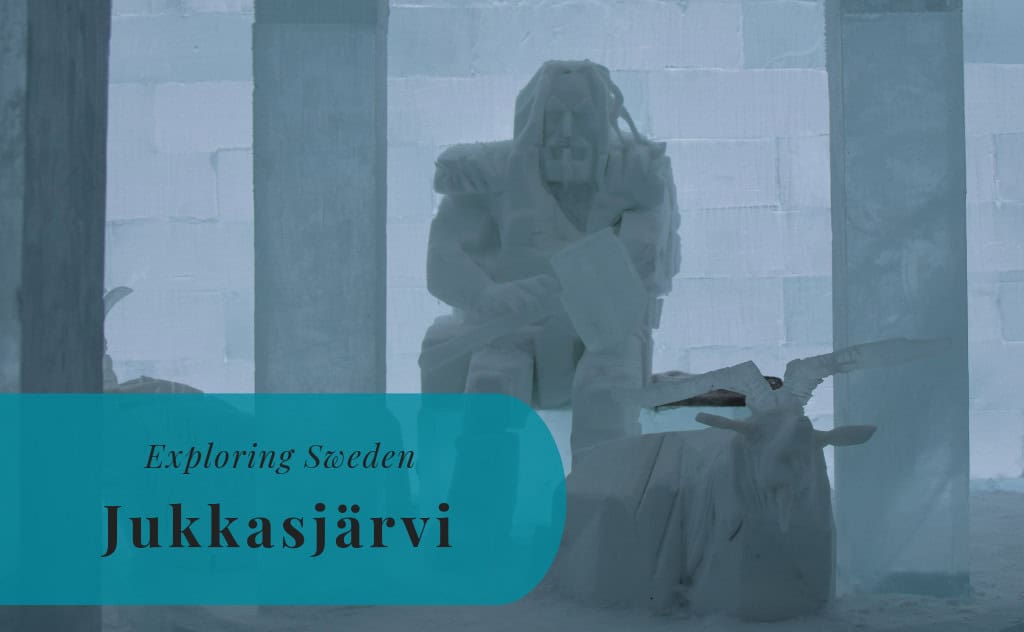
Jukkasjärvi, Lappland – Exploring Sweden
Jukkasjärvi is a village in Kiruna Municipality, located in the county of Norrbotten, Sweden. It is situated in the historic province of Lappland, approximately 200 kilometers north of the Arctic Circle. With a population of around 800 residents, Jukkasjärvi is a small rural community located on the shores of the Torne River. The village is located about 17 kilometers east of the main city of Kiruna. It is one of the oldest villages in this part of Swedish Lapland.
The character of Jukkasjärvi is defined by its world-famous Icehotel, which has transformed the small, historic village into a major international tourist destination. The identity of the village is a unique blend of its deep Sámi heritage, its history as a traditional northern Swedish village, and its modern role as a center for innovative art and tourism. The surrounding landscape of subarctic forests and the frozen Torne River in winter are a key part of its character. The village is also known for having a large population of sled dogs, with some estimates suggesting that there are more dogs than human inhabitants.


A Short History of Jukkasjärvi
The history of Jukkasjärvi is that of an ancient Sámi meeting place that became one of the first permanent settlements in the region and was later reinvented as a global tourism icon. For centuries, it was a quiet village centered around its church and the rhythms of life in the Arctic. The creation of the Icehotel in the late 20th century was a pivotal moment that brought a new and unexpected chapter to the village’s long history. This has made it one of the most well-known small villages in all of Sweden.
A Sámi Meeting Place
The history of Jukkasjärvi is long, with the area serving as a key meeting and trading place for the indigenous Sámi people for centuries. The name Jukkasjärvi has its origin in the Northern Sámi language, from the word Čohkkirasjávri, which means “meeting place at the lake.” The first permanent settlers in the 17th century were Finnish-speaking, and they adapted the original name. For a long time, the village’s only permanent inhabitants were the families of the priest and the bell ringer. The historic wooden church, which dates back to the 17th and 18th centuries, is a testament to this early period.
The Birth of the Icehotel
For most of its history, the main occupations in Jukkasjärvi were fishing, hunting, and trade. The village remained a small and remote community. This changed dramatically in the late 20th century. In 1989, a local entrepreneur, Yngve Bergqvist, created the first art exhibition and structure made of ice and snow. This idea evolved into the Icehotel, which opened in its first iteration shortly after. The hotel, which is rebuilt every winter from the ice of the Torne River, became a global phenomenon. This has completely transformed the village’s economy and identity, turning it into a major center for Arctic tourism.


Sights in Jukkasjärvi
Jukkasjärvi might be small when it comes to population, but it has a high density of sights for visiting travelers to explore. The famous Icehotel is just one of several attractions that are focused on the region’s unique art, culture, and history.
Icehotel
The Icehotel in Jukkasjärvi is one of Sweden’s most famous attractions and is the world’s first and largest hotel built of snow and ice. The main, seasonal part of the hotel has been constructed anew each winter since its first iteration in 1989. The entire structure is built from large blocks of ice harvested from the nearby Torne River and a special material known as snice, which is a mixture of snow and ice that strengthens the structure. Each year, international artists are invited to design and carve the unique “art suites,” ensuring the hotel’s interior is a completely new art exhibition every season. This ephemeral part of the hotel exists from December until it melts back into the river in the spring.
In addition to the seasonal hotel, the complex now includes Icehotel 365. This is a permanent structure that allows visitors to experience the ice and snow environment all year round, even during the summer months with the midnight sun. The building is a large, specially designed hall that is kept at a constant sub-zero temperature using a sustainable cooling system powered by solar panels. Inside, it features a number of permanent art suites, an impressive ice gallery, and the famous Icebar, where drinks are served in glasses made of ice. Visitors can choose to stay overnight in either the seasonal or the year-round hotel, sleeping in thermal sleeping bags on beds made of ice, or they can visit during the day as an art exhibition.
Jukkasjärvi Church
The Jukkasjärvi Church (Jukkasjärvi kyrka) is the oldest still-standing church in Swedish Lapland. The wooden church is also one of the oldest buildings in Jukkasjärvi. The first parts of the structure were built in 1607. The church was rebuilt and expanded in 1726. The church is known for its unique altarpiece, which was created by the artist Bror Hjorth and depicts scenes from the religious revival that swept through Lapland in the early 20th century.
Nutti Sámi Siida
The Nutti Sámi Siida is a Sámi open-air museum and camp located on the outskirts of Jukkasjärvi. The site was established in 1996 and is centered around the traditional reindeer husbandry of the Sámi people. It provides visitors with an opportunity to learn about the history, culture, and daily life of the Sámi. A key part of the experience is the opportunity to see and feed reindeer up close. The site also includes traditional Sámi dwellings (goahti) and a cafe that serves traditional food.
Jukkasjärvi Homestead
The Jukkasjärvi Homestead (Hembygdsgården) is the local heritage museum. It is located in the heart of the old village. The museum is housed in some of the oldest timber buildings in Jukkasjärvi. These buildings showcase the life of the early Swedish and Finnish settlers in the region. The site also includes a restaurant that serves traditional local dishes. It provides a look into the history of the village before the arrival of the Icehotel.
The Torne River
The Torne River (Torne älv) is a key natural feature of the area and a sight in its own right. It is one of Sweden’s four major, unregulated “national rivers.” During the winter, the river freezes over completely, and its clear, pure ice is harvested to build the Icehotel. In the summer, the river is a major destination for recreational fishing, particularly for salmon and grayling. It is a central part of the landscape and the life of the village.
Traveling with Kids in Jukkasjärvi
Jukkasjärvi is an excellent destination for families with children, offering a range of unique and exciting activities. The main attractions are very family-friendly. The opportunity to experience the Arctic environment and its culture can be a very memorable experience for children.
Family-Friendly Attractions
The Icehotel is a magical experience for children, with its rooms filled with ice sculptures. The Nutti Sámi Siida is also very popular with families, as children can meet and feed the reindeer. In the winter, the most popular activities are dog sledding and reindeer sleigh rides, which are offered by several local tour operators. These activities provide an exciting way for the whole family to experience the Arctic wilderness.
Sports and Recreation
The sports and recreational activities in Jukkasjärvi are almost entirely focused on the Arctic environment. The main activities are centered on winter tourism. The vast, surrounding wilderness provides a large arena for these pursuits.
Dog Sledding and Snowmobiling
Dog sledding is one of the most popular activities for visitors to Jukkasjärvi during the winter. Several local companies offer tours that range from short trips to multi-day expeditions. This provides a traditional way to travel through the snowy landscape. Snowmobiling is another very popular activity. Guided snowmobile tours are available, which allow visitors to cover larger distances and explore the remote wilderness areas around the village.
Cross-country Skiing and Snowshoeing
The area around Jukkasjärvi offers excellent opportunities for cross-country skiing and snowshoeing. There are marked and prepared ski trails in the local area. The vast, open landscape of frozen rivers and forests also provides endless possibilities for exploring on skis or snowshoes. These activities offer a quiet and peaceful way to experience the Arctic nature during the winter months.


Getting Around in Jukkasjärvi
Navigating the village of Jukkasjärvi is straightforward and is best done on foot. The village is very small, and all the main sights are located within a short walking distance of each other. For travel to the nearby city of Kiruna, a local bus or taxi is required.
On Foot: The Village
Walking is the best way to explore Jukkasjärvi. The Icehotel, the church, and the Sámi Siida are all located close to each other. The paths along the Torne River also provide a pleasant route for a stroll. The village is very small, so all its main points of interest can be seen in a short amount of time.
Local Buses
A local bus service, operated by Länstrafiken Norrbotten, connects Jukkasjärvi with the main city of Kiruna. The bus runs several times a day. The bus is the primary mode of public transport for traveling between the village and the city’s main train station and airport.
How to Get to Jukkasjärvi
Reaching Jukkasjärvi requires travel to the far north of Sweden. The nearby city of Kiruna serves as the main transport hub for the region, with an airport and a train station. The final part of the journey to the village is a short trip by road.
The Open Road: Driving to Jukkasjärvi
Driving is a common way to reach Jukkasjärvi. The village is located just off the E10 highway. This major European route connects the city of Luleå on the coast of the Gulf of Bothnia with Narvik on the coast of Norway. The drive from the main city of Kiruna is approximately 17 kilometers and takes about 20 minutes. A car provides flexibility for exploring the wider region.
Arriving by Air: Kiruna Airport
The closest airport is Kiruna Airport (KRN). The airport is located just a short drive from Jukkasjärvi. It has several daily flights to Stockholm-Arlanda Airport (ARN), which provides connections to the rest of the world. The airport also has some seasonal international flights. An airport bus service and taxis connect the airport with both Kiruna and Jukkasjärvi.
On Track: A Journey by Rail
Jukkasjärvi does not have its own train station. The closest train station is located in the nearby city of Kiruna. The Kiruna station is a key stop on the Iron Ore Line (Malmbanan). Vy Tåg operates overnight sleeper trains that connect Kiruna directly with Stockholm. Regional trains also connect Kiruna with Luleå and with Narvik in Norway. From the Kiruna station, a connecting bus or taxi is required to reach Jukkasjärvi.
Connecting by Coach
There are long-distance bus services that connect Kiruna with other parts of northern Sweden. The main bus station is located in Kiruna. From there, travelers would need to transfer to the local bus service to complete the short journey to Jukkasjärvi.
Driving Distances
The driving distance from 10 regional cities, according to Google Maps:
- Kiruna, Sweden – 19 kilometers (0 h 20 min)
- Gällivare, Sweden – 134 kilometers (1 h 40 min)
- Luleå, Sweden – 356 kilometers (4 h 10 min)
- Umeå, Sweden – 596 kilometers (7 h 00 min)
- Östersund, Sweden – 767 kilometers (9 h 00 min)
- Stockholm, Sweden – 1,229 kilometers (13 h 50 min)
- Oslo, Norway – 1,405 kilometers (18 h 00 min)
- Gothenburg, Sweden – 1,573 kilometers (18 h 00 min)
- Malmö, Sweden – 1,837 kilometers (19 h 30 min)
- Copenhagen, Denmark – 1,879 kilometers (20 h 10 min)
Explore More of Lappland and Sweden

This post was first published 2019-08-13 and was updated 2025-07-27


En natt på ishotellet är en underbar upplevelse som jag kan rekommendera. Det ger en tillfälle att fotografera i olika ljus under lång tid och verkligen känna atmosfären.
Kan förstå att det är en upplevelse, även om jag föredrar att ha åtminstone över 10 grader i sovrummet 😀
Har dock inte övervägt vilka fotograferingsmöjligheter en övernattning skulle ge, det är ju även det en intressant aspekt. 🙂