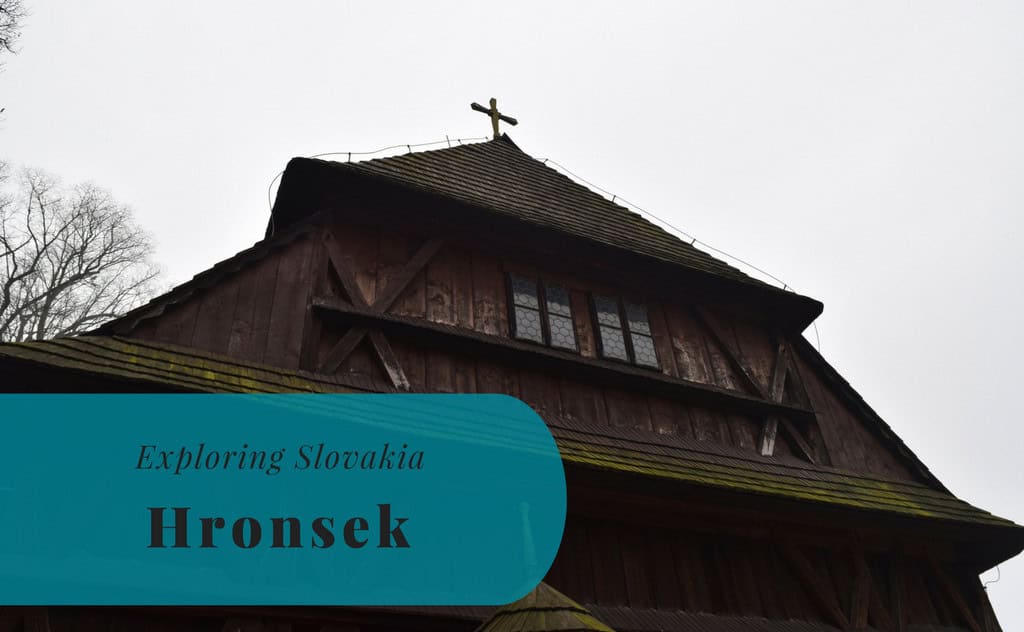
Hronsek | Exploring Slovakia
Hronsek is a small village in central Slovakia, and it is home to little more than 600 inhabitants. It is located in the Banská Bystrica Region, not far from the larger cities of Zvolen and Banská Bystrica. The village stands by the Hron, which is the second-longest river in Slovakia. Despite its small size, Hronsek holds significant historical and architectural importance. This importance is primarily due to its remarkable articular wooden church, a rare and beautiful structure.
The village’s main claim to fame is its Articular Wooden Church, which is a UNESCO World Heritage Site. This, along with its other historic manor houses, makes the village a noteworthy stop for visitors. The community is situated in a pleasant agricultural landscape, and it offers a peaceful, rural atmosphere. Its location makes it an easy day trip from the nearby regional centers. Hronsek provides a unique glimpse into a specific period of Slovak religious history and aristocratic life.
History of Hronsek
The first historical records that mention the town of Hronsek date back to the year 1500. However, sources suggest that the creation of the village dates to the 13th or 14th centuries. The town has changed its name several times throughout its history, and its current name has been in use since 1946. The town gained significant religious importance in the 18th century with the construction of its articular wooden church. These unique churches were a product of specific religious laws within the Kingdom of Hungary.
Early History and Noble Families
The history of Hronsek is closely linked with several influential noble families who owned the land and built the manors that still stand today. The village was historically a part of Zvolen County within the Kingdom of Hungary. The Gothal, Soós, and eventually the Batthyány families were among the prominent landowners who shaped the village’s development. These families were responsible for the construction of the Gothic-Renaissance “Water Castle” and the Baroque manor house, which were the centers of the local agricultural estate.
The Articular Church and Religious Freedom
The village gained its greatest religious importance in the 18th century. This was due to the terms of the Congress of Sopron of 1681. These articles of law granted limited religious freedom to Protestants in the staunchly Catholic Habsburg lands. Each county was permitted to build only two such churches for Evangelical congregations. These churches, known as “articular” churches, had to be built entirely of wood, without any metal nails, and they had to be constructed outside the village walls. The church in Hronsek is one of only five such churches that have survived in Slovakia to this day.
Modern Development
In the modern era, Hronsek has remained a small agricultural village. It has avoided the large-scale industrialization that transformed many other towns in the region. This has allowed it to preserve its quiet, rural character and its significant historical buildings. In 2008, the Articular Wooden Church was inscribed on the UNESCO World Heritage List as part of the “Wooden Churches of the Slovak part of the Carpathian Mountain Area.” This international recognition has brought new attention to the village and cemented its status as an important historical and cultural site.
Sights in Hronsek
Hronsek is a small town, but it has a few very interesting sights that are well worth a quick stop. The main attraction is the magnificent Articular Wooden Church, a UNESCO World Heritage Site that is the primary reason most visitors come to the village. In addition to the famous church, Hronsek is also home to two historic manor houses, which offer a glimpse into the life of the local nobility. These three main sights are all located within a short walking distance of each other in the center of the village, making for a pleasant and easy exploration.
Articular Wooden Church
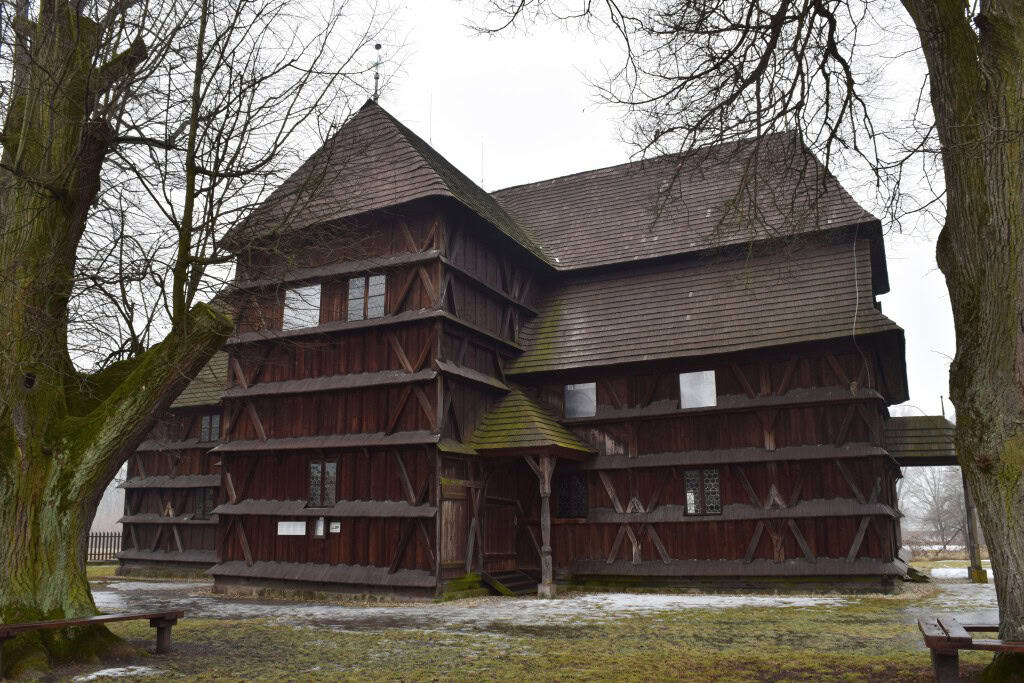
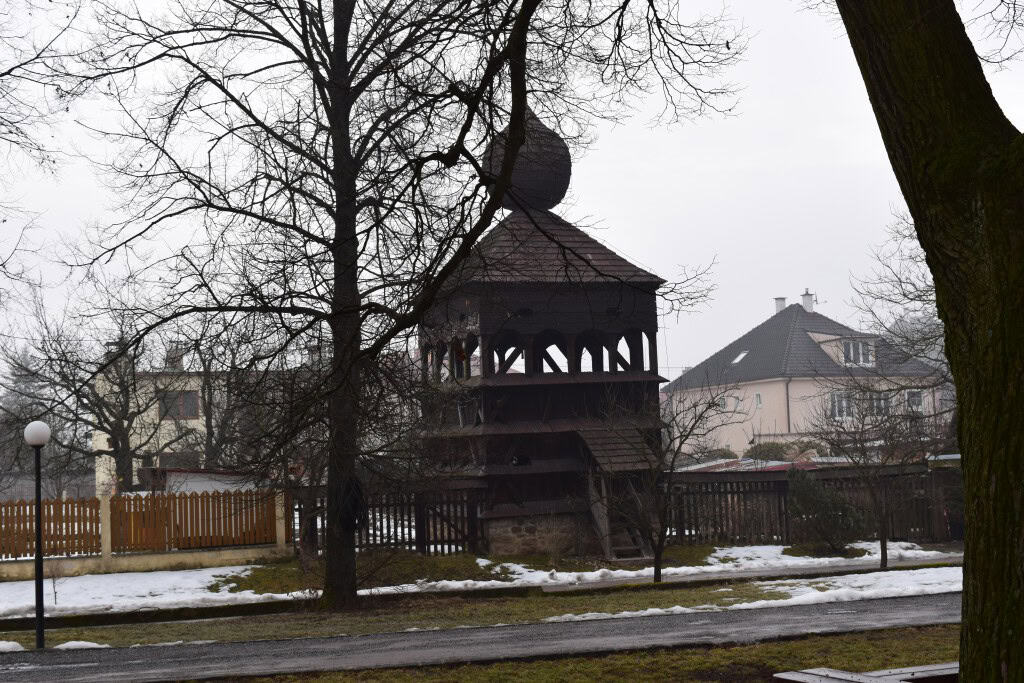
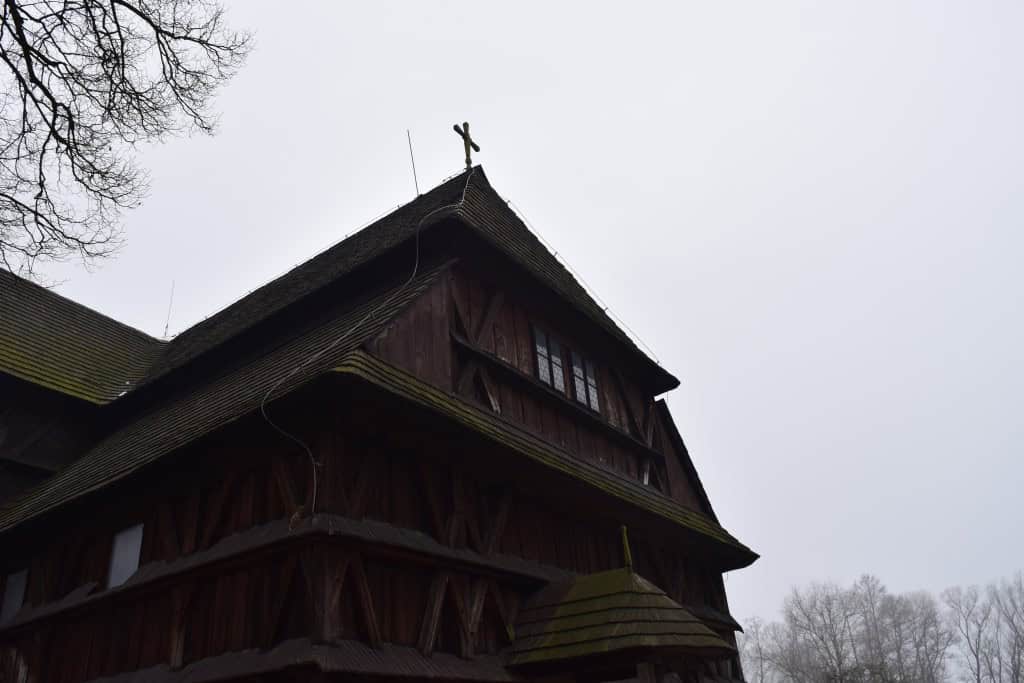
The Articular Wooden Church of Hronsek is a large wooden church in the center of the village. The church dates back to 1725, and its construction took just one year to complete. It is the only wooden church in Slovakia that bears influences of Scandinavian and German architecture. The church is surprisingly large, for it can fit 1,100 worshippers in an amphitheater-style arrangement. The interior is beautifully decorated with paintings, and it has a unique wooden baroque organ. The church has been on the UNESCO World Heritage List since 2008. A separate wooden belfry stands next to the church.
The Water Castle (Vodný hrad)
In English, the name of this building would be the Water Castle. It is a Gothic-Renaissance mansion house that was originally built as a moated castle in the 14th century. The current structure dates from a major reconstruction in 1576. The Water Castle is the oldest building in the village. It is a four-winged building with a central courtyard and corner towers. For many years, it was the main residence of the local nobles. Today, the building has a private owner, so it is not open to the public, but its historic exterior can be admired from the outside.
The Hronsek Manor House
The Hronsek Manor House, or Kaštieľ v Hronseku, is a large manor house dating back to the year 1775. It is a beautiful Baroque building with four corner bastions, which give it a defensive appearance. The manor was built by the Soós family. It is surrounded by a historic park with a magnificent, protected linden tree that is over 200 years old. The municipality now owns this building. Each year, the town celebrates a festive day here, and on that day, both the building and its gardens are open to the public.
The Hron River
The village of Hronsek is named after the Hron River, which flows directly past it. The Hron is the second-longest river in Slovakia. The river and its banks provide a beautiful natural setting for the village. The area along the river is a great place for a peaceful walk, and it offers opportunities for birdwatching and enjoying the rural landscape. The river has played an important role in the history of the region for centuries, serving as a route for transportation and a source of life for the communities along its banks.
Zvolen Castle
Located in the nearby city of Zvolen, the Zvolen Castle is a major historical sight and an easy excursion from Hronsek. The castle was built in the 14th century by King Louis I the Great of Hungary as a Gothic hunting lodge. The castle has been beautifully restored and today houses a branch of the Slovak National Gallery. Its collections include a magnificent display of medieval and Renaissance art. The castle is a dominant landmark in the center of Zvolen and a must-visit for anyone interested in history and art.
Banská Bystrica SNP Square
The city of Banská Bystrica is another major regional center located just a short drive from Hronsek. Its main square, Námestie SNP, is one of the most beautiful in Slovakia. The square is lined with colorful burgher houses and features a historic clock tower that visitors can climb for a panoramic view. The square also contains an impressive monument to the Slovak National Uprising. It is the historic and social heart of the city, with numerous cafes, restaurants, and shops. A visit to the square provides a look into a larger urban environment.

Getting Around in Hronsek
Navigating the small village of Hronsek is done entirely on foot. All of the main sights—the Articular Wooden Church, the Water Castle, and the Manor House—are located within a very small area in the center of the village. For travel to the surrounding region and to the nearby cities of Zvolen and Banská Bystrica, a car is the most convenient option. However, the village is also served by a local bus system that provides essential public transport connections to these larger transport hubs.
Exploring by Foot
The village of Hronsek is very small, so walking is the only mode of transport you need to explore it. A leisurely stroll through the center of the village will take you past all of its main historical landmarks in just a few minutes. The area is quiet and has very little traffic, making for a safe and pleasant walk. The surrounding fields and the banks of the Hron River are also easily accessible on foot, providing opportunities for a longer walk in the peaceful rural landscape.
Using Local Buses
Hronsek has a local bus stop that is a key part of the regional public transport network. The best option is to go to either Zvolen or Banská Bystrica and then find a local bus that takes you to Hronsek. These buses provide an essential connection for those traveling without a car. The bus service links the village to the main train and bus stations in the nearby cities, from where you can connect to the rest of the country.
Navigating by Car
A car is the most convenient way to explore Hronsek and the wider region. The village is located very close to the main R1 expressway, which provides a fast connection to Bratislava and other cities. Having a car makes it simple to take day trips to the many castles, spa towns, and natural attractions in the surrounding area. Parking is generally available and easy to find within the small village, especially near the main sights.
How to Get to Hronsek?
Hronsek is located in the central part of Slovakia and is easily accessible by car as it is situated close to a few major roads, including the E77. For those using public transport, the best option is to travel to one of the nearby major hubs, Zvolen or Banská Bystrica, and then take a local bus for the final short journey to the village. While Hronsek does not have its own train station, these nearby cities have excellent rail and bus connections to the rest of the country.
Arriving by Air
Hronsek does not have its own airport. The closest international airports are in Bratislava (BTS) and Budapest (BUD) in Hungary, both of which are about a two-hour drive away. Kraków John Paul II International Airport (KRK) in Poland is another major option. The small airport in Sliač, located between Zvolen and Banská Bystrica, is physically the closest but has very limited or no regular commercial flights. From any of the major airports, you would need to continue your journey by car, bus, or train.
Driving into the Village
The village of Hronsek is located along the main road I/69, which runs between the cities of Banská Bystrica and Zvolen. This road connects directly with the main R1 expressway (E77), which provides a high-speed link to Bratislava and Nitra. This excellent road access makes driving a very fast and convenient option for reaching the village from almost anywhere in Slovakia. The journey from Bratislava takes approximately two hours.
Journey by Rail
Hronsek does not have its own train station. The closest main train stations are in Zvolen and Banská Bystrica. Both of these cities are major hubs on the Slovak railway network and have frequent connections to Bratislava, Košice, and other major domestic destinations. From either of these train stations, you would then need to take a short local bus ride to reach the village of Hronsek. This combined train-and-bus journey is a practical option for those traveling by public transport.
Connecting by Bus
Long-distance and regional bus services provide another excellent option for reaching the area. The main bus stations in Zvolen and Banská Bystrica have extensive connections to cities and towns all over Slovakia and to neighboring countries. From these main bus hubs, it is a very short and frequent local bus ride to the village of Hronsek. The local bus is an easy and affordable way to complete the final leg of the journey.
Driving Distances
The driving distance to Hronsek from 20 regional cities, according to Google Maps:
- Zvolen, Slovakia – 11 kilometers (0 h 15 min)
- Banská Bystrica, Slovakia – 13 kilometers (0 h 15 min)
- Nitra, Slovakia – 95 kilometers (1 h 00 min)
- Žilina, Slovakia – 100 kilometers (1 h 30 min)
- Trenčín, Slovakia – 120 kilometers (1 h 20 min)
- Budapest, Hungary – 150 kilometers (2 h 10 min)
- Ostrava, Czech Republic – 190 kilometers (2 h 30 min)
- Bratislava, Slovakia – 205 kilometers (2 h 00 min)
- Katowice, Poland – 205 kilometers (2 h 40 min)
- Kraków, Poland – 225 kilometers (3 h 20 min)
- Košice, Slovakia – 241 kilometers (2 h 50 min)
- Rzeszów, Poland – 245 kilometers (3 h 30 min)
- Vienna, Austria – 265 kilometers (2 h 40 min)
- Brno, Czech Republic – 270 kilometers (2 h 50 min)
- Lviv, Ukraine – 420 kilometers (5 h 40 min)
- Zagreb, Croatia – 430 kilometers (4 h 10 min)
- Prague, Czech Republic – 475 kilometers (4 h 40 min)
- Warsaw, Poland – 515 kilometers (5 h 50 min)
- Ljubljana, Slovenia – 520 kilometers (5 h 00 min)
- Belgrade, Serbia – 535 kilometers (5 h 10 min)
Looking to Explore more of Slovakia and Europe?


This post was first published 2017-09-17 and was updated 2025-07-31