
Exploring Denmark
Exploring Denmark
Denmark, a charming Scandinavian kingdom, offers a blend of historic cities and stunning natural beauty. It’s known for its laid-back lifestyle, innovative design, and a unique concept of “hygge.” This invites visitors to embrace cozy contentment. Join Us Exploring Denmark!
Population of Denmark
Denmark’s population is approximately 6.0 million as of early 2025. This makes it a relatively small nation in Europe. Despite its size, it is highly prosperous. Most Danes live in urban areas, with Copenhagen, the capital, being the largest city. It’s also a major cultural and economic hub. Denmark is celebrated for its robust social welfare system. Its citizens enjoy a consistently high quality of life. The national culture deeply values equality, innovative design, and a strong sense of community. The official language is Danish, but English is very widely spoken throughout the country, making it easy for international visitors to navigate and communicate.
Location of Denmark
Denmark holds a highly strategic position in Northern Europe. It effectively forms a vital bridge connecting the Scandinavian Peninsula with continental Europe. The Baltic Sea lies to its east, while the North Sea washes its western shores. To the south, it shares a land border with Germany. In the east, an impressive bridge-tunnel system links it directly to Sweden. Norway sits just across the narrow Skagerrak Strait to the north. This central location has profoundly shaped Denmark’s history, establishing it as a significant player in both Nordic and broader European affairs.
Geography of Denmark
Denmark’s geography is distinctly unique. It is famously flat, lacking any major mountains. The highest natural point, Møllehøj, stands at a modest 170 meters. The country itself comprises the Jutland Peninsula and a vast archipelago. This includes over 400 named islands. Zealand, where Copenhagen is located, is the largest and most populous island. Many other islands, large and small, are inhabited, each with its own charm. Denmark boasts an incredibly long and intricate coastline, stretching over 7,300 kilometers. This creates an abundance of beautiful sandy beaches, gentle dunes, and picturesque fjords. While much of the landscape is cultivated agricultural land, scattered forests and tranquil lakes add to its diverse scenic beauty.
Entry Points to Denmark
Denmark’s advanced infrastructure ensures convenient and smooth international access by air, sea, and land.
By Air: Copenhagen Airport (CPH), also known as Kastrup, is Denmark’s largest and busiest international airport. It serves as a major aviation hub for the entire Scandinavian region. Numerous international airlines operate here, connecting Copenhagen to destinations across Europe, North America, Asia, and beyond. Billund Airport (BLL) is another key international gateway in Jutland. It’s particularly popular for tourism, especially for visitors heading to the nearby Legoland. Other regional airports like Aalborg (AAL) and Aarhus (AAR) also handle a growing number of international flights, providing access to different parts of the country.
By Sea: Ferry services remain an important mode of regional transport and entry. Regular passenger ferries operate routes connecting Denmark to neighboring countries like Norway, Sweden, and Germany. For example, popular routes include Frederikshavn to Oslo (Norway) and the efficient Rødby to Puttgarden (Germany) connection, part of a major European route. These offer scenic and practical travel alternatives. Furthermore, Copenhagen is a frequent stop for cruise ships, with many vessels docking directly in the city’s harbor, allowing passengers immediate access to the capital’s attractions.
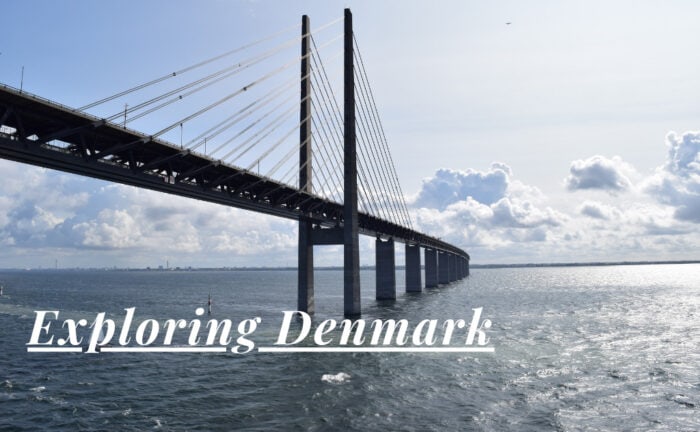
By Land: Denmark is seamlessly integrated into Europe’s road and rail networks. The iconic Øresund Bridge provides a direct road and rail link between Copenhagen (Denmark) and Malmö (Sweden), offering very easy access from Scandinavia. A clear land border exists with Germany in the south, traversed by well-maintained roads and railway lines. High-speed trains connect major Danish cities directly to Germany and other European destinations. Additionally, extensive international bus services, such as FlixBus, operate frequently, providing a budget-friendly option for connecting Denmark to numerous cities across the European continent.
Join Us in Exploring Denmark






Exploring More of Europe?
Join us in exploring more of what Europe has to offer. It is not only Norway that we have been exploring.