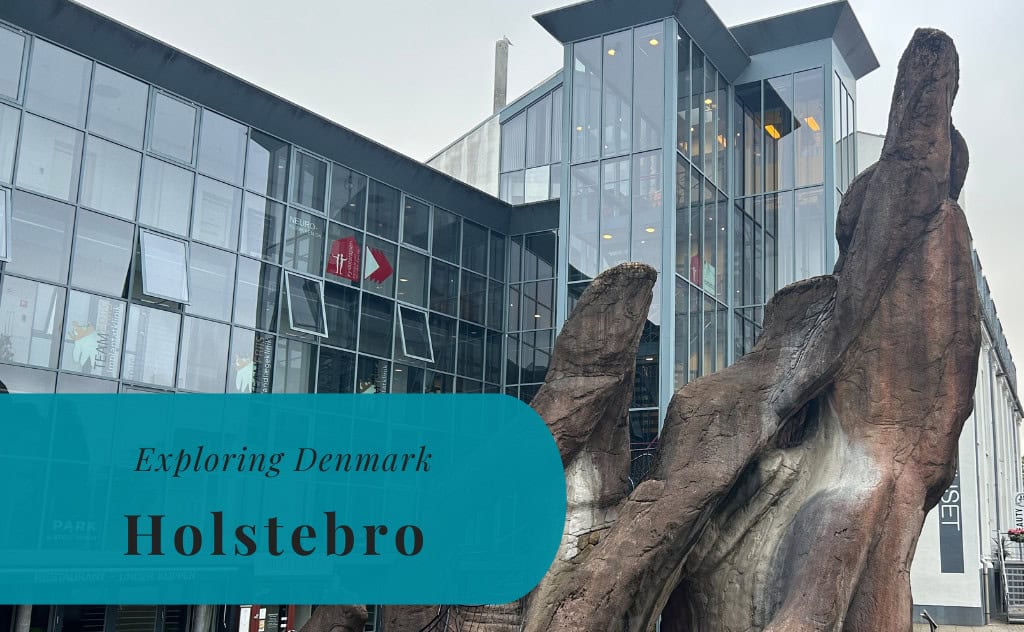
Holstebro | Exploring Denmark
Holstebro is a city in the West Jutland region of Denmark. It is the main commercial and administrative center of Holstebro Municipality. The city is situated on the banks of the Storå, one of Denmark’s longest rivers. With a population of approximately 37,000 residents, Holstebro is a key economic and cultural hub for this part of the country. It is located about 50 kilometers west of the larger city of Viborg and about 100 kilometers northwest of Aarhus.
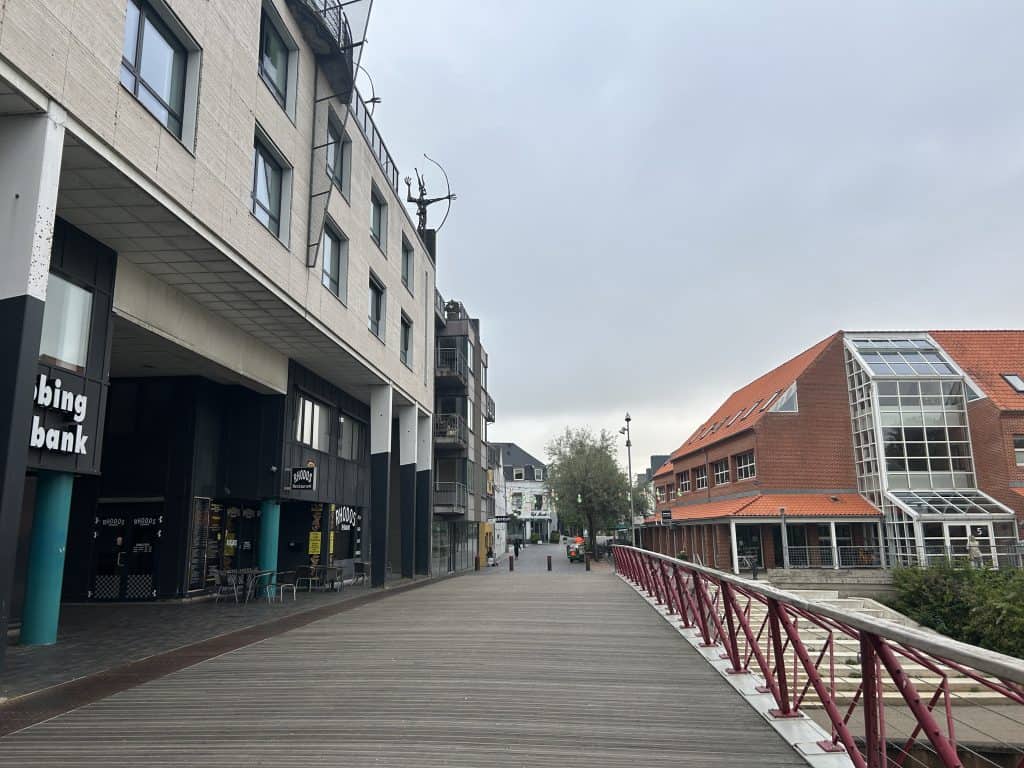
The character of Holstebro is defined by its modern identity as a major center for culture and art. This exists alongside its history as a traditional Jutlandic market town and a significant garrison town. The city center features a large pedestrian zone with numerous shops and public art installations. The Storå river, which flows directly through the heart of the city, is a key geographical feature that is integrated into the urban landscape with parks and walking paths. This combination of commerce, culture, and nature gives the city its specific character.

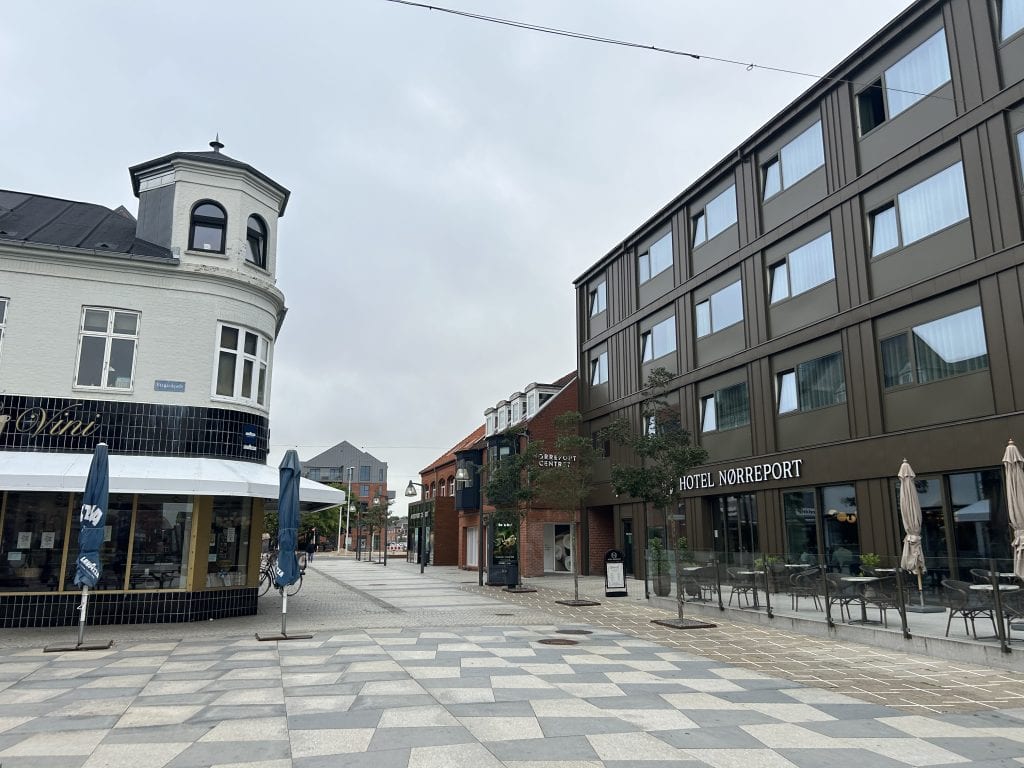


A Short History of Holstebro
The history of Holstebro is that of a medieval market town that evolved into an industrial and military center, and later reinvented itself as a cultural hub. Its location at a key crossing point of the Storå river has been central to its development for centuries. The city’s story reflects the economic and social changes that have shaped the Jutland peninsula. This journey has taken it from a regional center for trade to a modern city known for its focus on the arts.
Medieval Market Town
The history of Holstebro dates back to the 13th century. The town was founded at a ford, or crossing point, on the Storå river. Its name, which first appears in a document from 1274, refers to a settlement at a “hollow” or “hole” (hol) near the bridge (bro). It grew into a regional market town, primarily for the trade of cattle and horses from the surrounding agricultural district. For centuries, its economy was based on this local trade and its function as a small administrative center.
Stagnation and Revival
For several hundred years, the development of Holstebro was slow. The town faced periods of stagnation due to wars, fires, and changes in trade routes that bypassed West Jutland. The construction of a new harbor at nearby Struer in the mid-19th century provided a new outlet for trade. A more significant event was the arrival of the railway in 1866. This connected Holstebro with the rest of the Danish rail network, which spurred new industrial growth in the town, including iron foundries and food processing.
A Modern Cultural and Garrison Town
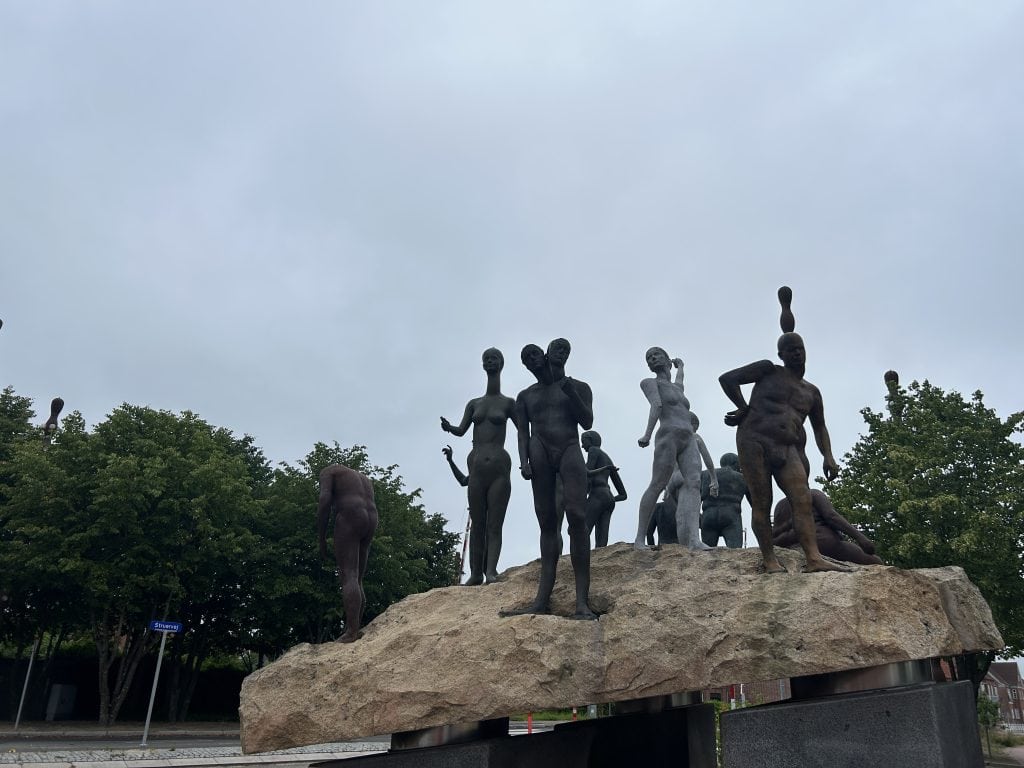
In the 20th century, Holstebro’s identity was significantly shaped by its role as a major garrison town. It became the home of the Jydske Dragonregiment (Jutland Dragoon Regiment), one of the main regiments of the Danish army. From the 1960s onwards, the city also embarked on a deliberate strategy to transform itself into a cultural center. The city council began purchasing works of art by famous international artists to be displayed in public spaces. This initiative, which included the controversial purchase of the sculpture “Woman on Cart” by Alberto Giacometti, has defined the city’s modern cultural identity.

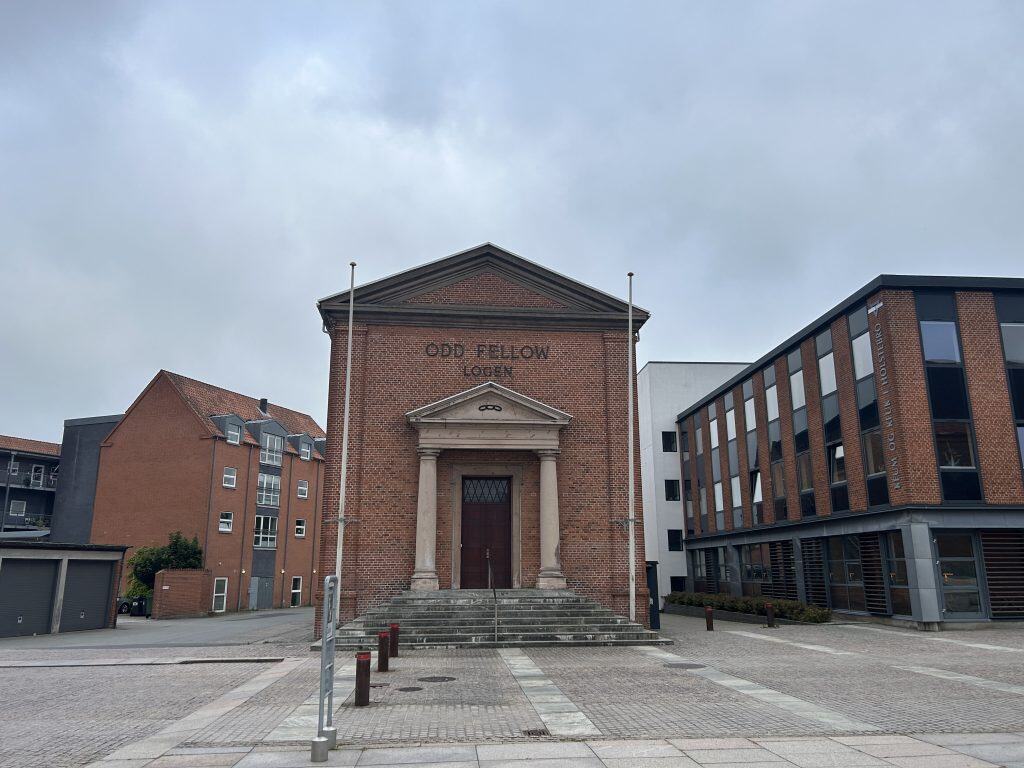

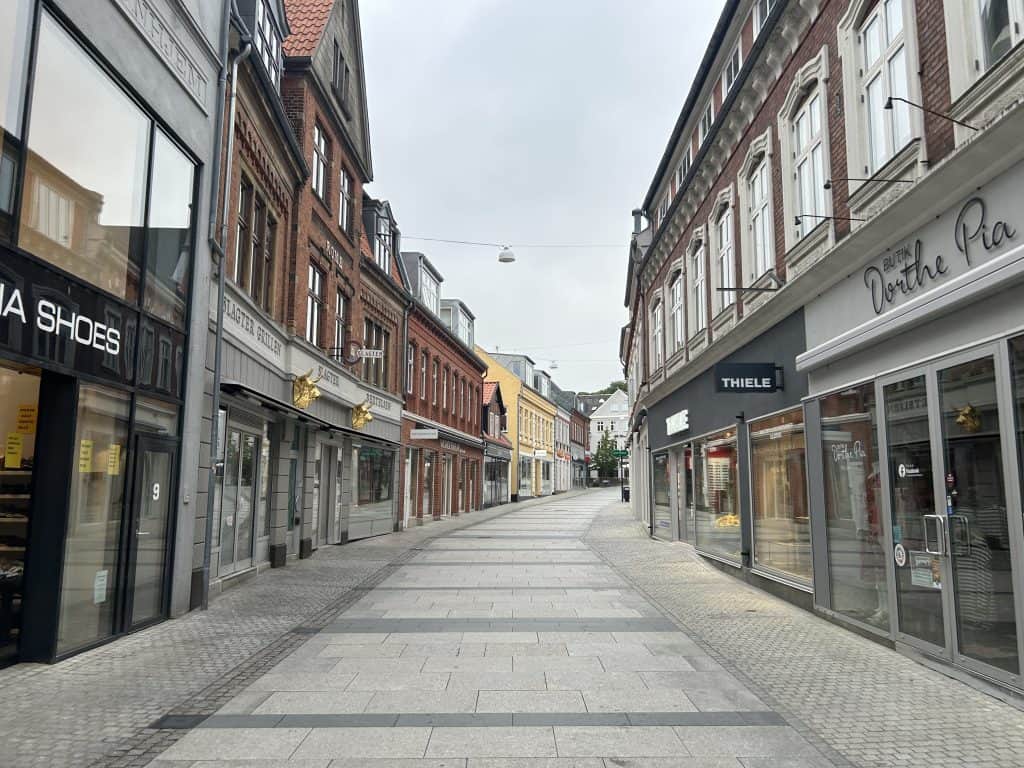


Things to Do and See
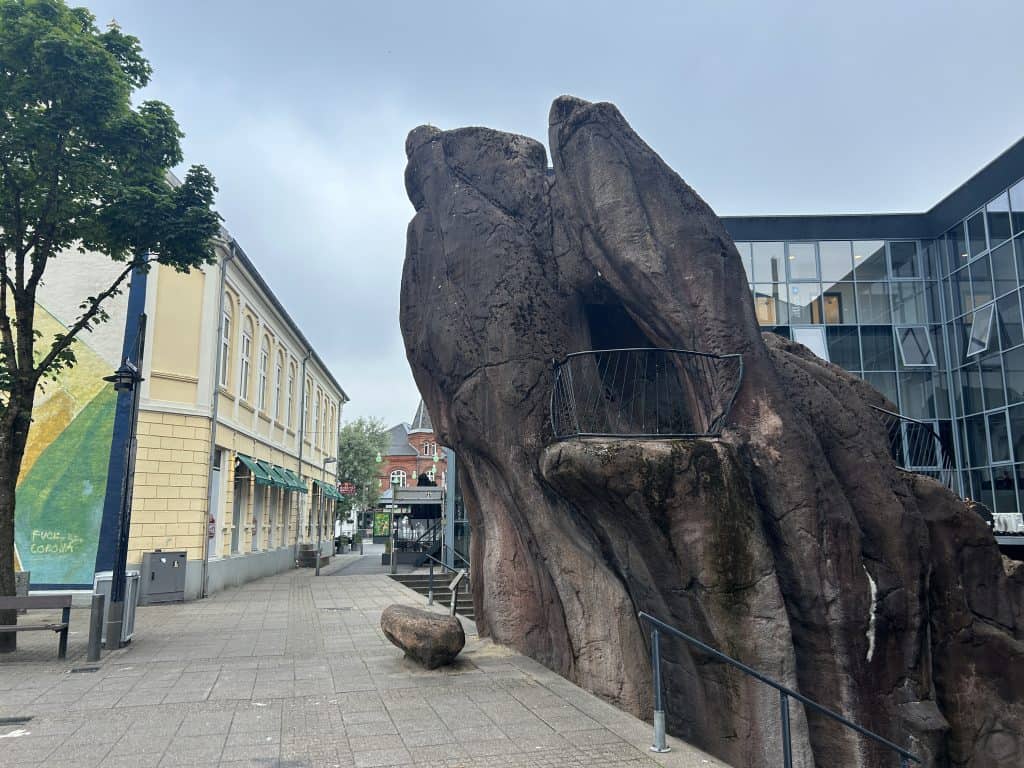
The sights in Holstebro reflect its modern cultural identity and its history as a regional center. The main points of interest include its art museum, several cultural history museums, and the numerous public art installations found throughout the city center. The Storå river and its surrounding parks are also key features of the urban landscape.
Holstebro Kunstmuseum
The Holstebro Kunstmuseum is the city’s main art museum. The museum’s collection focuses on Danish and international art from the 20th century to the present day. It has a significant collection of Danish modernist art. The museum is also known for its collection of non-Western art, particularly traditional art from Africa and Oceania. The building itself is a modern architectural landmark. It is part of a larger complex that also includes the Holstebro Museum.
Hjerl Hede Open-Air Museum
Located a short drive east of Holstebro is the Hjerl Hede Open-Air Museum. This large museum showcases the history of the Danish countryside from the 19th century. The museum features a collection of over 50 historic buildings that have been relocated from various parts of Jutland. This includes a traditional village with a church, a school, and various workshops. During the summer season, the museum is brought to life with actors and volunteers who demonstrate traditional crafts and daily life. It is a major regional attraction.
Holstebro Museum
The Holstebro Museum is the local cultural history museum. The museum’s exhibitions detail the history of Holstebro and the West Jutland region, from ancient times to the modern era. It provides context on the development of the town as a market center, an industrial town, and a modern cultural hub. The museum is located in a modern building that it shares with the Holstebro Kunstmuseum, creating a single cultural center for the city.
“Woman on Cart” by Alberto Giacometti
One of the most famous landmarks in Holstebro is the sculpture “Woman on Cart” (Kvinde på Kærre). This sculpture by the world-renowned Swiss artist Alberto Giacometti was purchased by the city council in 1966. The purchase was highly controversial at the time due to its high cost. However, it came to symbolize the city’s commitment to bringing high-quality international art into the public space. The sculpture is located in the courtyard of the Old Town Hall.
Holstebro Church
The Holstebro Church (Holstebro Kirke) is the main church in the town center. The current church was built in 1907 in a National Romantic style. It replaced an older medieval church that had become too small for the growing town. The church is known for its large size and its prominent position in the city. Its interior features modern stained glass windows. It remains the main center for the Church of Denmark in the city.



Sports in Holstebro
The sporting life in Holstebro is centered on its highly successful professional handball team, which is one of the top teams in Denmark. Football is also a popular sport with a local club that is a key part of the community. The city has modern sports facilities, including a large indoor arena and a stadium, which serve as hubs for these clubs.
Handball
Handball is the most successful sport in Holstebro. The city is home to a top-tier professional club with both men’s and women’s teams that compete at the highest level in Denmark. The sport has a very dedicated following in the town. Home games are major events that draw large crowds to the main indoor arena.
TTH Holstebro
The city’s main professional handball club is Team Tvis Holstebro (TTH Holstebro). Both the men’s and women’s teams compete in the top divisions of Danish handball. The men’s team has won the Danish Cup twice. The women’s team has had significant success in European competitions, winning the EHF Cup multiple times. They play their home games at the Gråkjær Arena, a modern multi-purpose arena.
Football
Football is another popular sport in Holstebro. The local club is an important part of the community, with a long history and a strong focus on youth development. The club represents the town in the Danish national league system.
Holstebro Boldklub
The main football club is Holstebro Boldklub. The club was founded in 1921. They have a history of competing at higher levels of Danish football, including seasons in the second tier. They currently compete in the lower divisions of the Danish league system. The club plays its home games at the Holstebro Idrætspark.


Getting Around in Holstebro
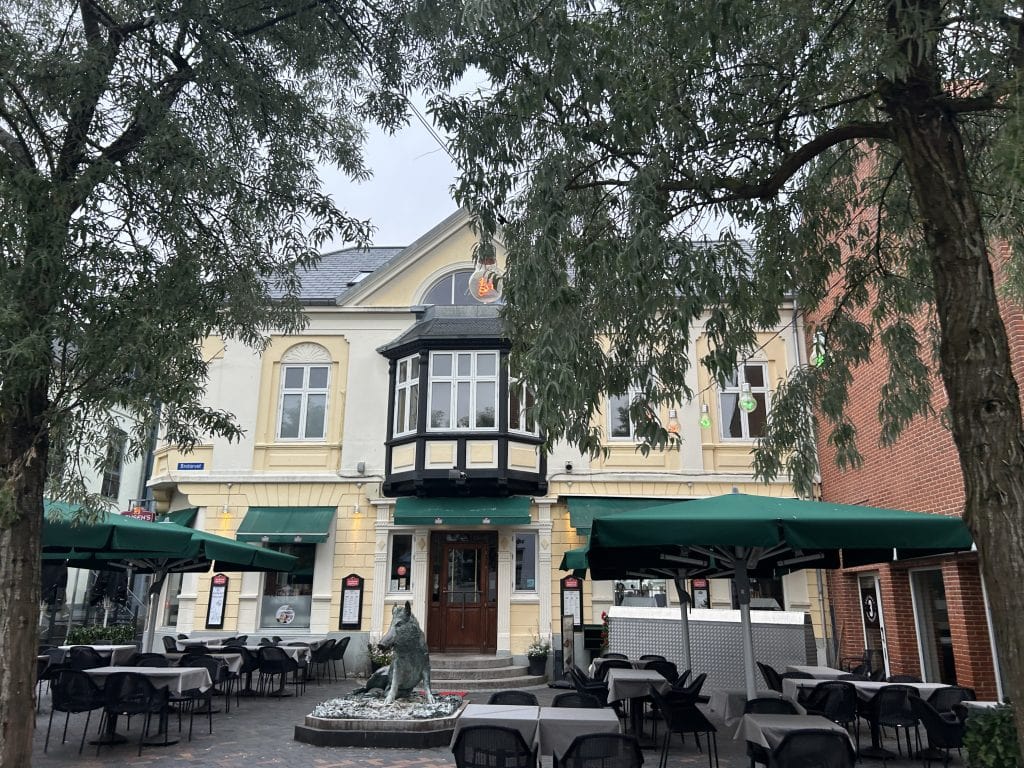
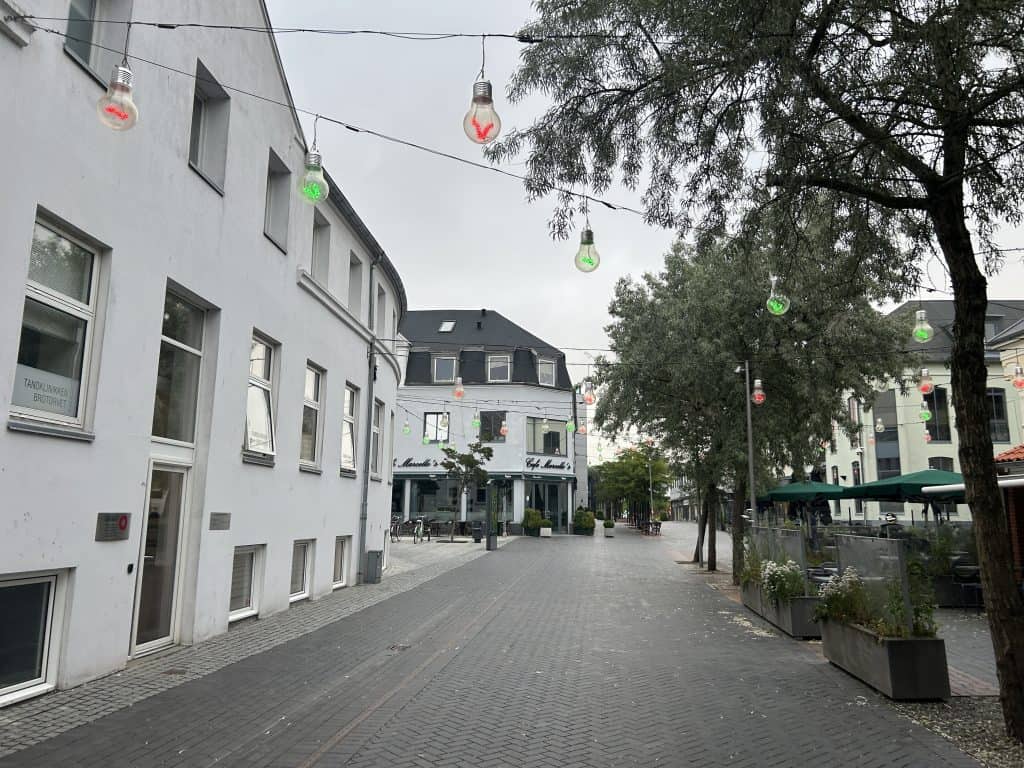
Navigating the town of Holstebro is straightforward. The city center is compact and very walkable, with a large pedestrianized main street. For travel to the surrounding areas, a local bus network is the primary mode of public transport. The city is also very bike-friendly.
On Foot: The City Center
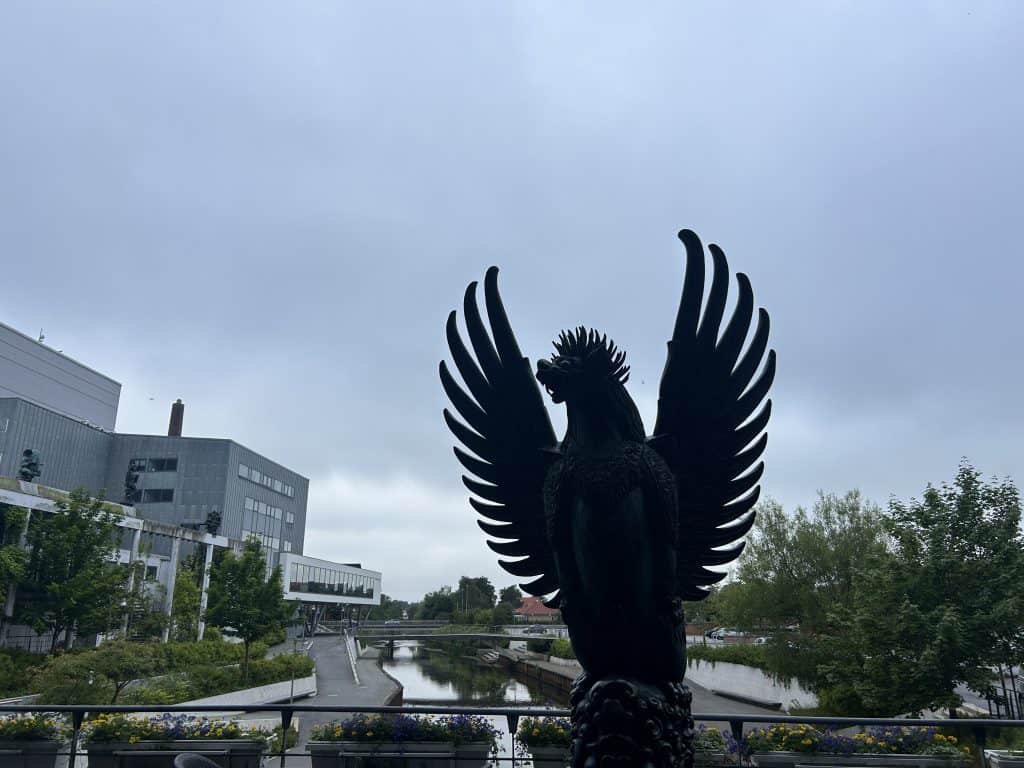
Walking is the best way to explore the central part of Holstebro. The main pedestrian shopping street, Nørregade, the historic church, and the town hall are all within a short walking distance of each other. The paths along the Storå river also provide a pleasant route for a stroll through the center of the city.
Local Buses
The public transport in Holstebro and the wider Central Denmark Region is operated by Midttrafik. A network of local city buses serves all parts of Holstebro and its suburbs. The main bus station is located at the Holstebro traffic terminal, which is integrated with the train station. These buses are useful for reaching attractions located outside the immediate city center.


How to Get to Holstebro
Reaching Holstebro is convenient by road and rail, as it is a major transport hub in West Jutland. The city is well-connected to the Danish motorway and railway networks.
The Open Road: Driving to West Jutland
Driving to Holstebro offers flexibility for exploring the region. The city is located at the junction of several primary routes. The Holstebromotorvejen (motorway) connects the city with Herning and the main E45 motorway. This provides a fast road link to major Danish cities like Aarhus and Aalborg. The drive from Aarhus takes approximately 1 hour and 30 minutes.
Arriving by Air: Karup Airport
The closest airport to Holstebro is Midtjyllands Lufthavn, also known as Karup Airport (KRP). It is located approximately 25 kilometers southeast of the city. The airport primarily offers domestic flights to Copenhagen. The much larger Billund Airport (BLL), with numerous international connections, is located about 90 kilometers to the south. From either airport, a rental car or a combination of bus services is required to reach Holstebro.
Connecting by Coach
The Holstebro bus terminal offers connections to major cities in Denmark. Long-distance bus services, such as those operated by FlixBus, connect Holstebro with cities like Copenhagen and Aarhus. Regional buses, operated by Midttrafik, connect the city with all other major towns in the Central Denmark Region.
On Track: A Key Railway Hub
Traveling to Holstebro by train is highly efficient. The Holstebro Station is a key railway hub in West Jutland. The station is served by trains operated by both DSB (Danish State Railways) and Arriva. There are frequent train connections to major Danish hubs like Aarhus, Herning, and Skjern. From these hubs, it is easy to connect to the wider Danish and European rail networks.
An International Ferry Approach
There is no direct ferry access to the inland city of Holstebro. The closest major ferry ports are located in Hirtshals and Frederikshavn in northern Jutland, with connections to Norway and Sweden, and in Esbjerg on the west coast. From any of these ports, the journey to Holstebro must be completed by train or car, a drive of over 100 kilometers.
Driving Distances
The driving distance from 10 regional cities, according to Google Maps:
- Esbjerg, Denmark – 107 kilometers (1 h 30 min)
- Aarhus, Denmark – 109 kilometers (1 h 30 min)
- Aalborg, Denmark – 113 kilometers (1 h 30 min)
- Odense, Denmark – 195 kilometers (2 h 10 min)
- Kiel, Germany – 282 kilometers (3 h 10 min)
- Hamburg, Germany – 374 kilometers (3 h 50 min)
- Copenhagen, Denmark – 384 kilometers (4 h 00 min)
- Gothenburg, Sweden – 389 kilometers (6 h 20 min, includes ferry)
- Oslo, Norway – 568 kilometers (8 h 00 min, includes ferry)
- Berlin, Germany – 662 kilometers (7 h 00 min)
Looking to Explore more of Denmark and Europe?