
Kolding | Exploring Denmark
Kolding is a city in the Southern Denmark region, located on the Jutland peninsula. The city sits at the head of Kolding Fjord, where the Kolding River flows into the Little Belt strait. With a population of approximately 94,000 residents in the municipality, it is a key economic and cultural hub in the region. Kolding is also known as a “Design City,” a designation reflecting its focus on education and industry related to design and architecture.
The city’s character is defined by its history as a royal border town and its modern identity as a center for design. The large, reconstructed Koldinghus Castle dominates the city center, a testament to its past. This exists alongside modern cultural institutions like the Trapholt Museum. The city’s location at the head of a fjord provides a direct connection to the sea, which has shaped its history and provides recreational opportunities today.



A Short History of Kolding
The history of Kolding is that of a strategic royal border town that evolved into an industrial and commercial center. Its location on the frontier between the Kingdom of Denmark and the Duchy of Schleswig made it a site of conflict and royal power for centuries. The city’s most important landmark, Koldinghus Castle, is central to this narrative. Its destruction by fire and subsequent modern reconstruction also reflect the city’s journey into the modern era.
Royal Fortress and Border Town
The history of Kolding dates back to the 12th century, with the first recorded mention of the settlement in 1231. Its strategic location was crucial, as it guarded the historical border between the Kingdom of Denmark and the Duchy of Schleswig. Koldinghus Castle was founded in the mid-13th century by King Eric V Klipping to serve as a royal residence and fortress. For centuries, many Danish kings held court here, using the castle to manage the southern frontier of the kingdom.
Warfare and a Devastating Fire
The city saw significant events during various wars due to its strategic position. In 1644, during the Torstenson War with Sweden, Kolding was heavily damaged. Another major event was the Battle of Kolding in 1849, which took place during the First Schleswig War, where Danish forces clashed with German troops. The castle itself suffered a devastating fire in 1808. The fire occurred while Spanish troops allied with Napoleon were stationed there, and it left the castle a ruin for much of the 19th century.
Industrialization and Modern Design
Despite these challenges, Kolding developed as an important industrial and trade center, particularly in the 19th and 20th centuries. In the 20th century, extensive restoration of Koldinghus began. The project was completed in 1993 with an innovative modern reconstruction inside the old walls, making it a symbol of the city’s resilience. This focus on modern architecture and design has continued, leading to the city’s current identity as a center for design education and culture.


Things to Do and See
Kolding offers a range of attractions that showcase its royal heritage, modern design, and natural surroundings. Visitors can explore the reconstructed Koldinghus Castle, the Trapholt Museum for modern art, and the Geografisk Have botanical garden. Historic churches and the nearby Christiansfeld UNESCO World Heritage Site also provide additional points of interest for visitors to the region.
Koldinghus Castle
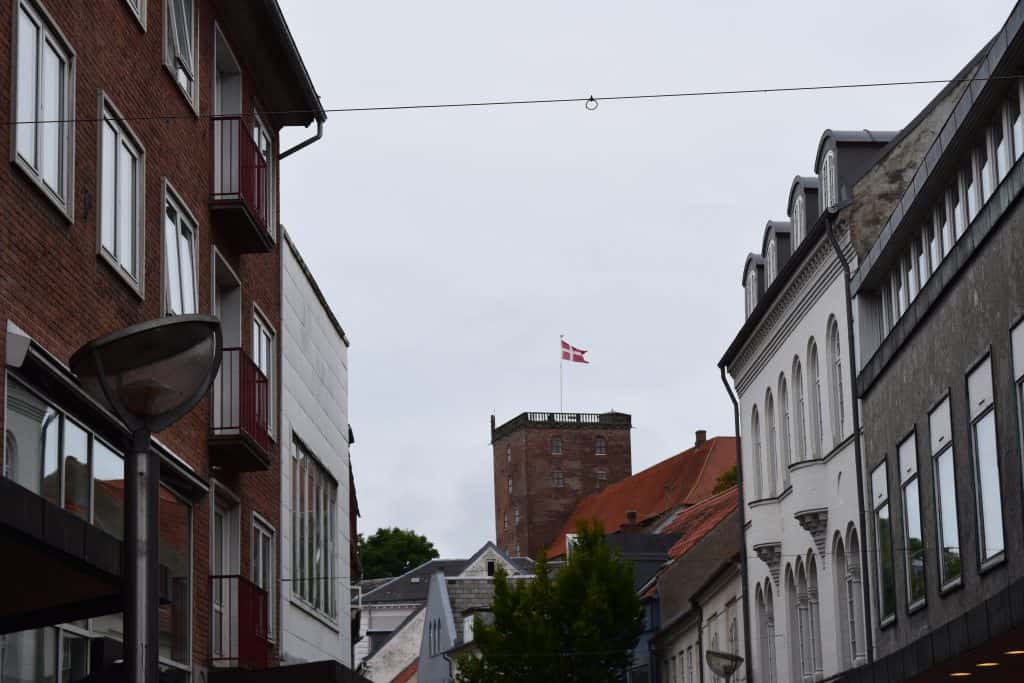
Koldinghus Castle is Kolding’s primary landmark. This former royal castle and fortress, originally built in the mid-13th century, stands on a hill overlooking the city. After being destroyed by fire in 1808, it underwent an extensive and innovative reconstruction from 1976 to 1993. Today, it functions as a museum, housing collections of Danish crafts, furniture, and exhibitions on its history. Its modern roof and interior structure, built within the historic ruins, are particularly notable.
Trapholt Museum for Modern Art, Crafts, and Design
The Trapholt Museum is a major Danish museum focused on modern art, crafts, and design. Opened in 1988, it is located in a park overlooking Kolding Fjord. The museum’s collection includes a significant collection of Danish furniture design, with works by designers like Arne Jacobsen. It also features ceramics, textiles, and contemporary art. Trapholt is the only museum in Denmark where visitors can experience a summer house designed by the Finnish architect Alvar Aalto, the “Kubeflex House.”
Geografisk Have (Geographical Garden)
The Geografisk Have is a botanical garden that spans 14 hectares. The garden is divided into geographical zones, featuring plants from around the world, including China, Japan, North America, and Europe. It is known for its extensive collection of roses, with over 2,000 varieties. The garden also houses a bamboo forest and various animals like goats and peacocks. Established in 1918, the garden provides an educational and recreational experience.
St. Nicolai Church
St. Nicolai Church (Sankt Nikolaj Kirke) is the oldest church in Kolding, with a history dating back to the 13th century. It stands in the city center and is dedicated to St. Nicholas, the patron saint of seafarers. The current building is primarily Gothic in style. Inside, visitors can see a Renaissance-era altarpiece and historic epitaphs. The church has undergone several renovations over the centuries but remains an active place of worship.
Christiansfeld
Located just 20 kilometers south of Kolding is the town of Christiansfeld, a UNESCO World Heritage Site. This town was founded in 1773 by the Moravian Church. It is recognized for its well-preserved architecture and its distinct urban plan, which reflects the religious and social ideals of the Moravians. The town’s harmonious design and distinctive yellow brick buildings offer a look into this specific community’s life. Visitors can explore the church, cemetery, and original Moravian houses.
Sports in Kolding
Kolding has an active sports culture with a particularly strong and successful tradition in handball. The city is home to one of Denmark’s most historically successful men’s handball clubs. Football is also a key community sport with a club competing in the national leagues. The city’s location on a fjord provides opportunities for water sports.
Handball
Handball has an exceptionally strong presence in Kolding. The city is home to a club that has been a dominant force in Danish men’s professional handball for decades. The club’s success has made Kolding a major center for the sport in Denmark, with a large and dedicated following. Home games are major events that draw large crowds to the city’s main arena.
KIF Kolding
KIF Kolding is one of Denmark’s most successful men’s handball clubs. Founded in 1941, they play their home matches at the Sydbank Arena in Kolding, which has a capacity of around 5,000. KIF Kolding has won the Danish Men’s Handball League (Herrehåndboldligaen) a record 14 times. They have also competed consistently in the EHF Champions League, Europe’s premier club competition.
Football
Football holds a significant place in Kolding’s community. The city’s primary football club fosters local participation and draws loyal supporters to its matches. The club has a long history and represents the city in the Danish national league system. It serves as a key institution for the local sports community.
Kolding IF
The city’s most prominent football club is Kolding IF. The club has a long history, founded in 1895. They play their home matches at the Autocentralen Park in Kolding. Kolding IF currently competes in the Danish 1st Division (NordicBet Liga), which is the second tier of Danish football. The club strives for promotion to the top-tier Superliga.
Water Sports
The Kolding Fjord provides a natural venue for a variety of water sports. Sailing is a popular activity, with several marinas and yacht clubs located along the fjord. The Kolding Sejlklub is the main sailing club and organizes regattas and youth programs. Other water sports, such as kayaking and paddleboarding, are also common activities on the fjord during the summer months.


Getting Around in Kolding
Navigating Kolding is straightforward. The city center is compact and walkable. An efficient local bus network connects the city center with the surrounding districts and the main transport hubs.
On Foot: The City Center
Walking is the best way to explore the central part of Kolding. Many key attractions, including Koldinghus Castle, St. Nicolai Church, and the main shopping streets, are within a short walking distance of each other. The area around the Kolding River also has pedestrian paths. Comfortable shoes are recommended for exploring the hilly area around the castle.
Local Buses
Kolding’s public transport is operated by Sydtrafik. A comprehensive network of local buses serves all parts of Kolding and its suburbs. The buses are a key mode of transport for connecting the city center with attractions like the Trapholt Museum and the train station. Tickets can be purchased on the bus or via a mobile app. Always check official sources for up-to-date schedule information.
How to Get to Kolding
Reaching Kolding is convenient due to its central location in the Jutland peninsula and its excellent transport links. The city is a major railway hub and is located directly on Denmark’s primary motorway.
Arriving by Air: Billund Gateway
Kolding does not have its own airport. The closest and most convenient major airport is Billund Airport (BLL), located approximately 40 kilometers away. Billund is one of Denmark’s busiest airports and serves many European cities, including major hubs and low-cost carriers. From Billund Airport, direct bus services connect to Kolding in about 40 minutes. Copenhagen Airport (CPH) is a larger international hub, from which direct trains run to Kolding.
The Open Road: Driving the E45
Driving to Kolding is very efficient. The city is located directly on the E45 motorway, which is the main north-south highway in Jutland. This motorway connects Kolding directly to Aarhus in the north and to the German border in the south. The E20 motorway, which crosses the country from Copenhagen, also passes directly through Kolding. This makes the city a key road transport junction.
Connecting by Coach
The main bus station in Kolding is located at the Kolding Station. Regional buses, operated by Sydtrafik, connect Kolding with all nearby towns and cities. Long-distance bus companies like FlixBus also operate routes connecting Kolding to major Danish cities like Copenhagen and Aarhus, as well as to cities in Germany and the rest of Europe.
On Track: A Major Railway Hub
Traveling to Kolding by train is highly efficient. Kolding Station is a major railway hub in Southern Denmark. DSB (Danish State Railways) operates frequent InterCity and InterCityLyn (express) train services. Direct trains connect Kolding to all major Danish cities, including Copenhagen (a journey of about 2 hours), Aarhus, and Odense. The station is located centrally, a short walk from the main pedestrian streets.
The Sea Route: Arriving by Ferry
While Kolding is not a ferry port, it is easily accessible from various ferry terminals in Jutland. Esbjerg, on the west coast, has ferry connections. Frederikshavn, in northern Jutland, has ferry links to Norway and Sweden. From Germany, the Puttgarden-Rødby ferry provides a quick crossing to Denmark. From any of these ferry ports, the journey to Kolding must be completed by train or car.
Driving Distances
The driving distance from 10 major regional cities, according to Google Maps:
- Odense, Denmark – 67 kilometers (0 h 50 min)
- Esbjerg, Denmark – 71 kilometers (1 h 00 min)
- Aarhus, Denmark – 99 kilometers (1 h 10 min)
- Aalborg, Denmark – 209 kilometers (2 h 10 min)
- Copenhagen, Denmark – 227 kilometers (2 h 30 min)
- Hamburg, Germany – 268 kilometers (2 h 50 min)
- Berlin, Germany – 563 kilometers (6 h 10 min)
- Oslo, Norway – 618 kilometers (7 h 00 min)
- Amsterdam, Netherlands – 716 kilometers (7 h 40 min)
- Stockholm, Sweden – 883 kilometers (9 h 20 min)
Looking to Explore more of Denmark and Europe?