
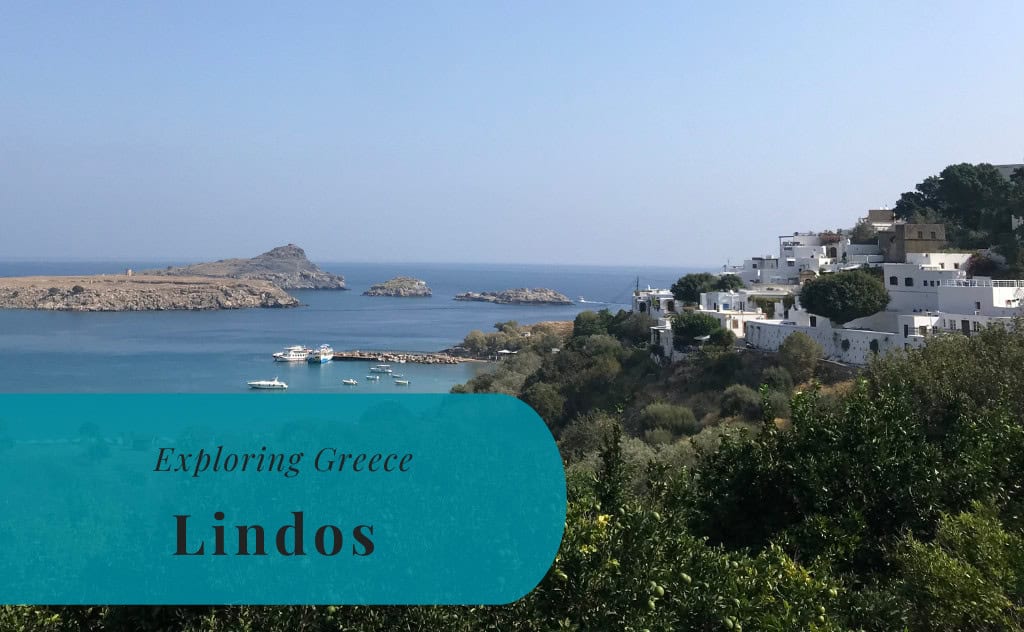
Lindos, Rhodes | Exploring Greece
Lindos is a historic village and archaeological site on the Greek island of Rhodes, part of the Dodecanese island group. Located on the island’s eastern coast, Lindos is approximately 55 kilometers (34 miles) south of Rhodes Town, the island’s capital. As of the 2021 census, the community of Lindos had a population of 1,114 residents. The village is built into a hillside, overlooking a picturesque bay and the Aegean Sea. Its geography is dominated by a towering natural rock formation, crowned by an ancient acropolis. This acropolis rises 116 meters (380 feet) above the village. The climate is Mediterranean, with hot, dry summers and mild winters. Nearby places include the village of Pefkos to the south and Kalathos to the north. Lindos is a UNESCO World Heritage site, recognized for its cultural significance. The village’s white-washed houses, narrow alleys, and historical monuments create a unique atmosphere.
Our Visit to Lindos
Our Lindos trip on Rhodes was a vivid experience. We explored the charming village, with its white houses and narrow streets. The sandy beaches and the towering Acropolis impressed us. The streets were, however, often crowded, resulting in us remembering it as a “Tourist Madness”.


A Short History
Lindos boasts a history spanning millennia. It was one of the three major cities of ancient Rhodes, founded by the Dorians around the 10th century BC. Its strategic position made it a powerful maritime and commercial center. In the 8th century BC, Lindos was a member of the Dorian Hexapolis, a league of six cities. It established colonies in areas like Sicily and Asia Minor. The Temple of Athena Lindia, on the acropolis, was a significant sanctuary. It attracted offerings from historical figures.
During the Classical period, Lindos flourished. Its decline began after the foundation of the city of Rhodes in 408 BC. However, it remained an important religious site. The Romans, Byzantines, Knights of St. John, and Ottomans all left their mark. The Knights of St. John, who ruled Rhodes from 1309 to 1522, heavily fortified the acropolis. This created the castle we see today. The village below developed during medieval times.


Things to Do and See
Lindos, a captivating village on the island of Rhodes, offers a wealth of historical and natural sights. Dominated by its ancient Acropolis, the village provides a unique blend of archaeological wonders and stunning coastal views. From the impressive remnants of an ancient past to charming village streets and tranquil bays, Lindos presents a journey through time and a feast for the eyes.
Acropolis of Lindos
The Acropolis is the village’s primary attraction. It stands on a dramatic natural rock formation. The acropolis rises 116 meters (380 feet) above the sea. The ascent provides panoramic views of the village, coastline, and Aegean Sea. Visitors can reach the summit by walking a paved path. Donkeys are also available for transport. The site combines ancient Greek and medieval architecture. Entry requires a fee.
Temple of Athena Lindia
Situated at the highest point of the Acropolis, this temple is a core historical element. It was built in the 4th century BC. Its Doric columns, though partially reconstructed, show its former grandeur. The temple was dedicated to Athena Lindia, the patron goddess of Lindos. Evidence suggests it was a major religious center in the ancient world, attracting worshipers from afar.
Propylaea and Hellenistic Stoa
These structures form part of the Acropolis complex. The Propylaea served as the impressive monumental gateway to the sanctuary of Athena Lindia. It dates back to the 4th century BC. The Hellenistic Stoa, built around 200 BC, was a long, colonnaded building. It provided shelter and a gathering place for visitors and pilgrims. Its remains illustrate the sophisticated urban planning of ancient Lindos.
Knights of St. John’s Castle
This medieval fortress encircles the ancient ruins on the Acropolis. It was constructed by the Knights of St. John. They ruled Rhodes from 1309 to 1522. The castle walls are thick and well-preserved in many sections. They incorporate earlier Byzantine fortifications. The castle’s strategic position allowed control of the sea lanes. Its towers and battlements offer insights into medieval military architecture.
Village of Lindos
Nestled at the foot of the Acropolis, the village is a major attraction in itself. It is famous for its distinct traditional Lindian houses. Most of these date from the 17th and 18th centuries. They feature whitewashed walls, flat roofs, and intricate pebble mosaics in their courtyards. The village’s narrow, car-free alleys invite exploration. They are lined with small shops, cafes, and restaurants.
St. Paul’s Bay
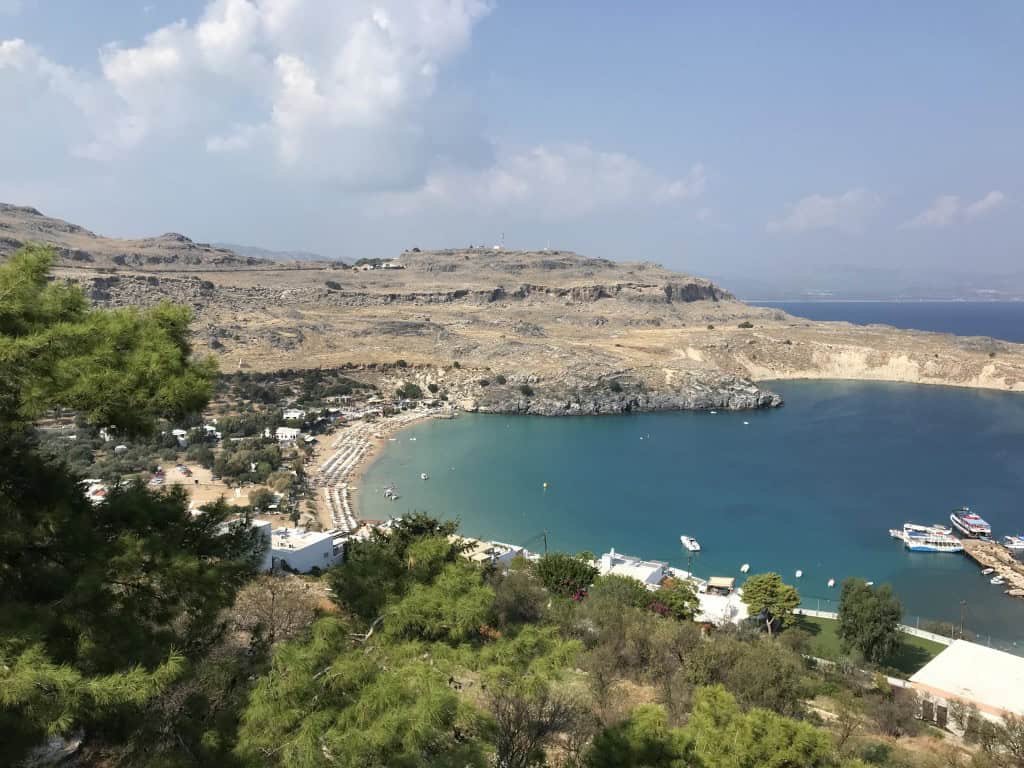
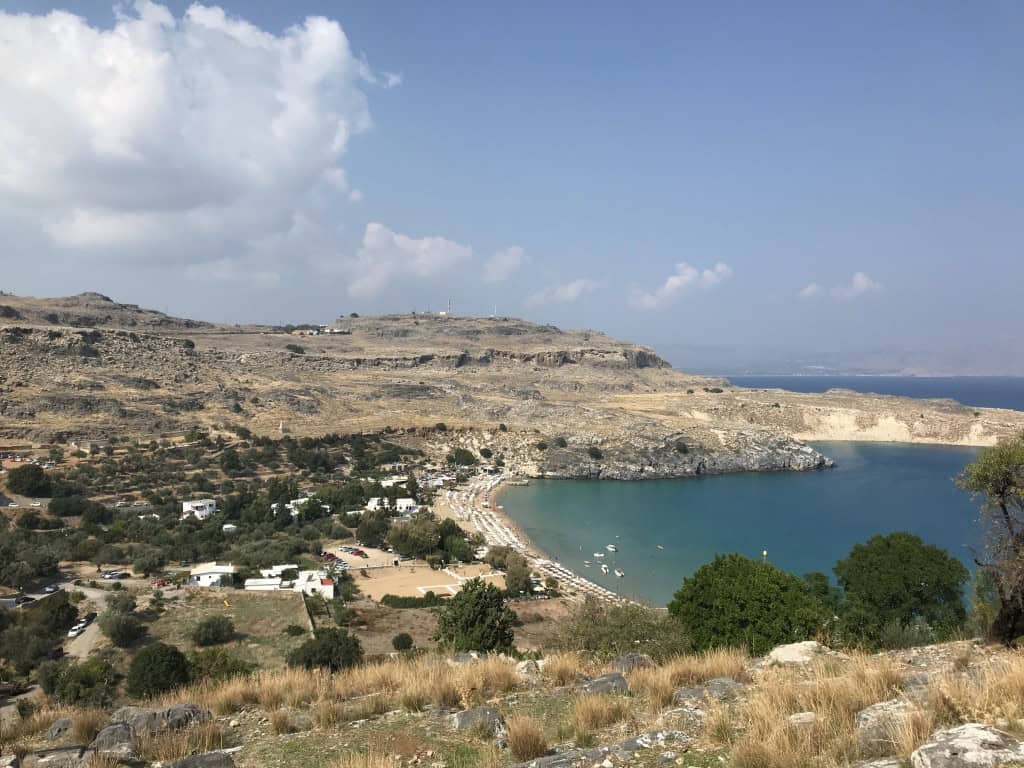
This picturesque, almost circular bay lies directly below the Acropolis. It is a natural harbor. The calm, crystal-clear turquoise waters make it ideal for swimming and snorkeling. The bay is sheltered from winds. A small, charming white chapel dedicated to Saint Paul is on one side of the bay. Legend says Saint Paul landed here during his missionary journeys. The bay offers stunning views of the Acropolis from below.



How to Get to Lindos
Lindos, a sought-after destination on Rhodes, Greece, is accessible through several convenient transport options. Rhodes International Airport (RHO), also known as Diagoras Airport, is the main gateway to the island. It sits approximately 55 kilometers (34 miles) north of Lindos.
By Plane
Rhodes International Airport (RHO) handles both domestic and international flights. During peak season, many airlines offer direct flights from various European cities. Year-round, connections are available via Athens International Airport (ATH). Book flights in advance for better prices. The flight duration from Athens to Rhodes is about one hour.
By Car
Renting a car offers flexibility for exploring Rhodes and reaching Lindos. Car rental offices are available throughout Rhodes, including Rhodes Town. The drive to Lindos is direct. It follows well-maintained coastal roads. The journey takes around an hour from Rhodes Town. Driving allows for spontaneous stops. Parking in Lindos is outside the village center. This requires a short walk to the main attractions.
By Bus
Public buses provide an economical way to reach Lindos. The main bus terminal for intercity routes is in Rhodes Town. Buses depart frequently from Rhodes Town to Lindos. The journey typically takes around 1 hour and 45 minutes. Services operate throughout the day. Check the KTEL Rhodes website for current schedules. Buses are a budget-friendly choice.
By Ferry
Rhodes is well-connected by ferry to mainland Greece and other islands. The main port is in Rhodes Town. This port receives ferries from Piraeus, the main port of Athens. The journey from Piraeus to Rhodes is long, typically 12 to 18 hours, varying by vessel and stops. Overnight cabins are available. Rhodes also has frequent ferry connections to other Dodecanese islands like Symi, Kos, and Patmos. Additionally, international ferry services connect Rhodes to towns on the Turkish coast, such as Marmaris and Fethiye. These provide a unique travel option. Travelers should book ferry tickets in advance, especially during high season.
Looking to Explore more of Greece and Europe?




Jag är glad att jag besökte denna vackra plats en gång för länge sen när det inte var tillåtet att bygga hotell där och turisterna bara kom över dagen. Vi bodde inhysta hos en familj i några veckor och när bussarna for iväg sen eftermiddag kände vi oss lite som en del av befolkningen.
Tider som vi andra bara kan drömma om, när alla dessa fantastiska platser var mer orörda 🙂