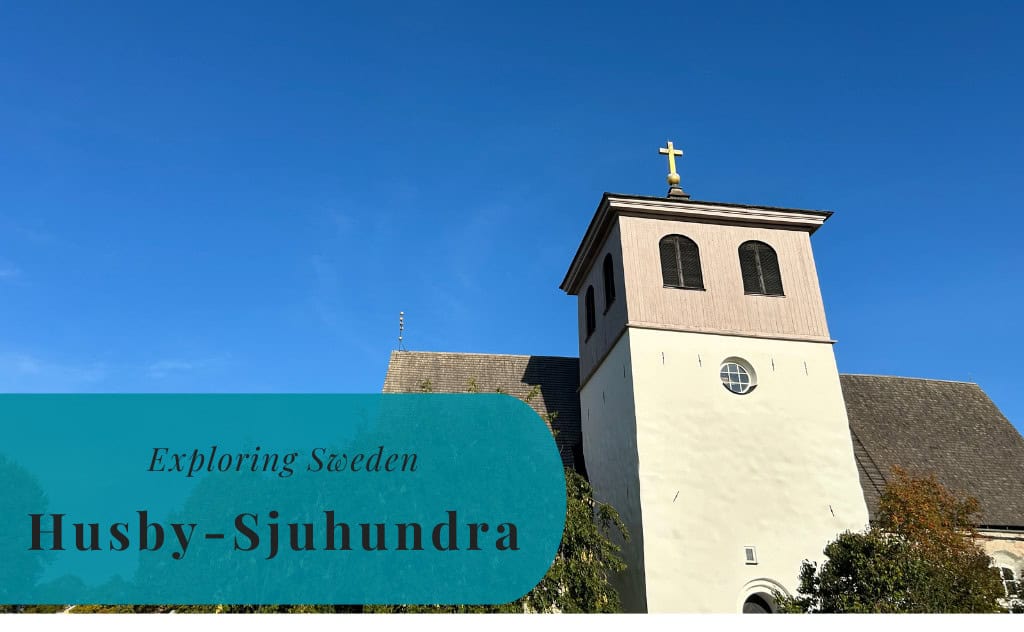
Husby-Sjuhundra, Uppland | Exploring Sweden
Husby-Sjuhundra is a locality and parish in Norrtälje Municipality, located in the historic Sjuhundra härad (hundred) of Uppland, Sweden. The current locality is formed by the small villages of Husby and Syninge. According to 2020 data, the defined urban area of Husby has a population of 305 residents. The area’s geography is characterized by a mix of forests, open farmland, and proximity to several lakes. Nearby towns include Rimbo, about 10 kilometers away, and the municipal center of Norrtälje, about 25 kilometers away.
The character of Husby-Sjuhundra is defined by its deep historical roots, particularly from the Viking Age and early Swedish Middle Ages. The name “Husby” itself indicates its former status as a royal administrative estate. The area is not a commercial center but rather a quiet, rural community. Its main points of interest are its well-preserved church, numerous ancient remains, and the surrounding cultural landscape, which is of national interest for heritage conservation.

A Short History of Husby-Sjuhundra
The history of Husby-Sjuhundra is a record of its long-standing importance as a center of royal power and religious life in the Uppland region. Its story is told through its name, its ancient church, and the many runestones and burial grounds that mark the landscape.
A Viking Age Center
The history of Husby-Sjuhundra stretches back to the Viking Age and before. The name “Husby” indicates that this might have been the site of a royal manor or administrative center for the Swedish king during the early Middle Ages. These manors were crucial for collecting taxes and administering the surrounding territory. The area’s importance during this period is confirmed by the high concentration of ancient remains. There are numerous runestones and several extensive grave fields found in the parish.
The Medieval Church and Parish
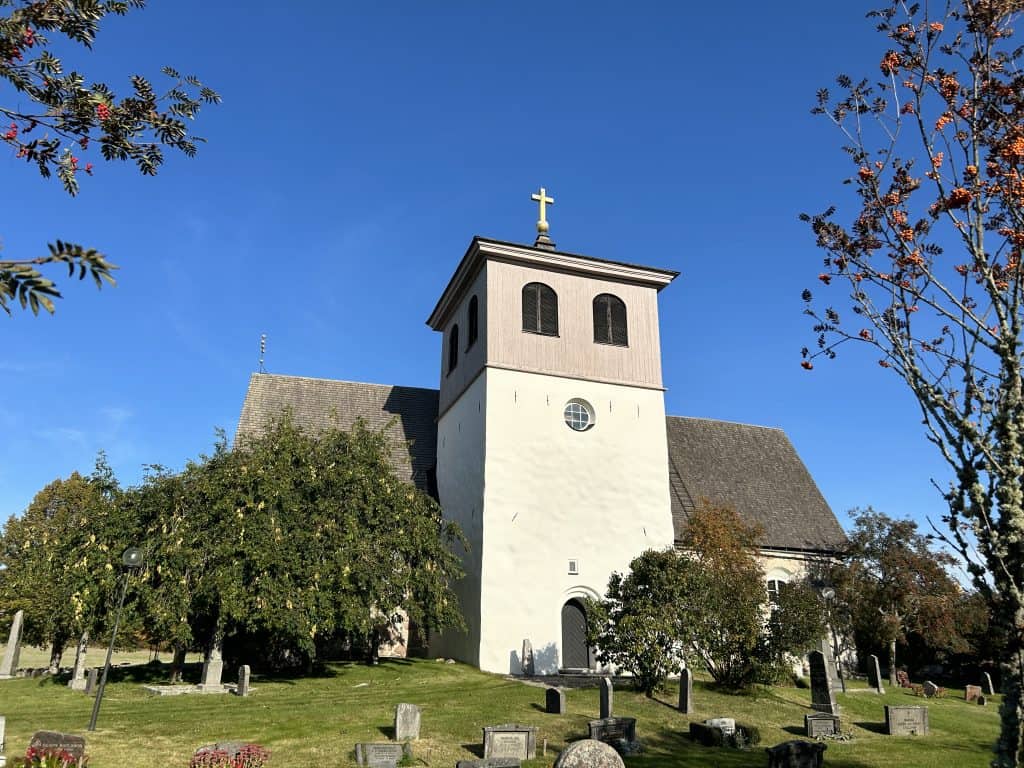
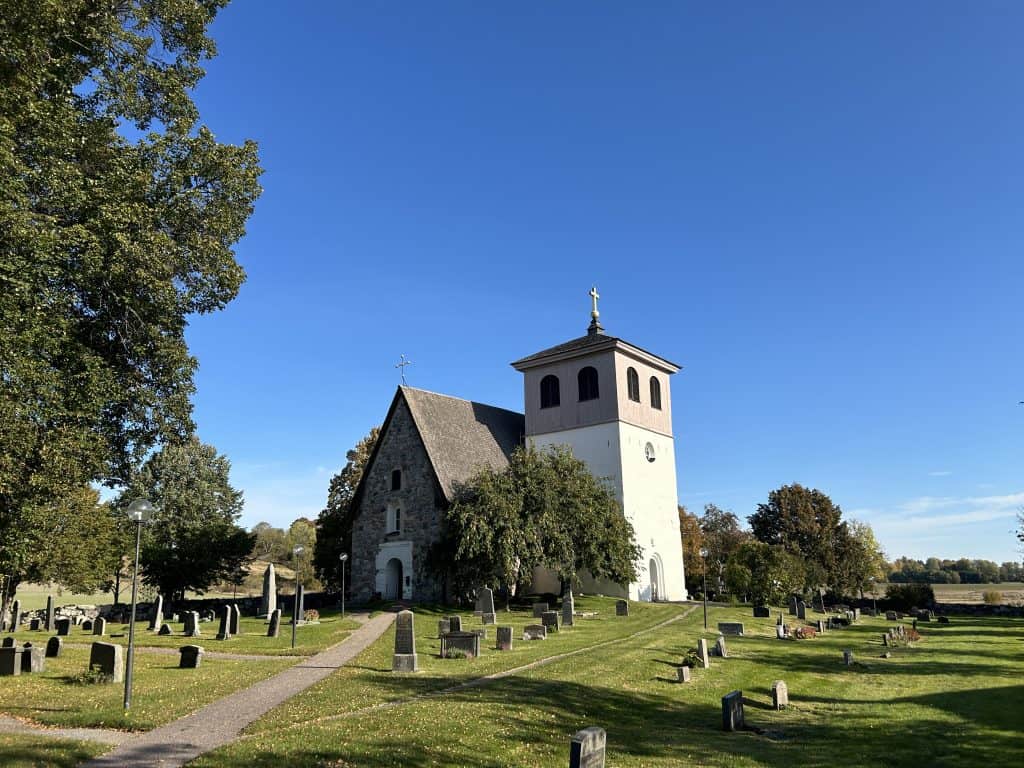
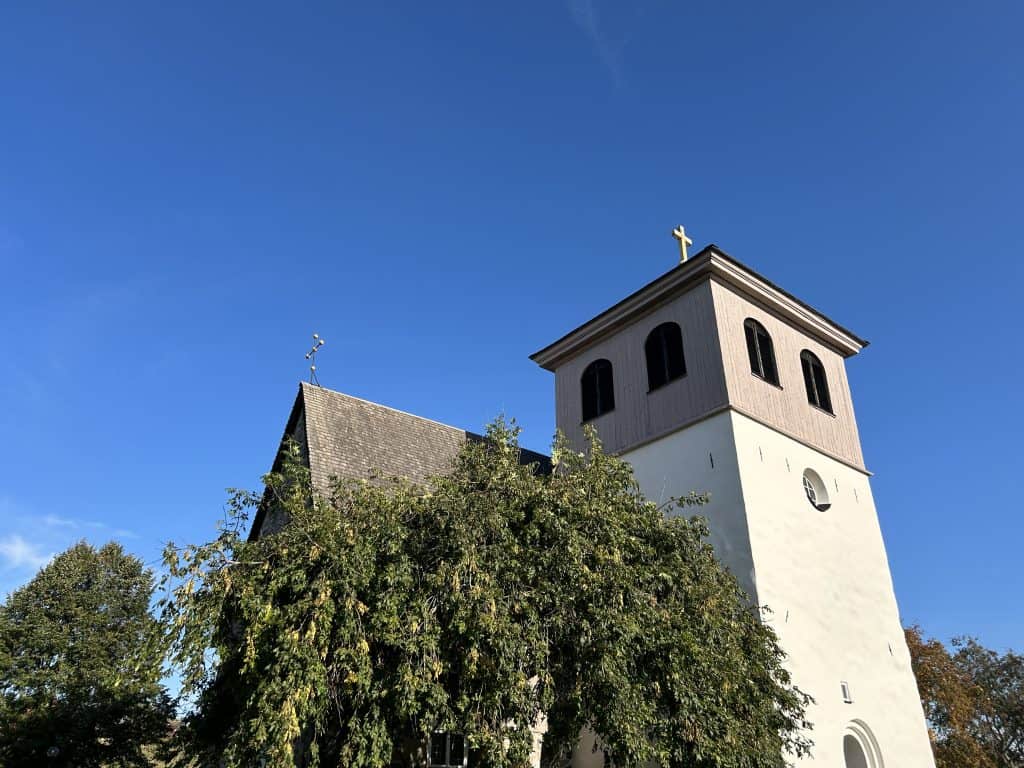
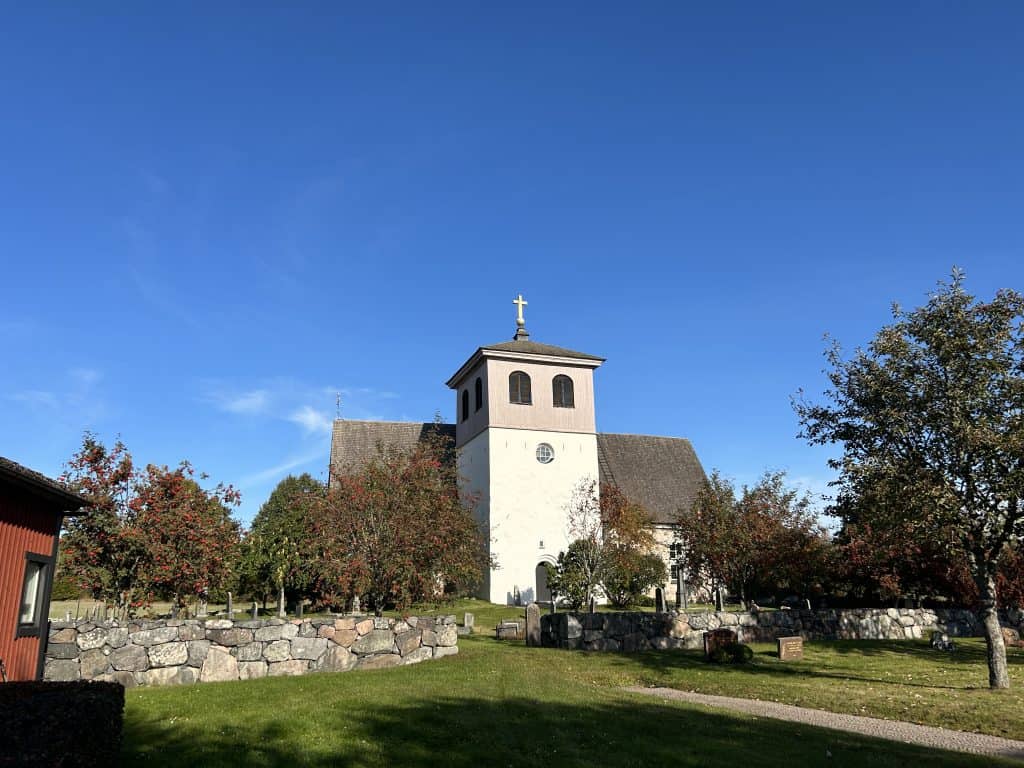
At the center of the parish stands the Husby-Sjuhundra Church, which dates back to the 12th century. It was likely built on the site of an even older wooden church, and its construction solidified the area’s role as a religious hub. The stone church’s tower is one of the oldest of its kind in the region. According to some historical interpretations, the king may have had his own private gallery in the church tower. For centuries, the church served as the spiritual and communal center for the surrounding agricultural community.
From Agricultural Life to Modern Locality
Following the medieval period, Husby-Sjuhundra continued primarily as an agricultural community. The land, once managed as a royal estate, was divided among various farms. This rural character has been maintained for centuries, preserving the historical landscape. In the modern era, Husby-Sjuhundra remains a small locality. Its historical elements, including the church and ancient monuments, are now preserved as part of Sweden’s national heritage, managed by the state.

Things to Do and See
Husby-Sjuhundra’s sights are a direct reflection of its long history as a center of power in ancient Uppland. The main points of interest are the medieval church, the numerous Viking Age runestones, and the extensive prehistoric grave fields that are found throughout the parish.
Husby-Sjuhundra Church
The Husby-Sjuhundra Church (Husby-Sjuhundra kyrka) is the central landmark of the locality. It is one of the oldest churches in the Uppland region. Its oldest parts, including the nave and parts of the tower, date from the 12th century. The church displays a blend of Romanesque and later architectural styles. Inside, visitors can see remnants of medieval frescoes. The church is today a part of the Husby, Skederid och Rö Congregation within the Church of Sweden.
Runestones
The Runestones of Husby-Sjuhundra are significant historical monuments from the Viking Age. The parish is home to several of these inscribed stones, which provide direct insight into the region’s early history. One of the most notable runestones, designated U 539, still stands at the church. Another, U 540, is located nearby. These stones often commemorate local families, their travels, and their deeds, serving as important historical documents carved in stone.
How to Get to Husby-Sjuhundra
Reaching the historic locality of Husby-Sjuhundra requires travel through the wider Roslagen region. The journey typically involves connecting through major transport hubs like Stockholm and the municipal center of Norrtälje.
Arriving by Air: The Arlanda Gateway
The primary airport for reaching Husby-Sjuhundra is Stockholm Arlanda Airport (ARN), located approximately 45 kilometers to the southwest. As Sweden’s largest international airport, it offers extensive global connections. From Arlanda, the most direct way to continue is by rental car. Alternatively, travelers can take public transport to Stockholm or Uppsala, and then connect to a bus heading towards Rimbo or Norrtälje for a final transfer to Husby-Sjuhundra.
The Open Road: Driving to Uppland
Driving is the most flexible option for reaching Husby-Sjuhundra and exploring the surrounding countryside. From Stockholm, the main route is the E18 motorway towards Norrtälje. Drivers can then take Road 280 towards the town of Rimbo. From Rimbo, local signs direct travelers the final few kilometers to Husby-Sjuhundra. The total drive from Stockholm is approximately 65 kilometers and takes about an hour. Parking is available at the church.
Connecting by Coach: A Regional Journey
Bus services provide a public transport link to the area. The journey requires a transfer at a regional bus hub like Rimbo or Norrtälje. SL (Storstockholms Lokaltrafik) operates express buses from Stockholm to these towns. From the Rimbo bus station, local bus line 637 runs towards Husby-Sjuhundra, with a stop named “Husby kyrka” located at the church. It is advisable to check local schedules in advance, as rural services can be infrequent.
On Track: A Journey by Rail and Bus
There is no direct train service to Husby-Sjuhundra. The journey involves taking a train to a major regional hub and then transferring to the bus network. Travelers can take a long-distance or commuter train (pendeltåg) to Stockholm Central Station. From there, one must connect to the bus network to reach Norrtälje or Rimbo. The final leg of the journey to Husby-Sjuhundra must be completed by local bus.
The Baltic Sea Route: Arriving by Ferry
For international visitors arriving by sea, the primary passenger port is the Port of Stockholm. Major ferry lines connect Stockholm with Finland, Estonia, and other Baltic destinations. From the ferry terminals in Stockholm, such as Värtahamnen, travelers would need to use local public transport to reach a bus terminal for the onward journey. The regional port of Kapellskär, also in Norrtälje Municipality, offers some ferry connections as well, requiring a shorter onward road journey.
Driving Distances
The driving distance from 5 major Swedish cities, according to Google Maps:
- Stockholm – 62 kilometers (45 min)
- Gothenburg – 531 kilometers (5 h 40 min)
- Malmö – 673 kilometers (7 h)
- Linköping – 260 kilometers (3 h)
- Kiruna – 1226 kilometers (13 h 40 min)
Explore More of Uppland and Sweden