Exploring Skåne

Exploring Skåne
Skåne, Sweden’s southernmost historical province, is a vibrant land. It has rolling agricultural fields and picturesque coastlines, boasting a rich, complex history. Historically, Skåne was a Danish province for centuries, and its cultural and architectural heritage still shows distinct Danish influences. It officially became part of Sweden in 1658 with the Treaty of Roskilde, leading to a long period of integration. Today, Skåne is a dynamic region, serving as a bustling gateway to mainland Europe. It’s also a hub of innovation. Its provincial flower is the vibrant Oxeye Daisy (Prästkrage), symbolizing its sunny meadows. Its provincial animal is the majestic Red Deer (Kronhjort). These symbols perfectly capture Skåne’s blend of lush nature and abundant wildlife.

Population
Skåne has a population of about 1.4 million people. This makes it Sweden’s most populous historical province, and one of its most densely populated. Most residents live in the highly urbanized southwestern parts, particularly around its three largest cities.
- Malmö: This is Skåne’s largest city and the third-largest in Sweden. Malmö is a diverse and modern urban center, a key part of the Öresund Region connected to Copenhagen, Denmark, by the Öresund Bridge. It’s known for its contemporary architecture, like the Turning Torso. Its cultural scene is vibrant, and culinary offerings are excellent. Malmö is a major hub for business, education, and innovation.
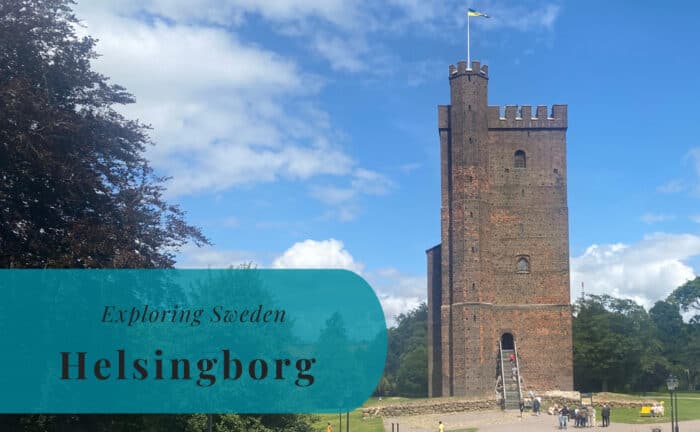
- Helsingborg: Situated on the narrowest part of the Öresund strait, it sits directly opposite Helsingør in Denmark. Helsingborg is a major port city with a long trading history. It’s famous for its medieval tower, Kärnan, which offers panoramic views. The city blends historical charm with a lively urban environment, serving as a vital connection point to Denmark.
- Lund: This ancient university city is renowned for its prestigious Lund University, one of Scandinavia’s oldest and largest institutions of higher education. Lund boasts a magnificent Romanesque cathedral. Charming cobblestone streets add to its appeal. It has a vibrant intellectual atmosphere, and it’s a city rich in history, research, and youthful energy.
- Kristianstad: Located inland in eastern Skåne, Kristianstad is a historic garrison town. Christian IV of Denmark founded it. It’s surrounded by wetlands, including the unique Kristianstads Världar biosphere reserve. The city offers historical architecture and good access to beautiful natural areas.
Location
Skåne is located in the southernmost part of Sweden. It forms the southernmost tip of the Scandinavian Peninsula. It borders Halland to the north, Småland to the northeast, and Blekinge to the east. To the south and west, its extensive coastline meets the Baltic Sea and the Öresund strait. These provide direct maritime connections to continental Europe and Denmark. Its unique position as Sweden’s gateway to Europe has profoundly shaped its identity.
Geography
Skåne’s geography is quite distinct. It features flat to gently rolling agricultural plains, often called the “Skåne Plain.” These are among the most fertile in Northern Europe. Vast cultivated fields dominate much of the landscape. Towards the north and east, the terrain becomes more undulating, with forests and some low ridges, like Linderödsåsen. The coastline is diverse, featuring long sandy beaches on its southern and western shores, such as those in Falsterbo and Åhus. Dramatic rocky cliffs are found in the northwest, for example, Kullaberg. Numerous small rivers and streams crisscross the landscape. The highest point in Skåne is Söderåsen, reaching 212 meters (696 feet) above sea level. This provides a contrast to the flat plains.
Entry Points to Skåne
Skåne is exceptionally well-connected by air, sea, and land. It truly serves as Sweden’s primary gateway to continental Europe.
By Air
Skåne is served by a major international airport, Malmö Airport (MMX), located near Sturup, east of Malmö. MMX offers regular domestic flights connecting to both Stockholm Arlanda Airport (ARN) and Stockholm Bromma Airport (BMA), providing easy connections throughout Sweden. It also has international routes, primarily to various European cities, and handles significant charter traffic. Beyond MMX, many travelers to Skåne utilize Copenhagen Airport (CPH), located just across the Öresund Bridge in Denmark. CPH is the largest international airport in the Nordic region, offering extensive global connections. Its close proximity and excellent train connections directly to Malmö and Lund make it a very popular choice. From both MMX and CPH, airport coaches and taxis connect travelers to city centers.
By Sea
Skåne’s long coastline and numerous ports make sea travel a significant entry option. Trelleborg Port stands as Sweden’s largest ferry port, offering extensive ferry services to Rostock, Travemünde, and Sassnitz in Germany, as well as Świnoujście, Poland, operated by Stena Line and TT-Line for both passengers and freight. Helsingborg Port is primarily a hub for short, frequent ferry services across the Öresund strait to Helsingør, Denmark, a popular 20-minute crossing operated by ForSea for commuters and day-trippers. Other ports like Ystad Port also offer ferry services to Bornholm, Denmark, and Świnoujście, Poland. While Malmö Port is less focused on passenger ferries today, it still handles some international cruise traffic and holds historical significance.
By Land
Land travel is exceptionally convenient due to Skåne’s location and infrastructure.
- By Car: The Öresund Bridge is a marvel of engineering. It directly connects Malmö to Copenhagen, Denmark. Major highways crisscross Skåne, including the E6 (north to Gothenburg, Oslo) and E4 (north to Stockholm), and the E22 (east to Blekinge and Kalmar). Driving offers superb flexibility for exploring the region.
- By Train: Skåne has an excellent and extensive railway network. The Öresundståg regional trains provide very frequent services. They cross the Öresund Bridge to Copenhagen (including CPH Airport) and northward through Skåne and into Småland and Halland. SJ (Swedish Railways) operates long-distance trains. They connect Malmö and Lund to Stockholm, Gothenburg, and other major Swedish cities.
- By Bus: Extensive regional bus networks (Skånetrafiken) operate throughout the province. They connect cities, towns, and even smaller villages. Long-distance bus companies also offer routes linking Skåne to major cities across Sweden. They even connect to parts of Europe.
Join Us Exploring Skåne!






Explore more of Sweden and Europe