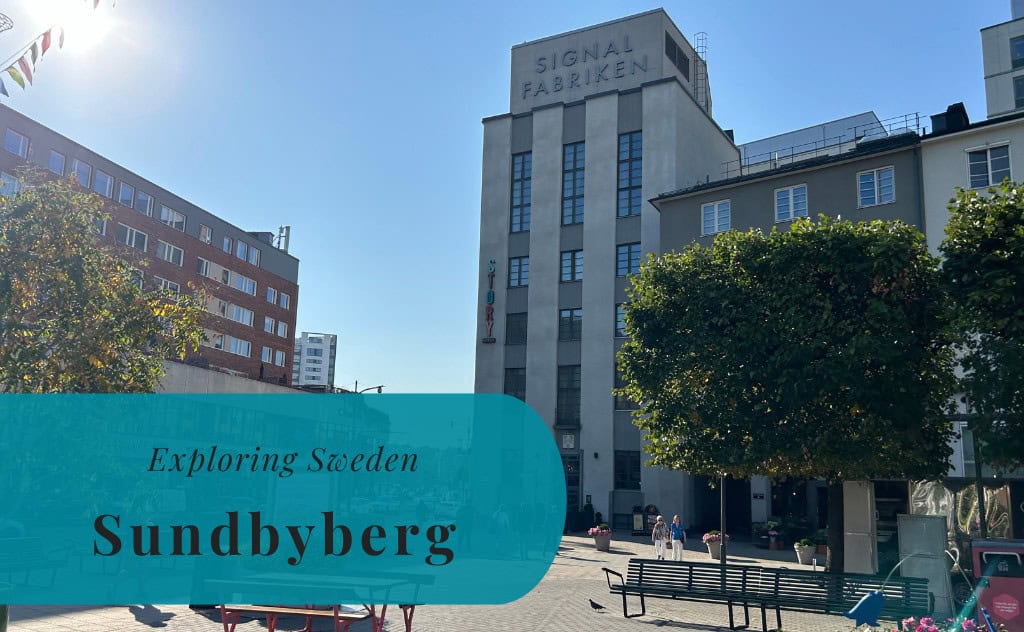
Sundbyberg, Uppland | Exploring Sweden
Sundbyberg is a district in the Stockholm urban area. It is the core of Sundbyberg Municipality, located northwest of central Stockholm and directly bordering the city proper. With a population of over 54,000 as of 2023, it is often cited as Sweden’s most densely populated municipality. The district features a blend of residential areas, commercial centers, and green spaces. Neighboring Stockholm districts include Bromma and Solna.
The area’s character is defined by its compact urban environment, often referred to as “Sumpan” by locals. It functions as a self-contained town while also being fully integrated into the greater Stockholm transport network. The architecture reflects its rapid growth from the late 19th century onwards, with a mix of industrial-era brick buildings, early 20th-century apartment blocks, and modern construction. Key areas within the district include the central commercial hub and the quieter residential zones surrounding it.


A Short History of Sundbyberg
The history of Sundbyberg is a story of rapid transformation driven by the industrial revolution and the expansion of Sweden’s railway network. It evolved from open farmland into a major industrial suburb and later into the dense, modern district it is today.
From Farmland to Railway Town
Until the mid-19th century, the area was primarily agricultural land belonging to the Sundby farm estate. Its modern history began when the industrialist Anders Petter Löfström purchased the land and began developing it. The true catalyst for growth was the opening of the Stockholm-Västerås railway line in 1876. A station was established here, which immediately sparked rapid development and attracted new residents and industries from Stockholm.
The Industrial Boom
Following the arrival of the railway, industrialization quickly took hold. Numerous factories were established in Sundbyberg, specializing in textiles, chemicals, and food production. This industrial boom attracted many workers to the area, leading to a sharp increase in population. The presence of these factories shaped the district’s early character as a working-class industrial town. The growth was so significant that Sundbyberg began to form its own distinct identity separate from its rural surroundings.
Municipal Status and Modern Growth
In 1888, Sundbyberg officially separated from Bromma parish, becoming a distinct municipality (köping). It later received its city charter (stad) in 1927. The early 20th century saw significant residential construction, including many of the red-brick apartment buildings that still characterize parts of the district. After World War II, further development continued, and the area evolved from an industrial town into a modern commercial and residential hub within the expanding Stockholm metropolitan area.
Things to Do and See
Sundbyberg’s sights reflect its urban character, historical development, and local culture. The points of interest include historic buildings, public squares, parks, and a contemporary art space, all located within a compact area.
Sundbybergs Kyrka
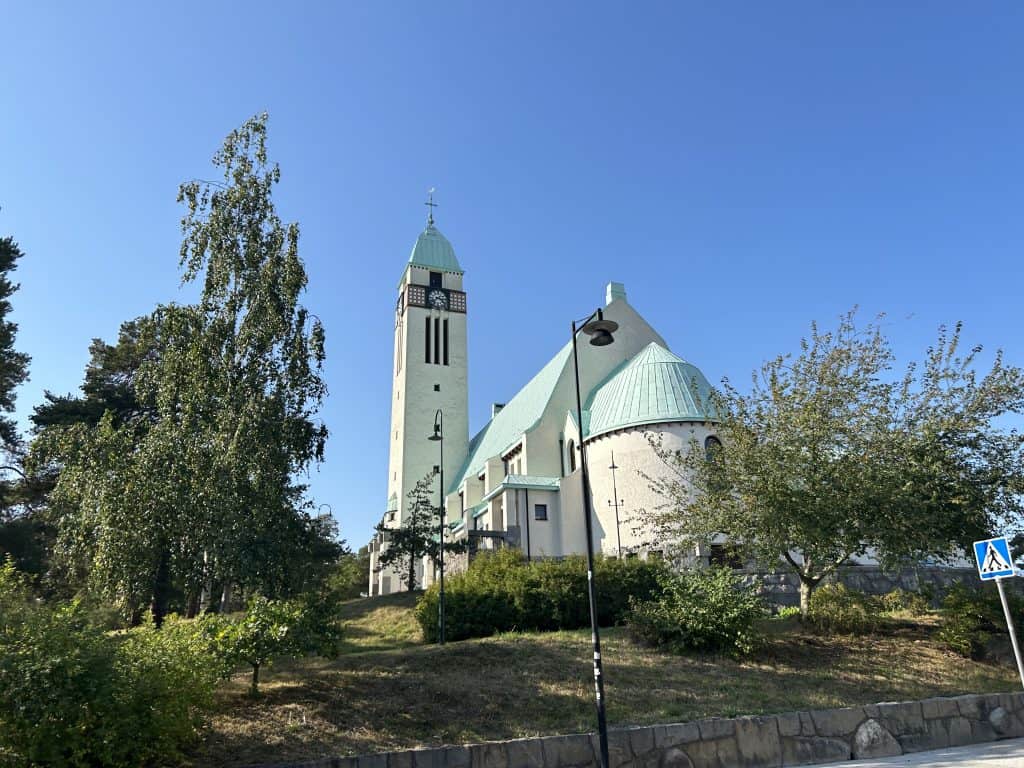
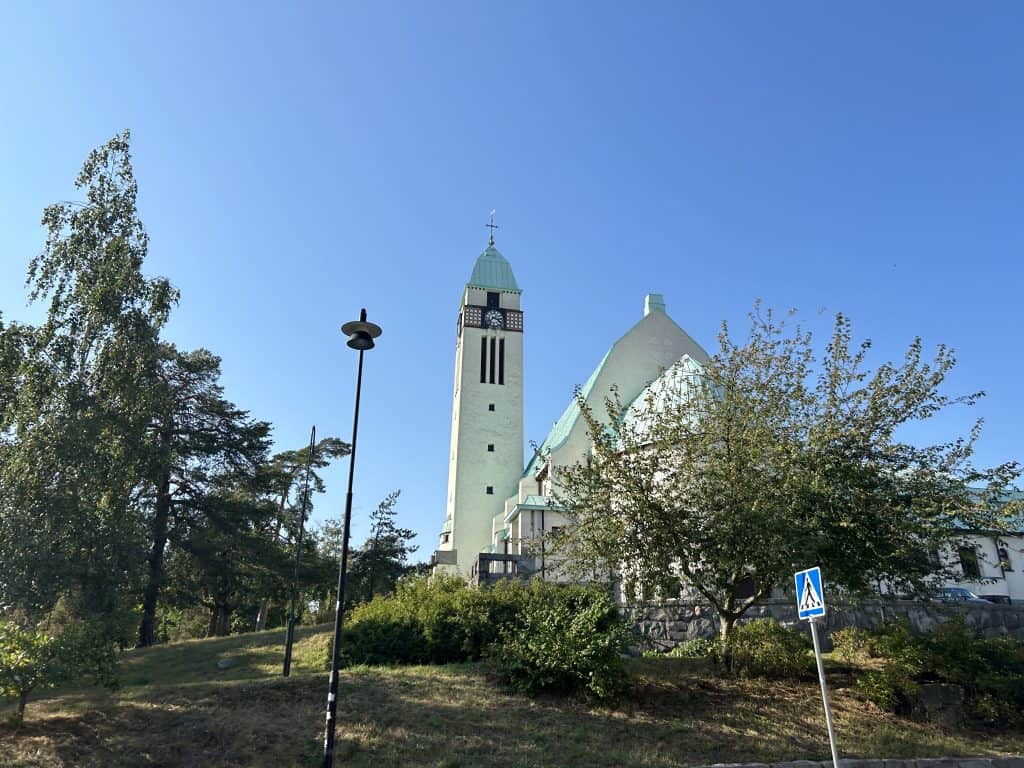
Sundbyberg Church (Sundbybergs kyrka) is a key landmark in the district. Completed in 1911, this brick church was designed by the architect Axel Sjögren in a Neo-Gothic style. The church stands on a small hill, which gives it a visible position over the surrounding urban landscape. It is the central place of worship for the Church of Sweden parish of Sundbyberg. Its tall bell tower is a recognizable feature of the district’s skyline.
Sundbybergs Torg
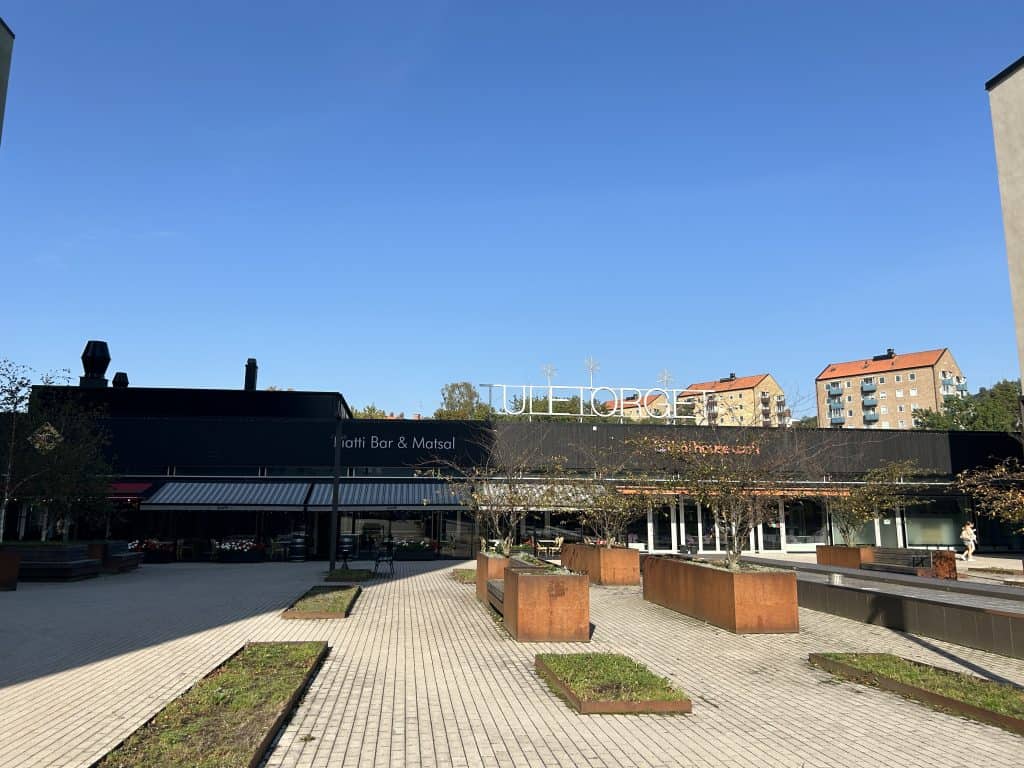
Sundbyberg’s Town Square (Sundbybergs torg) is the heart of the district’s commercial and social life. This central square is surrounded by shops, restaurants, and cafes. It is also a major public transport hub, containing the entrances to the Metro, commuter train, and several bus lines. The square often hosts local markets and events. It reflects the dense and active urban atmosphere of the district’s central core.
Marabouparken
Marabouparken is a park and art gallery located on the border of Sundbyberg. The park was established in the 1940s and 50s by the Marabou chocolate company for its employees. It contains a collection of sculptures by notable Swedish artists. Within the park is the Marabouparken Konsthall, a contemporary art gallery housed in a former cocoa laboratory from the 1940s. The gallery hosts changing exhibitions of modern and contemporary art, blending art with industrial heritage.
Tornparken
Tornparken is one of the oldest and most central parks in Sundbyberg. The park is situated on a hill and is named after its most prominent feature: an old water tower (vattentorn) built in 1912. While the tower is no longer in use, it remains a well-known local landmark. The park itself is a popular public space for relaxation and recreation. Its elevated position offers views across the district.
Lötsjön and Råstasjön
The lakes Lötsjön and Råstasjön are located on the border between Sundbyberg and the neighboring Solna municipality. These two shallow lakes are connected by a small stream and are surrounded by parkland and walking paths. The area is particularly known as a significant location for birdwatching, attracting a wide variety of species throughout the year. The circular path around both lakes is a very popular route for walking and running for residents of both districts.
Sturegatan
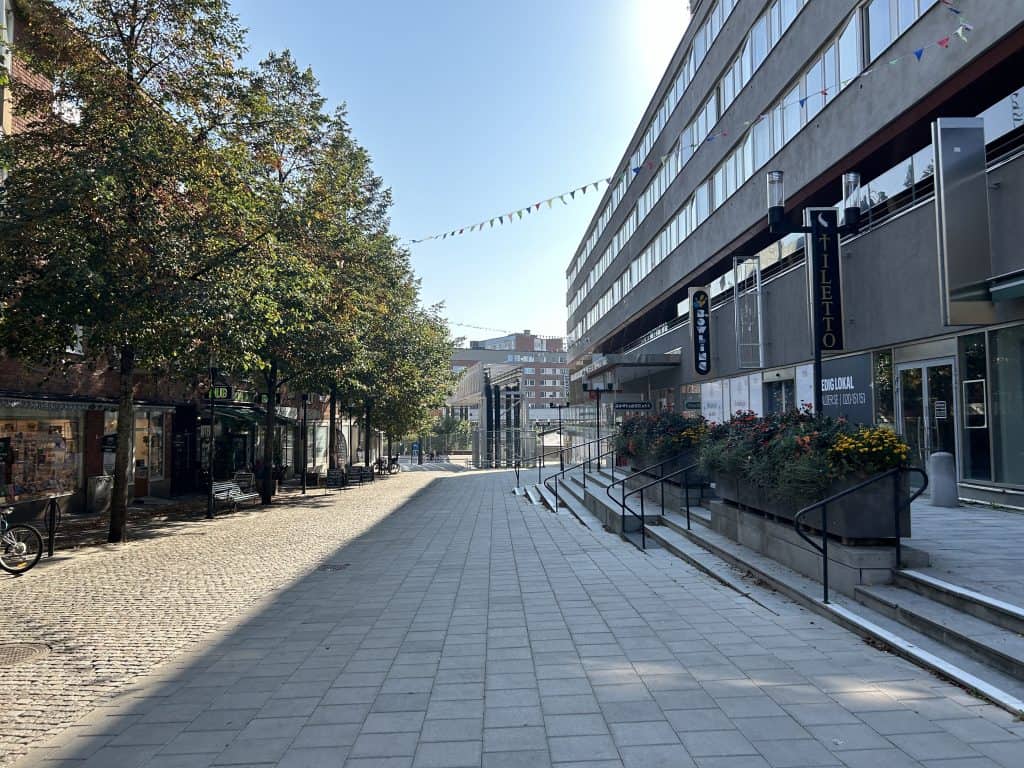
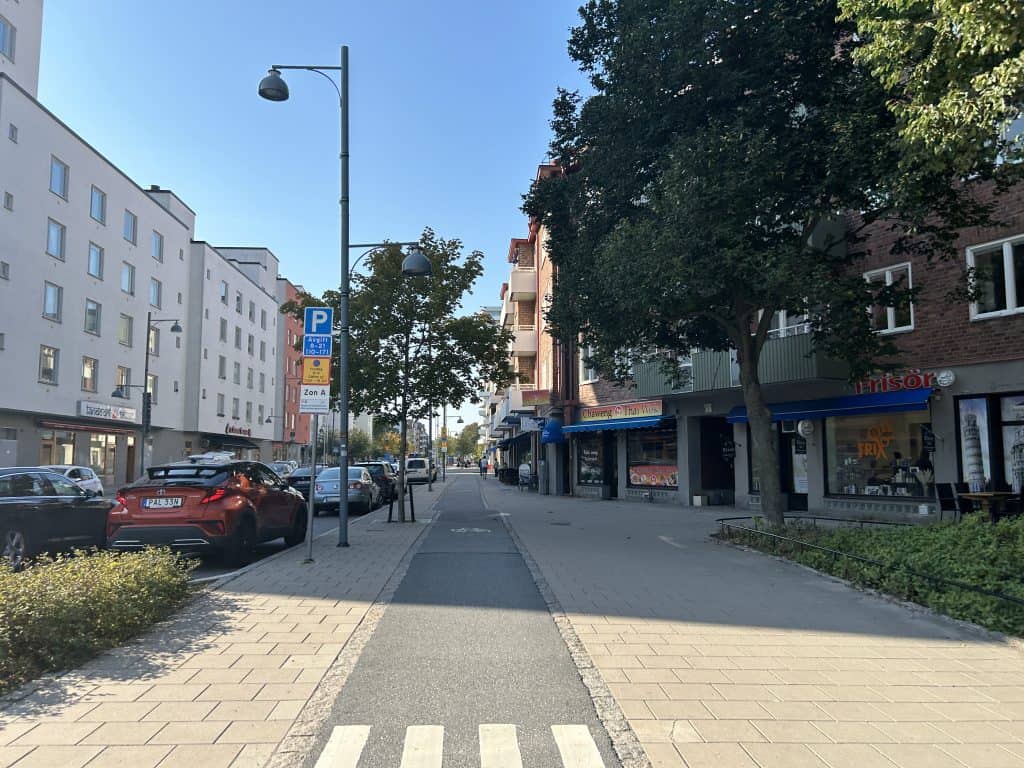
Sturegatan is the main commercial street that runs through the heart of central Sundbyberg. It is a pedestrian-friendly street lined with a wide variety of shops, services, cafes, and restaurants. The street represents the primary retail corridor for the district. It connects directly with Sundbyberg’s Town Square and the main transport station. A walk along Sturegatan provides a direct look at the local commercial life of the area.
How to Get to Sundbyberg
Reaching Sundbyberg is straightforward due to its integration into the greater Stockholm transport network. The district is served by all major forms of public transport, as well as major roadways, making it easily accessible from central Stockholm, the airports, and other parts of Sweden.
Via Commuter Train and Metro
The most efficient way to reach Sundbyberg is by rail. The Sundbyberg station is a major transport hub serving both the commuter train (pendeltåg) and the metro (T-bana). The pendeltåg provides a direct link to Stockholm Central Station in approximately 8 minutes. The metro’s Blue Line (T10) also stops here, connecting the district to central Stockholm stations like T-Centralen and Kungsträdgården in about 15 minutes.
By Tram and Bus
Sundbyberg is also served by Stockholm’s light rail, the Tvärbanan. This tram line connects Sundbyberg with neighboring areas like Solna, Alvik, and Sickla. In addition, a comprehensive network of local buses, operated by SL (Storstockholms Lokaltrafik), converges at Sundbyberg station. These buses provide connections to nearby districts like Bromma and Kista. Always check official sources for the most up-to-date ticket information.
An Excursion by Car
Driving to Sundbyberg is an option for those traveling within the region. The district is located near several major highways, including the E4 and E18 motorways. From Stockholm city center, the drive is approximately 8 kilometers. Travel time is highly dependent on traffic but is typically under 15 minutes in off-peak hours. Parking is available in the district, including in several parking garages and on the street, though fees apply.
From the Airports
Sundbyberg is accessible from Stockholm’s two main airports. From Stockholm Arlanda Airport (ARN), the pendeltåg commuter train offers a direct connection to Sundbyberg station, with a journey time of about 30 minutes. From Bromma Stockholm Airport (BMA), which is located very close, local buses provide a short and direct transfer to Sundbyberg centrum. A taxi from Bromma Airport takes only a few minutes.
Driving Distances
The driving distance from 5 major Swedish cities, according to Google Maps:
- Stockholm – 8 kilometers (0 h 10 min)
- Gothenburg – 471 kilometers (5 h 10 min)
- Malmö – 600 kilometers (6 h 40 min)
- Linköping – 202 kilometers (2 h 20 min)
- Kiruna – 1227 kilometers (13 h 50 min)
Explore More of Uppland and Sweden