Zaragoza, Aragon | Exploring Spain
Zaragoza is the capital city of the Aragon region in northeastern Spain. The city is located on the fertile plain of the Ebro River. The Ebro is the longest river located entirely within Spain and also the country’s largest by volume of flow. With a metropolitan area population of approximately 743,000, Zaragoza is Spain’s fifth-largest city. Its location makes it a significant crossroads in the Iberian Peninsula, situated midway between major hubs like Madrid and Barcelona.
The city’s character has been shaped by the Roman, Moorish, Jewish, and Christian cultures that have occupied it over the centuries. This has left a rich architectural and cultural legacy. Today, Zaragoza functions as a major academic center and an economic hub, with a significant trade fair complex and logistics industry. The historic center contains numerous important monuments, while the surrounding districts reflect the city’s growth. This combination of historical layers and modern functions defines the city.
Zaragoza also serves as a gateway to the surrounding region of Aragon, including the Pyrenees mountains to the north. The city itself has a continental climate, with hot summers and cool winters, influenced by its position in the Ebro Valley. It is known for its major local festival, the Fiestas del Pilar, which attracts visitors from all over Spain and beyond.
Good to Know When Visiting Zaragoza
To help with planning a visit, here are several practical points covering daily essentials, timing, and efficient exploration of the city. Understanding these details can make a trip to Zaragoza more convenient. This information is intended to provide a general overview for travelers preparing to visit this major Spanish city.
The Daily Essentials
The official currency used in Zaragoza is the Euro (EUR). Credit and debit cards are widely accepted in most hotels, restaurants, and shops, but it is advisable to carry some cash for smaller tapas bars or market stalls. The official language is Spanish (Castellano). English is spoken in most major hotels and tourist attractions, but less so in smaller, local establishments. Tipping is not obligatory and is less common than in some other countries; rounding up the bill or leaving a small amount of change for good service is a standard practice. The tap water in Zaragoza is safe to drink. The electrical system uses Type F sockets with a standard voltage of 230V. As a large city, visitors should be mindful of their belongings in crowded areas.
Planning Your Calendar
Zaragoza is a year-round destination, with a continental climate that brings hot summers and cool winters. The spring and autumn months are often considered the best time to visit, with pleasant temperatures for exploring the city on foot. The summer can be very hot and dry. The winter is generally cool, with occasional colder spells and wind. The city’s most important festival is the Fiestas del Pilar, held annually around October 12th. This major event involves parades, concerts, and traditional events, and the city becomes very crowded. For a first visit, two to three days is generally sufficient to see the main sights in the city center.
A Tourist’s Toolkit for Exploration
The historic center of Zaragoza, particularly the area around the Plaza del Pilar, is compact and best explored on foot. For longer distances, the city has a modern public transport system of buses and a tram line. The Zaragoza Card is a tourist pass that can be an option for visitors. It offers discounts on attractions and can sometimes include public transport benefits. It is highly advisable to book tickets for the Aljafería Palace online in advance, especially during peak season, as entry is by timed slots. In addition, it is also a good idea to check the opening hours for specific museums, as many are closed on Mondays.
A Short History of Zaragoza
The history of Zaragoza spans over two millennia, from its founding as a major Roman colonial outpost to its role as the capital of a powerful medieval kingdom, and finally to a modern industrial and commercial center. The city’s strategic location in the Ebro Valley has made it a key city throughout Spanish history. It has been shaped by all the major cultures that have inhabited the Iberian Peninsula. This long history is visible in its monumental architecture, from its Roman ruins and Islamic palace to its grand Baroque basilica.
Roman Origins and Early History
The city’s history began as the Roman city of Caesaraugusta. It was founded between 25 BC and 11 BC by the Roman Emperor Augustus to settle army veterans from the Cantabrian Wars. This Roman colony thrived due to its location and became one of the most important cities in the province of Hispania Tarraconensis. It featured all the major public buildings of a large Roman city, such as a forum, baths, and a large theatre, the ruins of which are still visible today.
After the fall of the Roman Empire in the 5th century AD, the city passed into Visigothic hands without major conflict. It continued its life as an important urban center. The city was later conquered by the Moors in the 8th century. Under Muslim rule, it was known as Saraqusta and became a key administrative center in the region.
The Flourishing of Saraqusta and Aragon
In the 11th century, Zaragoza flourished as the capital of an independent emirate, the Taifa of Saraqusta. This was a period of great cultural and political prosperity under the Banu Hud dynasty. The Taifa was a major center of learning, philosophy, and art in the Islamic world. The magnificent Aljafería Palace was built during this time as a recreational residence for the rulers. This period left a lasting Islamic mark on the city.
In 1118, the Aragonese king Alfonso I, “the Battler,” conquered the city from the Almoravids. He then made it the capital of the powerful Kingdom of Aragon, a role it would hold for centuries. The city’s La Seo Cathedral became the coronation site for the kings of Aragon. Zaragoza continued to be a major political and commercial center throughout the Middle Ages, with a diverse population of Christians, Muslims, and Jews.
Sieges and Modern Development
Zaragoza is famously associated with the Peninsular War. The city endured two devastating sieges by Napoleonic forces in 1808 and 1809. During these sieges, the city’s residents put up a fierce resistance against the French army, led by figures like Agustina de Aragón. The city was almost completely destroyed during the fighting, but this resistance became a powerful symbol of Spanish nationalism.
The 19th and 20th centuries brought significant industrial growth to Zaragoza. Its location as a transport hub helped it to develop its industries. The city was designated a “Pole for Industrial Development” by the Francoist government in the 1960s. This led to a large increase in population and established the foundations of its modern economy. Today, it is a major logistics and commercial center for Spain.

Things to Do and See
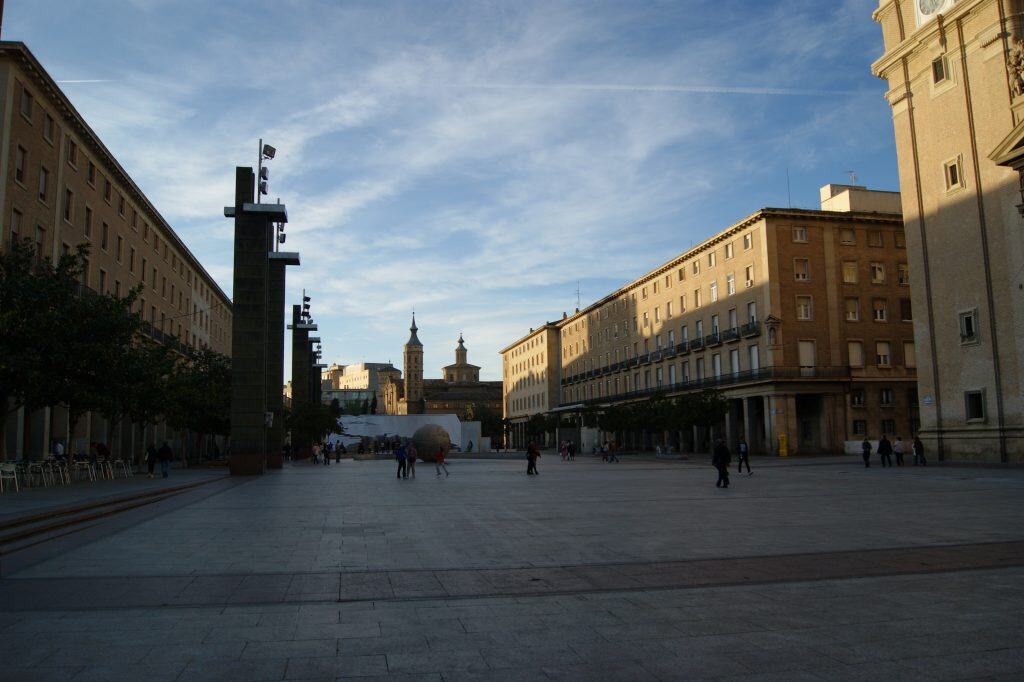
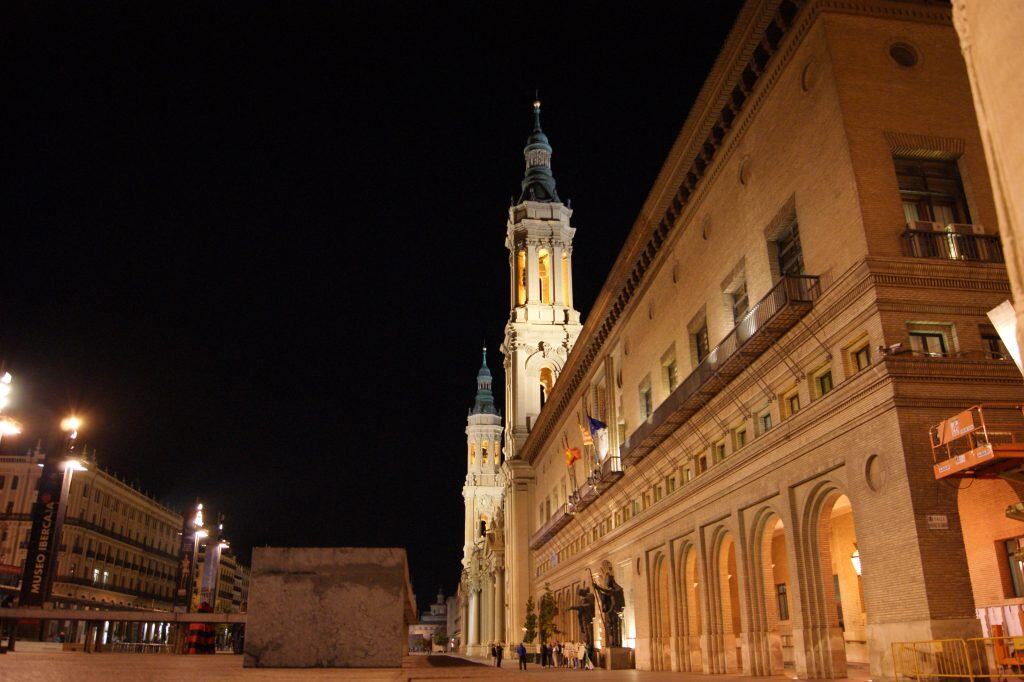
Zaragoza offers a range of attractions that showcase its layered history and architecture. The city’s main landmarks are concentrated around the Plaza del Pilar, which is one of the largest pedestrian squares in Europe. The square is home to two cathedrals and other important civic buildings. The city also has significant Roman ruins, a unique Islamic palace, and museums dedicated to its most famous artist, Francisco de Goya.
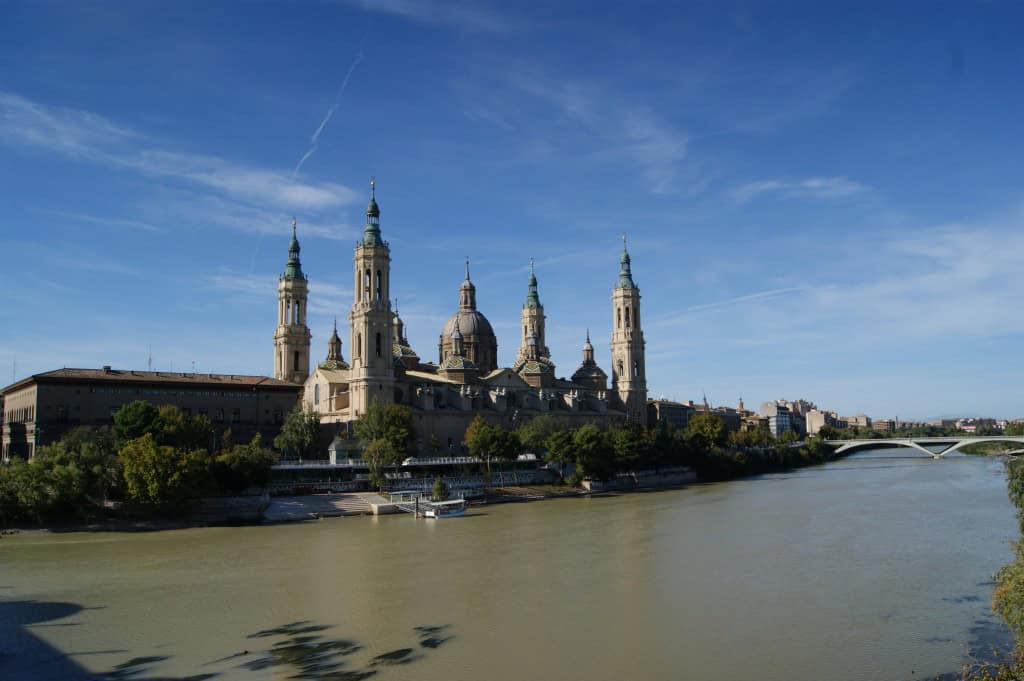
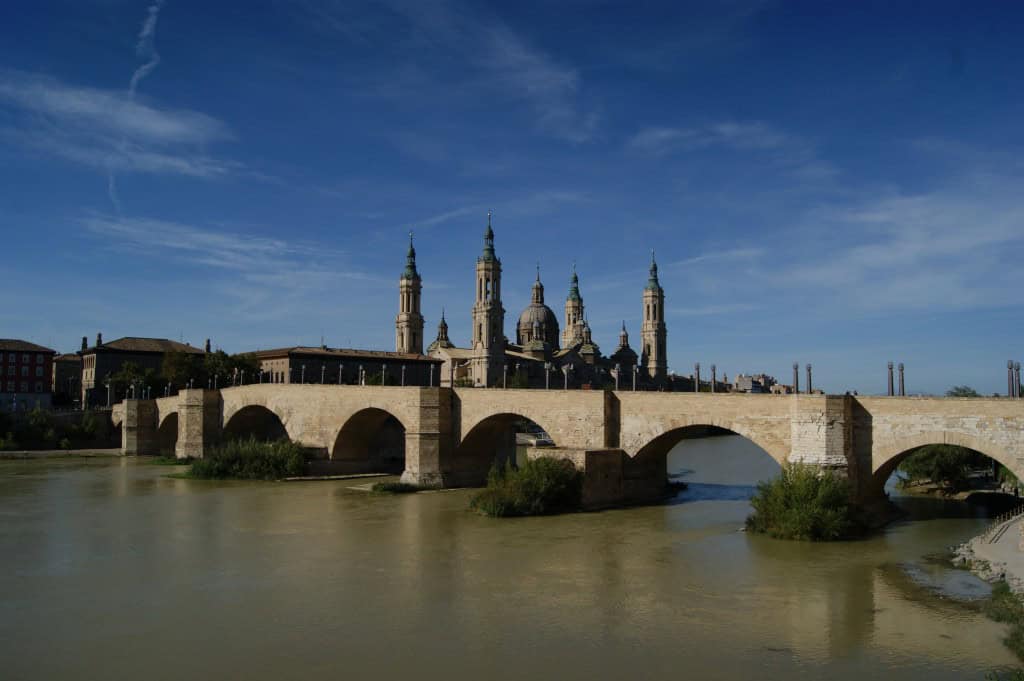
These sights provide a journey through the different cultures that have shaped the city. Visitors can see direct evidence of its Roman, Moorish, Christian, and modern history. The Ebro River, which runs through the city, also provides a key geographical feature, with its historic stone bridge offering views of the main basilica. The combination of these monumental sights makes Zaragoza a key historical destination in Spain.
Basílica de Nuestra Señora del Pilar
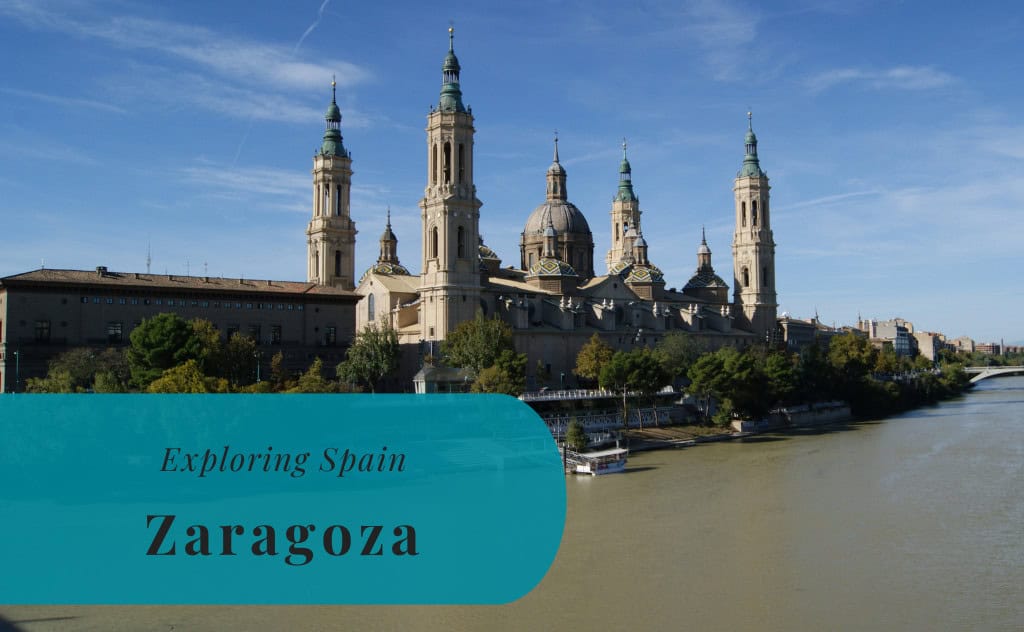
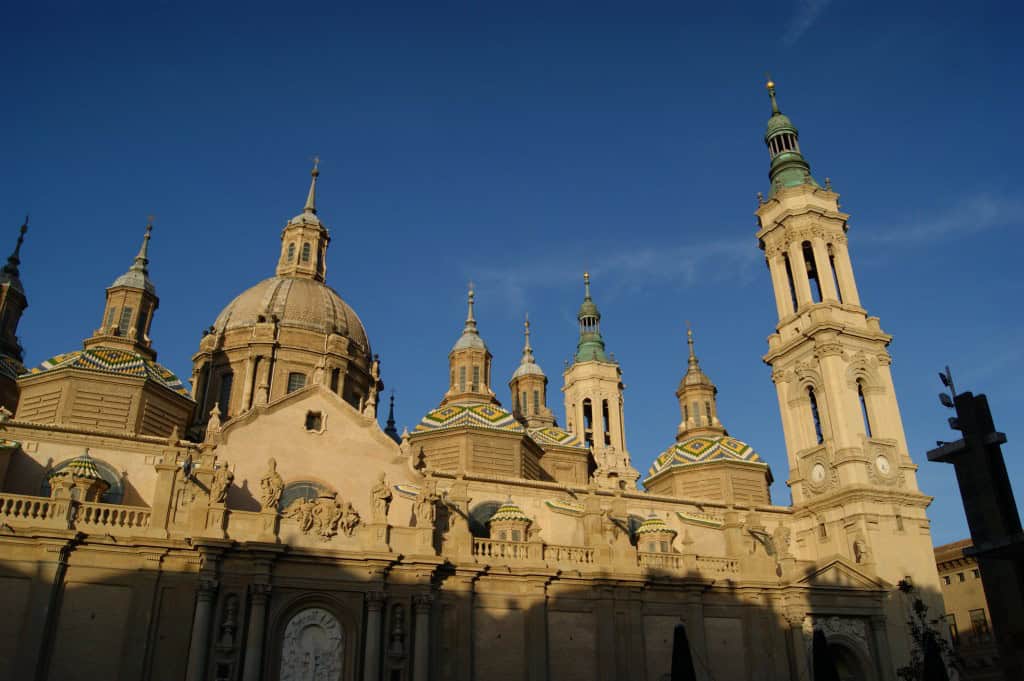
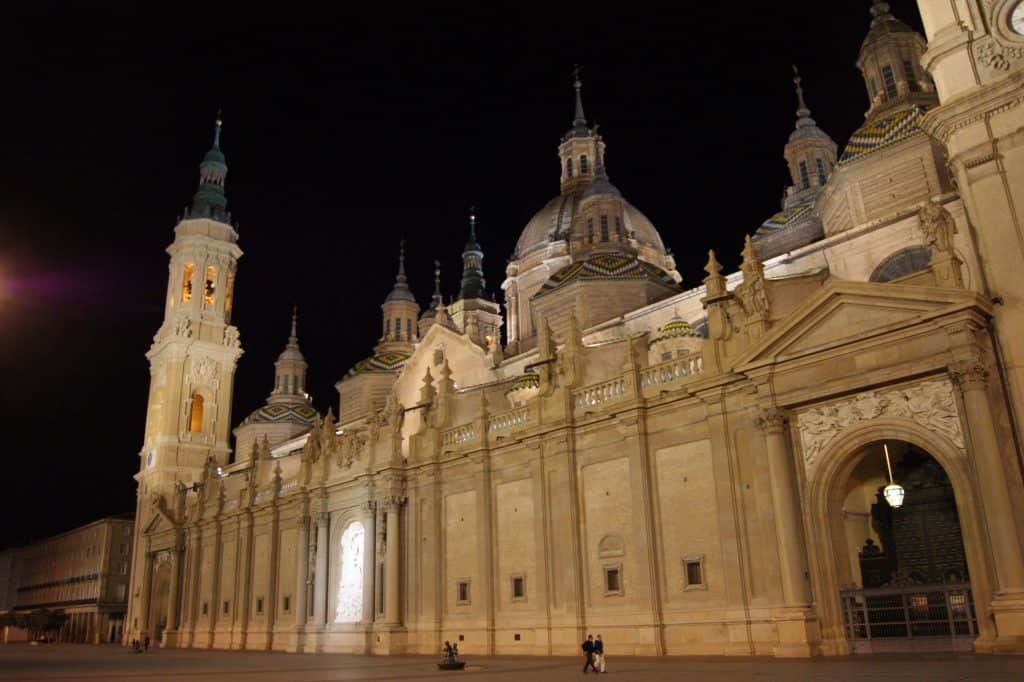
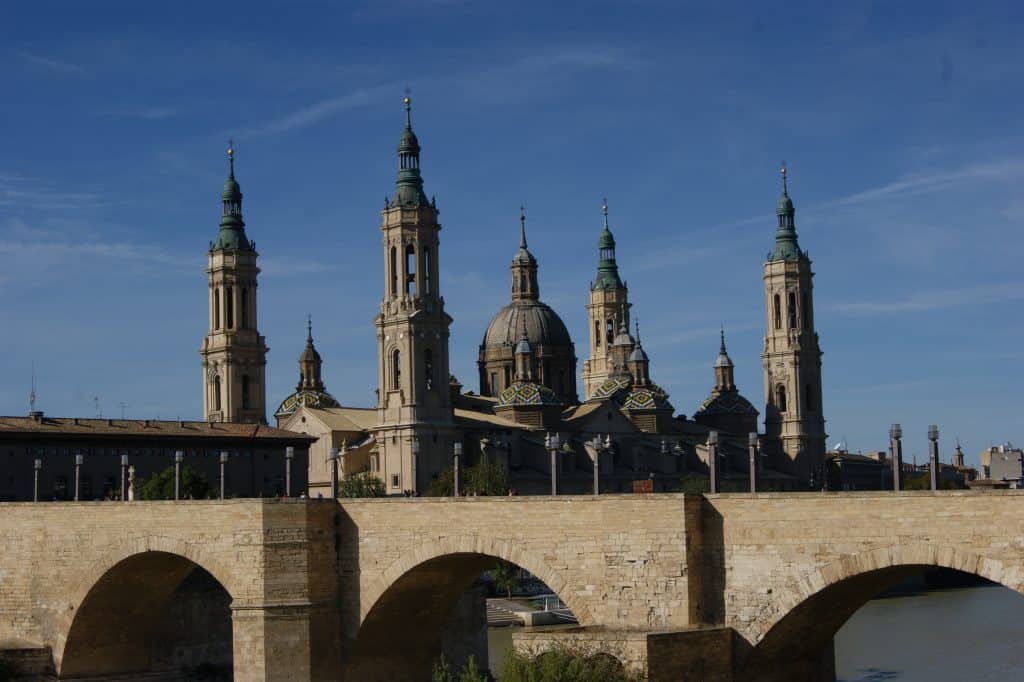
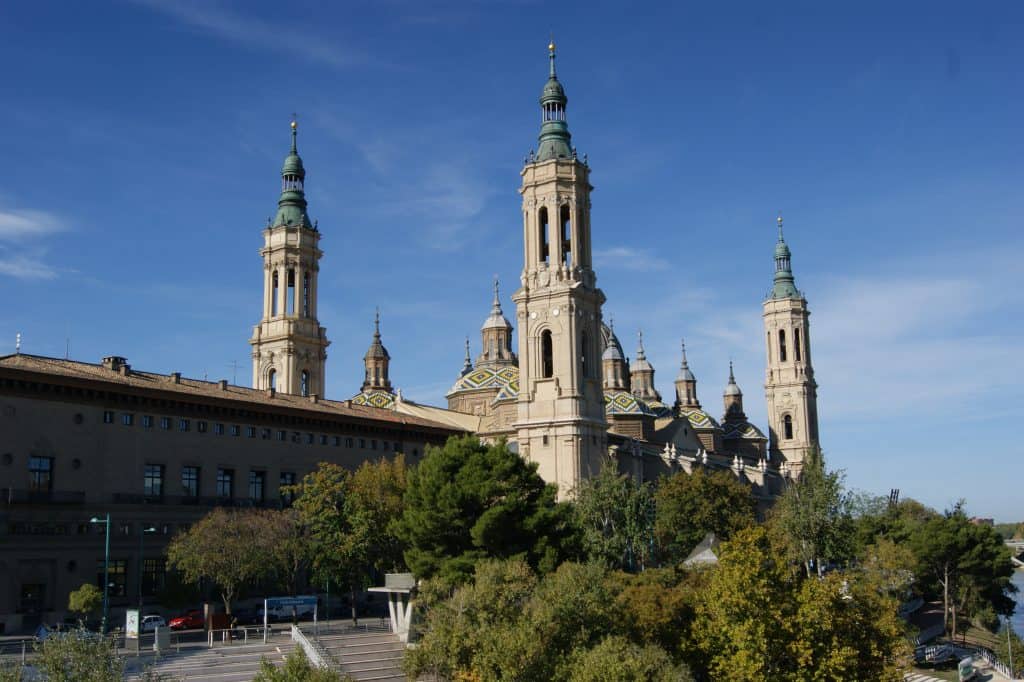
The Basílica de Nuestra Señora del Pilar is a primary landmark in Zaragoza and a significant Marian shrine. According to tradition, the Virgin Mary appeared here on a pillar to St. James the Apostle in 40 AD. This large Baroque basilica was constructed mainly between the late 17th and mid-18th centuries. It features eleven domes decorated with blue, green, and yellow tiles, and four tall bell towers. The interior contains a high altarpiece made of alabaster by Damián Forment. Several cupolas are adorned with frescoes by Francisco Goya, including “Adoration of the Name of God.” The basilica is one of the most visited pilgrimage sites in Spain.
La Seo Cathedral
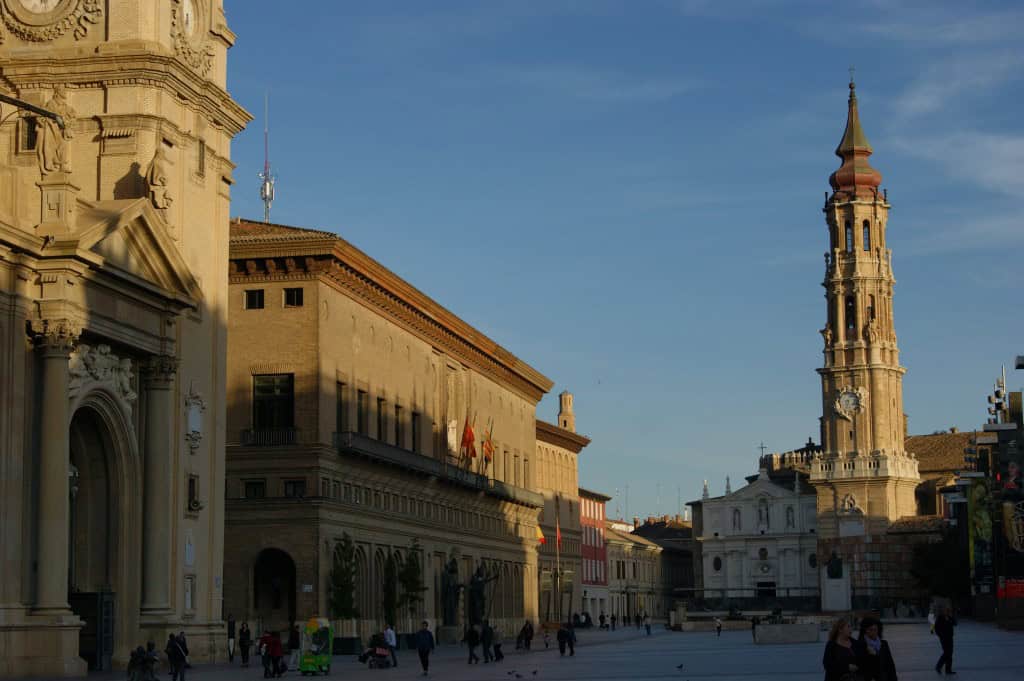
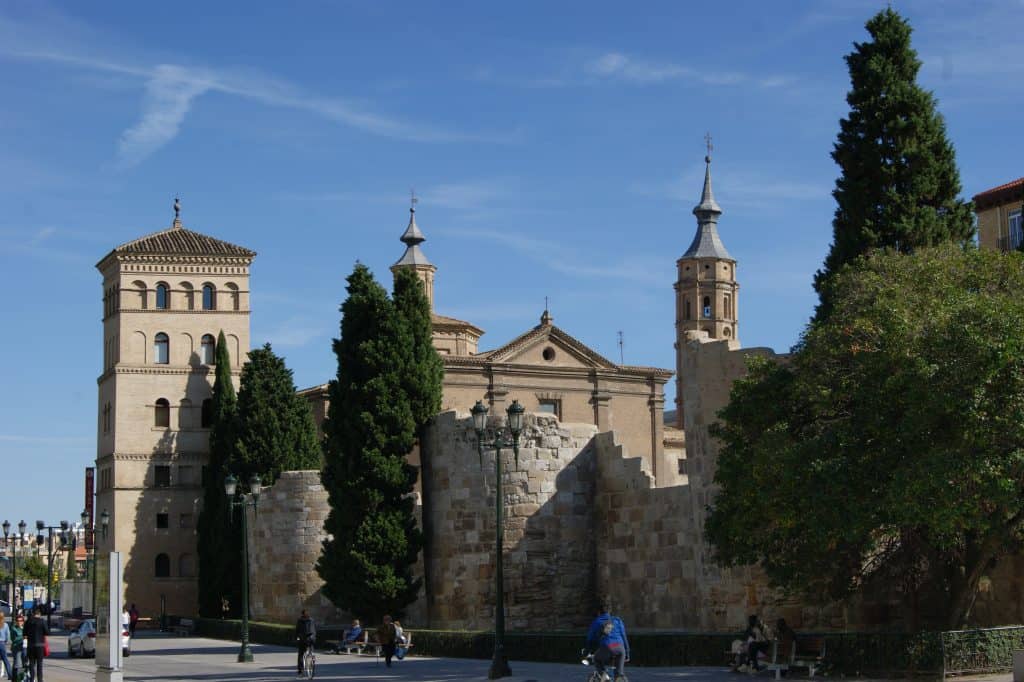
Adjacent to El Pilar, La Seo Cathedral (Catedral del Salvador de Zaragoza) presents a different architectural profile. It was built on the site of the ancient Roman forum and the city’s main mosque, with construction beginning in the 12th century. The cathedral is a blend of Romanesque, Gothic, Mudéjar, and Baroque styles. Its northern exterior wall is a key example of Mudéjar architecture and is part of a UNESCO World Heritage Site. La Seo served as the coronation site for the kings of Aragon until the 15th century. It also houses a notable museum of Flemish tapestries.
Aljafería Palace
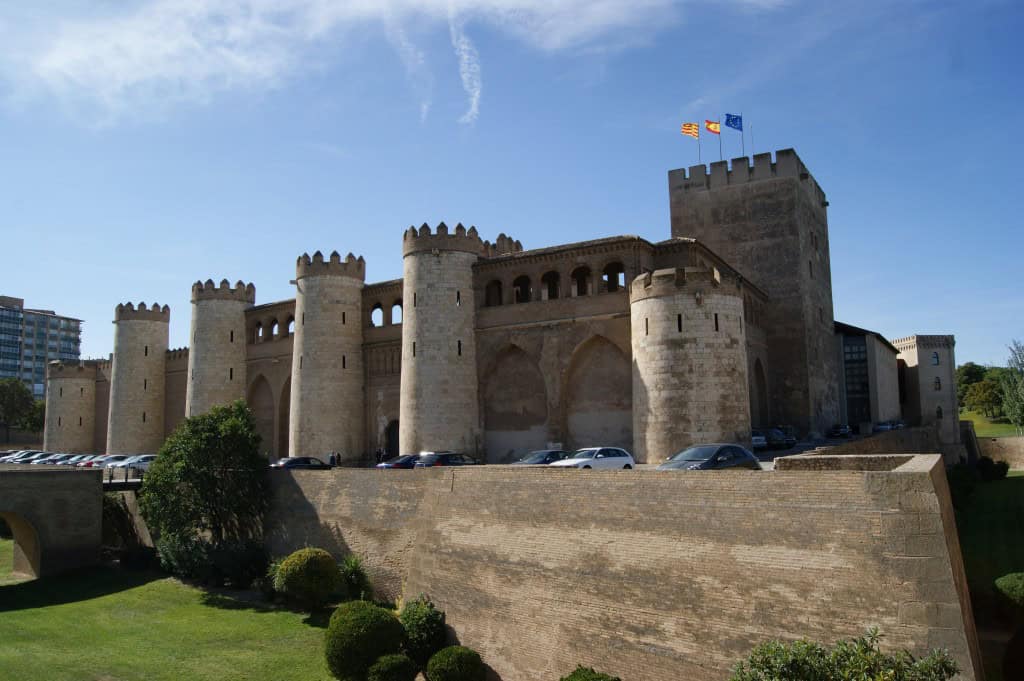
The Aljafería Palace (Palacio de la Aljafería) is a fortified Islamic palace from the 11th century. It stands as one of the most important examples of Hispano-Islamic architecture of the Taifa period outside of Andalusia. It was built as a recreational residence for the rulers of Saraqusta. Its intricate plasterwork, ornate arches, and the central Patio de Santa Isabel are key features. Later, it was used as a royal residence for the Catholic Monarchs and now houses the Parliament of Aragon. Its oldest section is the Troubadour Tower, which dates to the 9th century.
Roman Theatre Museum
The Roman Theatre Museum (Museo del Teatro de Caesaraugusta) contains the remains of a large Roman theatre built in the first half of the 1st century AD. Modeled after the Theatre of Marcellus in Rome, it once seated around 6,000 spectators in the city of Caesaraugusta. Although its stones were later repurposed for city walls in the 3rd century, excavations in the 1970s brought the structure to light. Today, visitors can walk along elevated walkways over the ruins. An interpretation center provides context on Roman life and performances. It is part of a larger route of Roman museums in the city.
Plaza del Pilar
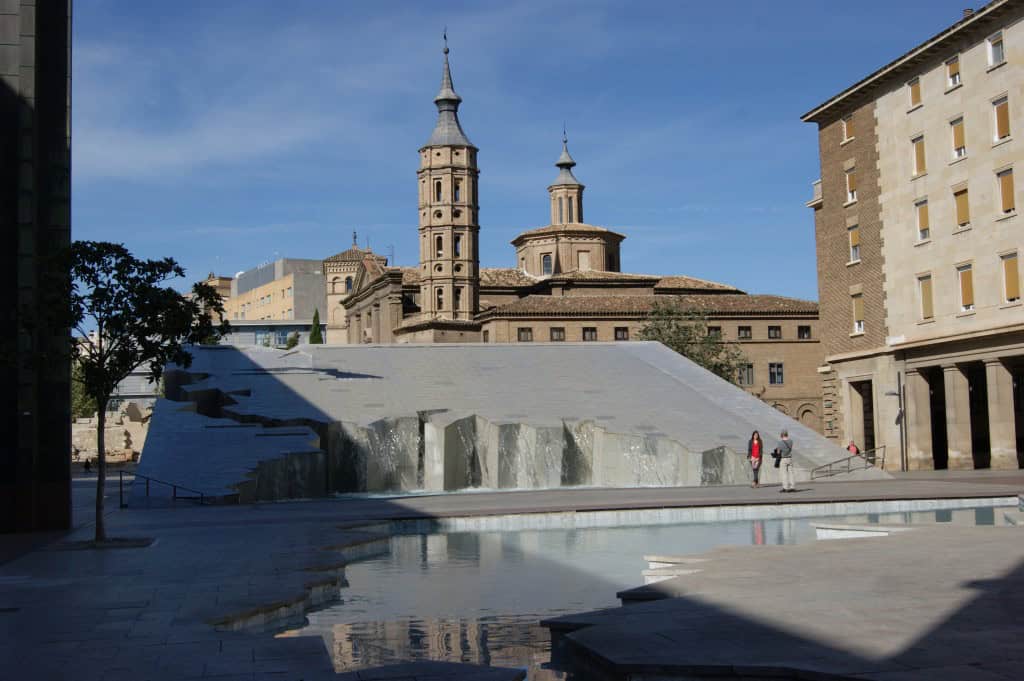
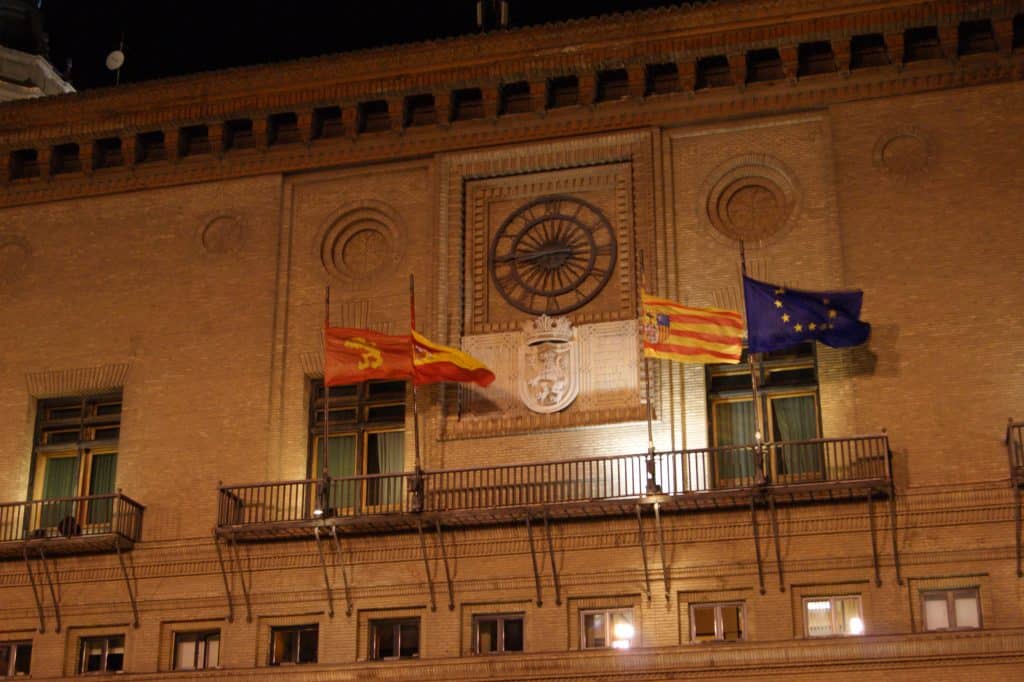
The Plaza del Pilar is Zaragoza’s main public square and one of the largest pedestrian plazas in Europe. The long, rectangular square is framed by the Basílica del Pilar on one side and La Seo Cathedral on the other. It also contains the Lonja (the old exchange building) and the Town Hall. It serves as the heart of the city’s public life. The plaza hosts numerous festivals, most notably the Fiestas del Pilar in October. The Fountain of Hispanicity is also located here, with its design reflecting a map of Latin America.
Goya Museum
The Goya Museum (Museo Goya – Colección Ibercaja) is dedicated to the works of the artist Francisco de Goya, who was born near Zaragoza in 1746. The museum is housed in a Renaissance-era nobleman’s house. Its collection features a significant number of Goya’s paintings. It also holds a complete collection of his famous series of prints: Los Caprichos, Los Desastres de la Guerra, La Tauromaquia, and Los Disparates. The museum provides a comprehensive overview of the artist’s life and his evolution as a painter and printmaker.
Puente de Piedra
The Puente de Piedra (Stone Bridge) is a historic bridge that crosses the Ebro River. The bridge that stands today was largely built in the 15th century, although there have been bridges on this site since the Roman era. It is known as the “Bridge of Lions” because of the four bronze lions, symbols of the city, that were added to its entrances in the 20th century. The bridge offers one of the most well-known views of the Basílica del Pilar and the riverfront. It is a key landmark in the city.
Mercado Central
The Mercado Central (Central Market) is the city’s main indoor food market. The current building is a designated National Historic Monument, designed in 1895 and officially opened in 1903. Its structure is a notable example of late 19th-century iron-and-glass architecture. Inside, dozens of stalls sell fresh produce, meat, fish, and local products from the Aragon region. The market is a central point of daily commerce for the city’s residents. It is located near the city’s Roman walls.
Parque Grande José Antonio Labordeta
The Parque Grande José Antonio Labordeta is the largest public park in Zaragoza. Opened in 1929, it is designed in a formal French style with grand avenues, fountains, and monuments. Key features include the large monument to King Alfonso I “the Battler” at its main entrance, and a botanical garden. The park is a popular place for walking, running, and recreation. It serves as a major green space for the city and contains several cafes and restaurants.
Museo del Fuego y de los Bomberos
The Museo del Fuego y de los Bomberos (Museum of Fire and Firefighters) is housed in a former monastery. The museum is dedicated to the history of firefighting, both in the Aragon region and worldwide. Its collection includes historic fire engines, uniforms, equipment, and documents. The museum provides educational information on fire prevention and the work of firefighters. It is a specific-interest museum located near the city center.
Sports in Zaragoza
Zaragoza has an active sports culture, with a strong community identity tied to its local teams. The city supports professional clubs in several of Spain’s top leagues, with football and basketball being the most followed team sports. The city has modern facilities that allow it to host a wide array of multi-sport events. This has solidified its reputation as a hub for athletics in the Aragon region.
Football
Football is a deeply ingrained part of Zaragoza’s social fabric. The city’s primary football club, Real Zaragoza, commands immense local loyalty. Matches are significant social events that unite generations of fans and foster a strong sense of belonging. The club’s performance influences the city’s collective mood, creating a tense atmosphere on match days at their home stadium. The club has a long and successful history in Spanish football.
Real Zaragoza
Founded in 1932, Real Zaragoza is the city’s most prominent football team. They play home matches at the Estadio La Romareda, a venue opened in 1957 with a capacity of over 33,000 spectators. Real Zaragoza has a successful history, having won the Copa del Rey six times. Their most significant European trophy was the UEFA Cup Winners’ Cup in 1995, won with a famous last-minute goal against Arsenal. The club also won the Inter-Cities Fairs Cup in 1964. The club currently competes in the Segunda División, the second tier of Spanish football.
Basketball
Basketball also has a significant following in Zaragoza, complementing the city’s interest in football. The local professional team has a dedicated following and competes in Spain’s top league. The fast-paced action of the sport brings an exciting element to the city’s sports scene. The club serves as a point of community engagement and athletic competition, with its games drawing large crowds to the city’s main indoor arena.
Casademont Zaragoza
The city’s professional basketball club is Casademont Zaragoza, founded in 2002. They compete in the Liga ACB, which is Spain’s top professional basketball league. The team has also participated in European competitions like the FIBA Europe Cup and the Basketball Champions League. Their home games are held at the Pabellón Príncipe Felipe, an arena with a capacity of nearly 11,000 spectators. The team is a key part of Zaragoza’s sports landscape.
Handball
Handball holds a notable position within Zaragoza’s sports community. The city supports competitive teams in the national league structure for both men and women. The clubs often use facilities like the Pabellón Príncipe Felipe. This team sport is well-supported and adds to the diversity of athletic options available in the city. Handball matches provide a high-energy spectacle for fans.
Contazara Zaragoza
The men’s handball club, Contazara Zaragoza, is a prominent local team. The club has recently achieved promotion and competes in the División de Honor Plata, which is the second tier of Spanish men’s handball. The team is active in developing local talent within the sport. Their promotion signifies a growing presence for men’s handball in the city.
Schär Colores Zaragoza
The women’s handball club, Schär Colores Zaragoza, is another key team in the city’s sporting landscape. The club also competes at a high level, having recently secured promotion to the División de Honor Oro, which is the second tier of Spanish women’s handball. The club is dedicated to promoting women’s handball and provides a strong platform for female athletes.



Getting Around in Zaragoza
Navigating Zaragoza is straightforward. The city has a modern public transport system that includes a tram line and an extensive bus network connecting the main districts. Its central areas are also highly walkable, making it easy for visitors to explore its main attractions. The public transport system is integrated, allowing for simple transfers between different modes. A reloadable transport card, the Tarjeta Lazo, can be used on both trams and buses.
The city’s layout, with a large pedestrianized central square and flat terrain along the river, makes it suitable for walking and cycling. The main tourist areas are concentrated in a relatively small area. For destinations further afield, like the Aljafería Palace or the main train station, public transport is efficient. The system is designed to serve both residents and the many visitors the city receives each year.
On Foot: The Historic Core
Walking is the best way to explore Zaragoza’s historic center. The area around the Plaza del Pilar is a large pedestrian zone. This allows for easy movement between the Basilica, La Seo Cathedral, and the Roman ruins. The main shopping streets and the historic “El Tubo” tapas district are also best explored on foot. Comfortable shoes are all you need to see the majority of the city’s central sights. The flat terrain of the city center makes walking a pleasant option.
Riding the Line: Trams and Buses
Zaragoza’s public transport system consists of an efficient tram line and a comprehensive bus network. The single tram line runs north-south through the heart of the city. It connects new residential areas with the city center and the main football stadium. The city bus network covers all other parts of the city and its suburbs. A single ticketing system is used for both. Tickets can be purchased at tram stops or on the buses. Remember to check official sources for up-to-date ticket information.
A Quick Ride: Taxis and Ride-Sharing
Official taxis are widely available throughout Zaragoza. They can be found at designated taxi stands at transport hubs like the train station and the airport, and at major squares. Taxis can also be hailed on the street. They are required to use a meter to calculate the fare. For another option, ride-sharing apps like Uber and Cabify also operate in the city. These services are booked via a smartphone app, which provides the price upfront.
How to Get to Zaragoza
Reaching Zaragoza is straightforward due to its strategic location and excellent transport links. The city is a major hub connecting Madrid and Barcelona. It is served by its own airport, modern motorways, and Spain’s high-speed rail network. This makes it easily accessible from all major cities in Spain and from neighboring countries.
Arriving by Air: Zaragoza’s Airport
Zaragoza has its own international airport, Zaragoza Airport (ZAZ), located just 10 kilometers west of the city center. ZAZ primarily handles domestic flights and some international routes to other European cities, often served by low-cost carriers. For wider international access, the airports in Madrid (MAD) and Barcelona (BCN) are major hubs. Both are well-connected to Zaragoza by high-speed train, making onward travel efficient. A dedicated airport bus connects ZAZ airport with the city center.
The Open Road: Driving to Zaragoza
Driving to Zaragoza offers flexibility for exploring the wider Aragon region. The city is a key junction on Spain’s motorway network. The A-2 motorway connects it directly to Madrid and Barcelona. The AP-68 motorway links it to Bilbao and the north of Spain. The A-23 motorway connects to Valencia and the south. The city is encircled by several ring roads, the Z-30 and Z-40, which help to distribute traffic. Ample parking facilities are available in the city center.
Connecting by Coach: A National Hub
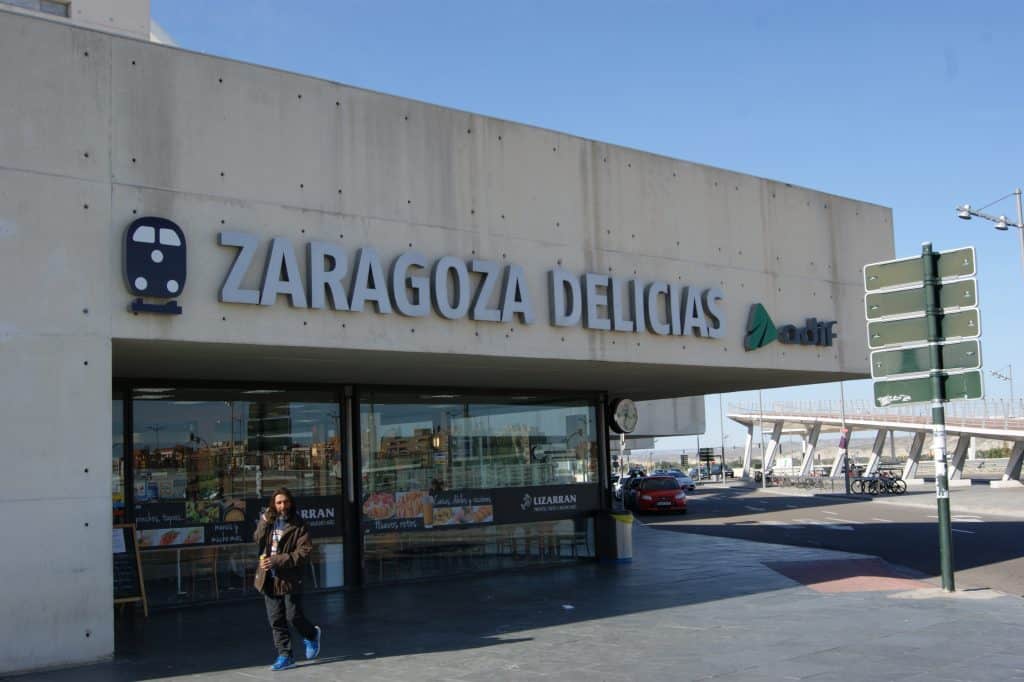
Bus services provide an economical and extensive way to reach Zaragoza. The Zaragoza Central Bus Station (Estación Central de Autobuses de Zaragoza) is a modern hub. It is integrated with the main train station, Zaragoza-Delicias. Major Spanish bus companies like ALSA operate frequent routes to and from Zaragoza. Direct bus connections from Madrid typically take around 3.5 to 4 hours. From Barcelona, the journey is similar.
On Track: High-Speed Rail
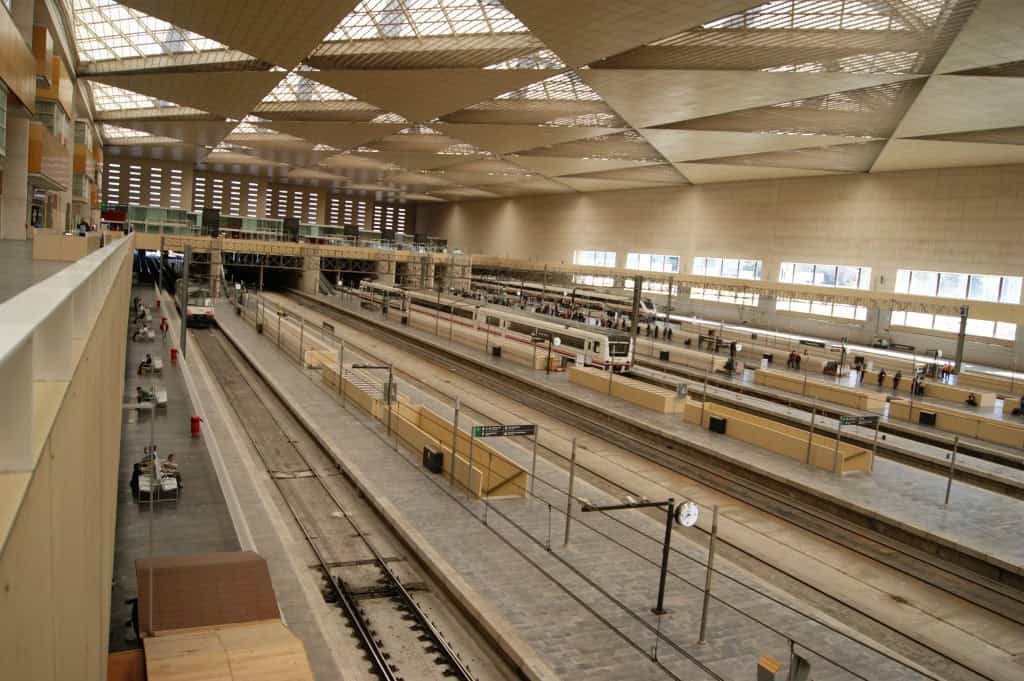
Traveling to Zaragoza by train is a highly efficient and popular choice. The city’s main railway station, Zaragoza-Delicias, is a major high-speed rail hub. It is located on the line connecting Madrid and Barcelona. Spain’s AVE (Alta Velocidad Española) trains provide rapid connections to Madrid in about 1 hour 20 minutes, and to Barcelona in around 1 hour 30 minutes. Regional trains also connect Zaragoza to smaller towns within Aragon. The station is located just west of the city center.
Driving Distances
The driving distance from 5 major Spanish cities, according to Google Maps:
- Bilbao, Spain – 303 kilometers (3 h 10 min)
- Valencia, Spain – 309 kilometers (3 h 20 min)
- Madrid, Spain – 314 kilometers (3 h 20 min)
- Barcelona, Spain – 322 kilometers (3 h 40 min)
- Toulouse, France – 370 kilometers (3 h 50 min)
- Seville, Spain – 828 kilometers (8 h 00 min)
- Lisbon, Portugal – 938 kilometers (9 h 00 min)
- Geneva, Switzerland – 972 kilometers (9 h 30 min)
- Paris, France – 1,123 kilometers (10 h 40 min)
- Rome, Italy – 1,821 kilometers (18 h 00 min)
Looking to Explore more of Spain and Europe?