Skärholmen, Stockholm | Exploring Sweden
Skärholmen is a district in the southwestern part of Stockholm, Sweden. It is part of the larger Skärholmen borough within Stockholm Municipality. This area is characterized by a combination of residential zones and significant commercial activity. While the district of Skärholmen itself has a population of approximately 8,600 residents, the broader borough is home to a diverse community of over 37,000. The district sits close to the shores of Lake Mälaren.
The character of Skärholmen is defined by its origins as a large-scale, planned development from the mid-20th century. Its most prominent feature is the SKHLM shopping center, which has long been a major commercial hub for the southern part of Stockholm. The district is composed primarily of multi-story apartment buildings typical of its construction era. Its location on the Stockholm Metro’s red line provides direct transport links to the city center, making it a key residential area.

A Short History of Skärholmen
The history of Skärholmen is one of radical transformation from a rural, agricultural landscape into a modern, planned suburb. For centuries, the area was a minor part of the countryside outside Stockholm. Its development in the 1960s was a key part of a massive national housing program that reshaped many Swedish cities. This makes its story a prime example of post-war Swedish urban planning and social development.
Rural Origins and Skärholmen Manor
While archaeological finds suggest human presence in the wider area for 2,000 years, the specific history of Skärholmen as a named place is more recent. The name “Skärholmen” first appeared in written records in 1627, when it referred to a small farm or croft. This croft later developed into Skärholmen Manor (Skärholmens Gård), a historic building that still stands today. For centuries, the area remained largely rural, consisting of farmland and forests that were part of Huddinge Municipality.
The Million Programme Transformation
The area underwent a complete transformation after Stockholm City acquired the land in 1963. This was part of the preparation for Sweden’s “Million Programme” (Miljonprogrammet). This was a national initiative that aimed to build one million new homes between 1965 and 1975 to address a housing shortage. Skärholmen was designated as a major new suburban center. Construction began rapidly, and the first residents moved into the newly built apartments in 1965.
A Modern Commercial Center
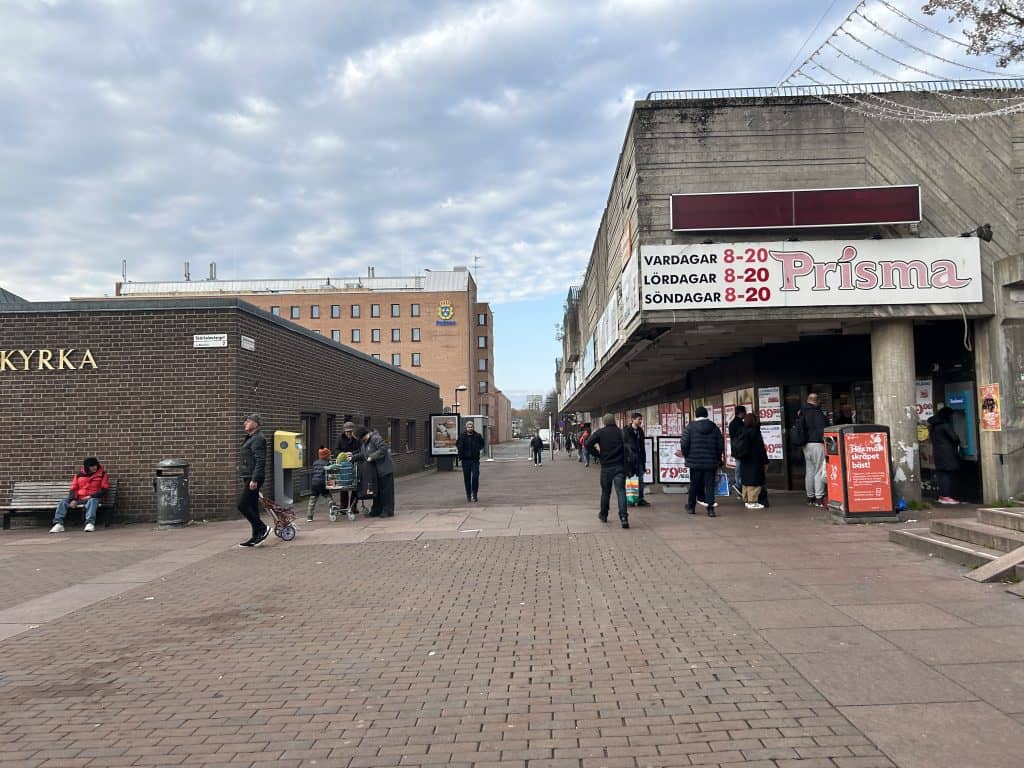
A central part of the plan for Skärholmen was the creation of a large commercial center. Skärholmen Centrum (now SKHLM) was opened by Prince Bertil in 1968. At the time of its opening, it was one of the largest suburban shopping centers in Europe. The area was fully developed by 1975. While the district was initially designed with car access as a priority, the center has since been adapted to favor pedestrian areas, reflecting changes in urban planning.


Things to Do and See
The sights in Skärholmen reflect its character as a modern district with a preserved historical core and access to nature. The primary attractions are its large shopping center and the surrounding parks. The historic manor house provides a direct link to the area’s rural past, while the nearby shoreline of Lake Mälaren offers a natural escape from the urban environment.
SKHLM Shopping Center
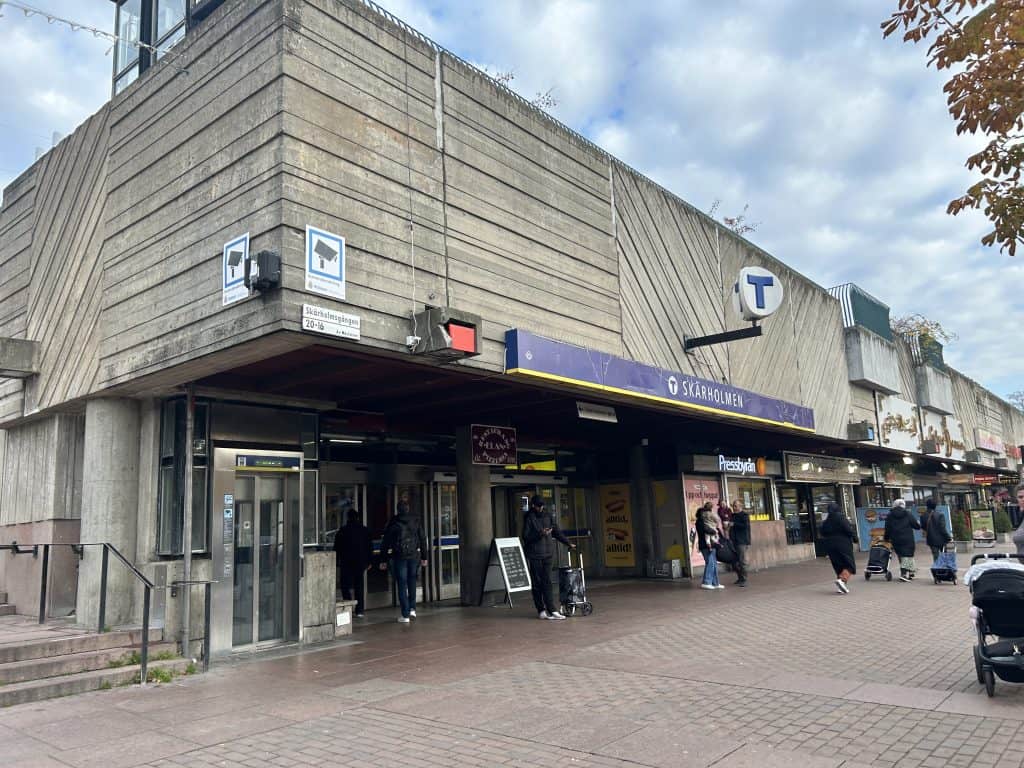
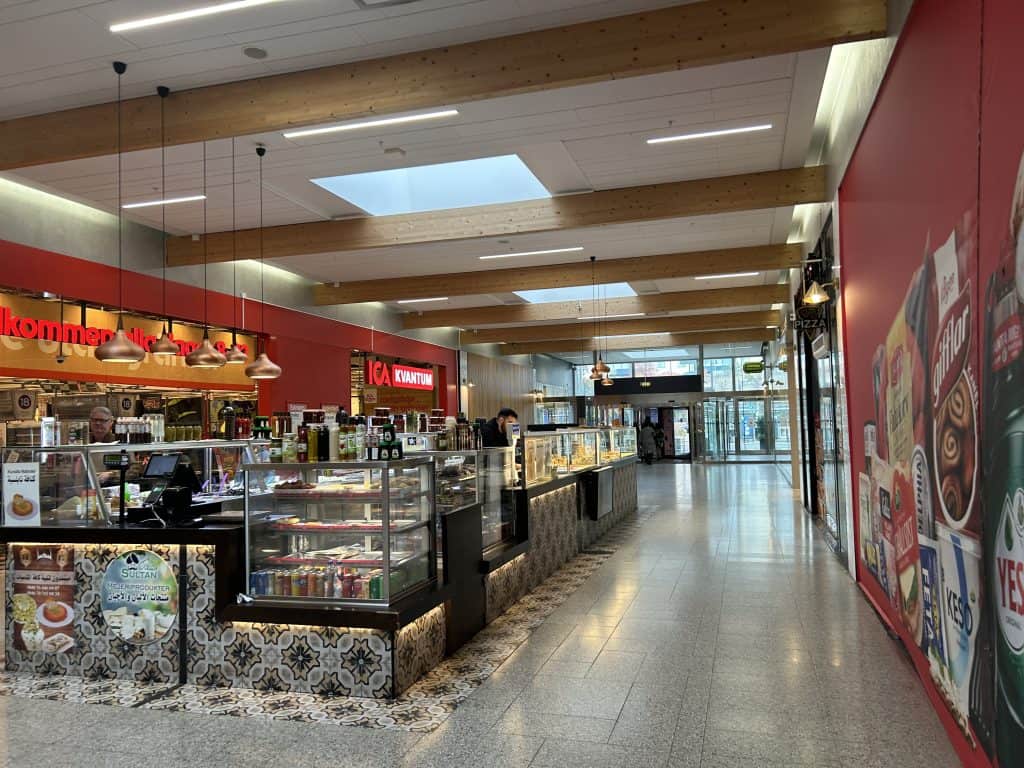
The SKHLM Shopping Center (Skärholmen Centrum) is the district’s primary landmark. It is one of the largest shopping centers in Sweden. Inaugurated in 1968, the center contains over 100 stores, restaurants, and cafes. It provides a comprehensive retail experience and serves as a major commercial hub for the entire southern part of Greater Stockholm. The center has undergone several renovations over the years to modernize its interior and public spaces. It remains a central point of community life in the district.
Skärholmens Gård
Skärholmens Gård is the historic manor house that gives the area its name. The current building dates back to the 18th century. It represents Skärholmen’s rural past, before its transformation into a modern suburb. The preserved building stands in contrast to the surrounding 1960s apartment blocks. It serves as a quiet reminder of the district’s origins as a farming estate. The manor is now used for cultural activities and events.
The Shores of Lake Mälaren
Skärholmen provides direct access to the shores of Lake Mälaren. This vast freshwater lake is one of Sweden’s largest. The shoreline near the district offers walking paths and recreational areas. It is a popular destination for residents seeking to enjoy nature and the views across the water. The combination of a dense urban district with immediate access to this major natural feature is a key part of Skärholmen’s character.
Johannesdalsbadet
During the warmer months, Johannesdalsbadet is a designated public bathing spot. It is located directly on the shore of Lake Mälaren, within the Skärholmen district. The beach offers opportunities for swimming and relaxing by the water. It is a popular local amenity for residents, especially families, during the summer season. It provides a recreational escape within walking distance of the residential areas.
Skärholmen’s Public Park
Skärholmens Parkstråk is the main green space that runs through the district. The park offers residents a pleasant urban environment. It features open lawns, trees, and playgrounds. It provides areas for relaxation and informal recreation. The park is easily accessible and serves as a local gathering point for leisure activities. It is a key part of the original 1960s urban plan for the district.


How to Get to Skärholmen
As a major district in southwestern Stockholm, Skärholmen is well-integrated into the city’s public transport network. It is also located directly on a major motorway, making it straightforward to reach for visitors.
Riding the Metro
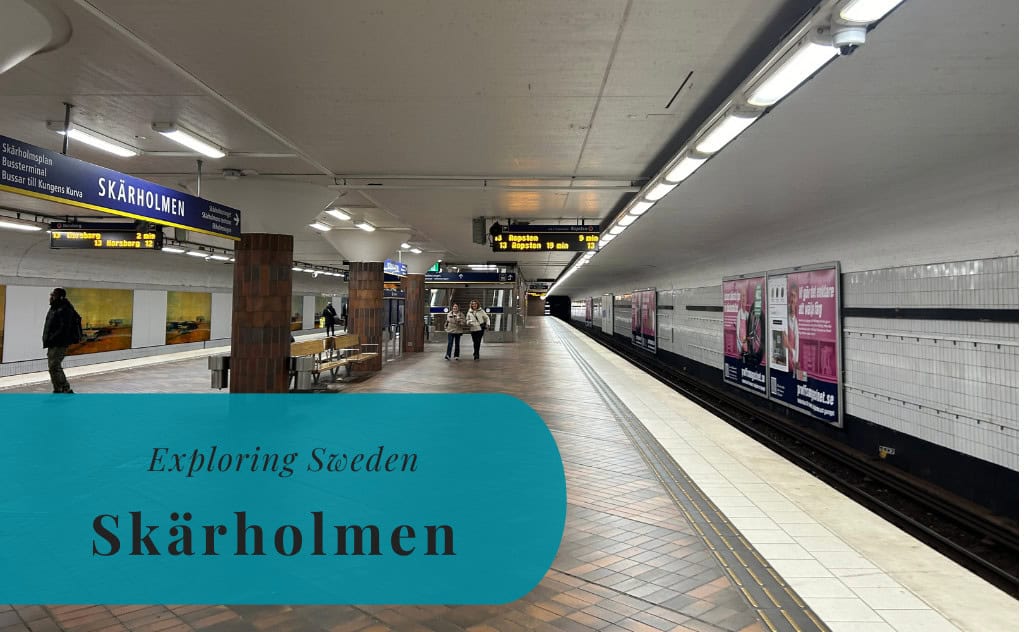
The most efficient way to reach Skärholmen from central Stockholm is by using the Stockholm Metro (Tunnelbana). Skärholmen has its own metro station, which is located on the red line (T13). To reach it from the city center, you would take a train heading southbound towards Norsborg. The journey from T-Centralen (the central station) is direct and takes approximately 20-25 minutes. Metro trains run frequently from early morning until late at night.
The Open Road: Driving the E4/E20
Driving to Skärholmen is convenient, as the district is located directly next to a major highway. The E4/E20 motorway passes directly alongside Skärholmen. This provides a direct road link from central Stockholm and from other regions to the south, such as Södertälje. There is ample parking available at the SKHLM Shopping Center, which has several large parking garages.
Connecting by Bus
A network of local and regional buses also serves the Skärholmen area. The main bus terminal is located at Skärholmen Centrum. These buses connect Skärholmen to neighboring districts and suburbs. They also provide links to areas not directly on the metro line. The bus network is integrated with the metro system, allowing for easy transfers.
An International Ferry Approach
There is no direct ferry access to the inland district of Skärholmen. International travelers arriving by ferry would dock at one of Stockholm’s main ports, such as the terminals at Värtahamnen or Stadsgården. From the ferry terminals, travelers would need to use Stockholm’s public transport system, typically a combination of bus and metro, to reach Skärholmen.
Arriving by Air
International visitors would fly into one of Stockholm’s airports. The main airport is Stockholm Arlanda Airport (ARN). From Arlanda, you can take an express train or an airport bus to Stockholm Central Station. From there, you would transfer to the metro’s red line to reach Skärholmen. The smaller Stockholm Bromma Airport (BMA) is closer to the city center and is another option.
Driving Distances
The driving distance from 10 regional cities, according to Google Maps:
- Stockholm, Sweden – 16 kilometers (0 h 20 min)
- Linköping, Sweden – 186 kilometers (2 h 10 min)
- Gothenburg, Sweden – 457 kilometers (4 h 50 min)
- Helsinki, Finland – 515 kilometers (13 h 40 min, includes ferry)
- Oslo, Norway – 535 kilometers (6 h 10 min)
- Malmö, Sweden – 599 kilometers (6 h 10 min)
- Copenhagen, Denmark – 658 kilometers (6 h 50 min)
- Hamburg, Germany – 952 kilometers (11 h 30 min, includes ferry)
- Berlin, Germany – 1017 kilometers (13 h 20 min, includes ferry)
- Kiruna, Sweden – 1221 kilometers (13 h 40 min)
Explore More of Stockholm and Sweden