Rhodes Town, Rhodes | Exploring Greece
Rhodes Town, located on the northern tip of Rhodes Island, is the capital of the Dodecanese island group in Greece. The city is situated on the Aegean Sea, at a strategic point between mainland Europe and the coast of Anatolia. With a population of around 56,000 residents, it is the largest city in the Dodecanese. Rhodes Town serves as the region’s primary administrative, commercial, and transport hub. The island itself is the largest in the Dodecanese and lies about 18 kilometers from the Turkish coast.
The character of Rhodes Town is defined by its two distinct parts: the Medieval Old Town, which is a UNESCO World Heritage site, and the modern city that has grown around it. The Old Town is a fully preserved, inhabited medieval city, enclosed by massive stone walls. This historic core exists alongside a modern city with hotels, shops, and administrative buildings. This combination of a living medieval city and a functional modern one gives Rhodes its specific identity.
The city’s history is a visible tapestry of different eras and cultures. Its origins are in the classical Greek world, but its most defining period was its time as the headquarters of the Knights of St. John. This left a legacy of Gothic and Renaissance architecture. Later periods of Ottoman and Italian rule also added their own layers to the city’s urban fabric. Today, Rhodes Town is one of the most visited tourist destinations in Greece, drawing visitors to its historical sites and its coastal setting.


Good to Know When Visiting Rhodes Town
To help with planning a visit, here are several practical points covering daily essentials, timing, and efficient exploration of the city. Understanding these details can make a trip to Rhodes Town more convenient. This information is intended to provide a general overview for travelers preparing to visit this major Greek island capital.
The Daily Essentials
The official currency used in Rhodes Town is the Euro (EUR). Credit and debit cards are widely accepted in most hotels, restaurants, and larger shops, especially in the modern town and main tourist areas. However, it is highly advisable to carry some cash for smaller purchases in the Old Town, for local tavernas, or for market stalls. The official language is Greek. English is very widely spoken in all tourist areas. Tipping is customary in Greece; while not always obligatory, rounding up the bill or leaving a tip of 5-10% for good service at restaurants is standard practice. The tap water in Rhodes Town is generally considered safe to drink, but many visitors prefer bottled water. The electrical system uses Type F sockets with a standard voltage of 230V.
Planning Your Calendar
Rhodes is primarily a summer destination, with a long tourist season that runs from spring to autumn. The peak season is during the summer months (July-August), which offers the hottest weather for beaches but also the largest crowds and highest prices. The spring (April-June) and autumn (September-October) are often considered the best times to visit. These periods offer pleasant, warm weather suitable for both sightseeing and swimming, with fewer crowds. The winter is mild but can be rainy, and many tourist-focused businesses may be closed. A key cultural event is the Medieval Rose Festival, which takes place in the Old Town and recreates the era of the Knights. For a first visit, three to four full days is generally sufficient to explore the Old Town and nearby sights.
A Tourist’s Toolkit for Exploration
The Medieval Old Town of Rhodes is a large, labyrinthine area that is best explored on foot. Comfortable footwear is essential for navigating its cobblestone streets. For traveling between the Old Town, the modern city, and the Acropolis, local buses are available. A car is not necessary for exploring the city itself and is not permitted within most of the Old Town. It is highly advisable to book accommodation well in advance, especially if traveling during the peak summer season. It is also a good idea to check the opening hours for major archaeological sites and museums, as they can have reduced hours on certain days or be closed on public holidays.


A Short History
The history of Rhodes Town is that of a major maritime power in the ancient world and a formidable Christian fortress in the medieval period. Its strategic location at the crossroads of the Aegean and Mediterranean seas has made it a center for trade and a target for conquest for millennia. The city’s story is one of classical prosperity, medieval military engineering, and a succession of different rulers. This long history has left an unparalleled architectural and archaeological legacy, leading to its designation as a UNESCO World Heritage Site.
Ancient Rhodes and the Colossus
The city of Rhodes was founded in 408 BCE. It was established as a unified city-state by the three older cities of the island: Ialysos, Kamiros, and Lindos. This marked the start of a prosperous period. Ancient Rhodes was famous for the Colossus of Rhodes, a giant bronze statue of the sun god Helios. The statue stood at the harbor entrance and was one of the Seven Wonders of the Ancient World. It was constructed to celebrate the city’s victory over a siege, but it was toppled by an earthquake in 226 BCE.
In the Hellenistic period, Rhodes became a major center for maritime trade, culture, and learning. It had a famous school of philosophy and rhetoric. In 164 BCE, Rhodes came under Roman control, but it maintained its status as a center for arts and sciences. It was a key ally of Rome in the eastern Mediterranean. The city continued to be an important urban center throughout the Roman and subsequent Byzantine periods.
The Knights of St. John
The most defining period of Rhodes Town’s history began in 1309. The Knights of St. John of Jerusalem, a military religious order, conquered the island and established their headquarters here. They transformed Rhodes Town into an impregnable fortress city. They built massive walls, a moat, and a powerful fleet. From this base, they controlled trade routes and acted as a Christian bulwark against the rising power of the Ottoman Empire.
For two centuries, Rhodes under the Knights was a significant commercial and cultural hub in the eastern Mediterranean. The city was divided into the Collachium (the High Town), where the Knights lived in their inns organized by language, and the Burgo (the Lower Town), where the general population lived. This period saw the construction of the Palace of the Grand Master, the Hospital of the Knights, and the famous Street of the Knights. The Knights’ rule ended in 1522, after a six-month siege by the Ottoman Sultan Suleiman the Magnificent.
Ottoman, Italian, and Modern Greek Era
After the Knights departed, Ottoman rule followed and lasted for nearly four hundred years, until 1912. During this period, many churches were converted into mosques, and new mosques, baths, and public buildings were constructed. The Greek population was moved out of the fortified city and into new suburbs. The city’s commercial importance declined during this era.
In 1912, Italy seized Rhodes and the other Dodecanese islands from the Ottomans. The Italians undertook major infrastructure projects and extensive archaeological work and restoration in Rhodes Town. They rebuilt the Palace of the Grand Master, which had been destroyed in an explosion. After World War II, following a brief period of British and German control, Rhodes and the rest of the Dodecanese islands officially became part of Greece in 1947.

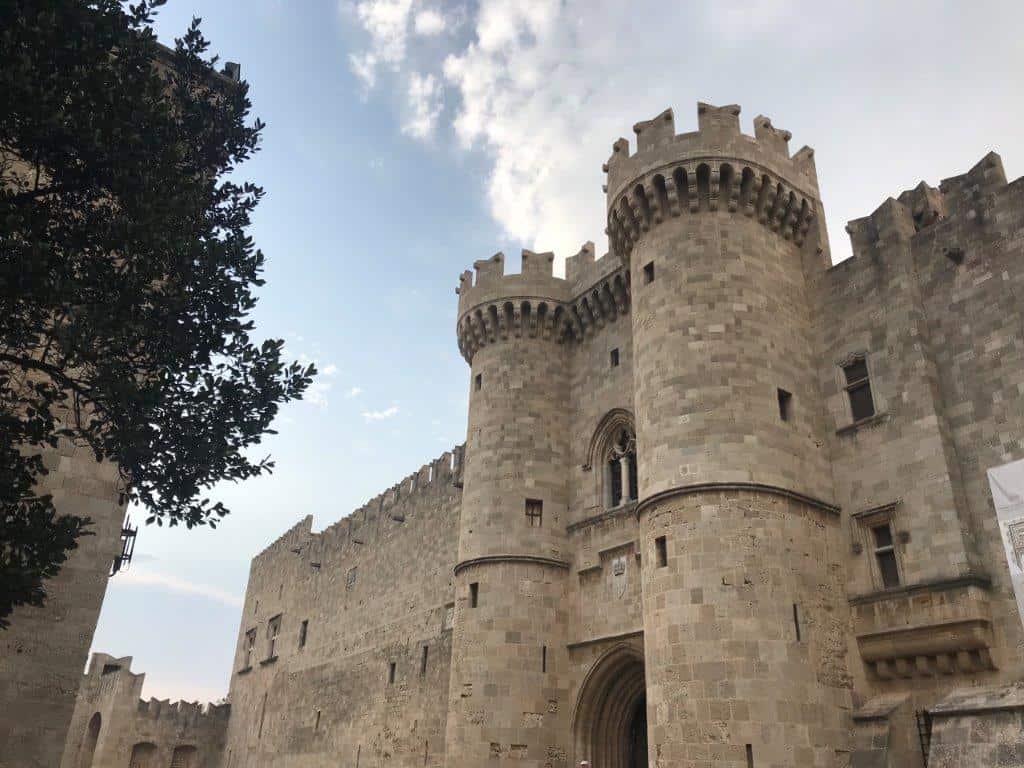
Things to Do and See
Rhodes Town offers a range of attractions that showcase its ancient history, its medieval fortifications, and the different cultural layers left by its successive rulers. From the imposing fortifications of the Old Town to the serene remnants of its classical past, the city invites visitors to explore centuries of history. Each landmark tells a story, revealing the diverse cultures that have shaped this Greek island capital.
The main sights are concentrated within the Medieval City, which is a UNESCO World Heritage site. This area is divided into the High Town, where the Knights lived, and the Lower Town. Key landmarks include the Palace of the Grand Master, the Street of the Knights, and the Archaeological Museum. The historic Mandraki Harbour and the ancient Acropolis are located just outside the city walls.
Medieval City of Rhodes
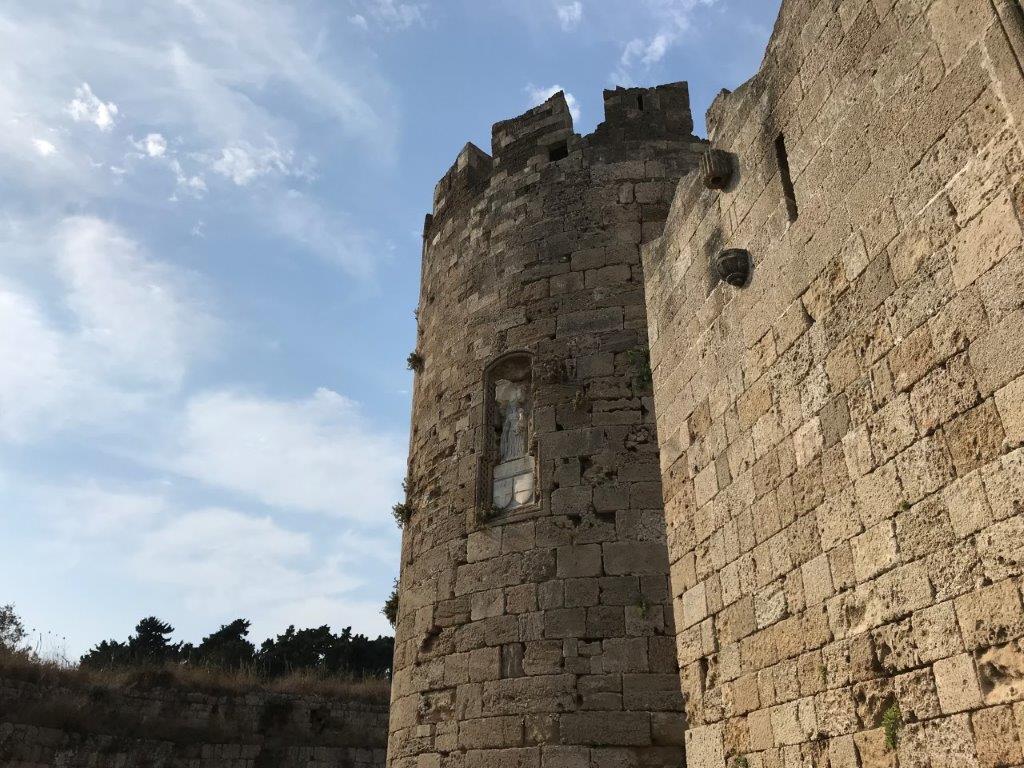
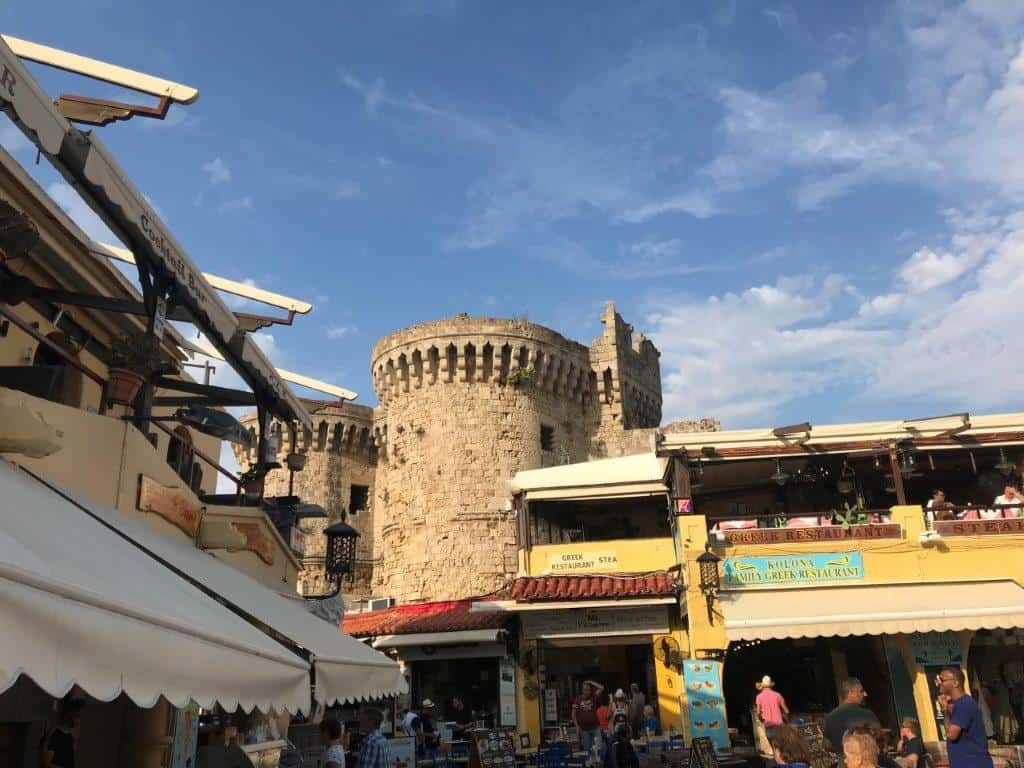
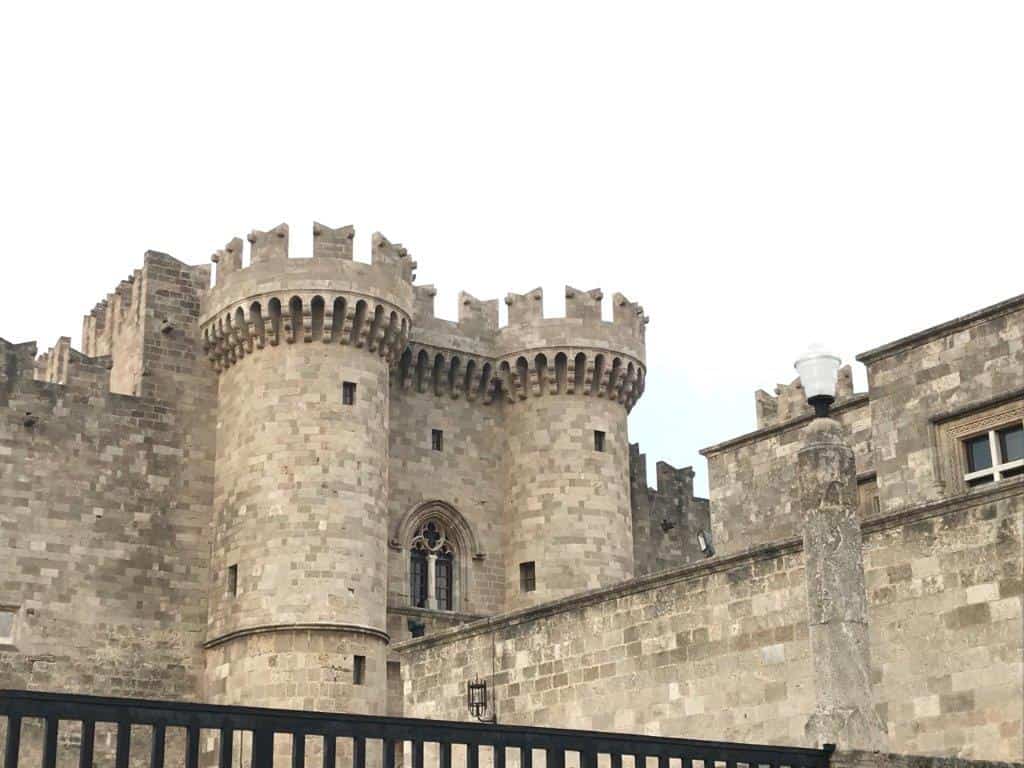
The Medieval City of Rhodes is a UNESCO World Heritage site and a living, inhabited city. It is enclosed by a 4-kilometer-long wall that is one of the best-preserved examples of medieval fortification in Europe. The city is divided into the High Town (or Collachium) and the Lower Town (or Burgo). The High Town was the quarter of the Knights of St. John, containing the Palace, the Cathedral, and the inns of the different “Tongues.” The Lower Town was where the common people lived and contains mosques, churches, and public squares. Walking its cobbled streets provides a direct look into the medieval past.
Palace of the Grand Master of the Knights
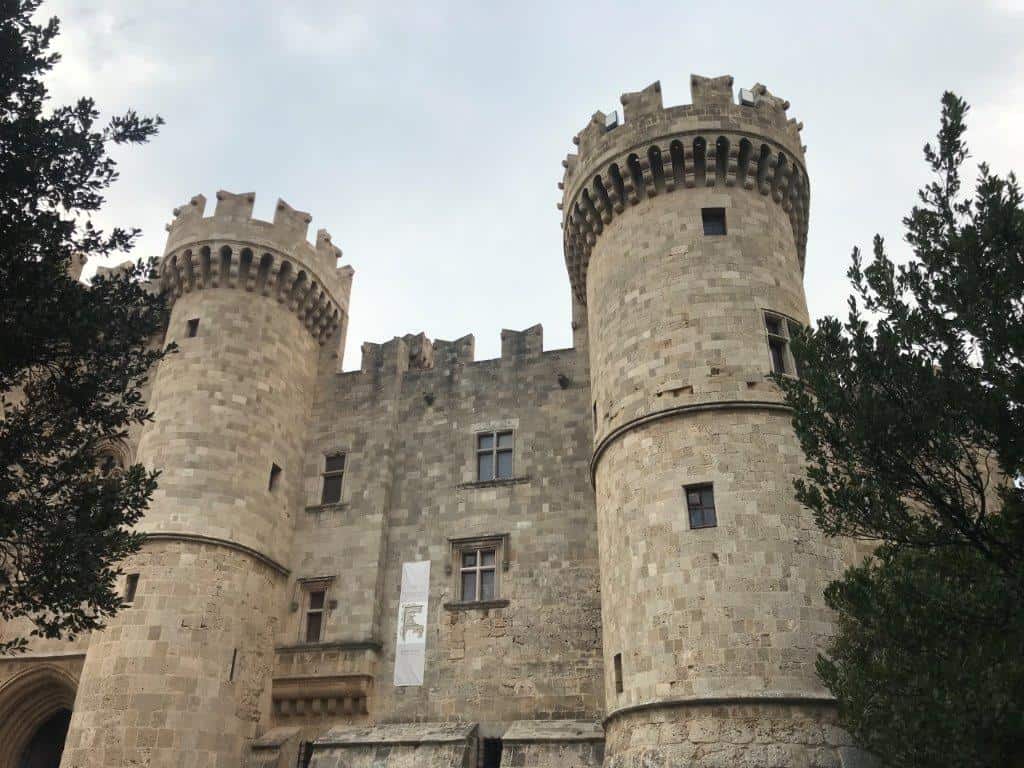
The Palace of the Grand Master is an imposing fortress that sits at the highest point of the Old Town. It served as the administrative center and residence of the Grand Master of the Knights of St. John. Originally a Byzantine citadel, the Knights rebuilt it in the 14th century. It was largely destroyed by an explosion in 1856. The palace was then extensively rebuilt by the Italians in the 1930s as a holiday residence for King Victor Emmanuel III and later for Mussolini. Today, it houses a museum with collections of medieval furniture and impressive Hellenistic and Roman floor mosaics.
Street of the Knights
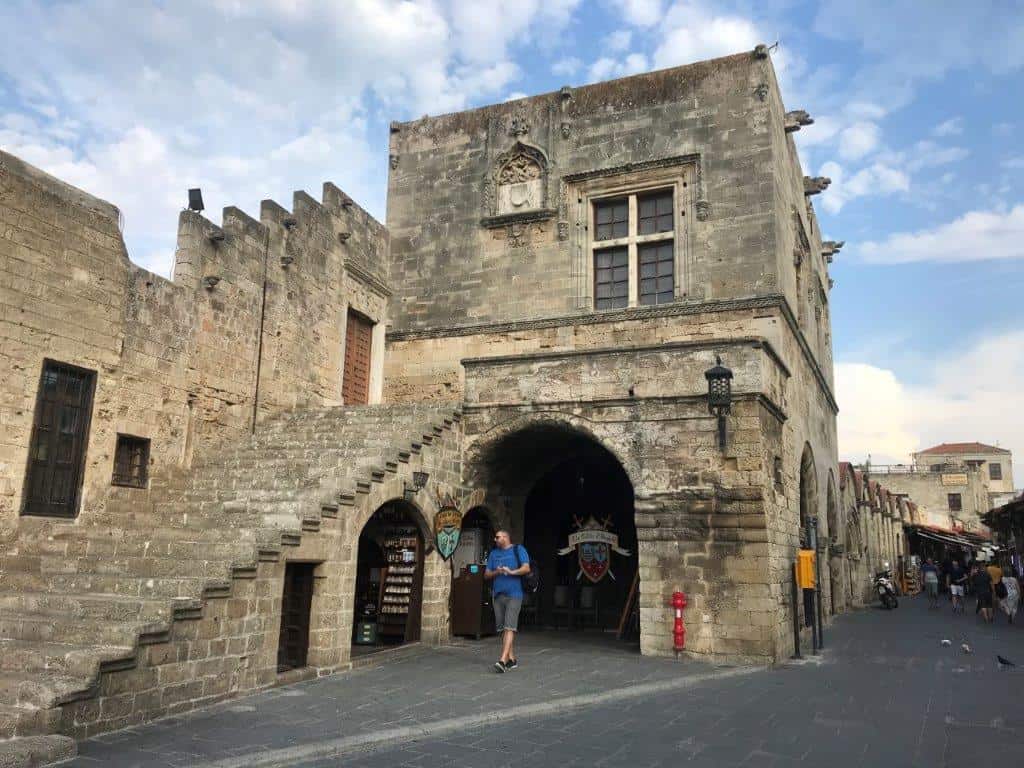
The Street of the Knights (Odos Ippoton) is a famous street that runs through the High Town of the medieval city. The cobblestone street is lined with Gothic buildings known as “Inns” or “Auberges.” Each Inn belonged to a different “Tongue” (a division based on language) of the Knights of St. John. These include the Inns of France, Italy, Spain, and Provence. The street retains its 15th- and 16th-century appearance and leads directly up to the Palace of the Grand Master. It is one of the best-preserved medieval streets in Europe.
Archaeological Museum of Rhodes
The Archaeological Museum of Rhodes is housed in the impressive Hospital of the Knights, which was built between 1440 and 1489. This building is a significant example of Gothic architecture and served as the main hospital for the order. The museum displays artifacts from archaeological sites across the island and the wider Dodecanese. The collections include statues, mosaics, and pottery from the Archaic, Classical, Hellenistic, and Roman periods. A key artifact is the famous marble statue of the Aphrodite of Rhodes. The building itself, with its large central courtyard, is a major attraction.
Mandraki Harbor
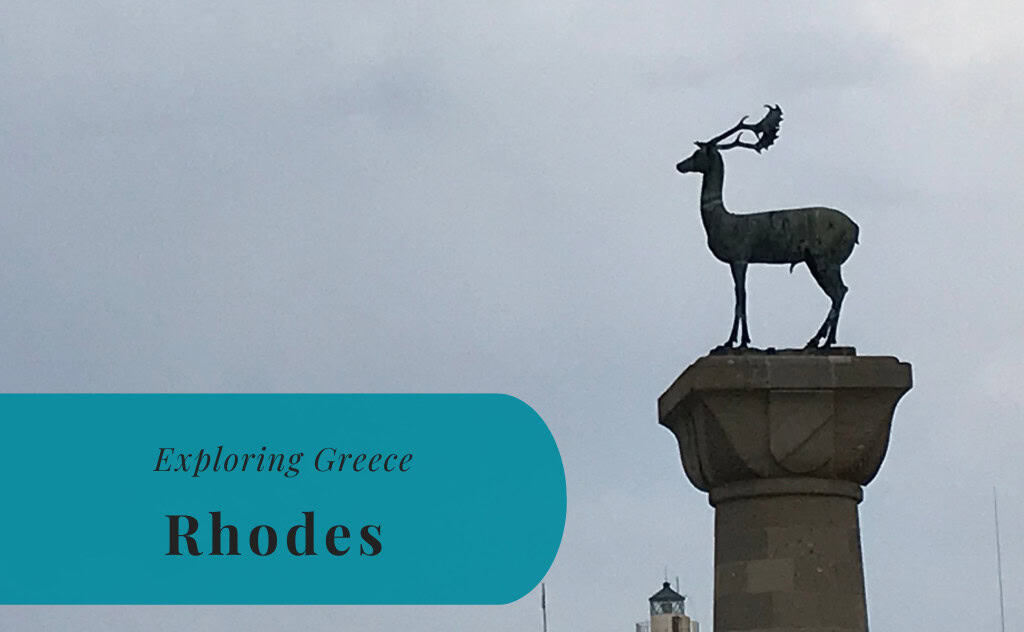
The Mandraki Harbour is the historic harbor of Rhodes Town. In ancient times, it was the city’s military port. It is believed to be the site where the Colossus of Rhodes, one of the Seven Wonders of the Ancient World, once stood. Today, the entrance to the harbor is flanked by two columns topped with bronze statues of a male and female deer, which are symbols of the island. Three medieval windmills stand on the long breakwater that protects the harbor. The harbor is now used by excursion boats and private yachts.
Acropolis of Rhodes
Located outside the Medieval City, on Monte Smith hill, are the ruins of the ancient Acropolis of Rhodes. This site includes the partially restored Temple of Apollo, which stands on the highest point of the hill. There are also the remnants of an ancient stadium and a small marble theatre (odeon). The site offers panoramic views of Rhodes Town, the sea, and the Turkish coast. The hill is named after the British Admiral Sir Sidney Smith, who used it as a lookout point during the Napoleonic Wars.
Suleiman Mosque
The Suleiman Mosque is the most important Ottoman-era mosque in Rhodes Town. It is located in the Lower Town, at the end of Sokratous Street. The original mosque was built in 1522 to commemorate the Ottoman conquest of Rhodes by Sultan Suleiman the Magnificent. The current building dates to a reconstruction in 1808. The mosque features a distinctive pink-and-white striped exterior and a tall minaret. Its presence is a key reminder of the nearly 400 years of Ottoman rule in the city.
Roloi Clock Tower
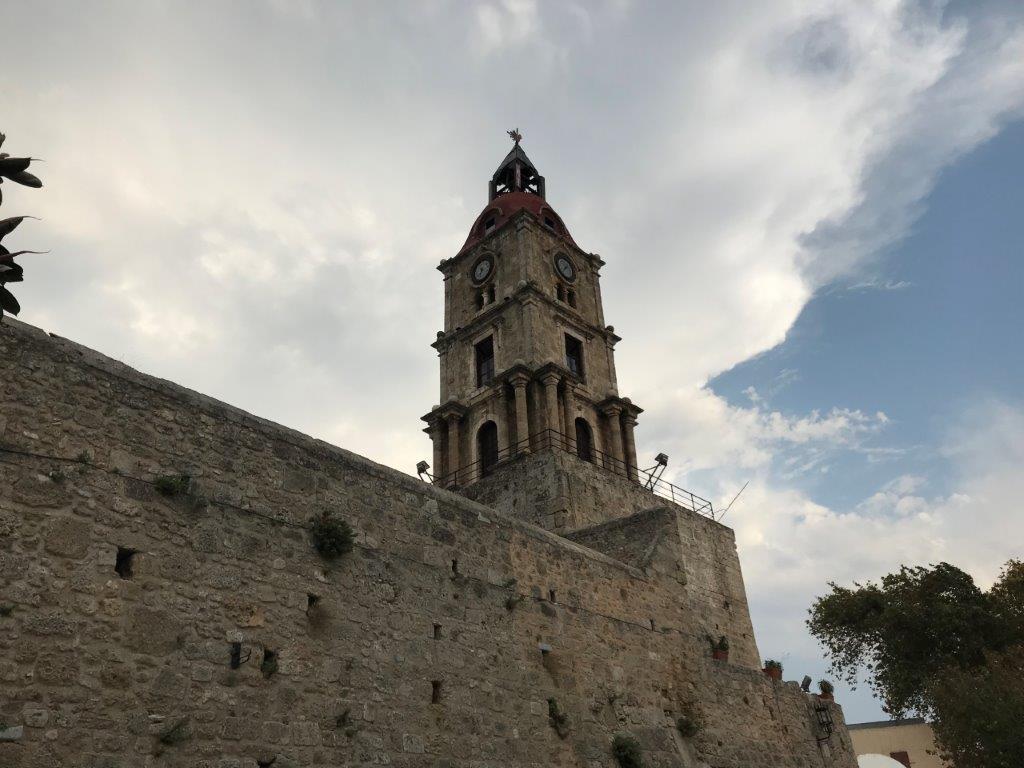
The Roloi Clock Tower is a Byzantine-era clock tower located in the heart of the Old Town. Originally built in the 7th century, it was rebuilt by the Knights of St. John in the 15th century. Visitors can climb the narrow staircase to the top of the tower. The top offers 360-degree panoramic views of the entire Medieval City, including its mosques, churches, and the Palace of the Grand Master. The clock tower is a key landmark in the Old Town’s skyline.
Sports in Rhodes
The sports scene in Rhodes is focused on its professional football and basketball clubs, which represent the island in the Greek national leagues. The island’s coastal location and favorable weather also make it a major center for a wide range of water sports. These sports are popular with both local residents and the many tourists who visit the island each year.
Football
Football is a widely followed sport in Rhodes, as it is throughout Greece. The city is home to two main football clubs with long histories. These clubs have a strong local following and a rivalry that is a key part of the island’s sporting culture. The teams compete in the national league system of Greece.
Diagoras FC
Diagoras FC is one of the oldest and most historically significant football clubs in Rhodes. The club is named after Diagoras of Rhodes, an ancient Olympic boxer. The team has a history of competing in the Super League Greece, the top tier of Greek football. They play their home games at the Diagoras Stadium in Rhodes Town. The club has a dedicated local fanbase.
AS Rodos
AS Rodos is the other major football club in the city. They also have a long history and a strong local following. The club shares a rivalry with Diagoras FC, and matches between the two teams are major local events. AS Rodos has also competed at high levels of the Greek football league system. They currently play their home games at the Municipal Stadium of Rhodes “Kallipateira.”
Basketball
Basketball is another popular sport on the island. The city is home to a professional basketball club that has competed at the highest level in Greece. The sport has a dedicated following, with home games drawing enthusiastic crowds. The club is a key part of the island’s modern sporting identity.
Kolossos Rodou B.C.
The city’s professional basketball club is Kolossos Rodou B.C. The team competes in the Greek Basket League, which is the top professional basketball league in Greece. They have been a consistent presence in the top tier for many years. They play their home games at the Kallithea Palais des Sports. The team is a major representative of the Dodecanese islands in national sport.
Water Sports
With its extensive coastline and favorable wind conditions, Rhodes is a major destination for water sports. The beaches on the west coast of the island, particularly around Ialyssos and Ixia, are world-renowned for windsurfing and kitesurfing. These areas host international competitions. The numerous bays and coves around the island are also popular for sailing, jet-skiing, and scuba diving. Many schools and rental centers operate along the coast.



Getting Around in Rhodes Town
Navigating Rhodes Town is straightforward. The Medieval Old Town is a large pedestrian zone that is best explored on foot. The modern city has a local bus network that connects to the main sights and beaches. Taxis and rental vehicles are also widely available.
On Foot: The Medieval City
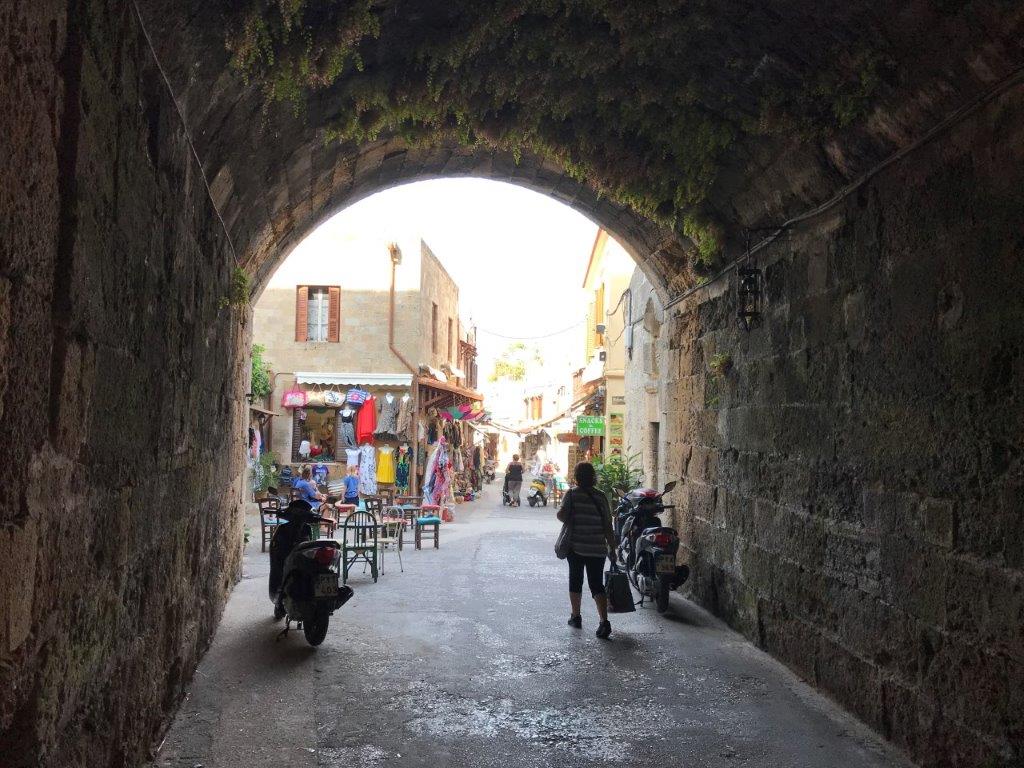
Walking is the only way to explore the interior of the Medieval City. The entire walled city is a labyrinth of narrow, cobblestone streets and alleys that are not accessible to most vehicles. All the main sights within the Old Town, such as the Palace of the Grand Master and the Street of the Knights, must be reached on foot. Comfortable footwear is essential for navigating the uneven stone streets.
Riding the Bus: Local and Intercity
The public transport on the island is based on buses. In Rhodes Town, the local bus company is RODA. Their buses serve the city, the Acropolis, and the nearby beach resorts like Ixia and Faliraki. The main intercity bus company is KTEL. Their buses connect Rhodes Town with all the other major villages and destinations on the island, such as Lindos. The two main bus terminals are located next to each other in the modern city.
How to Get to Rhodes
Reaching Rhodes Town is convenient, as the island is a major international tourist destination with its own airport and a busy port. It is well-connected to the rest of Greece and to Europe, particularly during the summer tourist season.
Arriving by Air: Rhodes International Airport
The main entry point to the island is Rhodes International Airport (RHO), also known as Diagoras Airport. It is located approximately 14 kilometers southwest of Rhodes Town. The airport is one of the busiest in Greece. It handles numerous direct flights from cities across Europe, especially from May to October. Airlines like Aegean Airlines and Olympic Air provide year-round connections to Athens. Low-cost carriers also have a large presence. From the airport, public buses and taxis provide frequent connections to Rhodes Town.
The Aegean Route: Arriving by Ferry
Rhodes Town’s main port is a significant maritime hub in the Dodecanese. It offers extensive ferry connections. Regular, large car ferries connect Rhodes with Piraeus, the main port of Athens. This journey is long and often operates overnight. Rhodes also has frequent ferry services to all the other islands in the Dodecanese island group, including Kos and Patmos. International ferry services also connect Rhodes to towns on the Turkish coast, such as Marmaris.
Looking to Explore more of Greece and Europe?