Lahnstein, Rhineland-Palatinate | Exploring Germany
Lahnstein is a historic town in the German state of Rhineland-Palatinate. The town is located at the confluence of the Lahn and Rhine rivers. This places it at a pivotal point in the Upper Middle Rhine Valley, a UNESCO World Heritage Site. With a population of approximately 19,000 residents, Lahnstein is part of the Rhein-Lahn-Kreis district. Situated just 6 kilometers south of Koblenz, it serves as a gateway to the landscapes of the Westerwald and Taunus mountain ranges.
The character of Lahnstein is defined by its two formerly separate town centers, Oberlahnstein and Niederlahnstein, and its two prominent castles. The town’s setting at the meeting point of two major rivers has shaped its history as a center for trade, tolls, and defense for centuries. The surrounding steep, wooded hillsides and the busy river traffic contribute to its specific atmosphere. Today, Lahnstein combines its role as a tourist destination with its function as a residential town within the Koblenz metropolitan area.


A Short History of Lahnstein
The history of Lahnstein is that of two separate towns that grew on either side of the Lahn River’s mouth before their eventual unification. The area’s strategic importance was recognized in Roman times and solidified in the Middle Ages with the construction of castles by powerful regional rulers. The town’s development was driven by its control over river traffic and its administrative role for the Electorates of Mainz and Trier. This long history is visible today in the town’s castles, historic churches, and remnants of its medieval walls.
Roman and Medieval Foundations
The history of settlement in the Lahnstein area dates back to Roman times. The Romans built a military fort, castellum ad confluentes, here to secure the frontier of their empire. Following the Roman period, the area was settled by the Franks. The modern town was formed in 1969 by the merger of the previously independent towns of Oberlahnstein, located on the south side of the Lahn, and Niederlahnstein, on the north side. Oberlahnstein is home to the prominent Burg Lahneck, a castle built around 1226 by the Archbishop of Mainz to protect his territory at the river confluence.
Electoral Power and Conflicts
In 1324, the town of Oberlahnstein received its town charter from Emperor Ludwig IV. The area played a role in the politics of the Holy Roman Empire; the election of King Wenceslaus took place at the Königsstuhl, near Lahnstein, in 1376. In Niederlahnstein, the Archbishops of Trier built Schloss Martinsburg in 1298, originally as a toll castle to control trade on the Rhine. The town’s strategic importance meant it was often involved in conflicts. Burg Lahneck was heavily damaged by French troops during the Nine Years’ War in 1688, not the Thirty Years’ War, and lay in ruins for over a century.
Modern Unification and Preservation
After the Napoleonic Wars, the region became part of the Duchy of Nassau and was later incorporated into Prussia in 1866. The 19th century saw a renewed interest in the romantic castles of the Rhine. Burg Lahneck was purchased and restored in the English Gothic Revival style starting in the 1850s. The two towns of Oberlahnstein and Niederlahnstein continued to develop separately. Finally, as part of an administrative reform in Rhineland-Palatinate, the two towns were officially merged to create the modern town of Lahnstein on June 7, 1969. Today, the town focuses on preserving its extensive historical heritage.


Things to Do and See
Lahnstein offers a range of attractions that combine historical landmarks with the natural setting of the Rhine and Lahn river valleys. Visitors can explore prominent medieval castles like Burg Lahneck and the well-preserved Schloss Martinsburg. The town also features historic churches and remnants of its ancient city walls. Its location within a UNESCO World Heritage Site makes the surrounding landscape itself a key attraction.
Burg Lahneck
Lahneck Castle (Burg Lahneck) is a medieval fortress perched on a rocky hill overlooking the confluence of the Lahn and Rhine rivers. It was built around 1226 by the Archbishop of Mainz. Lahneck Castle features a pentagonal keep, which is a rare design, standing over 30 meters high. The castle was destroyed in the Nine Years’ War in 1688 but was faithfully restored in the 19th century in the English Gothic Revival style. The castle is said to have inspired Johann Wolfgang von Goethe’s poem “Geistesgruß.” Guided tours are available from April to November, allowing visitors to explore its chapel, knight’s hall, and inner courtyard.
Schloss Stolzenfels
Stolzenfels Castle (Schloss Stolzenfels) is a major example of Rhine Romanticism. Although technically in Koblenz, it sits directly opposite Lahnstein on the west bank of the Rhine and is a key part of the view from the town. Originally a 13th-century toll castle, it was destroyed in 1689. King Frederick William IV of Prussia had it rebuilt as a summer residence between 1836 and 1842. Designed by the famous architect Karl Friedrich Schinkel, it features an ochre finish and Italianate terraces. It is a key landmark within the UNESCO World Heritage site.
Schloss Martinsburg
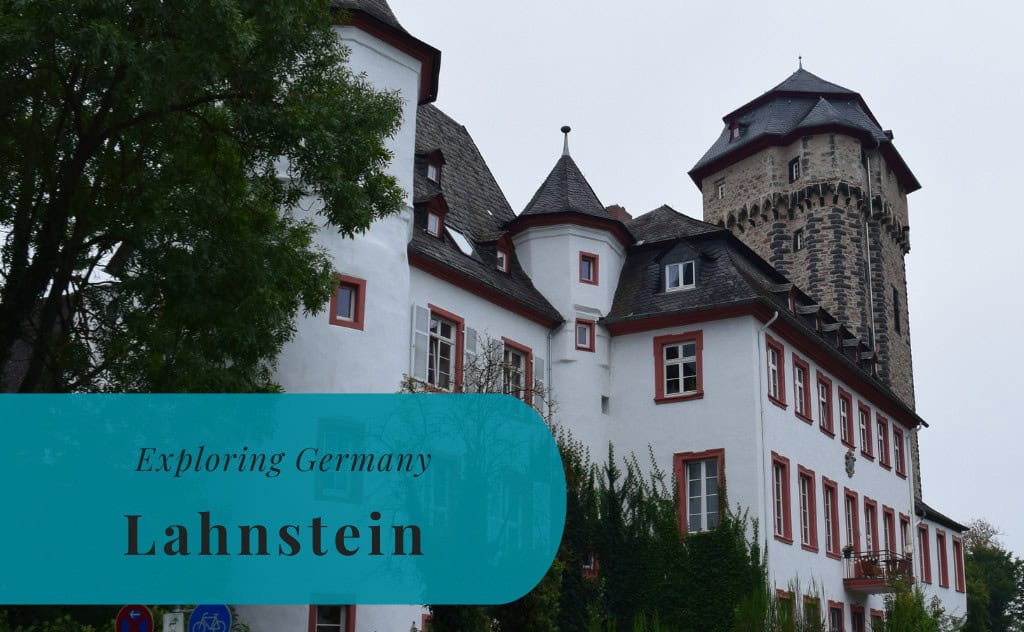
Schloss Martinsburg, located in the Niederlahnstein part of the town, is another historic castle. It was constructed in 1298, initially as a toll castle for the Archbishop of Trier. It is one of the few castles in the Rhine Valley that has never been destroyed. Over the centuries, it underwent various transformations from a Gothic fortress to a more residential palace. Today, parts of it house private residences and a Carnival museum (Fastnachtsmuseum). The castle’s well-preserved structure provides a tangible link to Lahnstein’s medieval past.
Johanniskirche
St. John’s Church (Johanniskirche) in Niederlahnstein is a significant Romanesque pillar basilica. Built around 1130, it is considered one of the oldest gallery churches on the Middle Rhine. Its architecture features a west tower rising six stories high. Archaeological finds show that beneath the current church lie foundations of a Carolingian predecessor from before 850 AD. Despite some destruction and rebuilding over the centuries, its historical significance and Romanesque architectural style are notable.
Hexenturm and City Walls
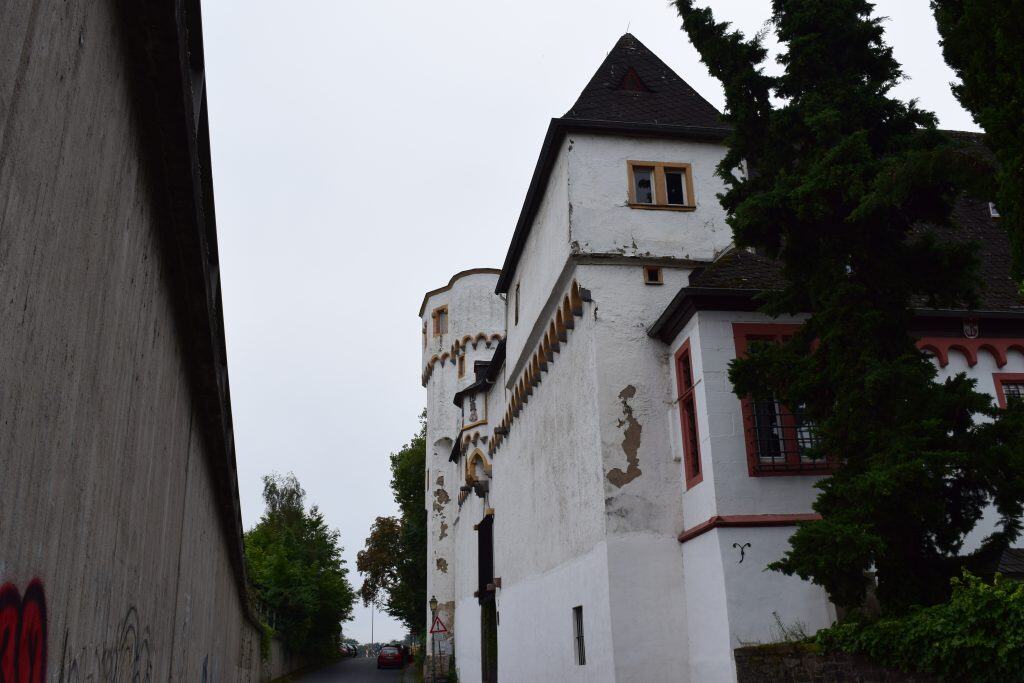
The Hexenturm (Witches’ Tower) is a well-preserved part of Lahnstein’s ancient city walls, located in the Oberlahnstein district. This medieval tower was once part of the town’s 14th-century fortifications. It is famously associated with the witch hunts of the 17th century when it was used as a prison. Visitors can explore sections of the old city wall adjacent to the tower. This offers a look into medieval life and the town’s defensive history.



Getting Around in Lahnstein
Navigating Lahnstein requires an understanding of its two main districts, Oberlahnstein and Niederlahnstein, which are located on either side of the Lahn River. The historic centers of both districts are compact and can be explored on foot. For travel between the two districts and to the surrounding areas, local buses and trains are available.
On Foot: The Two Town Centers
Walking is the best way to explore the historic cores of both Oberlahnstein and Niederlahnstein. In Oberlahnstein, you can walk from the train station through the old town to see the Hexenturm and the city walls. In Niederlahnstein, the area around the Johanniskirche and Schloss Martinsburg is also easily walkable. A pedestrian bridge crosses the Lahn River, connecting the two town centers.
Local Buses and Trains
The public transport in Lahnstein is part of the Verkehrsverbund Rhein-Mosel (VRM). A network of local buses connects the different parts of Lahnstein. They also provide connections to the nearby city of Koblenz. The town is also well-served by regional trains. The Niederlahnstein station is a key junction, making it easy to travel up and down both the Rhine and Lahn valleys by train.
How to Get to Lahnstein
Reaching Lahnstein is straightforward due to its location just south of the major transport hub of Koblenz. The town is well-connected to the German road and rail networks, making it accessible from major cities in western Germany and neighboring countries.
Arriving by Air: Nearby Gateways
Lahnstein does not have its own airport. The closest airport with some international connections is Frankfurt-Hahn Airport (HHN), which is primarily served by low-cost carriers and is located about 80 kilometers away. The closest major international airports are Frankfurt Airport (FRA), about 120 kilometers away, and Cologne Bonn Airport (CGN), about 110 kilometers away. From any of these airports, the journey to Lahnstein must be completed by train, bus, or rental car.
The Open Road: Driving the Rhine Valley
Driving to Lahnstein offers flexibility for exploring the scenic Rhine and Lahn valleys. The town is located directly on the B42, a major federal road that runs along the right bank of the Rhine. This road connects to the A3 and A61 motorways, which are major north-south routes. The drive from Frankfurt takes approximately 1 hour and 30 minutes. From Cologne, the journey is similar.
Connecting by Coach
Direct long-distance bus services to Lahnstein are limited. Travel by coach typically involves taking a service from a company like FlixBus to the main bus station in the nearby city of Koblenz. From Koblenz, travelers would then need to transfer to a regional train or a local bus service to complete the short journey to Lahnstein. This is an economical option for reaching the region.
On Track: A Key Railway Junction
Traveling to Lahnstein by train is very efficient. The town has two main railway stations, Oberlahnstein and Niederlahnstein. The Niederlahnstein station is a key regional junction, serving both the East Rhine Railway and the Lahn Valley Railway. Regional trains (RB, RE) provide frequent connections. From Koblenz Hauptbahnhof, direct trains to Lahnstein take only about 5-10 minutes. From Frankfurt Hauptbahnhof, direct regional trains to Niederlahnstein take around 1 hour and 30 minutes.
The River Route: Arriving by Boat
For a scenic arrival, it is possible to travel to Lahnstein by riverboat. The town is a stop on the Rhine River cruise routes. Companies like KD (Köln-Düsseldorfer) offer scheduled services that connect Lahnstein with other towns and castles along the Middle Rhine Valley. While not a primary mode of transport from distant cities, it is a popular way to travel between the towns of the UNESCO World Heritage site.
Driving Distances
The driving distance from 10 regional cities, according to Google Maps:
- Cologne, Germany – 116 kilometers (1 h 30 min)
- Frankfurt, Germany – 125 kilometers (1 h 30 min)
- Luxembourg City, Luxembourg – 157 kilometers (2 h 10 min)
- Stuttgart, Germany – 281 kilometers (3 h 20 min)
- Strasbourg, France – 299 kilometers (3 h 20 min)
- Brussels, Belgium – 311 kilometers (3 h 40 min)
- Amsterdam, Netherlands – 359 kilometers (4 h 00 min)
- Munich, Germany – 504 kilometers (5 h 40 min)
- Hamburg, Germany – 536 kilometers (5 h 30 min)
- Berlin, Germany – 602 kilometers (6 h 10 min)
Looking to Explore more of Germany and Europe?