
Mtskheta | Exploring Georgia
Mtskheta is a city in the region of Mtskheta-Mtianeti, Georgia. It is one of the oldest continuously inhabited cities in the world. The city is located approximately 20 kilometers north of Tbilisi, at the scenic confluence of the Mtkvari and Aragvi rivers. With a current population of around 7,000 inhabitants, it is a small provincial capital. For nearly a millennium, until the 5th century AD, Mtskheta was a large fortified city, and it served as the significant economic and political capital of the ancient Kingdom of Iberia.
The city’s identity is defined by its profound role as the birthplace of Christianity in Georgia. Due to the historical significance of the town and its several outstanding churches, the “Historical Monuments of Mtskheta” became a UNESCO World Heritage Site in 1994. As one of the most vibrant centers of Christianity in the nation, Mtskheta was officially declared the “Holy City” by the Georgian Orthodox Church in 2014. Its collection of medieval churches and monasteries makes it the spiritual heart of the nation and a primary destination for pilgrims and tourists alike.


History of Mtskheta
The history of Mtskheta is a story of a great capital, a spiritual center, and a city that has witnessed the birth of the Georgian nation. Its origins date back to at least the 5th century BC, and it rose to prominence as the capital of the ancient Kingdom of Iberia. The city’s most pivotal moment was its conversion to Christianity in the 4th century, an event that has shaped its destiny ever since. Although the capital was later moved to Tbilisi, Mtskheta has always remained the undisputed spiritual heart of Georgia, serving as the seat of the Georgian Orthodox Church.
The Capital of the Kingdom of Iberia
Mtskheta was the capital of the early Georgian Kingdom of Iberia from the 3rd century BC to the 5th century AD. During this period, the city was a major political and economic center, and it was strongly fortified with massive walls and several citadels. The main citadel, Armazi, stood on Mount Bagineti, controlling the approaches to the city. Archaeological evidence traces human settlement in the area back to the 2nd millennium BC. The city’s location at the confluence of two major rivers made it a natural center for trade and communication.
The Conversion to Christianity
A defining moment in the history of Mtskheta and all of Georgia occurred in the early 4th century. According to tradition, a female evangelist from Cappadocia, known as Saint Nino, came to Mtskheta and converted King Mirian III of Iberia and his wife, Queen Nana, to Christianity. In 337, Christianity was declared the official religion of the kingdom. A small wooden church was built in the center of the city, on the site that would later become the magnificent Svetitskhoveli Cathedral. This event made Mtskheta the birthplace of Georgian Christianity.
A Continued Spiritual Center
In the 5th century, King Vakhtang Gorgasali moved the capital of the kingdom from Mtskheta to the more defensible location of Tbilisi. However, Mtskheta never lost its importance. It continued to serve as the coronation and burial place for most of the kings of Georgia until the end of the kingdom in the 19th century. It also remained the headquarters of the Georgian Orthodox Church. The city suffered damage during invasions by the Arabs and by Timur, but its sacred monuments were always rebuilt and preserved.


Sights in Mtskheta
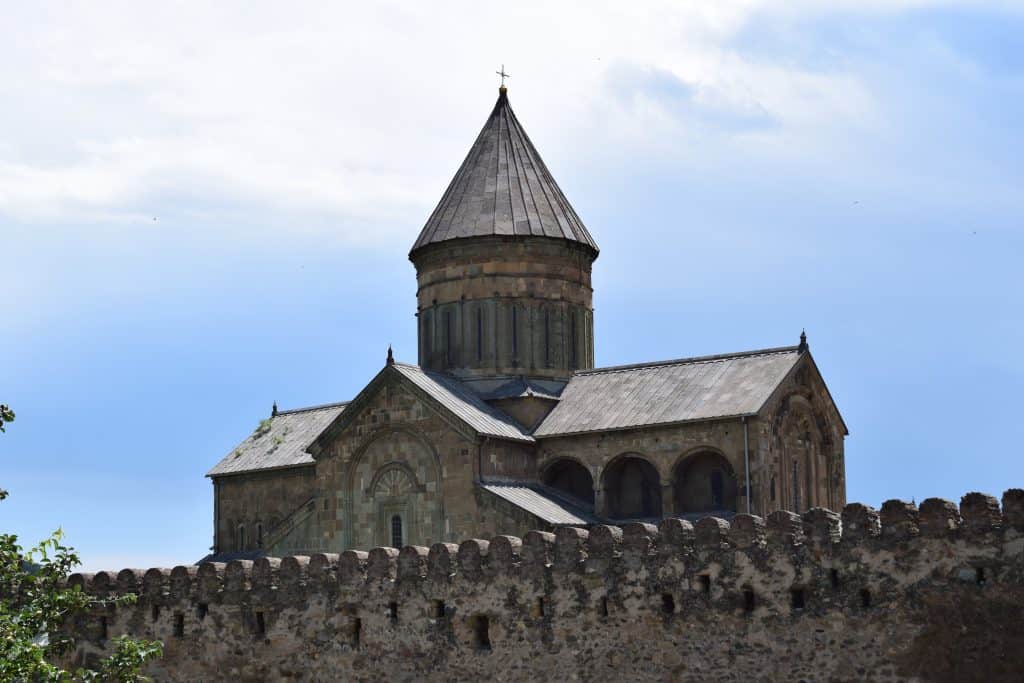
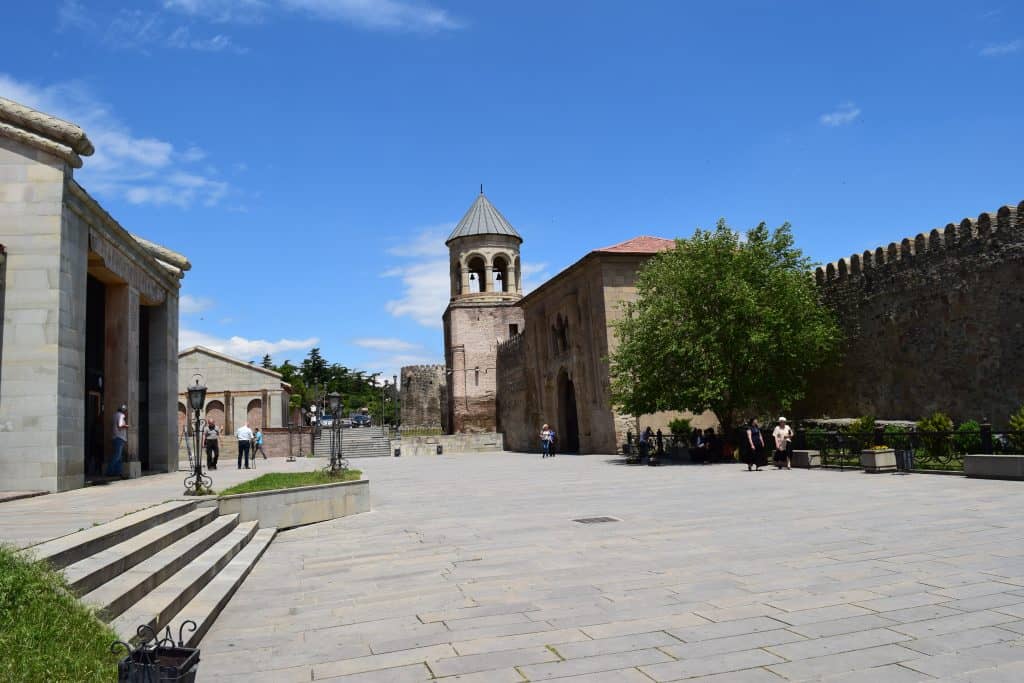
The sights in Mtskheta are centered around its magnificent collection of historical and religious monuments, which are a part of a UNESCO World Heritage Site. The undisputed centerpiece of the city is the Svetitskhoveli Cathedral, a masterpiece of medieval Georgian architecture and the most sacred church in the country. Another key sight is the Jvari Monastery, which stands on a high hill overlooking the city and the confluence of the rivers. The Samtavro Monastery, another ancient complex, is also a major pilgrimage site. A walk through the charming and beautifully restored old town of Mtskheta is a journey through the heart of Georgian history and spirituality.
Svetitskhoveli Cathedral
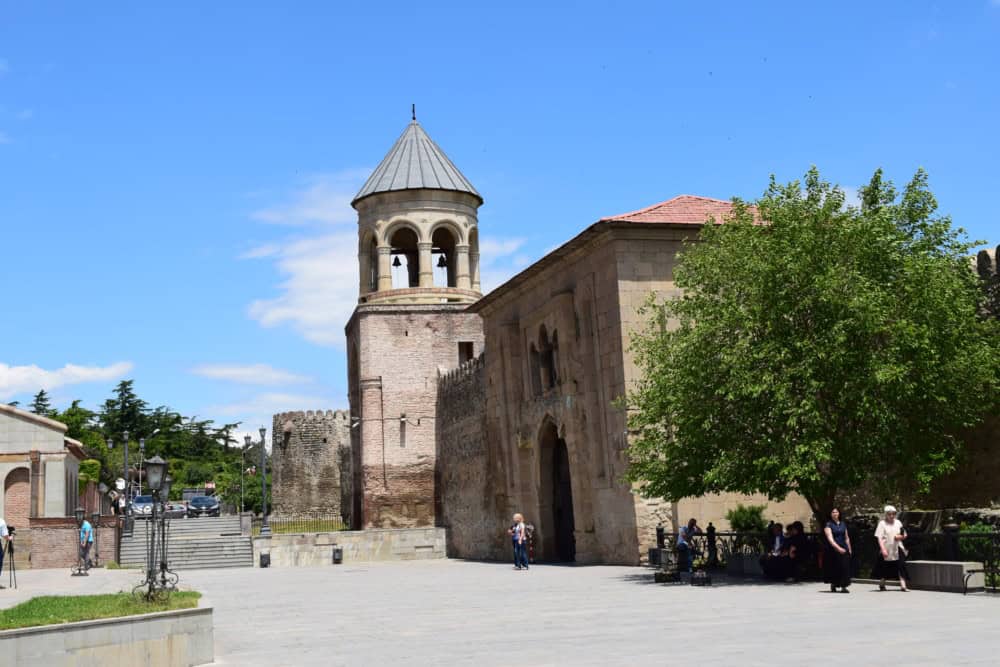
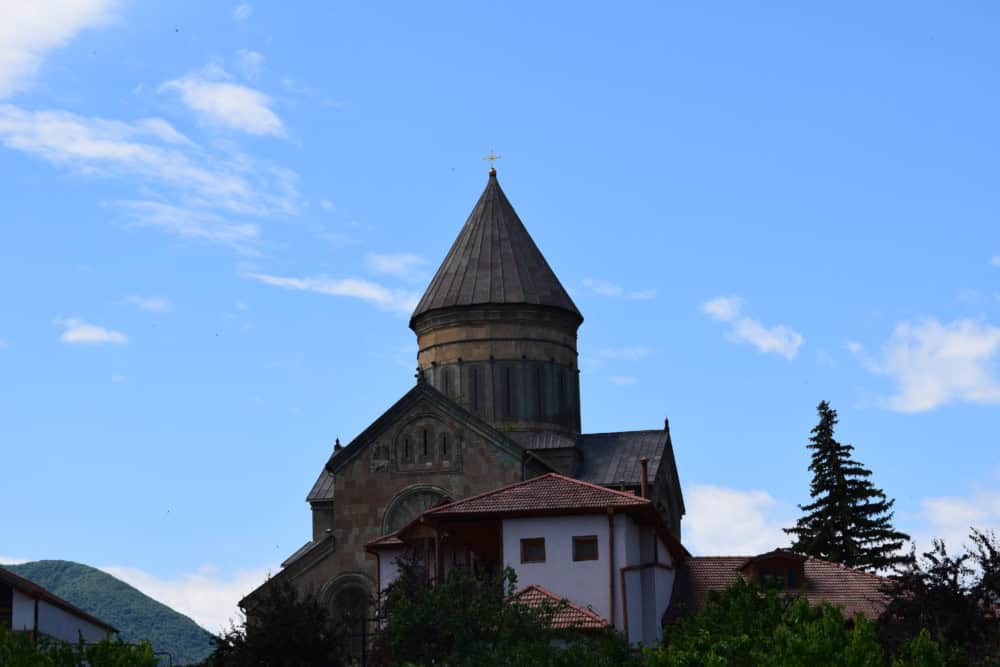
Svetitskhoveli Cathedral is the most important and revered church in Georgia. Its name translates to the “Life-Giving Pillar.” The cathedral was built in the 11th century on the site of Georgia’s first Christian church from the 4th century. According to legend, the seamless robe of Jesus Christ was brought to Mtskheta and buried on this very spot. The cathedral is a magnificent example of medieval Georgian architecture, and its interior is decorated with beautiful, though partially damaged, frescoes. It is the burial place of many Georgian kings and a major pilgrimage destination.
Jvari Monastery
The Jvari Monastery, which translates to the “Monastery of the Cross,” stands on a rocky mountaintop on the opposite bank of the river from Mtskheta. The monastery was built in the 6th century on the spot where Saint Nino is said to have erected a large wooden cross. The church is a masterpiece of early medieval Georgian architecture and is a perfect example of a tetraconch design. The view from the monastery is one of the most famous and iconic in all of Georgia. It offers a spectacular panorama of the confluence of the Mtkvari and Aragvi rivers and the city of Mtskheta below.
Samtavro Monastery
The Samtavro Monastery is another ancient and important monastic complex located in the center of Mtskheta. The complex includes the main church of the Transfiguration, which was built in the 11th century. It also includes a smaller, older chapel known as St. Nino’s Church, which dates back to the 4th century. According to legend, this is the spot where St. Nino lived and prayed. The monastery is the burial place of King Mirian III and Queen Nana, the first Georgian monarchs to convert to Christianity. Today, it functions as a nunnery.
Bebris Tsikhe Fortress
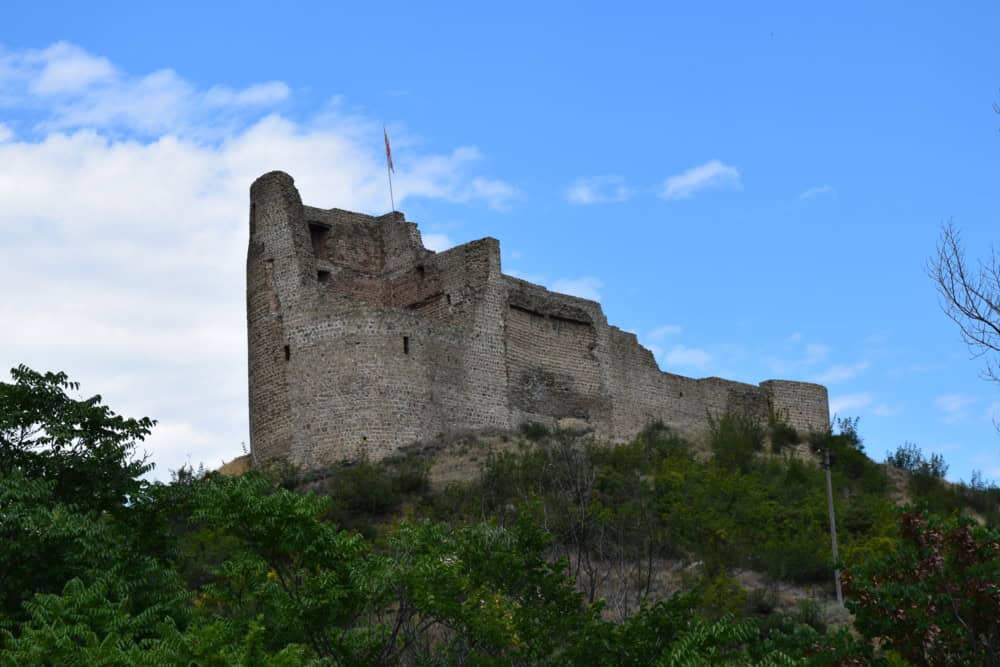
The ruins of Bebris Tsikhe, or the “Elder’s Fortress,” are located on a hill on the northern edge of Mtskheta. The fortress dates back to the early medieval period, and it was once a part of the city’s extensive defensive system. While the fortress is now largely in ruins, it is a fun and interesting place to explore. Visitors can climb on the crumbling walls for excellent views of Mtskheta and the river valley. The site is a reminder of the city’s past as a major fortified capital.
Old Mtskheta
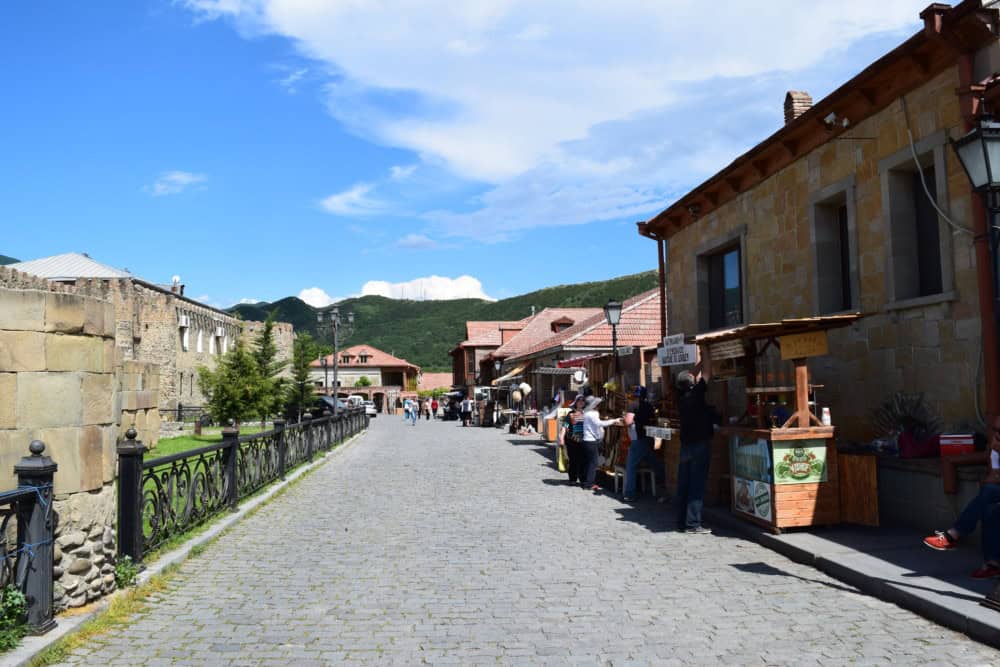
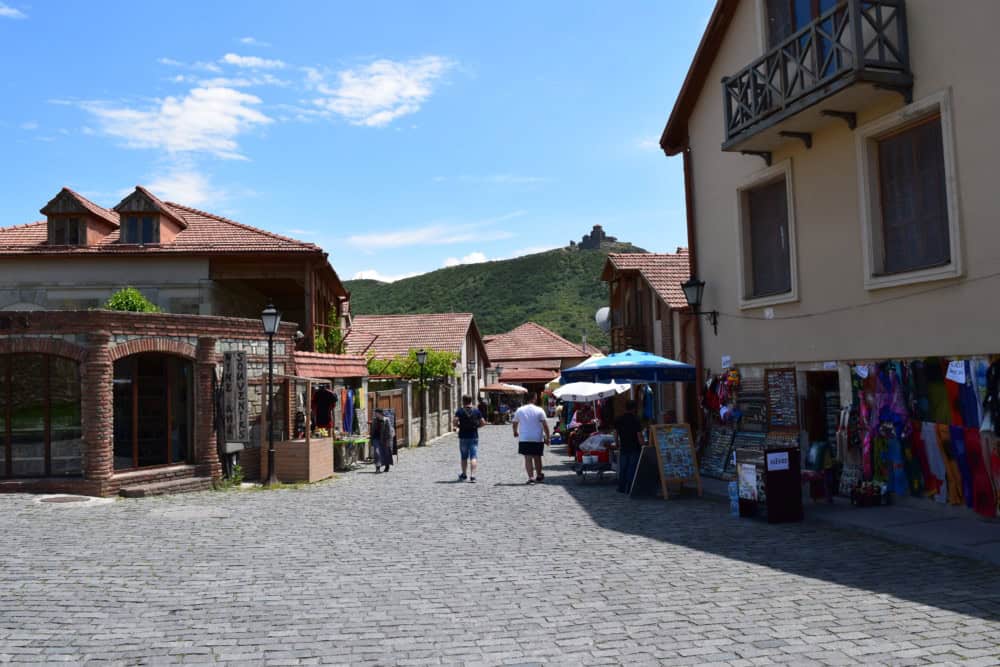
The old part of Mtskheta, particularly the area around the Svetitskhoveli Cathedral, has been beautifully restored. The streets are cobbled, and the traditional houses have been renovated, creating a charming and picturesque atmosphere. The old town is filled with souvenir stands, wine shops, and restaurants serving traditional Georgian food. A walk through these streets allows you to soak in the unique atmosphere of this ancient holy city. It is a pleasant place to spend a few hours exploring.
Shio-Mgvime Monastery
Located in a narrow limestone canyon a few kilometers from Mtskheta is the spectacular Shio-Mgvime Monastery. The monastic complex was founded in the 6th century by one of the Thirteen Assyrian Fathers, a monk named Shio. The oldest building is the cave where St. Shio lived as a hermit. The monastery grew into a major religious and cultural center. A visit to this remote and beautiful monastery is a popular excursion from Mtskheta, offering a glimpse into the ascetic traditions of early Georgian monasticism.

Traveling with Kids
Mtskheta is a great destination for a family day trip, especially from the nearby capital of Tbilisi. The city is small, pedestrian-friendly, and filled with a sense of history that can be exciting for children. The vast grounds of the Svetitskhoveli Cathedral provide plenty of open space for kids to run around in a safe environment. The stories and legends associated with the city’s history, such as the tale of Christ’s robe, can also capture a child’s imagination.
The surrounding area also offers opportunities for family-friendly activities. A trip up to the Jvari Monastery provides an adventurous feel with its stunning views. The nearby city of Tbilisi offers a much wider range of dedicated family attractions, including an amusement park and a large zoo, making a combined trip a great option. The combination of historical exploration in a small, manageable town and the proximity to the attractions of a major capital makes Mtskheta a well-rounded family destination.
Activities for Kids in Mtskheta
For families seeking memorable outings, Mtskheta offers unique cultural and historical experiences. An exploration of the ancient Svetitskhoveli Cathedral is the main event, while a trip up to the Jvari Monastery provides a thrilling sense of adventure with its spectacular views.
Exploring Svetitskhoveli Cathedral
A visit to the Svetitskhoveli Cathedral can be a fascinating experience for families. While it is a major religious site, its scale and history can be impressive for children. Kids can explore the large, walled courtyard that surrounds the cathedral. Inside the church, they can see the tombs of ancient kings and look at the colorful frescoes that tell biblical stories. The legend of the “Life-Giving Pillar” is a particularly interesting story to share with children. It is a hands-on way to experience history and architecture.
A Trip to Jvari Monastery
A trip up to the Jvari Monastery is a must for any family visiting Mtskheta. The monastery is located on a high, windy hilltop, which gives it a very adventurous feel. The main attraction is the breathtaking panoramic view of the confluence of the two rivers, the Mtkvari and the Aragvi, which have different colors. This is a great real-life geography lesson for kids. The small, ancient church itself is also a beautiful and peaceful place to visit.


Getting Around in Mtskheta
Navigating the historic town of Mtskheta is best done on foot. The town’s historic core is a small and largely pedestrianized area, and all of the main sights within the town are within a short and pleasant walking distance of each other. To reach the Jvari Monastery, which is located on a high hill on the other side of the river, a taxi is the most common option. For travel between Mtskheta and the capital city of Tbilisi, a variety of transport options are available, including buses, marshrutkas, and trains.
Exploring by Foot
The best way to experience the unique atmosphere of Mtskheta is by walking. The restored Old Town, with its cobbled streets and traditional houses, is a perfect area for a leisurely stroll. The main attraction, the Svetitskhoveli Cathedral, is located in the heart of this pedestrian-friendly zone. A walk through the town allows you to explore the many souvenir shops, wine cellars, and restaurants at your own pace. The beautiful riverbanks are also a great place for a peaceful walk.
Using Taxis
To get from the center of Mtskheta up to the Jvari Monastery, the most practical and common option is to take a taxi. There are always many taxi drivers waiting in the main square of Mtskheta who offer a return trip to the monastery for a fixed price. The drivers will wait for you while you explore the monastery and then take you back down to the town. This is a very convenient and affordable way to visit this iconic viewpoint.
How to Get to Mtskheta?
Mtskheta is located in central Georgia, just 20 kilometers north of the capital city, Tbilisi. Its close proximity to the capital makes it an extremely accessible and popular destination for a day trip. The main gateway to the country for international visitors is Tbilisi International Airport. From Tbilisi, Mtskheta can be easily reached by car, train, or by one of the frequent marshrutka (minivan) services.
Arriving by Air
The main international airport for the country is Tbilisi Shota Rustaveli International Airport (TBS). The airport is located on the eastern outskirts of the capital city, Tbilisi. From the airport, you would first need to travel to the Didube Bus Station in Tbilisi to catch a marshrutka to Mtskheta. This can be done by taking a city bus or a taxi. The entire journey from the airport to Mtskheta takes about one hour.
Driving to the City
Driving to Mtskheta from Tbilisi is very straightforward. You would take the main E60 highway that runs north from the capital. The drive is short and scenic, and it takes only about 30 minutes, depending on traffic. Having a car provides the most flexibility for exploring the sights around Mtskheta, such as the Jvari Monastery and the Shio-Mgvime Monastery. There are several large parking areas located in the center of Mtskheta, near the main cathedral.
Journey by Rail
Traveling from Tbilisi to Mtskheta by train is another convenient and scenic option. Georgian Railway operates trains that depart from the Central Railway Station in Tbilisi. The journey is short, taking only about 25 minutes. The railway station in Mtskheta is located a bit outside of the main historic center, so from the station, you would need to take a short taxi ride or walk for about 20 minutes to reach the Svetitskhoveli Cathedral.
Connecting by Marshrutka
The cheapest and most common way to get to Mtskheta from Tbilisi is by taking a marshrutka. These minivans depart every 20-30 minutes from the bustling Didube Bus Station in Tbilisi, which is located at a metro station of the same name. The journey takes about 30 minutes, and the cost is very low. The marshrutkas drop you off in the center of Mtskheta, within easy walking distance of all the main sights.
Driving Distances
The driving distance from 20 regional cities, according to Google Maps:
- Tbilisi, Georgia – 25 kilometers (0 h 30 min)
- Gori, Georgia – 65 kilometers (1 h 00 min)
- Vladikavkaz, Russia – 180 kilometers (3 h 00 min)
- Kutaisi, Georgia – 210 kilometers (3 h 00 min)
- Gyumri, Armenia – 235 kilometers (4 h 00 min)
- Grozny, Russia – 280 kilometers (4 h 30 min)
- Yerevan, Armenia – 300 kilometers (5 h 30 min)
- Batumi, Georgia – 380 kilometers (6 h 00 min)
- Baku, Azerbaijan – 600 kilometers (7 h 00 min)
- Trabzon, Turkey – 600 kilometers (9 h 00 min)
- Sochi, Russia – 620 kilometers (10 h 30 min)
- Krasnodar, Russia – 720 kilometers (10 h 30 min)
- Rostov-on-Don, Russia – 1080 kilometers (14 h 30 min)
- Tehran, Iran – 1180 kilometers (15 h 30 min)
- Ankara, Turkey – 1280 kilometers (16 h 30 min)
- Kyiv, Ukraine – 1480 kilometers (21 h 30 min)
- Istanbul, Turkey – 1730 kilometers (21 h 30 min)
- Moscow, Russia – 1930 kilometers (25 h 30 min)
- Warsaw, Poland – 2180 kilometers (28 h 00 min)
- Berlin, Germany – 2780 kilometers (31 h 30 min)
Looking to Explore more of Georgia and Europe?