Lunda, Södermanland | Exploring Sweden
Lunda is a historic parish in the province of Södermanland, with its geographical and spiritual heart centered around the location of its medieval church. This area, which is part of Nyköping Municipality, is not a modern town but a rural district defined by the ancient church site and the fertile Kiladalen valley. The parish is located approximately 20 kilometers southwest of the city of Nyköping. The story of Lunda is the story of the community that has existed around this central church location for nearly a thousand years. Its identity is therefore that of an ancient agricultural community.
The area surrounding the Lunda church site is quiet and rural, characterized by scattered farms and open fields. This provides a distinct contrast to the nearby locality of Jönåker, a railway community which later grew within the parish’s historical boundaries. Today, the Lunda area is known for its long history, which is most evident at the church’s location, and for its scenic countryside. It remains a sparsely populated agricultural district, valued for its tranquility and historical significance.

History of Lunda
The history of Lunda is that of a classic Swedish agricultural parish, with a story that stretches back to the early medieval period. For centuries, the parish church served as the spiritual, administrative, and social hub for a community of farmers and laborers. The area’s development was steady and slow, dictated by the cycles of agriculture. This changed dramatically with the arrival of the railway in the 20th century, which created the new settlement of Jönåker within the parish’s borders. This event shifted the area’s economic and demographic focus, and the parish system was eventually dissolved in favor of modern municipalities.
Medieval Origins and Church Foundation
The area that comprises Lunda parish has been settled for over a thousand years. The name Lunda is derived from the Old Norse word lundr, meaning “grove,” suggesting a pre-Christian sacred site may have existed here. The parish was formally established in the Middle Ages, with the construction of the first stone church in the 12th or 13th century. This church became the unquestioned center of life, and the parish became the primary administrative unit for both the church and the state. It was responsible for record-keeping and local governance for the surrounding farms and estates.
Agrarian Life and the Parish System
From the medieval period until the late 19th century, life in Lunda was defined by agriculture. The fertile soil of the Kiladalen valley made it a productive farming region. The population consisted mainly of tenant farmers who worked the land owned by the Crown, the church, or a few powerful local manors. The parish meeting was the main form of local government, where community issues were discussed and resolved. This agrarian way of life, with its distinct social structure and dependence on the land, remained the dominant feature of the area for hundreds of years.
The Shift to the Railway and Modernity
The great societal changes of the late 19th and early 20th centuries altered Lunda’s traditional structure forever. The construction of the railway line between Nyköping and Norrköping led to the establishment of a station within the parish. A new community, named Jönåker, quickly grew around this station. This new railway village became the commercial and population hub, attracting residents and businesses and shifting the focus away from the old church village.


Sights at Lunda
The sights in the Lunda parish are all connected to the history and landscape surrounding the central church location. The area does not have commercial tourist attractions but instead offers visitors a chance to see well-preserved historical landmarks and scenic landscapes. The primary point of interest is the ancient parish church itself and the Viking Age artifacts associated with it. The surrounding area is characterized by the fertile Kila valley and the modern locality of Jönåker.
Lunda Church
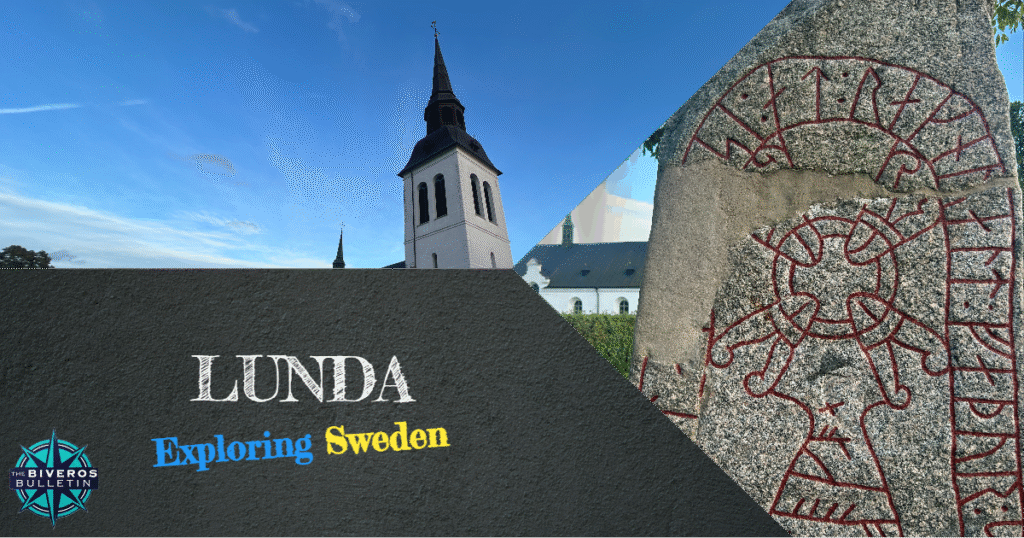
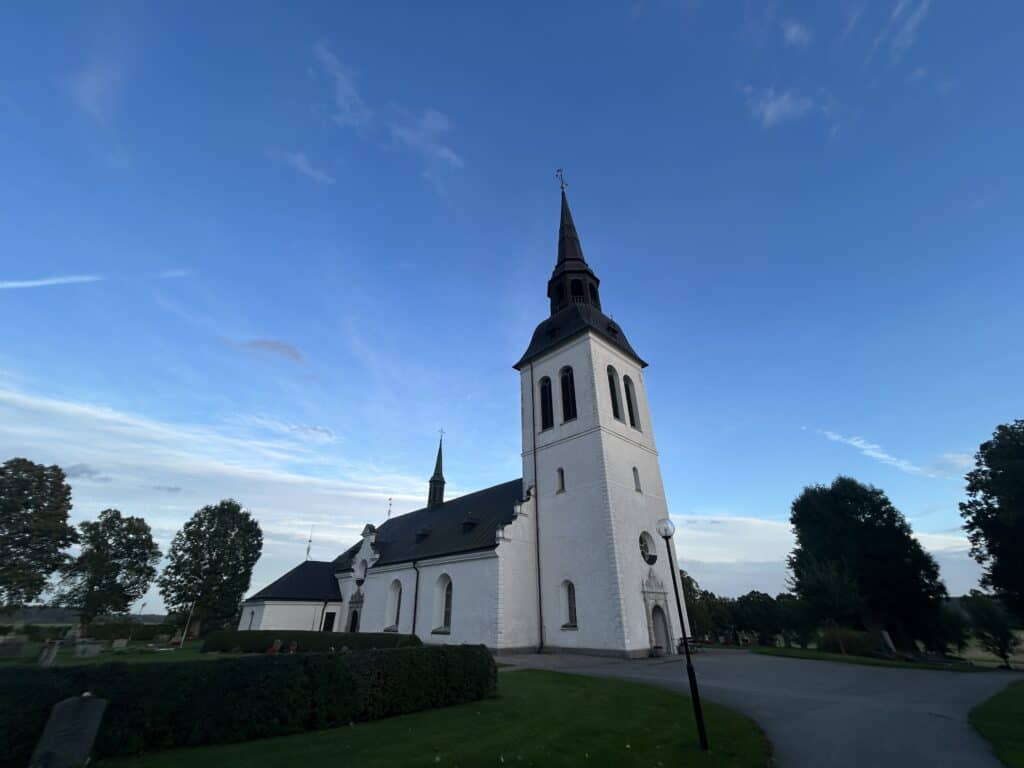
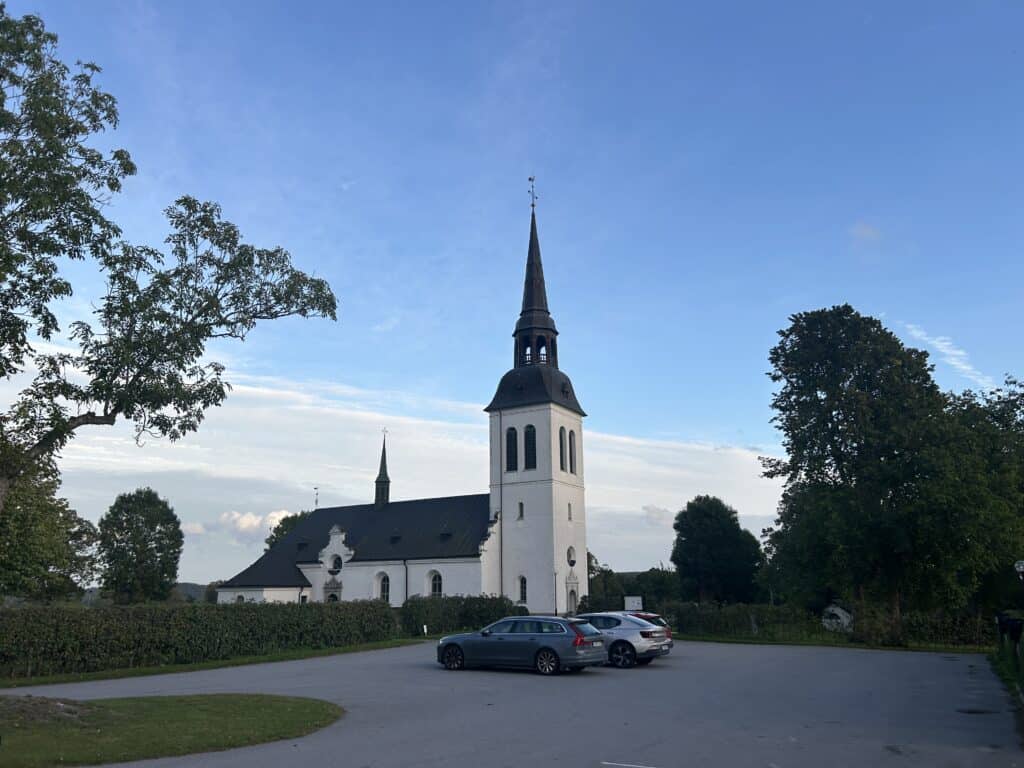
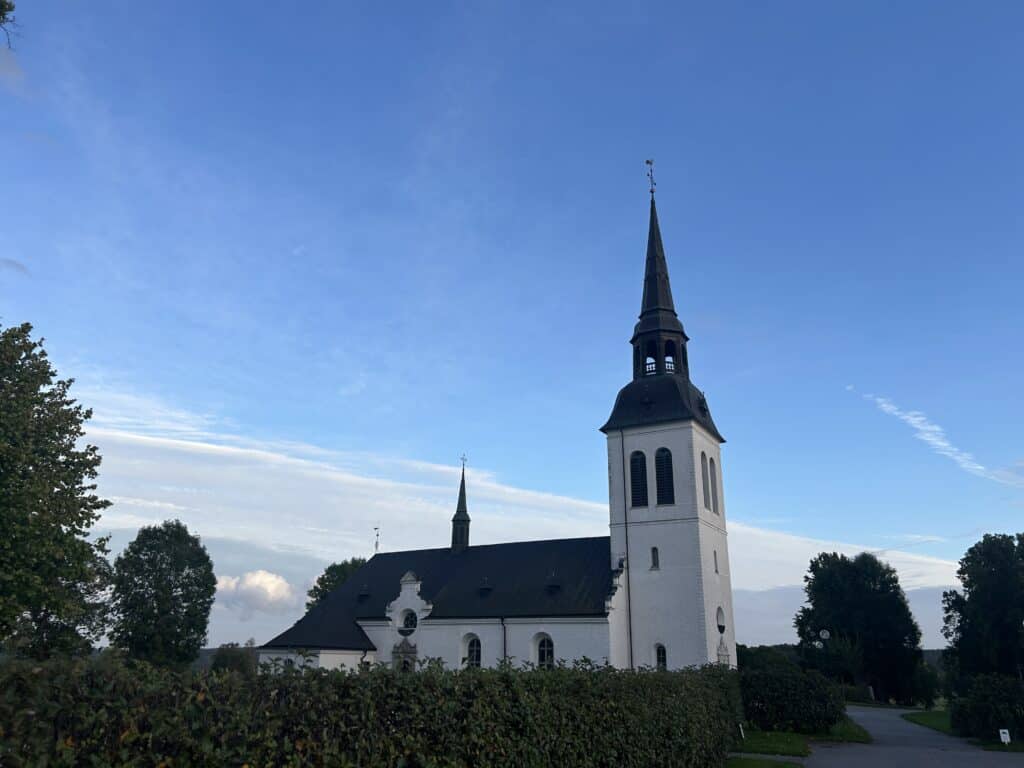
Lunda Church (Lunda kyrka) is the most significant historical building in the area. The church has medieval origins, with its oldest parts dating to the 12th or 13th century, though it was significantly rebuilt in the 1770s to its present form. The church is a traditional whitewashed stone building with a separate wooden bell tower, a characteristic feature of the region’s older churches. It is surrounded by a well-preserved cemetery with gravestones of local families from centuries past and stands today as the historical and spiritual heart of the old parish.
The Runic Inscription (Sö Fv1948;295)
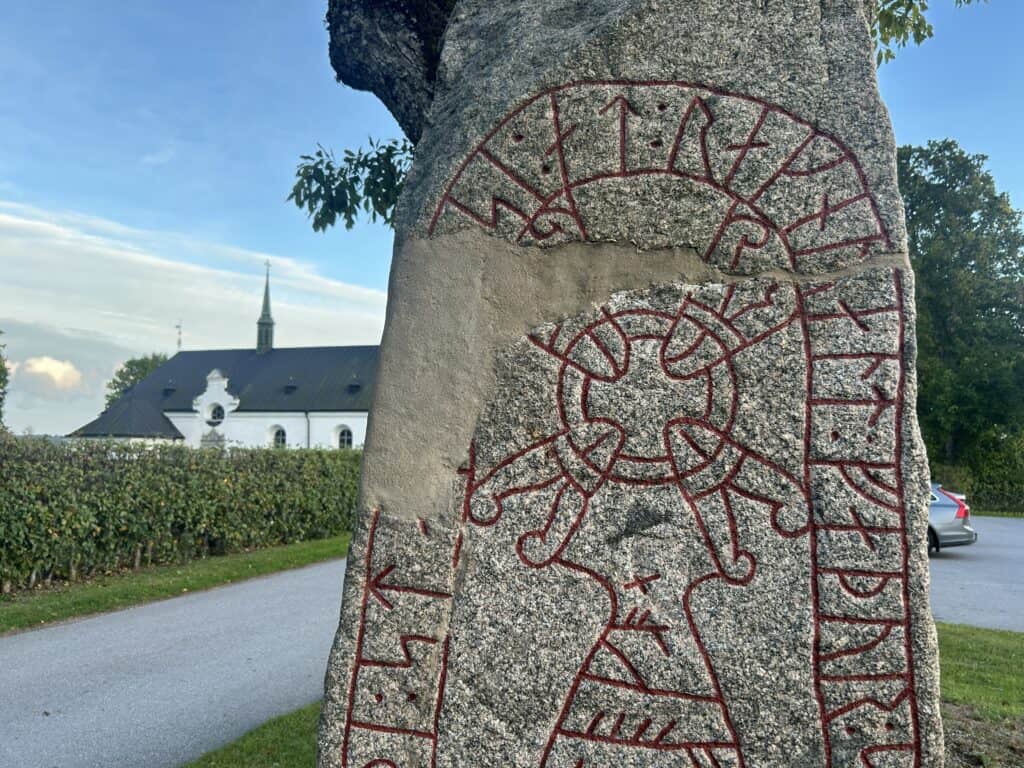
Another piece of Viking Age history can be found in the churchyard, the runestone fragment designated as Sö Fv1948;295. This inscription was discovered by chance in 1947 during renovation work beneath the church floor. The fragment is from a larger monument that was likely broken apart and reused as building material centuries after it was first raised. The surviving text is incomplete but reveals that a woman named Inga had the stone made. The recovered fragment has since been raised on a base and now stands outside the church walls for visitors to see.
The Jönåker Locality
The locality of Jönåker is the modern center of the area historically served by Lunda Church. The entire community is in itself a historical sight, representing the birth of a Swedish stationssamhälle (railway village) in the early 20th century. The layout of the streets and the location of the older buildings are a direct result of the railway’s construction. Jönåker has local services like a grocery store and a restaurant. A visit here offers a clear contrast between the old parish center at the church and the new center that was created by modern infrastructure.
The Kila Valley
The Lunda parish area is situated in the middle of the scenic Kiladalen, the valley of the Kilaån river. This valley is known for its open and fertile agricultural landscape. It is characterized by wide fields, meandering rivers, and groves of trees that dot the landscape. The valley is a beautiful area for a scenic drive or a bicycle tour on the network of small country roads. The open landscape provides a sense of space and tranquility and is fundamental to the rural character of the region.
The Old Riksettan Road
The historical main road between Stockholm and the south of Sweden, known as Riksettan, passes through the Lunda parish. This road was the primary artery for travel in Sweden for much of the 20th century, before the modern E4 motorway was built. While the motorway now bypasses the area, the old road remains as a local thoroughfare. Driving along this road offers a sense of what travel was like in a bygone era, passing by the old farms and landscapes that have been part of the parish for centuries.
Local Manors and Farms
The landscape of Lunda is dotted with several historical farms and manors that are reminders of its agricultural past. While these are private properties and not open to the public, their impressive buildings are visible from the local roads. These estates, some with histories stretching back to the medieval period, were the economic engines of the parish for centuries. Observing these large, well-preserved farmsteads provides insight into the social and economic structure of the old agrarian society that defined life around the church.

How to Get to Lunda?
Reaching the Lunda parish area is straightforward due to its location between Nyköping and Norrköping, directly adjacent to the E4 motorway. The primary destination for visitors exploring the historic parish is typically the church location. This site is easily accessible by car. For those using public transport, the area is served by regional buses that connect to the major train stations in the neighboring cities. This excellent connectivity makes the historical parish accessible despite its rural character.
The most common way to travel to the Lunda area is by car, which offers the most direct route. However, arriving by public transport is also a very viable option. The journey typically involves traveling to either Nyköping or Norrköping first, both of which are major transport hubs with train stations and long-distance bus terminals. From these cities, the final part of the journey is a short trip on a regional bus that passes through the parish, with a stop directly at the church.
Driving to the Lunda Area
The easiest way to get to Lunda is by car. The parish is located directly next to the E4 motorway. Travelers should take exit 129 (Jönåker), which leads directly into the heart of the Lunda parish. Lunda Church is located just a few minutes’ drive from the motorway exit. From Stockholm, the drive takes approximately 1 hour and 20 minutes. The direct access to the motorway makes the area an exceptionally easy destination to reach by road.
Reaching Lunda by Train
The closest major train stations to the Lunda parish area are in Nyköping and Norrköping. Both stations are located on the main southern railway line with frequent high-speed train services from Stockholm and Malmö. Upon arrival at either station, travelers can transfer to a regional bus for the final leg of the journey. The bus ride from Nyköping to the Lunda Church bus stop takes about 25 minutes.
Traveling to Lunda by Bus
Long-distance bus companies like Flixbus operate routes that may stop at the E4 motorway exit for Jönåker, in the center of the parish. Alternatively, these buses have frequent services to the main bus terminals in Nyköping and Norrköping. From these terminals, it is a simple transfer to the regional bus service operated by Sörmlandstrafiken. The bus route between Nyköping and Jönåker has a stop named “Lunda kyrka” for the church.
Flights and Airports
The closest airport to the Lunda area is Stockholm Skavsta Airport (NYO), located in Nyköping. The airport is a hub for low-cost airlines and is only about a 20-minute drive from Lunda Church. From the airport, travelers can take a taxi or a local bus into Nyköping and then transfer to a bus that passes through the parish. The largest international airport, Stockholm Arlanda (ARN), is approximately a two-hour drive away.
Driving Distances
The driving distance from 20 regional cities, according to Google Maps:
- Nyköping, Sweden – 18 kilometers (0 h 15 min)
- Oxelösund, Sweden – 28 kilometers (0 h 22 min)
- Norrköping, Sweden – 48 kilometers (0 h 35 min)
- Katrineholm, Sweden – 49 kilometers (0 h 45 min)
- Linköping, Sweden – 85 kilometers (0 h 55 min)
- Södertälje, Sweden – 85 kilometers (0 h 55 min)
- Eskilstuna, Sweden – 89 kilometers (1 h 15 min)
- Stockholm, Sweden – 118 kilometers (1 h 20 min)
- Örebro, Sweden – 122 kilometers (1 h 55 min)
- Västerås, Sweden – 134 kilometers (1 h 50 min)
- Uppsala, Sweden – 188 kilometers (2 h 5 min)
- Jönköping, Sweden – 235 kilometers (2 h 30 min)
- Kalmar, Sweden – 275 kilometers (3 h 15 min)
- Gävle, Sweden – 296 kilometers (3 h 5 min)
- Växjö, Sweden – 299 kilometers (3 h 15 min)
- Gothenburg, Sweden – 370 kilometers (3 h 55 min)
- Oslo, Norway – 404 kilometers (4 h 35 min)
- Helsingborg, Sweden – 462 kilometers (4 h 40 min)
- Malmö, Sweden – 513 kilometers (5 h 10 min)
- Copenhagen, Denmark – 555 kilometers (5 h 45 min)
Explore More of Södermanland and Sweden