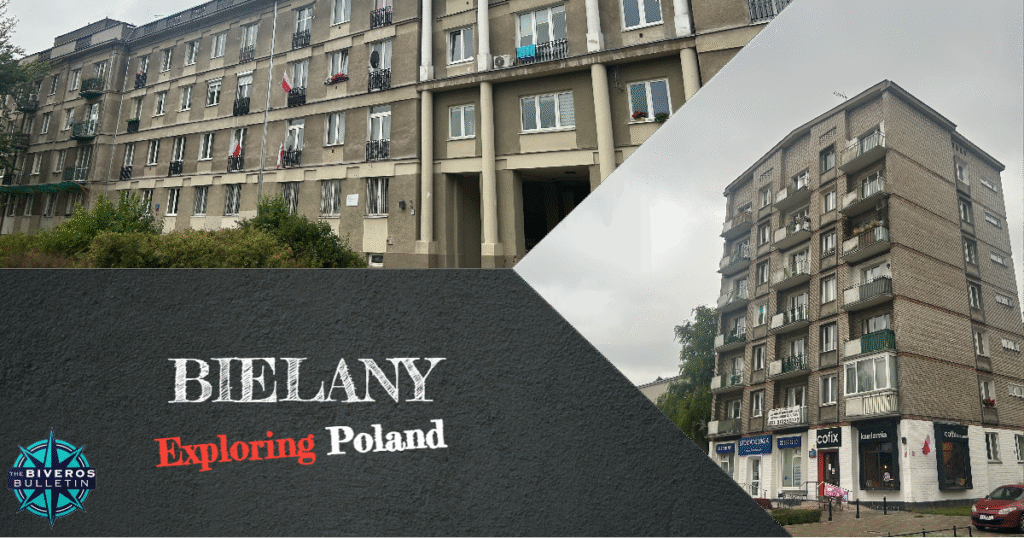
Bielany, Warsaw | Exploring Poland
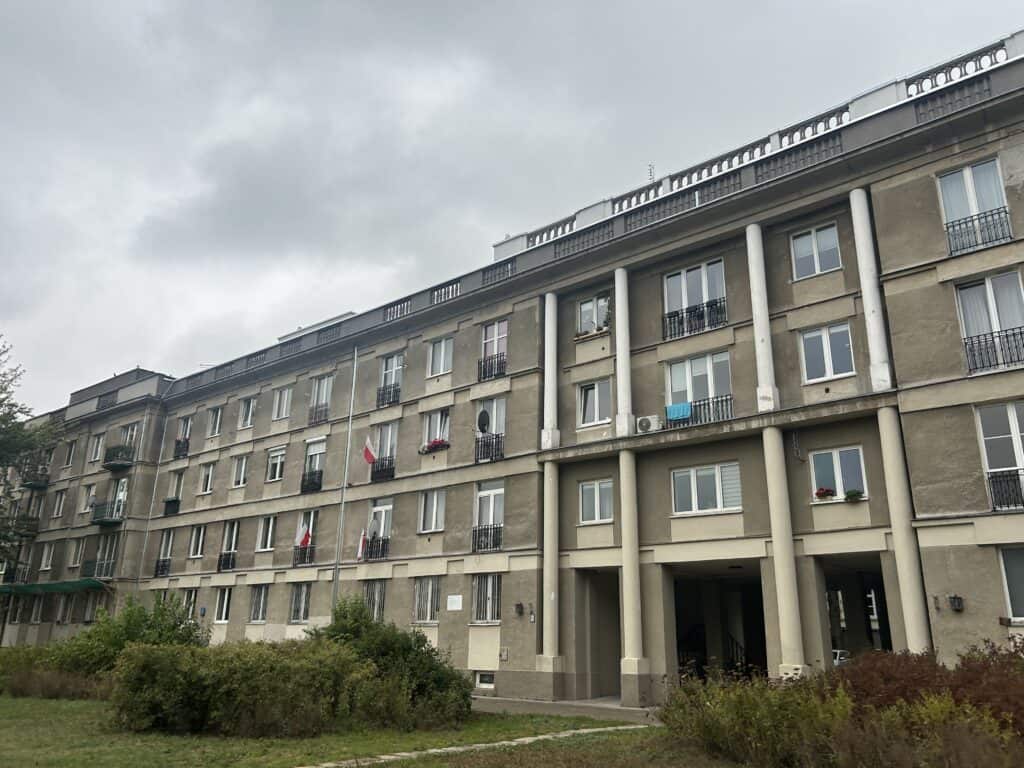
Bielany, with its official name Dzielnica Bielany m.st. Warszawy, is the northernmost district on the left bank of Warsaw, celebrated for its vast green spaces and tranquil residential character. Often called the “green lungs” of the capital, the district’s identity is dominated by the sprawling Las Bielański (Bielany Forest), a protected nature reserve. The district offers a unique blend of environments, from the charming pre-war streets of Stare Bielany (Old Bielany) to large, post-war housing estates and modern developments. Bielany is also a significant academic center, home to two major universities, which adds a youthful dynamic to its otherwise peaceful, suburban atmosphere, making it a perfect escape from the intensity of the city center.
Covering a large area of 32.34 square kilometers, Bielany borders the district of Żoliborz to the south and Bemowo to the west, with its long eastern boundary defined by the Vistula River. As of the end of 2023, Bielany had a population of around 132,700 residents. The district is composed of many distinct neighborhoods, including the historic core of Stare Bielany, the large housing estates of Wrzeciono and Młociny, and the industrial area around the Huta steelworks. This variety creates a diverse demographic, with a mix of families, students attending the UKSW and AWF universities, and older generations who have lived in the area for decades, creating a stable and multifaceted community.
History of Bielany
The history of Bielany is a journey from a secluded monastic forest to a large and diverse residential district of Warsaw. For centuries, the area was a remote woodland far outside the city walls. Its name and origin are tied to the 17th-century Camaldolese monks, whose white habits inspired the name Bielany. The area remained largely rural until the early 20th century, when it was gradually incorporated into the expanding city. The interwar period saw the first planned residential developments, but the district’s most significant growth occurred in the post-war era, when massive housing projects were built to accommodate Warsaw’s growing population.
The Camaldolese Hermitage
The recorded history of Bielany begins in the first half of the 17th century when King Władysław IV Vasa invited the Camaldolese monks to establish a hermitage in the forest north of Warsaw. The monks, known for their white habits, built a beautiful Baroque church and monastery complex. This hermitage, consecrated in 1643, became a popular destination for pilgrimages and outings for the residents of Warsaw. The forest and the monastic complex gave the area its name and its unique, spiritual character, which can still be felt in the historic parts of the Las Bielański nature reserve today.
Expansion in the 20th Century
Bielany was officially incorporated into the city of Warsaw in 1916, which marked the beginning of its urban development. In the 1920s and 1930s, the neighborhood of Stare Bielany was created, featuring modernist architecture with a focus on green spaces, in a style similar to the neighboring Żoliborz district. A pivotal moment in the district’s history was the establishment of the Central Institute of Physical Education in 1929, which later became the Józef Piłsudski University of Physical Education (AWF). This institution solidified Bielany’s reputation as a center for sports and education.
Post-War Residential Boom
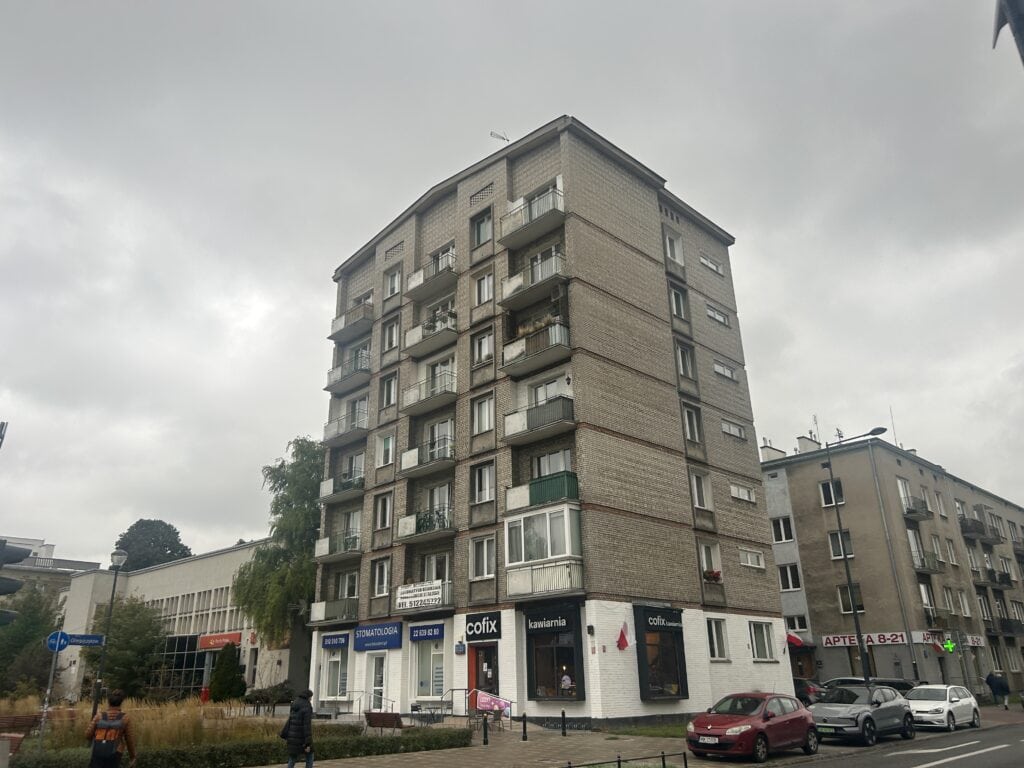
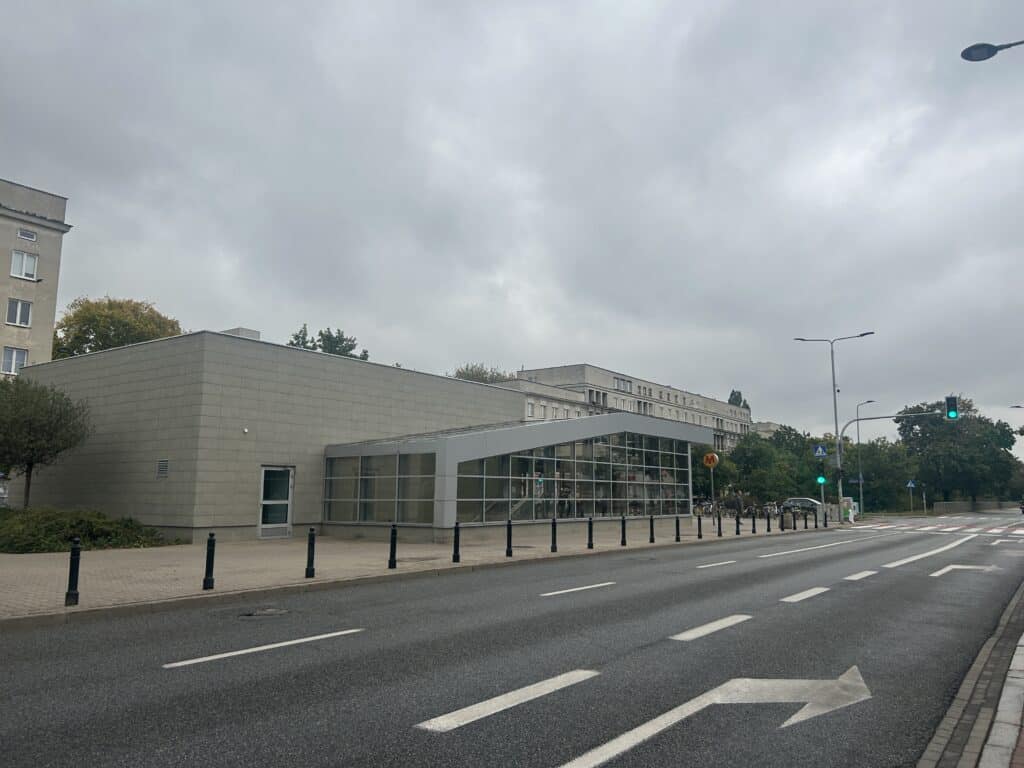
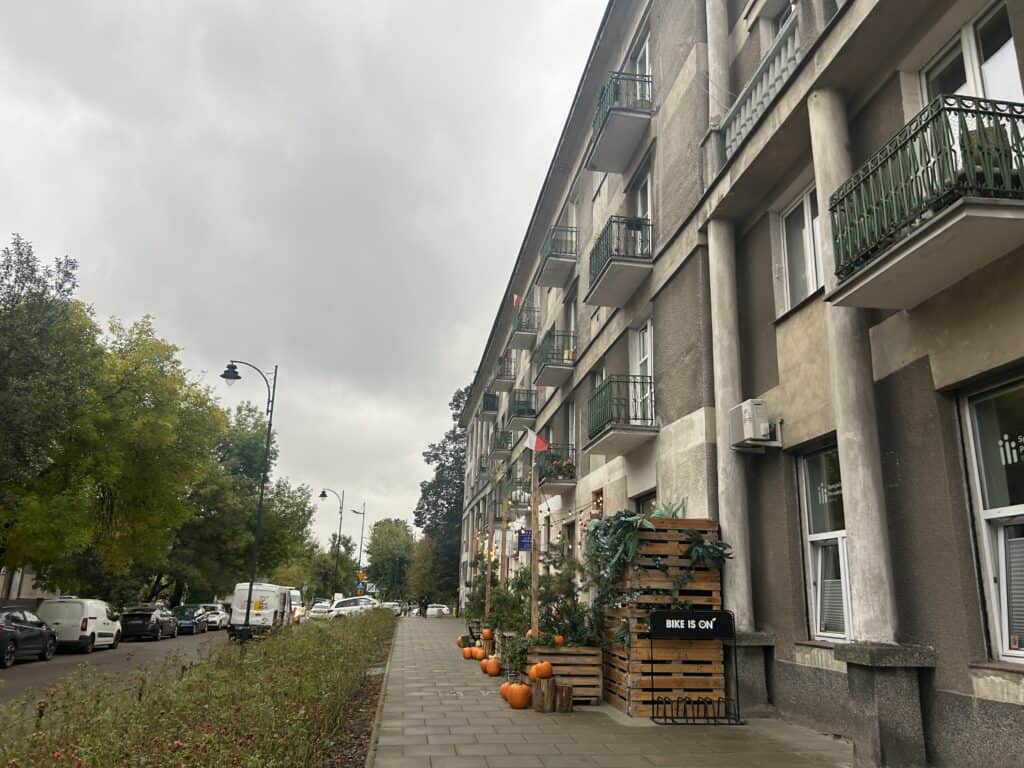
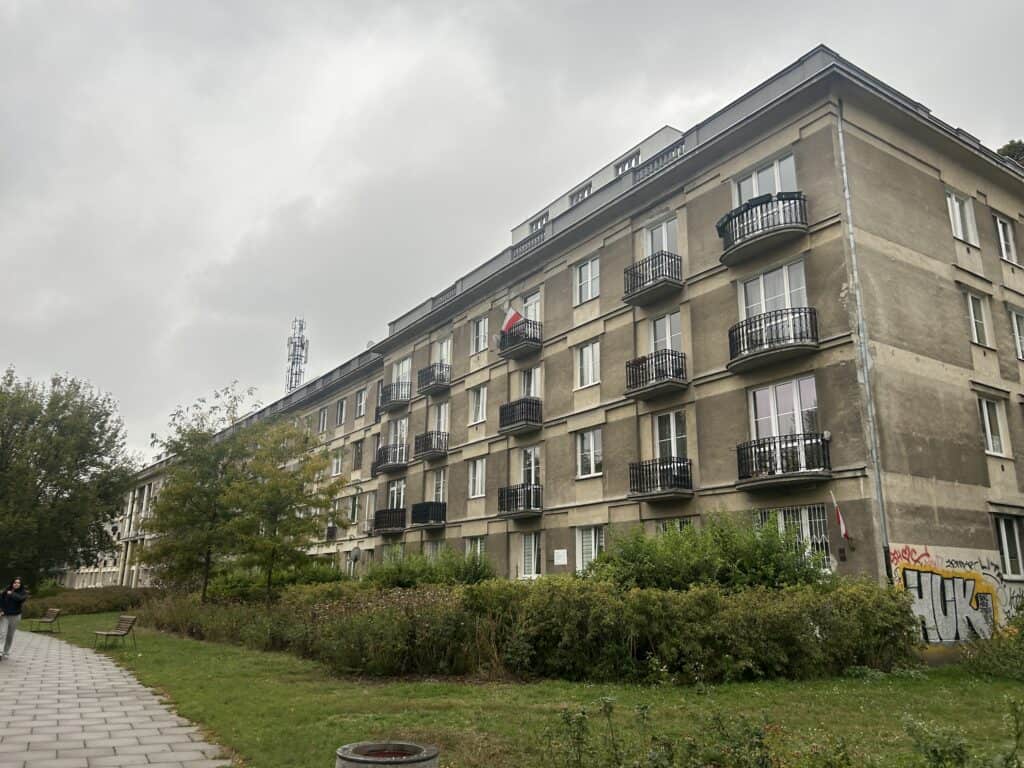
The period after World War II brought the most dramatic changes to Bielany. To address the severe housing shortage in the destroyed capital, massive housing estates were constructed across the district throughout the 1950s, 60s, and 70s. Neighborhoods such as Wrzeciono, Słodowiec, and Młociny were filled with large, prefabricated apartment blocks. The construction of the Huta Warszawa steelworks in the 1950s further fueled the district’s growth, creating a large industrial center. In recent decades, the extension of the M1 metro line to the Młociny terminus has further integrated Bielany with the rest of Warsaw.
Sights in Bielany
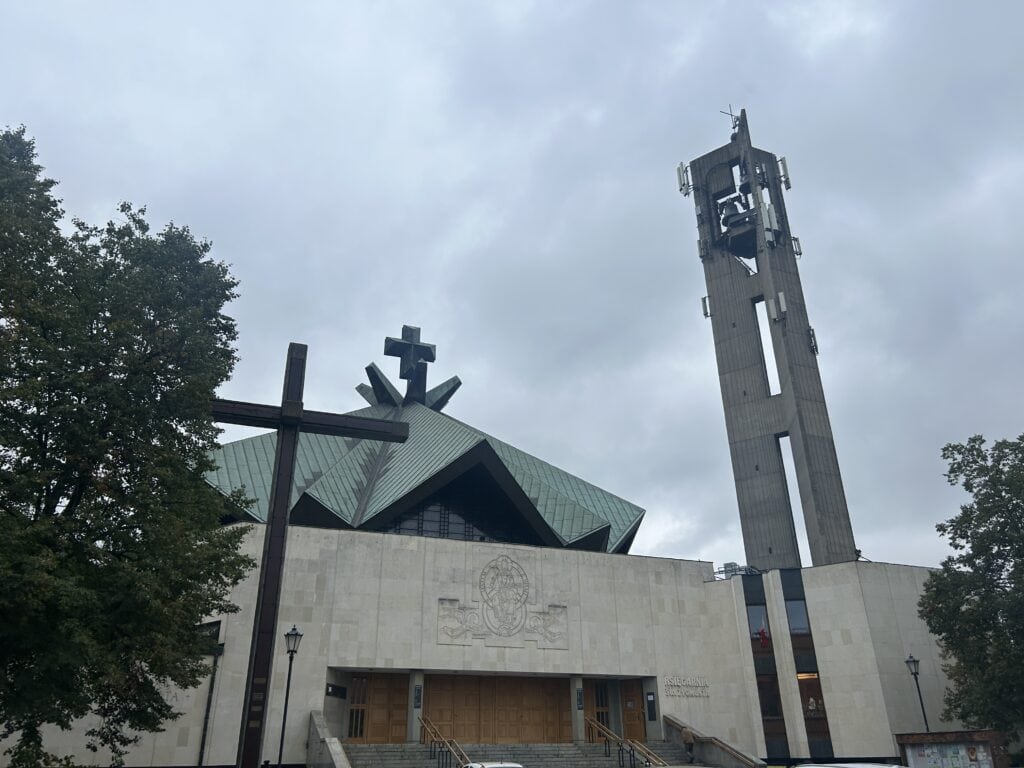
Bielany’s sights are predominantly linked to its natural landscapes, its religious history, and its unique 20th-century architectural heritage. The district offers a different kind of Warsaw experience, inviting visitors to escape the urban rush and immerse themselves in ancient forests, explore historic monastic grounds, and appreciate the legacy of Polish modernism. The main attraction is undoubtedly the nature itself, with Las Bielański serving as a vast playground for nature lovers. The district’s sights are spread out, encouraging longer walks or bike rides to fully appreciate the area’s tranquil and green character.
Beyond nature, Bielany has a number of important cultural and historical landmarks. The historical heart of the district, the Camaldolese monastery, provides a direct link to Poland’s Baroque past. The campuses of its universities are showcases of functionalist architecture, while the post-war housing estates tell the story of Warsaw’s socialist-era expansion. This mix of nature, history, and architecture makes Bielany a multifaceted destination for those looking to discover a quieter, greener side of the Polish capital.
Las Bielański
Las Bielański (Bielany Forest) is the undisputed natural heart of Bielany and one of the most ecologically valuable areas in Warsaw. It is a preserved remnant of the ancient Masovian primeval forest, covering an area of approximately 130 hectares. The forest is a protected nature reserve, home to ancient oak trees, diverse wildlife, and a network of scenic walking and cycling trails. It serves as a vital recreational area for the city, where people come to hike, run, and connect with nature. The historic Camaldolese Hermitage is located within the forest, adding a deep historical dimension to its natural beauty.
Camaldolese Church and Hermitage
Located deep within Las Bielański, the Camaldolese Church and Hermitage is the historical and spiritual origin of the district. The stunning Baroque church, dedicated to St. Mary, along with the surrounding hermitage buildings, was founded in the 17th century. The complex is situated on a high bluff, offering beautiful views of the surrounding forest. The interior of the church is richly decorated, and the hermitage includes small cottages where the monks once lived in seclusion. It remains an active parish and a place of pilgrimage, offering a peaceful and beautiful retreat.
University of Physical Education (AWF)
The campus of the Józef Piłsudski University of Physical Education (Akademia Wychowania Fizycznego, AWF) is a significant landmark in Bielany. Established in 1929, the university’s main buildings are a prime example of Polish modernist architecture from the interwar period. The campus was designed as a self-contained complex with academic buildings, sports halls, swimming pools, and student dormitories, all set within a park-like environment. It is one of the most important sports universities in Europe and has trained countless Polish Olympians and world champions.
Stare Bielany
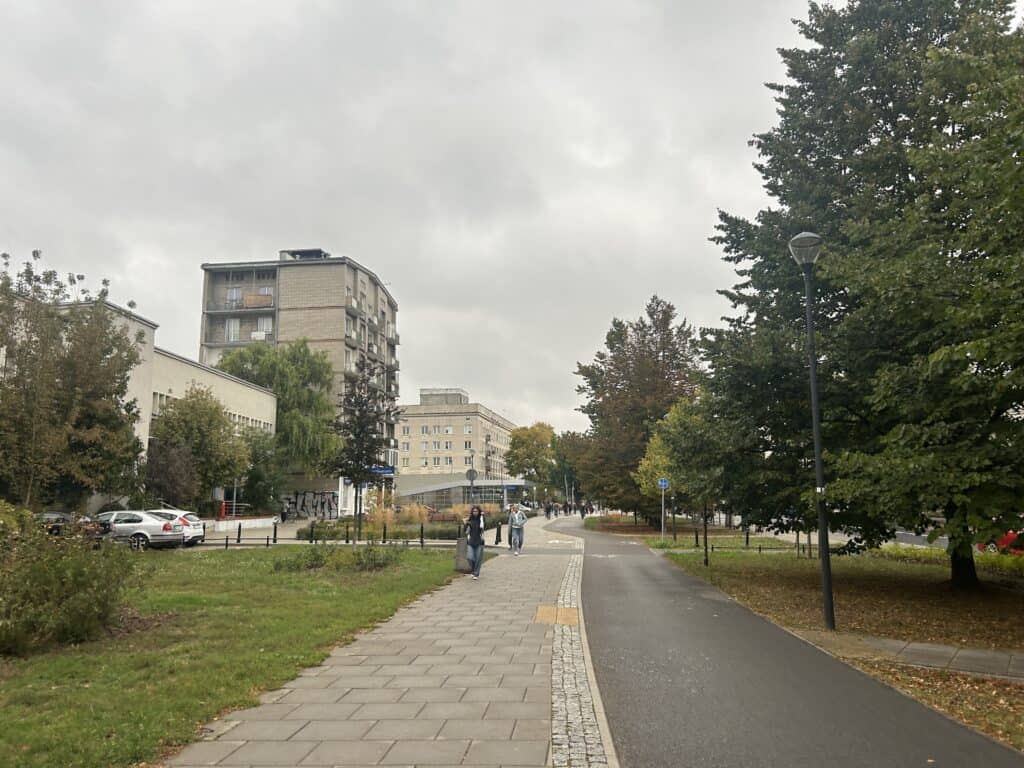
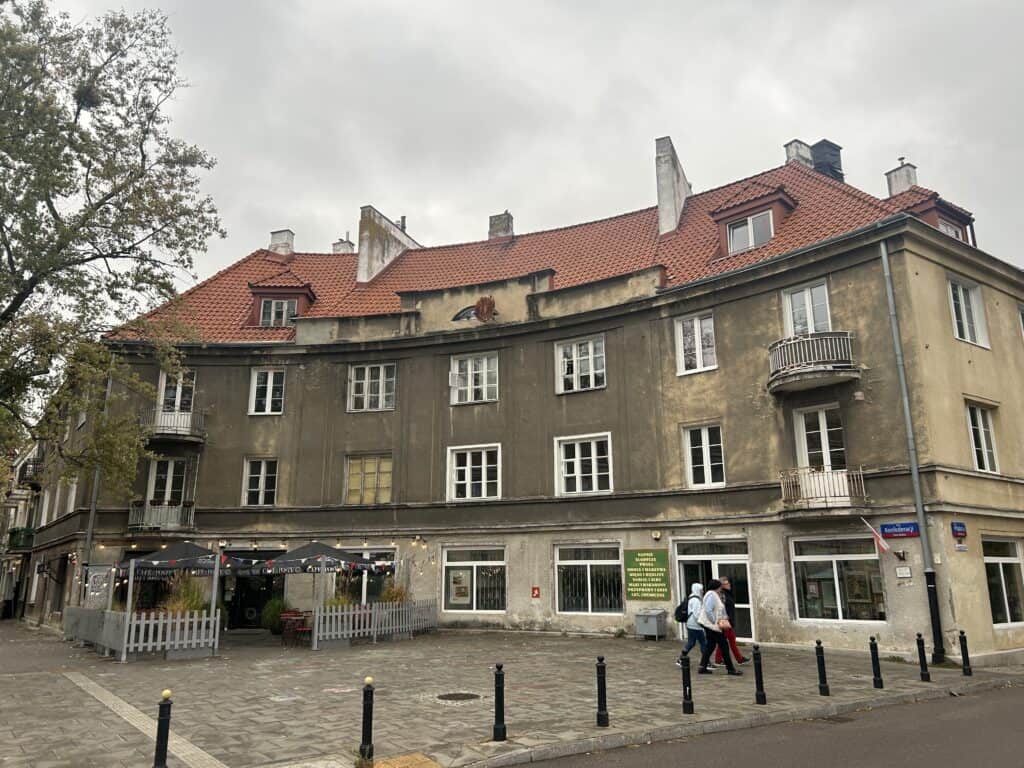
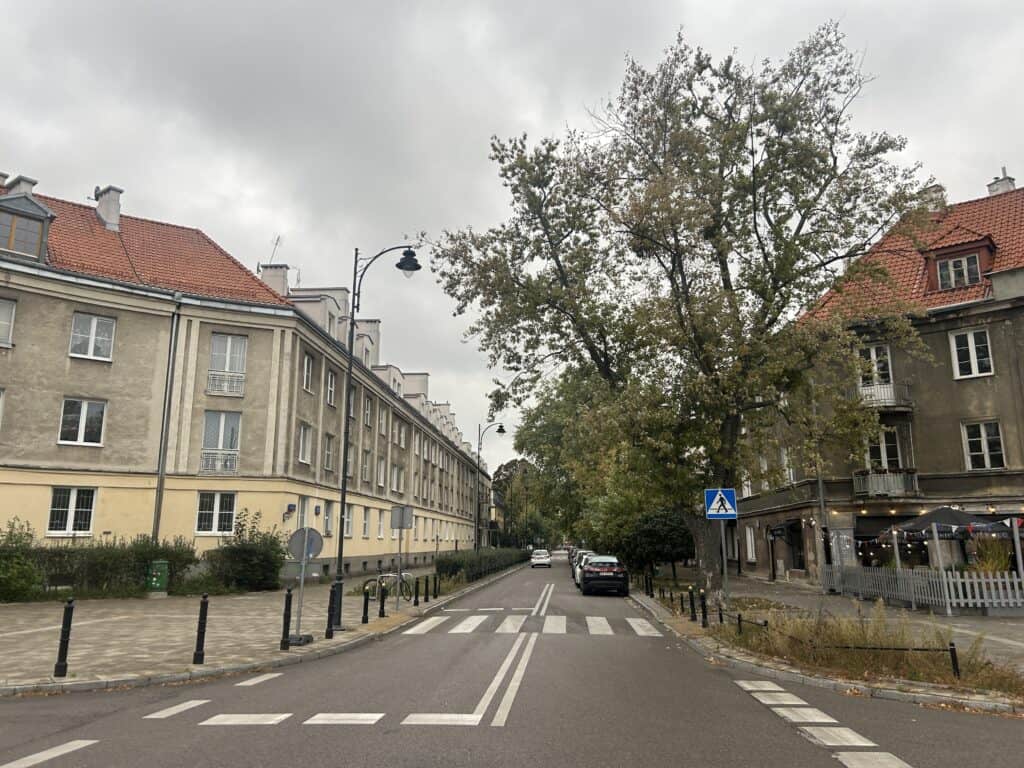
Stare Bielany (Old Bielany) is the oldest residential part of the district, developed in the 1920s and 1930s. This neighborhood is cherished for its tranquil, leafy streets and its well-preserved modernist architecture. The area was designed with a “garden city” philosophy, featuring low-rise apartment buildings and single-family homes set among abundant greenery and small squares. It stands in contrast to the large-scale housing estates in other parts of the district. Stare Bielany is a highly sought-after residential area, valued for its unique, peaceful atmosphere and historical character.
Cardinal Stefan Wyszyński University (UKSW)
The Cardinal Stefan Wyszyński University (Uniwersytet Kardynała Stefana Wyszyńskiego, UKSW) is another major academic institution located in Bielany. The university’s main campus is situated on the edge of Las Bielański, creating a beautiful and inspiring setting for study. UKSW is a public university with a focus on the humanities, social sciences, and theology. Its presence brings thousands of students to the district, contributing to the local economy and creating a youthful, intellectual atmosphere in the surrounding neighborhoods.
Młociński Park
Park Młociński is another large forest park located in the northwestern part of Bielany, bordering the Kampinos National Park. While slightly more wild than Las Bielański, it is also a popular destination for recreation. The park features numerous walking and cycling trails that wind through its wooded landscape, as well as open clearings that are perfect for picnics and outdoor games. It offers a more rustic nature experience and serves as a gateway to the even larger wilderness of the Kampinos forest, making it a key green space for northern Warsaw.
Galeria Młociny
Galeria Młociny is a large, modern shopping and entertainment center located next to the Młociny metro and bus terminus. Opened in 2019, it is one of the newest major shopping malls in Warsaw. The center offers a wide range of retail stores, a multi-screen cinema, a fitness club, and a diverse food court with numerous restaurants and cafes. Its strategic location at a major transport hub makes it easily accessible for residents of Bielany and the surrounding suburban towns. It has quickly become the main commercial and social hub for the northern part of the city.
Stawy Brustmana
Stawy Brustmana (Brustman Ponds) is a charming park located in the Wawrzyszew neighborhood of Bielany. The park is centered around a series of interconnected ponds, which are surrounded by walking paths, green lawns, and mature trees. It is a popular spot for local residents, especially families with children, who come to feed the ducks, relax by the water, and use the modern playground. The park provides a valuable and picturesque green space within the dense residential area of the Wawrzyszew housing estate.
Cmentarz Włoski
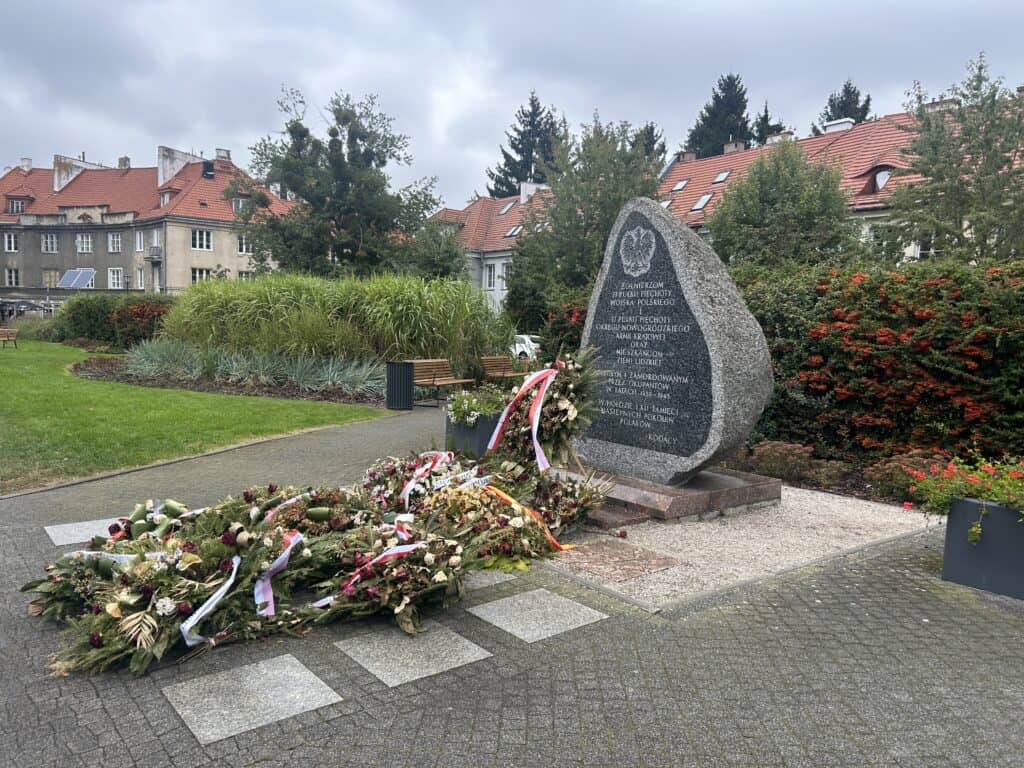
The Italian War Cemetery (Cmentarz Żołnierzy Włoskich) is a unique and solemn memorial located in Bielany. It is the final resting place for over 2,000 Italian soldiers who died in Poland during both World War I and World War II, mostly after being held in German prisoner-of-war camps. The cemetery is beautifully maintained by the Italian government and features rows of uniform white crosses set in a peaceful, wooded area. It is a poignant and often-overlooked site of remembrance, honoring the shared history between Poland and Italy.
Huta Warszawa
Huta Warszawa, now known as ArcelorMittal Warszawa, is a large steelworks that has been a dominant feature of Bielany’s landscape and economy since it was built in the 1950s. While it is an industrial facility, it is also a significant local landmark, representing the post-war industrialization of the capital. The steelworks led to the rapid development of the surrounding residential areas to house its thousands of workers. Although its production has been scaled down, the Huta remains an important part of the district’s identity and a symbol of its working-class heritage.
Getting Around in Bielany
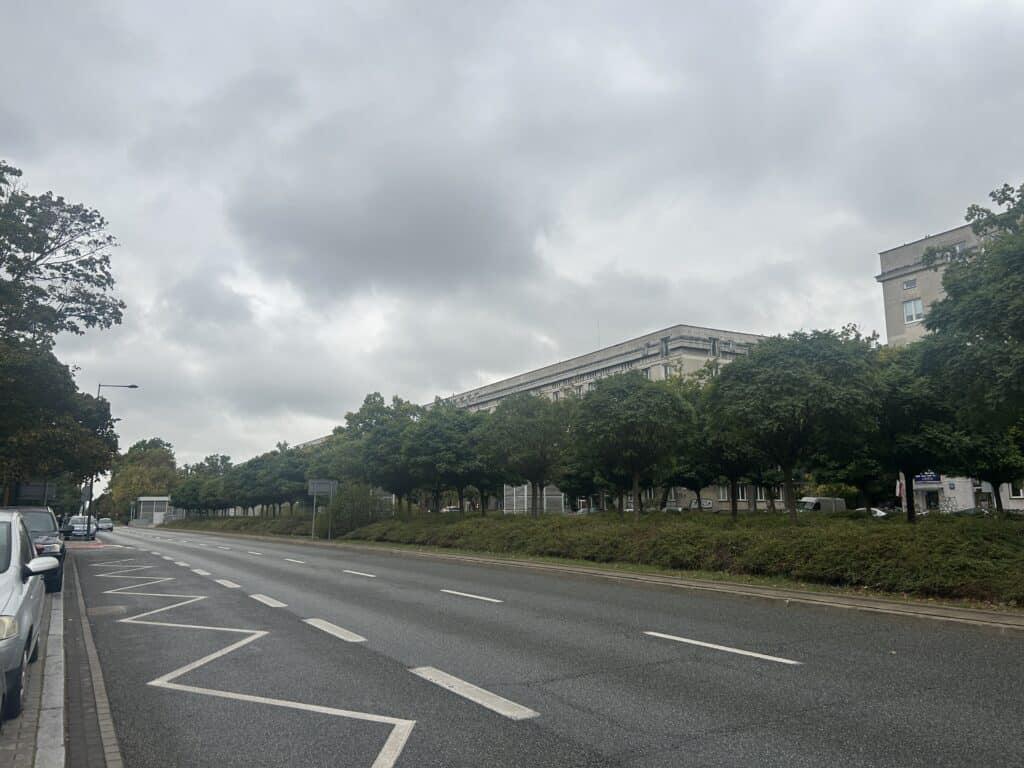
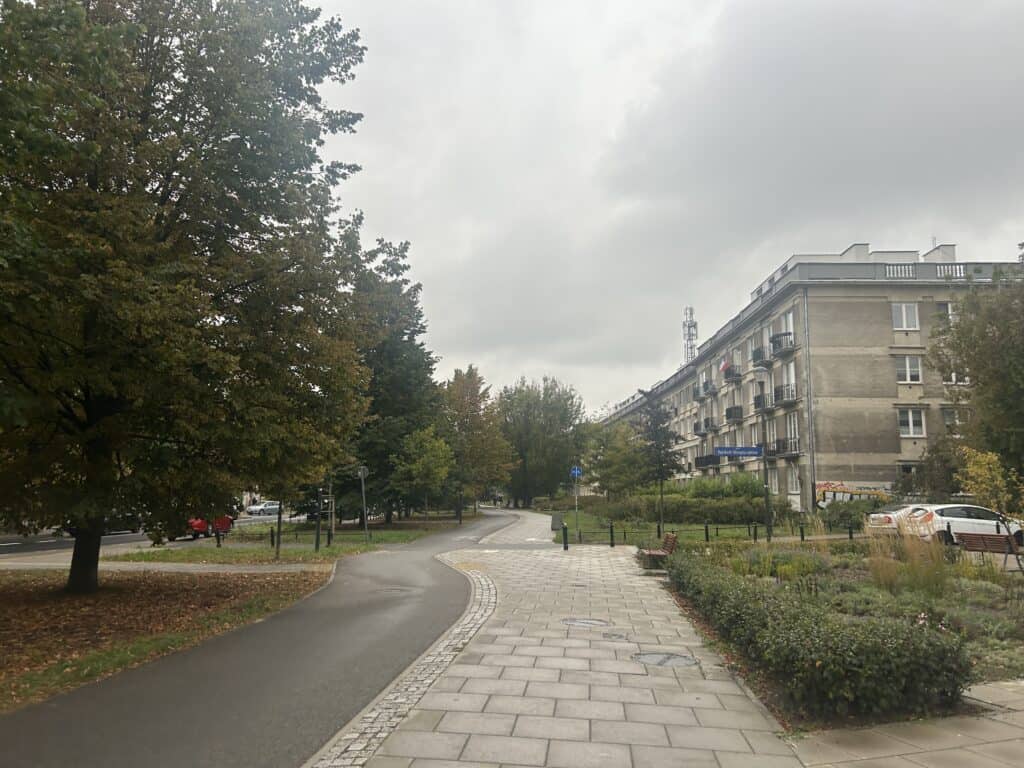
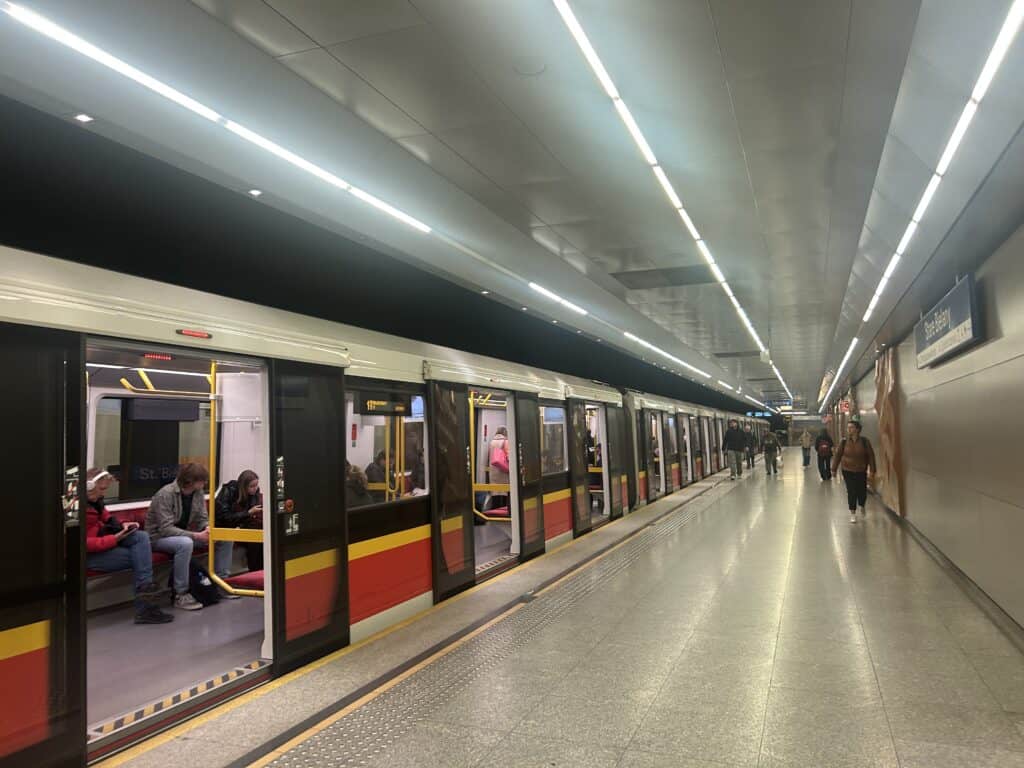
Navigating Bielany and connecting to the rest of Warsaw is simple and efficient, thanks to a well-developed public transport system, particularly the metro. The district serves as the northern terminus of the M1 metro line, which provides the fastest and most reliable link to the city center. This is supported by a comprehensive network of bus and tram routes that cover all of the district’s neighborhoods. Bielany’s vast green spaces and relatively flat terrain also make it an ideal district for cycling, with an ever-improving network of bike paths for both recreation and commuting.
The Northern Metro Terminus: Line M1
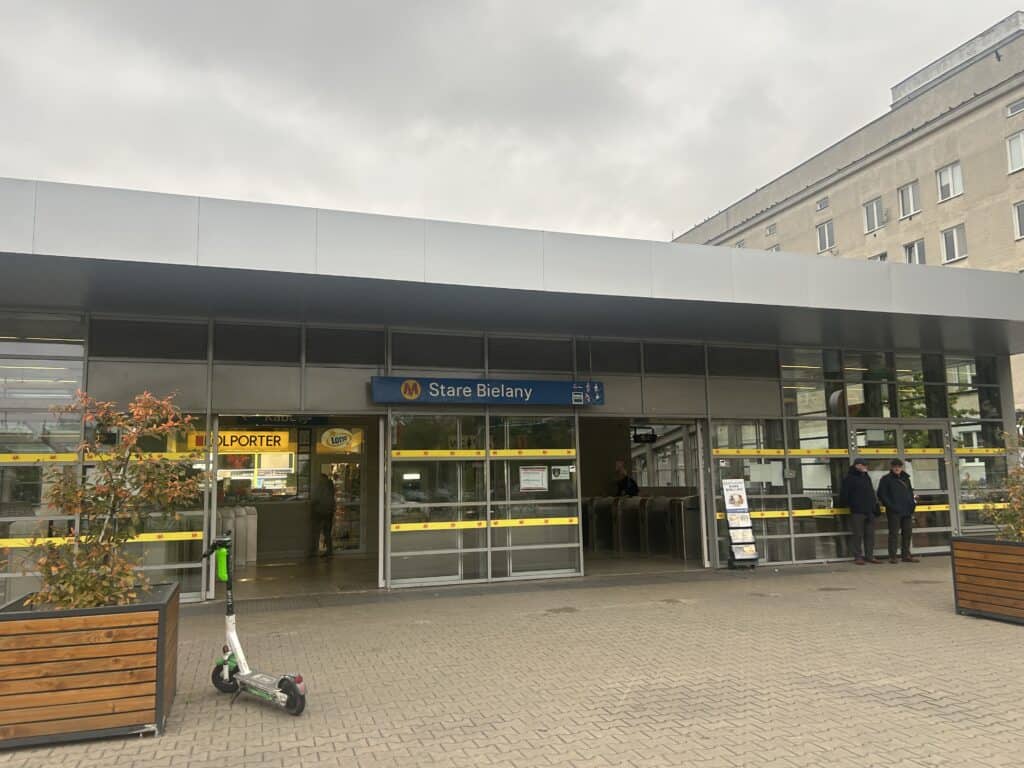
The M1 metro line is the most important transport artery for Bielany. The line runs the entire length of the district from south to north, with several stations including Słodowiec, Stare Bielany, Wawrzyszew, and the final station, Młociny. The Młociny station is a major modern transport interchange, integrating the metro with numerous city and suburban bus lines, as well as tram routes. The metro offers a direct journey to Plac Wilsona, the city center, and Ursynów in the south in under 30 minutes, making it the preferred mode of transport for most commuters.
An Extensive Tram and Bus Network
Where the metro does not reach, a dense network of tram and bus lines provides comprehensive coverage. Trams are particularly important for east-west travel within the district and for connecting Bielany with neighboring Bemowo and Żoliborz. Major bus routes run along the main thoroughfares, providing access to every residential estate and connecting to the metro stations. The Młociny interchange is the central hub for this network, with dozens of lines terminating there, including buses that serve the suburban towns northwest of Warsaw.
Cycling Through Forests and Riverbanks
Bielany is a cyclist’s paradise, offering some of the best and most scenic bike routes in Warsaw. The most popular is the path that runs along the Vistula River, providing a long, flat, and picturesque route south towards the city center and north towards the Kampinos National Park. The vast forests of Las Bielański and Park Młociński are crisscrossed with trails suitable for mountain biking and recreational riding. The city’s Veturilo bike-sharing system is also well-represented, with stations at metro stops and key intersections.
How to Get to Bielany?
Reaching Bielany from outside Warsaw is convenient, as the district is well-connected to the national road network and the city’s main transport hubs. Its location at the northern end of the M1 metro line makes the final leg of the journey from any central arrival point both fast and simple. Whether arriving by plane, train, or car, travelers will find that Bielany’s excellent public transport and strategic road connections make it an easily accessible part of the capital.
Access via Warsaw’s Airports
Travelers arriving by air at Warsaw Chopin Airport (WAW) can reach Bielany by taking a taxi or ride-sharing service, or more economically, by using public transport. The most common route is to take a train or bus to the city center and then transfer to the northbound M1 metro line, which goes directly to Bielany. For those arriving at Warsaw Modlin Airport (WMI), located to the northwest, access is even more direct. Shuttle buses from Modlin Airport often connect to the Młociny metro station, the northern terminus of the M1 line, providing a seamless entry point to the district.
Rail Connections to Central Warsaw
Most long-distance and international trains arrive at Warsaw’s central stations, Warszawa Centralna or Warszawa Wschodnia. From either of these stations, the easiest way to reach Bielany is to connect to the M1 metro line. From Warszawa Centralna, the Centrum metro station is a short walk away. The direct metro journey from the city center to Bielany’s main stations, like Stare Bielany or Młociny, takes approximately 15-20 minutes. The Warszawa Gdańska station, which is also on the M1 line, provides another convenient connection point.
Driving to Bielany via the S8 Expressway
Bielany is strategically located at the junction of several major national roads, making it very accessible by car. The S8 expressway, which forms the northern part of Warsaw’s ring road, runs directly through the district. This road provides a fast connection to the A2 motorway (for travel to Poznań and Berlin) and the S7 route (for travel to Gdańsk). The main north-south route is the Wisłostrada, which runs along the Vistula. While road access is excellent, traffic can be heavy, especially on the bridges crossing the river.
Long-Distance Bus and Local Transit Links
The main long-distance bus terminal in Warsaw is located at the Warszawa Zachodnia station, in the west of the city. From there, travelers can take a local city bus or suburban train to the city center and transfer to the M1 metro line to reach Bielany. A more direct but less frequent option is to find a local bus route that connects the western districts with the northern ones. The Młociny transport hub in Bielany also serves as a terminal for some regional bus lines, providing another point of entry.
Reaching Warsaw from Baltic Sea Ports
For those traveling to Poland by ferry from Scandinavia, the primary arrival ports are Gdańsk, Gdynia, and Świnoujście. From the Tri-City area (Gdańsk, Gdynia, Sopot), Warsaw is easily accessible via a fast and comfortable express train journey that takes approximately 3 hours. These trains arrive at Warsaw’s central stations, from where the M1 metro line provides a quick and direct connection to Bielany. This efficient rail link makes it easy to combine sea travel with a visit to the capital.
Driving Distances
The driving distance from 20 regional cities, according to Google Maps:
- Łomianki, Poland – 8 kilometers (0 h 15 min)
- Jabłonna, Poland – 11 kilometers (0 h 20 min)
- Legionowo, Poland – 15 kilometers (0 h 25 min)
- Nowy Dwór Mazowiecki, Poland – 28 kilometers (0 h 30 min)
- Ząbki, Poland – 18 kilometers (0 h 30 min)
- Łódź, Poland – 145 kilometers (1 h 45 min)
- Olsztyn, Poland – 215 kilometers (2 h 30 min)
- Poznań, Poland – 325 kilometers (3 h 15 min)
- Kraków, Poland – 310 kilometers (3 h 50 min)
- Gdańsk, Poland – 325 kilometers (3 h 10 min)
- Grodno, Belarus – 275 kilometers (4 h 00 min)
- Kaliningrad, Russia – 300 kilometers (4 h 20 min)
- Vilnius, Lithuania – 465 kilometers (5 h 30 min)
- Berlin, Germany – 570 kilometers (5 h 30 min)
- Prague, Czechia – 635 kilometers (6 h 20 min)
- Vienna, Austria – 700 kilometers (7 h 00 min)
- Copenhagen, Denmark – 1030 kilometers (10 h 20 min)
- Budapest, Hungary – 880 kilometers (8 h 10 min)
- Stockholm, Sweden – 1070 kilometers (12 h 30 min)
- Milan, Italy – 1500 kilometers (15 h 30 min)
Looking to Explore more of Poland and Europe?