
La Oliva, Fuerteventura | Exploring Spain
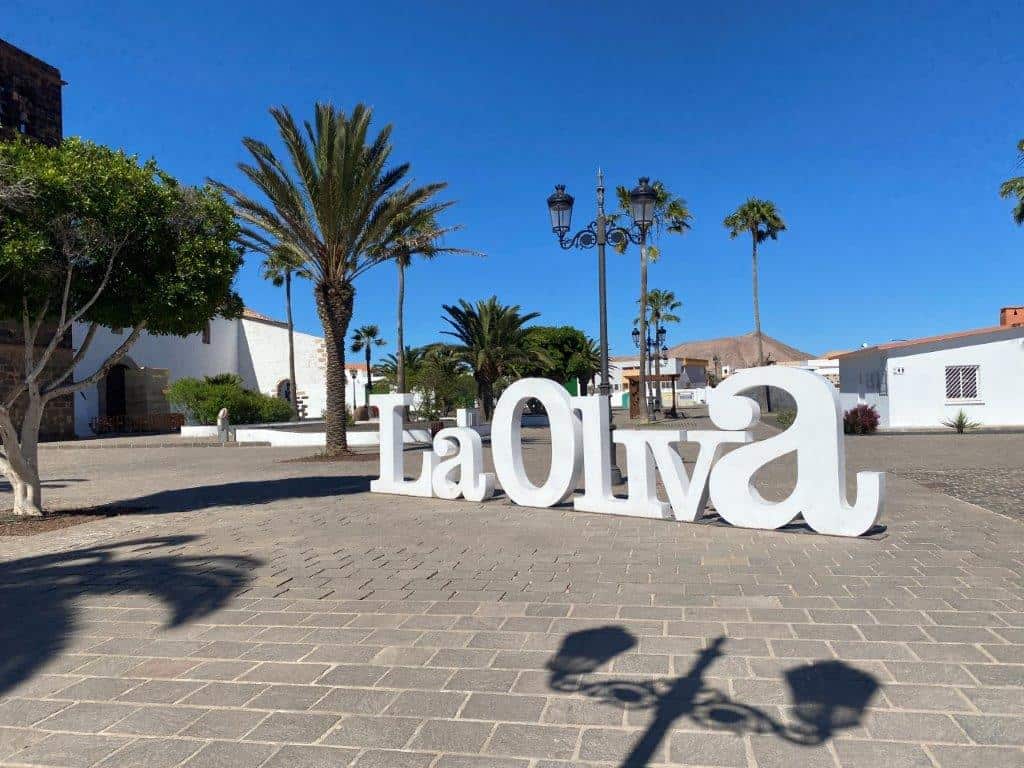
La Oliva is a town and a municipality located in the northern part of the island of Fuerteventura, one of the Canary Islands of Spain. The town itself is a quiet, historic settlement situated in a fertile plain in the island’s interior. With a population of around 1,500 inhabitants, the town of La Oliva stands in contrast to the bustling coastal resorts like Corralejo, which are part of its wider municipality. It is known for its well-preserved historic buildings, its traditional Canarian atmosphere, and its rich cultural heritage.
The identity of La Oliva is defined by its history as the political and military center of Fuerteventura for a significant period. From the 17th to the 19th century, the town was the seat of the island’s military governors, known as the “Coroneles.” This legacy is visible in the magnificent Casa de los Coroneles (House of the Colonels), which is the most important historical monument in the town. Today, La Oliva is a tranquil administrative and agricultural center that offers visitors a journey back in time, away from the busy tourist areas on the coast.

History of La Oliva
The history of La Oliva is a story of a small agricultural settlement that rose to become the capital of Fuerteventura. The area has been inhabited since the time of the Guanches, the aboriginal people of the Canary Islands. The modern town began to develop in the 16th century, but its most important period began in the 17th century when it became the political and military center of the island. The powerful military governors, the “Coroneles,” ruled the island from here for over a century, and their influence shaped the town’s development.
The Rise of a Capital
The town of La Oliva began to grow in importance in the 17th century. Its location in a fertile agricultural plain made it a prosperous area. In the early 18th century, the powerful Cabrera-Bethancourt family established their residence here and began their long rule as the military governors, or “Coroneles,” of the island. They effectively ruled Fuerteventura as their own private fiefdom. Their power was centered in La Oliva, which became the de facto capital of the island, a status it held until the mid-19th century.
The House of the Colonels
The most significant symbol of this era of power is the magnificent Casa de los Coroneles. This large, palace-like building was the residence and headquarters of the military governors. It is one of the most important and impressive historical buildings in all of the Canary Islands. The power of the “Coroneles” eventually declined, and in 1859, the capital of the island was officially moved to the coastal town of Puerto de Cabras (now Puerto del Rosario). This marked the end of La Oliva’s time as the political center of Fuerteventura.
A Modern Cultural Center
In the modern era, La Oliva has retained its historic and rural character. While the coastal parts of its municipality, like Corralejo, have been transformed by tourism, the town of La Oliva has been preserved. The magnificent Casa de los Coroneles has been beautifully restored and is now a major cultural center and art gallery. The town continues to be the administrative seat of the municipality, and it is a center for the preservation of the traditional culture and history of northern Fuerteventura.
Sights in La Oliva
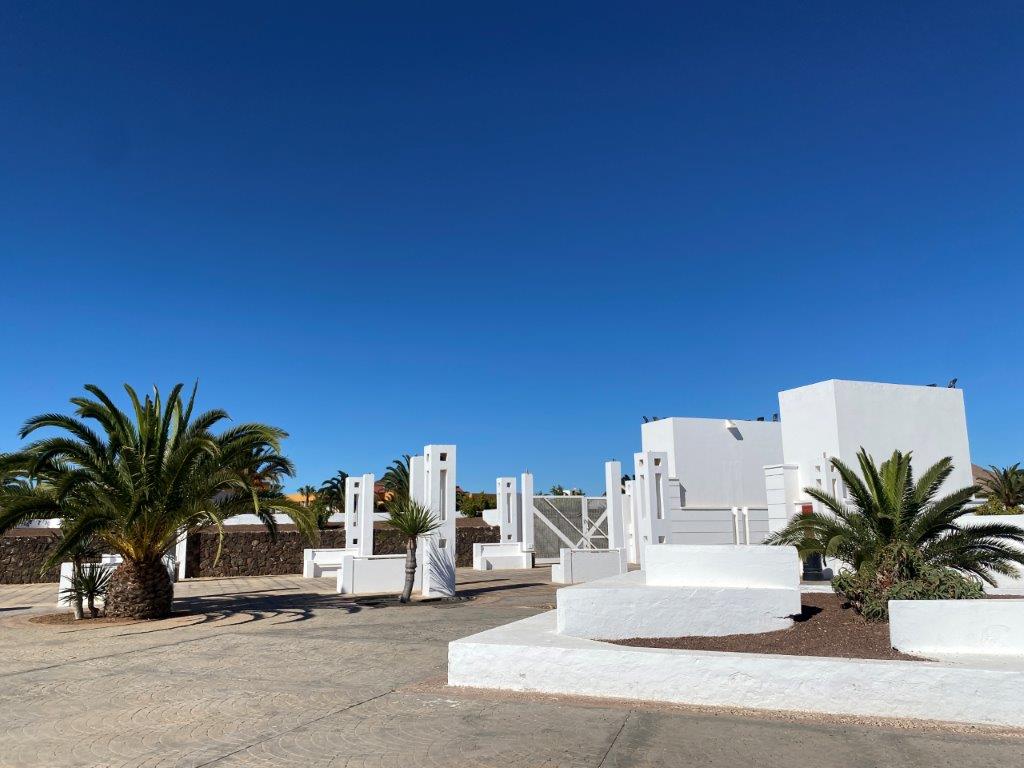
The sights in La Oliva are centered around its rich collection of historical and cultural monuments. The main attraction is the magnificent Casa de los Coroneles, a testament to the town’s past as the island’s capital. The historic Church of Our Lady of Candelaria is another key landmark, with its distinctive square bell tower. For those interested in traditional Canarian culture, the Centro de Arte Canario “Casa Mané” showcases a superb collection of modern art. A walk through the tranquil streets of the town reveals a charming and authentic Canarian atmosphere.
Casa de los Coroneles (House of the Colonels)
The Casa de los Coroneles is the most important historical monument in La Oliva and one of the most significant in all of the Canary Islands. This large, palace-like building was the residence of the military governors who ruled the island from the 17th to the 19th century. The building is known for its long facade with numerous wooden balconies. It has been beautifully restored and now serves as a cultural center and art gallery, hosting a variety of temporary exhibitions. A visit provides a fascinating look into the feudal history of the island.
Church of Our Lady of Candelaria
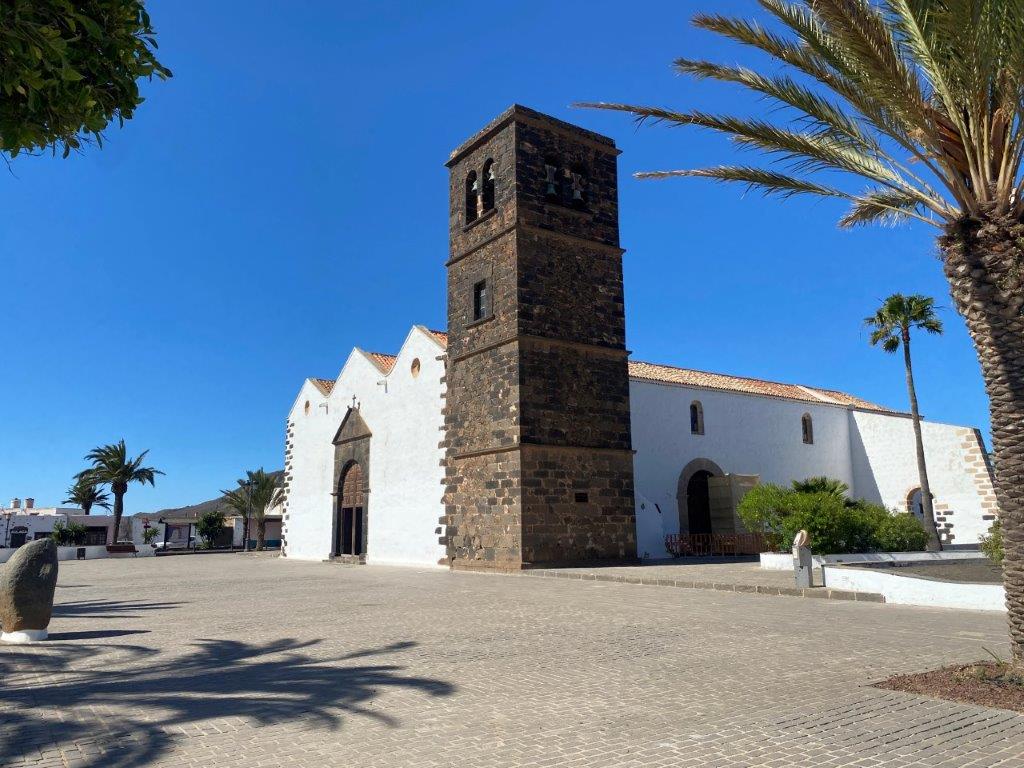
The Iglesia de Nuestra Señora de la Candelaria is the main church of La Oliva. The beautiful, whitewashed church was built in the 18th century. Its most distinctive feature is its square bell tower, which is a common feature of Canarian religious architecture. The church has a beautiful interior with a magnificent Baroque altarpiece and a painting by the famous local artist Juan de Miranda. The church is the spiritual heart of the town and a fine example of traditional island architecture.
Centro de Arte Canario “Casa Mané”
The Centro de Arte Canario “Casa Mané” is a superb modern art gallery located in a beautifully restored historic building in La Oliva. The gallery showcases a fantastic collection of works by prominent Canarian artists from the 20th century to the present day. The collection was established by Manuel Delgado, known as Mané. In addition to the indoor galleries, there is also a beautiful sculpture garden. It is an essential visit for anyone interested in the modern art of the Canary Islands.
Casa del Capellán
The Casa del Capellán, or the Chaplain’s House, is another of the historic buildings in the center of La Oliva. This traditional Canarian house is known for its beautiful stone facade. The building has been restored and now houses a small exhibition space that is often used for local art and craft exhibitions. It is another example of the rich architectural heritage of the town.

Traveling with Kids
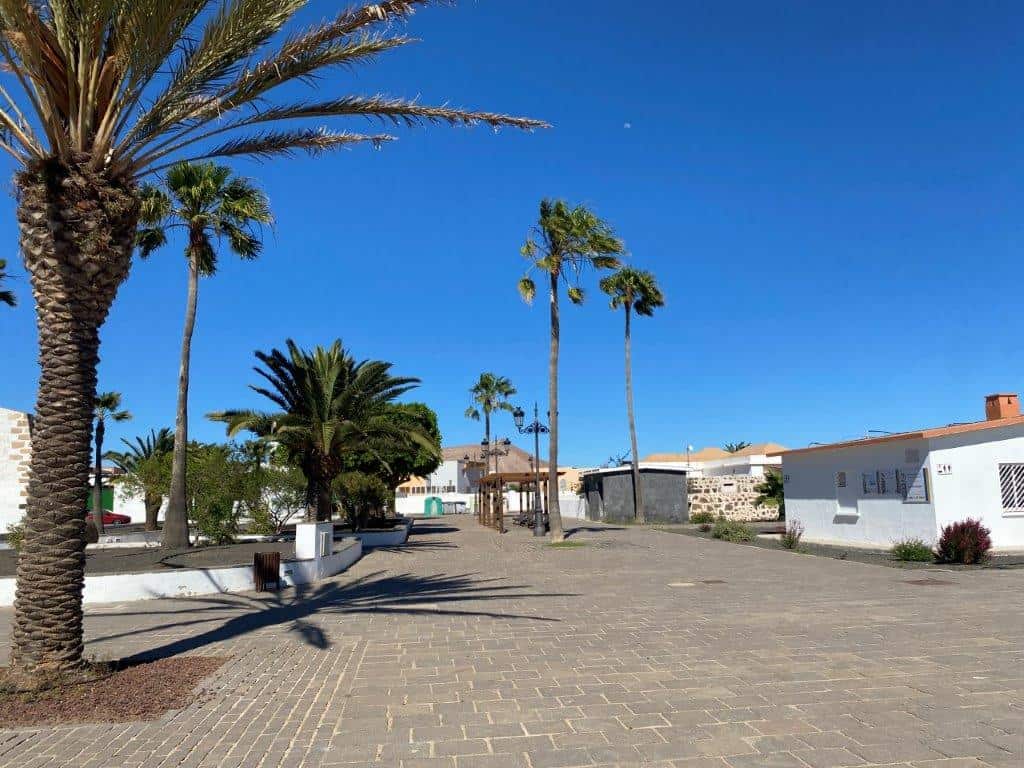
The town of La Oliva offers a peaceful and educational experience for families with children. While it does not have the large-scale attractions of the coastal resorts, its historic buildings and museums can be interesting for older children. The vast, open spaces of the surrounding countryside are also great for a family walk or a bike ride. The town provides a glimpse into a more traditional and authentic side of Fuerteventura, away from the busy beaches.
The main attractions for families in the wider municipality of La Oliva are located in the coastal resort of Corralejo. This includes the Acua Water Park and the magnificent sand dunes of the Corralejo Natural Park. A visit to the historic town of La Oliva can be easily combined with a trip to these more classic family-friendly attractions on the coast, making for a varied and well-rounded family day out.
Getting Around in La Oliva
Navigating the town of La Oliva is best done on foot. The town is small and compact, and all of its main sights are located within a short and pleasant walking distance of each other. For travel to other parts of the municipality, such as the coastal resort of Corralejo, and to the rest of the island, the local bus system provides a convenient and affordable option. A car is also a very practical way to explore the island’s many sights.
Exploring by Foot
The historic center of La Oliva is very walkable. All the main sights, including the Casa de los Coroneles and the main church, are located in a compact area. A walk through the tranquil streets is the best way to appreciate the town’s unique architectural heritage and its peaceful, traditional atmosphere.
Using Local Buses
The public bus system on Fuerteventura is operated by the company Tiadhe. The town of La Oliva is well-served by this network. There are regular and reliable bus services that connect La Oliva with the capital city, Puerto del Rosario, and with the major resort town of Corralejo. The bus is an affordable and convenient way to get around the northern part of the island.
How to Get to La Oliva?
La Oliva is located in the northern part of the island of Fuerteventura in the Canary Islands. The main gateway to the island for international visitors is Fuerteventura Airport (FUE). From the airport and the capital city, Puerto del Rosario, the town of La Oliva is easily accessible by car or by the public bus service. The town is located on the main road that connects the capital with the popular resort of Corralejo and the village of El Cotillo.
Arriving by Air
The main airport on the island is Fuerteventura Airport (FUE), also known as El Matorral Airport. The airport is located near the capital city, Puerto del Rosario. It is served by numerous airlines, with direct scheduled and charter flights from many cities all over Europe. From the airport, the drive to La Oliva takes about 30 minutes. There are no direct public buses from the airport to La Oliva, so a transfer is required.
Driving into the Town
Driving to La Oliva is very straightforward. From the airport, you would take the main FV-2 road north towards the capital, Puerto del Rosario. You would then take the FV-1 and then the FV-10 road, which is the main road that leads directly to La Oliva. The roads are modern and in excellent condition. A car is a very convenient way to explore the many other attractions in the northern part of the island.
Connecting by Bus
The public bus system on Fuerteventura is operated by the company Tiadhe. To get to La Oliva from the airport by bus, you must first take the Route 3 bus to the main bus station in the capital, Puerto del Rosario. From there, you can connect to the Route 7 bus service, which runs from Puerto del Rosario to El Cotillo via La Oliva. The total journey time by bus is over an hour, including the transfer.
Arriving by Ferry
Fuerteventura has three main ferry ports: Corralejo in the north, Puerto del Rosario in the center, and Morro Jable in the south. The ports of Puerto del Rosario and Morro Jable have ferry connections with the neighboring islands of Gran Canaria and Tenerife. The port of Corralejo has a very frequent ferry connection with Playa Blanca on the island of Lanzarote. From any of these ports, you can then continue your journey to La Oliva by car or by the local bus network.
Driving Distances
The driving distance from 20 regional places, according to Google Maps:
- Villaverde, Fuerteventura – 4 kilometers (0 h 05 min)
- Lajares, Fuerteventura – 7 kilometers (0 h 10 min)
- Tindaya, Fuerteventura – 10 kilometers (0 h 15 min)
- Corralejo, Fuerteventura – 16 kilometers (0 h 20 min)
- El Cotillo, Fuerteventura – 17 kilometers (0 h 20 min)
- Tefía, Fuerteventura – 18 kilometers (0 h 20 min)
- Puerto del Rosario, Fuerteventura – 22 kilometers (0 h 25 min)
- Fuerteventura Airport (FUE) – 28 kilometers (0 h 30 min)
- Betancuria, Fuerteventura – 32 kilometers (0 h 35 min)
- Antigua, Fuerteventura – 34 kilometers (0 h 35 min)
- Caleta de Fuste, Fuerteventura – 35 kilometers (0 h 35 min)
- Pozo Negro, Fuerteventura – 45 kilometers (0 h 45 min)
- Ajuy, Fuerteventura – 45 kilometers (0 h 50 min)
- Pájara, Fuerteventura – 48 kilometers (0 h 50 min)
- Las Playitas, Fuerteventura – 55 kilometers (1 h 00 min)
- Gran Tarajal, Fuerteventura – 60 kilometers (1 h 00 min)
- La Pared, Fuerteventura – 70 kilometers (1 h 05 min)
- Costa Calma, Fuerteventura – 80 kilometers (1 h 10 min)
- Morro Jable, Fuerteventura – 100 kilometers (1 h 30 min)
- Cofete, Fuerteventura – 120 kilometers (2 h 20 min)
Looking to Explore more of Spain and Europe?