Hamnøy, Lofoten | Exploring Norway
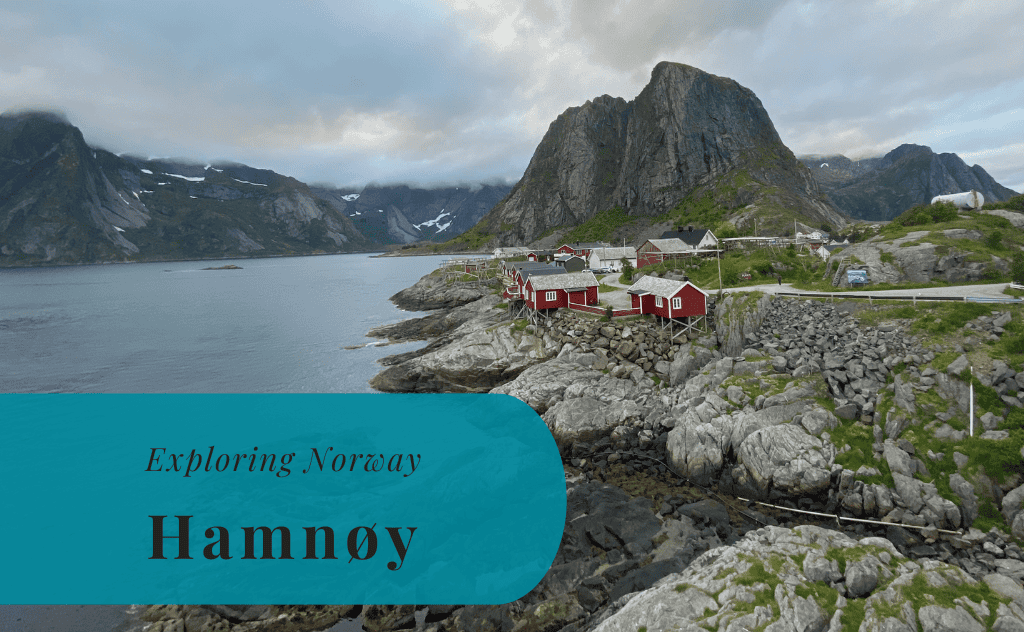
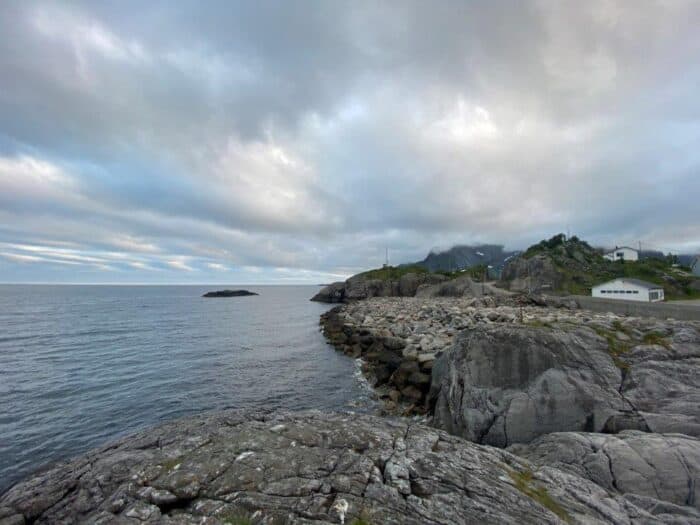
Hamnøy is a small fishing village in Moskenes Municipality, and it is located in Nordland county, Norway. The village is situated on a small peninsula on the eastern side of the island of Moskenesøya. This island is a part of the Lofoten archipelago. With a very small permanent population, Hamnøy is known for its dramatic and scenic setting. It is settled at the foot of tall mountains that drop directly into the Vestfjorden. The village is one of the most well-known and photographed locations in all of Lofoten.
The identity of Hamnøy is that of a historic fishing village, and it is famous for its impressive scenery. Its image, with the characteristic red fishermen’s cabins (rorbuer) set against a backdrop of sharp mountain peaks, has become a symbol of the Lofoten Islands. The village has a history that goes back over a thousand years. It is closely connected to the large seasonal cod fisheries that have defined life in this region for centuries. Today, Hamnøy is a popular destination for tourists and photographers from all over the world. It offers a unique combination of natural beauty, traditional architecture, and a direct link to the rich fishing heritage of northern Norway.

History of Hamnøy
The history of Hamnøy is a story of a small and remote fishing community that has been shaped by the rhythms of the sea and the seasonal cod fisheries. The village is one of the oldest in the Lofoten archipelago, and its history of human settlement dates back over a thousand years. Its development was driven by its role as a base for the annual “Lofotfiske,” which is the world’s largest cod fishery. The village’s modern history has been shaped by the change from a purely fishing-based economy to one that also includes tourism. Its historic fishermen’s cabins now serve as popular accommodations for visitors.
A Historic Fishing Village
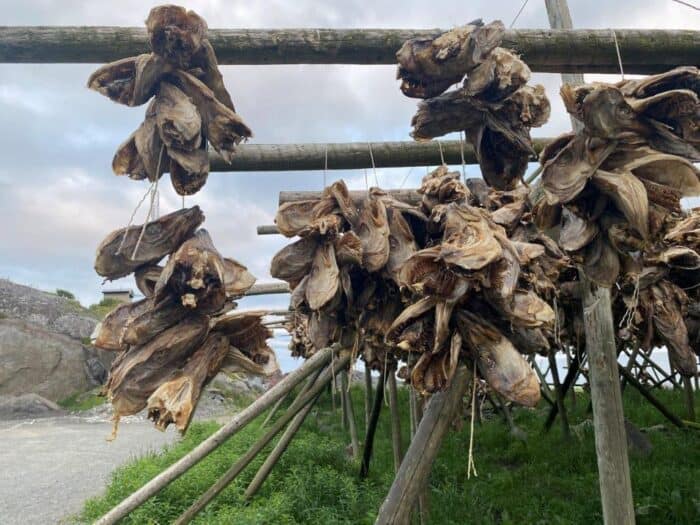
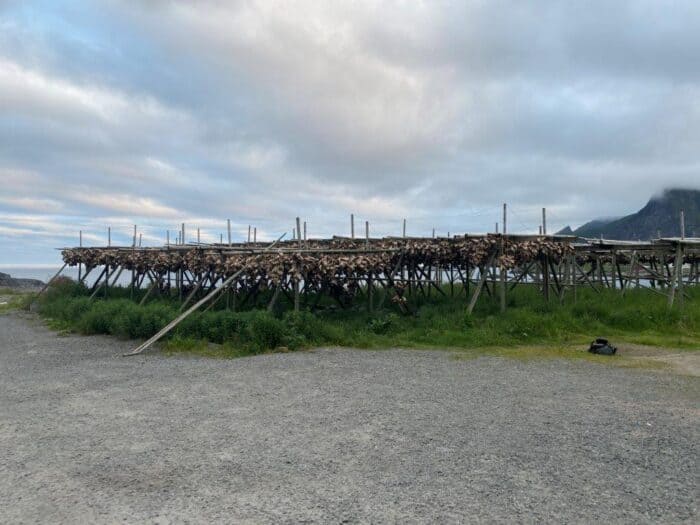
The settlement at Hamnøy is directly associated with the historic Lofoten fishery. For over a thousand years, fishermen from all over Norway have traveled to these waters between January and April. They come to take part in the large annual cod (skrei) spawning migration. The small, sheltered harbor at Hamnøy provided a base for these fishermen. They lived in simple cabins known as “rorbuer” during the fishing season. The catch was processed and dried on large wooden racks, producing the famous stockfish (tørrfisk), which was then exported to markets all over Europe.
The Eliassen Era
In the mid-1870s, the Eliassen family was one of the first families to settle permanently in Hamnøy. They played a major role in the development of the village. They organized the local fishing operations, and they were involved in the purchase, processing, and sale of the fish. The name of the family is still very prominent in the village today. They founded the famous Eliassen Rorbuer, which is a collection of historic fishermen’s cabins that is now one of the most well-known accommodations in all of Lofoten. The oldest of these historic cabins date back to 1890.
The Era of Connectivity
A key milestone in the modernization of the village was the construction of a large pier in 1953. Before this, the harbor at Hamnøy was quite exposed, and it could be dangerous due to strong currents. The new pier created one of the safest harbors in the western Lofoten. The village was further connected to the rest of the world with the construction of King Olav V’s Road, the E10, in 1963. The final bridge connecting Hamnøy to the neighboring island of Sakrisøya was completed in 1981. This greatly increased the accessibility of the area and spurred the growth of tourism.

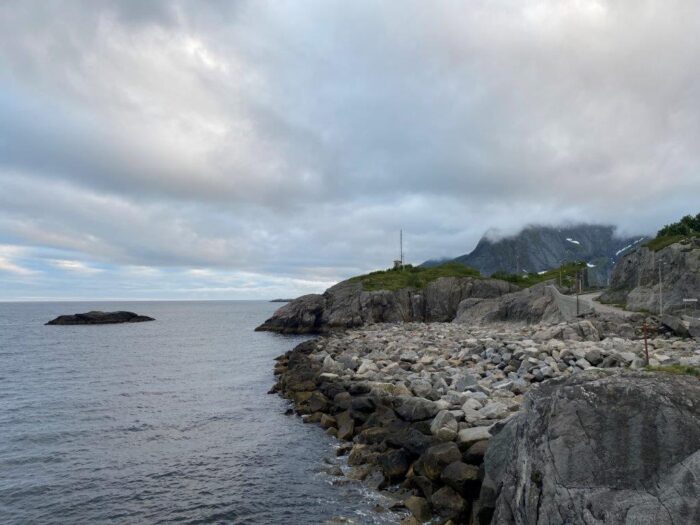
Sights in Hamnøy
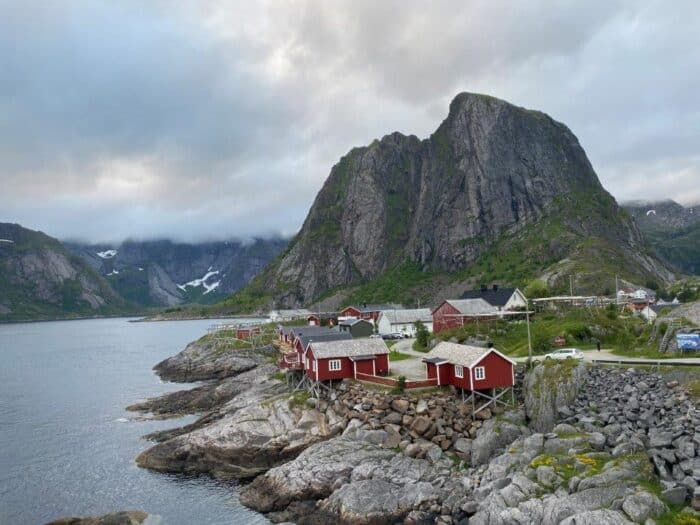
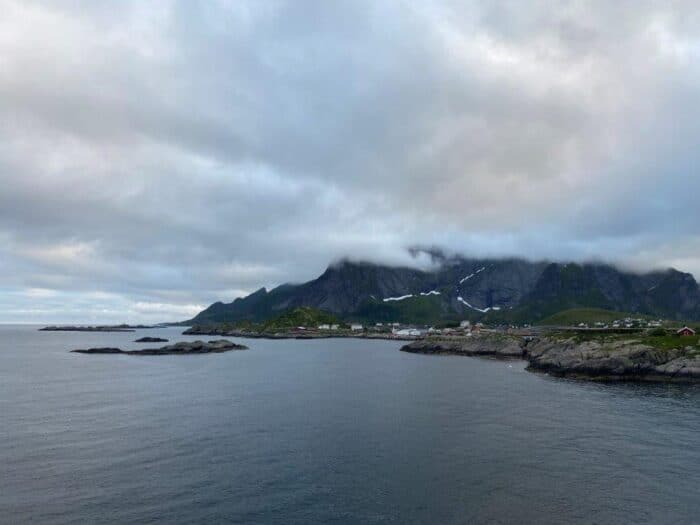
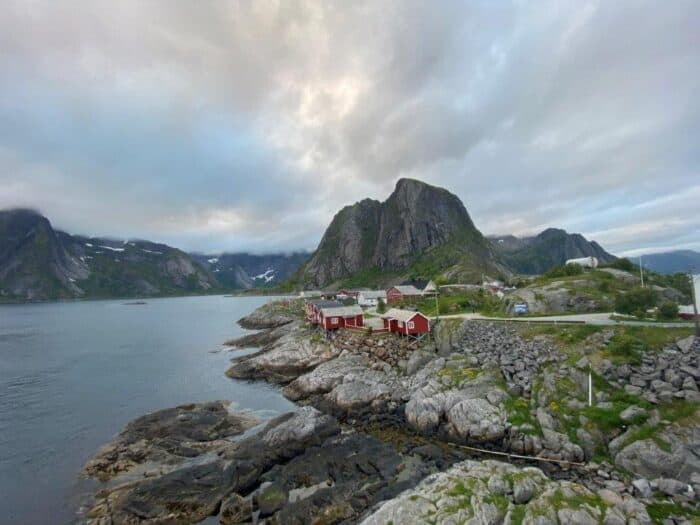
The sights in Hamnøy are centered around its impressive natural setting and its iconic, traditional architecture. The main attraction is the view of the village itself, with its red fishermen’s cabins (rorbuer) clustered around the small harbor. These are all set against the dramatic backdrop of the towering Lofoten mountains. This view, which is particularly famous from the Hamnøy Bridge, is one of the most photographed scenes in all of Norway. The surrounding landscape of fjords, mountains, and the sea provides a spectacular setting for exploration.
The Hamnøy Bridge Viewpoint
The most famous and iconic sight in Hamnøy is the view from the Hamnøy Bridge. This bridge connects Hamnøy with the small island of Toppøya to the east. From the bridge, you have the classic postcard view of the village. It features a cluster of red fishermen’s cabins (rorbuer) and the mountain of Festhelltinden rising up in the background. This viewpoint is one of the most popular in all of the Lofoten Islands, and it attracts photographers from all over the world. It is a particularly good spot for capturing the midnight sun in summer and the northern lights in winter.
The Village and Harbor
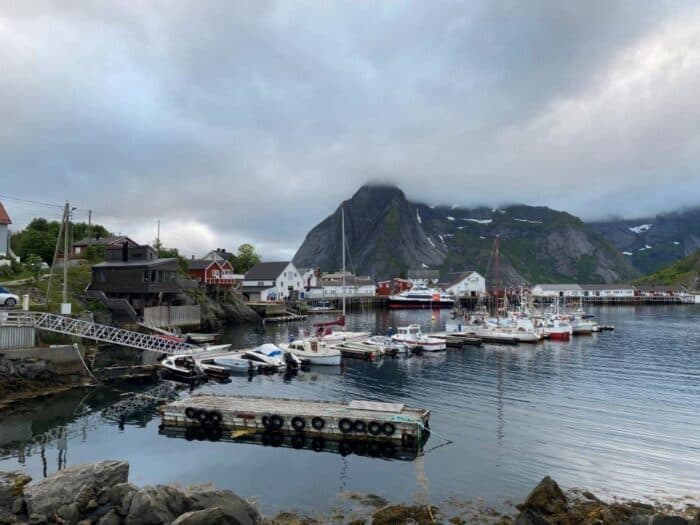
The village of Hamnøy itself is a beautiful sight to explore on foot. A walk through the small harbor area allows you to get up close with the historic red rorbuer. These traditional fishermen’s cabins, many of which are now rented out to tourists, are built on stilts over the water. The harbor is still an active fishing port, and you can often see local fishing boats coming and going. The atmosphere in the village is very peaceful and authentic, and it offers a direct connection to the rich fishing heritage of the Lofoten Islands.
Reine
The village of Reine, located just a few kilometers southwest of Hamnøy, is another of the most famous and beautiful sights in the Lofoten Islands. Reine is often cited as one of the most scenic villages in the world. Like Hamnøy, it is a picturesque fishing village that is set in a spectacular landscape of sharp, granite peaks that rise directly from the sea. A visit to Reine is an essential part of any trip to this part of the Lofoten archipelago. The view of the village from the main E10 road is another of the most iconic photo spots in the region.
Read More Here: Reine, Lofoten | Exploring Norway
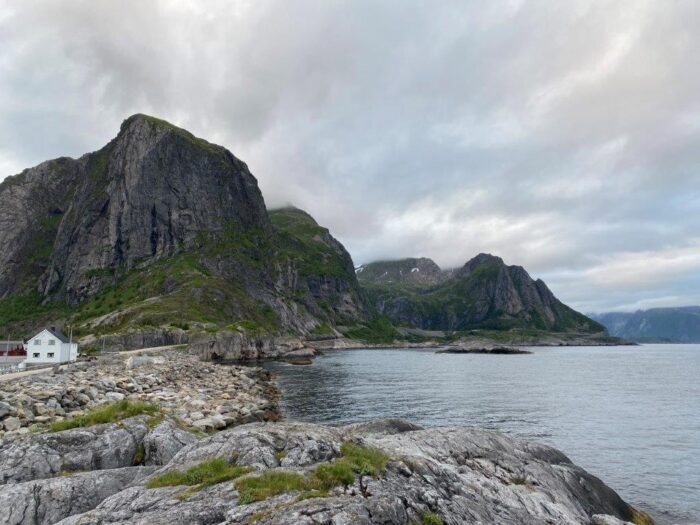

How to Get to Hamnøy?
Hamnøy is located on the island of Moskenesøya in the Lofoten archipelago, in northern Norway. The main gateways for visitors to the Lofoten Islands are the airports in Bodø (BOO), Harstad/Narvik (EVE), Svolvær (SVJ), and Leknes (LKN). From the mainland, the journey to Hamnøy involves either a ferry crossing or a scenic drive along the main E10 highway. A car is the most practical mode of transport for reaching this beautiful but remote part of Norway.
Arriving by Air and Ferry
The most common way to reach the southern part of the Lofoten Islands is to fly to the city of Bodø (BOO) on the mainland. From Bodø, there is a large car ferry that runs directly to the town of Moskenes. This town is located just a few kilometers from Hamnøy. The ferry journey across the Vestfjorden takes about 3-4 hours and is a very scenic trip in itself. It is also possible to fly to the smaller airports within the Lofoten Islands, such as Leknes (LKN), and then drive to Hamnøy from there.
Driving into the Village
Driving to Hamnøy is a spectacular journey along the E10 highway. This road is one of the designated National Scenic Routes in Norway. The E10 is the main road that runs the entire length of the Lofoten archipelago, and it connects the islands to the mainland via a series of bridges and tunnels. The final section of the road that leads to Hamnøy is particularly famous for its incredible scenery. The road winds its way between dramatic mountains and the sea.
Driving Distances
The driving distance from 20 regional cities, according to Google Maps:
- Reine, Norway – 5 kilometers (0 h 10 min)
- Moskenes, Norway – 10 kilometers (0 h 15 min)
- Leknes, Norway – 50 kilometers (0 h 50 min)
- Svolvær, Norway – 120 kilometers (1 h 50 min)
- Narvik, Norway – 350 kilometers (4 h 50 min)
- Harstad, Norway – 300 kilometers (4 h 20 min)
- Bodø, Norway – 330 kilometers (5 h 20 min)
- Kiruna, Sweden – 480 kilometers (6 h 40 min)
- Tromsø, Norway – 550 kilometers (7 h 40 min)
- Mo i Rana, Norway – 580 kilometers (8 h 30 min)
- Luleå, Sweden – 720 kilometers (9 h 50 min)
- Alta, Norway – 750 kilometers (10 h 30 min)
- Umeå, Sweden – 850 kilometers (12 h 00 min)
- Oulu, Finland – 930 kilometers (12 h 30 min)
- Trondheim, Norway – 950 kilometers (13 h 30 min)
- Bergen, Norway – 1400 kilometers (21 h 00 min)
- Oslo, Norway – 1400 kilometers (20 h 00 min)
- Stockholm, Sweden – 1600 kilometers (20 h 30 min)
- Helsinki, Finland – 1600 kilometers (21 h 30 min)
- Gothenburg, Sweden – 1650 kilometers (23 h 00 min)
Looking to Explore more of Norway and Europe?