
History Lesson in Eastern Finland | Arctic Tour 2024 [11/14]
After a night in Kemijärvi, it was time to leave Finnish Lapland and continue even further south. It was going to be a day with a very long drive, a drive that quite soon took us past the Arctic Circle and further down towards Kuusamo and later Kajaani. But it was not going to be all about driving. It was time for a proper lesson in Finnish history. It was time for us to learn more about the Winter War and the pivotal Battle of Raate Road. This is the eleventh of fourteen posts about our great Nordic adventure.
The journey on this day took us from the vast, sparsely populated wilderness of Lapland into the region of Kainuu. This area is characterized by its rugged landscape of hills, extensive forests, and a great number of lakes and rivers. It is one of the least populated regions in Finland, which gives it a remote and wild character. The history of Kainuu is deeply connected to its position on the eastern border, having been a frontier zone between Sweden and Russia for centuries. This strategic location became especially significant during the 20th century.
Lunch Break in Kuusamo
Before it was time for our history lesson, we needed some lunch. Arriving in Kuusamo at around 11 a.m. was a quite good time to find a restaurant for our midday meal. I even got some time afterward, while the rest of the company visited the grocery store, to explore the town a bit. Having the bike readily available once again proved to have its advantages. I found my way to the Kuusamo Local History Museum before heading towards the town center. It might not have been a long and proper exploration, but it was nice to head out and cycle for a while before sitting in the car again for several more hours. Luckily, it was also easy to locate the rest of the company at the commercial center just on the outskirts of town.
Kuusamo is a town and municipality in the Northern Ostrobothnia region of Finland. It is located in a hilly and forested area known for its natural beauty. The town is a major center for tourism in Finland, primarily due to its proximity to the Ruka Ski Resort, which is one of the country’s largest and most popular winter sports destinations. The area is also known for its national parks, including Oulanka National Park, which is famous for its hiking trails. Kuusamo’s location near the Russian border has also given it a specific historical and strategic importance.

Nightmares at Hiljaisen Kansan
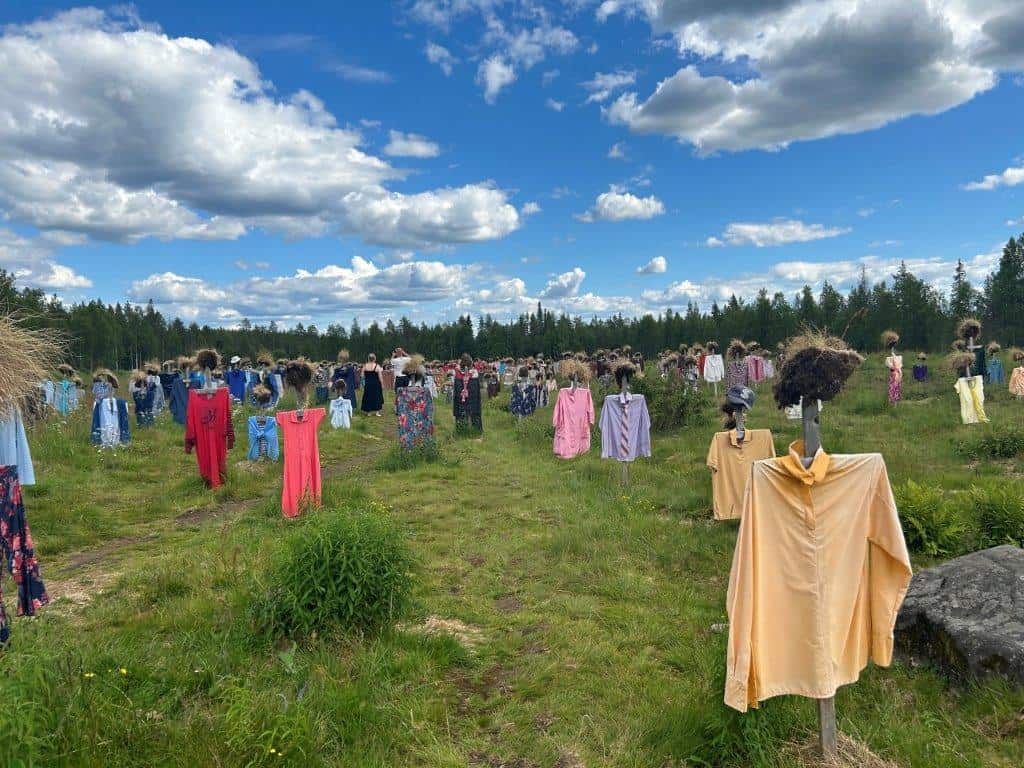
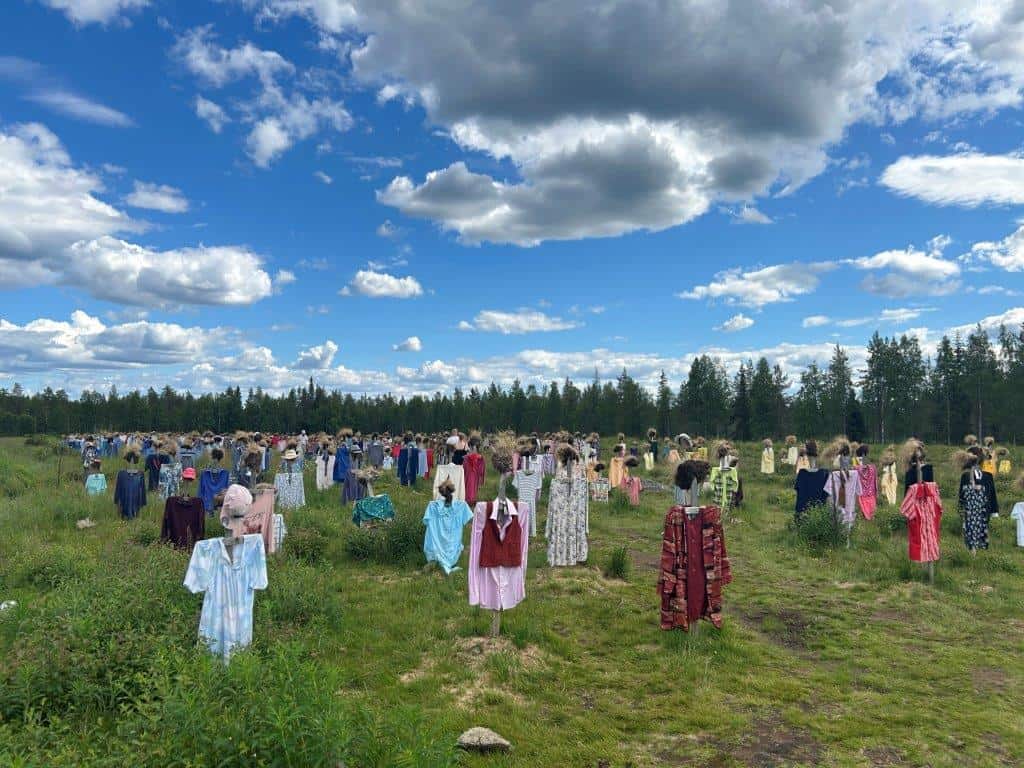
The Hiljaisen Kansan, or the “Silent People,” is an art exhibition on a field just north of Suomussalmi. The outdoor art installation consists of close to 1,000 turf-headed figures dressed in clothes. I cannot really place the feeling when seeing all these figures standing silently on the field. It is a really surreal and slightly unnerving feeling. It is the kind of image that can really cause nightmares if you think about it for too long, as they look like a silent, waiting army. Luckily, we did not stay for too long before continuing on our way to Suomussalmi.
“The Silent People” (Hiljainen Kansa) is a famous art installation created by the Finnish artist Reijo Kela. It is located on a field next to Highway 5. The nearly one thousand scarecrow-like figures are dressed in clothes that are changed twice a year, with summer and winter outfits. The artist has never explicitly stated the meaning of the work, leaving it open to individual interpretation. Some have suggested it represents those lost in the Winter War, while others see it as a statement on conformity or loneliness. It has become a well-known and often photographed landmark in Finland.
Suomussalmi and the Raate Road
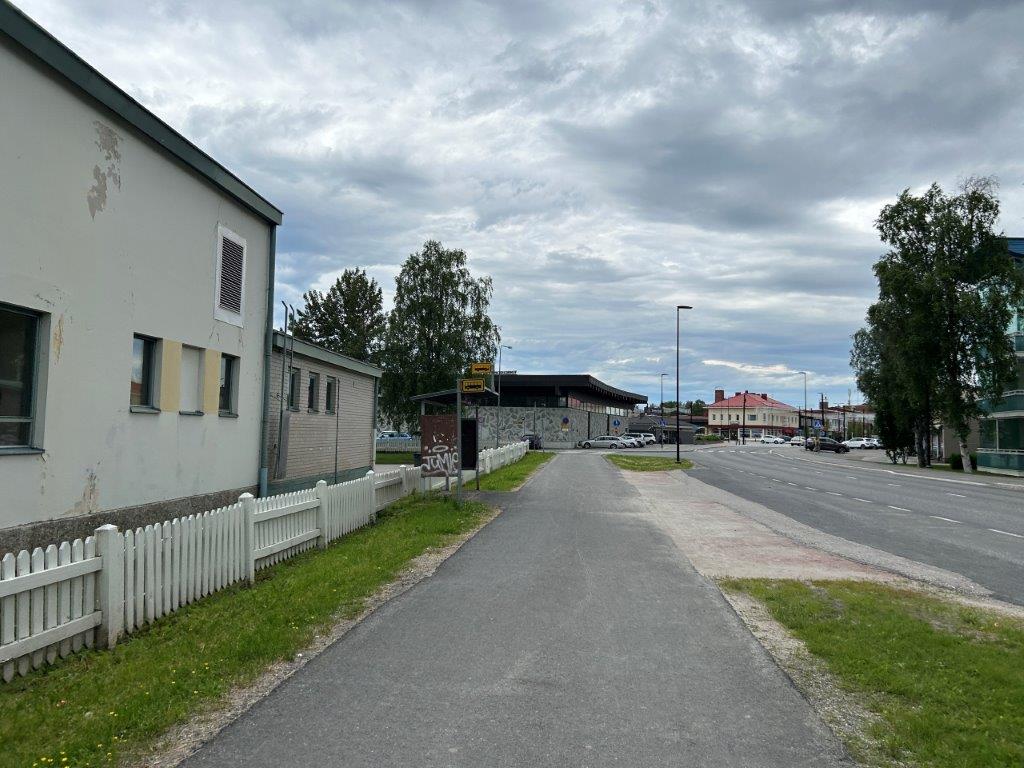
Suomussalmi marked the start of our history lesson about the Winter War. We stretched our legs in the town for a short while before heading east towards the Russian border. Suomussalmi had been captured by Soviet forces in December of 1939 during the early stages of the war. One of the Soviet supply routes was the Raate Road. Several major battles took place here, which in the end marked one of the most important Finnish victories during the entire Winter War. The Finns had risked the Soviet army cutting the country in half, but instead, they got to see the retreating and destroyed Soviet divisions.
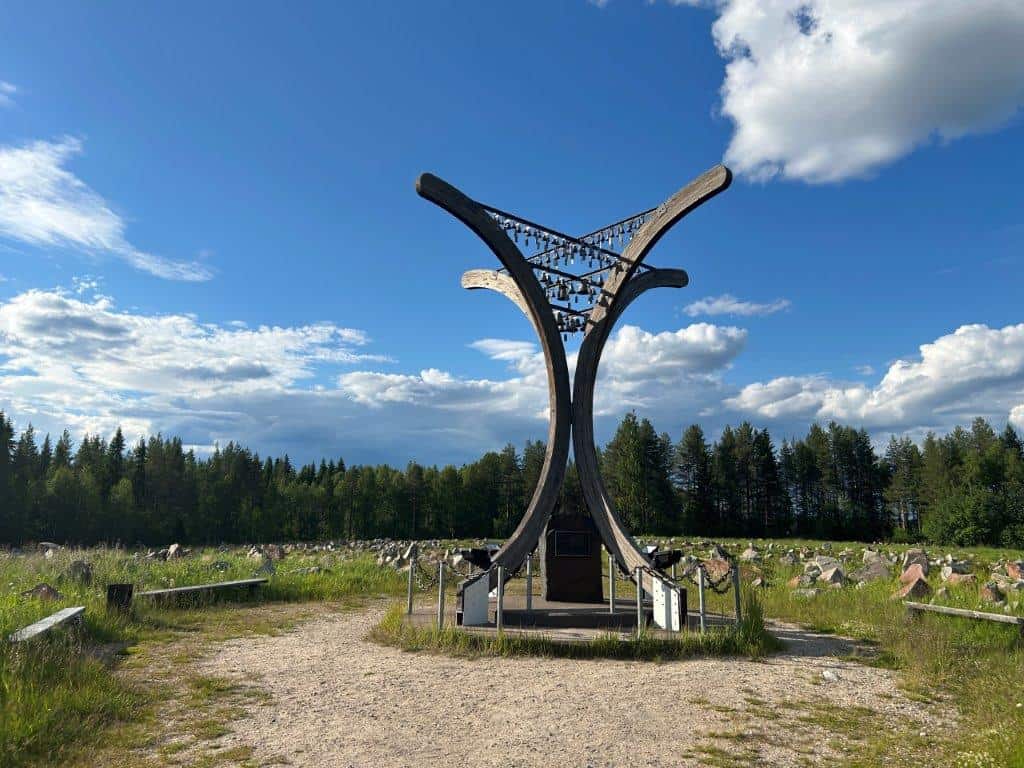
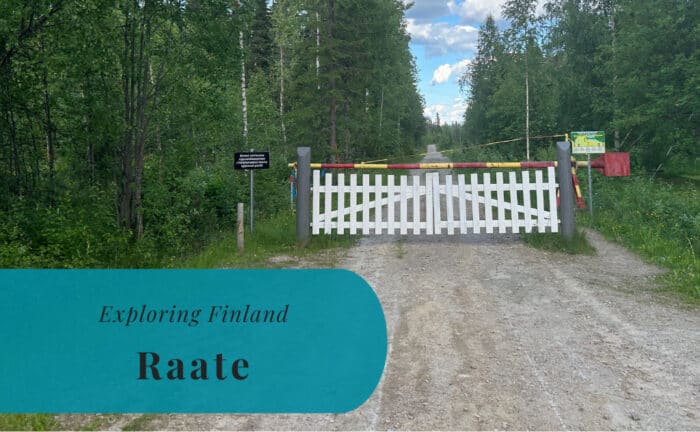
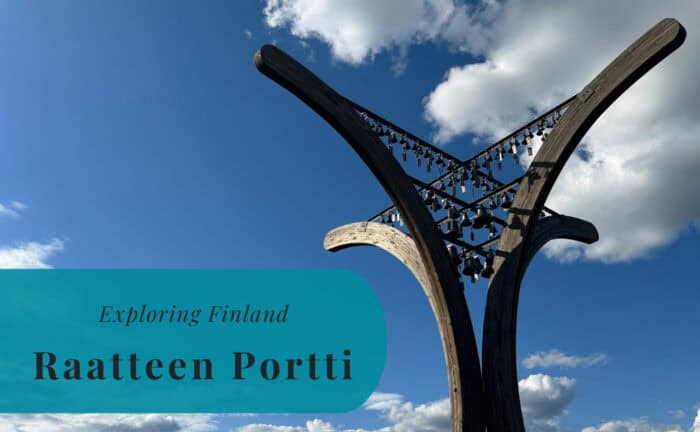
We followed the memorials of these battles as we drove east along the Raate Road. This is where we got to see the impressive Winter War Monument (Talvisotamonumentti), with its field of thousands of stones representing the fallen. We also stopped at the preserved trenches at Purasjoki. Driving as far as the actual border gate at Raate, which is a closed border crossing, we did get to see a few border guards going through the gate towards the border region itself. The gate is about a kilometer and a half from the actual border. It might not look impressive, but its historical significance is immense.


An Evening in Kajaani
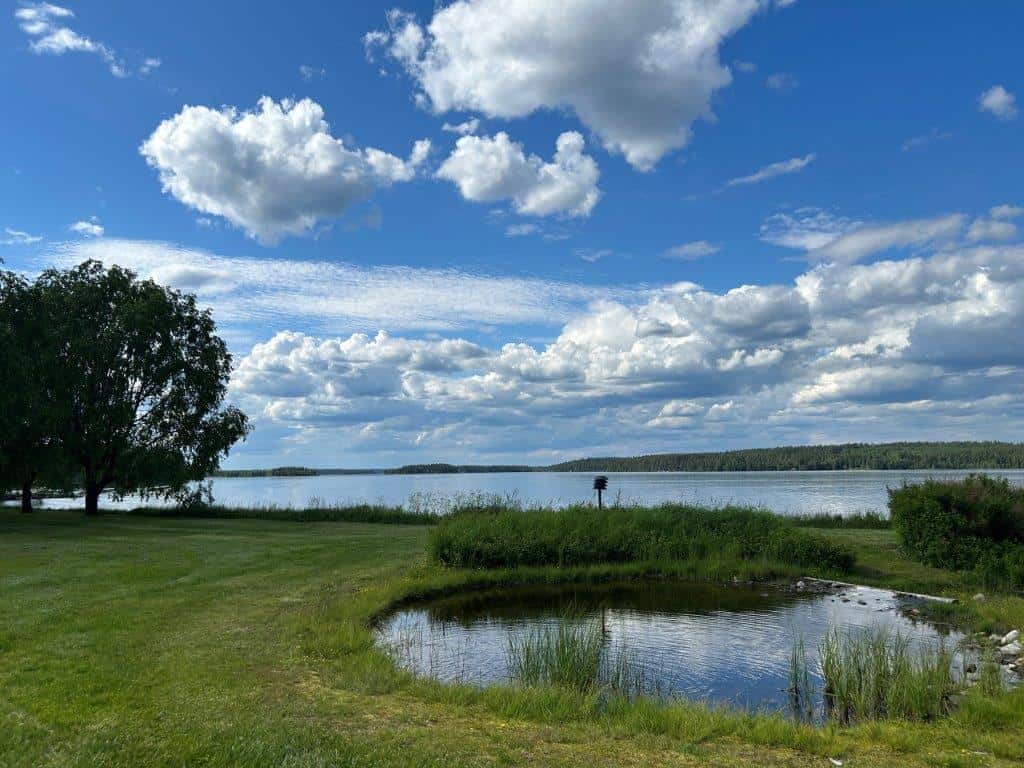
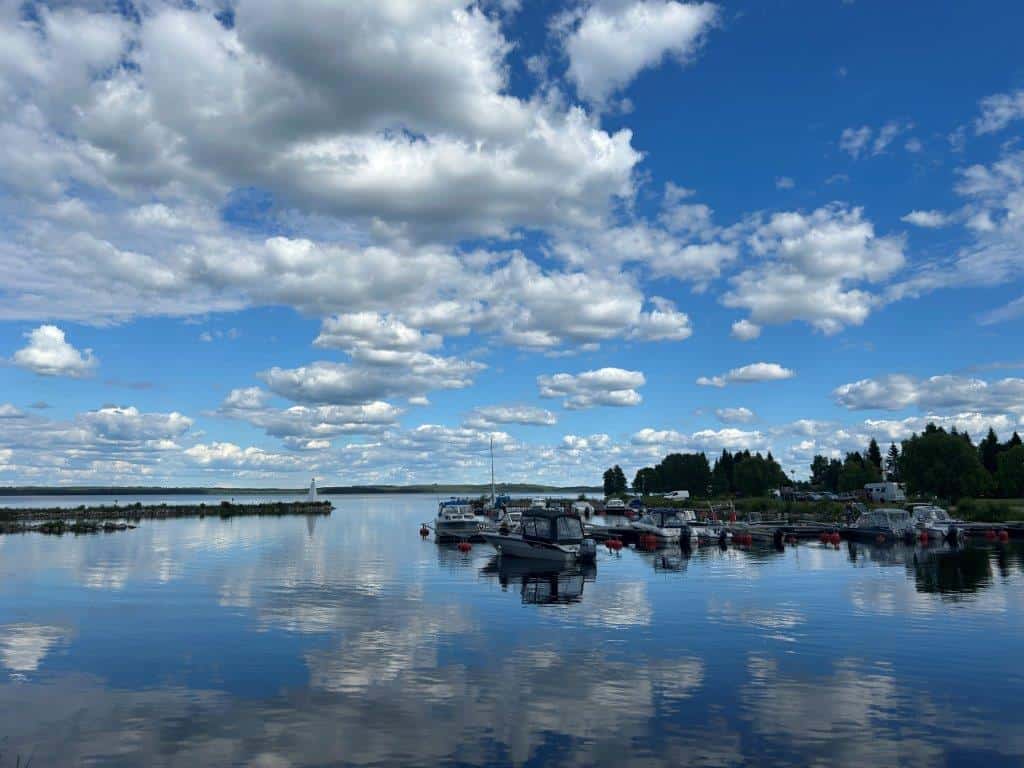
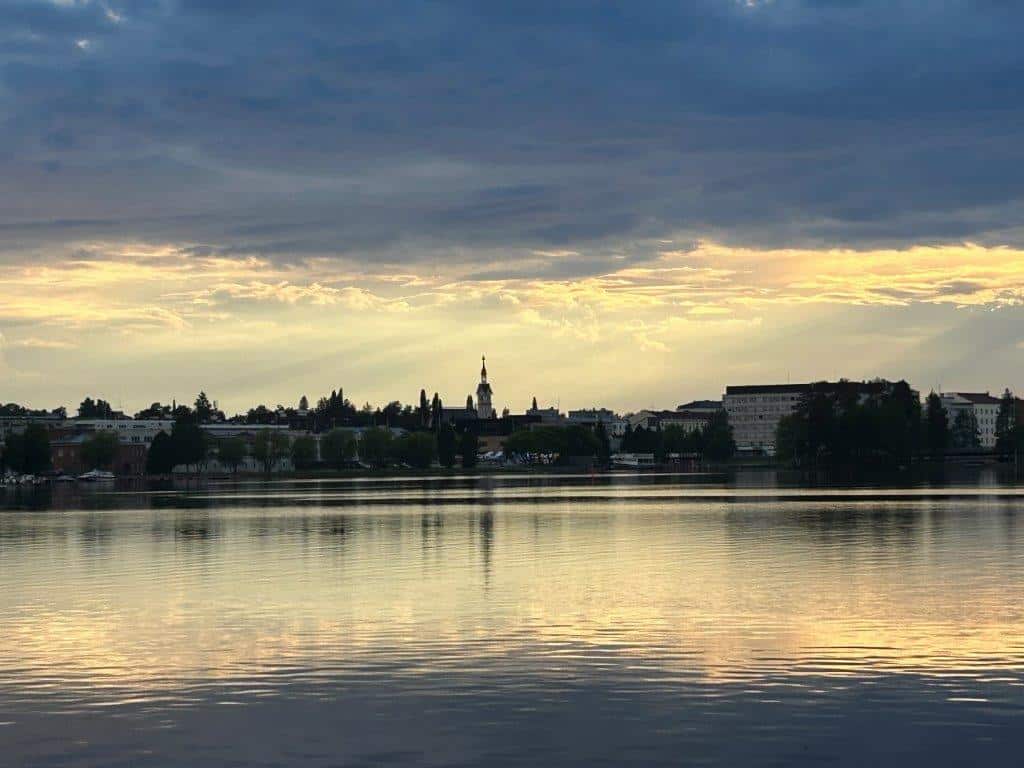
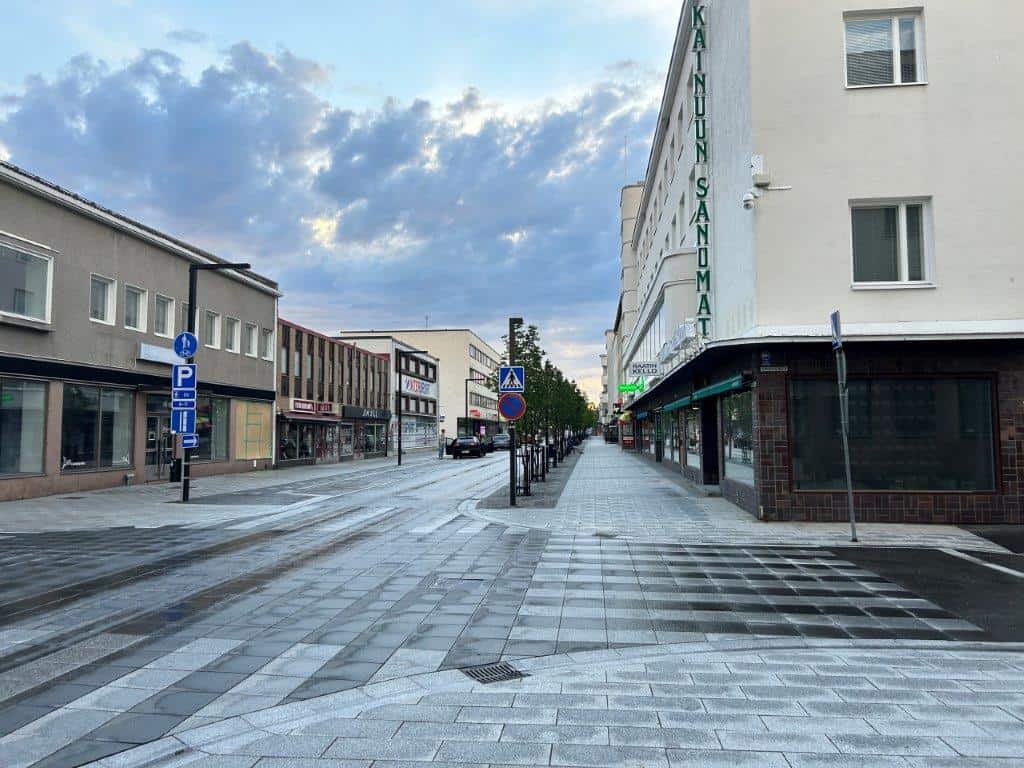
It was already evening when we reached the city of Kajaani. Susann’s mother and Little A wanted to go for a swim, so we stopped at a beach just north of the city center. While they swam in the lake, I once more took my bike to explore the town. I had plenty of time to explore the center, to enjoy the late evening sun, and to find my way to some of the main sights. The castle ruins on an island in the river might not have been very impressive. Instead, I did like the view at the Ämmäkoski hydroelectric power plant. The view of the river and the short canal with its locks was quite nice. It felt really peaceful in the evening sun.
Kajaani is the capital of the Kainuu region in Finland. The city is located on the Kajaani River, between the lakes of Oulujärvi and Nuasjärvi. It was founded in the 17th century by Count Per Brahe the Younger, the same governor-general who was involved in the history of Raahe. The city is known for the ruins of Kajaani Castle, which was built in the 17th century and was a key administrative and military center. In the modern era, Kajaani is a center for the forestry and paper industries, as well as a garrison town for the Finnish army.
A Night in Siilinjärvi
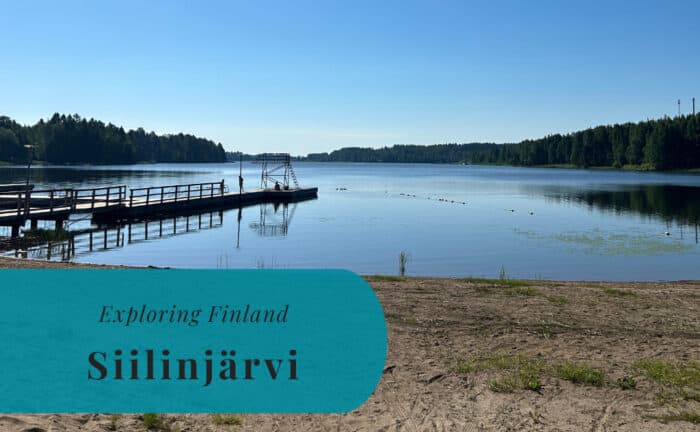
Once I got back to the beach, the girls were ready and we could get going again. It was now just a matter of covering as many kilometers as possible before it was time to sleep for the night. We did get as far as Siilinjärvi, just north of Kuopio, before we all got too tired to continue. We stopped at a gas station for the night. It was one of those large service areas where truckers and a few other cars and motorhomes stop for the night. Here we could get some late-evening pizza and prepare for the night. The morning would have to tell where we had actually parked for the night and what the area looked like in the daylight.
Read More About Some of the Visited Places




Want to Read More About This Adventure?