Exploring Namibia

Exploring Namibia
Namibia, officially the Republic of Namibia, is a large and sparsely populated country located in Southern Africa. It is known for its dramatic and contrasting landscapes, which include the vast Namib Desert, one of the oldest deserts in the world, and the rugged terrain of the Damaraland region. The country’s capital and largest city is Windhoek, which is situated in the central highlands. Namibia is defined by its wide-open spaces, its unique desert-adapted wildlife, and its stark, natural beauty.
The cultural identity of Namibia is shaped by its diverse population. This includes numerous indigenous groups, such as the San, Damara, and Nama peoples, as well as the Herero and Ovambo peoples. It also has a significant population of European descent, primarily German and Afrikaner, which is a legacy of its history as a German colony and later as a territory administered by South Africa. This complex history is reflected in the country’s languages, architecture, and place names. English is the sole official language.
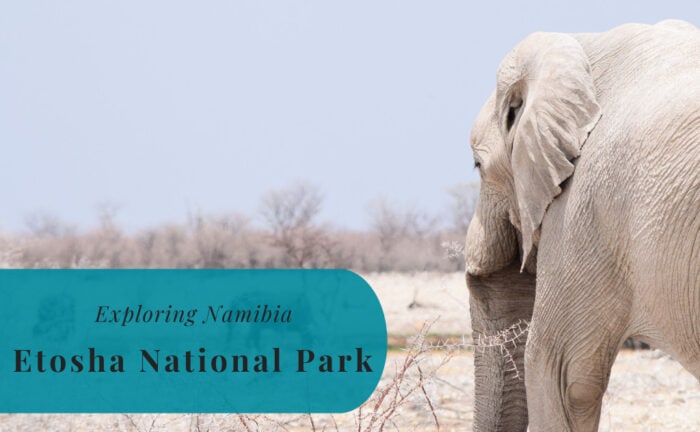
For the traveler, Namibia offers a destination focused on wilderness, wildlife, and adventure. It is a country of epic road trips, with long distances between its main attractions. Key experiences include exploring the towering red dunes of Sossusvlei, tracking desert elephants in Damaraland, and visiting the vast salt pan of Etosha National Park, one of Africa’s premier wildlife viewing destinations. The country’s commitment to conservation, with a large portion of its land under protection, is central to its identity.
Population of Namibia
The population of Namibia is approximately 2.6 million people. It is one of the most sparsely populated countries in the world, second only to Mongolia. The population density is extremely low, a result of the country’s large size and its arid environment.
The population is concentrated in the northern part of the country, where rainfall is higher and conditions are more suitable for agriculture. The capital city of Windhoek, located in the central highlands, is the main urban and economic center and is home to a significant portion of the population. Other towns, such as Walvis Bay and Swakopmund on the coast, are also important population centers. The vast southern and western parts of the country, which are dominated by the Namib and Kalahari deserts, are very sparsely inhabited.
Location of Namibia
Namibia is located in the southwestern part of Southern Africa. The country has a long coastline on the South Atlantic Ocean to the west. It is bordered by Angola and Zambia to the north, Botswana to the east, and South Africa to the south and southeast.
A unique geographical feature of Namibia is the Caprivi Strip (now the Zambezi Region). This is a narrow panhandle of land that extends eastwards from the northeastern corner of the country. This strip gives Namibia access to the Zambezi River and borders four other countries in a small area. The country’s location and its arid environment have made it a place of strategic importance, particularly for its rich mineral resources.
Geography of Namibia
The geography of Namibia is defined by its arid and semi-arid landscapes. The country can be divided into four main geographical regions, each with its own distinct characteristics.
The Namib Desert
The Namib Desert is a vast, ancient desert that runs the entire length of the country’s Atlantic coastline. It is characterized by immense sand seas, with some of the highest dunes in the world, such as those found at Sossusvlei. The desert is extremely arid, but it is home to a unique ecosystem of desert-adapted plants and animals. The northern part of the Namib, known as the Skeleton Coast, is famous for its shipwrecks and stark beauty.
The Central Plateau
Running from north to south through the center of the country is the Central Plateau. This is a high-altitude region of mountains and plains, and it is where the majority of the country’s population and agricultural activity is concentrated. The capital city of Windhoek is located here. The plateau receives more rainfall than the coastal desert, making it suitable for ranching.
The Great Escarpment
Separating the Central Plateau from the Namib Desert is the Great Escarpment. This is a dramatic transition zone of rugged mountains and rocky outcrops. The escarpment runs the length of the country and is a region of great scenic beauty, with features like the Brandberg Massif, which is Namibia’s highest point, and the dramatic landscapes of Damaraland.
The Kalahari Desert
In the eastern part of the country lies a portion of the Kalahari Desert. Unlike the Namib, the Kalahari is technically a semi-desert as it receives more rainfall. It is characterized by vast expanses of sand and savanna grasslands. The Kalahari is home to a diverse range of wildlife and is where many of the country’s San communities live.
Entry Points to Namibia
As a major destination for tourism in Southern Africa, Namibia has several key entry points. For most international visitors, the primary point of entry is the main international airport near Windhoek. Land border crossings with its four neighboring countries are also important entry points, particularly for those on regional overland tours.
Major International Airports
The primary gateway to the country is Hosea Kutako International Airport (WDH). It is located approximately 45 kilometers east of the capital city, Windhoek. The airport handles most of the international flights to Namibia, with connections to major hubs in Europe (such as Frankfurt) and other African countries (such as Johannesburg, Cape Town, and Addis Ababa). A smaller airport, Eros Airport (ERS), is located within Windhoek and handles most domestic and some regional flights. Walvis Bay International Airport (WVB) on the coast also receives some international flights.
Land Border Crossings
Namibia shares land borders with four countries. There are several major road crossings. The primary crossings with South Africa are at Noordoewer/Vioolsdrift in the south and at Ariamsvlei/Nakop. The border with Botswana has several crossings, including at Buitepos/Mamuno. The border with Angola in the north has crossings at Oshikango/Santa Clara. The crossings in the Caprivi Strip provide access to Zambia (at Katima Mulilo/Sesheke) and also allow for easy access to Victoria Falls in Zimbabwe and the Chobe National Park in Botswana.
Join Us in Exploring Namibia


Exploring More of the World?
Join us in exploring more of what the World has to offer.