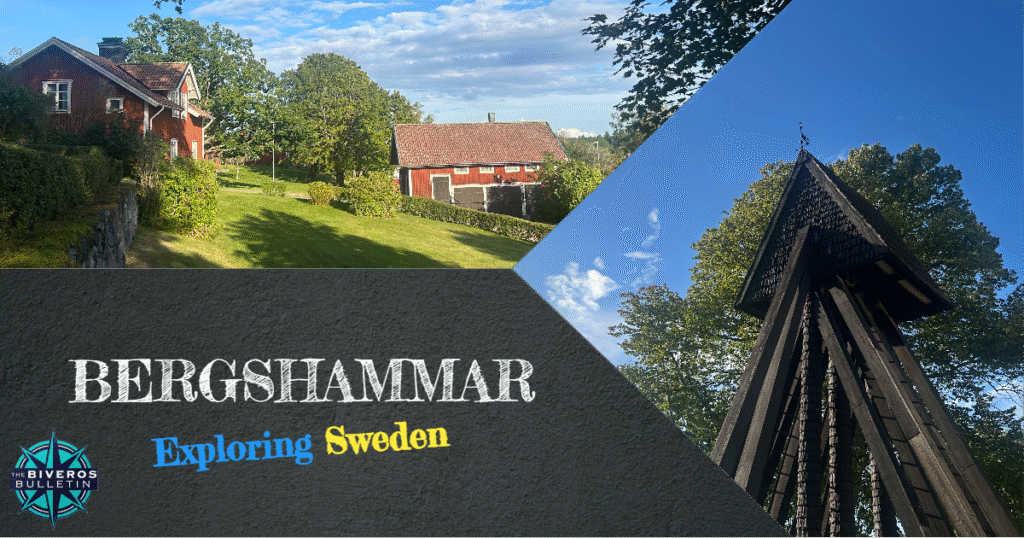
Bergshammar, Södermanland | Exploring Sweden
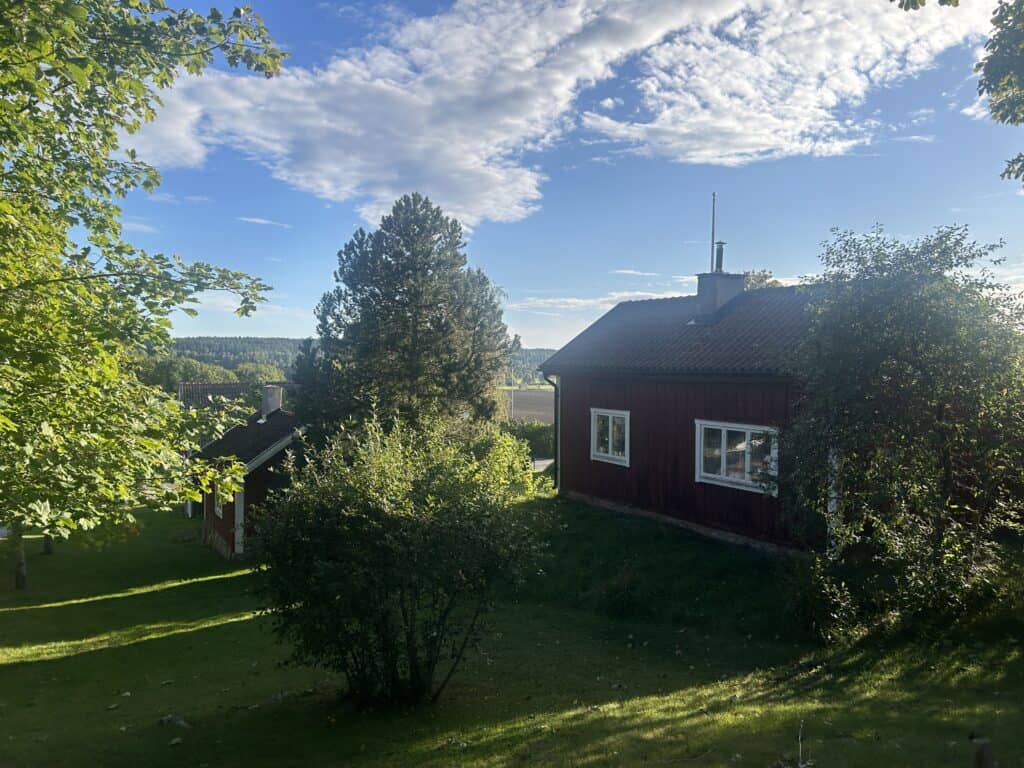
Bergshammar is a residential locality in the province of Södermanland. It is a part of Nyköping Municipality and is located just 9 kilometers west of the city of Nyköping. The modern community, or tätort, lies within the historical boundaries of the much older Bergshammar parish. The surrounding landscape is one of forests and open agricultural land, characteristic of the Södermanland countryside. The locality itself consists mainly of single-family homes that have been built since the mid-20th century, establishing it as a distinct residential community.
Due to its proximity to Nyköping, Bergshammar’s primary function today is as a commuter town. Many residents travel to the city for work while living in the locality’s quieter, rural setting. While Bergshammar has essential local services, most commercial activity is centered in Nyköping. The location is also advantageous for its close access to regional nature reserves and the nearby coast, providing residents with many opportunities for outdoor recreation. This combination of a countryside environment with a strong connection to both urban amenities and natural landscapes is a key feature of the locality.


History of Bergshammar
The history of the Bergshammar area stretches back to the early medieval period, with its origins as a well-established agricultural parish. For centuries, the area’s development was shaped by farming and its connection to the sea, with a landscape dominated by a few large manors. The major change came in the latter half of the 20th century. Improved infrastructure and a growing population in Nyköping led to the development of the modern inland locality, which grew distinct from the old parish’s historical structure.
Ancient Origins of the Parish
The area has been inhabited since the Iron Age, a fact evidenced by ancient burial grounds and a runestone. The parish of Bergshammar was formed during the 12th century, and the first stone church was constructed around this time to serve the surrounding farms. For hundreds of years, the parish was the primary unit of local government, with a life based on agriculture, fishing, and forestry. This long history is the foundation upon which the modern locality was later built, and the church remains as a key historical landmark for the entire region.
The Era of Manors
From the medieval period onward, the social and economic life of the Bergshammar parish was dominated by a few large estates. The most significant of these is Hofsätter Säteri. These large estates owned much of the land and employed a significant portion of the local population as tenant farmers and laborers. This social structure was typical for the region until the land reforms of the 19th and 20th centuries. While these manors are not within the modern locality, their historical influence shaped the entire landscape in which the town later developed.
Growth of the Modern Locality
The modern development of Bergshammar as a defined locality began in the mid-20th century. Its scenic, inland location and proximity to Nyköping made it an attractive place to build new homes. As car ownership became more common, the area transformed from a purely agricultural parish into a suburb. New residential areas with single-family homes were built, attracting families who wanted more space and a closer connection to nature. In 1971, the old parish was fully incorporated into the larger Nyköping Municipality.

Sights at Bergshammar
The sights within the locality of Bergshammar itself are focused on its community hubs and historical roots. As a modern residential area, the points of interest reflect local life and the area’s connection to the surrounding nature. Exploring the locality is an opportunity to see a peaceful Swedish suburb that is built in an area with a long history. The primary sights are the medieval church and the community buildings that serve the residents, along with direct access to one of Sweden’s most famous hiking trails.
Bergshammar Church
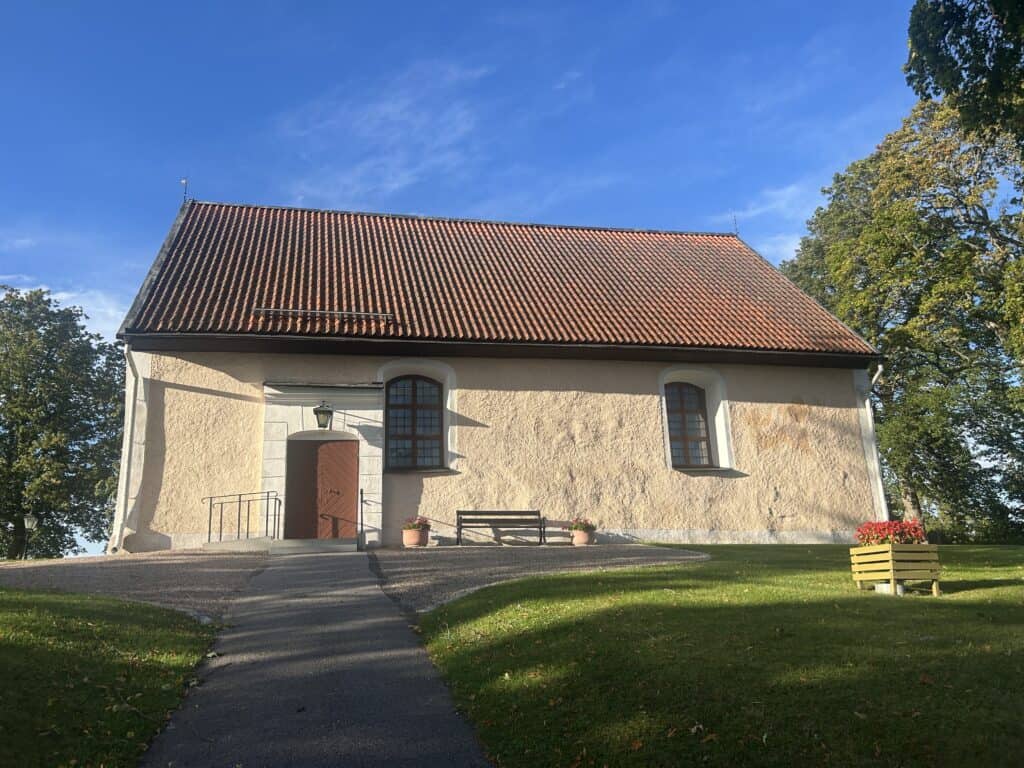
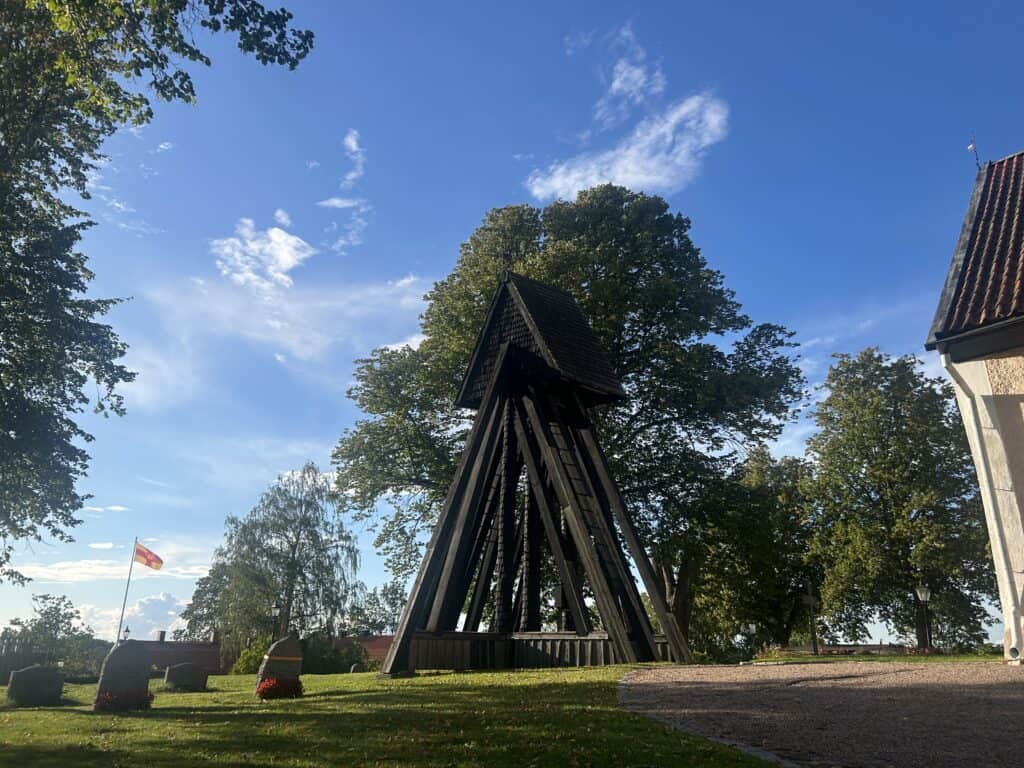
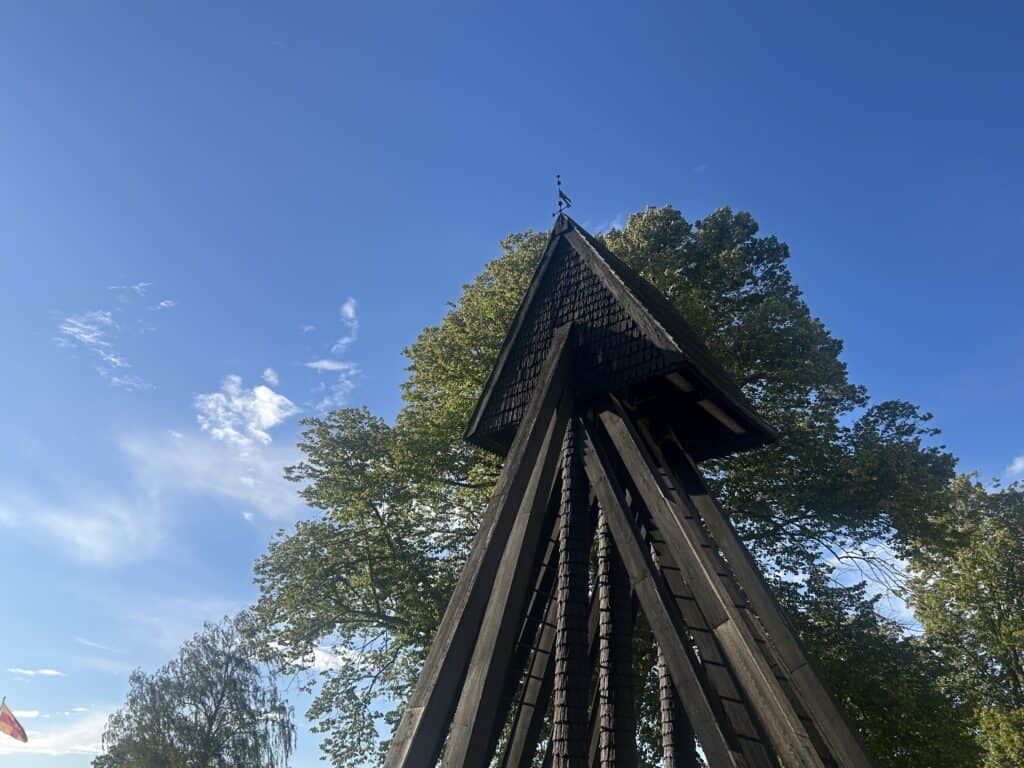
Bergshammar Church (Bergshammars kyrka) is the most significant historical building immediately adjacent to the locality. Its oldest parts date from the 12th century, although it has been rebuilt and expanded several times, notably in the 18th century. The church has a traditional whitewashed exterior and a separate wooden bell tower, a common feature for churches in the Södermanland region. Inside, it houses several historical artifacts, including a medieval baptismal font. The church serves as a central landmark and a visible link to the area’s deep history.
Bergshammar Bygdegård
The local community hall, Bergshammar Bygdegård, is an important center for social life in the locality. These halls are a common feature in Swedish rural and suburban communities, serving as a venue for a wide range of activities. The hall in Bergshammar hosts meetings for local associations, private celebrations, seasonal markets, and other community events. It is run by a local association and functions as an essential indoor gathering space for residents of all ages. The building and its activities are central to the social fabric of the community.
Bergshammar School
Bergshammar School (Bergshammars skola) is a key landmark and the heart of daily life for many families in the community. As the local primary school, it serves the children of the locality and the surrounding countryside. The school building and its grounds, including playgrounds and sports fields, are a central hub of activity, especially during the week. In a small community like Bergshammar, the local school is more than just an educational institution; it is a primary gathering place and a cornerstone of the community’s identity and future.
How to Get to Bergshammar?
Reaching Bergshammar is straightforward, thanks to its close proximity to the city of Nyköping, a major transport hub. The locality is situated just a few kilometers from the E4, the main motorway in Sweden, and is also very near Stockholm Skavsta Airport. This makes it easily accessible for both domestic and international travelers. The final part of the journey from Nyköping to Bergshammar is a short trip by car or local bus through the Södermanland countryside.
The most common way for visitors to travel to Bergshammar is to first arrive in Nyköping, which serves as the gateway to the region. Nyköping is well-connected by train, bus, and air. From the Nyköping travel center (resecentrum), frequent local buses make the short journey out to Bergshammar. For those driving, the turn-off from the E4 motorway is just a few minutes away. This ease of access makes Bergshammar a convenient destination for a day trip from Stockholm or for a longer stay.
Driving to Bergshammar
The most direct way to get to Bergshammar is by car. The locality is located just west of the E4 motorway. Travelers should take exit 132 (Nyköping V) and follow the signs towards Bergshammar. The drive from the motorway exit to the center of the locality takes only about 5-10 minutes. From central Stockholm, the total driving time is approximately 1 hour and 15 minutes. A car is the most flexible option and is highly recommended for exploring the area.
Reaching Bergshammar by Train
The closest train station to Bergshammar is Nyköping Central Station. The station is located on the main line and has regular train services connecting it with Stockholm, Norrköping, and Linköping. From Stockholm, the train journey to Nyköping takes about one hour. Upon arrival at Nyköping station, travelers can take a local bus from the adjacent bus terminal for the final 15-20 minute journey to Bergshammar.
Nearby Airports and Flights for Bergshammar
Bergshammar is located very close to Stockholm Skavsta Airport (NYO), one of Sweden’s main hubs for low-cost airlines. The airport is only about a 15-minute drive from Bergshammar, making it an exceptionally convenient gateway for international visitors. Airport buses connect the airport with Nyköping’s central bus station, from where one can transfer to a local bus to Bergshammar. The main international airport, Stockholm Arlanda (ARN), is about a two-hour drive or train journey away.
Traveling to Bergshammar by Bus
Long-distance bus companies like Flixbus operate routes to Nyköping from many cities in Sweden. These buses arrive at the Nyköping bus terminal, located next to the train station. From there, it is a simple transfer to the local bus service operated by Sörmlandstrafiken for the final short journey to Bergshammar. This combination of long-distance and local bus is often the most budget-friendly travel option.
Arriving by Boat to the Nearby Coast
For those with their own boat, the nearby coastline offers several options. While the locality of Bergshammar is inland, the coast is a short drive away. The closest major guest harbor with full services is located in central Nyköping. The famous Stendörren nature reserve also has a guest jetty for visiting boats. Arriving by sea provides a unique perspective on the beautiful Södermanland archipelago.
Driving Distances
The driving distance from 20 regional cities, according to Google Maps:
- Nyköping, Sweden – 9 kilometers (0 h 12 min)
- Oxelösund, Sweden – 20 kilometers (0 h 20 min)
- Norrköping, Sweden – 54 kilometers (0 h 40 min)
- Katrineholm, Sweden – 62 kilometers (0 h 55 min)
- Södertälje, Sweden – 75 kilometers (0 h 50 min)
- Eskilstuna, Sweden – 93 kilometers (1 h 20 min)
- Linköping, Sweden – 96 kilometers (1 h 10 min)
- Stockholm, Sweden – 110 kilometers (1 h 20 min)
- Västerås, Sweden – 140 kilometers (1 h 50 min)
- Örebro, Sweden – 145 kilometers (1 h 50 min)
- Uppsala, Sweden – 180 kilometers (2 h 5 min)
- Jönköping, Sweden – 245 kilometers (2 h 40 min)
- Kalmar, Sweden – 285 kilometers (3 h 25 min)
- Gävle, Sweden – 287 kilometers (3 h 5 min)
- Växjö, Sweden – 309 kilometers (3 h 30 min)
- Gothenburg, Sweden – 380 kilometers (4 h 5 min)
- Oslo, Norway – 394 kilometers (4 h 35 min)
- Helsingborg, Sweden – 472 kilometers (4 h 50 min)
- Malmö, Sweden – 523 kilometers (5 h 20 min)
- Copenhagen, Denmark – 565 kilometers (5 h 55 min)
Explore More of Södermanland and Sweden