
Acrocorinth, Peloponnese | Exploring Greece
Acrocorinth is a monolithic rock that rises dramatically above the ancient city of Corinth, and it is located in the Peloponnese region of Greece. This massive limestone hill reaches an altitude of 575 meters. It served as the acropolis for ancient Corinth for thousands of years. It is one of the most impressive and visually striking acropoleis in all of Greece. The site is a large and complex fortress, and its circuit of defensive walls stretches for nearly three kilometers. This makes it a formidable sight for any visitor to the region.
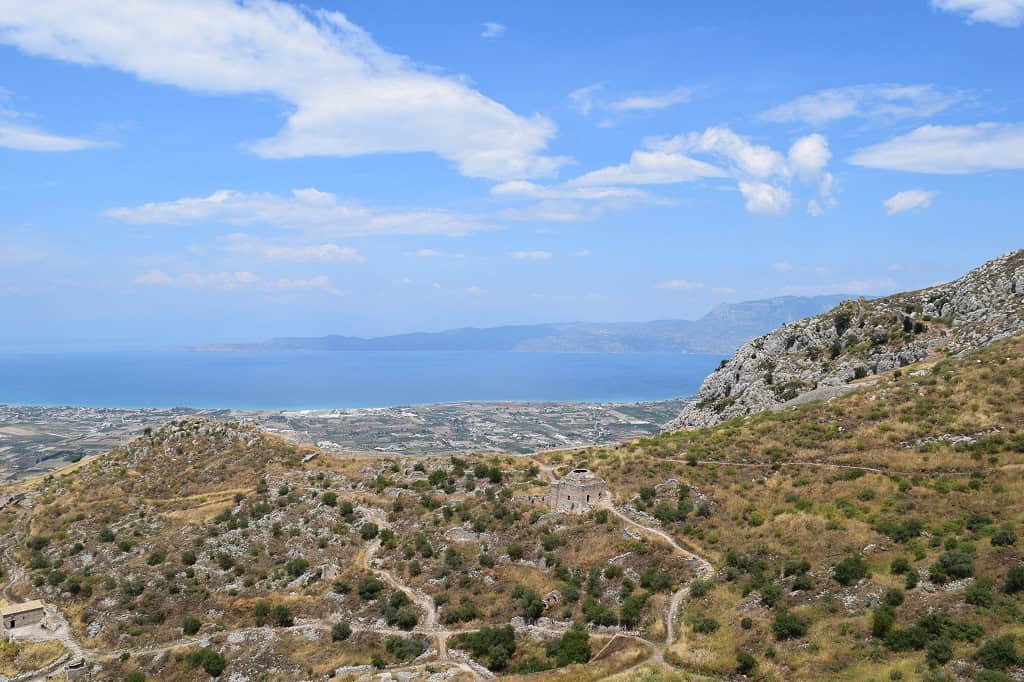
The identity of Acrocorinth is that of a natural fortress, and it has been continuously occupied by a succession of civilizations. The ancient Greeks and Romans held the site, and it was later controlled by the Byzantines, Franks, Venetians, and Ottoman Turks. Each power that controlled the region recognized its immense strategic importance, so they all left their mark on the fortifications. Today, the extensive ruins on its summit are a major archaeological site. It offers visitors a journey through layers of history, and it also provides spectacular panoramic views of the Corinthian and Saronic gulfs.



History of Acrocorinth
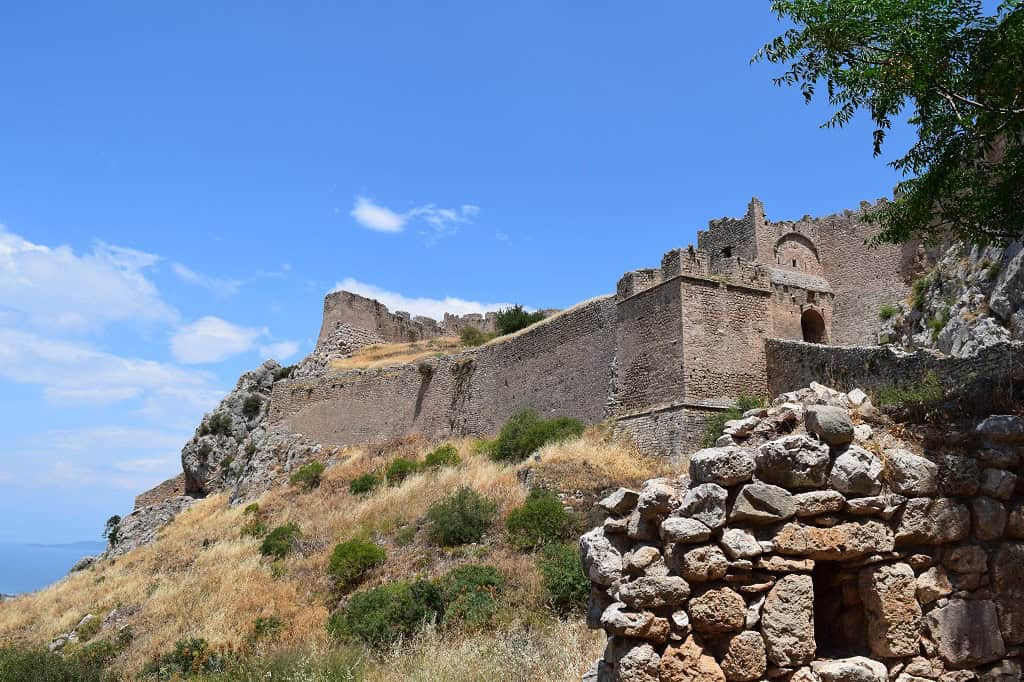
The history of Acrocorinth is a long and complex story, for it has been a strategic fortress for over seven thousand years. The site was first settled in the Neolithic period. Its easily defensible position made it a natural place for a stronghold. The main fortifications that are visible today are primarily medieval in origin, but they are built upon the foundations of earlier Greek and Roman walls. The fortress played a key role in the history of the Peloponnese. It served as the last line of defense for the region, and it was a symbol of power for whoever controlled it.
The Ancient Greek and Roman Acropolis
The hill of Acrocorinth served as the acropolis for the wealthy city-state of Corinth. In the classical period, it was famous for its Temple of Aphrodite, and this temple stood on its highest peak. According to the geographer Strabo, the temple was served by over a thousand sacred prostitutes. This story contributed to Corinth’s reputation for luxury and decadence. After the Romans conquered and destroyed Corinth in 146 BC, they later rebuilt the city. Acrocorinth once again became the site of its main temples and fortifications, and it was a key part of the Roman colony.
The Byzantine and Frankish Fortress
During the Byzantine period, the fortress was heavily refortified. This was to defend against Slavic invasions. It became a major administrative and military center for the Byzantine Empire in southern Greece. After the Fourth Crusade in the early 13th century, Acrocorinth was conquered by Frankish crusaders. They established the Principality of Achaea. The fortress became one of the most important castles for the Frankish rulers, and they expanded the fortifications. The castle played a key role in the many conflicts of this era, and it was a symbol of Crusader power.
Venetian and Ottoman Rule
In the 15th century, the fortress was conquered by the expanding Ottoman Empire. It later fell into the hands of the Republic of Venice. The Venetians also recognized its strategic importance, so they made further improvements to its defenses. The Venetians and the Ottomans fought for control of the fortress several times over the following centuries. The fortress was finally abandoned as a military installation in the 19th century. This happened after the Greek War of Independence. The massive earthquake of 1858, which destroyed the modern town of Corinth, also caused further damage to the historic fortress.


Sights in Acrocorinth
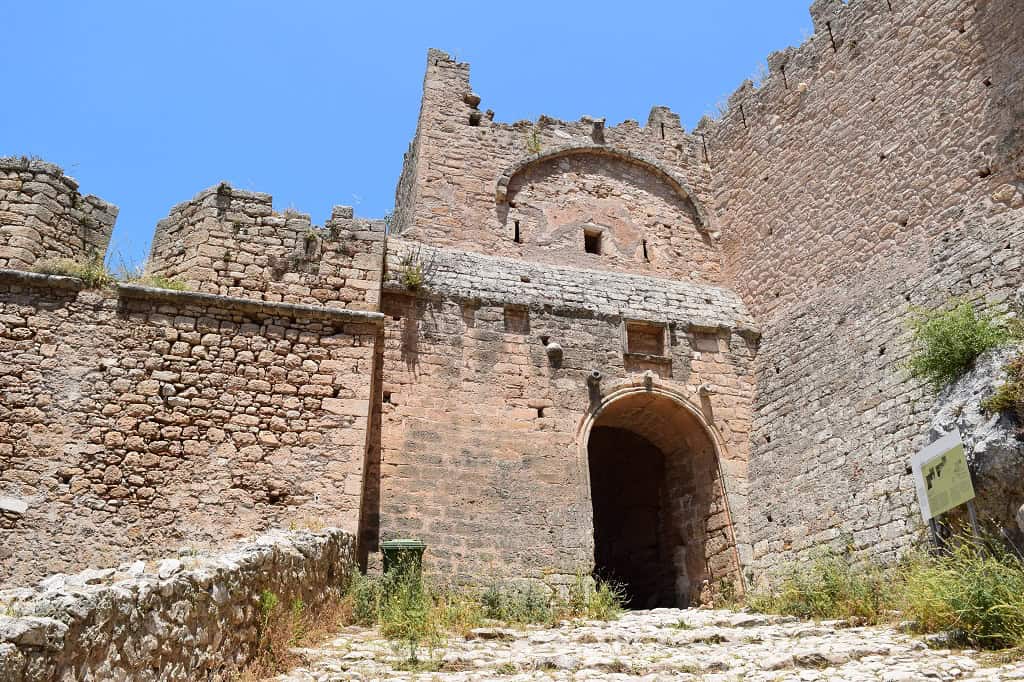
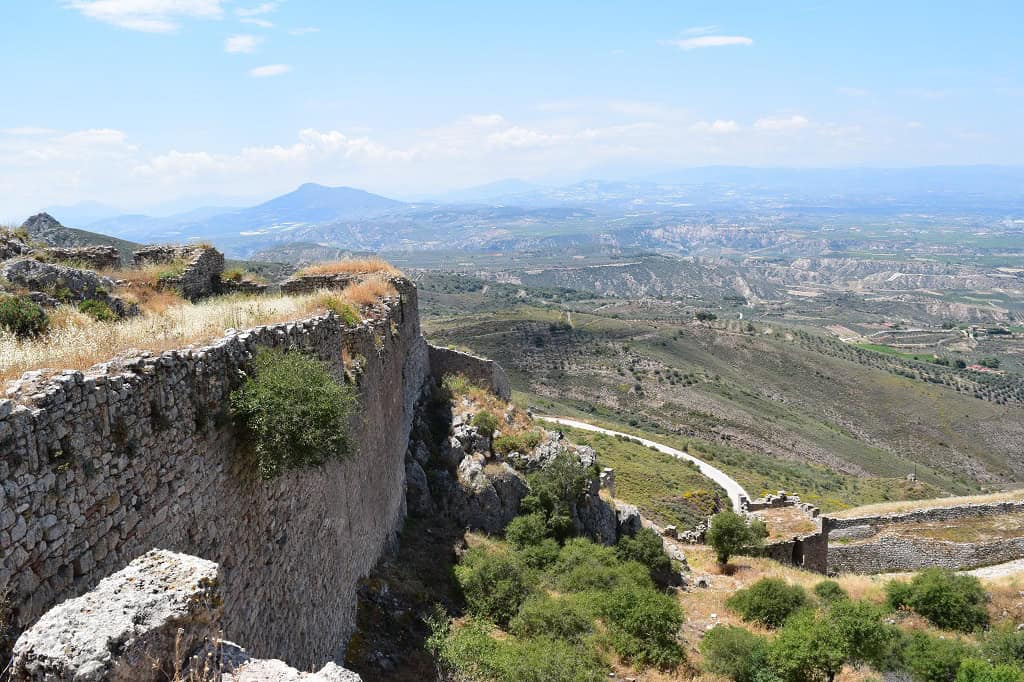
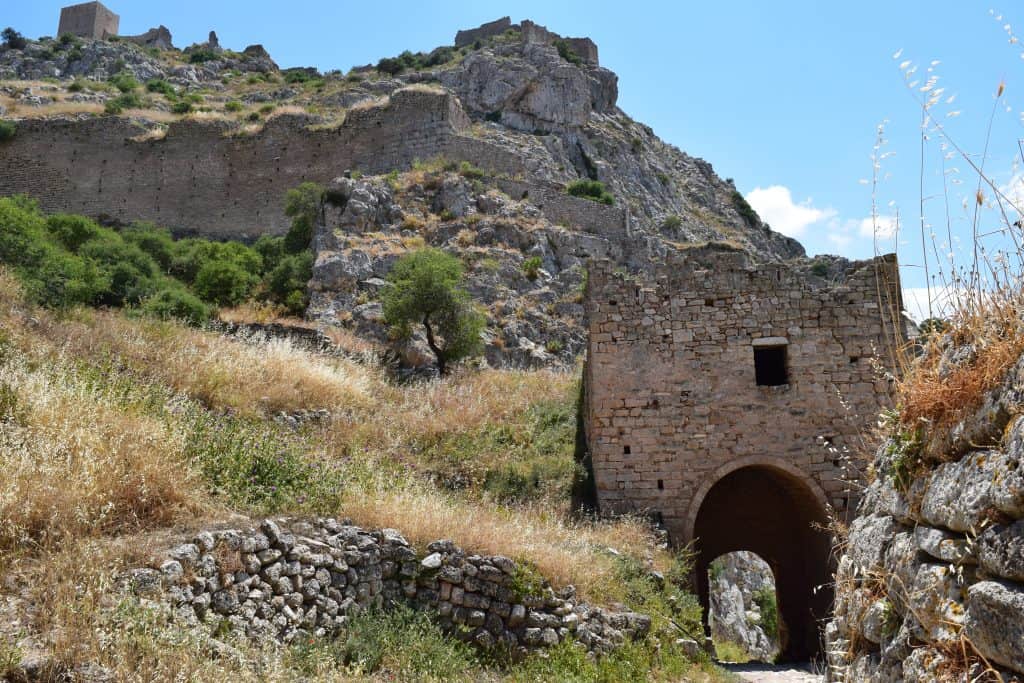
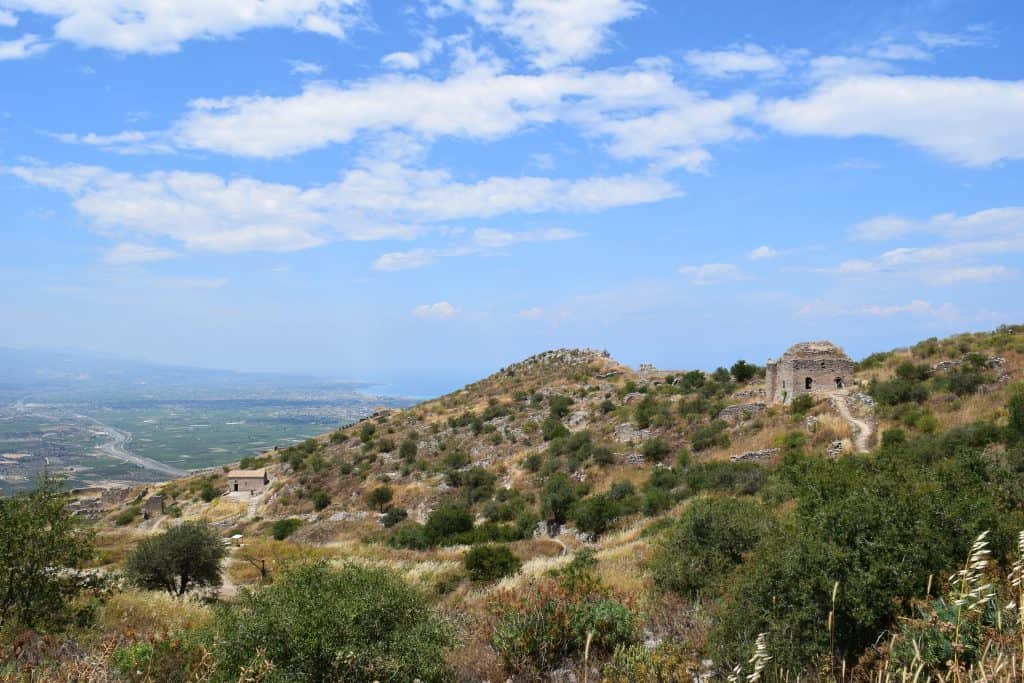
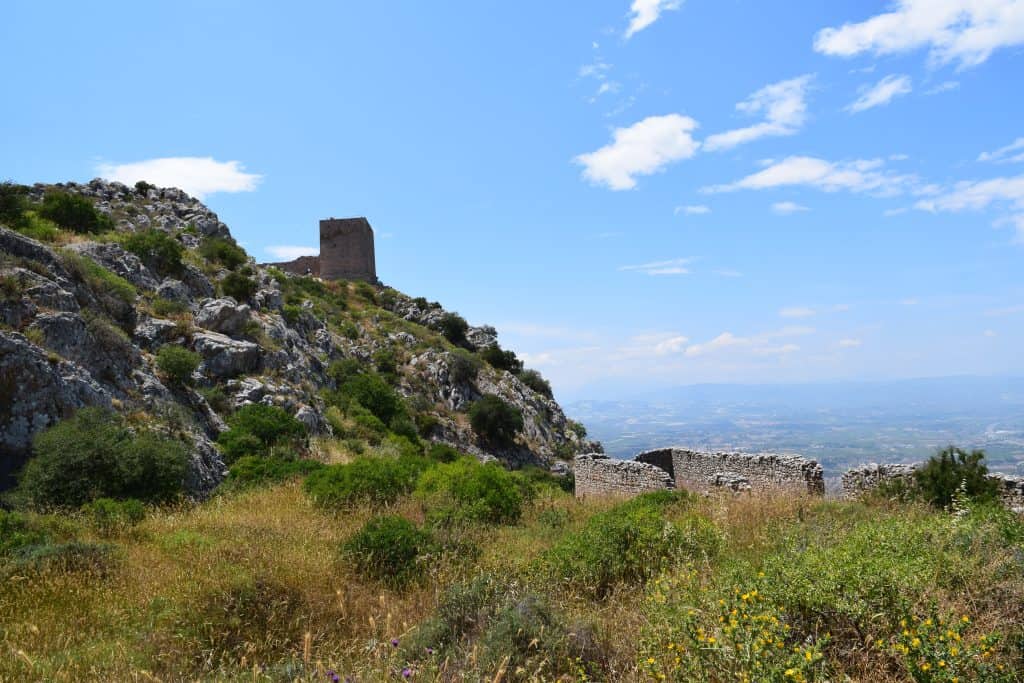
The sights at Acrocorinth are centered around its vast and impressive fortress, which is one of the largest in Greece. A visit involves a steep walk up a winding road to the main entrance. Once inside, a network of paths leads through the extensive ruins. The main attractions are the three successive lines of defensive walls and gates, and these represent different historical periods. At the highest point of the site are the remains of the famous Temple of Aphrodite. The panoramic views from the summit are a major highlight of any visit, and they are truly breathtaking.
The Three Lines of Fortifications
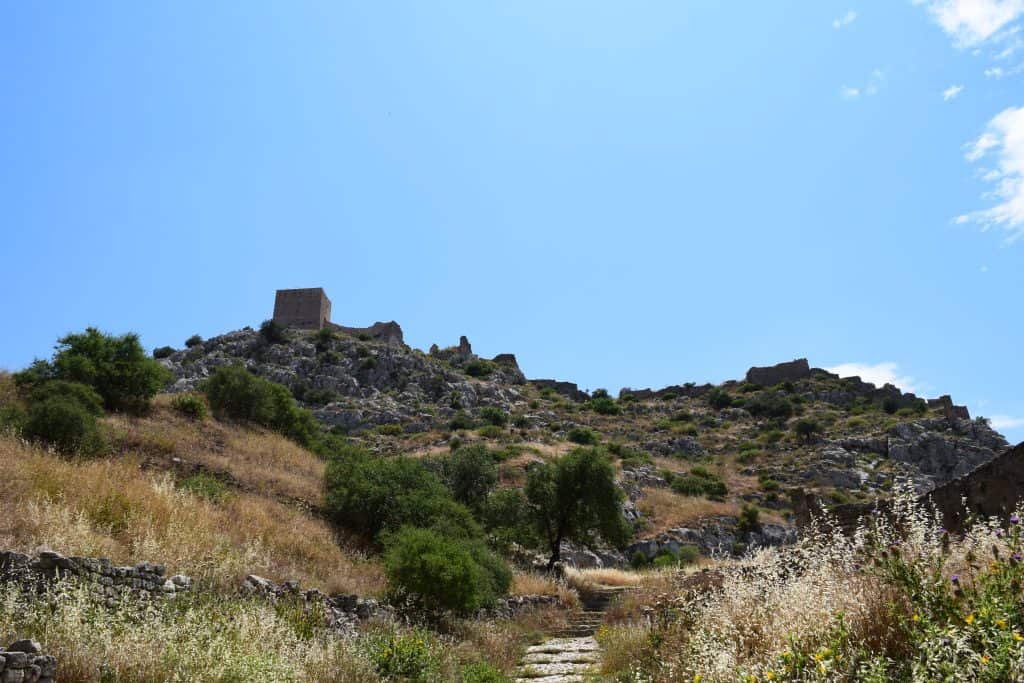
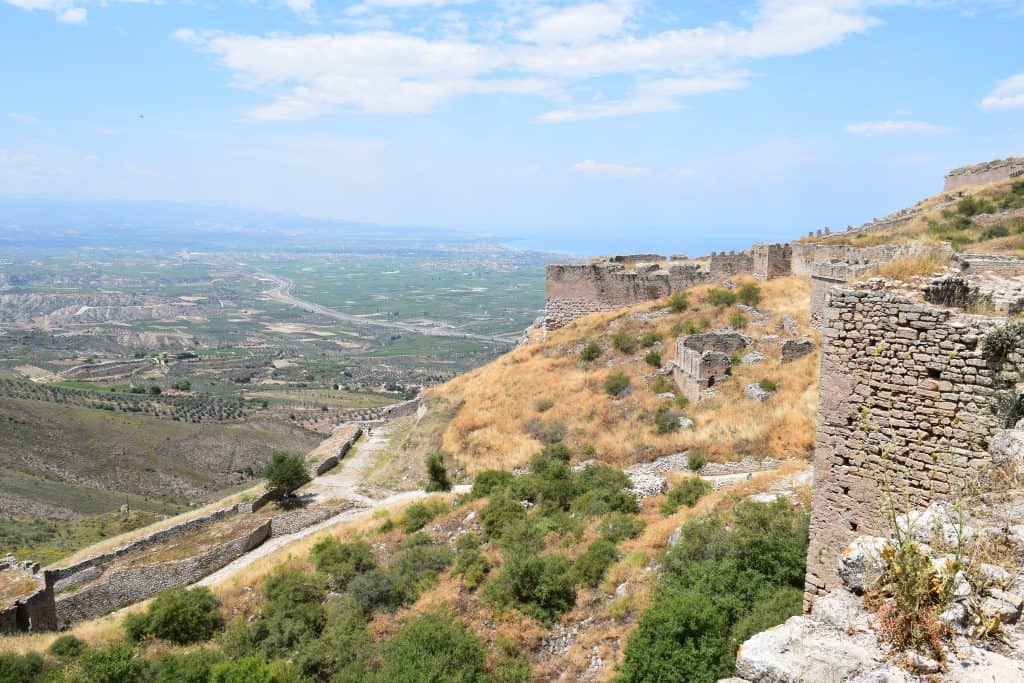
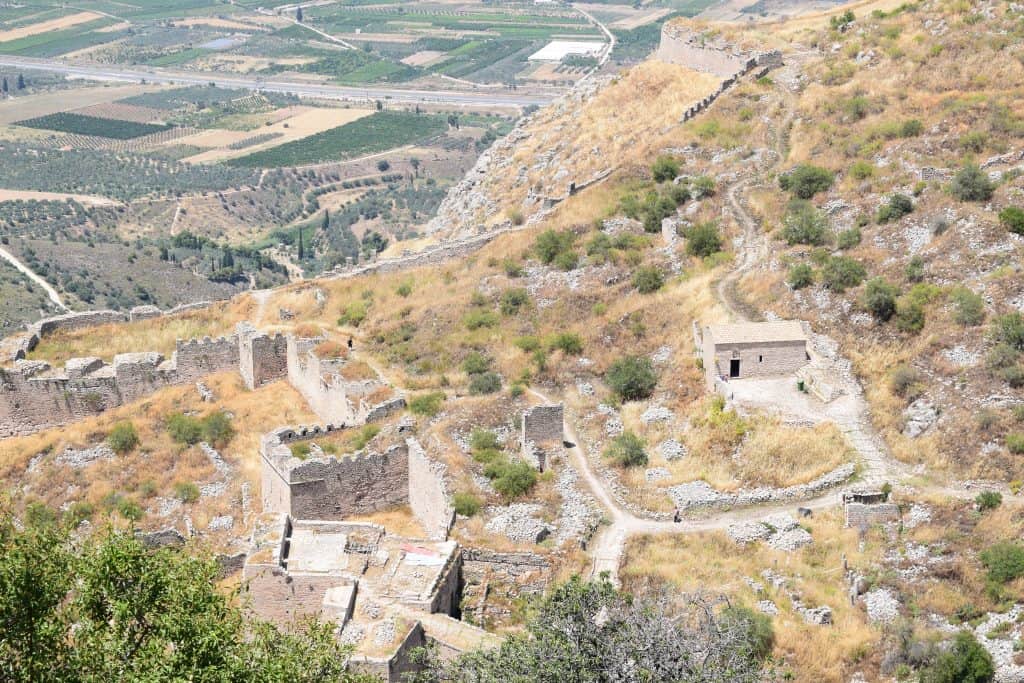
The most impressive feature of Acrocorinth is its massive system of fortifications. There are three successive lines of defensive walls. Visitors must pass through these to reach the summit. The first gate and wall were built by the Turks. The second line of defense is from the Venetian period. The third and innermost line of walls is the oldest, and parts of it date back to the Byzantine and even the ancient Greek periods. Walking through these three gates is like walking through the different historical layers of the fortress, and it gives a sense of the castle’s long history.
The Upper Keep and Summit
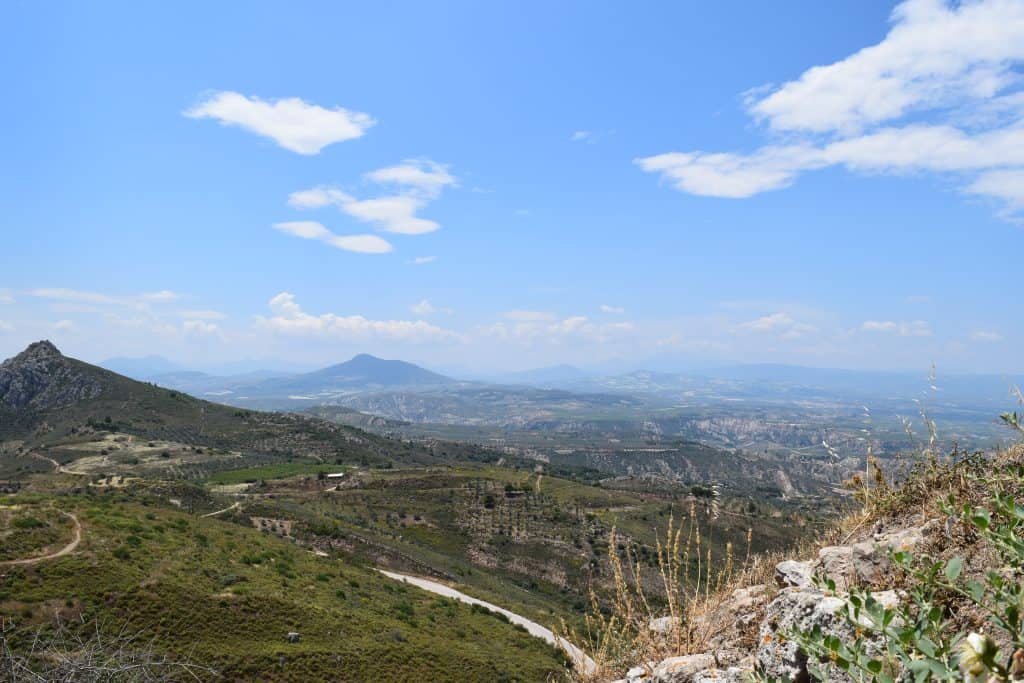
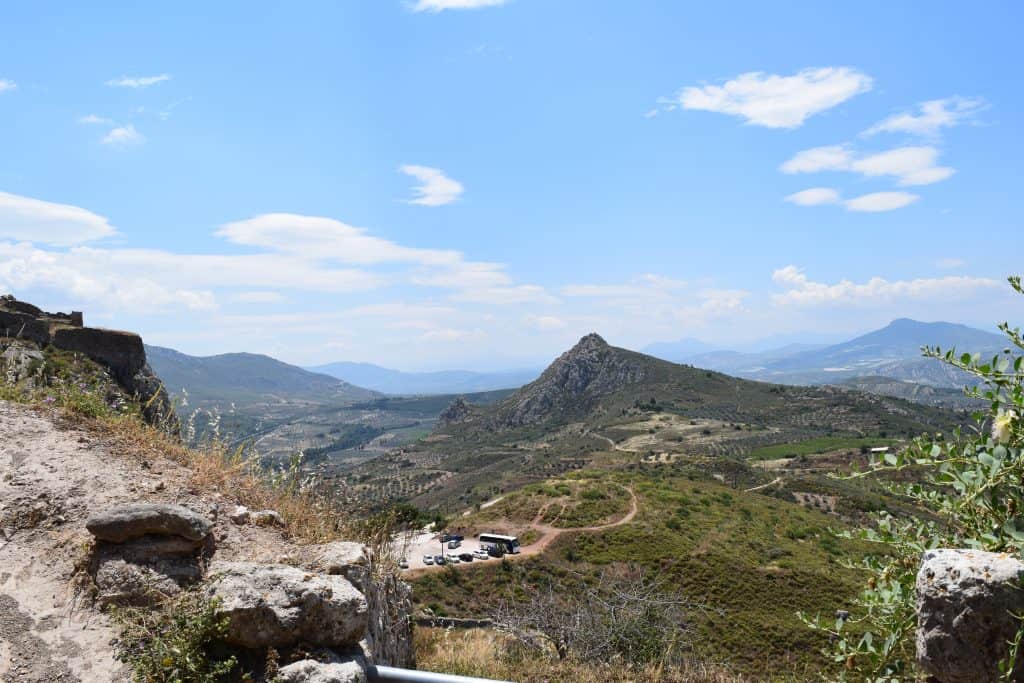
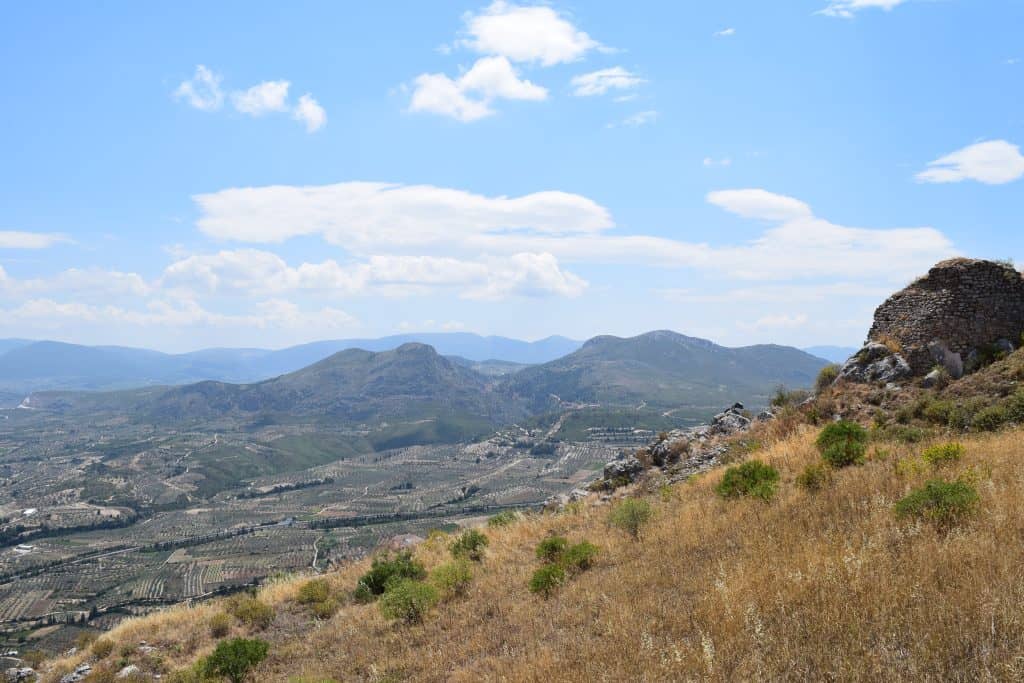
At the highest point of the site is the upper keep of the fortress. This was the final defensive position, and it was the residence of the castle’s commander. From this vantage point, the panoramic views are spectacular. You can see the ancient city of Corinth below, and you can also see the modern city and the Corinth Canal. The view includes both the Corinthian and Saronic gulfs. On a clear day, you can even see the mountains of central Greece. This is the spot where the famous Temple of Aphrodite once stood.
The Fountain of Peirene
Within the walls of the fortress, there is a famous spring known as the Fountain of Peirene. This spring provided a secure source of water for the defenders. This was crucial during a long siege. The spring is associated with many ancient Greek myths. According to legend, the spring was created by the hoof of the winged horse Pegasus. The fountain is located in a beautifully constructed underground chamber, and it has been a source of fresh water since ancient times. It is a cool and refreshing place to visit after the climb up the hill.
The Frankish Tower
Another prominent feature within the fortress is the large Frankish Tower. This massive keep was built by the Frankish crusaders in the 13th century, and it was part of their expansion of the castle. The tower is a powerful example of medieval European military architecture. It served as the central stronghold of the Frankish section of the fortress. Its impressive ruins stand as a testament to the period when this Greek citadel was ruled by French knights, and it is a key landmark within the upper part of the castle.
Getting Around at Acrocorinth
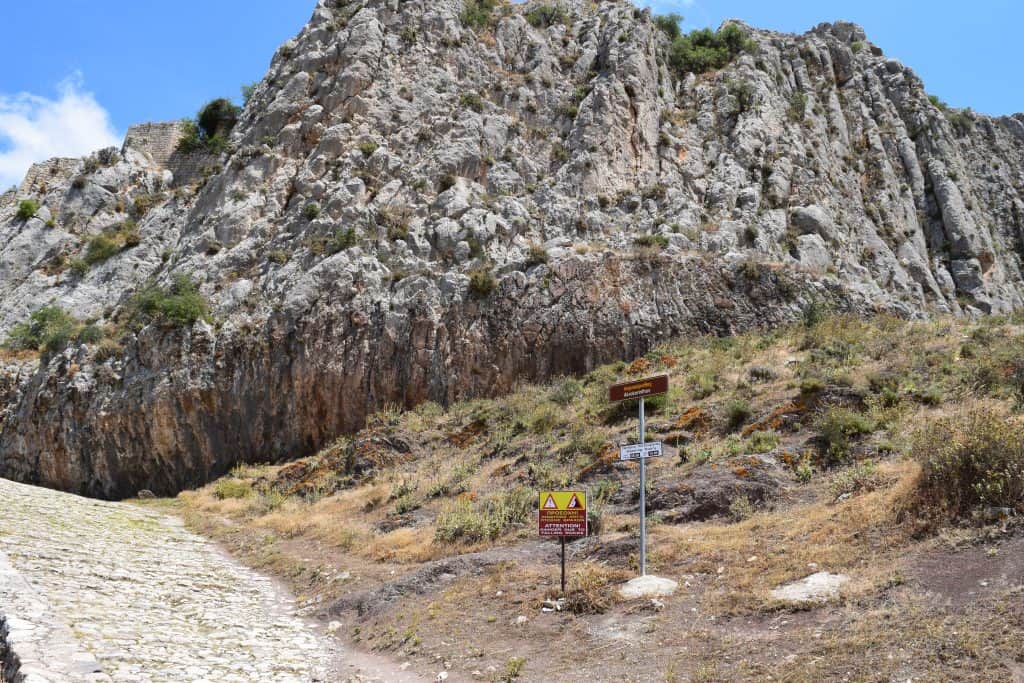
The archaeological site of Acrocorinth is explored entirely on foot. A steep but paved road leads up to the main entrance of the fortress. Inside the walls, a network of rough paths and trails connects the different parts of the site. To reach Acrocorinth, a car is the most convenient option, as it allows you to drive all the way up to the main gate. However, it is also possible to reach the site by taking a taxi from the nearby village of Ancient Corinth.
Exploring by Foot
Once you are at the entrance to the fortress, walking is the only way to explore the vast site. The terrain is steep and rocky, so sturdy and comfortable walking shoes are essential. The main path leads up from the main gate to the summit. There are also many smaller paths that lead to different parts of the ruins. The site is very large, and a thorough exploration can take several hours, so it is good to bring water with you.
How to Get to Acrocorinth?
Acrocorinth is located in the Peloponnese region of Greece, and it is just a few kilometers south of the modern city of Corinth. The site is very easy to reach, for it is located very close to the main motorway that connects the capital city, Athens, with the Peloponnese. The primary gateway for international visitors is Athens International Airport. From Athens, Acrocorinth can be easily reached by car or by a combination of public transport.
Arriving by Air
The closest and most convenient airport is Athens International Airport (ATH). This is the largest and busiest airport in Greece, and it is served by numerous airlines with connections to destinations all over the world. The airport is located about a 1.5-hour drive from Acrocorinth. From the airport, you can rent a car and drive directly to the site. It is also possible to take a suburban train or a bus from the airport to the city of Corinth.
Driving to the Site
Driving to Acrocorinth is very straightforward. The site is located just a few kilometers from the main A8 motorway (Olympia Odos). This is the main highway that connects Athens with the city of Patras in the western Peloponnese. You take the exit for Ancient Corinth, and then you follow the signs for Acrocorinth. A well-paved but steep and winding road leads from the village of Ancient Corinth up to the parking area at the entrance of the fortress.
Journey by Rail
It is also possible to reach the area by train. The suburban railway, the Proastiakos, runs from Athens International Airport and the main railway station in Athens to the city of Kiato. You would get off at the station for the modern city of Corinth. From the train station in Corinth, you would then need to take a short taxi ride to the village of Ancient Corinth. Then, you would need another taxi up to the Acrocorinth fortress.
Connecting by Bus
Long-distance buses, known as KTEL, are another excellent option for reaching the area. There are very frequent and comfortable bus services from the Kifissos Bus Terminal in Athens to the modern city of Corinth. The journey takes about one and a half hours. From the bus station in Corinth, you would then need to take a taxi to reach the Acrocorinth fortress. The buses are a very reliable and affordable way to travel.
Driving Distances
The driving distance from 20 regional cities, according to Google Maps:
- Corinth, Greece – 8 kilometers (0 h 15 min)
- Nafplio, Greece – 50 kilometers (0 h 50 min)
- Tripoli, Greece – 80 kilometers (1 h 00 min)
- Athens, Greece – 85 kilometers (1 h 10 min)
- Patras, Greece – 130 kilometers (1 h 30 min)
- Sparta, Greece – 140 kilometers (1 h 50 min)
- Olympia, Greece – 190 kilometers (2 h 20 min)
- Ioannina, Greece – 340 kilometers (3 h 30 min)
- Tirana, Albania – 550 kilometers (6 h 30 min)
- Thessaloniki, Greece – 580 kilometers (5 h 40 min)
- Skopje, North Macedonia – 660 kilometers (6 h 40 min)
- Podgorica, Montenegro – 750 kilometers (10 h 00 min)
- Sofia, Bulgaria – 850 kilometers (8 h 30 min)
- Sarajevo, Bosnia and Herzegovina – 950 kilometers (12 h 00 min)
- Belgrade, Serbia – 1100 kilometers (11 h 00 min)
- Istanbul, Turkey – 1150 kilometers (12 h 00 min)
- Zagreb, Croatia – 1250 kilometers (12 h 30 min)
- Rome, Italy – 1300 kilometers (plus ferry)
- Budapest, Hungary – 1350 kilometers (13 h 30 min)
- Ljubljana, Slovenia – 1400 kilometers (14 h 00 min)
Looking to Explore more of Greece and Europe?