Piran | Exploring Slovenia
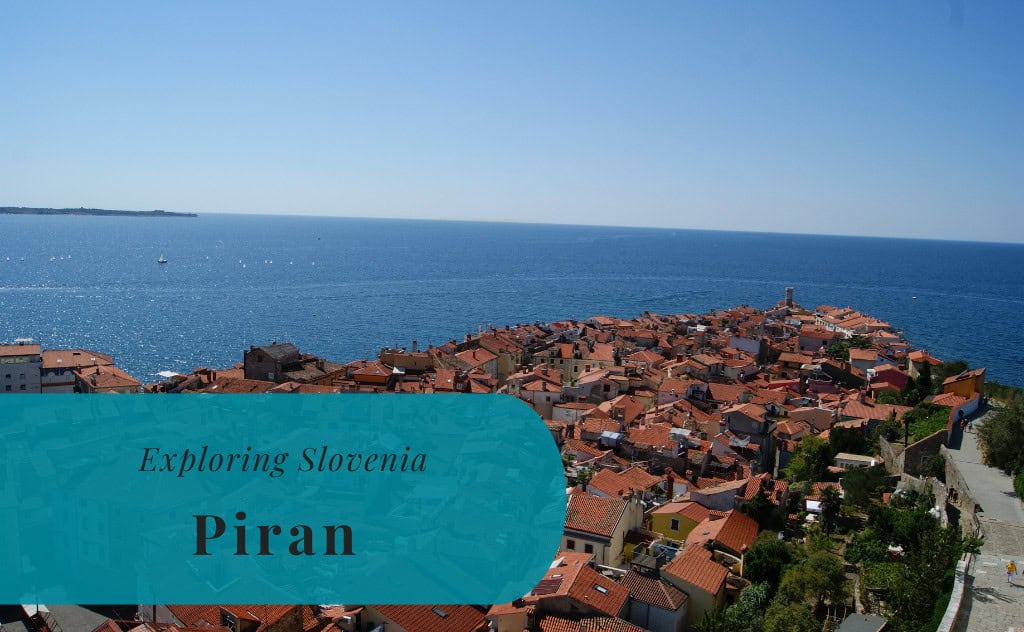
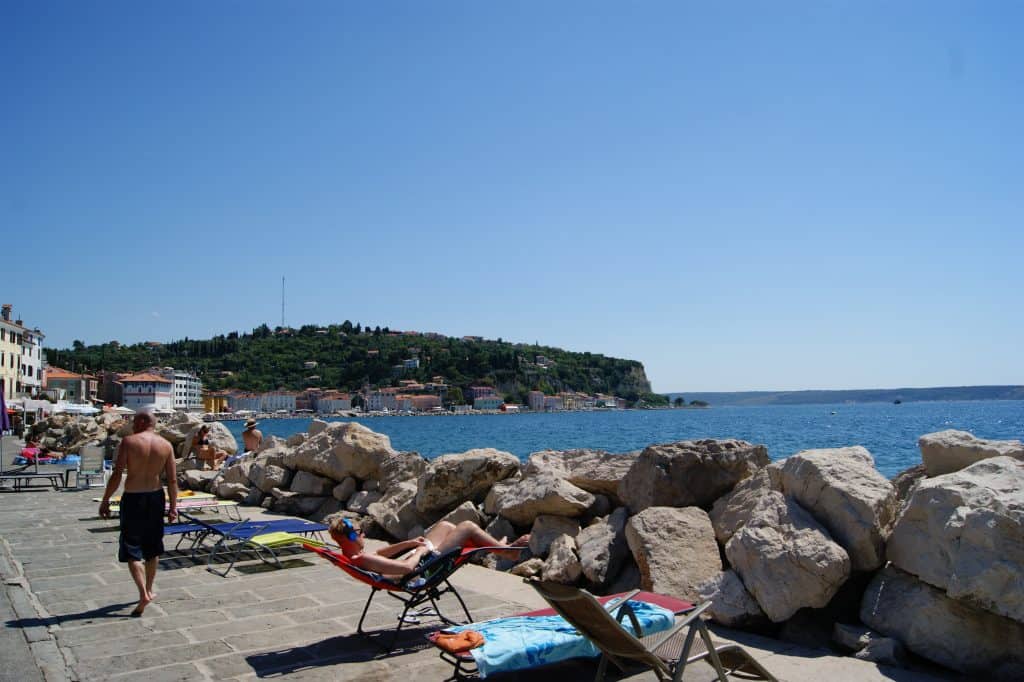
Piran is a town on Slovenia’s Adriatic coast, located in the region of Slovenian Istria. The town is situated on a narrow peninsula that extends into the Adriatic Sea. With a population of approximately 3,700 residents, Piran is a significant historical and tourist destination. Its geography makes it a prominent feature on the short Slovenian coastline. Nearby coastal towns include Portorož and Koper, while Trieste in Italy and Poreč in Croatia are also close.
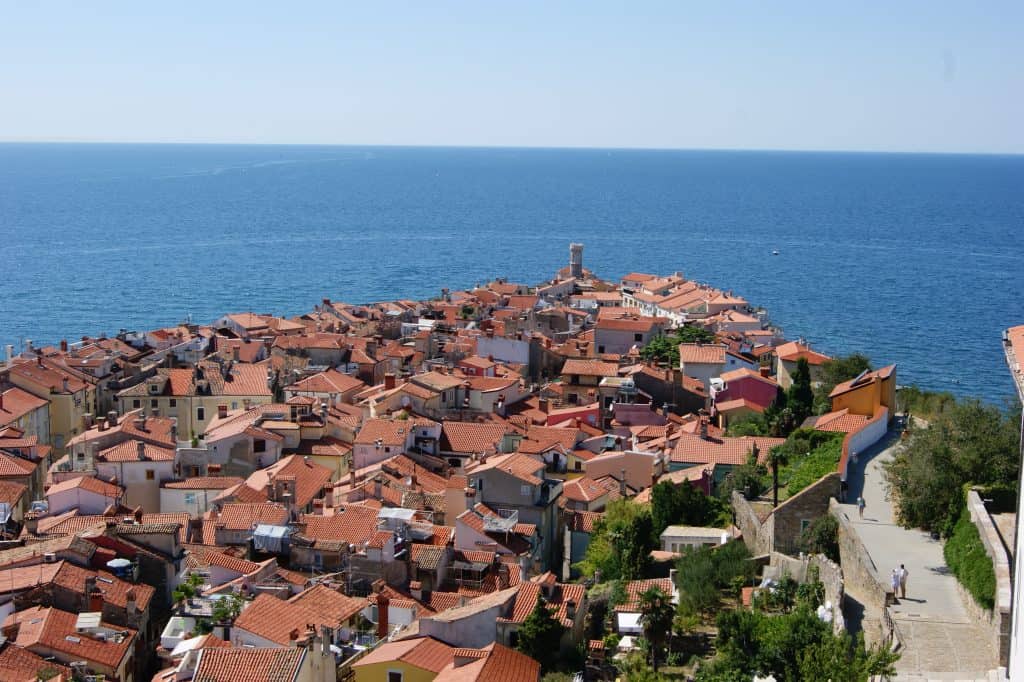
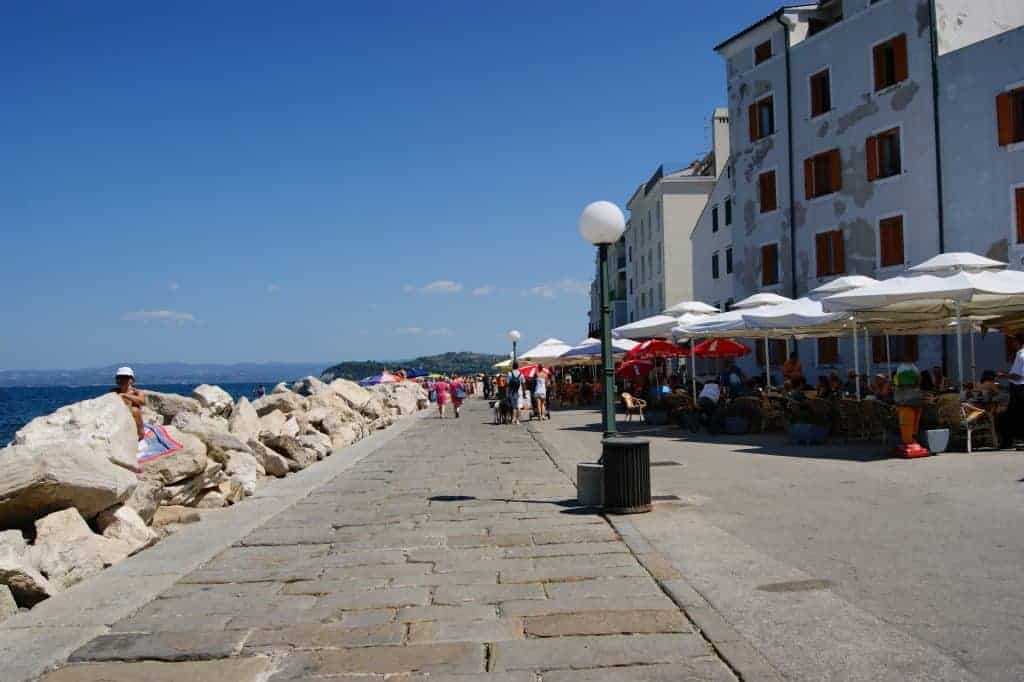
The town’s character is defined by its well-preserved Venetian Gothic architecture. The Old Town is a dense network of narrow streets and compact squares, reflecting its medieval origins. Piran’s history is deeply connected to the sea, having served as a port and a center for salt production for centuries. Today, it is one of Slovenia’s primary tourist destinations, with a bilingual administration where both Slovene and Italian are official languages.



A Short History of Piran
The history of Piran spans from the Roman era to the modern Republic of Slovenia. The town’s development was overwhelmingly shaped by nearly five centuries of Venetian rule, which gave the town its distinct architectural and cultural identity. Its strategic position on a peninsula and its valuable salt pans were key factors throughout its long history. Following the decline of Venice, Piran’s allegiance shifted between major European powers before its final incorporation into Slovenia in the 20th century.
Roman Origins and Venetian Rule
The history of Piran dates back to Roman times, with evidence of a settlement known as Piranum. However, its true prominence began in the medieval period as it grew into a fortified town. The town eventually came under the control of the Republic of Venice in 1283. It remained under Venetian rule for nearly five centuries, until the fall of the republic in 1797. This long period profoundly shaped Piran’s architecture, culture, and urban layout, with its narrow streets and public squares reflecting Venetian design.
Austrian Port and Italian Interlude
After the fall of Venice, Piran was annexed by the Austrian Empire. Under Austrian rule, it continued to be an important port for the region, particularly for the nearby salt pans in Sečovlje, which were a key economic asset. Following World War I and the dissolution of the Austro-Hungarian Empire, Piran and the Istrian peninsula were awarded to the Kingdom of Italy. The town remained part of Italy until after World War II.
Yugoslav Era and Independent Slovenia
After World War II, Piran became part of the Free Territory of Trieste under Allied administration. In 1954, the territory was dissolved, and Piran was officially incorporated into Yugoslavia, as part of the Socialist Republic of Slovenia. It remained part of Yugoslavia for several decades. Following Slovenia’s declaration of independence in 1991, Piran became one of the most important tourist and cultural centers of the new Republic of Slovenia.



Things to Do and See
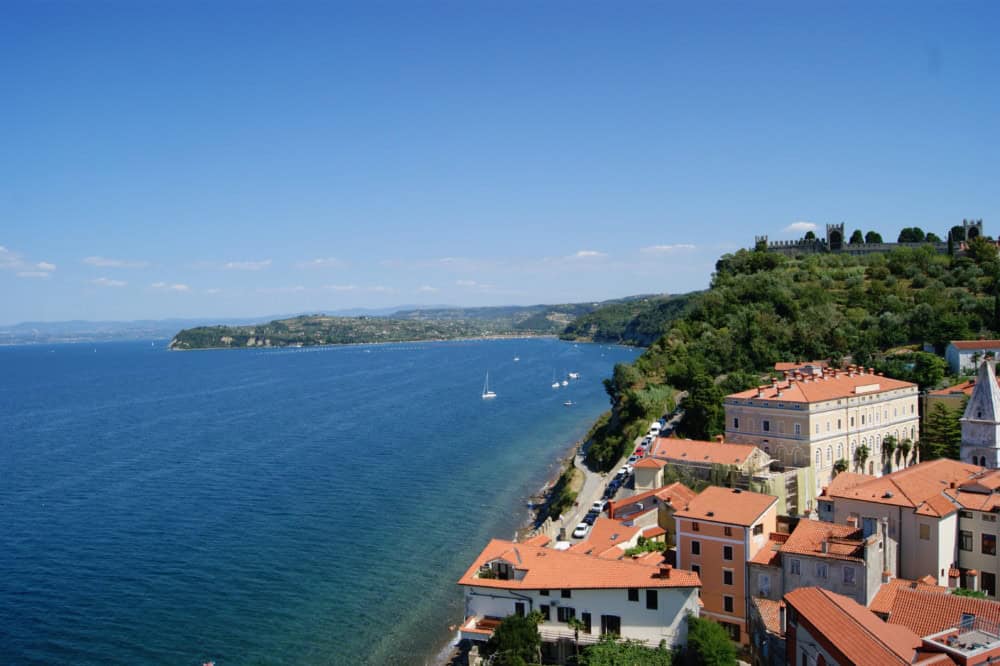
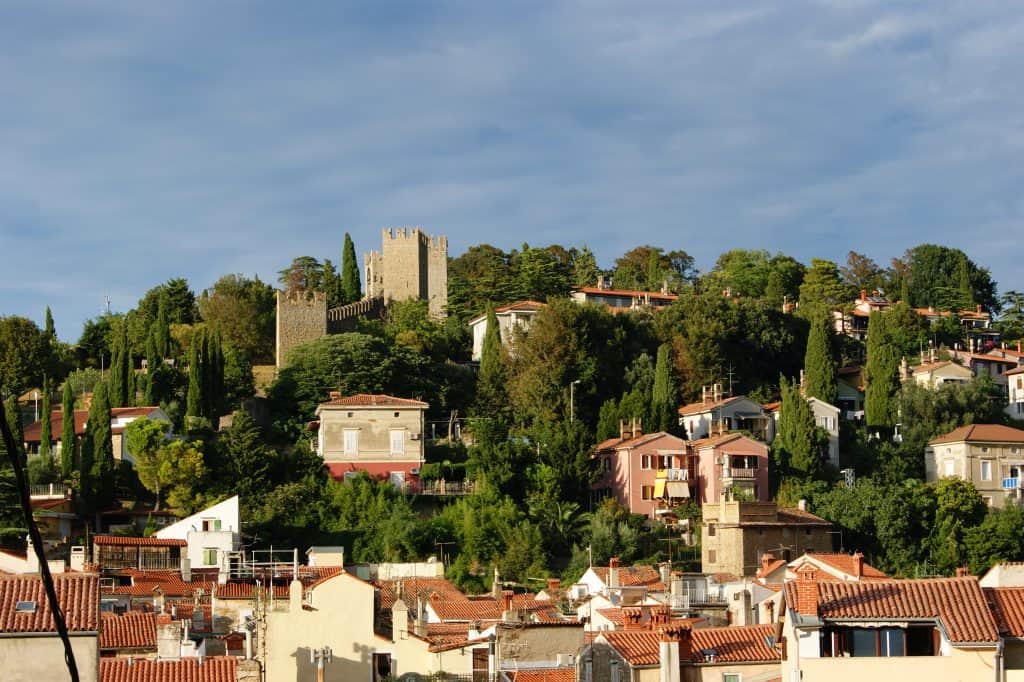
Piran’s sights are concentrated in its compact Old Town, which is a protected cultural monument. The main points of interest include its large central square, the dominant church on the hill above the town, and the preserved sections of its medieval defensive walls. The town’s Venetian-era architecture is itself a primary attraction.
Tartini Square
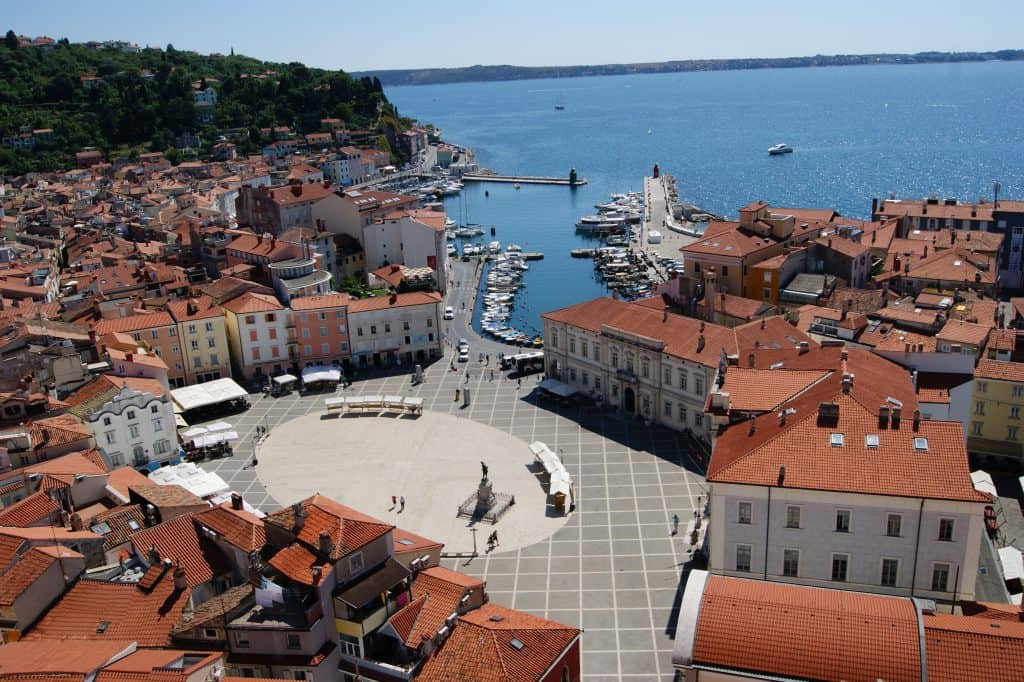
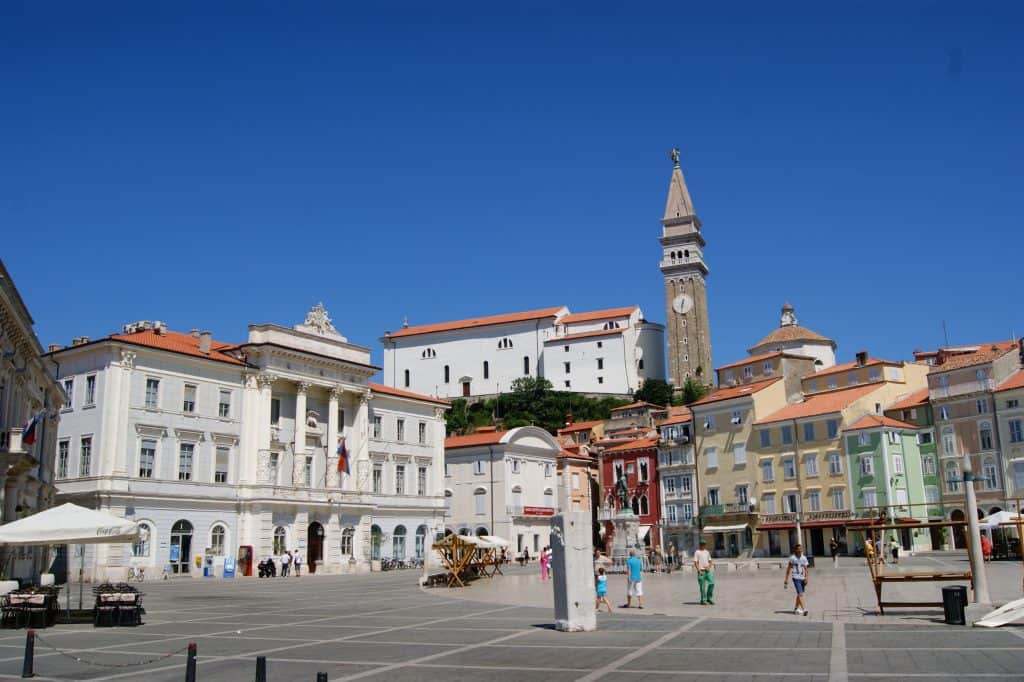
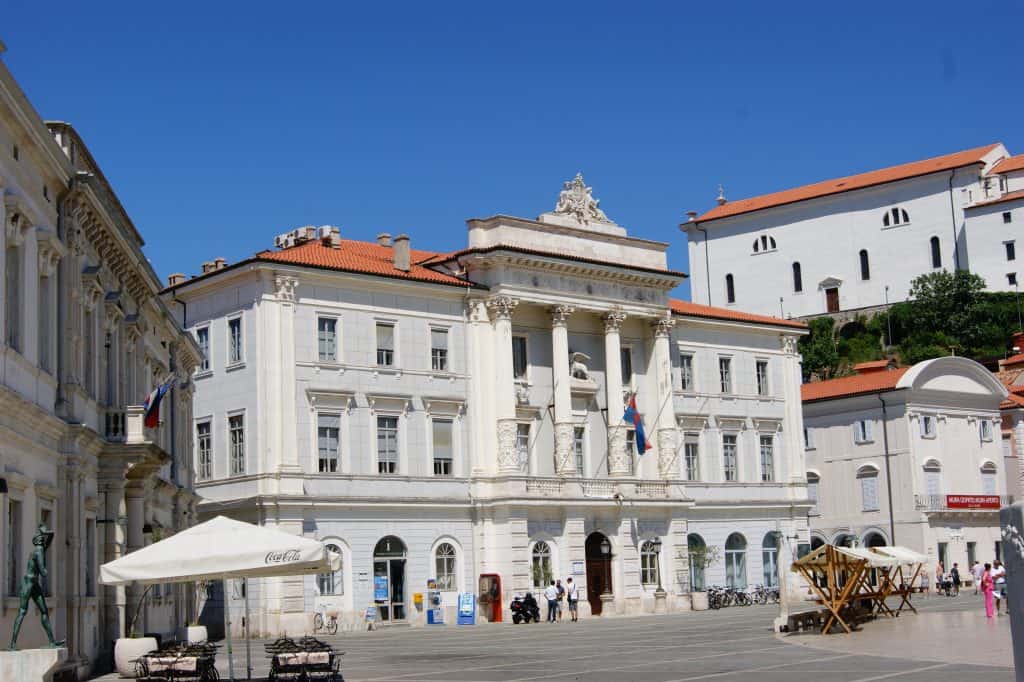
Tartini Square (Tartinijev trg) is the main square and the heart of Piran. The large, elliptical square is surrounded by buildings showcasing Venetian architecture. It was originally an inner harbor for smaller boats until it was filled in and paved in 1894. The square is named after the violinist and composer Giuseppe Tartini, who was born in a house on the square in 1692. A large monument to Tartini, erected in 1896, stands in its center.
St. George’s Church
St. George’s Church (Cerkev sv. Jurija) is located on the hill above Piran, overlooking the town and the sea. The current Baroque church was built in the 17th century, though a church has existed on the site for much longer. Its design was influenced by Venetian architecture. The church’s bell tower is a separate, freestanding structure that was modeled on St. Mark’s Campanile in Venice. Visitors can climb the bell tower for panoramic views of Piran and the Adriatic coast.
Piran Town Walls
The Piran Town Walls (Mestno obzidje) are a testament to the town’s medieval defenses. Constructed primarily between the 7th and 16th centuries, these walls protected the town from land-based invasions. Several sections of the wall, including multiple defensive towers and gates, are well-preserved and accessible to the public. A walk along the restored sections of the wall offers unique perspectives and views of the red-roofed Old Town below.
Maritime Museum “Sergej Mašera”
The Maritime Museum “Sergej Mašera” (Pomorski muzej Piran) is dedicated to the maritime history of the Slovenian coast. It is housed in the 19th-century Gabrielli Palace. The museum’s collections include ship models, navigation instruments, fishing equipment, and artifacts related to the local salt production industry. The museum explores the history of seafaring, shipbuilding, and trade in the northern Adriatic, highlighting Piran’s historical relationship with the sea.
Venetian House
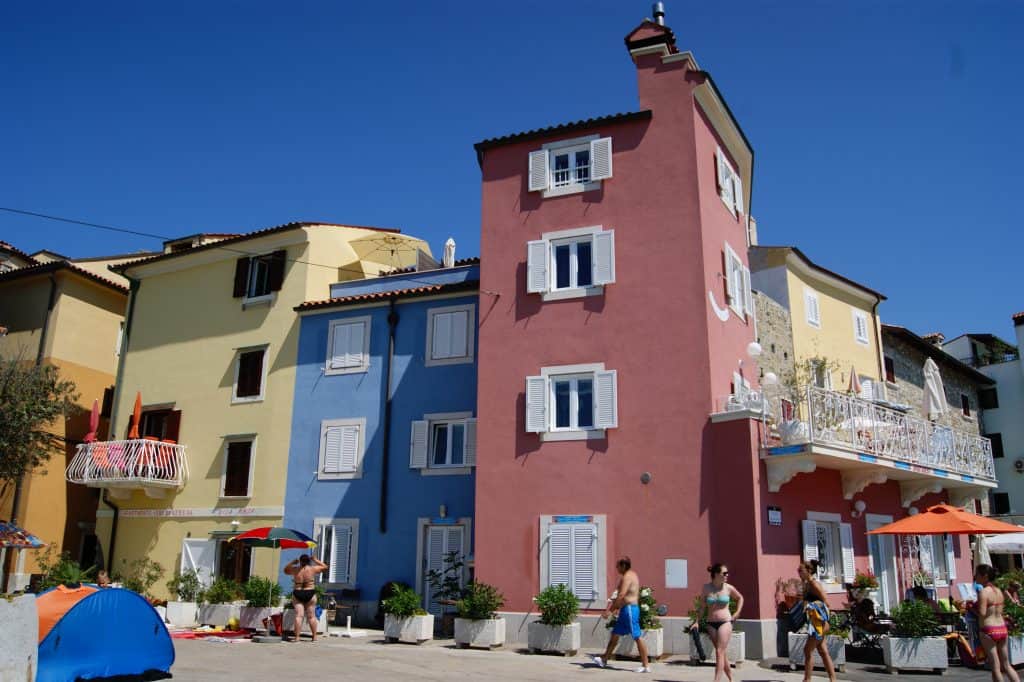
The Venetian House (Benečanka) is one of the most well-known buildings on Tartini Square. It is a preserved example of Venetian Gothic architecture from the mid-15th century. Its red facade, ornate windows, and prominent corner balcony are key features. According to a local legend, the house was built by a wealthy Venetian merchant for his local Piranese lover. The inscription between the windows reads “Lassa pur dir” (“Let them talk”).





How to Get to Piran
Reaching Piran is straightforward, as it is well-connected to the regional transport network. Its location near the borders of Italy and Croatia makes it accessible from several countries. The final approach often involves connecting through a larger Slovenian or Italian city.
Arriving by Air: Nearby Gateways
The closest international airport to Piran is Trieste Airport (TRS) in Italy, located approximately 80 kilometers away. Ljubljana Jože Pučnik Airport (LJU) is Slovenia’s main airport, around 140 kilometers from Piran. Other nearby options include Venice Marco Polo Airport (VCE) in Italy and Pula Airport (PUY) in Croatia. From any of these airports, onward travel is typically by bus, shuttle service, or rental car.
The Open Road: Driving to the Coast
Driving to Piran offers flexibility for exploring the Istrian peninsula. The A1 motorway connects Slovenia’s capital, Ljubljana, to the coastal city of Koper. From Koper, local roads lead the final 17 kilometers to Piran. Visitors arriving by car must use the designated parking garages outside the historic center, as the town itself is a pedestrian-only zone.
Connecting by Coach
Bus services provide an economical way to reach Piran. The main bus station is located near Tartini Square. Arriva Slovenia operates frequent domestic routes that connect Piran with major Slovenian cities like Ljubljana and Koper. International services, often operated by FlixBus, connect Ljubljana and nearby Trieste with cities across Europe. A transfer to a local bus may be required.
On Track: A Journey by Rail and Bus
Piran does not have its own railway station. The nearest train station is in Koper, Slovenia’s main port city, approximately 17 kilometers away. Slovenian Railways (SŽ) operate frequent services to Koper from Ljubljana. From the Koper railway station, regular local bus services provide direct connections to Piran. The bus journey from Koper to Piran takes about 30 minutes.
The Adriatic Route: Arriving by Ferry
For a scenic arrival, seasonal passenger ferries connect Piran with other ports on the Adriatic Sea. Venezia Lines operates a high-speed catamaran service between Piran and Venice, Italy, typically from April to October. Another operator, Trieste Lines, connects Piran with Trieste, Italy and towns on the Croatian coast like Poreč and Rovinj during the summer months. These ferries arrive directly at the port in the heart of Piran.
Driving Distances
The driving distance from 10 regional cities, according to Google Maps:
- Koper, Slovenia – 17 kilometers (0 h 20 min)
- Trieste, Italy – 40 kilometers (1 h 00 min)
- Ljubljana, Slovenia – 121 kilometers (1 h 30 min)
- Venice, Italy – 195 kilometers (2 h 30 min)
- Celje, Slovenia – 200 kilometers (2 h 10 min)
- Maribor, Slovenia – 249 kilometers (2 h 40 min)
- Zagreb, Croatia – 250 kilometers (3 h 00 min)
- Vienna, Austria – 504 kilometers (5 h 10 min)
- Munich, Germany – 538 kilometers (5 h 40 min)
- Budapest, Hungary – 584 kilometers (5 h 50 min)
Looking to Explore more of Slovenia and Europe?