Nice, Alpes-Maritimes | Exploring France
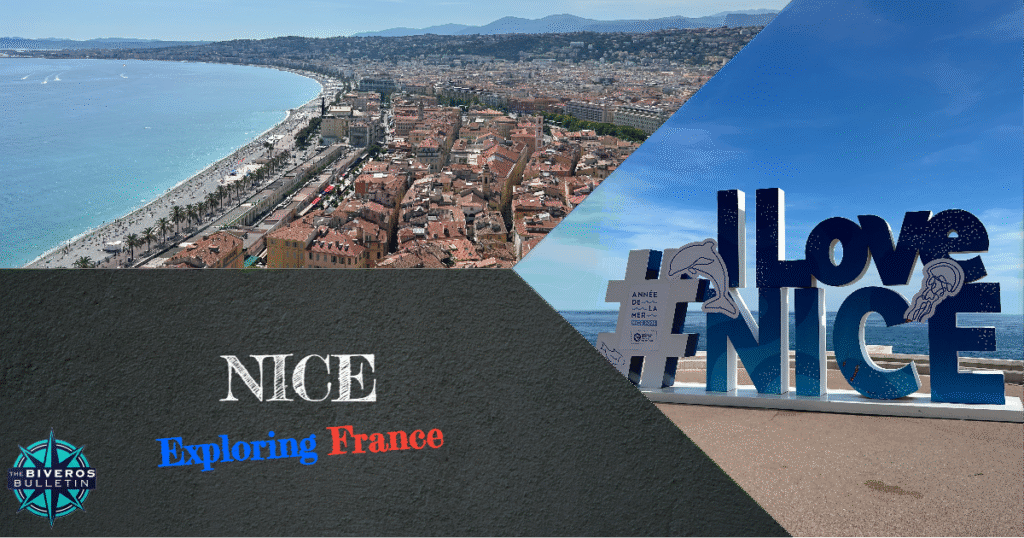
Nice is the capital of the Alpes-Maritimes department and a major city on the French Riviera (Côte d’Azur). The city is situated on the Baie des Anges, a large bay on the Mediterranean Sea, with the foothills of the Alps providing a backdrop to the north. With a population of approximately 343,000, Nice is the second-largest French city on the Mediterranean coast, after Marseille. It is located approximately 30 kilometers from the Italian border and 13 kilometers from the Principality of Monaco. The entire city, in its capacity as the “Winter Resort Town of the Riviera,” is a designated UNESCO World Heritage Site.
The city’s character is defined by its coastal promenade, its historic old town, and its role as a major tourist destination. The climate is Mediterranean, with mild winters and warm, dry summers, which first attracted international visitors in the 18th century. Today, Nice is a busy urban center that combines its historical Italianate and French influences with a modern, service-based economy. The city’s urban landscape includes the dense network of streets in the old town, the grand boulevards of the 19th-century city, and modern transport infrastructure.
As a key center for the wider Provence-Alpes-Côte d’Azur region, Nice serves as a primary gateway for visitors exploring the area. Its large airport, major train station, and position on the main coastal motorway make it a hub for travel along the Riviera. The city is also a center for education and culture, with several important museums, a university, and an opera house. This blend of tourism, history, and daily life gives the city its specific character.

Good to Know When Visiting Nice
To help with planning a visit, here are several practical points covering daily essentials, timing, and efficient exploration of the city. Understanding these details can make a trip to Nice more convenient. This information is intended to provide a general overview for travelers preparing to visit this major European destination.
The Daily Essentials
The official currency used in Nice is the Euro (EUR). Credit and debit cards are widely accepted in almost all establishments, including restaurants and shops. However, it is advisable to carry some cash for smaller purchases at local markets or for smaller cafes. The official language is French. In tourist areas, English is widely spoken in hotels and major restaurants, but less so in smaller, local establishments. Tipping is not obligatory as a service charge (service compris) is usually included in the bill, but it is common to leave a small extra amount for good service. The tap water in Nice is safe to drink. The electrical system uses Type E sockets with a standard voltage of 230V. As a major city, visitors should be mindful of pickpocketing in crowded areas.
Planning Your Calendar
Nice is a year-round destination, but the experience varies significantly by season. The spring (April-June) and autumn (September-October) months are often considered the best time to visit, offering mild and pleasant weather for exploring. The summer (July-August) is the peak tourist season, with hot weather and the largest crowds. The winter is mild and can be a good time to visit the city’s museums with fewer people. The city’s most famous festival is the Nice Carnival, one of the world’s major carnival events, which takes place over two weeks in February. For a first-time visitor, three to four days is generally sufficient to see the main sights. A longer stay would allow for day trips to other Riviera towns.
A Tourist’s Toolkit for Exploration
The historic center of Nice (Vieux Nice) and the main promenade are best explored on foot. For longer distances, the city has an efficient public transport system of trams and buses operated by Lignes d’Azur. A multi-trip card or a day pass can be an economical option for visitors planning to use the network frequently. The French Riviera Pass is another option, offering access to many sights and activities along the coast. It is highly advisable to book tickets for major museums like the Musée Chagall online in advance, especially during peak season. It is also important to check the opening hours for museums, as many are closed on Mondays.


A Short History of Nice
The history of Nice spans more than two millennia, from its origins as a Greek trading post to its modern status as a major French city. Its strategic coastal location has made it a contested territory for centuries, with its cultural identity shaped by both Italian and French rule. This long history is evident in the city’s architecture, language, and traditions. The decision to develop Nice as a winter resort for the European aristocracy in the 18th and 19th centuries fundamentally shaped its modern economy and urban layout, particularly along its waterfront.
Greek Origins and Savoyard Rule
The history of Nice began around 350 BC, when Greeks from Marseille established a permanent settlement here. They named it Nikaia, after Nike, the Greek goddess of victory. It became a significant port and trading hub on the Mediterranean coast. After periods of Roman and Frankish rule, the city was held by the Counts of Provence. This early period established its credentials as a key port on the Ligurian Sea.
A pivotal moment in the city’s history came in 1388, when Nice placed itself under the protection of the House of Savoy. This began a long period of Savoyard rule that would last, with some interruptions, until 1860. During this time, the city’s defenses were strengthened, and it became the primary port for the Savoyard state. This long connection to the Italian-speaking world of Savoy is the reason for the strong Italianate character of the city’s old town and local culture.
French Influence and Annexation
During the 17th and 18th centuries, the strategic importance of Nice meant that it was frequently fought over. French forces captured and occupied the city multiple times during the wars of King Louis XIV. During the French Revolution and the Napoleonic era, Nice became part of the French First Republic between 1792 and 1815. After Napoleon’s defeat, it then reverted to the Kingdom of Piedmont-Sardinia, the successor state to Savoy.
The final change of allegiance came following the Second Italian War of Independence. In 1860, as a reward for French assistance in the war against Austria, the Kingdom of Piedmont-Sardinia ceded both Nice and the Savoy region to France. This was finalized by the Treaty of Turin. A local plebiscite was held, which confirmed the decision. This event permanently shifted the city from Italian influence to French rule and established its modern identity as a French city.
The Belle Époque and Modern Tourism
Beginning in the 18th century, English upper classes began spending winters in Nice to take advantage of its mild climate. This established the city as a winter health resort. The initial development of the waterfront promenade was funded by English residents in the 1820s, giving it its name, the Promenade des Anglais. This trend accelerated in the late 19th and early 20th centuries, a period known as the Belle Époque.
During this era, grand hotels like the Negresco, large villas, and the first casino were constructed. The arrival of the railway connected Nice to the rest of Europe, bringing even more visitors, including members of the Russian imperial family. The city also attracted artists and writers, including Henri Matisse and Marc Chagall, who were drawn to the city’s light and colors. This period established Nice’s modern identity as a major tourist destination on the French Riviera.
Things to Do and See
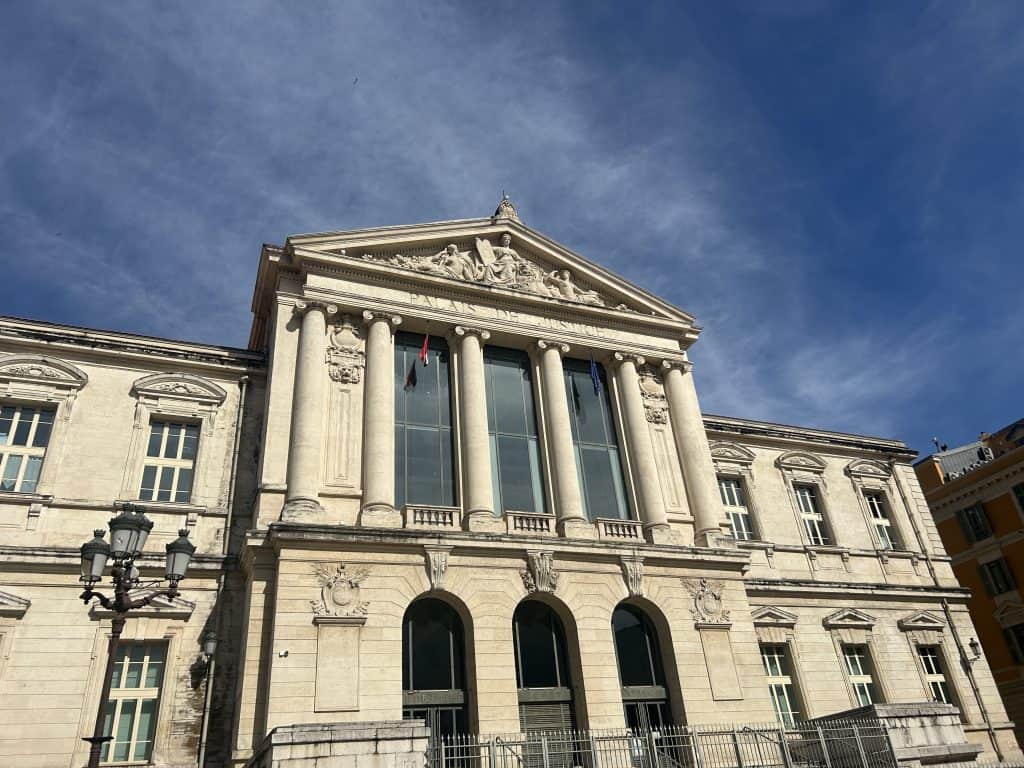
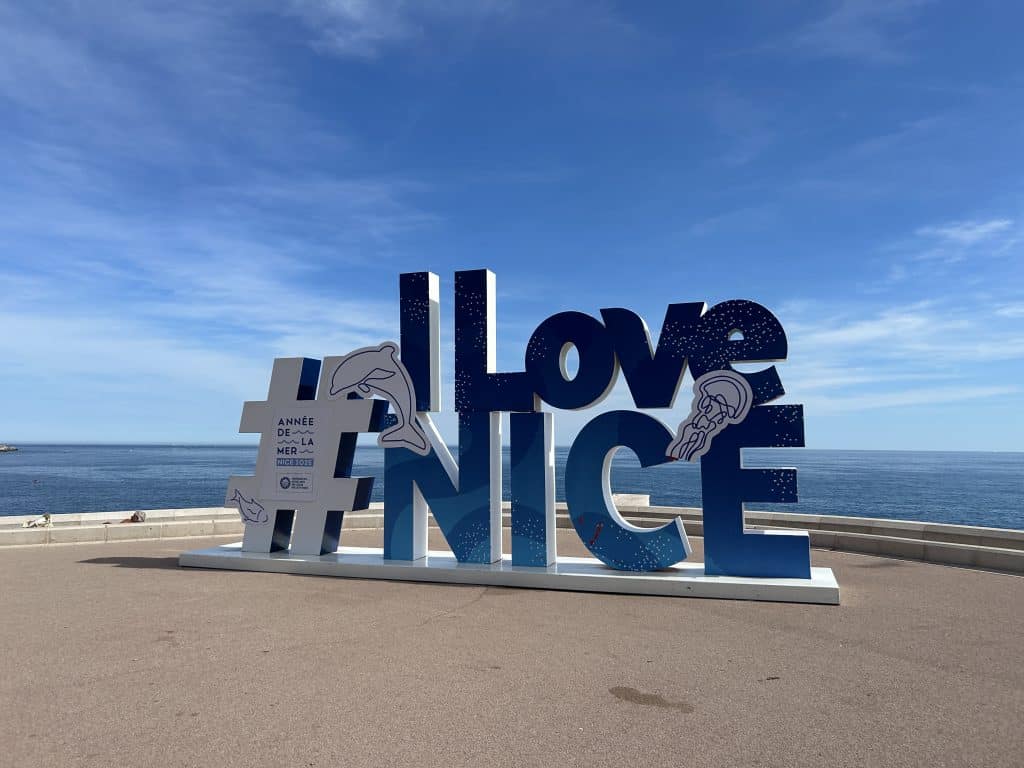
Nice offers a range of attractions that showcase its history, art, and coastal setting. The city’s main landmarks are concentrated in the historic Old Town, along the famous waterfront promenade, and in the hills overlooking the city. These sights provide a look into the city’s Italianate past, its role as a winter resort, and its importance as a center for modern art. The city’s public squares and parks are also central to its urban life.
The main areas of interest for visitors are distinct. The Promenade des Anglais provides a long, open space along the sea. Vieux Nice (the Old Town) offers a dense network of historic streets. The hill of the Colline du Château provides a natural viewpoint over the city. Finally, the neighborhood of Cimiez in the hills to the north contains Roman ruins and major art museums.
Promenade des Anglais
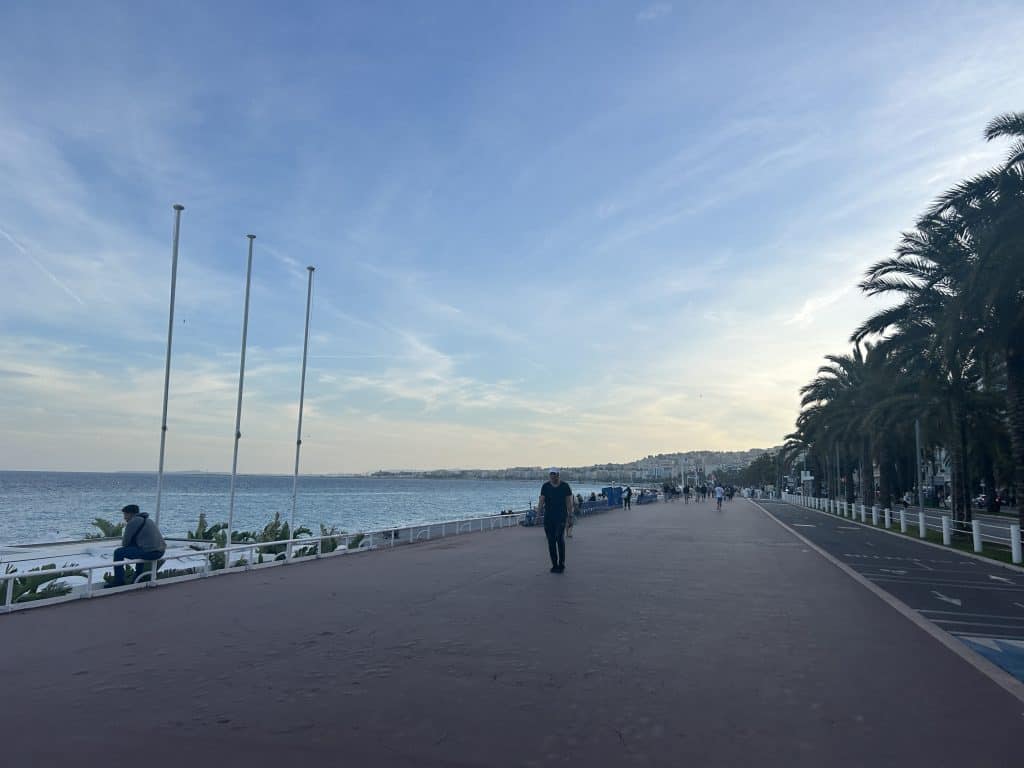
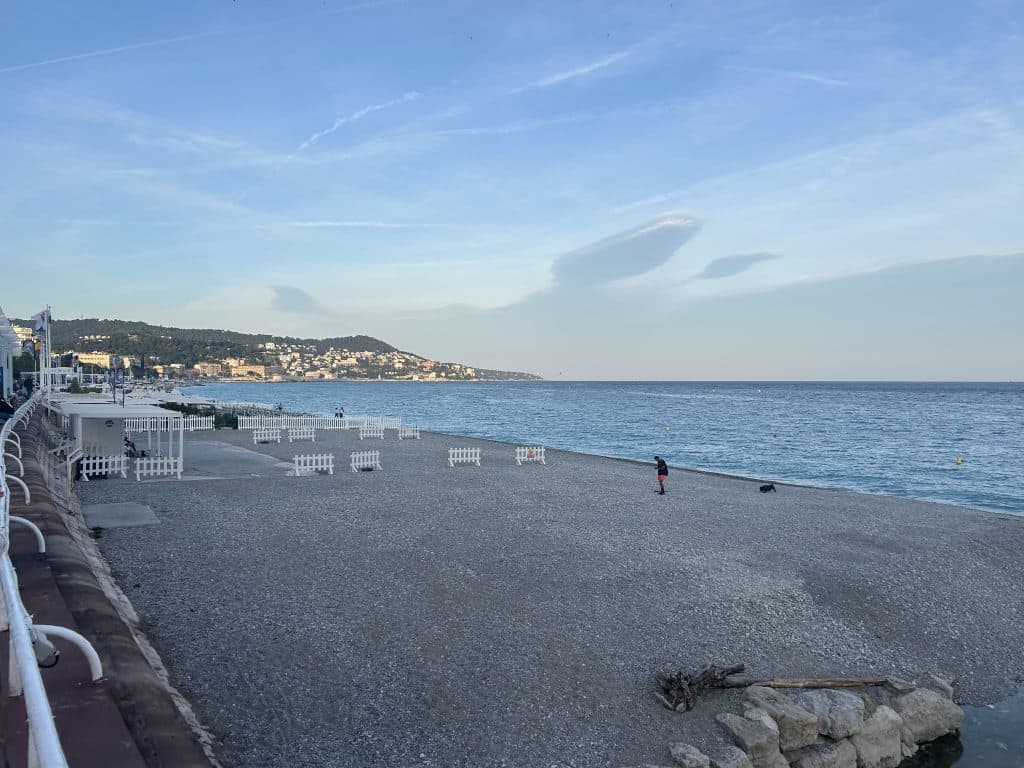
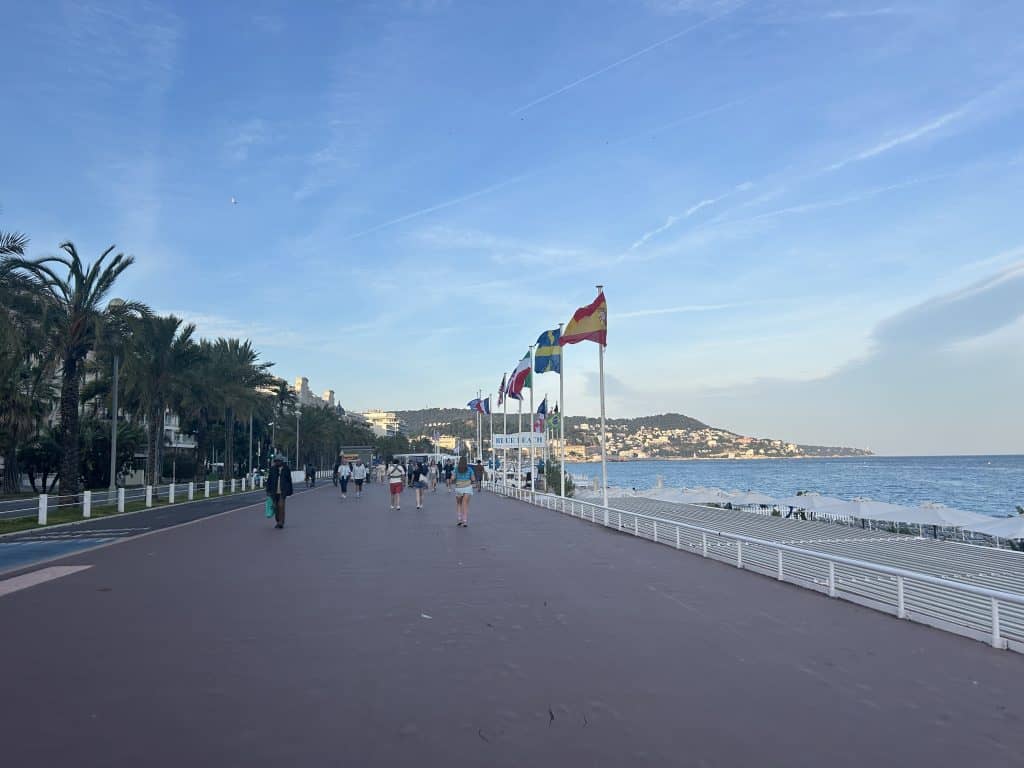
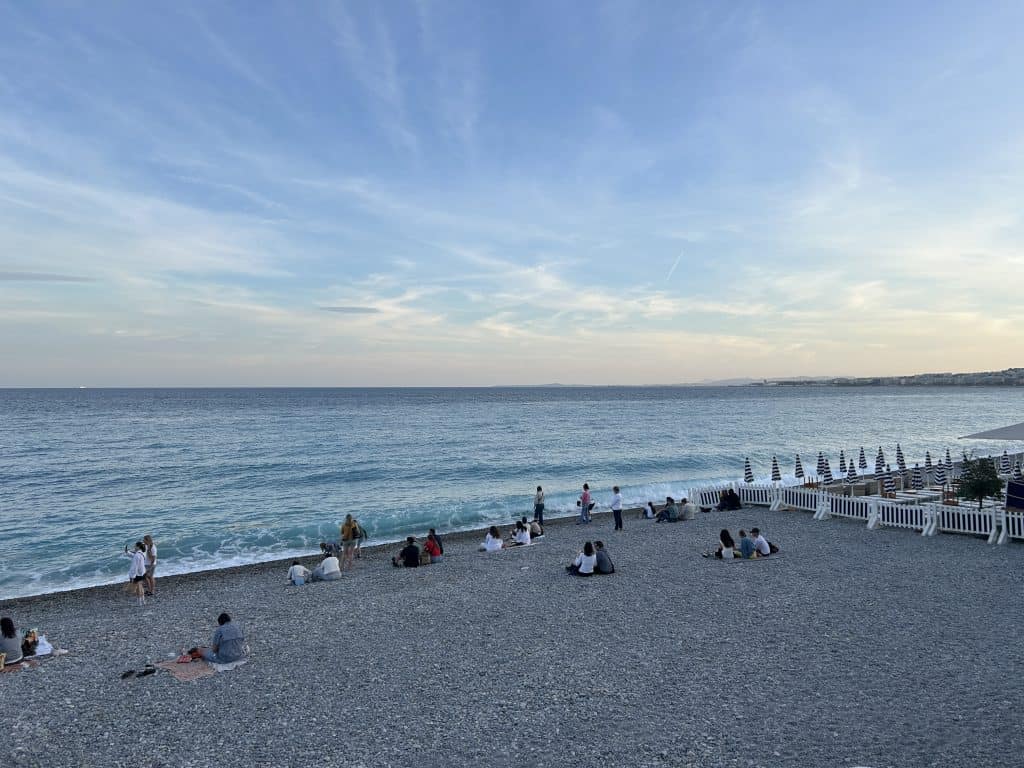
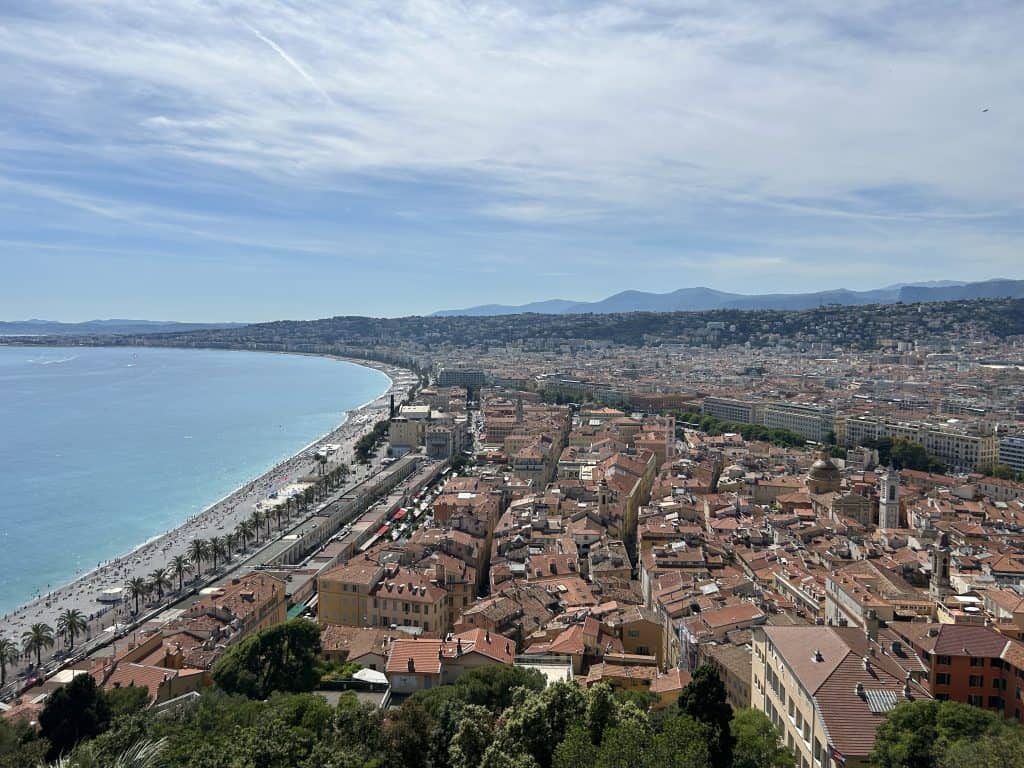
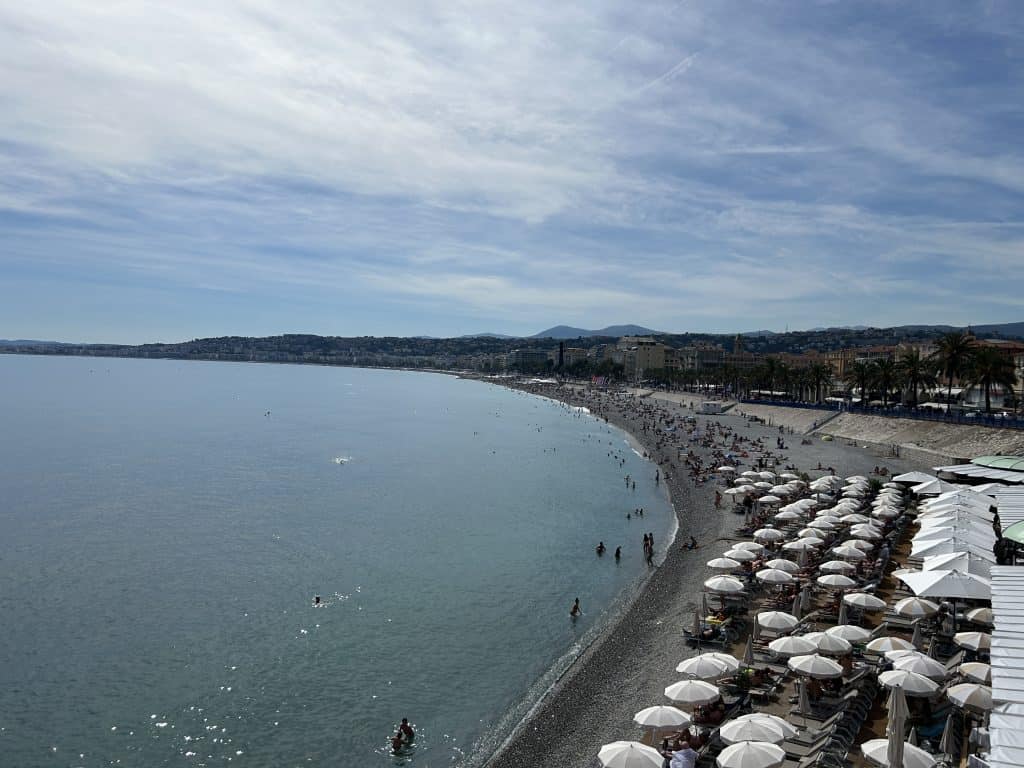
The Promenade des Anglais is the walkway that stretches for 7 kilometers along the Baie des Anges. It was initially developed by English residents in the 1820s for their afternoon walks. The “Prom,” as it is known locally, is a wide, paved promenade used for strolling, cycling, and skating. Its distinctive blue chairs (chaises bleues) are a symbol of the city and provide places to sit and view the Mediterranean Sea. Many large hotels, including the historic Hotel Negresco, line this avenue. The Promenade is a central part of the city’s UNESCO World Heritage designation as a “Winter Resort Town.” It is the main artery of the city’s social and recreational life.
Vieux Nice
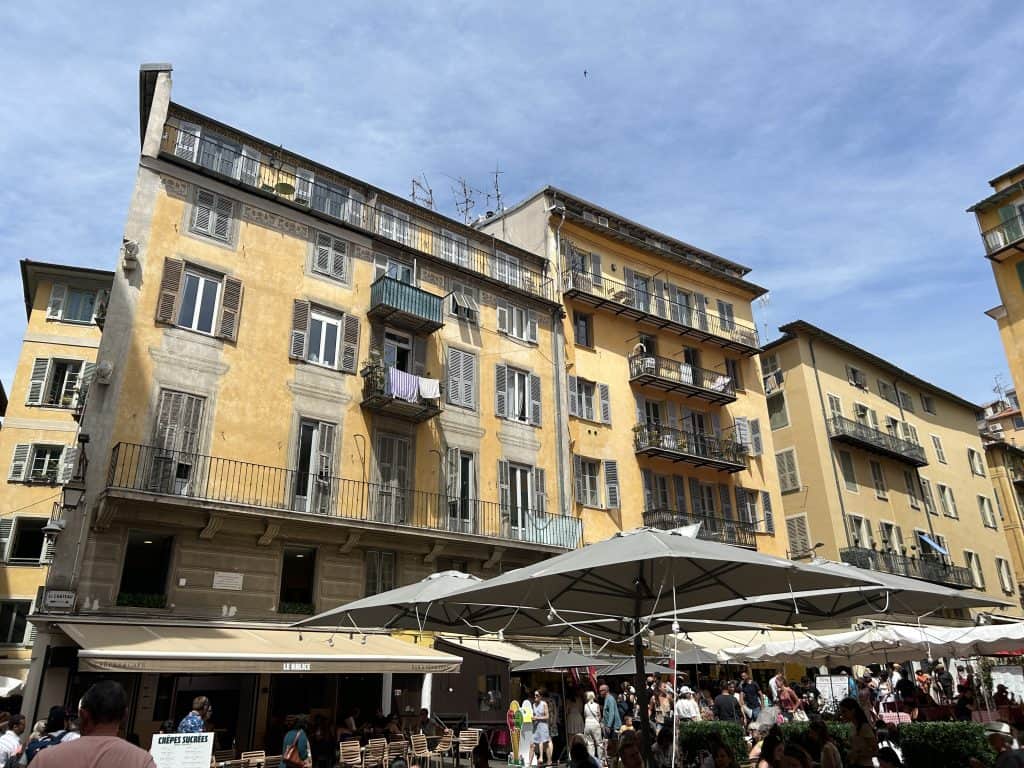
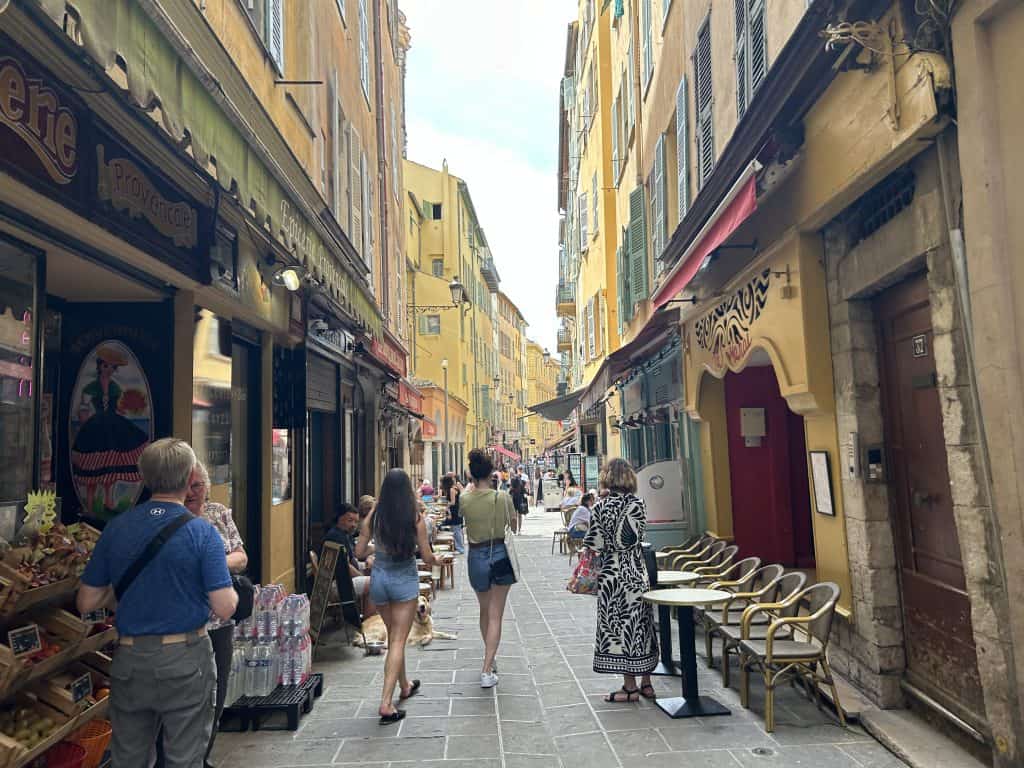
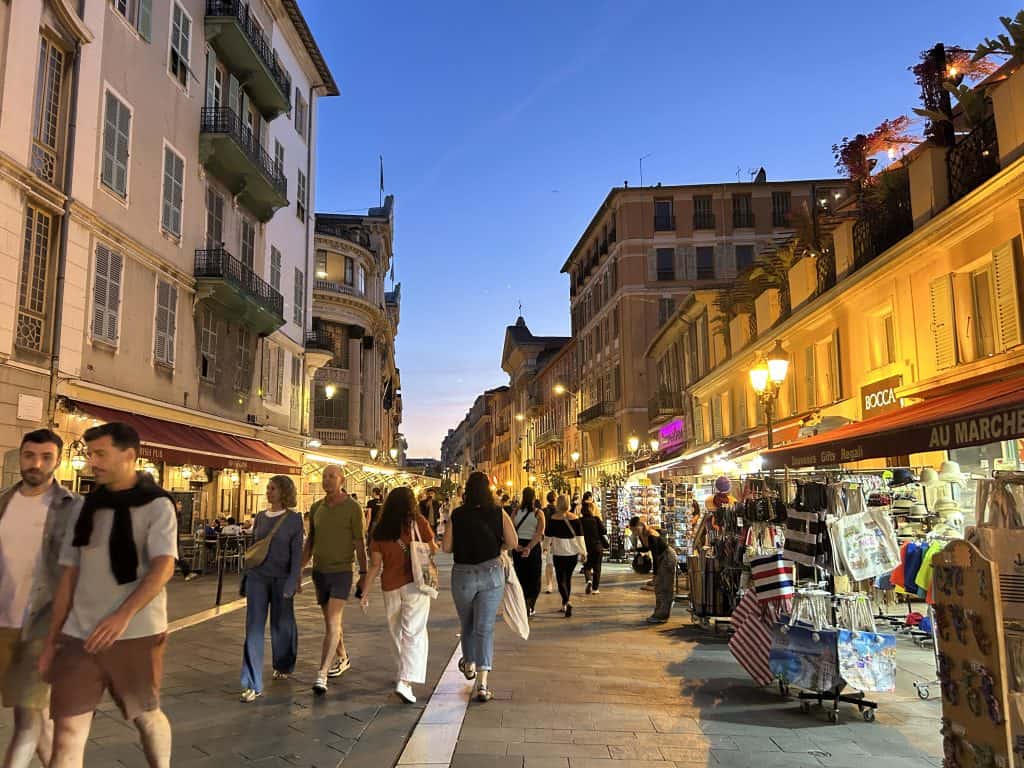
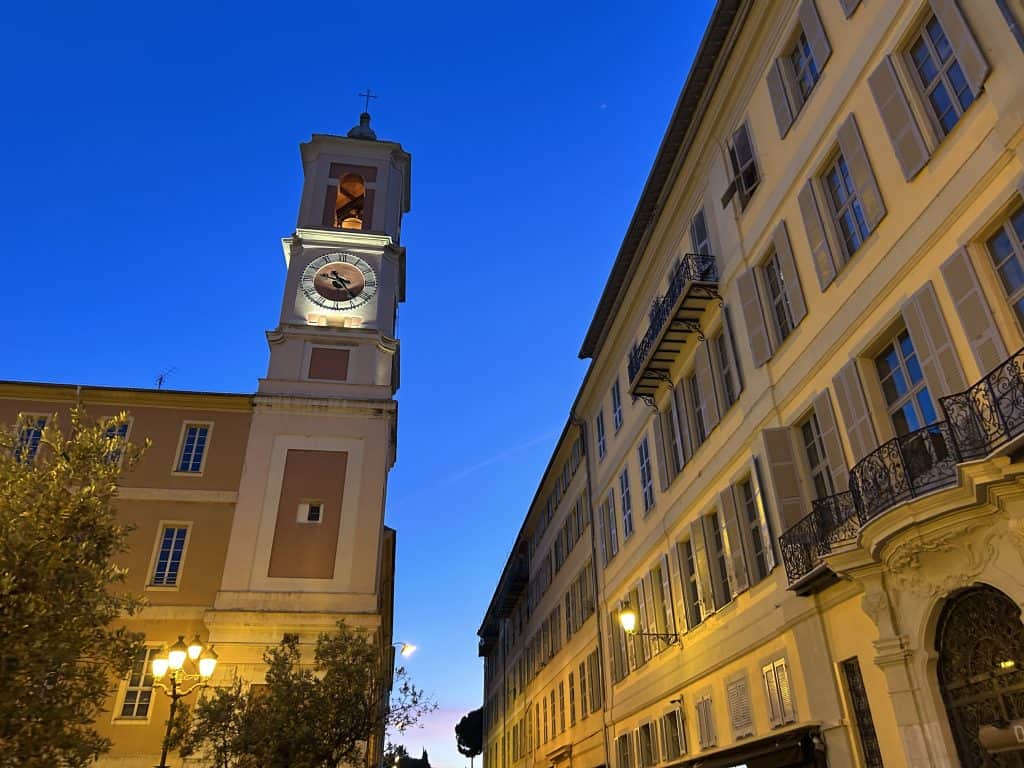
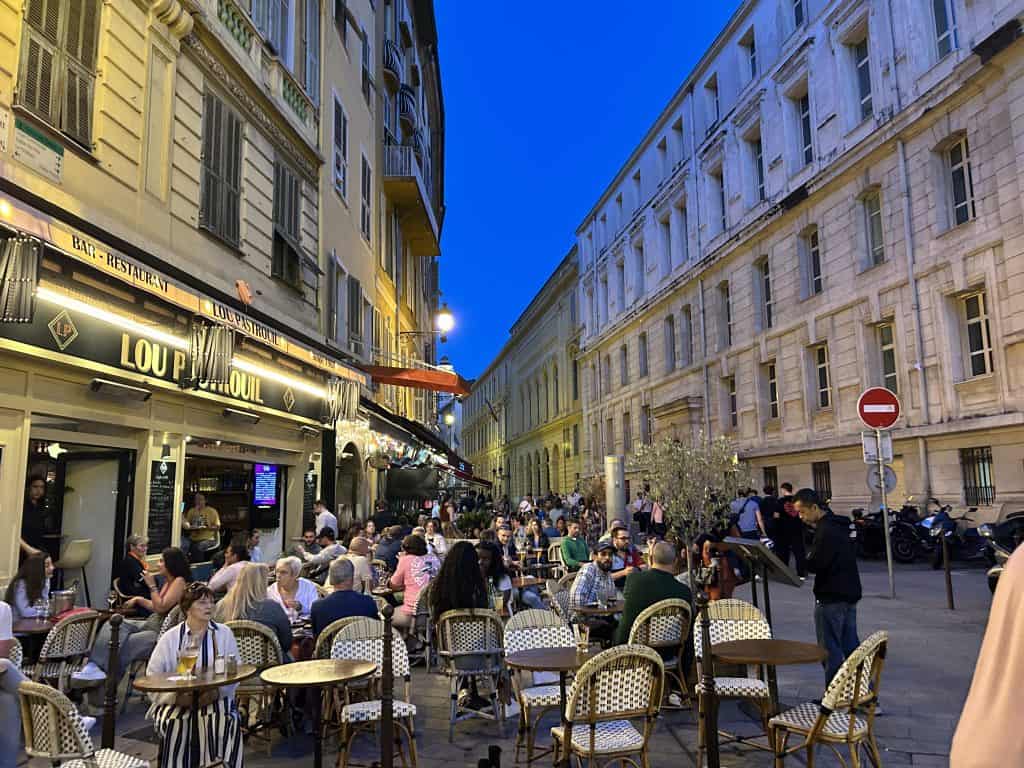
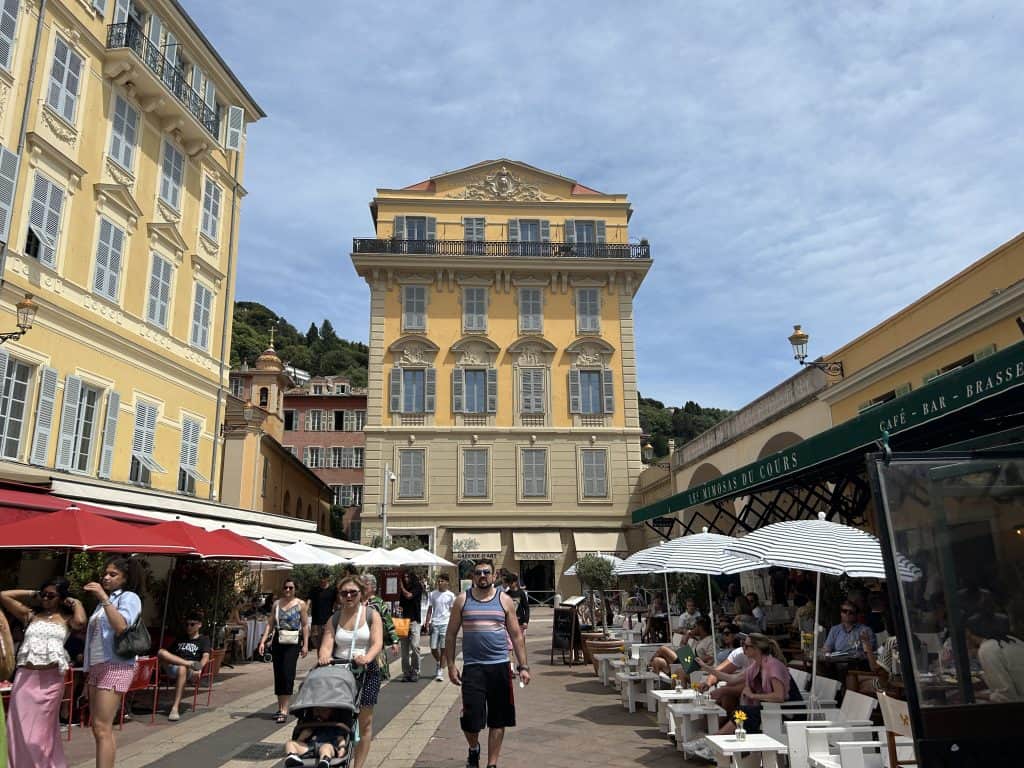
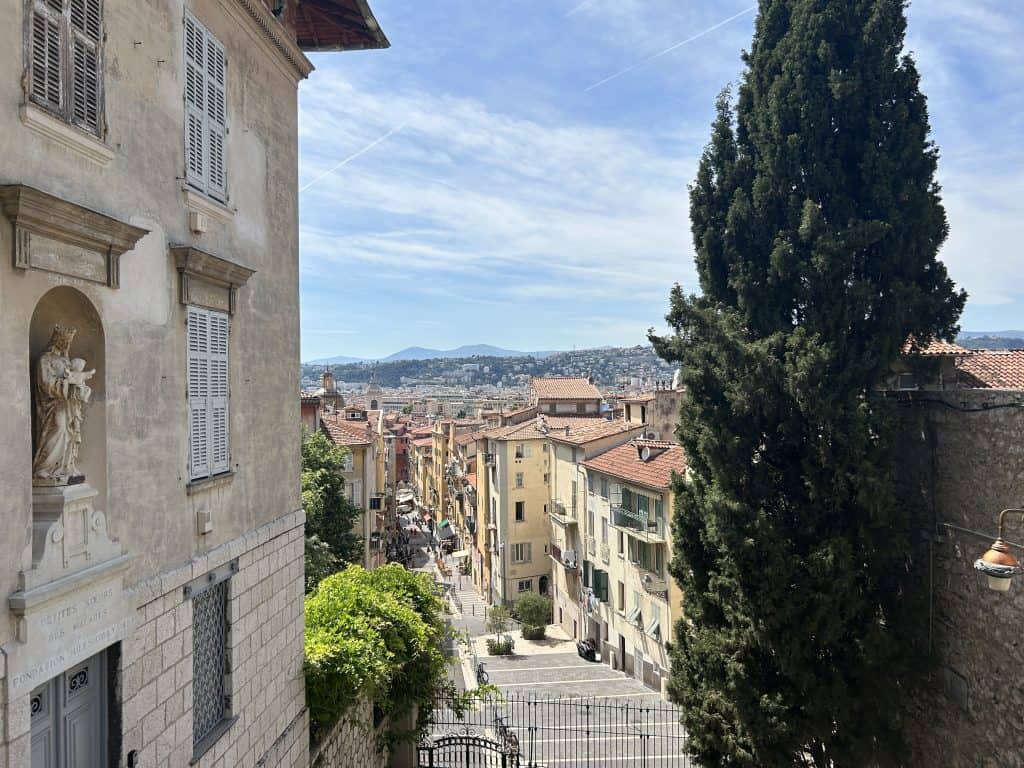
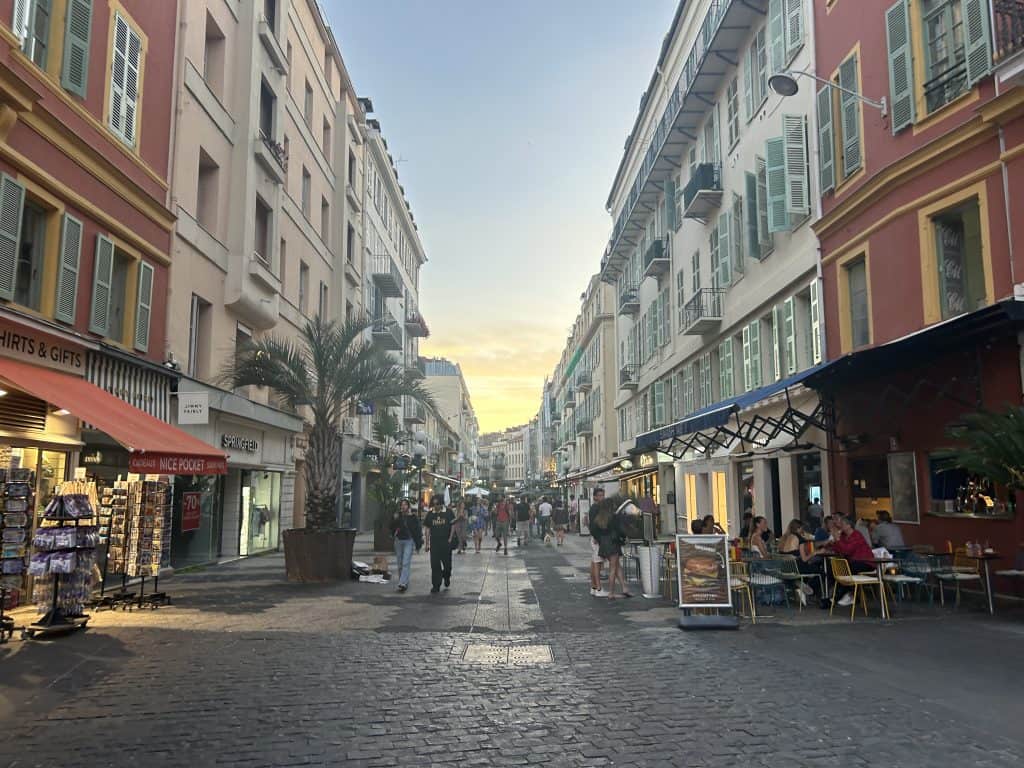
Vieux Nice is the historic center of the city, with a layout that dates back to the 17th and 18th centuries. The area is a network of narrow, winding streets. It is filled with Baroque churches, active public squares, and numerous shops and restaurants. The buildings, with their ochre-colored facades and Italianate architecture, reflect Nice’s history before its annexation by France. A key building in the district is the Palais Lascaris, a 17th-century aristocratic palace that is now a museum of musical instruments. The area is known for its lively atmosphere both day and night.
Cours Saleya Market
The Cours Saleya Market is located in a large public space in the heart of the Old Town. It operates daily, except on Mondays. The market is particularly known for its large flower market (Marché aux Fleurs), which was established in 1897 and is a designated “exceptional market” of France. In addition to flowers, vendors sell fresh local produce, cheeses, and other artisanal goods. On Mondays, the space transforms into a popular antique and flea market (marché à la brocante). The area is surrounded by numerous restaurants with large terraces.
Colline du Château
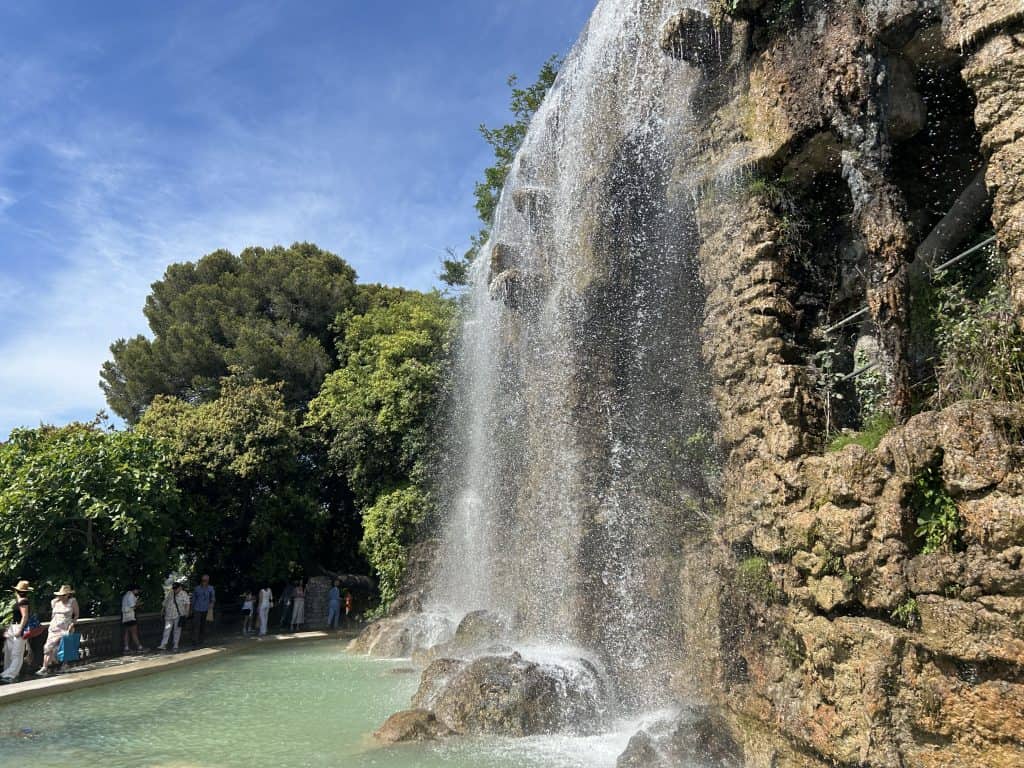
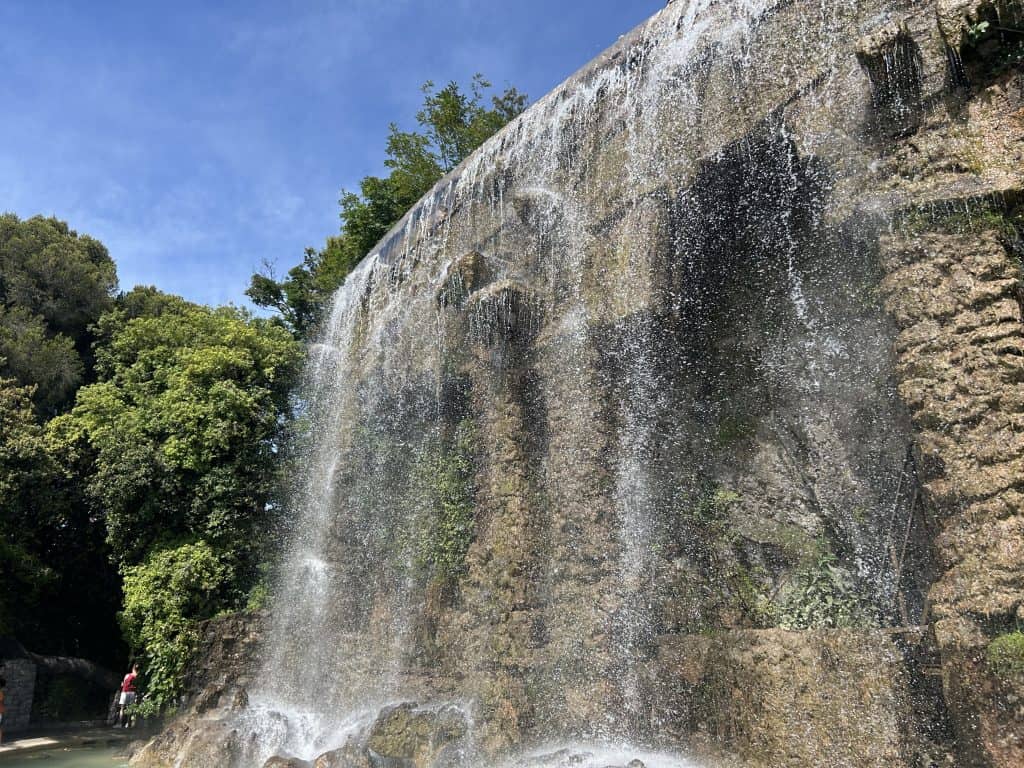
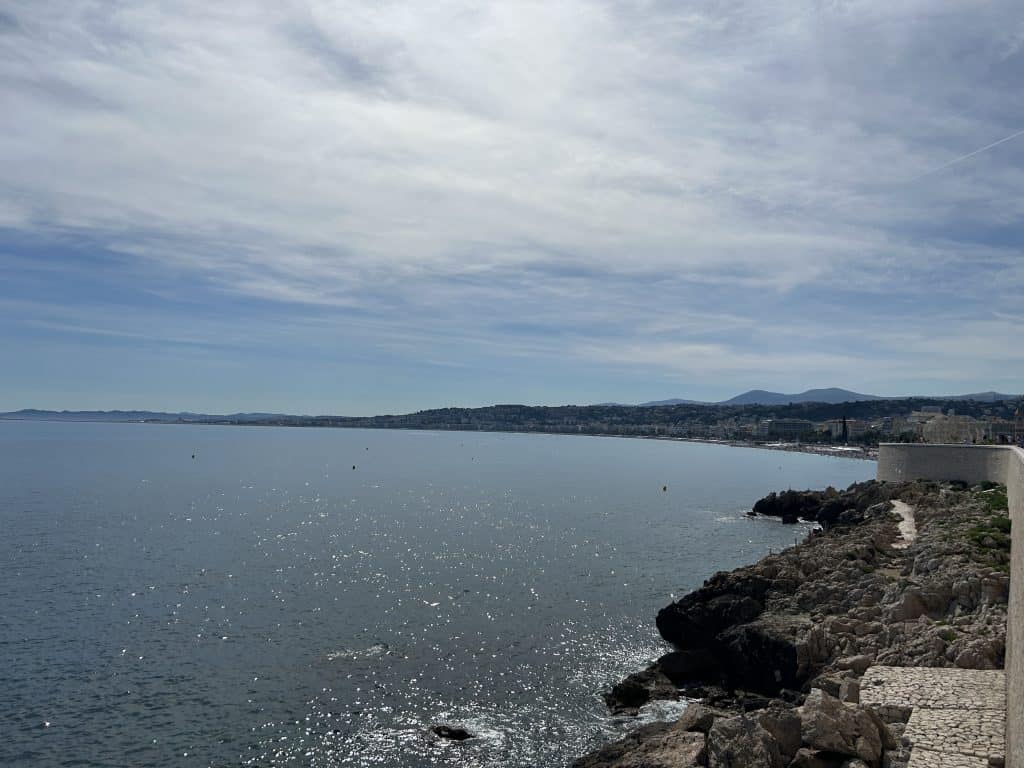
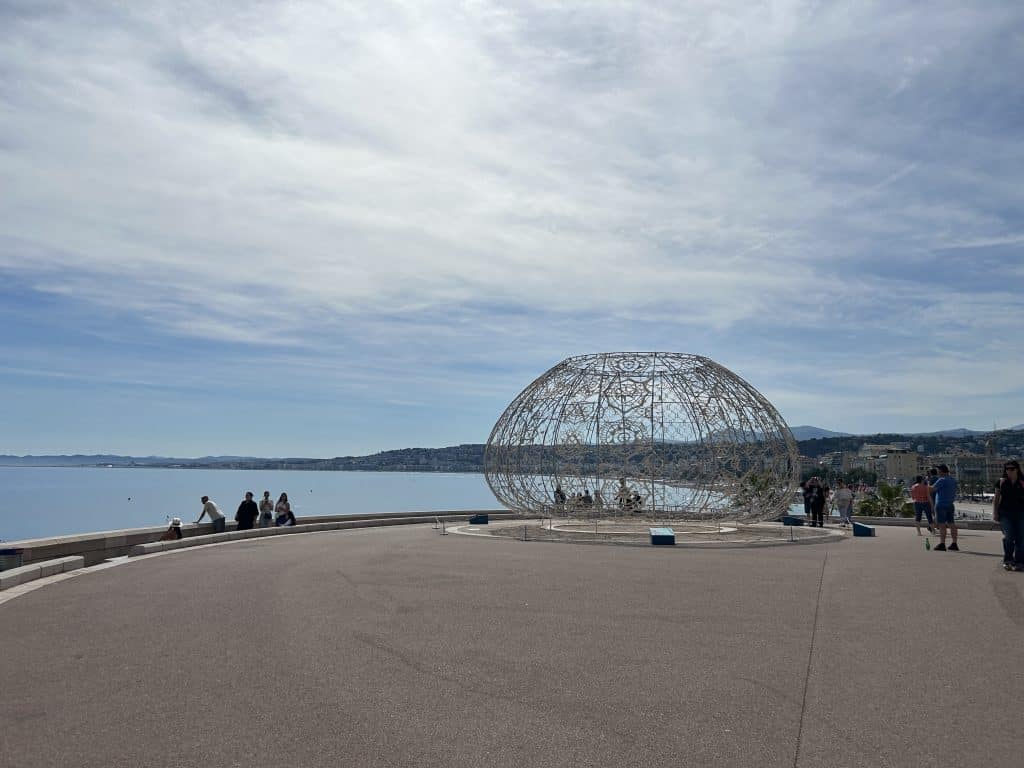
Castle Hill (Colline du Château) is an elevated park that rises 90 meters above the city. It offers panoramic views of the Old Town, the Baie des Anges, and the coastline. The military citadel that once stood here was dismantled by the soldiers of King Louis XIV in 1706. Today, the hill is a public park with green spaces, an artificial waterfall, and the archaeological remains of the original cathedral. An elevator (Ascenseur du Château) provides access to the top from the waterfront. The park is a popular spot for locals and visitors to escape the city bustle.
Place Masséna
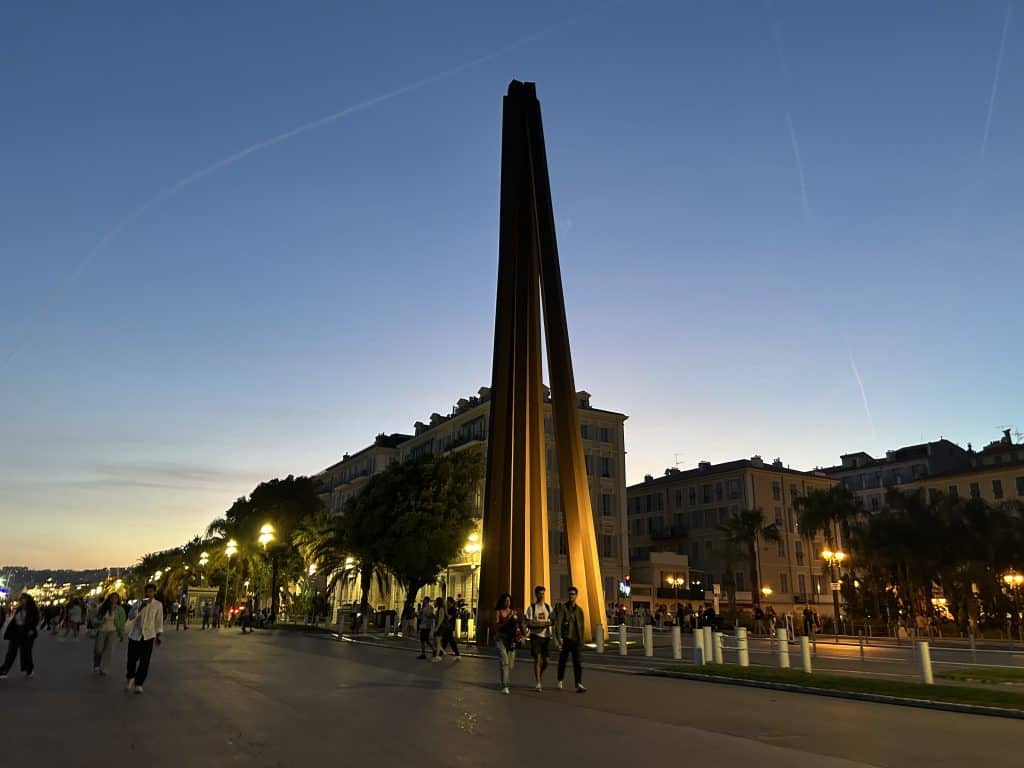
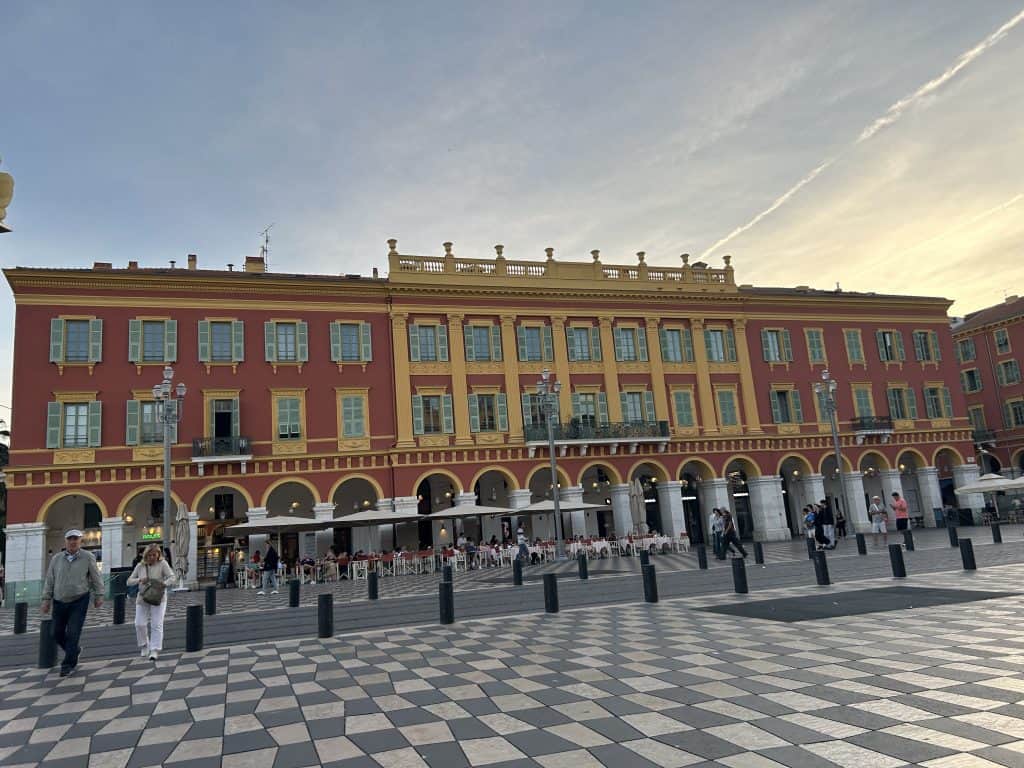
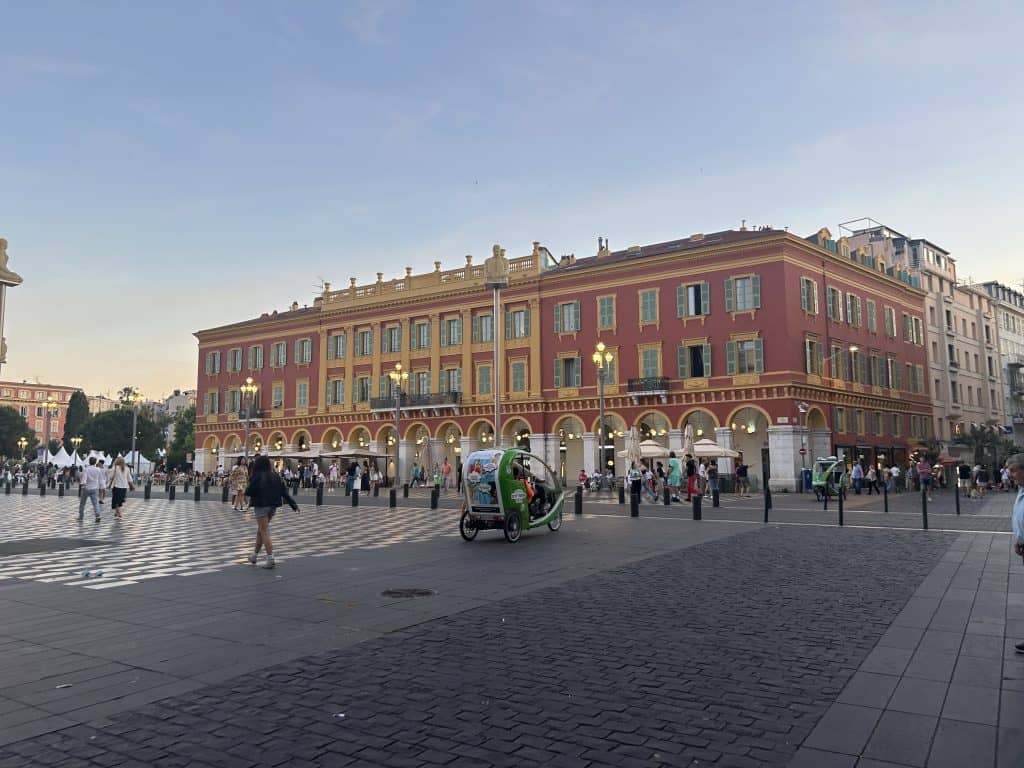
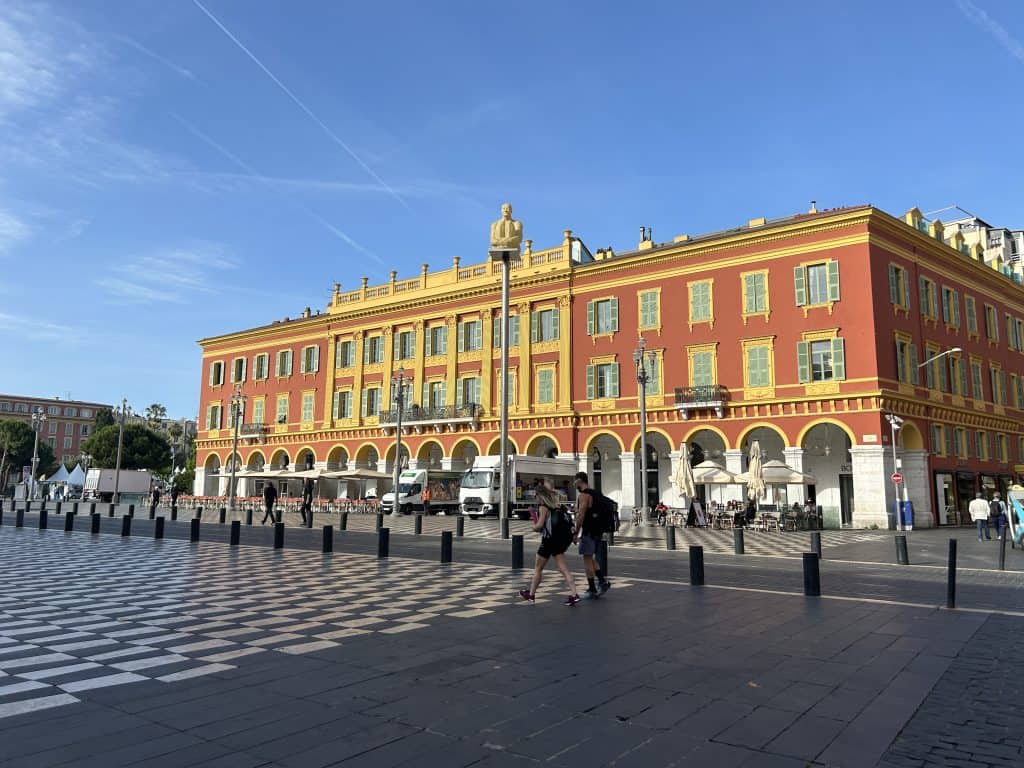
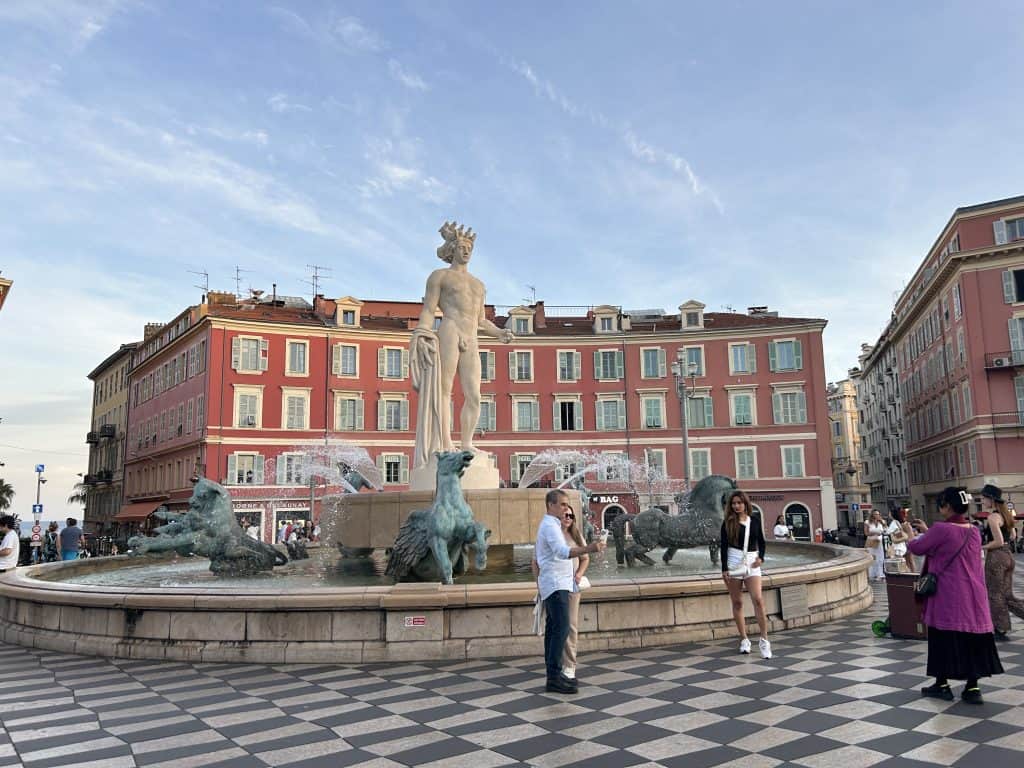
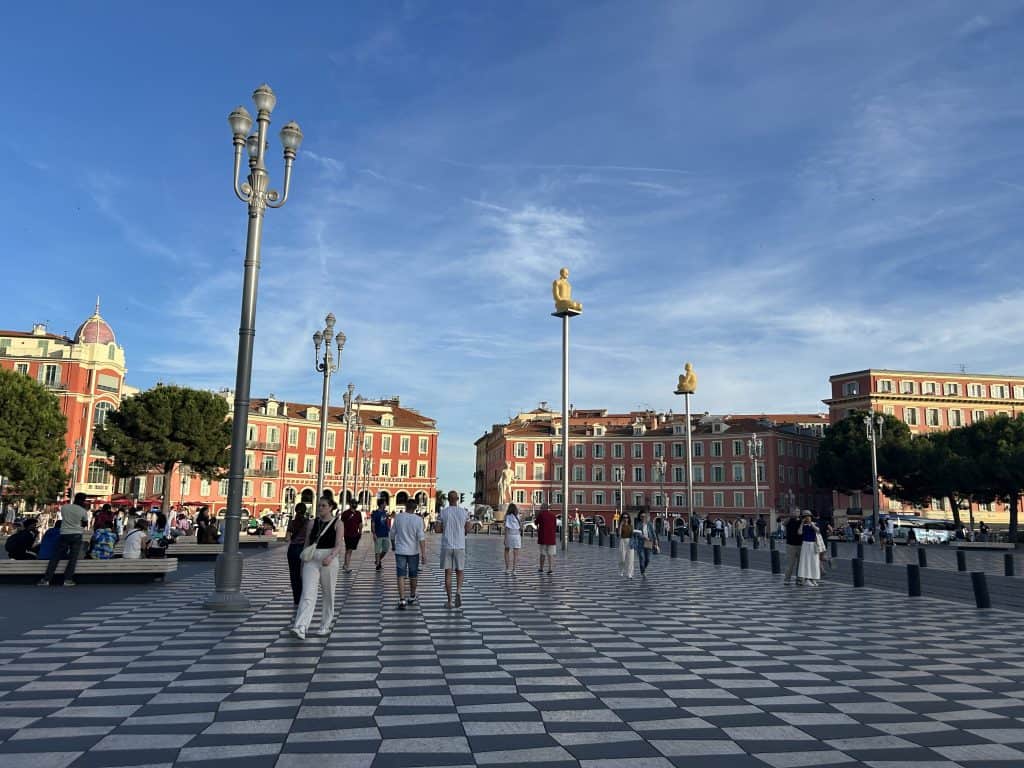
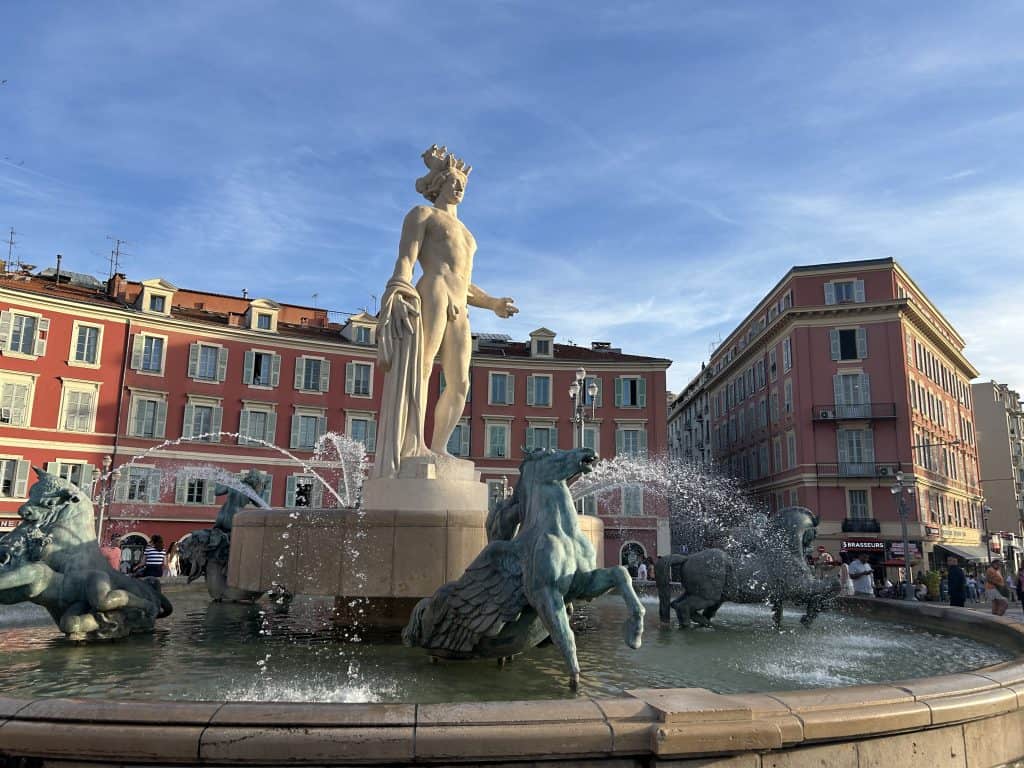
Place Masséna is the main public square of central Nice. The square features distinctive black and white checkerboard paving stones. It is lined with red-ochre buildings with arcades. The Fontaine du Soleil (Fountain of the Sun), with its large statue of Apollo, is a central feature. At night, seven tall statues by the Catalan artist Jaume Plensa, representing the continents, are illuminated. The square hosts many public events and festivals and is a key transport hub for the tram system. It connects the Old Town with the modern city center.
Musée Matisse
Located in the Cimiez neighborhood, the Musée Matisse is housed in a 17th-century Genoese villa. The museum showcases a significant collection of works by the artist Henri Matisse. The collection was donated to the city by Matisse himself and his heirs. It includes paintings, drawings, sculptures, and paper cut-outs, which trace his artistic evolution. Matisse lived in Nice from 1917 until his death in 1954. He was drawn to the city for the quality of its light, which is reflected in many of his works. The museum is surrounded by an olive grove and Roman ruins.
Musée National Marc Chagall
This national museum, the Musée National Marc Chagall, was purpose-built to house the works of Marc Chagall. It features the largest public collection of his art. The collection is focused on his “Biblical Message” cycle, a series of 17 large paintings illustrating themes from the books of Genesis and Exodus. The artist himself was involved in the design of the museum and the installation of the works. The museum opened in 1973. In addition to the paintings, the museum also includes stained glass, sculptures, and mosaics by the artist.
Russian Orthodox Cathedral of Saint Nicholas
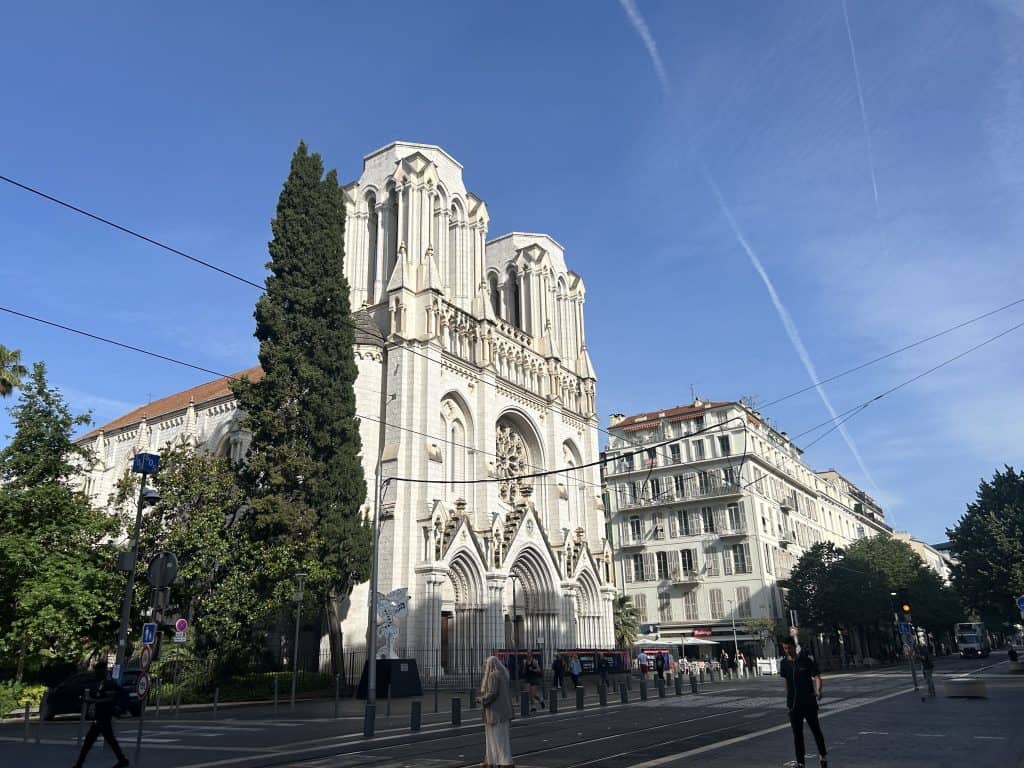
The Russian Orthodox Cathedral of Saint Nicholas is a major architectural landmark in Nice. It was built between 1903 and 1912 with funding from Tsar Nicholas II. It was constructed to serve the large Russian aristocratic community that wintered in the city. The cathedral is considered one of the most important Orthodox churches outside of Russia and is a designated national monument of France. Its interior contains a large collection of icons, frescoes, and intricate woodwork. The design is based on the churches of Moscow.
Promenade du Paillon
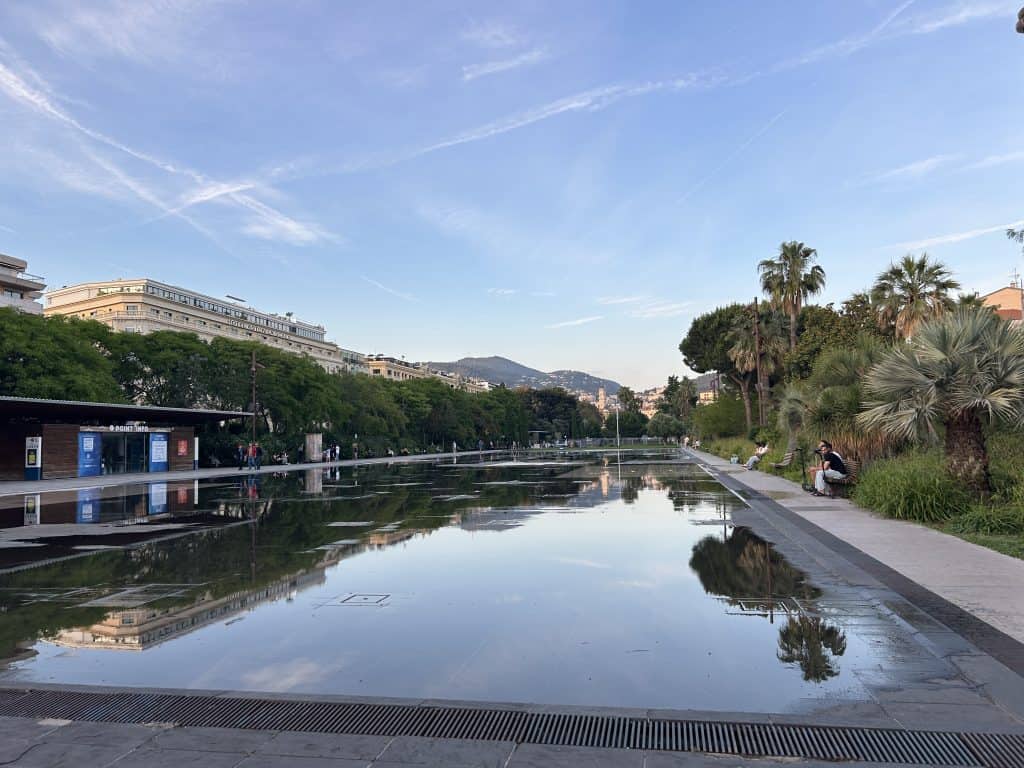
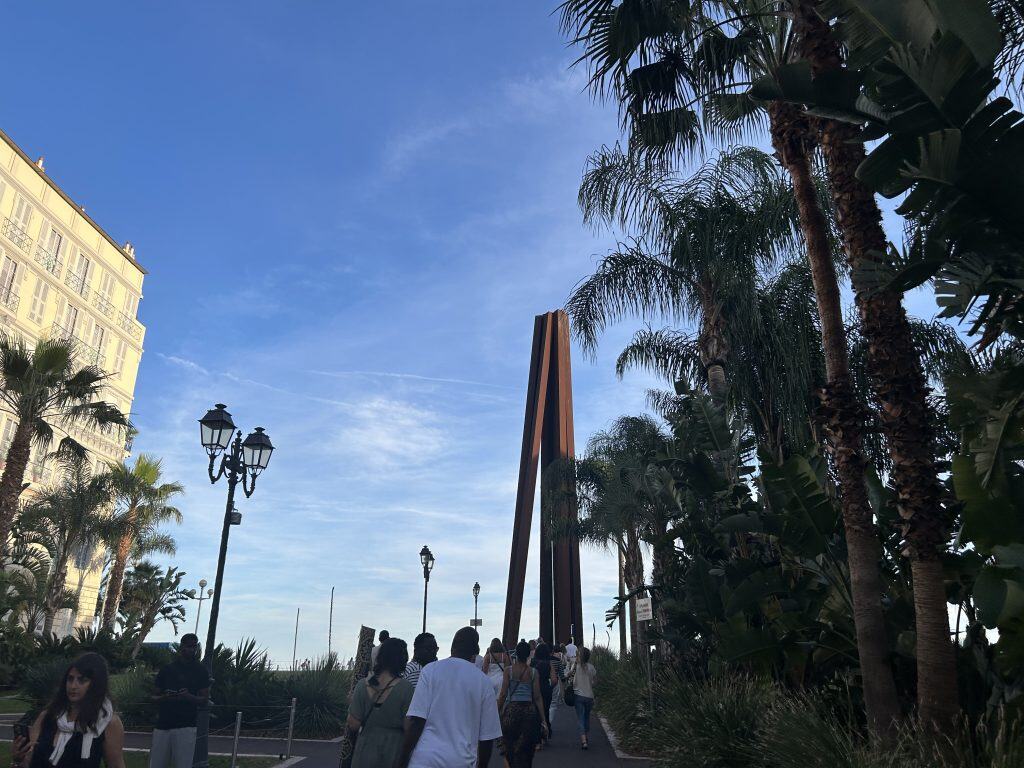
The Promenade du Paillon is a modern urban park that was completed in 2013. The park stretches for 1.2 kilometers from the Place Masséna towards the Nice National Theatre. It was built on the site of a former bus station and parking lot, covering the Paillon river. The park features large green spaces, children’s playgrounds, and a unique “water mirror” (miroir d’eau) where jets of water create a display. It serves as a modern green space in the heart of the city.
Musée d’Art Moderne et d’Art Contemporain
The Museum of Modern and Contemporary Art (Musée d’Art Moderne et d’Art Contemporain – MAMAC) focuses on art from the 1960s to the present. Its collection includes works by European New Realists and American Pop Art artists. Notable artists featured are Yves Klein, who was a key figure in the local “School of Nice,” Niki de Saint Phalle, and Andy Warhol. The museum’s architecture consists of four grey marble towers connected by glass walkways. Its rooftop terraces offer panoramic views of the city.



Sports in Nice
Nice has an active sports scene, with a professional football club that competes at the highest level in France. The city’s coastal location makes it a center for water sports. Its position at the foot of the Alps also makes it a key destination for major international cycling and triathlon events. These events take advantage of the city’s waterfront and the challenging terrain of the surrounding mountains. The city has modern facilities, including the Allianz Riviera stadium, which supports this active sports culture.
Football
Football is a widely followed sport in Nice. The city’s premier professional football club has a long history and a strong local following. The club has won multiple national championships in its history. Attending a home match is a key local sporting experience for residents and visitors. The city’s main stadium is a modern facility that was also a host venue for the UEFA Euro 2016 championship.
OGC Nice
The city’s premier professional football club is OGC Nice. Founded in 1904, they compete in France’s top-tier league, Ligue 1. Their home ground is the modern Allianz Riviera stadium, which opened in 2013 and has a capacity of over 36,000. OGC Nice has won the French Championship title four times in its history, though most of these successes came in the 1950s. They have also won the Coupe de France (French Cup) three times. The team’s nickname is “Les Aiglons” (The Eaglets), in reference to the eagle in the city’s coat of arms.
Basketball
Basketball is another sport with a presence in Nice, particularly in the women’s professional game. The city is represented by a historic club that competes in the national league system. The team provides a platform for high-level basketball in the city. It contributes to the diverse local sports scene. This offers residents another top-level team sport to follow.
Cavigal Nice Basket 06
Cavigal Nice Basket 06 represents Nice in women’s basketball. The team competes in the LF2 (Ligue Féminine de Basketball 2), the second tier of women’s professional basketball in France. The club is part of the larger Cavigal Nice Sports association, which has a long history in the city. They have a history of competing in the top flight as well. They play their home games at the Salle Leyrit, a local sports hall in the city.
Endurance Sports
Nice is a major international destination for endurance sports, particularly triathlon and running. The city hosts several major annual events that attract thousands of international participants. The courses for these events utilize the city’s famous waterfront and the challenging terrain of the surrounding mountains. The mild climate allows for year-round training, making the city a base for many professional and amateur athletes.
Ironman France
Ironman France is a major annual long-distance triathlon event that takes place in Nice, typically in June. Nice was one of the original locations for Ironman events in Europe. Athletes compete in a 3.8 km swim, a 180 km bike ride, and a 42.2 km run. The swim takes place in the Baie des Anges. The challenging bike course winds through the mountains of the Alpes-Maritimes hinterland, often featuring significant elevation gain. The run finishes along the Promenade des Anglais. Nice has also hosted the Ironman 70.3 World Championship.
Nice Half Marathon
The Semi-Marathon International de Nice is held annually in the spring. This international half marathon draws thousands of runners from around the world. The fast and largely flat course primarily follows the Promenade des Anglais. It offers coastal views throughout the race. The event is popular with both elite athletes seeking fast times and recreational runners. In addition to the half marathon, the event usually includes a 10k and 5k race.
Cycling
Nice plays a key role in professional road cycling. The city is the traditional finishing point for one of the most important early-season stage races on the professional calendar. This event, known as “The Race to the Sun,” attracts the world’s top cycling teams and riders each year. The varied terrain of the region, from the flat coastal roads to the steep mountain climbs, makes it an ideal location for professional cycling.
Paris-Nice Cycling Race
While the race starts in the Paris region, the professional cycling stage race Paris-Nice traditionally concludes in Nice in March. The final stages often feature challenging climbs in the mountains of the Nice hinterland, such as the Col d’Èze. The race typically finishes with a final stage on or around the Promenade des Anglais. This finish draws significant crowds of cycling fans and is a major event on the international cycling calendar.



Getting Around in Nice
Navigating Nice is straightforward due to its efficient and integrated public transport network. This system, which includes trams and buses, connects the city’s landmarks with its neighborhoods, the airport, and the train station. The central areas are also highly walkable, making it easy for visitors to explore the main attractions. The public transport system is operated by Lignes d’Azur and uses integrated tickets.
A single ticket is valid for 74 minutes after the first validation and allows for unlimited travel and transfers on buses and trams. Multi-trip tickets and day passes are also available, offering better value for frequent travel. You can buy tickets at tram stops, from vending machines, or via the Lignes d’Azur app. Remember to validate your ticket immediately upon boarding buses or when entering the tram station platforms. Always check official sources for the most up-to-date information.
On Foot: The Old Town and Promenade
Walking is often the best way to experience Nice’s historic core. The Promenade des Anglais, the Old Town (Vieux Nice), and the Place Masséna are all easily walkable. The Old Town is a large pedestrian-friendly zone with narrow streets. This allows visitors to discover shops, restaurants, and historic squares on foot. The walk along the Promenade des Anglais from the Old Town to the Hotel Negresco is a key part of the Nice experience. Comfortable shoes are recommended for the cobblestone streets of the Old Town.
Riding the Tram
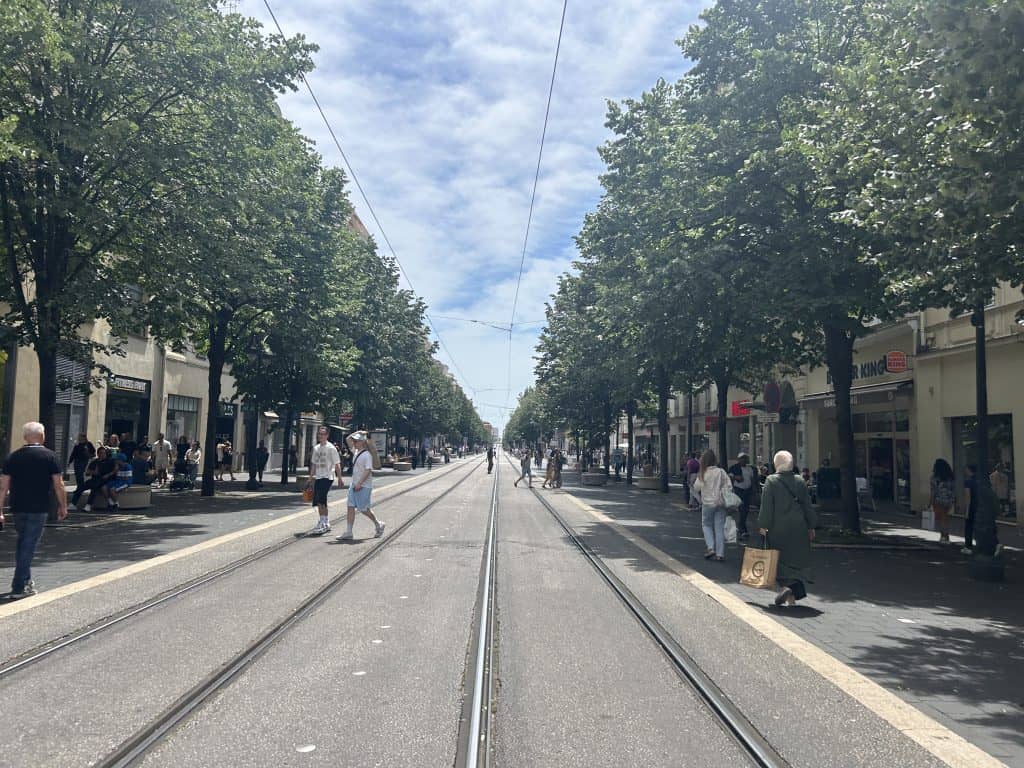
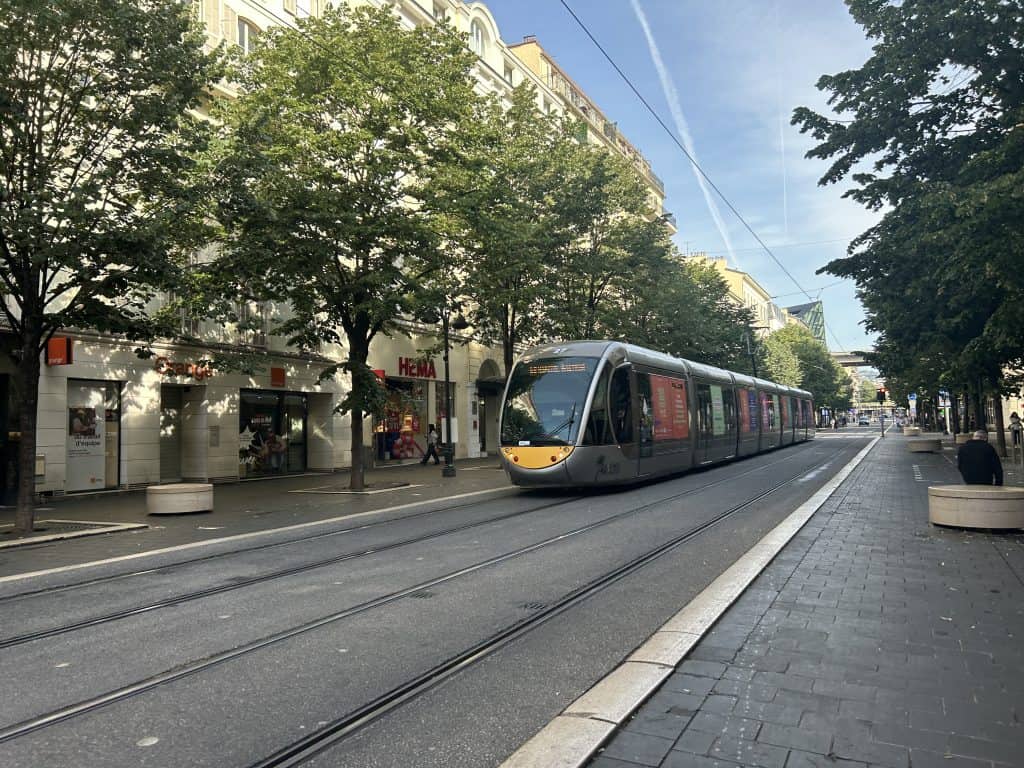
Nice’s modern tram system is a quick and efficient way to travel around the city. The network consists of several tram lines that serve key corridors. Line 1 runs in a U-shape, connecting the northern and eastern suburbs via the city center and the main train station. Line 2 runs east-west, providing a direct connection from Nice Airport to the city center and the Port. Trams operate frequently from early morning until late evening. The stations are modern and provide clear information for passengers.
A Network Above Ground: Buses
Nice has an extensive bus network that covers areas not reached by the tram. The buses are also operated by Lignes d’Azur. They can be slower than the tram due to traffic but offer access to all parts of the city and the surrounding hills, including the Cimiez neighborhood where the Matisse and Chagall museums are located. You must have a validated ticket to travel. A network of night buses, known as Noctambus, operates after midnight on specific routes.
Two Wheels on the Riviera: Cycling
Cycling is a popular way to explore Nice, especially along the flat waterfront. The city has a public bike-sharing scheme called Vélobleu. Numerous stations are located throughout the city, allowing for short-term rentals. The Promenade des Anglais has a dedicated two-way cycle path that runs its entire length, providing a safe and scenic route. Electric scooters are also widely available for rent via various apps. Use designated cycle lanes where possible.

How to Get to Nice
Nice is a major transport hub and is highly accessible from across France and internationally. It is served by France’s third-busiest airport, a major railway station on the high-speed TGV line, and the A8 motorway. Its location on the Mediterranean coast also gives it ferry connections. This makes arriving in the city a convenient process for most travelers.
Arriving by Air: The Côte d’Azur Gateway
The city is served by Nice Côte d’Azur Airport (NCE). It is located just 7 kilometers southwest of the city center. NCE is the third-busiest airport in France and a major hub for international travel to the French Riviera. Numerous airlines offer direct flights to Nice from major European cities, as well as routes from North America and the Middle East. From the airport, tram line 2 connects directly to the city center in about 30 minutes. Taxis and ride-sharing services are also readily available.
The Open Road: Driving the A8
Driving to Nice allows for travel along the French Riviera. The city is well-connected by France’s extensive motorway network. The A8 motorway, known as “La Provençale,” runs east-west along the coast. It links Nice to Aix-en-Provence and Marseille to the west, and to Monaco and the Italian border to the east. Traffic can be heavy during peak tourist season. Parking in central Nice is challenging and primarily in underground public car parks.
Connecting by Coach
Long-distance bus travel offers an economical option to reach Nice. Companies like FlixBus and BlaBlaCar Bus operate routes to Nice from various European cities. The main long-distance bus station in Nice is located at Terminal 1 of the Nice Côte d’Azur Airport. Regional bus services, operated by ZOU!, also link Nice to nearby towns and villages along the coast and in the hinterland. These regional buses are a key way to explore the wider region.
On Track: High-Speed and Regional Rail
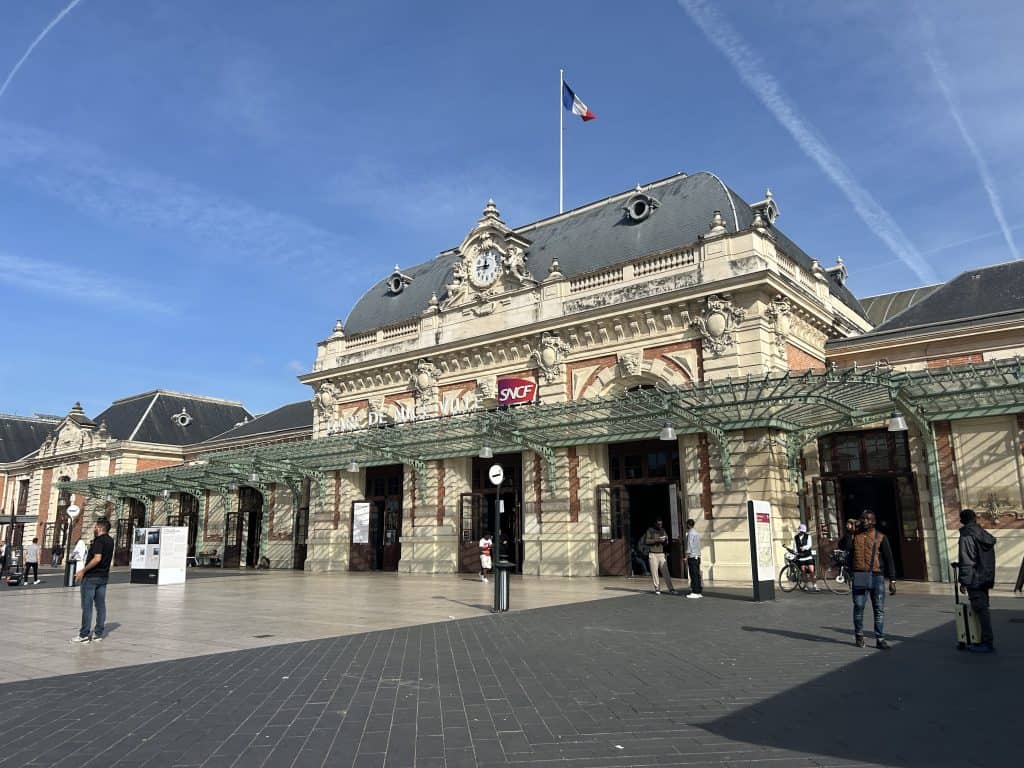
Traveling by train offers convenient access to the city center. Nice-Ville station is the city’s main railway hub. High-speed TGV trains connect Nice to major French cities. Direct services run from Paris (a journey of about 6 hours) and Marseille. Regional TER trains link Nice to other Riviera towns like Cannes, Monaco, and Menton. International train services also connect from Italy via the nearby border town of Ventimiglia. The station is centrally located, making it easy to access hotels and public transport.
The Mediterranean Route: Arriving by Ferry
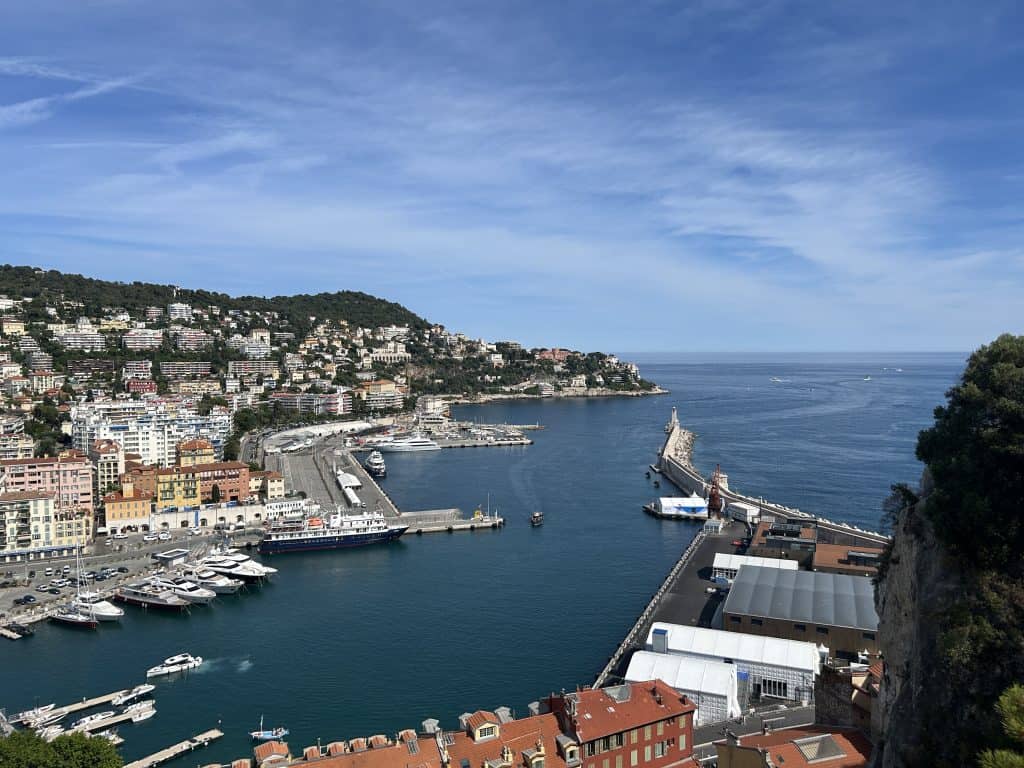
While less common for international travel, ferries provide access to the region. The Port of Nice primarily serves ferry connections to the French island of Corsica. Companies like Corsica Ferries operate these routes. The port is situated east of the Promenade des Anglais and is accessible from the city center. This option is mainly for travelers combining a visit to Nice with a trip to Corsica. The port is also a stop for some Mediterranean cruise ships.
Driving Distances
The driving distance from 10 regional cities, according to Google Maps:
- Monaco – 21 kilometers (0 h 30 min)
- Marseille, France – 197 kilometers (2 h 10 min)
- Genoa, Italy – 196 kilometers (2 h 40 min)
- Turin, Italy – 299 kilometers (3 h 30 min)
- Milan, Italy – 389 kilometers (4 h 20 min)
- Lyon, France – 471 kilometers (4 h 40 min)
- Geneva, Switzerland – 517 kilometers (5 h 20 min)
- Toulouse, France – 565 kilometers (5 h 50 min)
- Barcelona, Spain – 663 kilometers (6 h 40 min)
- Paris, France – 932 kilometers (8 h 30 min)
Looking to Explore more of France and Europe?