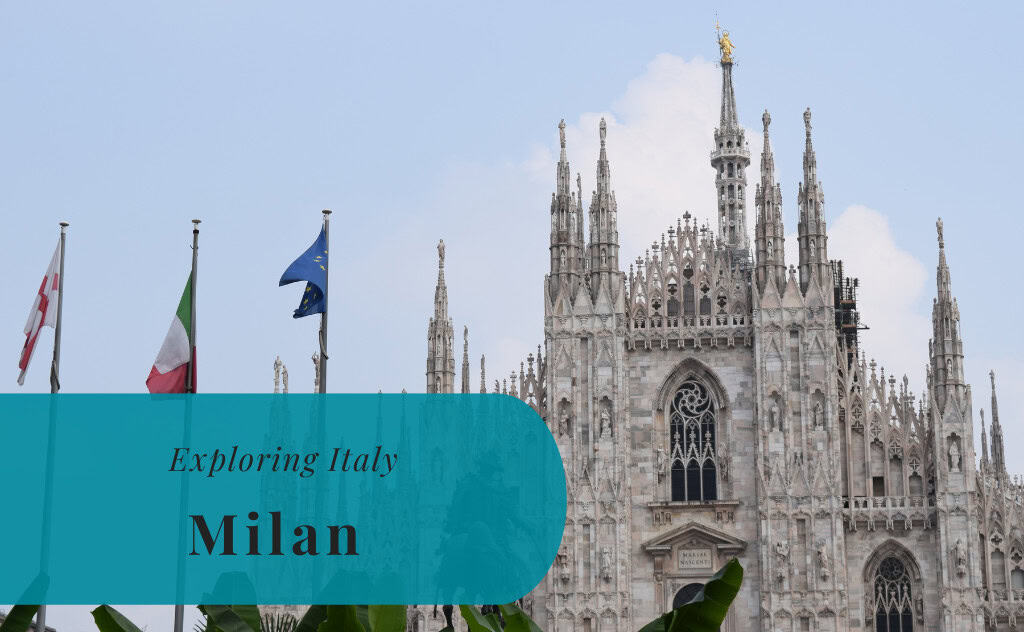
Milan, Lombardy | Exploring Italy
Milan (Milano) is a major city in northern Italy. It serves as the capital of the Lombardy region, Italy’s most populous and wealthiest region. Situated in the fertile Po Valley, Milan is at the center of a large metropolitan area. It is a global hub for fashion and design, recognized worldwide for its influence. Beyond fashion, it stands as a significant center for finance, industry, and it is also a major university city. Milan is Italy’s second most populous city, with approximately 1.3 million residents (2025) within its municipal borders. It is often identified as the wealthiest and most international city in Italy. This makes it a key transport, economic, and cultural node in both Italy and Europe.


A Short History
Milan’s history spans over two millennia. It held early importance and it served as the capital of the Western Roman Empire from 286 AD to 402 AD. During the Holy Roman Empire, Milan developed into a powerful free commune. This shaped the destiny of Lombardy. The city flourished during the Renaissance, when it became a center of art, culture, and learning. Leonardo da Vinci contributed to its canal network.
Over centuries, Milan was controlled by various powers, including the Spanish, Austrians, and French. It experienced significant growth during the industrial revolution and it became a major manufacturing hub. The city suffered extensive destruction during World War II bombings. It was largely rebuilt in the post-war era. Today, Milan blends its ancient heritage with a modern, dynamic skyline, featuring Italy’s tallest skyscraper, the UniCredit Tower.




Things to Do and See
Milan offers a concentrated array of world-renowned sights. The Duomo di Milano is a vast Gothic cathedral with rooftop views. The Galleria Vittorio Emanuele II is Italy’s oldest shopping arcade. You can experience opera at Teatro alla Scala and explore Castello Sforzesco, a medieval fortress. See Leonardo da Vinci’s “The Last Supper” in Santa Maria delle Grazie. The Pinacoteca di Brera holds a top art collection. Finally, stroll through the charming Navigli District with its historic canals.
Duomo di Milano
The Duomo is a Gothic masterpiece is central to Milan. It is Italy’s largest cathedral and the fifth-largest Christian church globally. Its construction spanned nearly six centuries, starting in 1386. The exterior boasts 3,400 statues, 135 gargoyles, and numerous spires. Visitors can explore the vast interior. Climbing to the rooftop terraces offers close-up views of its intricate details and panoramic vistas of Milan, with the Alps visible on clear days.
Galleria Vittorio Emanuele II
Located beside the Duomo, the Galleria Vittorio Emanuele II is Italy’s oldest active shopping arcade. Built between 1865 and 1877, it features a stunning glass and cast-iron roof. The central octagon is topped with a large glass dome. Nicknamed “Milan’s drawing room,” it houses luxury boutiques, historic cafes, and restaurants. It is an architectural marvel and a precursor to modern shopping malls.
Teatro alla Scala
Inaugurated in 1778, La Scala is one of the world’s most prestigious opera houses. It has hosted legendary composers like Verdi and Puccini. Its Neoclassical architecture and renowned acoustics are highlights. Visitors can take guided tours or attend performances of opera, ballet, and classical concerts. The attached museum details its rich history.
Castello Sforzesco
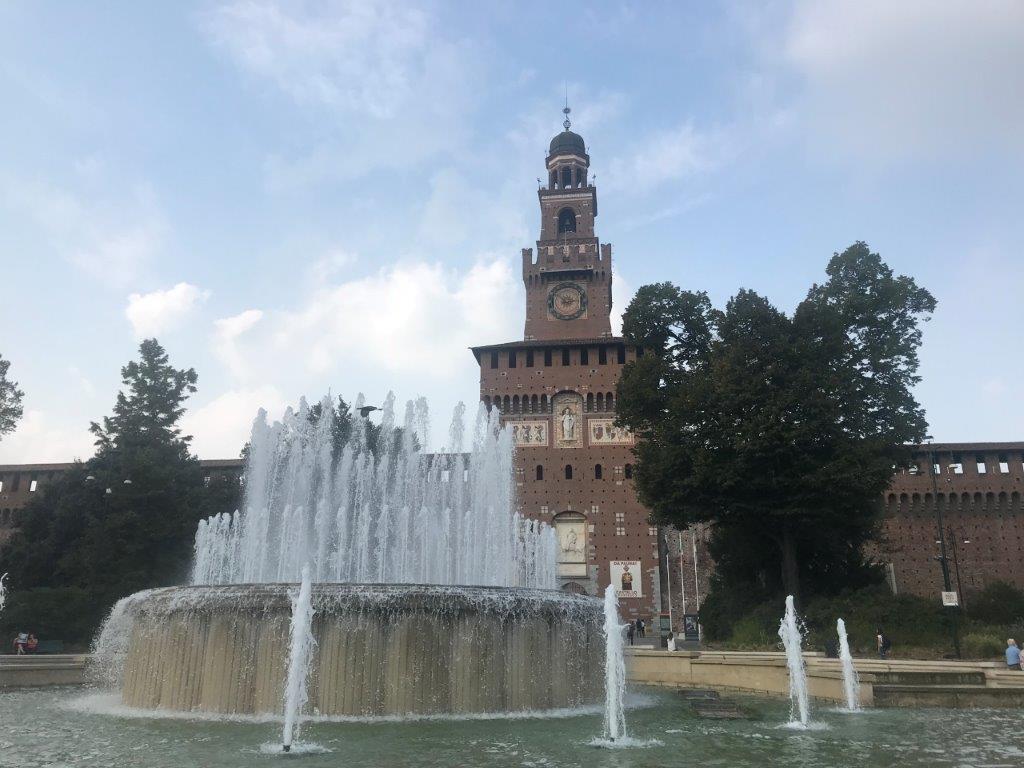
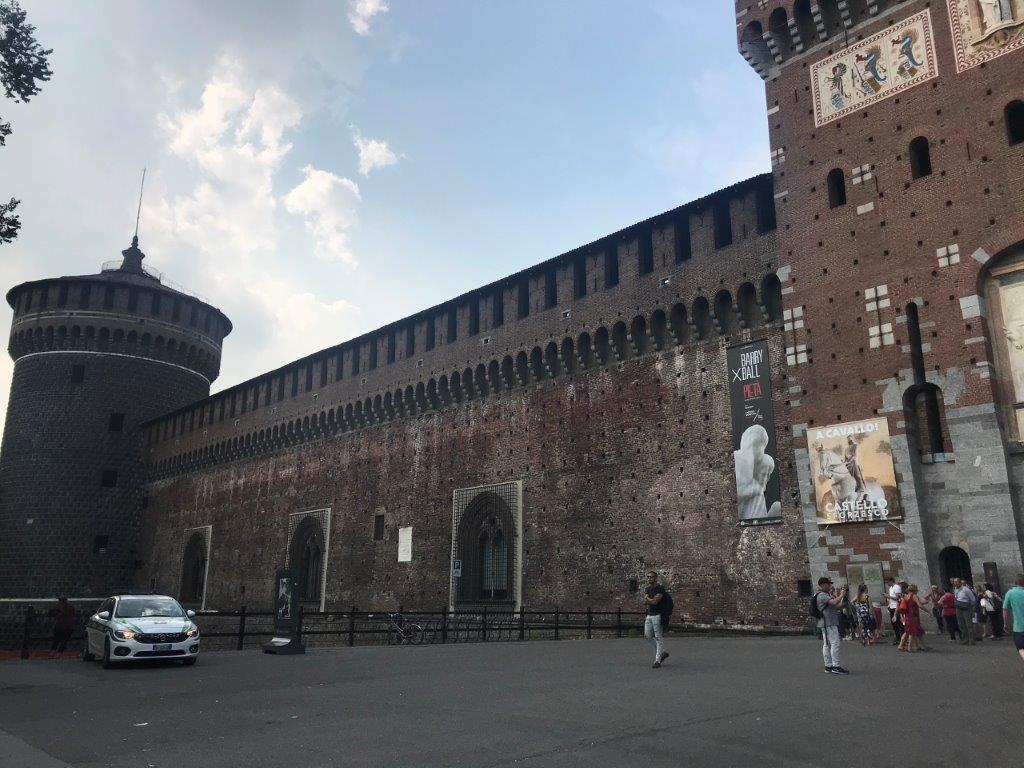
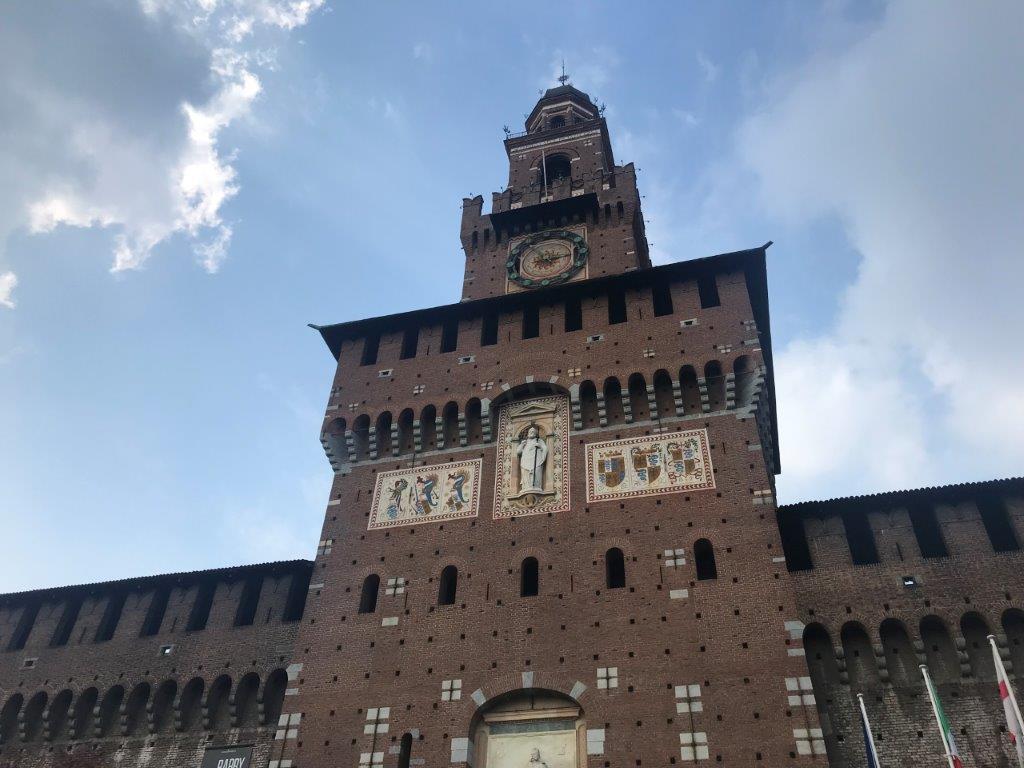
This majestic medieval fortification dates back to the 15th century, built by Duke Francesco Sforza on earlier remnants. In the 16th and 17th centuries, it became one of Europe’s largest citadels. Today, it houses several museums, including the Museum of Ancient Art and the Museum of Musical Instruments. It stands at the edge of Parco Sempione.
Santa Maria delle Grazie
This 15th-century basilica is a UNESCO World Heritage site. It houses Leonardo da Vinci’s iconic mural masterpiece, The Last Supper (Il Cenacolo). Painted in the late 15th century in the monastery’s refectory, it is one of the world’s most famous artworks. Access requires advance booking due to strict conservation measures.
Pinacoteca di Brera
Located in the artistic Brera district, this art gallery is considered one of Italy’s best art collections. It features masterpieces by Italian artists, including Raphael, Caravaggio, and Mantegna, offering a comprehensive overview of Italian painting.
Navigli District
This quaint neighborhood is known for its historic canals, some of which were designed by Leonardo da Vinci for transporting marble for the Duomo. Today, the Navigli canals are a lively area. They are filled with bars, restaurants, and art studios. It is a popular spot for evening “aperitivo.”
Sports in Milan
Milan is a global sports capital. Football is dominant, with iconic rivals AC Milan (7 UEFA Champions League, 19 Serie A titles) and Inter Milan (3 UEFA Champions League, 20 Serie A titles) sharing San Siro Stadium, Italy’s largest. The city is also a key part of Formula 1, hosting the Italian Grand Prix at nearby Monza. Milan will co-host the 2026 Winter Olympics, including the opening ceremony. Basketball is prominent with Olimpia Milano. Various other sports like cycling, athletics, and tennis are also active.
Football in Milan
This is the city’s most popular sport. Milan is home to two world-famous rival clubs, forming one of football’s most intense derbies, the Derby della Madonnina. This rivalry dates back to 1908 when Inter Milan was formed by a splinter group from AC Milan.
- AC Milan: Founded on December 16, 1899, by English expatriate Herbert Kilpin, AC Milan is nicknamed the “Rossoneri” (Red and Blacks). They are one of Europe’s most successful clubs, holding 7 UEFA Champions League titles and 19 Serie A (Scudetto) titles. Beyond these, they have won 5 UEFA Super Cups, 2 UEFA Cup Winners’ Cups, a joint-record 3 Intercontinental Cups, and 1 FIFA Club World Cup. In total, AC Milan has amassed 18 FIFA and UEFA trophies, making them the most successful Italian club in international competitions. Eras under presidents like Silvio Berlusconi (1986-2017) and coaches like Arrigo Sacchi and Fabio Capello saw periods of significant dominance, including an undefeated Serie A season in 1991-92. The club has been home to legendary players such as Paolo Maldini, Franco Baresi, Marco van Basten, and Kaká. Fans can visit Casa Milan, the club’s official headquarters, which houses a museum showcasing their vast trophy collection and rich history.
- FC Internazionale Milano (Inter Milan): Also a highly successful club, Inter has secured 3 UEFA Champions League titles and 20 Serie A (Scudetto) titles (as of 2024). They boast a passionate fanbase both domestically and internationally. Both teams share Stadio Giuseppe Meazza, commonly known as San Siro Stadium. It is Italy’s largest stadium, with a seating capacity of 75,817. San Siro has hosted major events, including matches for the 1990 FIFA World Cup, UEFA Euro 1980, and multiple European Cup finals. While both clubs have explored options for new, individual stadiums, they currently continue to share this iconic venue.
Formula 1
Although the track is not within Milan city limits, the Autodromo Nazionale Monza hosts the annual Italian Grand Prix. It is located just north of Milan, in a parkland setting. Built in 1922, it is one of the oldest and fastest circuits in Formula 1 history. It’s a key part of Milan’s broader sports identity.
Winter Olympics 2026
Milan, along with Cortina d’Ampezzo, will co-host the 2026 Winter Olympics. Milan is scheduled to host the opening ceremony at San Siro Stadium and several indoor events. This highlights the city’s capacity for major international sporting spectacles.
Basketball
Milan has a professional basketball team, Olimpia Milano. They are one of Italy’s most successful basketball clubs, competing in the Lega Basket Serie A (Italy’s top league) and the EuroLeague. Their home arena is the Mediolanum Forum.
Other Sports
Milan offers facilities for various other sports. These include cycling, athletics, and tennis. The city promotes an active lifestyle, with parks and public spaces used for running and recreation.



How to Get to Milan
To reach Milan, fly to Malpensa (MXP), Linate (LIN), or Bergamo (BGY) airports, all well-connected to the city. Drive via major motorways like A1 and A4. Extensive bus services run from national and international cities to various terminals. Milano Centrale is the main train station, offering high-speed links across Italy and to Europe.
By Plane
Milan is served by three international airports:
- Milan Malpensa Airport (MXP): The main international gateway, about 45 km northwest of the city center. It has direct train (Malpensa Express) and bus connections to Milano Centrale.
- Milan Linate Airport (LIN): Closer to the city, about 7 km east, primarily for domestic and short-haul European flights. Connected by Metro Line M4.
- Bergamo Orio al Serio Airport (BGY): About 50 km northeast, a major hub for low-cost carriers. Bus services connect directly to Milano Centrale.
By Car
Driving to Milan is straightforward. The city is a central motorway interchange, connected to Italy and Europe via multiple expressways. Major routes include:
- A1 (Autostrada del Sole): Links Milan to Rome and Naples.
- A4 (Autostrada Serenissima): Connects Milan to Turin, Venice, and Trieste.
- A7: Connects Milan to Genoa.
- A8/A9: Link to the Italian Lakes region and Switzerland. These motorways connect to Milan’s extensive ring road system.
By Bus
Milan features several major bus terminals, such as Lampugnano and San Donato. They are well-connected to the city’s metro system. Numerous bus companies, including FlixBus, Itabus, and BlaBlaCar Bus, offer extensive national and international routes. Direct services connect Milan with major Italian cities like Rome, Florence, and Venice. International routes link to various European capitals.
By Train
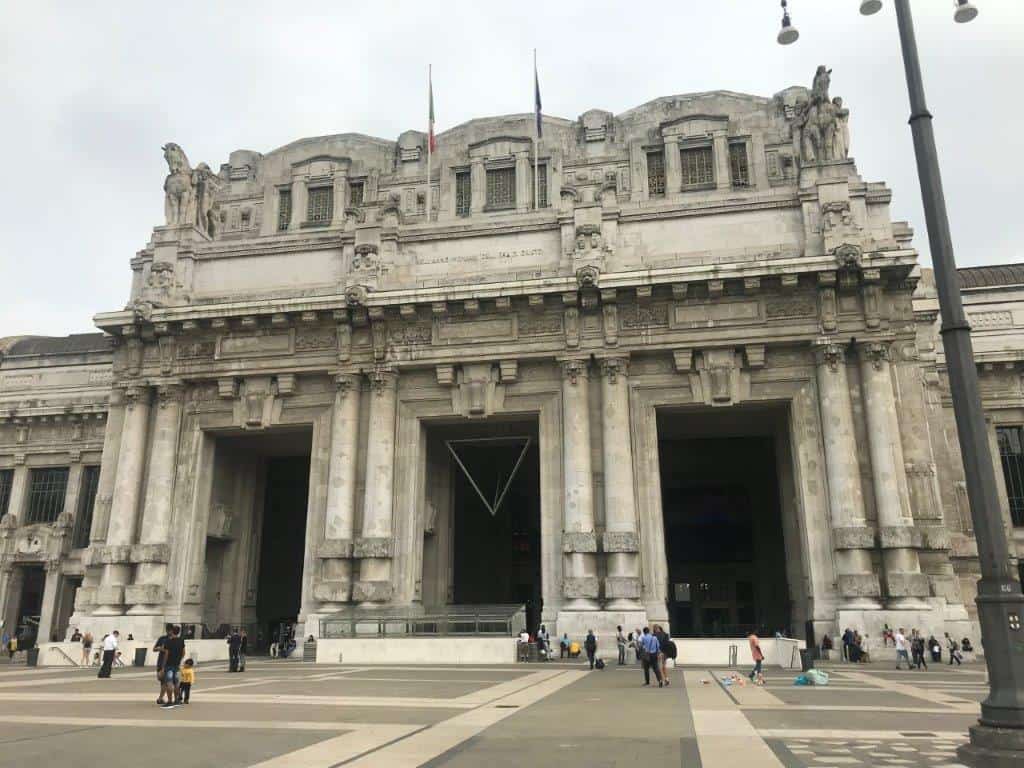
Milan is a crucial railway hub. Its main station, Milano Centrale, is one of Europe’s largest. Other important stations include Porta Garibaldi and Cadorna FN.
- High-speed trains (Frecciarossa and Italo) offer frequent, fast connections to major Italian cities like Rome (approx. 3 hours), Florence, Venice, Turin, and Naples.
- Regional trains connect to Lombardy and surrounding areas.
- International trains provide direct links to cities like Paris, Zurich, Geneva, and Vienna.
Driving Distances
The driving distance from 4 major Italian cities, according to Google Maps:
- Rome – 573 kilometers (5 h 40 min)
- Venice – 265 kilometers (2 h 40 min)
- Naples – 771 kilometers (7 h)
- Palermo – 1475 kilometers (14 h 20 min)
Looking to Explore more of Italy and Europe?