Hallamölla, Skåne | Exploring Sweden
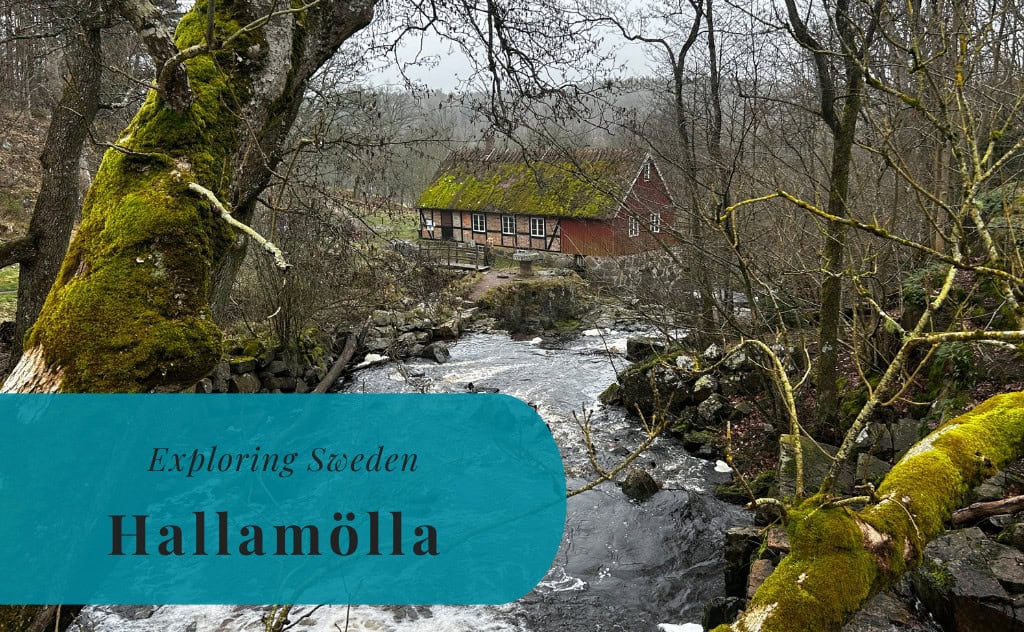
Hallamölla is a natural and cultural heritage site located in the Österlen region of Skåne County, Sweden. The site is situated on the Verkeån river and lies within the Verkeån Nature Reserve. The name “Hallamölla” likely translates to “mill by the flat rocks,” referring to its two main features: Skåne’s highest waterfall and a historic watermill. As a protected nature and heritage area rather than a residential village, it has no permanent population.
The character of Hallamölla is defined by the interplay between the natural force of the river and the historical industry it once powered. The site is a destination for nature walks and for those interested in industrial history. It is part of a larger protected landscape that includes hiking trails and other points of interest, such as the nearby Christinehof Ecopark.
A Short History of Hallamölla
The history of Hallamölla is the history of harnessing the power of the Verkeån river. For centuries, the site was a vital center of rural industry for the local agricultural community, centered around the function of its watermill.
Medieval Origins and Agricultural Importance
Milling at the Hallamölla site likely began in the late Middle Ages, with the first documented mention of a mill here in 1491. The river’s significant drop in elevation at this point made it an ideal location for water-powered mills. For centuries, Hallamölla Kvarn (the mill) was vital to the local farming community in the Österlen region. It ground grain for local farmers and was a center of rural life and commerce.
The 19th-Century Mill
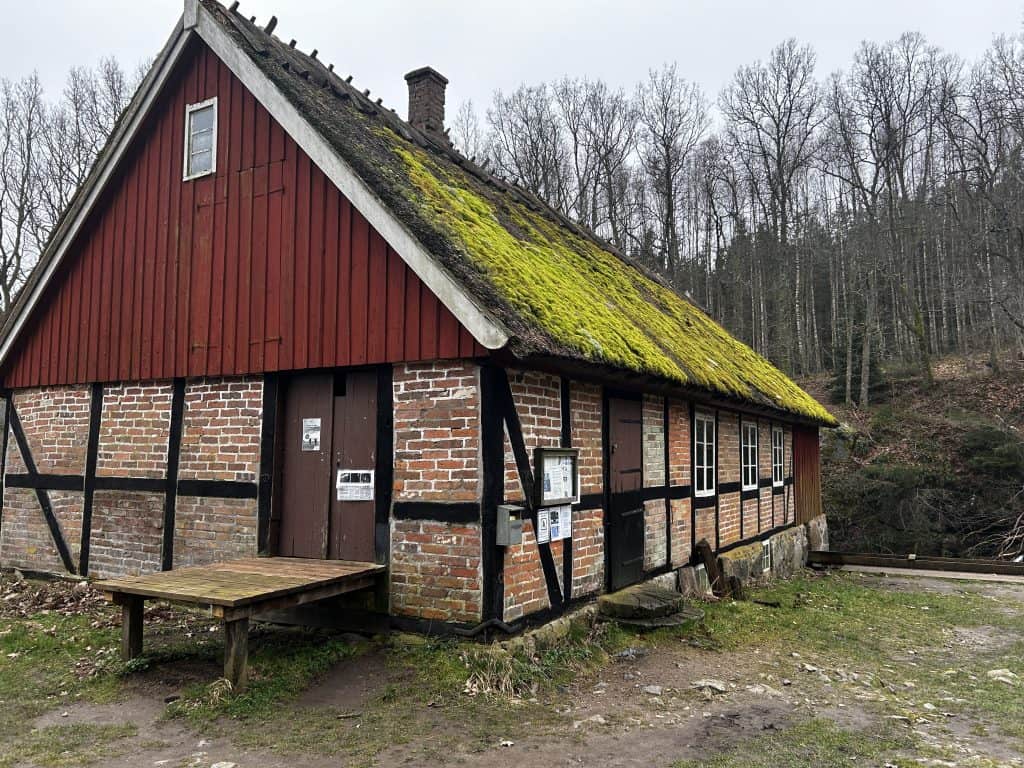
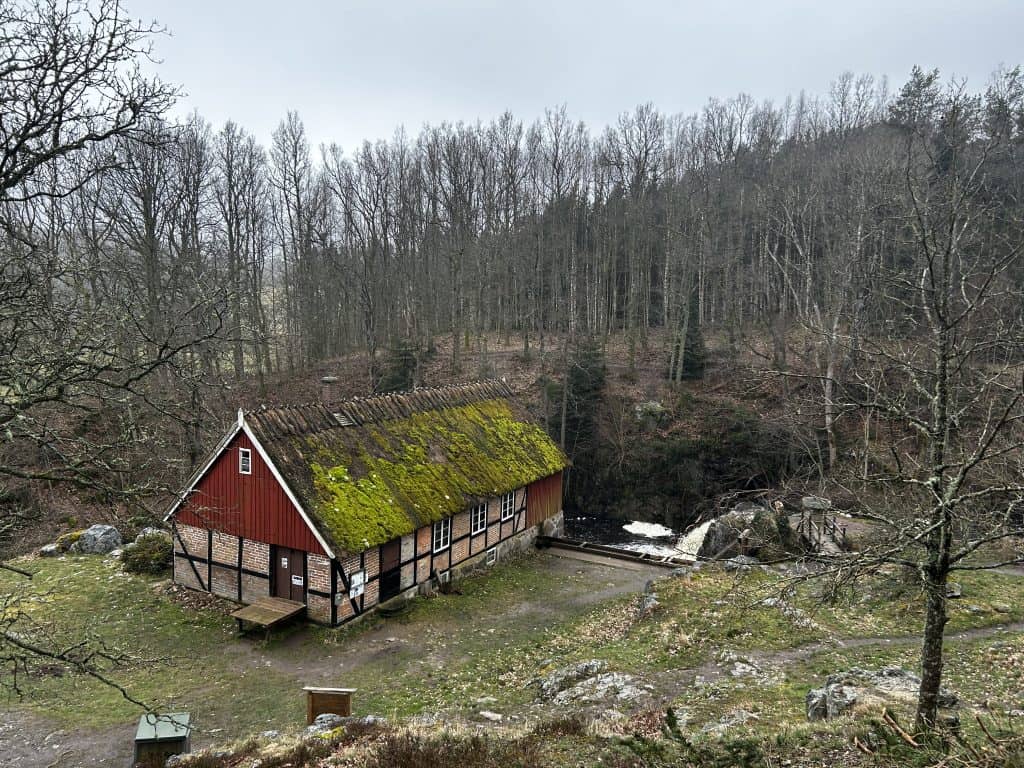
The current half-timbered mill building dates mostly from the 19th century, although some parts of the foundation may be older. The mill complex of this era included the main mill building, the miller’s residence, stables, and other farm buildings. The machinery inside represents the technology used for grain milling during that period. The site was a small but active industrial center, reflecting the agricultural economy of Skåne at the time.
End of an Era and Preservation
The mill ceased commercial operations around 1949. The development of modern, large-scale milling techniques made small, water-powered mills like Hallamölla obsolete. In recognition of its historical importance, the site was preserved. Today, the mill and its surrounding buildings are protected as a cultural monument. The site is managed by a local heritage association that sometimes operates the mill on special demonstration days.
Things to Do and See
The sights at Hallamölla and its immediate vicinity offer a combination of natural features and cultural history. The main points of interest are the waterfall itself, the historic mill, and the surrounding protected landscapes which are accessible via a major regional hiking trail.
Hallamölla Waterfall
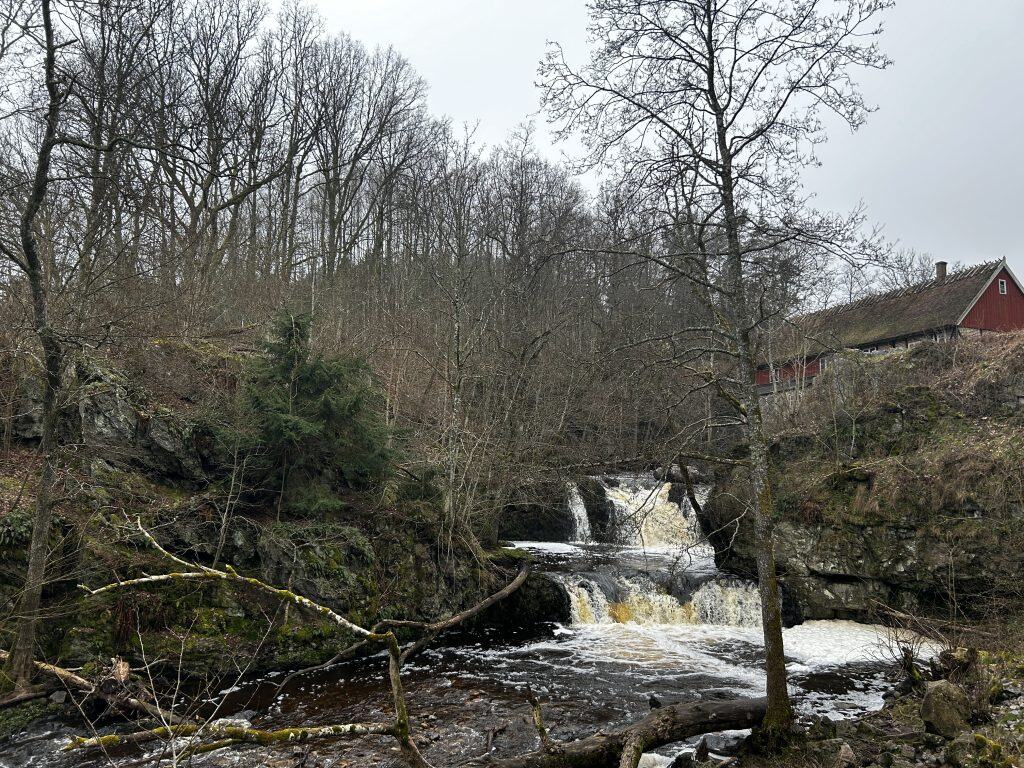
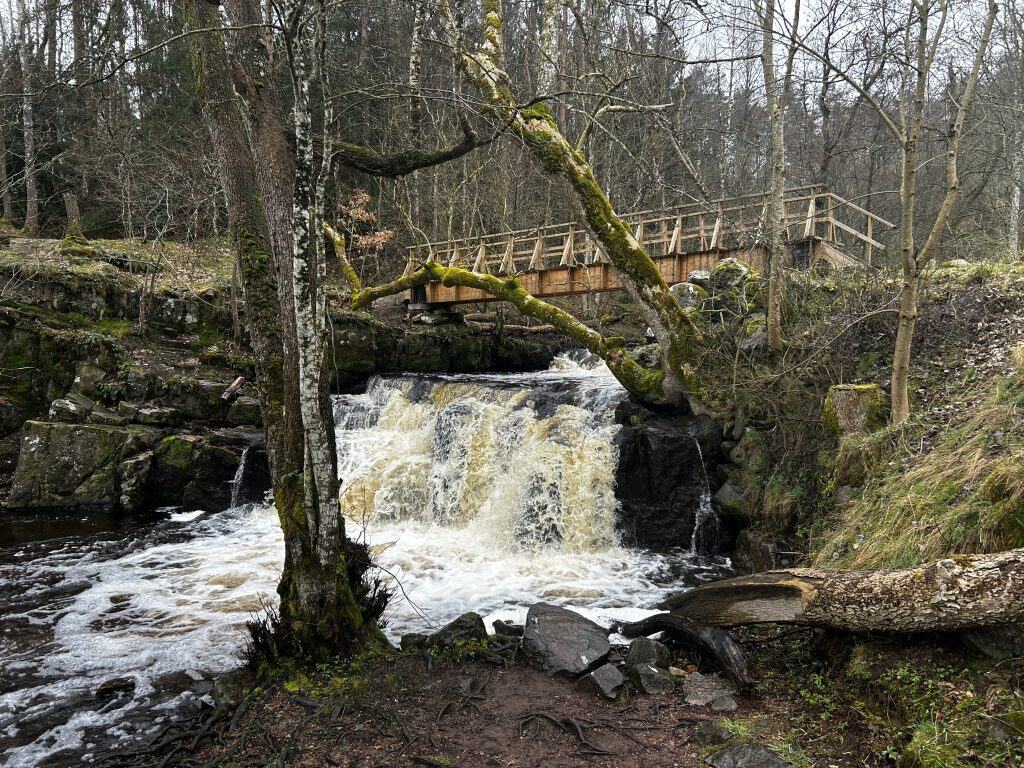
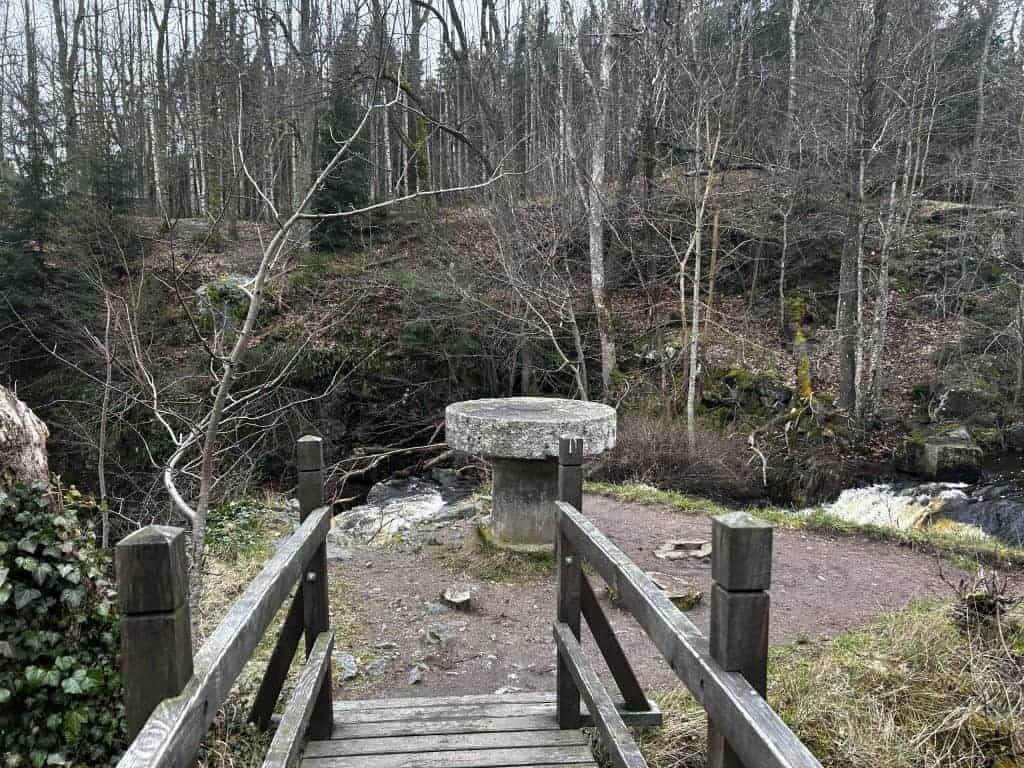
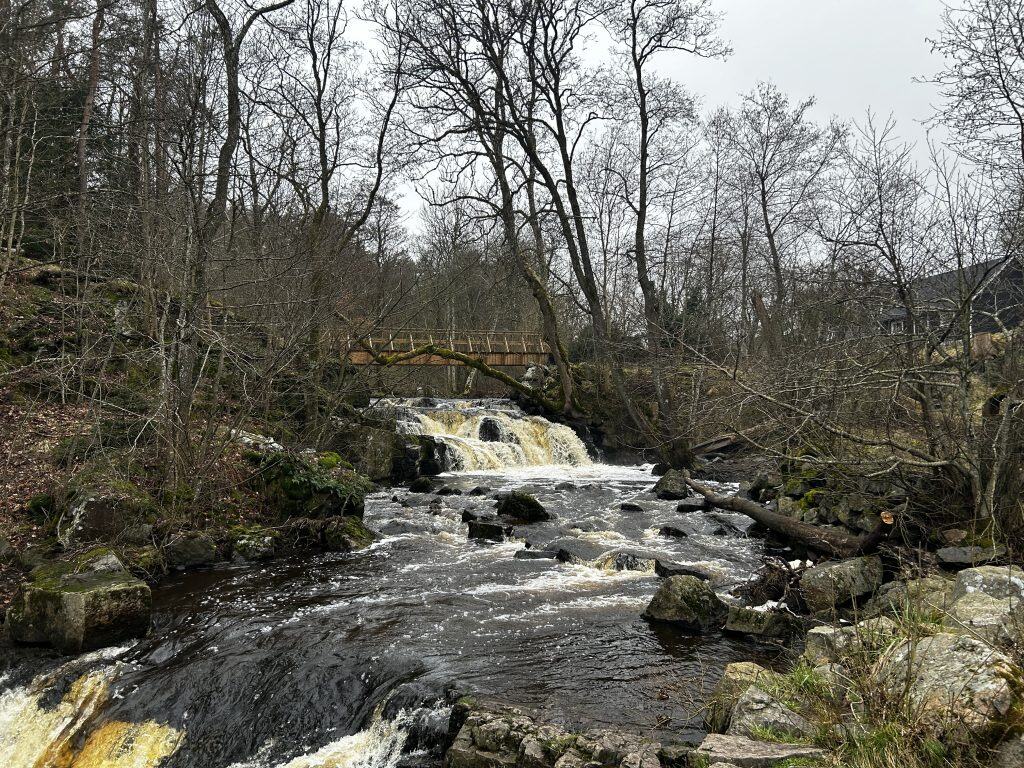
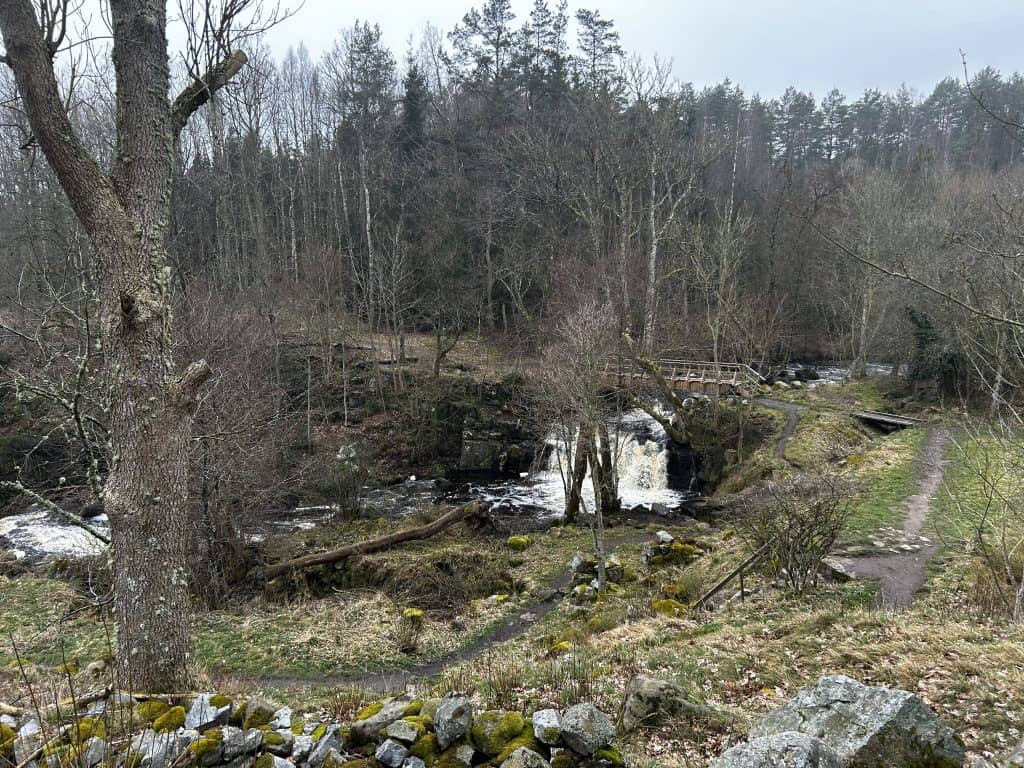
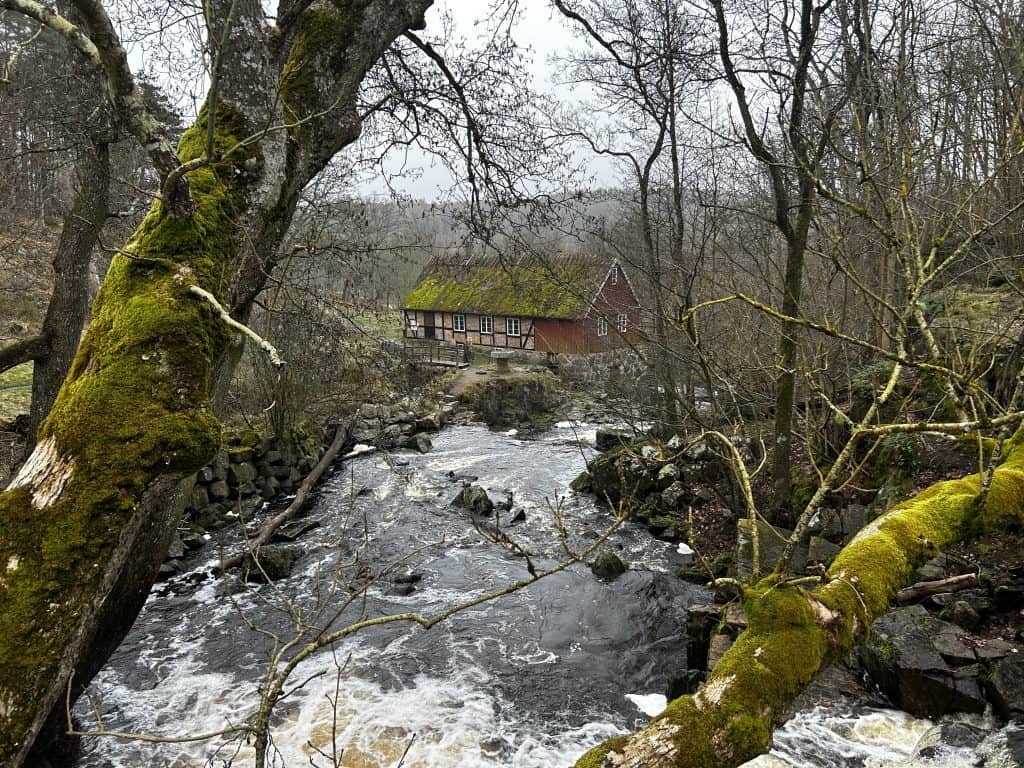
The Hallamölla Waterfall (Hallamölla Vattenfall) is the site’s primary natural attraction. It is the highest waterfall in Skåne, with a total drop of 23 meters. The waterfall consists of a series of five separate cascades where the Verkeån river tumbles down a series of rocky, sandstone ledges. The volume of water is most significant after heavy rains or during the spring melt. Well-maintained wooden walkways and viewing platforms have been built to provide safe access and clear views of the falls.
Hallamölla Kvarn
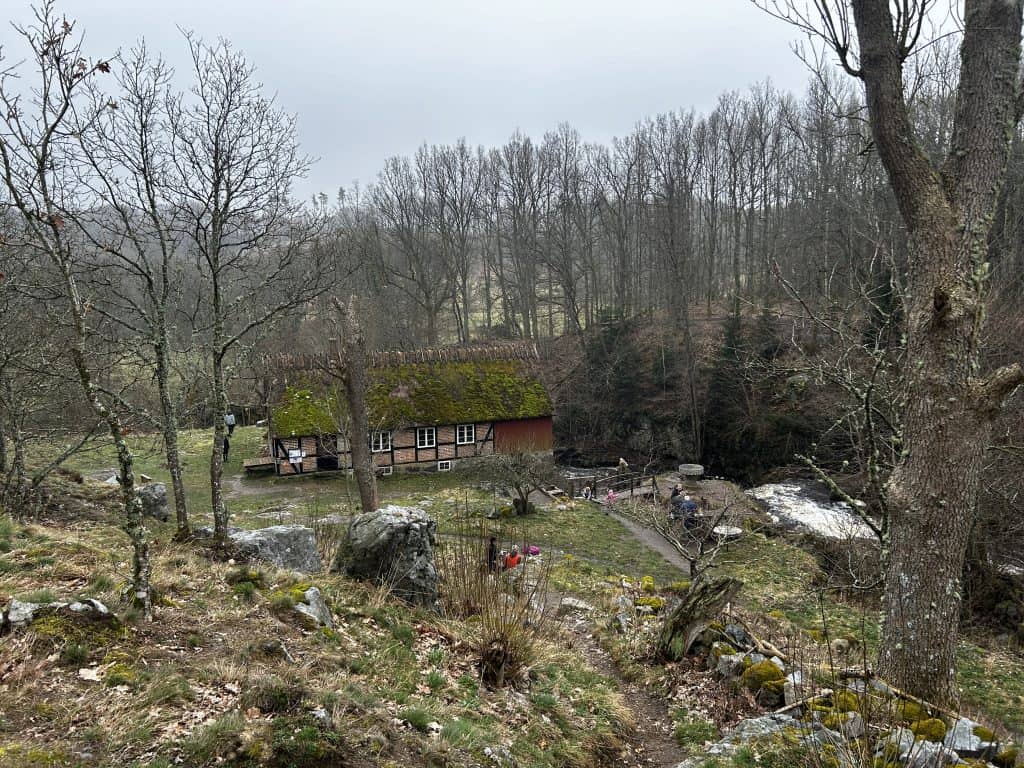
Adjacent to the falls stands Hallamölla Kvarn, a preserved 19th-century watermill. The building’s half-timbered architectural style is characteristic of the region. While the interior is generally closed to the public, on special designated open days, visitors may have the chance to see the old milling machinery inside. The mill is maintained by a local heritage group, Albo Härads Hembygdsförening. The combination of the waterfall and the mill building is a key feature of the site.
Verkeån Nature Reserve
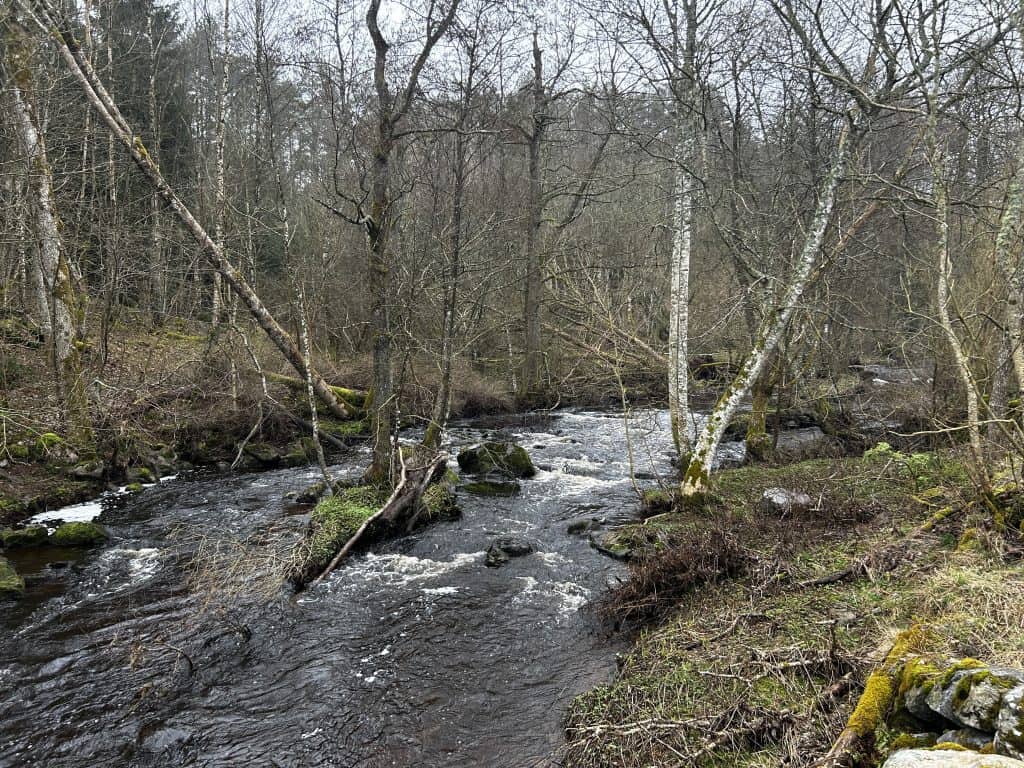
The entire Hallamölla site is nestled within the expansive Verkeån Nature Reserve (Verkeåns naturreservat). This protected area encompasses the Verkeån river valley and is one of the largest nature reserves in Skåne. It showcases diverse landscapes, including lush deciduous forests and a rich array of birdlife, with species like the kingfisher and dipper living along the river. The reserve’s varied plant life further enhances its natural character, making it a destination for outdoor enthusiasts.
Skåneleden Hiking Trail
The long-distance Skåneleden hiking trail conveniently passes directly through Hallamölla. Specifically, this section falls on the SL4 Österlen trail, which is a 188-kilometer-long trail that circles the Österlen region. The waterfall and mill are a popular and rewarding stop for those exploring this extensive network of paths. This part of the trail connects Hallamölla with the historic Alunbruket to the west and the coastal area of Haväng to the east.
Christinehofs Ekopark
Just a short distance from Hallamölla lies Christinehof Ecopark (Christinehofs Ekopark). This large ecological park offers even more opportunities for exploration. The park includes the historic Christinehof Castle, a Baroque manor house from the 18th century. The ecopark contains several marked hiking trails of varying lengths, from 1.4 to 12 kilometers. It also features managed wetlands, which are home to diverse wildlife, and the remains of the historic Andrarum Alum Works.

How to Get to Hallamölla
Reaching Hallamölla requires travel into a rural part of the Österlen region in Skåne. As there is no direct public transport to the site itself, arriving by car is the most common method.
Arriving by Air: Nearby Gateways
The two closest airports to Hallamölla are Malmö Airport (MMX), approximately 65 kilometers away, and Copenhagen Airport (CPH) in Denmark, about 100 kilometers away via the Öresund Bridge. Both airports offer numerous domestic and international connections. From either airport, the journey must be completed by rental car, as there are no direct public transport links to this rural site.
The Open Road: Driving to the Nature Reserve
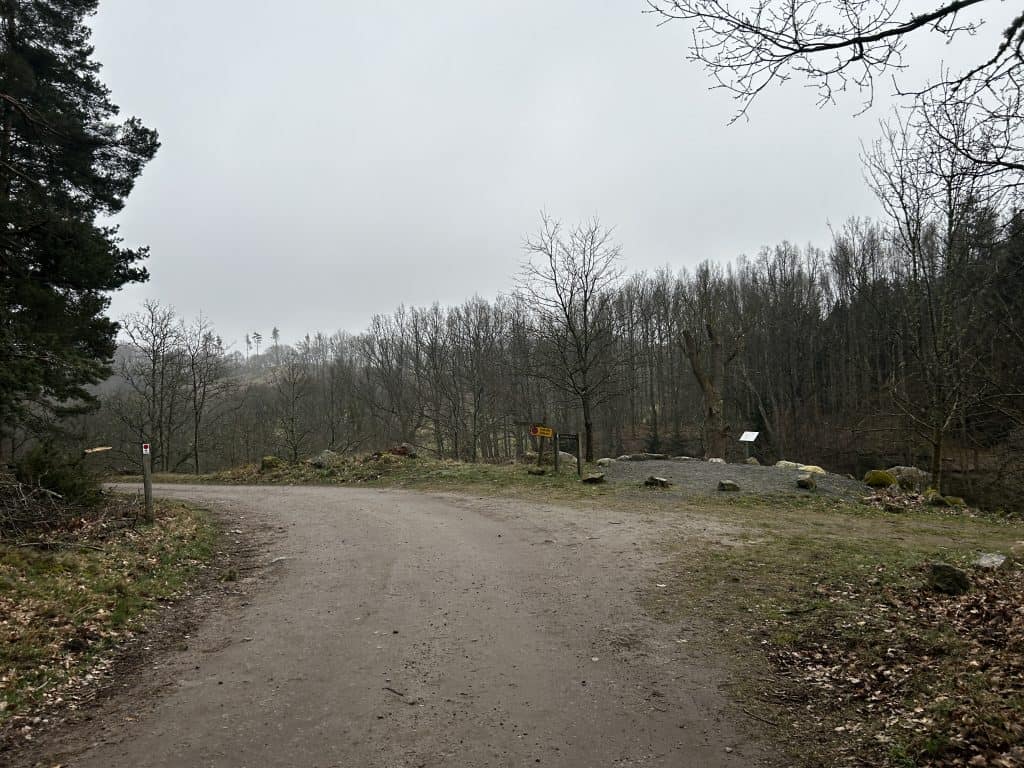
Driving is the most flexible option for reaching Hallamölla. The site is located within the Verkeån Nature Reserve and is accessible via smaller local roads. From larger towns like Simrishamn or Tomelilla, drivers would follow signs for Brösarp and then for Christinehof Castle, as Hallamölla is nearby. Using a GPS with the destination “Hallamölla Vattenfall” is recommended. A designated parking area is located a short walk from the waterfall and mill.
Connecting by Coach: A Regional Journey
There are no direct bus services to Hallamölla. The nearest regional bus hubs are in towns like Brösarp or Tomelilla. Regional buses operated by Skånetrafiken connect these towns with larger cities like Malmö, Lund, and Kristianstad. From the nearest bus stop, which can be several kilometers away, visitors would need to walk or hike the remaining distance to reach the waterfall.
On Track: A Journey by Rail and Car
There is no train station at Hallamölla. The closest train stations are located in the larger regional towns of Simrishamn and Ystad. These stations are served by the regional Pågatågen network, with connections from Malmö and Lund. From the train station, a rental car or a taxi would be required to complete the journey to Hallamölla.
Driving Distances
The driving distance from 10 major regional cities, according to Google Maps:
- Malmö, Sweden – 77 kilometers (1 h 10 min)
- Copenhagen, Denmark – 113 kilometers (1 h 40 min)
- Jönköping, Sweden – 268 kilometers (3 h 20 min)
- Gothenburg, Sweden – 303 kilometers (3 h 50 min)
- Szczecin, Poland – 354 kilometers (4 h 50 min)
- Linköping, Sweden – 396 kilometers (4 h 50 min)
- Hamburg, Germany – 434 kilometers (5 h 20 min)
- Berlin, Germany – 509 kilometers (6 h 20 min)
- Stockholm, Sweden – 593 kilometers (6 h 40 min)
- Oslo, Norway – 594 kilometers (6 h 40 min)
Explore More of Skåne and Sweden