Boulder Creek, California | Exploring the United States
Boulder Creek is a census-designated place in Santa Cruz County, located in the state of California, United States. It is situated deep within the Santa Cruz Mountains, in the northern part of the San Lorenzo Valley. With a population of approximately 5,300 residents, Boulder Creek is a small but historically significant mountain community. The town is located about 23 kilometers north of the coastal city of Santa Cruz. Its geography is defined by the surrounding redwood forests and the Boulder Creek, a tributary of the San Lorenzo River.
The character of Boulder Creek is that of a rustic, independent mountain town. Its identity is deeply connected to its past as a major center for the logging industry in the 19th century. This history is visible in its historic downtown area, which retains some of its Old West-style architecture. In the modern era, the town has become a residential community for people seeking a quieter, rural lifestyle among the redwoods, while remaining within commuting distance of Silicon Valley. It also serves as a gateway to Big Basin Redwoods State Park, California’s oldest state park.
A Short History of Boulder Creek
The history of Boulder Creek is a story of a classic American boomtown that grew rapidly around the logging industry and later transformed into a quiet mountain community. Its development was shaped by the vast natural resource of the surrounding redwood forests. The town’s story reflects the rise and fall of the timber industry in the Santa Cruz Mountains. Its more recent history has been marked by a devastating wildfire that has tested the resilience of the community.
The Logging Boom
Before the arrival of European-Americans, the area was inhabited by the indigenous Ohlone people. The modern town of Boulder Creek was founded and grew rapidly in the late 19th century as a major center for the logging industry. The vast, old-growth redwood forests of the Santa Cruz Mountains provided a massive source of timber for the growing cities of the San Francisco Bay Area. Numerous sawmills were established in and around the town. A railway line was constructed through the San Lorenzo Valley, which was essential for transporting the massive redwood logs out of the mountains. During this period, Boulder Creek was a bustling and rough boomtown.
Transition to a Mountain Community
By the early 20th century, much of the most accessible old-growth redwood forest had been logged. The logging industry began to decline, and the sawmills started to close. The town then began its transition away from being an industrial center. It became a quieter residential mountain community and a destination for recreational visitors from the nearby cities. The preservation of the remaining redwood forests, particularly with the establishment of Big Basin Redwoods State Park in 1902, helped to shift the local economy towards tourism and recreation.
Modern Challenges and Resilience
In the mid-20th century, Boulder Creek, like many communities in the Santa Cruz Mountains, became a center for the counter-culture movement. It attracted people seeking an alternative lifestyle away from the main urban centers. A defining event in the town’s recent history was the CZU Lightning Complex Fire in August 2020. This massive wildfire caused widespread destruction in the Santa Cruz Mountains. It destroyed numerous homes in the Boulder Creek area and devastated the historic core of the nearby Big Basin Redwoods State Park. The community has since been focused on the long and difficult process of recovery and rebuilding.
Things to Do and See
The sights in and around Boulder Creek are primarily focused on its historic town center and the surrounding natural landscape of the redwood forests. The main points of interest offer a look into the history of the logging era and provide access to the natural beauty of the Santa Cruz Mountains.
Big Basin Redwoods State Park
Located just a short drive from Boulder Creek, Big Basin Redwoods State Park is the most significant attraction in the region. It is California’s oldest State Park, established in 1902. The park is famous for its large groves of ancient coast redwood trees (Sequoia sempervirons), some of which are over 300 feet tall. The park was severely damaged by the 2020 CZU Lightning Complex Fire, which destroyed most of its historic buildings and infrastructure. It has since begun a phased reopening, with limited access to some of its trails as the forest begins its long process of recovery.
Downtown Boulder Creek
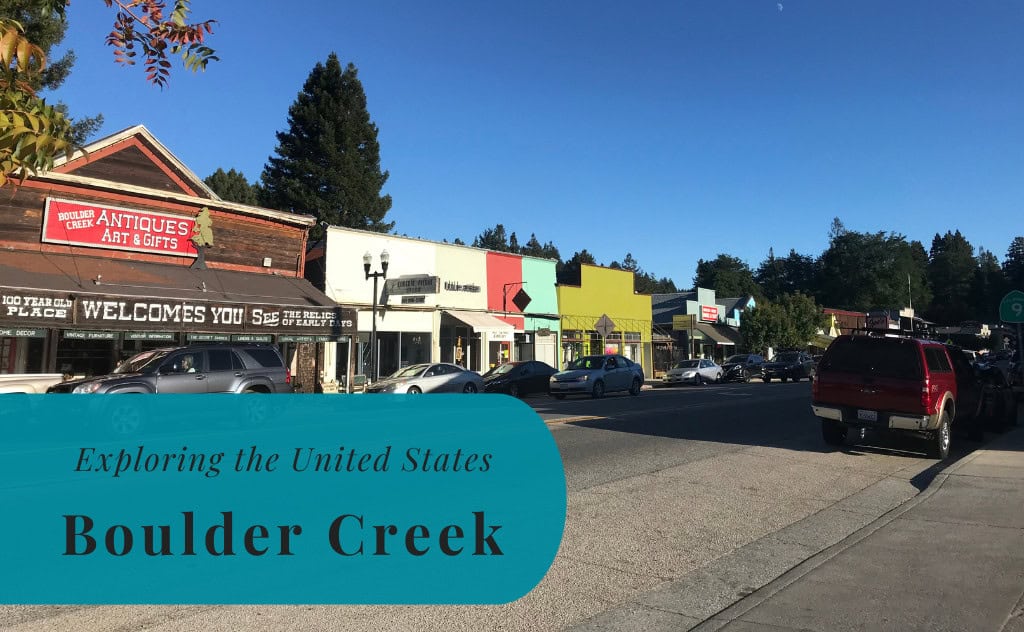
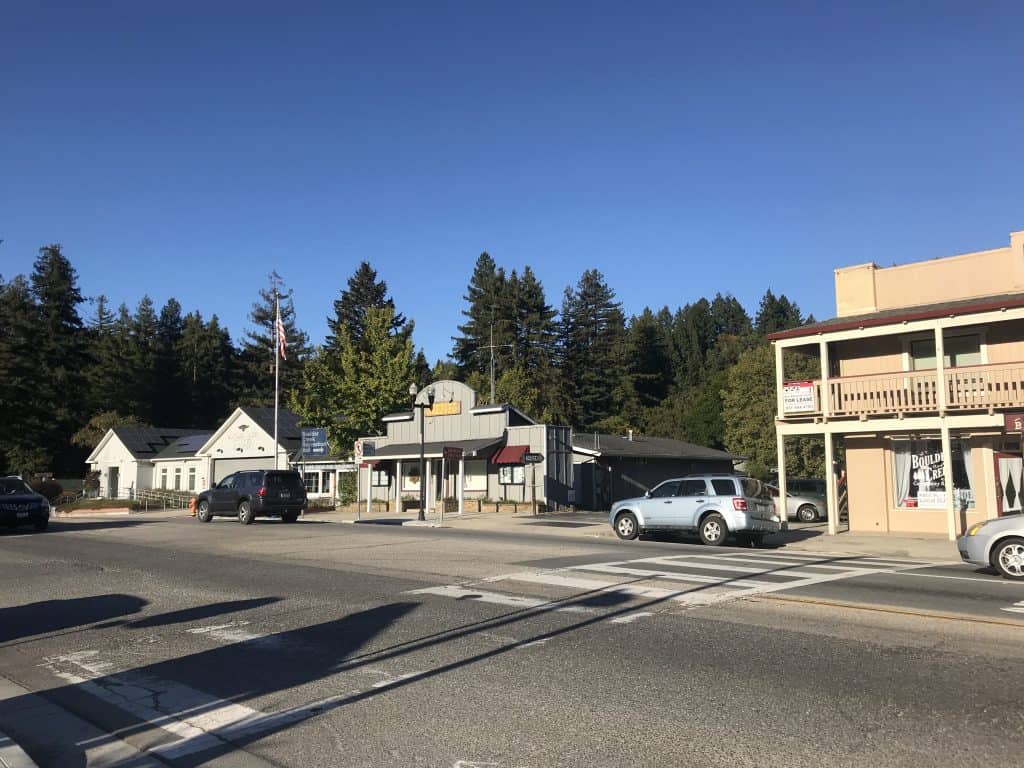
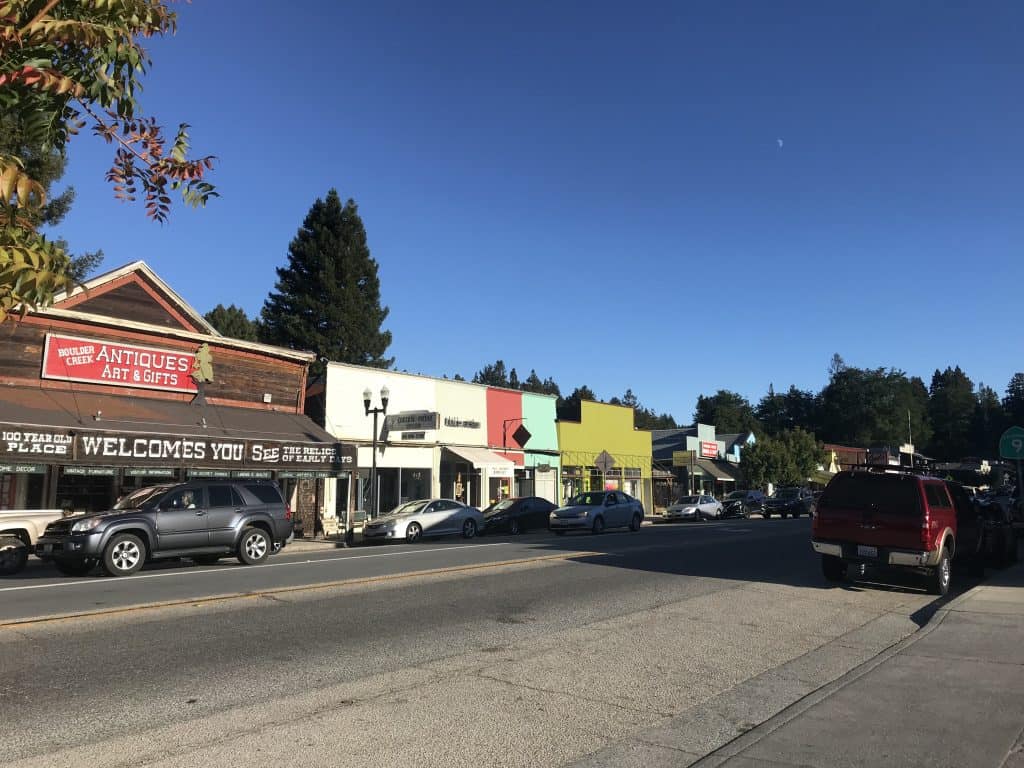
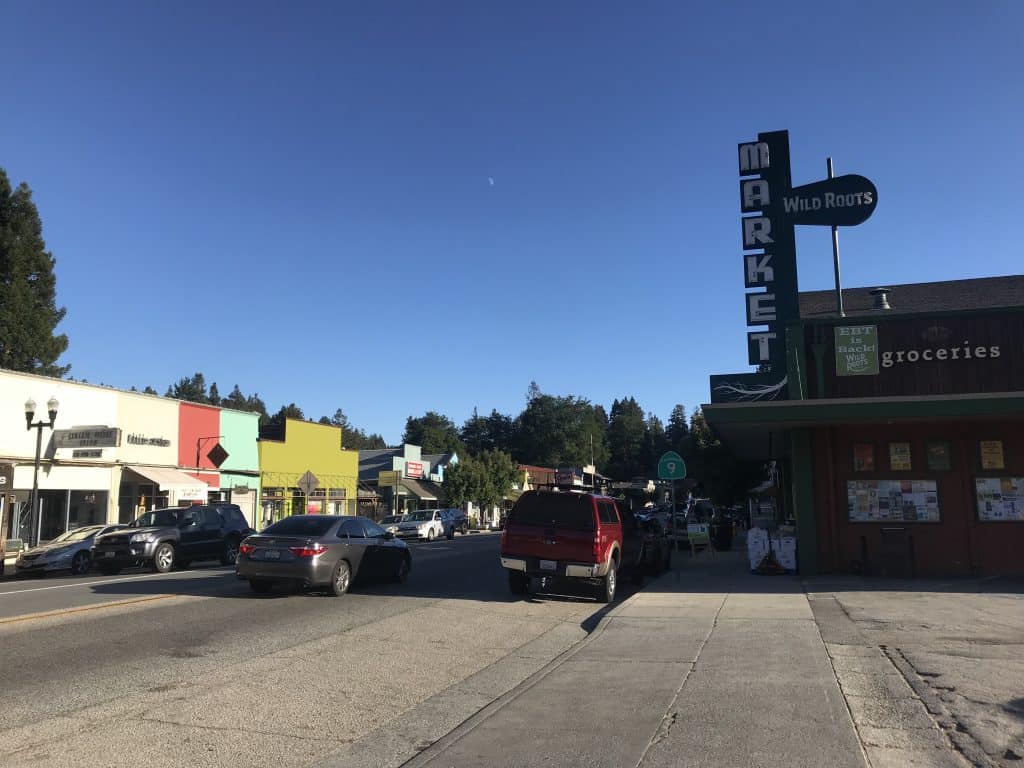
The historic downtown area of Boulder Creek is located along State Route 9, which is the main road through the San Lorenzo Valley. The downtown district retains some of its historic, Old West-style architecture from its time as a 19th-century logging boomtown. The street is lined with a mix of local shops, restaurants, and historic buildings. The downtown area serves as the commercial and social hub for the local community. A walk through the town provides a look into its past.
The San Lorenzo River
The San Lorenzo River is the main river that flows through the valley and is a key natural feature of the area. The town of Boulder Creek is located on the banks of a major tributary, which is also named Boulder Creek. The river and its tributaries are an important habitat for local wildlife, including the endangered coho salmon. The river provides a scenic backdrop to the town and the surrounding communities.
Hiking and Cycling Trails
The area surrounding Boulder Creek is a major destination for hiking and cycling. The Santa Cruz Mountains offer an extensive network of trails that run through the redwood forests. While many of the trails within Big Basin Redwoods State Park are still closed for recovery, other nearby parks and open space preserves provide numerous opportunities for outdoor recreation. The winding mountain roads in the area are also very popular with road cyclists.
Local Wineries
The Santa Cruz Mountains are a designated American Viticultural Area (AVA) and are known for producing high-quality wines, particularly Pinot Noir and Chardonnay. The area around Boulder Creek is home to several small, family-run wineries. These wineries are often located in scenic mountain settings. Many of them are open to the public for wine tasting, especially on weekends. A visit to a local winery provides a taste of the region’s agricultural heritage.
Sports in Boulder Creek
The sporting life in Boulder Creek is focused on the local high school and community-based sports. The surrounding natural landscape also provides extensive opportunities for outdoor recreational sports.
High School Athletics
As is common in many American towns, high school sports are a key part of the local identity. The teams of San Lorenzo Valley High School, which serves Boulder Creek and the other communities of the valley, are a focal point for the community. The school’s athletic teams, known as the Cougars, compete in various sports. The high school football games, in particular, are important community events during the autumn season.
How to Get to Boulder Creek
Reaching the town of Boulder Creek requires a scenic drive into the Santa Cruz Mountains. A car is the most practical means of transport for visiting the town and exploring the surrounding area. Public transport options are available but are limited.
The Open Road: Driving the Mountain Highways
Driving is the most common way to reach Boulder Creek. The town is located directly on California State Route 9. This is a winding, two-lane scenic highway that runs through the heart of the San Lorenzo Valley. It connects the city of Santa Cruz on the coast with the Silicon Valley to the north. State Route 17 is the main four-lane highway that crosses the mountains, and from there, local roads connect to Boulder Creek.
Arriving by Air: San Jose and San Francisco
The closest and most convenient major airport is Norman Y. Mineta San José International Airport (SJC). It is located approximately 40 kilometers away. For more extensive global connections, San Francisco International airport (SFO) is about 80 kilometers away. From either of these airports, a rental car is the most practical option for completing the journey into the Santa Cruz Mountains.
On Track: A Journey by Rail and Bus
Boulder Creek does not have a direct connection to the main Amtrak or Caltrain passenger rail networks. The closest major train station is the San Jose Diridon station. From the San Jose station, travelers would need to transfer to a bus service to reach the city of Santa Cruz. From Santa Cruz, a final local bus is required to reach Boulder Creek.
Connecting by Coach
There are no direct long-distance bus services to the small town of Boulder Creek. Travel by coach would involve taking a service from a company like Greyhound to the city of Santa Cruz. From the Santa Cruz Metro Center, the Santa Cruz METRO public bus system operates a local bus service (Route 35) that runs up the San Lorenzo Valley and serves Boulder Creek.
An International Ferry Approach
There is no major passenger ferry service to the Santa Cruz County area from other cities. The closest major international ferry ports are located much further south in Los Angeles or north in cities like San Francisco, but these primarily serve cruise ships. The primary means of arrival to this part of the California coast is by land or air.
Driving Distances
The driving distance from 10 regional cities, according to Google Maps:
- Santa Cruz, CA – 23 kilometers (0 h 30 min)
- San Jose, CA – 39 kilometers (0 h 50 min)
- San Francisco, CA – 101 kilometers (1 h 40 min)
- Sacramento, CA – 235 kilometers (2 h 50 min)
- Los Angeles, CA – 536 kilometers (5 h 40 min)
- San Diego, CA – 728 kilometers (7 h 30 min)
- Las Vegas, NV – 851 kilometers (8 h 20 min)
- Portland, OR – 1,078 kilometers (11 h 00 min)
- Phoenix, AZ – 1,141 kilometers (11 h 00 min)
- Seattle, WA – 1,353 kilometers (13 h 50 min)
Looking to Explore more of the United States and the Americas?