Asklipio, Rhodes | Exploring Greece
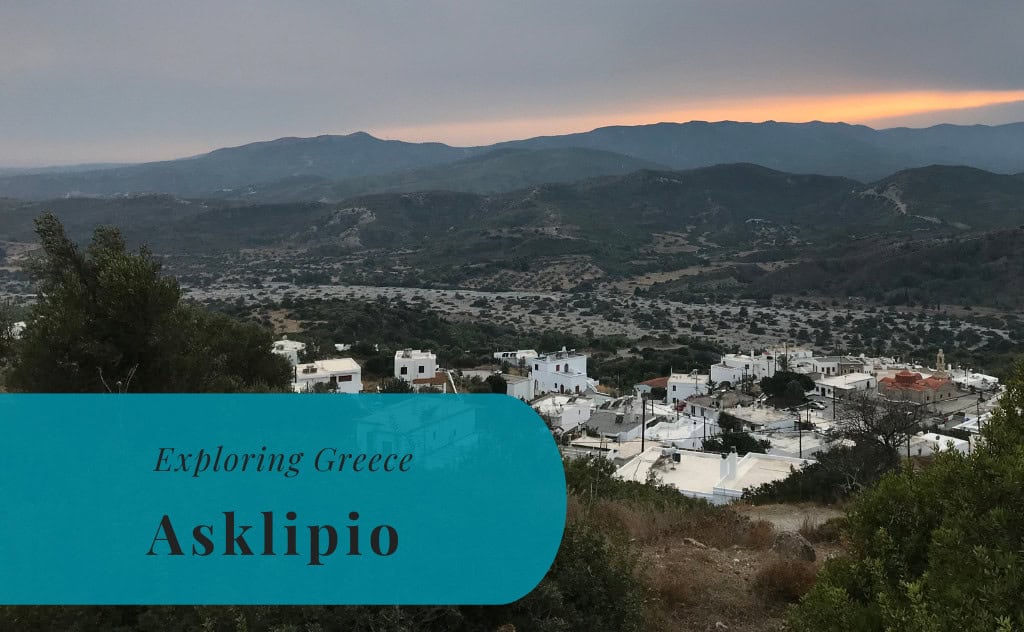
Asklipio is a village located in the southern part of the island of Rhodes, which is one of Greece’s Dodecanese islands. Situated inland from the eastern coast, the village provides a look into traditional island life away from the larger tourist resorts. The community of Asklipio has a population of approximately 600 residents. The village is set in an undulating landscape, surrounded by olive groves and low-lying hills, approximately 63 kilometers south of Rhodes Town. Its location near the coast places it just 5 kilometers from the resort area of Kiotari. The main historical site of Lindos is also about 15 kilometers to the north.
The character of Asklipio is that of a preserved, traditional Greek village. The layout is centered around its historic Byzantine church and the ruins of a medieval castle on the hill above. The narrow streets contain stone houses with courtyards, reflecting a way of life that has existed for centuries. The economy of the village has historically been based on agriculture, particularly the cultivation of olives. Today, it combines this rural character with its function as a cultural and historical destination for visitors exploring the southern part of Rhodes.


A Short History
The history of Asklipio is deeply rooted in the Byzantine era and the subsequent rule of the Knights of St. John. The village’s name is believed to derive from Asclepius, the ancient Greek god of medicine, suggesting the area may have had an ancient connection to healing or health. Its inland position offered protection from the pirate raids that were common along the coastline of Rhodes for many centuries. This allowed the settlement to develop with a degree of security. Its story is one of a small agricultural community that was fortified and served as a local stronghold.
Ancient Roots and Byzantine Era
While the name of the village suggests ancient origins, its documented history begins in the early Christian and Byzantine periods. The most significant early landmark is the Church of the Dormition of Theotokos, which has foundations dating back to 1060 AD. This indicates that a Christian community was well-established here during the middle Byzantine period. The village likely grew around this religious center. It functioned as a small, rural settlement, with an economy based on the agricultural output of the surrounding fertile land.
The Knights of St. John and Ottoman Period
The most significant historical period for Asklipio began in the 14th century, after the Knights of St. John had established their control over the island of Rhodes. To defend the island and control its population, the Knights built a network of fortifications. A castle was constructed on the hill above Asklipio to serve as a refuge for the local population during times of threat. This reinforced the village’s importance as a local administrative and defensive center. After the Ottoman conquest of Rhodes in 1522, Asklipio continued to be an important agricultural village, though the castle lost some of its military significance.
Modern Preservation
Over the subsequent centuries, the village maintained its traditional character. Its church, which is a central feature of village life, has undergone various renovations but has preserved its historic core. The local traditions and customs of rural Rhodian life have been maintained by the community. In the modern era, with the growth of tourism on the island, Asklipio has become a destination for visitors seeking to experience a more authentic side of Rhodes. The preservation of its historic castle, church, and folklore museum has cemented its role as a key cultural site in the southern part of the island.


Things to Do and See
Asklipio offers several sights that are focused on its history and tradition. The main points of interest are the ruins of its medieval castle, its historic Byzantine church, and a small museum dedicated to local folklore. A walk through the village itself also reveals its traditional architecture and its agricultural setting among the olive groves. These sights are all located within the compact village and can be easily explored on foot.
Asklipio Castle
The Asklipio Castle is the most prominent landmark in the village. The ruins of this fortress, originally built by the Knights of St. John in the 14th and 15th centuries, are perched on a hill overlooking the modern village. The castle was constructed on the site of an earlier Byzantine structure. It served as a defensive stronghold and a refuge for the local population. Visitors can walk up a short path to explore the remaining walls and towers. The location offers wide views of the village, the surrounding countryside, and the sea in the distance.
Church of the Dormition of Theotokos
The village’s spiritual heart is the Church of the Dormition of Theotokos (Kimisis tis Theotokou). The church has foundations that date back to 1060 AD, making it one of the older churches on the island. The current structure features well-preserved 17th-century frescoes that depict scenes from the Bible. These frescoes are a key feature and a significant example of post-Byzantine religious art in the Dodecanese. The church also has an impressive carved wooden iconostasis. Just outside the church is a small ecclesiastical museum.
Folklore Museum of Asklipio
For a deeper understanding of local heritage, the Folklore Museum of Asklipio is housed in a traditional village house. The building itself is an example of local vernacular architecture. The museum displays a collection of artifacts that illustrate the village’s agricultural past and the daily life of its residents in previous centuries. The collection includes traditional farming tools, household items, local costumes, and an old olive press. This provides insight into the history and traditions of the region.
Traditional Village Architecture
Beyond the specific monuments, a walk through Asklipio’s narrow streets reveals its traditional village architecture. The village is characterized by its stone-built houses, which often feature small, enclosed courtyards. Many of the older houses have been preserved and show the building techniques that were common in the Dodecanese islands for centuries. The layout of the village, with its winding paths and central church square, is typical of a historic Greek island settlement.
Surrounding Olive Groves
The village of Asklipio is enveloped by extensive olive groves, which are a vital part of the local economy and landscape. A peaceful stroll through these groves connects visitors directly to the island’s long agricultural legacy. The cultivation of olives has been a central part of life in this region for thousands of years. The olive trees, some of which are very old, create a characteristic Mediterranean landscape around the village.
Recreational Activities Nearby
The area surrounding Asklipio offers a range of recreational activities that take advantage of its rural setting and its proximity to the coast. The main activities are hiking in the hills and enjoying the beaches and water sports available at the nearby coastal resorts.
Hiking
The hilly and rugged landscape around Asklipio provides numerous opportunities for hiking. There are local paths and dirt tracks that lead through the olive groves and into the surrounding hills. These walks offer views of the countryside and the coastline. Hiking in this area provides a way to experience the natural environment of southern Rhodes, away from the more crowded tourist areas. The terrain is suitable for walkers of various fitness levels.
Coastal Activities
Asklipio is located just 5 kilometers from the coast. The nearby resort of Kiotari features a long beach with a mix of sand and pebbles. This area offers a wide range of tourist amenities, including sunbed rentals and water sports facilities. The beaches at Gennadi and Lardos are also a short drive away. This proximity to the coast allows visitors to Asklipio to easily combine a visit to the historic village with a day at the beach or swimming in the Aegean Sea.


How to Get to Asklipio
Reaching the village of Asklipio requires travel to the southern part of the island of Rhodes. The most common way to get there is by car, which provides the most flexibility. Public transport options are also available from the main city of Rhodes.
The Open Road: Driving to Southern Rhodes
Renting a car is the most flexible option for reaching Asklipio. The roads on Rhodes are generally well-maintained. The main road from Rhodes Town runs down the eastern coast of the island. The drive to Asklipio takes approximately 1 hour and 15 minutes. A car allows for exploration of the surrounding southern Rhodes region, including its beaches and other villages. Parking is generally available within the village of Asklipio.
Arriving by Air: Rhodes Airport
The primary gateway to the island is Rhodes International Airport (RHO), also known as Diagoras Airport. It is located near the northern tip of the island. The airport handles both domestic and international flights, with many European cities offering direct seasonal flights. Year-round connections are available via Athens International Airport (ATH). From the airport, a rental car or a combination of bus services is required to reach Asklipio.
Connecting by Coach
Public buses provide an economical way to get to Asklipio. From the main bus station in Rhodes Town, you can take a bus operated by the company KTEL. Buses heading towards villages in southern Rhodes, such as Gennadi or Kiotari, typically pass by the turn-off for Asklipio. The bus journey from Rhodes Town takes around 1 hour and 30 minutes. From the main road, it is a short walk into the village.
On Track: The Absence of Rail
There is no train service on the island of Rhodes. The island’s topography and size do not support a railway network. Therefore, it is not possible to reach Asklipio by train. All overland travel on the island must be done by road, either by car, bus, or taxi.
The Aegean Route: Arriving by Ferry
While there are no direct ferries to the village of Asklipio, you can reach the island of Rhodes by ferry. The main port for ferries is in Rhodes Town. This port has frequent connections from Piraeus (the main port of Athens) and from many other Greek islands in the Dodecanese and Cyclades. The journey from Piraeus is long and often operates overnight. From Rhodes Town’s port, you would then need to use a car or bus to reach Asklipio.
Driving Distances
The driving distance from 10 regional towns, according to Google Maps.
- Kiotari – 5 kilometers (0 h 10 min)
- Gennadi – 8 kilometers (0 h 10 min)
- Lardos – 11 kilometers (0 h 20 min)
- Pefkos – 15 kilometers (0 h 20 min)
- Lindos – 19 kilometers (0 h 20 min)
- Archangelos – 34 kilometers (0 h 40 min)
- Faliraki – 48 kilometers (0 h 50 min)
- Kallithea – 55 kilometers (1 h 00 min)
- Ialyssos – 62 kilometers (1 h 10 min)
- Rhodes Town – 63 kilometers (1 h 10 min)
Looking to Explore more of Greece and Europe?