
Warsaw, Mazovia | Exploring Poland
Warsaw, or Warszawa as it is known in Polish, is the capital of Poland and the country’s largest city. It is located in the Masovian Voivodeship, a region in the central-eastern part of the country. With a population of around 1.86 million residents, Warsaw is the seventh-largest city within the European Union. The city is situated along the banks of the Vistula River, which flows from the southern mountains to the Baltic Sea. The urban area is officially divided into 18 districts, with Śródmieście serving as the central district that contains the historic Old Town and the modern city center.
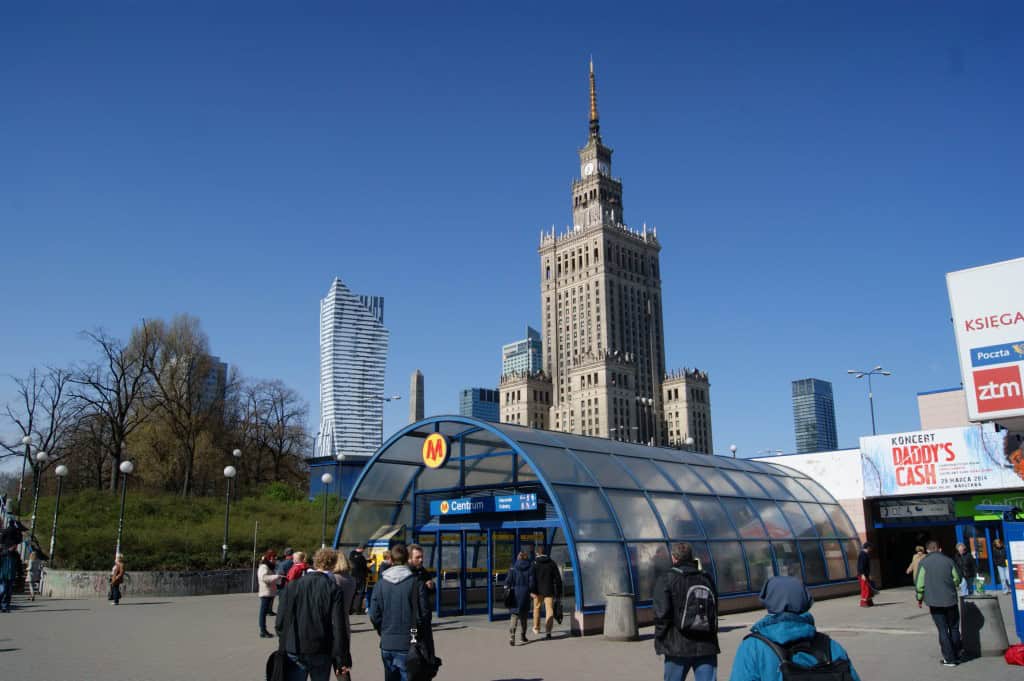
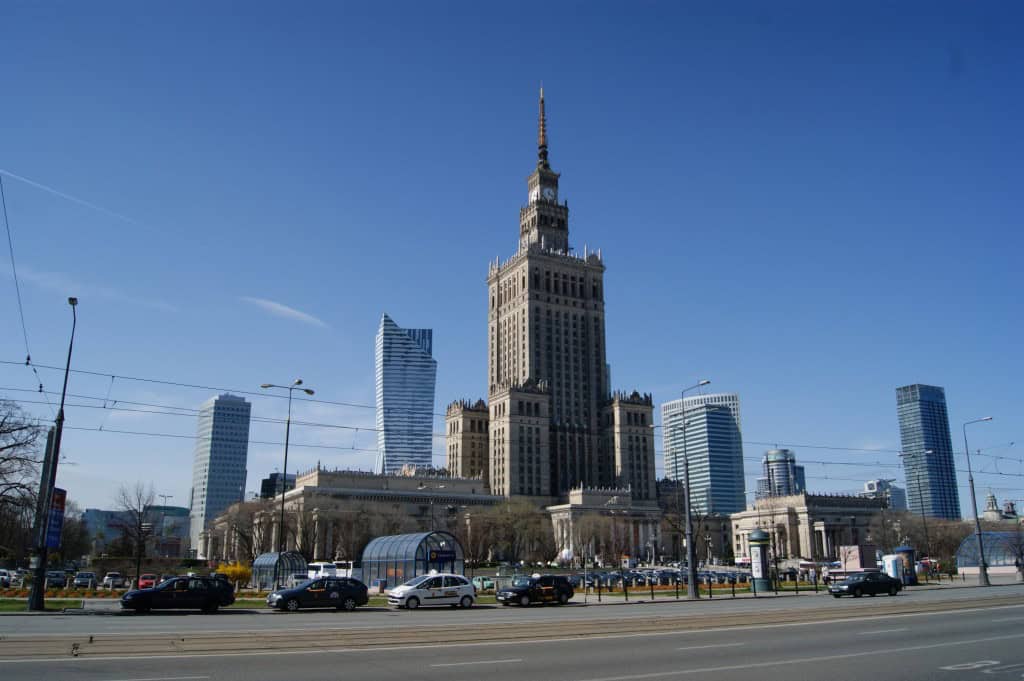
The city is often called the “Phoenix City” because it has literally risen from the ashes. During World War II, Warsaw was subjected to systematic and near-total destruction, with an estimated 85% of its buildings turned to rubble. The post-war period saw a monumental and unprecedented effort by the Polish nation to meticulously rebuild its capital. The historic Old Town and the Royal Castle were painstakingly reconstructed using old photographs and pre-war architectural plans, an achievement that earned the entire district a place on the UNESCO World Heritage List. This rebuilt historical core now stands in stark contrast to the city’s modern skyline, which is dominated by contemporary skyscrapers and the iconic Palace of Culture and Science.
Today, Warsaw is a dynamic and forward-looking metropolis that serves as the political, economic, and cultural heart of Poland. It is a major business and financial hub in Central Europe, home to numerous international companies and a thriving start-up scene. The city’s cultural landscape is equally rich, with world-class museums, historic theaters, and a lively music scene. Warsaw successfully balances its profound and often tragic history with a vibrant, energetic atmosphere, aspiring to its role as one of the main metropolises of modern Europe.



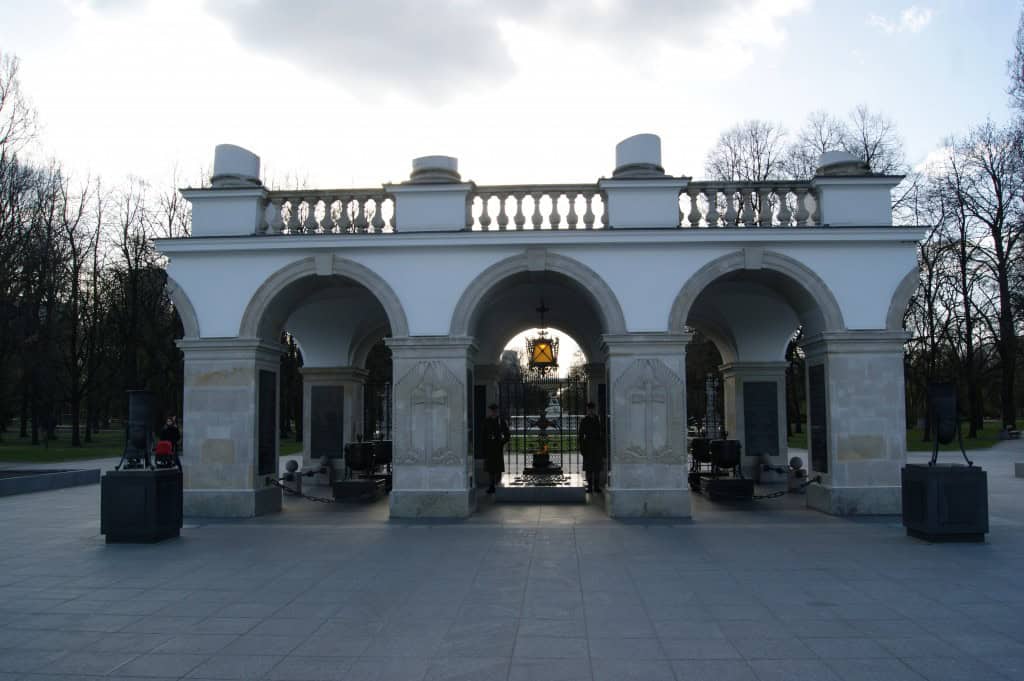
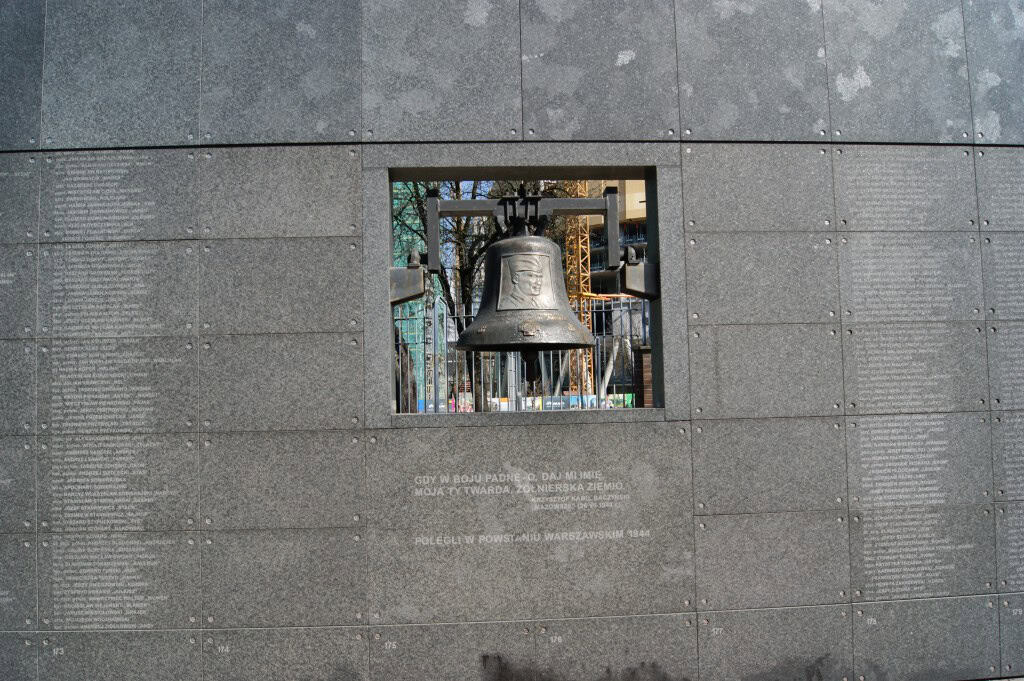
Good to Know When Visiting Warsaw
To fully appreciate a visit to Warsaw, it is useful to understand some of the key cultural and practical aspects that define the city’s character. Warsaw’s identity is a complex tapestry woven from its royal past, its tragic wartime history, and its dynamic present as a major European capital. This history is physically represented by the Royal Route, a historic artery that connects many of the city’s most important landmarks. The city’s geography is defined by the Vistula River, which has become a central part of its recreational and social life. Finally, Warsaw’s cultural soul is deeply connected to its most famous son, the composer Fryderyk Chopin, whose legacy can be experienced throughout the city.
The Royal Route (Trakt Królewski)
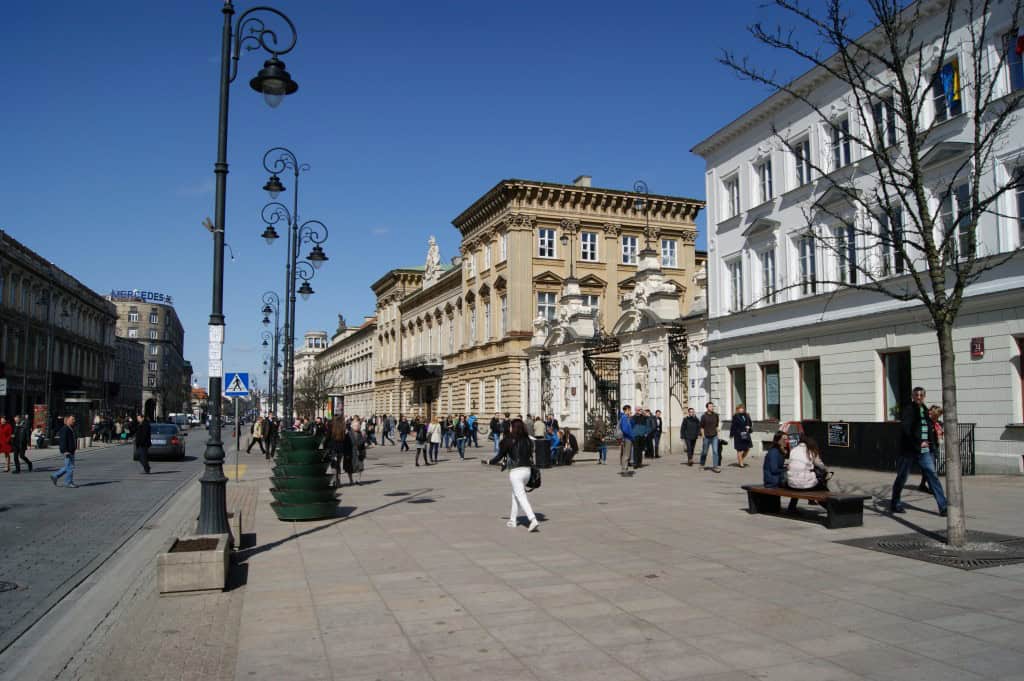
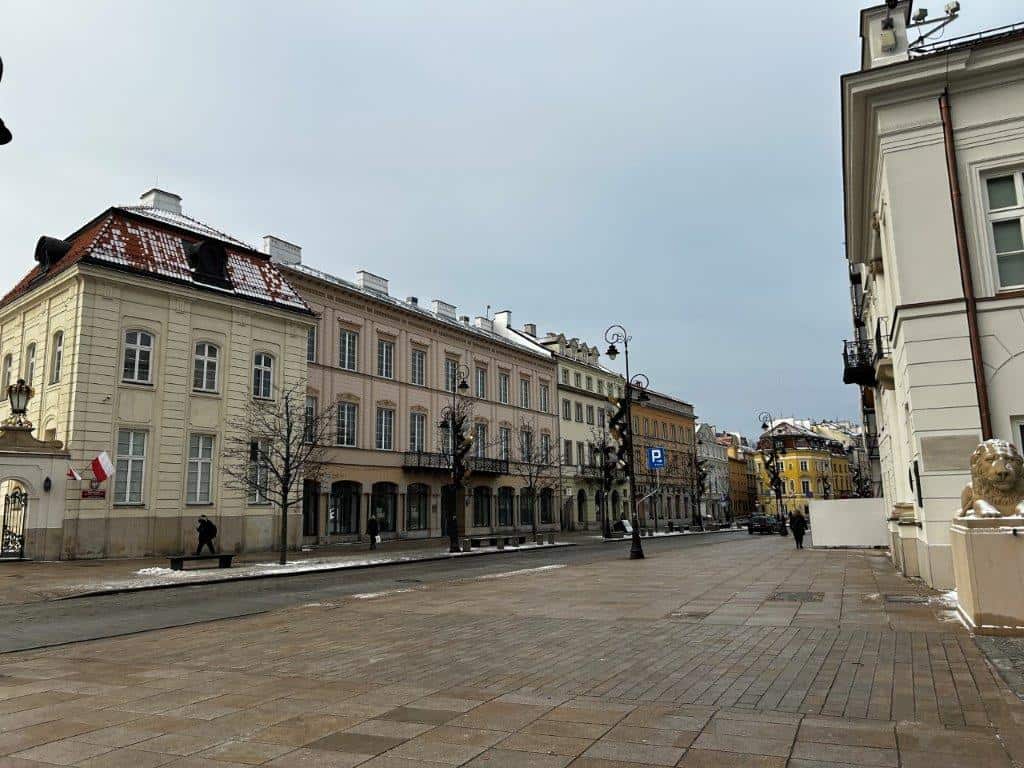
The Royal Route is a historic and prestigious thoroughfare that serves as the main cultural and ceremonial artery of Warsaw. This route stretches for several kilometers, connecting three former royal residences: the Royal Castle in the Old Town, the Łazienki Palace in its vast park, and the Wilanów Palace at its southern end. The most famous and elegant section of the route is formed by the streets of Krakowskie Przedmieście and Nowy Świat.
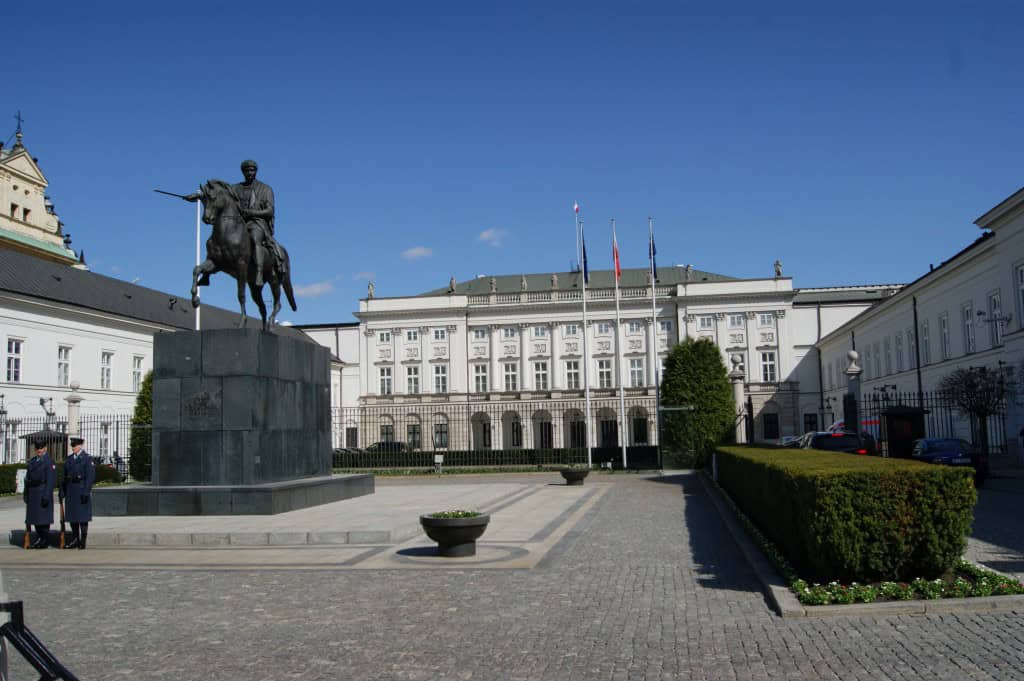
A walk along this path is a journey through Polish history, as it is lined with a magnificent collection of historic palaces, churches, monuments, and government buildings. Key landmarks along the route include the Presidential Palace, the University of Warsaw campus, and the Holy Cross Church. The route is not just a tourist attraction; it is a central part of city life, bustling with cafes, shops, and restaurants, and serving as the location for national parades and celebrations.
The Two Faces of the Vistula River
The Vistula River is a defining geographical feature of Warsaw, and in recent years it has been transformed into a major center for recreation and social life. The river effectively divides the city into two distinct parts, and the character of its banks is markedly different. The left, western bank, where the city center is located, features the modern Vistula Boulevards (Bulwary Wiślane). These are lively promenades with cafes, bars, and outdoor event spaces, perfect for walking, cycling, and socializing. In contrast, the right, eastern bank on the Praga side has been largely left in its natural state. This side of the river features wild, sandy beaches and dense floodplain forests, forming a unique urban nature reserve. This duality allows residents and visitors to enjoy both a bustling, modern riverside atmosphere and a tranquil, natural escape right in the heart of the city.
In the Footsteps of Fryderyk Chopin
Warsaw is inextricably linked with the life and music of its most famous resident, the composer Fryderyk Chopin. Although he was born just outside the city, he spent the first half of his life in Warsaw, and his presence can be felt everywhere. The most important site is the Fryderyk Chopin Museum, a modern, multimedia museum housed in the historic Ostrogski Palace that tells the story of his life and work. Another key location is the Holy Cross Church on Krakowskie Przedmieście, where the composer’s heart is interred in a pillar, according to his dying wish. During the summer, free piano concerts of his music are held every Sunday at the Chopin monument in Łazienki Park. To further immerse visitors, the city has placed a series of “Chopin benches” at significant locations, which play a short piece of his music at the push of a button.


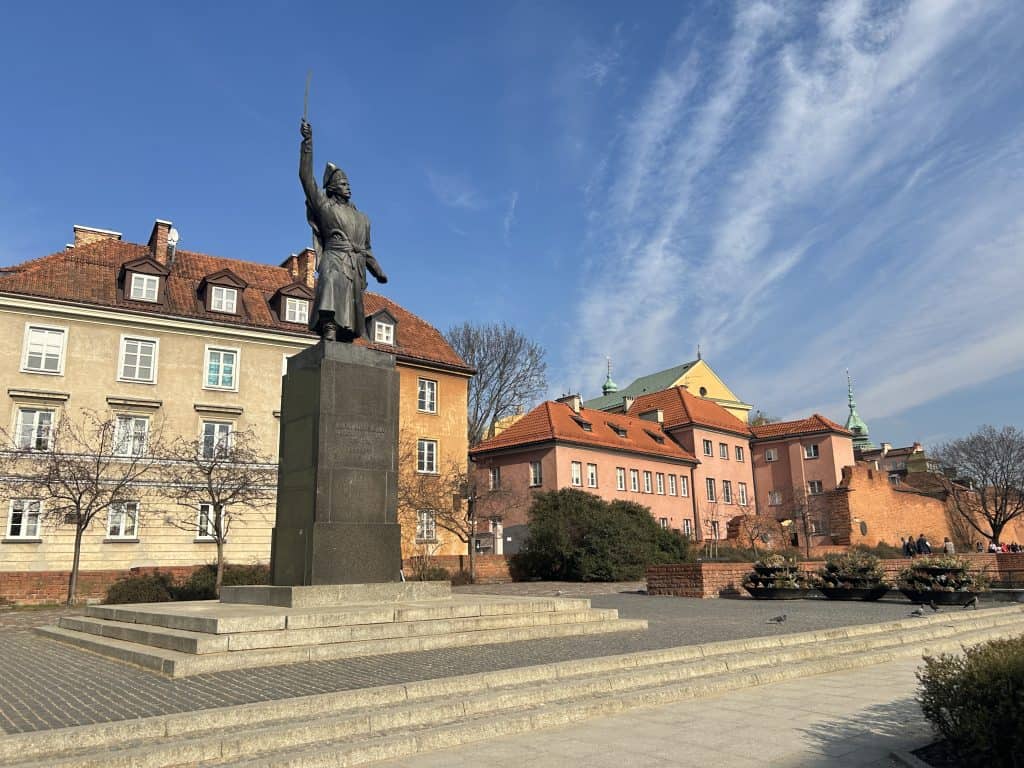


History of Warsaw
The history of Warsaw is a long and often turbulent narrative of a city that grew from a small ducal town to become the capital of a major European power, only to be almost completely erased from existence and then reborn. The city’s origins date back to the Middle Ages, and it rose to prominence after becoming the capital of the Polish-Lithuanian Commonwealth. This golden age was followed by centuries of foreign rule and conflict. The most devastating chapter in its history was World War II, which left the city in ruins. The subsequent reconstruction is a key part of its modern identity and a testament to the resilience of the Polish nation.
From Ducal Seat to National Capital
There were several earlier settlements at the site of what is today Warsaw, including Bródno and Jazdów. The existence of Warsaw as a fortified town dates back to the early 14th century. It became the capital of the Duchy of Masovia in 1413, which spurred its initial development and expansion. The region of Masovia was formally incorporated into the Kingdom of Poland in 1526 after the last of the local dukes died without an heir. This brought the town into the mainstream of Polish political life.
Due to its central location between the two capitals of the Polish-Lithuanian Commonwealth, Kraków and Vilnius, Warsaw became the seat of the Sejm (the Polish parliament) in the 16th century. Its status was further elevated when King Sigismund III Vasa moved the royal court and made Warsaw the official capital of the Commonwealth in 1596. This decision initiated a period of great prosperity and growth, with the construction of numerous palaces and churches that transformed Warsaw into a major European city and a center of political power.
Destruction in World War II
The Second World War was an unparalleled disaster for Warsaw. The city faced destruction and pillaging during earlier conflicts, but nothing could compare to the occupation by Nazi Germany between 1939 and 1945. The infamous Warsaw Ghetto was established in 1940, and hundreds of thousands of Jews were imprisoned within its walls before being sent to extermination camps. At its peak, 460,000 Jews were held in the ghetto. It is estimated that around 300,000 of them were killed at Treblinka, while many others died of starvation and disease within the ghetto itself.
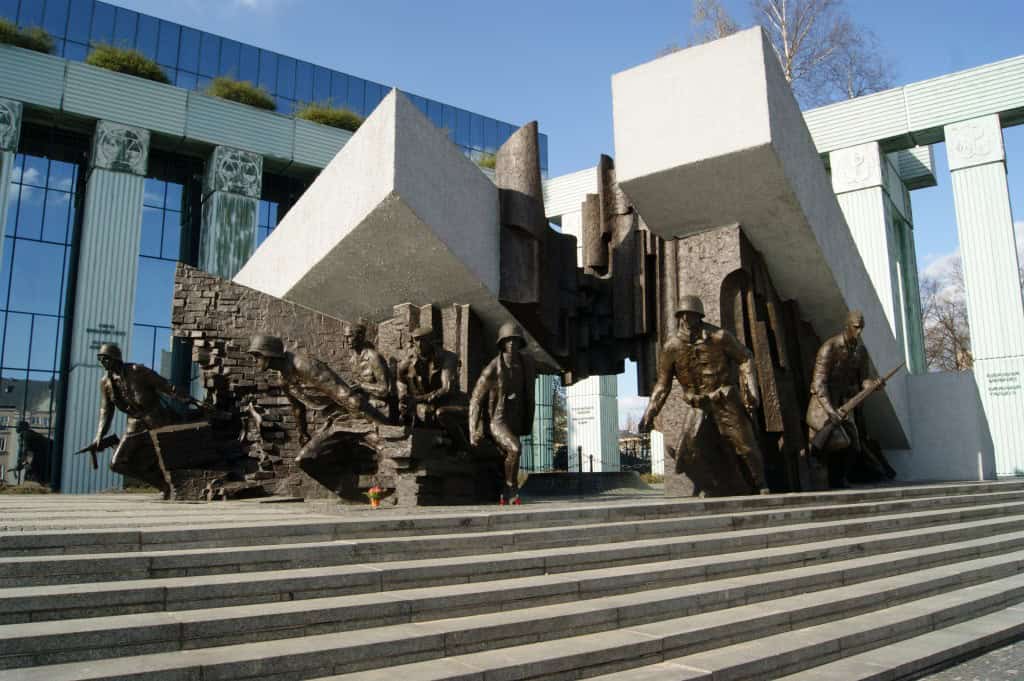
The rest of the city was not spared. In response to the German occupation, the Polish resistance launched the Warsaw Uprising in August 1944. For 63 days, the city’s residents fought a heroic but ultimately doomed battle against the German forces. After the uprising was crushed, the German forces, on Hitler’s orders, began the systematic destruction of Warsaw, block by block. This act of planned destruction, combined with the damage from the earlier fighting, resulted in an estimated 85% of the city being destroyed by the end of the war.
Post-War Reconstruction and Modern Era
Soviet troops entered the ruins of Warsaw in January 1945. The monumental task of rebuilding the city began almost immediately. The reconstruction of the historic Old Town and the Royal Route was a particularly remarkable achievement. The area was mostly rebuilt based on old photographs and, most importantly, the detailed pre-war architectural paintings by the 18th-century artist Canaletto. This meticulous effort was recognized when the entire historic center was placed on the UNESCO World Heritage List in 1980.
The reconstruction of the city also included the creation of new districts in the socialist realist style, dictated by the new communist regime. The most famous and controversial symbol of this era is the massive Palace of Culture and Science, a “gift” from the Soviet Union that was dedicated to Joseph Stalin upon its completion. After the fall of communism in 1989, Warsaw once again began to transform. It has since developed into a modern, democratic, and thriving European metropolis, with a skyline that is now defined by contemporary skyscrapers that have risen alongside the landmarks of its past.


Sights in Warsaw
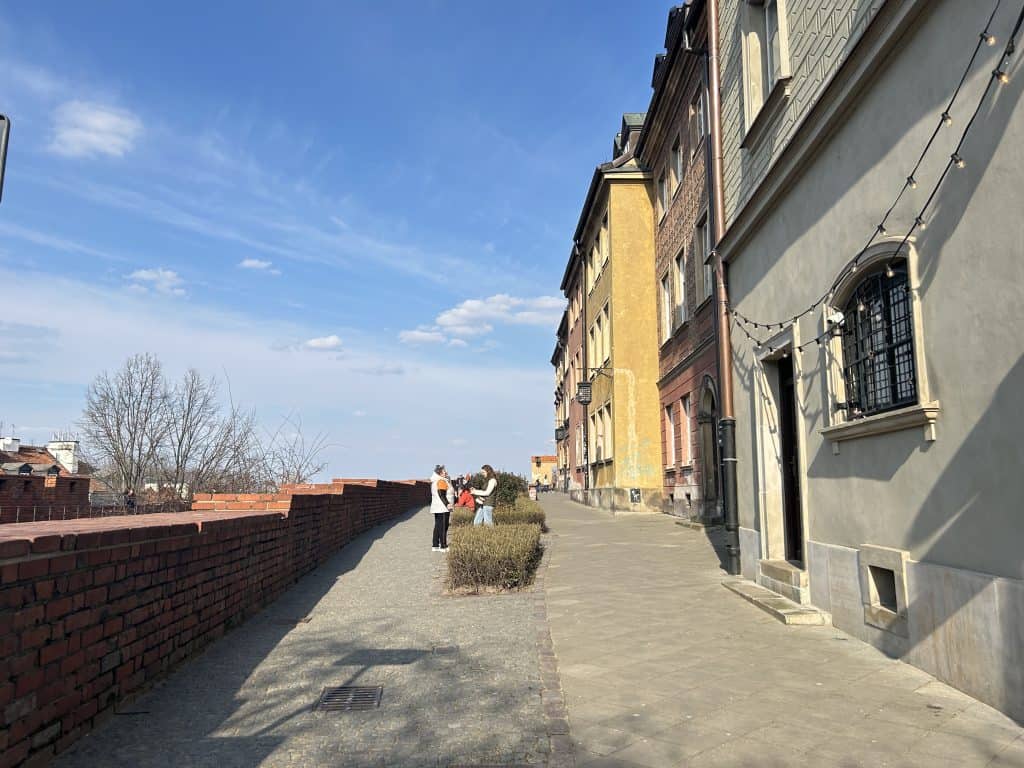
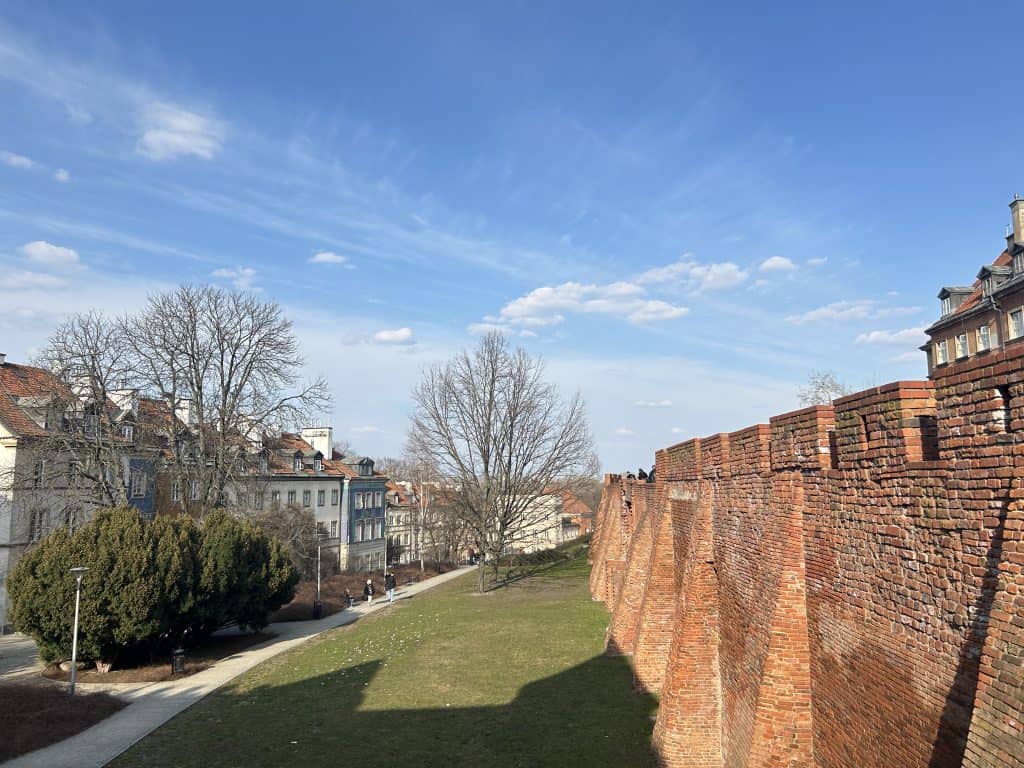
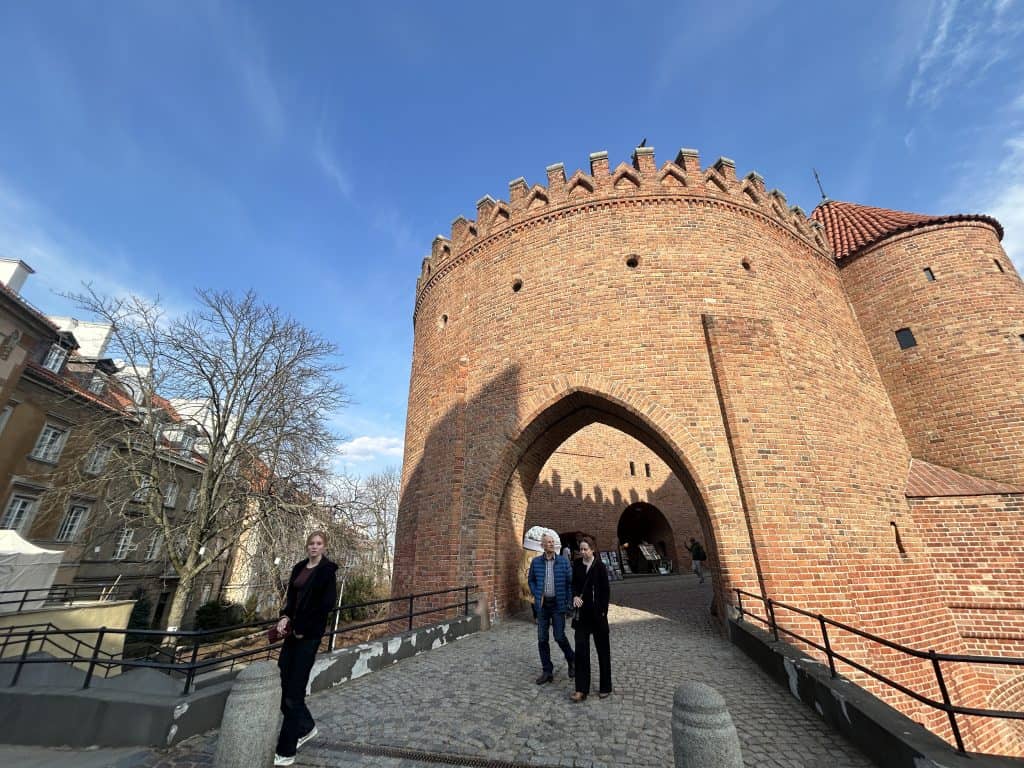
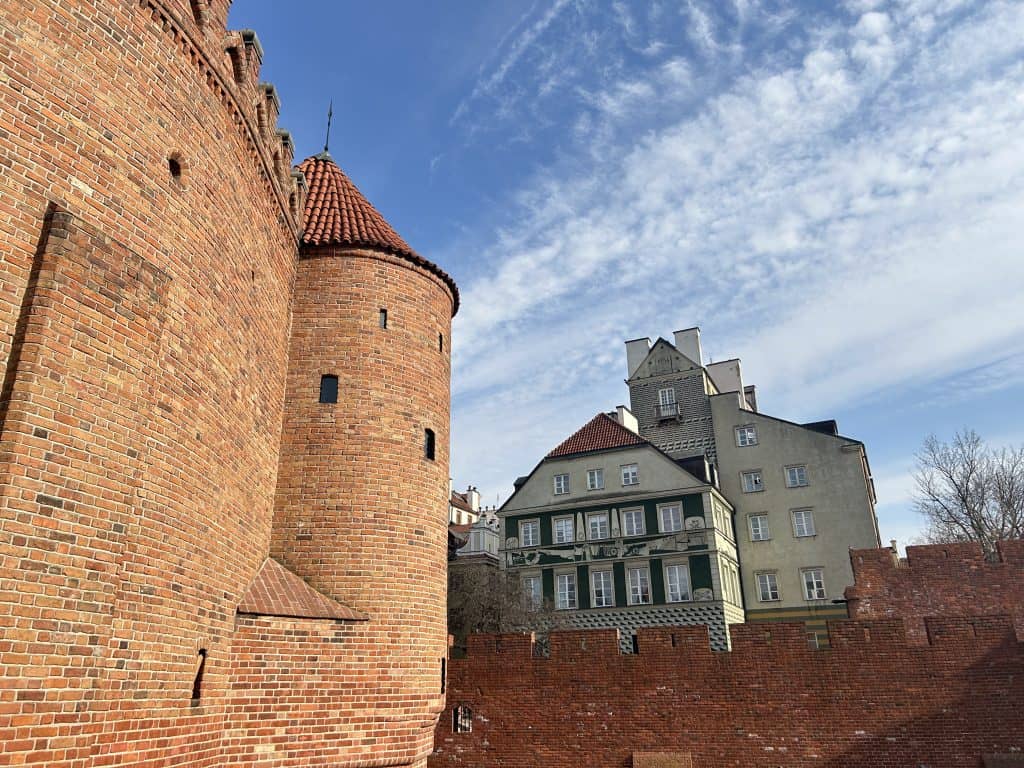
The main tourist area of Warsaw is without competition the Stare Miasto, or the Old Town. This entire district is a faithful reconstruction of the city’s historic heart, which was almost completely destroyed during World War II. However, the city’s attractions extend far beyond this single area. There are numerous world-class museums that delve into the city’s complex history, such as the Warsaw Rising Museum and the POLIN Museum of the History of Polish Jews. Warsaw is a central destination for anyone wanting to learn more about the events of the 20th century.
For those looking to escape the historical sights, the city offers several large and beautiful parks, with the most famous being the magnificent Łazienki Park, a vast royal garden not far from the city center. The Vistula River also provides a modern recreational hub with its lively boulevards and the interactive Copernicus Science Centre. The city’s skyline is dominated by the iconic Palace of Culture and Science, a landmark from the communist era that now offers a viewing terrace with panoramic views. This blend of meticulous reconstruction, poignant museums, and modern attractions makes for a diverse visitor experience.
The Royal Castle (Zamek Królewski)
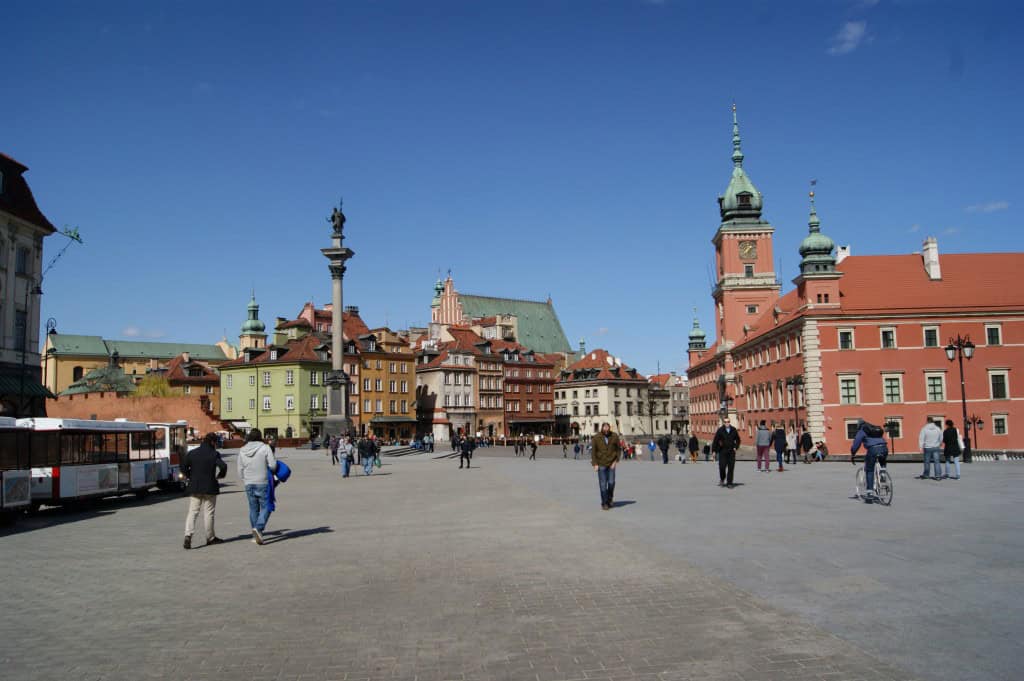
The Royal Castle in Warsaw is the historic residence of the Polish monarchs and the former seat of the Polish-Lithuanian Commonwealth’s parliament. The original castle was completely destroyed by the Germans following the Warsaw Uprising in 1944. The current building is a meticulous reconstruction that was completed in the 1980s, financed by donations from Poles around the world. Today, it functions as a museum, where visitors can explore the lavishly decorated royal apartments, the Senate Chamber where the historic Constitution of May 3, 1791 was passed, and galleries of European art. The castle stands as a powerful symbol of national identity and resilience.
The Old Town Market Square
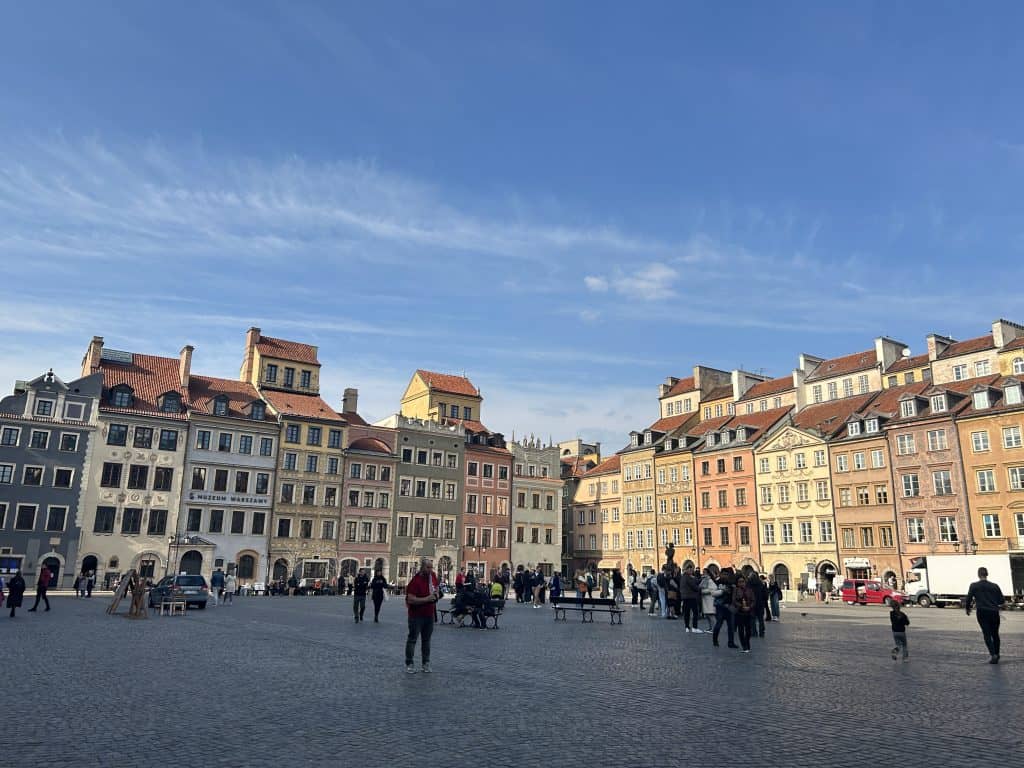
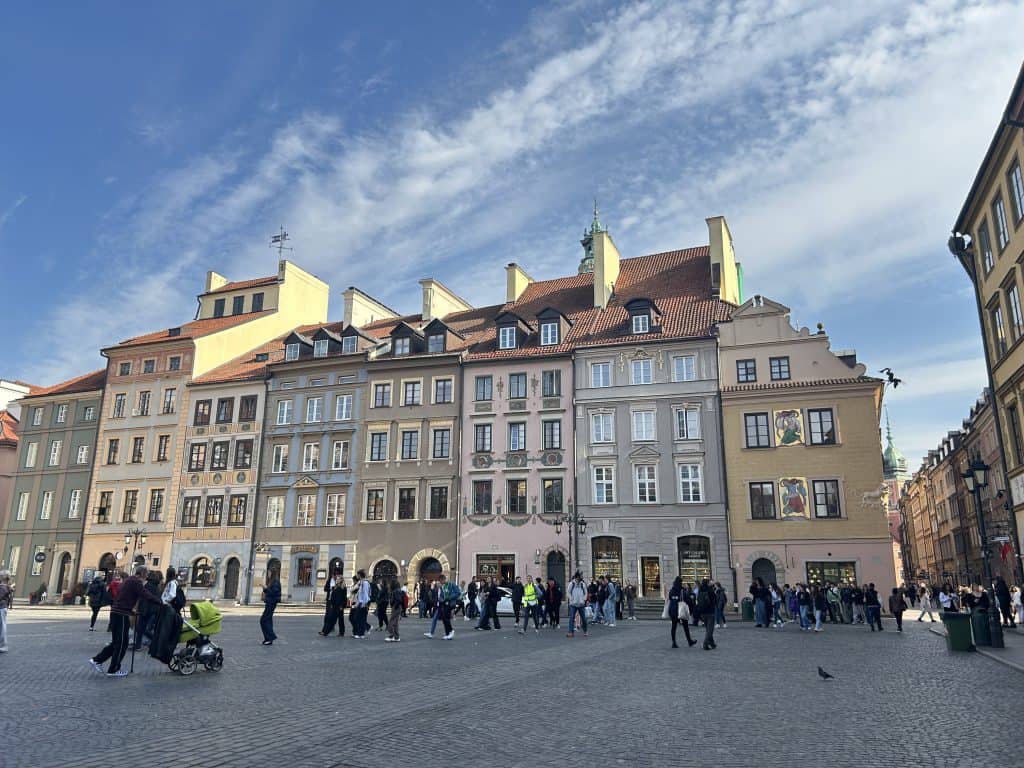
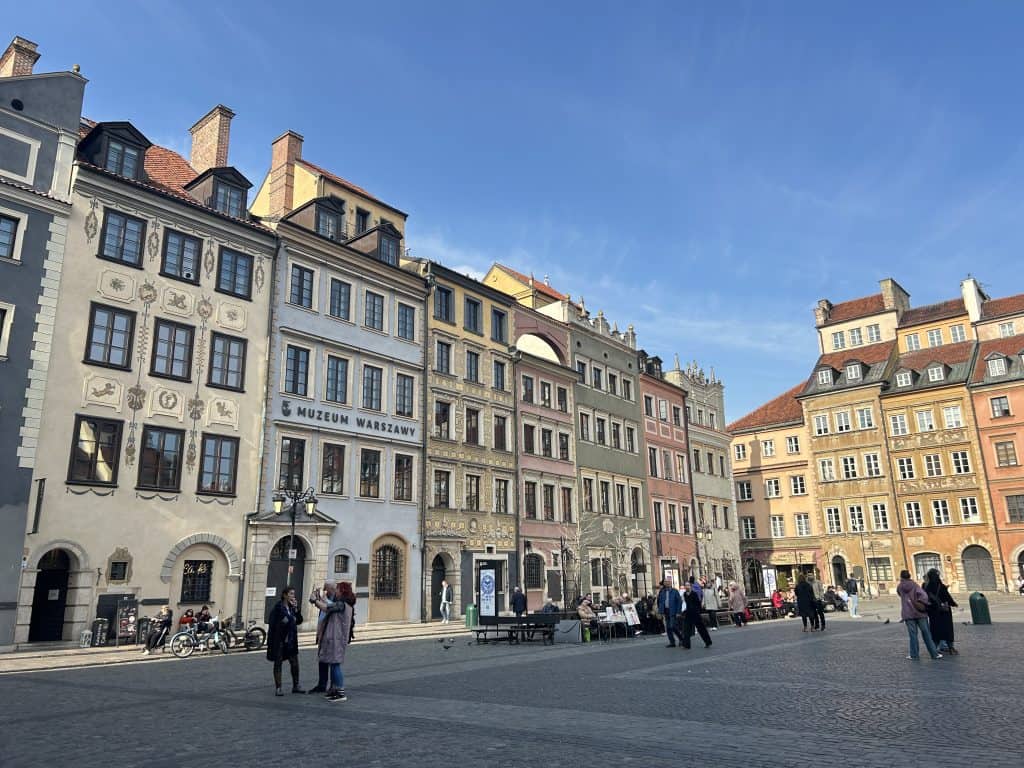
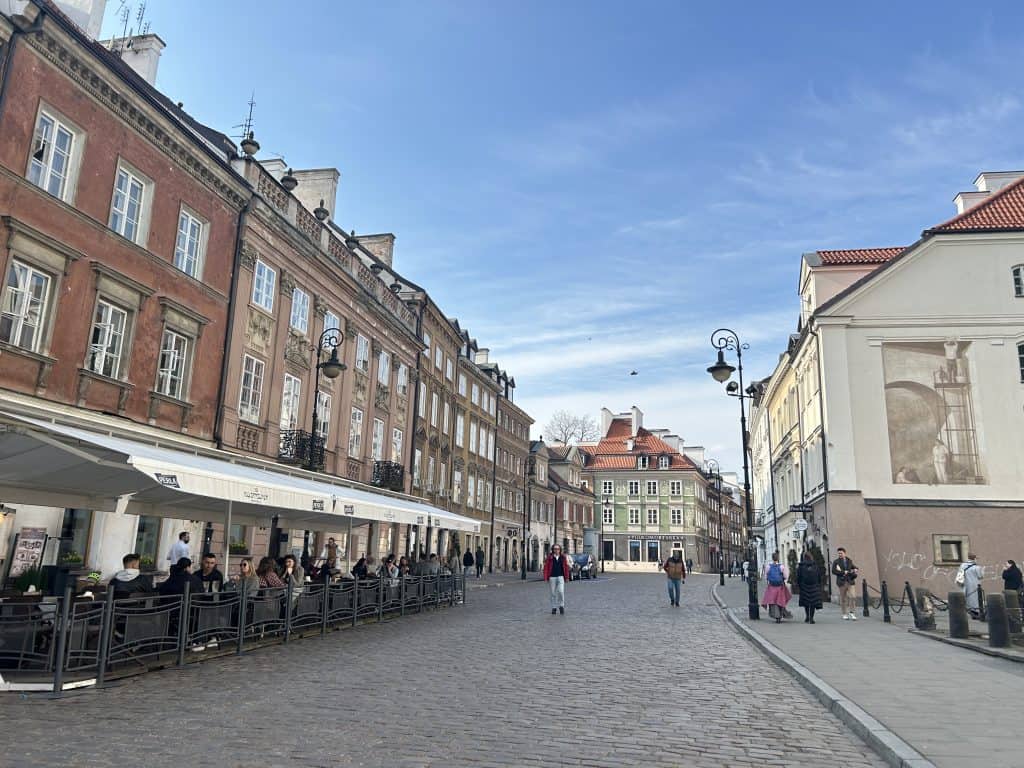
The Rynek Starego Miasta, or the Old Town Market Square, is the historic heart of Warsaw. The square is surrounded by tall, colorful tenement houses that are characteristic of old merchant towns. At the center of the square stands the statue of the Warsaw Mermaid (Syrenka), the legendary protector and symbol of the city. Like the rest of the Old Town, the entire square was reduced to rubble during World War II and was painstakingly rebuilt after the war. Today, it is a lively hub filled with restaurants, cafes, and art galleries, and it is a popular gathering place for both locals and tourists.
Palace of Culture and Science
The Pałac Kultury i Nauki is one of the most iconic and controversial buildings in Warsaw. Few cities have a building that marks their center in the same way. The massive skyscraper was completed in 1955 and was offered as a “gift” to Poland from the Soviet Union. It was designed by the Soviet architect Lev Rudnev in the same socialist realist style as the “Seven Sisters” in Moscow. For decades, it was seen as a symbol of Soviet domination, but today it has been embraced as a major cultural and business center, housing theaters, cinemas, museums, and a popular viewing terrace on the 30th floor.
Łazienki Park and Palace
Łazienki Park is the largest and most famous park in Warsaw, a vast royal garden complex that was designed in the 18th century for Poland’s last king, Stanisław August Poniatowski. The park is a beautiful example of landscape design, with lakes, canals, and a mix of formal and wild gardens. Its centerpiece is the magnificent Palace on the Isle, a stunning neoclassical residence that appears to float on the water. The park is also home to several other historic buildings, including the Old Orangery and an amphitheater. It is a beloved place for relaxation and is famous for its free Chopin concerts held every Sunday during the summer.
POLIN Museum of the History of Polish Jews
The POLIN Museum of the History of Polish Jews is a modern and award-winning museum that stands on the site of the former Warsaw Ghetto. The museum is dedicated to the 1,000-year history of the Jewish community in Poland. Its core exhibition is an immersive, narrative journey that takes visitors through eight galleries, from the first Jewish settlements in the country to the vibrant culture of the interwar period, the tragedy of the Holocaust, and the post-war revival. The museum’s stunning contemporary architecture and its powerful, interactive exhibits have made it one of the most important cultural institutions in the country.
Warsaw Rising Museum
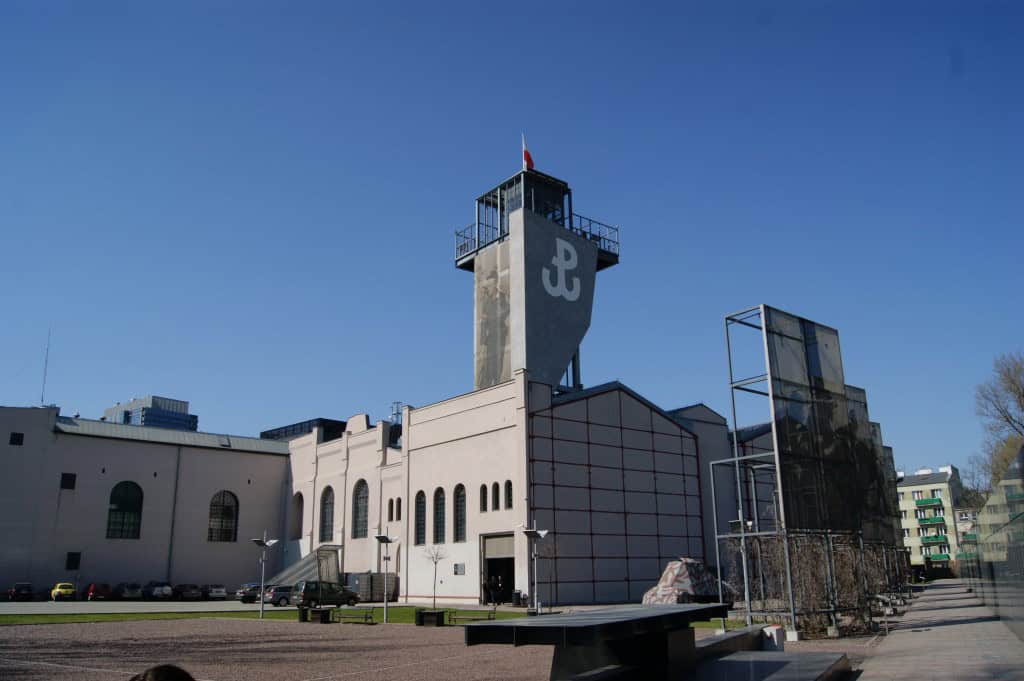
The Muzeum Powstania Warszawskiego, or Warsaw Rising Museum, is a modern and powerful museum dedicated to the Warsaw Uprising of 1944. Opened on the 60th anniversary of the uprising, the museum is housed in a former tram power station. It tells the story of the heroic 63-day battle fought by the Polish resistance against the German occupiers. The museum uses multimedia and interactive displays to create an immersive experience, recreating the atmosphere of the city during the uprising. It is a poignant tribute to the courage of the insurgents and the immense tragedy that befell the city.
Wilanów Palace and Gardens
The Wilanów Palace is a magnificent Baroque royal palace located at the southern end of the Royal Route. It was built in the late 17th century for King John III Sobieski. The palace is often referred to as the “Polish Versailles” and is one of the very few major landmarks in Warsaw to have survived World War II intact. The palace’s architecture is a unique blend of European art with traditional Polish building traditions. It is surrounded by a vast and beautiful park, which includes a two-level baroque garden, a romantic English park, and an Anglo-Chinese garden. Today, the palace is a museum showcasing the royal apartments and a collection of Polish art.
Copernicus Science Centre
The Centrum Nauki Kopernik, or Copernicus Science Centre, is a large and modern science museum located on the banks of the Vistula River. The center is dedicated to hands-on learning and features hundreds of interactive exhibits that allow visitors of all ages to conduct experiments and discover the laws of science for themselves. The exhibits are divided into several themed galleries covering topics from the natural world to human civilization and technology. The complex also includes a state-of-the-art planetarium, “The Heavens of Copernicus.” It is one of the most popular attractions in Warsaw, especially for families.
The National Museum in Warsaw
The Muzeum Narodowe w Warszawie is the largest museum in Warsaw and one of the largest in Poland. It is housed in a prominent modernist building from the interwar period. The museum’s vast collection includes an extensive gallery of ancient art, a significant collection of Polish painting from the Middle Ages to the present day, and a large collection of international art. A highlight is the Faras Gallery, which is the largest collection of Nubian Christian art in Europe, rescued from Sudan by Polish archaeologists. The museum provides a comprehensive overview of Polish and world art history.
PGE Narodowy (National Stadium)
The PGE Narodowy, or National Stadium, is Poland’s national stadium and a major landmark in Warsaw. It was built on the site of the former 10th-Anniversary Stadium to serve as a main venue for the UEFA Euro 2012 football championship, which Poland co-hosted. The stadium has a capacity of over 58,000 and is known for its striking red-and-white facade, reflecting the colors of the Polish flag, and its retractable roof. It is the home ground for the Polish national football team. In addition to football, it hosts major concerts by international artists, conferences, and other large-scale events.
Praga District
The Praga district, located on the eastern bank of the Vistula River, offers a very different atmosphere from the main part of Warsaw. Because it suffered much less damage during World War II, Praga has retained much of its authentic pre-war character. The district is known for its historic tenement houses with original courtyards, some of which still bear the scars of the war. In recent years, Praga has undergone a revitalization and has become a bohemian hub for artists and creatives. It is home to numerous art galleries, alternative clubs, and unique bars. A walk through Praga offers a glimpse into a different, more authentic side of Warsaw.




Traveling with Kids
Warsaw is an excellent destination for families traveling with children, offering a wide array of attractions that are both entertaining and educational. The city is home to one of Europe’s best and most interactive science museums, the Copernicus Science Centre, which can provide a full day of hands-on fun for all ages. The city’s many large and beautiful parks are another major asset for family travel. Łazienki Park, with its free-roaming peacocks and red squirrels, is a delight for younger children, while the city’s zoo offers a more traditional animal-watching experience.
The city has also invested in modern recreational spaces that are perfect for families. The Vistula Boulevards provide a safe and scenic place for a family walk or bike ride, with playgrounds and cafes along the way. During the summer, the Multimedia Fountain Park puts on spectacular light and sound shows that are a magical experience for children. The city’s public transport system is efficient and easy to navigate with strollers, making it simple to travel between these various family-friendly attractions.
Activities for Kids in Warsaw
For families seeking memorable outings, Warsaw provides world-class experiences that blend education with pure fun. From the hundreds of interactive exhibits at the Copernicus Science Centre to the diverse animal kingdom at the Warsaw Zoo, the city offers activities that can captivate children for hours. These attractions are designed to be engaging for the whole family, creating opportunities for shared discovery and lasting memories.
Copernicus Science Centre
The Copernicus Science Centre is a premier family attraction in Warsaw. This large, modern science museum is dedicated to hands-on learning and features hundreds of interactive exhibits. Children are encouraged to touch, experiment, and play as they learn about the laws of science. The exhibits cover a wide range of topics, from the human body and the natural world to light, sound, and robotics. The center also includes a dedicated area for younger children called “Bzzz!”. In addition, the complex houses a state-of-the-art planetarium, “The Heavens of Copernicus,” which shows immersive films about space. It is a must-visit destination for any family with curious kids.
Warsaw Zoo
The Warsaw Zoo is located in the Praga district and is home to over 12,000 animals representing more than 500 species. The zoo features modern, spacious enclosures for its animals, including a large exhibit for African elephants and a new enclosure for gorillas and chimpanzees. A highlight of the zoo is its connection to history; the zoo’s director during World War II, Jan Żabiński, and his wife Antonina saved hundreds of Jews from the Warsaw Ghetto by hiding them in the zoo’s empty enclosures. This story was made famous by the book and film “The Zookeeper’s Wife.” The zoo provides a full day of entertainment and education for animal lovers.
Multimedia Fountain Park
The Multimedia Fountain Park is a spectacular attraction located in a park near the Old Town and the Vistula River. During the day, it is a pleasant area with fountains for children to play in. However, the main attraction takes place on weekend evenings during the summer season. The park puts on a magnificent show that combines water, light, lasers, and music to create a “water ballet.” The shows are often themed around Warsaw legends, such as the story of the Warsaw Mermaid. This magical and free spectacle is a very popular activity for families on a warm summer evening.
Dollhouse Museum
The Muzeum Domków dla Lalek, or Museum of Dollhouses, Games and Toys, is a unique and charming museum located near the Palace of Culture and Science. The museum features a vast and meticulously curated collection of historical dollhouses, rooms, and toys, primarily from the 19th and 20th centuries. The intricate details of the miniature worlds can captivate both children and adults. The museum provides a fascinating glimpse into the history of childhood and play. It is a wonderful and nostalgic activity that offers a different kind of museum experience.
Playgrounds in Warsaw
Warsaw is a very green city with numerous parks, and most of these parks feature excellent public playgrounds. These play areas are generally modern, well-maintained, and offer a wide variety of equipment for children of all ages. They are important social spots for local families and are a welcome sight for visitors needing a break from sightseeing.
Playground in Łazienki Park
The playground located within the magnificent Łazienki Park is one of the best in the city. It is situated in the southern part of the park. The playground is large and modern, featuring a variety of wooden play structures that blend in with the natural surroundings. It includes swings, slides, sandpits, and extensive climbing frames. The location is ideal, as families can combine a visit to the playground with a walk through the beautiful royal gardens, a visit to the Palace on the Isle, and a chance to see the park’s famous peacocks and red squirrels.
Playground on the Vistula Boulevards
The Vistula Boulevards (Bulwary Wiślane) are a modern recreational area along the river, and they feature several excellent playgrounds. These play areas have a prime location with views of the river and the city skyline. The playgrounds are modern and creatively designed, often with a maritime or nature theme. One of the most popular is a large playground near the Copernicus Science Centre, which features a large climbing structure in the shape of a fish. These playgrounds are a key part of the family-friendly atmosphere of the revitalized riverfront.
Playground in Park Ujazdowski
Park Ujazdowski is another beautiful and historic park located in the city center, not far from Łazienki Park. It features a very popular and well-loved public playground. The playground is large and offers a wide range of equipment for different age groups. It is a favorite spot for local families due to its central location and its charming setting within the historic park, which also has a picturesque pond. It provides a perfect spot for a play break when exploring the southern part of the city center.
Playground at Fort Bema
For families willing to venture a bit further from the city center, the playground at Fort Bema is one of the largest and most impressive in Warsaw. The park is located on the grounds of a historic 19th-century fort. The playground is massive and features a huge moat-themed area with extensive rope bridges, climbing nets, and towers. It is an adventure playground that is particularly well-suited for older children. The surrounding park also has paths for walking and cycling, making it a great destination for a full day of outdoor family fun.




Sports in Warsaw
Warsaw has a rich and passionate sports scene, with football being the most popular and intensely followed sport in the city. The capital is home to one of Poland’s most successful and famous football clubs, Legia Warsaw, whose matches are major community events. The city’s other historic club, Polonia Warsaw, maintains a dedicated following and contributes to a local rivalry. The city is also home to the national stadium, PGE Narodowy, a world-class venue that hosts the Polish national football team and other major international events.
Beyond football, Warsaw supports a diverse range of other sports at a high professional level. The city has successful teams in both men’s volleyball and basketball, which compete in their respective top national leagues. Individual sports are also very popular, with the Warsaw Marathon being a major annual event that attracts thousands of runners. The historic Służewiec horse racing track provides another unique sporting spectacle. This variety of teams and events makes Warsaw a major center for sports in Poland.
Legia Warsaw (Football)
Legia Warsaw is the city’s premier professional football club and one of the most successful and widely supported clubs in the history of Poland. Founded in 1916, the club has won the Polish Championship (Ekstraklasa) more times than any other team. They have also won the Polish Cup a record number of times. Legia regularly competes in European competitions, such as the UEFA Champions League and Europa League. They play their home matches at the Stadion Wojska Polskiego (Polish Army Stadium), which is known for its incredible atmosphere created by the club’s passionate and vocal supporters.
Polonia Warsaw (Football)
Polonia Warsaw is the city’s other historic football club, founded in 1911, making it the oldest sports club in the capital. The club has a long and proud history, having won the Polish Championship twice. While they have faced financial challenges in recent years and currently compete in the lower divisions of the Polish league system, the club maintains a dedicated and loyal fanbase. They play their home matches at the Kazimierz Sosnkowski’s Polonia Warsaw Stadium. The rivalry between Polonia and Legia is known as the “Derby of Warsaw” and is one of the oldest in Polish football.
Projekt Warszawa (Men’s Volleyball)
Volleyball is a very popular sport in Poland, and Warsaw is represented at the highest level by the men’s team Projekt Warszawa. The club competes in the PlusLiga, which is Poland’s top men’s volleyball league and one of the best in the world. The team has achieved significant success, winning the European Challenge Cup and consistently competing for the top honors in the domestic league. They play their home games at the Torwar, a large indoor arena located in the city center. The team’s matches draw large and enthusiastic crowds of volleyball fans.
Legia Warsaw (Basketball)
The basketball section of the Legia Warsaw multi-sport club is another of the city’s top professional teams. The team competes in the Polish Basketball League (PLK), the premier basketball league in Poland. The club has a very successful history, having won the Polish Championship seven times, mostly during its golden era in the 1950s and 60s. After a period in the lower leagues, the team has returned to the top flight and is once again a competitive force in Polish basketball. They play their home games at the Hala OSiR Bemowo.
Warsaw Marathon
The Warsaw Marathon is the largest and most prestigious marathon in Poland. The event has been held annually since 1979, making it one of the oldest major city marathons in Europe. The race attracts thousands of participants from Poland and all over the world, including both elite athletes and amateur runners. The course takes runners on a scenic tour through the streets of the capital, passing by many of its most famous landmarks, including the Old Town, the Royal Route, and the Vistula River. The event has a festive atmosphere with strong support from spectators.
Warsaw Eagles (American Football)
American football is a growing sport in Poland, and the Warsaw Eagles are one of the oldest and most successful teams in the country. Founded in 1999, the team competes in the Polish Football League (PFL), the top level of American football in Poland. The Eagles have won the Polish Bowl championship multiple times. They represent the modern and dynamic side of the city’s sports scene. The team helps to grow the popularity of the sport in the capital and provides a different and exciting type of sporting event for local fans.
Tor Służewiec (Horse Racing)
The Tor Służewiec is a historic horse racing track located in the southern part of Warsaw. Opened in 1939, it is the main venue for horse racing in Poland. The complex is known for its beautiful functionalist architecture and its vast green spaces. The racing season runs from April to November, with races held on most weekends. The most prestigious event of the year is the Warsaw Derby, which is a major social and sporting occasion. A day at the races at Służewiec offers a unique and traditional sporting spectacle.


Getting Around in Warsaw
Navigating Warsaw is facilitated by a comprehensive and highly efficient public transportation system, managed by the city’s transport authority, ZTM (Zarząd Transportu Miejskiego). The system is fully integrated, allowing for seamless travel across the city’s metro, trams, and buses with a single ticket. This network provides extensive coverage of the city center and all of its outlying districts, making it the most practical way to travel for most visitors. The city’s historic core, including the Old Town and the Royal Route, is also very walkable.
In addition to the public transport network, Warsaw has a popular and extensive public bike-sharing system, Veturilo, which is an excellent way to explore the city during the warmer months. The city is continually expanding its network of dedicated bike lanes, making cycling a safe and enjoyable option. Taxis and ride-sharing services are also widely available throughout the city, providing another convenient option for direct travel. This variety of options makes getting around the Polish capital a simple and user-friendly experience.
The Warsaw Metro
The Warsaw Metro is the backbone of the city’s rapid transit system and the fastest way to travel across longer distances. It is one of the newest metro systems in Europe and consists of two lines, the north-south M1 line and the east-west M2 line, with further extensions under construction. The M1 line connects the southern and northern districts with the city center, while the M2 line provides a crucial link under the Vistula River to the Praga district. The stations are modern, clean, and efficient. The metro is fully integrated with the tram and bus systems, with easy transfers at key stations like Centrum.
Trams and Buses
The public transport system in Warsaw is dominated by a vast network of trams and buses. The trams are an iconic feature of the city, with their distinctive yellow and red colors. They serve as the primary mode of transport along the city’s main corridors and are an excellent way to see the city. The bus network complements the tram system, providing comprehensive coverage to every corner of the city and its suburbs, including areas not served by the trams or metro. The entire system is operated by ZTM, and a single ticket is valid for all modes of transport, making it very convenient for users.
Veturilo City Bikes
The Veturilo public bike-sharing system is one of the largest in Europe and a very popular way to get around Warsaw, especially from spring to autumn. The system includes thousands of bicycles, including electric bikes, which can be rented from hundreds of stations located all across the city. It is a convenient and eco-friendly option for short to medium-distance journeys. Warsaw has a growing network of dedicated bike lanes, particularly along the Vistula River and in the city center, which makes cycling a safe and pleasant experience. Using a Veturilo bike is a great way to explore the city’s parks and green spaces.
Walking the Royal Route
The historic heart of Warsaw is very walkable, and exploring on foot is the best way to experience its unique atmosphere. The most famous walking route is the Royal Route (Trakt Królewski). This route stretches from the Old Town and the Royal Castle, south along the elegant streets of Krakowskie Przedmieście and Nowy Świat, all the way to Łazienki Park. This single walk takes you past a majority of the city’s most important historical landmarks, including the Presidential Palace, the University of Warsaw, and numerous historic churches. It is the most immersive way to experience the beauty and history of the reconstructed city center.


How to Get to Warsaw
As the capital and largest city of Poland, Warsaw is the country’s primary transportation hub and is exceptionally well-connected. It is easily accessible by air, road, rail, and bus from destinations all across Europe and the world. The city is served by two international airports, with Warsaw Chopin Airport being the main gateway for the country. Warsaw is also at the center of Poland’s modernizing motorway and railway networks, making it a straightforward destination to reach from any direction.
This excellent connectivity is key to the city’s role as a major center for business, tourism, and politics in Central Europe. The main arrival points are all efficiently integrated with the city’s comprehensive public transport system, ensuring a smooth and simple transition for travelers upon arrival. Whether arriving on a long-haul flight or a high-speed train from a neighboring capital, the extensive transport links make reaching and exploring Warsaw a convenient and enjoyable process.
Arriving by Air
Warsaw is served by two international airports. The main airport is Warsaw Chopin Airport (WAW), located just 10 kilometers from the city center. It is the largest and busiest airport in Poland and is the main hub for the national carrier, LOT Polish Airlines. It offers a vast network of flights to destinations all over the world. The second airport is Warsaw Modlin Airport (WMI), located about 40 kilometers north of the city. This airport is primarily a hub for low-cost airlines, especially Ryanair, and serves many destinations across Europe. Both airports have good transport links to the city center.
Journey by Rail
Warsaw has several large train stations and is the central hub of the Polish railway network. The main station is Warszawa Centralna, located in the heart of the city center, directly opposite the Palace of Culture and Science. This station handles most long-distance domestic and international services. High-speed Pendolino trains operated by PKP Intercity provide fast connections to other major Polish cities like Kraków, Gdańsk, and Wrocław. There are also direct international trains to cities like Berlin, Prague, and Vienna. Other major stations include Warszawa Zachodnia (West) and Warszawa Wschodnia (East).
Driving into the City
In Poland, most major roads lead to Warsaw. The city is located at the intersection of several of the country’s main motorways and expressways. The A2 motorway runs east-west, providing a direct link to Łódź, Poznań, and the German border near Berlin. The S8 expressway connects Warsaw with Wrocław to the southwest and Białystok to the northeast. The S7 expressway provides a connection to Gdańsk in the north and Kraków in the south. While driving to the city is easy, be aware that traffic can be heavy, and parking in the city center is limited and paid.
Connecting by Bus
Warsaw is a major hub for long-distance bus travel. The main international bus terminal is located at the Warszawa Zachodnia (Warsaw West) station. Numerous companies, including FlixBus, operate an extensive network of routes connecting Warsaw with hundreds of cities across Poland and Europe. Bus travel is often the most economical option for reaching the city. There are frequent services to and from all major Polish cities, as well as direct connections to many European capitals, including Vilnius, Prague, and Budapest.
From Chopin Airport to the City Center
Warsaw Chopin Airport (WAW) is exceptionally well-connected to the city center. The fastest and most convenient option is often by train. A dedicated train service connects the airport’s underground station directly with the main stations in the city center, including Warszawa Centralna, with a journey time of about 20-25 minutes. In addition to the train, several local city bus routes also run from the airport to various parts of the city, including a direct bus to the central station. Taxis and ride-sharing services are also readily available just outside the arrivals hall.
Driving Distances
The driving distance from 50 regional cities, according to Google Maps:
- Łódź, Poland – 136 kilometers (1 h 30 min)
- Lublin, Poland – 172 kilometers (1 h 50 min)
- Białystok, Poland – 198 kilometers (2 h 10 min)
- Częstochowa, Poland – 219 kilometers (2 h 20 min)
- Bydgoszcz, Poland – 270 kilometers (2 h 50 min)
- Grodno, Belarus – 280 kilometers (3 h 40 min)
- Kraków, Poland – 292 kilometers (3 h 10 min)
- Katowice, Poland – 294 kilometers (3 h 00 min)
- Rzeszów, Poland – 295 kilometers (3 h 10 min)
- Kaliningrad, Russia – 300 kilometers (4 h 10 min)
- Poznań, Poland – 310 kilometers (3 h 00 min)
- Gdańsk, Poland – 340 kilometers (3 h 10 min)
- Wrocław, Poland – 355 kilometers (3 h 20 min)
- Ostrava, Czech Republic – 360 kilometers (3 h 30 min)
- Lviv, Ukraine – 390 kilometers (5 h 20 min)
- Vilnius, Lithuania – 475 kilometers (6 h 10 min)
- Brno, Czech Republic – 545 kilometers (5 h 20 min)
- Minsk, Belarus – 550 kilometers (6 h 20 min)
- Dresden, Germany – 560 kilometers (5 h 30 min)
- Berlin, Germany – 575 kilometers (5 h 40 min)
- Szczecin, Poland – 575 kilometers (5 h 20 min)
- Prague, Czech Republic – 615 kilometers (6 h 10 min)
- Bratislava, Slovakia – 660 kilometers (6 h 20 min)
- Riga, Latvia – 690 kilometers (8 h 30 min)
- Vienna, Austria – 730 kilometers (7 h 00 min)
- Kyiv, Ukraine – 780 kilometers (10 h 30 min)
- Hamburg, Germany – 860 kilometers (8 h 20 min)
- Budapest, Hungary – 860 kilometers (8 h 20 min)
- Munich, Germany – 950 kilometers (9 h 10 min)
- Tallinn, Estonia – 990 kilometers (12 h 30 min)
- Frankfurt, Germany – 1000 kilometers (9 h 40 min)
- Zagreb, Croatia – 1080 kilometers (10 h 30 min)
- Ljubljana, Slovenia – 1090 kilometers (10 h 40 min)
- Belgrade, Serbia – 1150 kilometers (11 h 30 min)
- Amsterdam, Netherlands – 1200 kilometers (11 h 40 min)
- Luxembourg City, Lux. – 1250 kilometers (12 h 00 min)
- Zurich, Switzerland – 1280 kilometers (12 h 30 min)
- Brussels, Belgium – 1300 kilometers (12 h 30 min)
- Sarajevo, Bosnia – 1340 kilometers (13 h 30 min)
- Bucharest, Romania – 1350 kilometers (16 h 30 min)
- Sofia, Bulgaria – 1400 kilometers (14 h 30 min)
- Milan, Italy – 1450 kilometers (14 h 30 min)
- Skopje, North Macedonia – 1500 kilometers (15 h 00 min)
- Paris, France – 1600 kilometers (15 h 00 min)
- Tirana, Albania – 1780 kilometers (18 h 30 min)
- Rome, Italy – 1800 kilometers (17 h 30 min)
- Madrid, Spain – 2800 kilometers (26 h 00 min)
- Lisbon, Portugal – 3400 kilometers (32 h 00 min)
Looking to Explore more of Poland and Europe?

This post was first published 2025-04-18 and was updated 2025-07-29