Rabati | Exploring Georgia
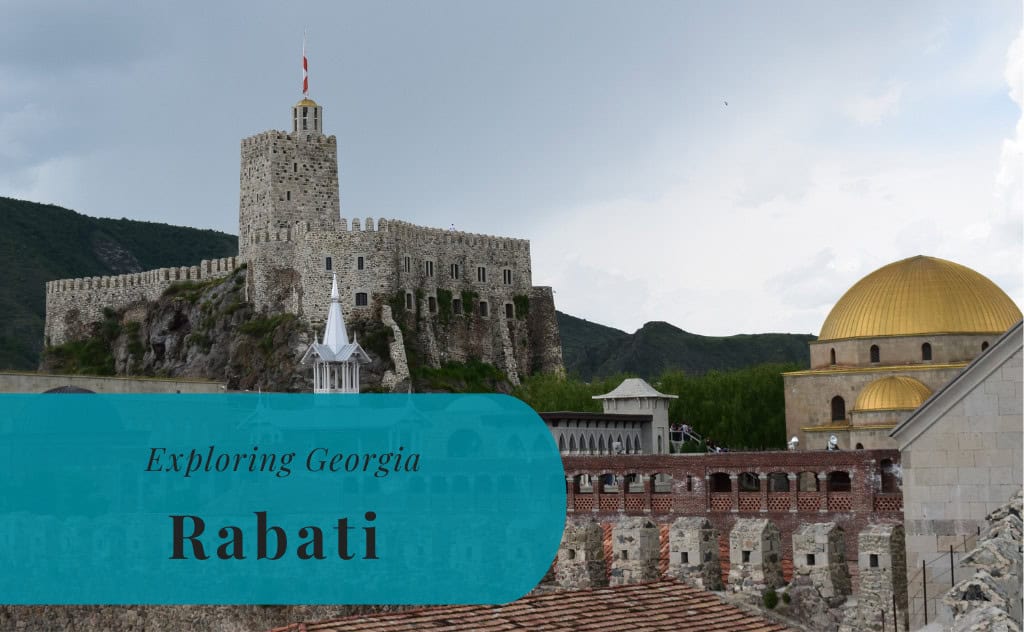
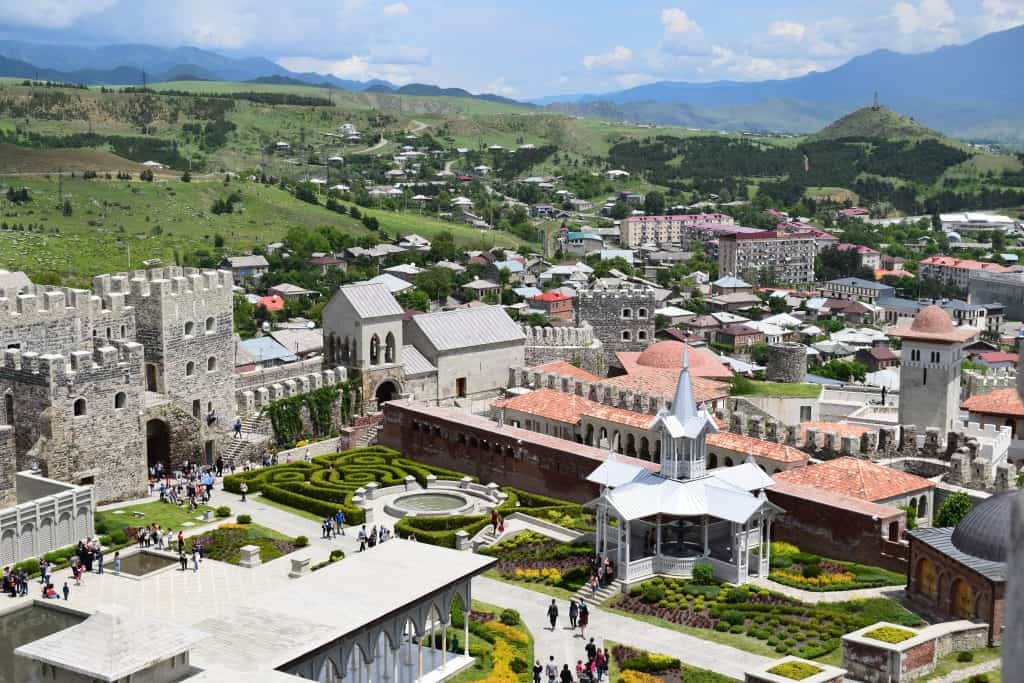
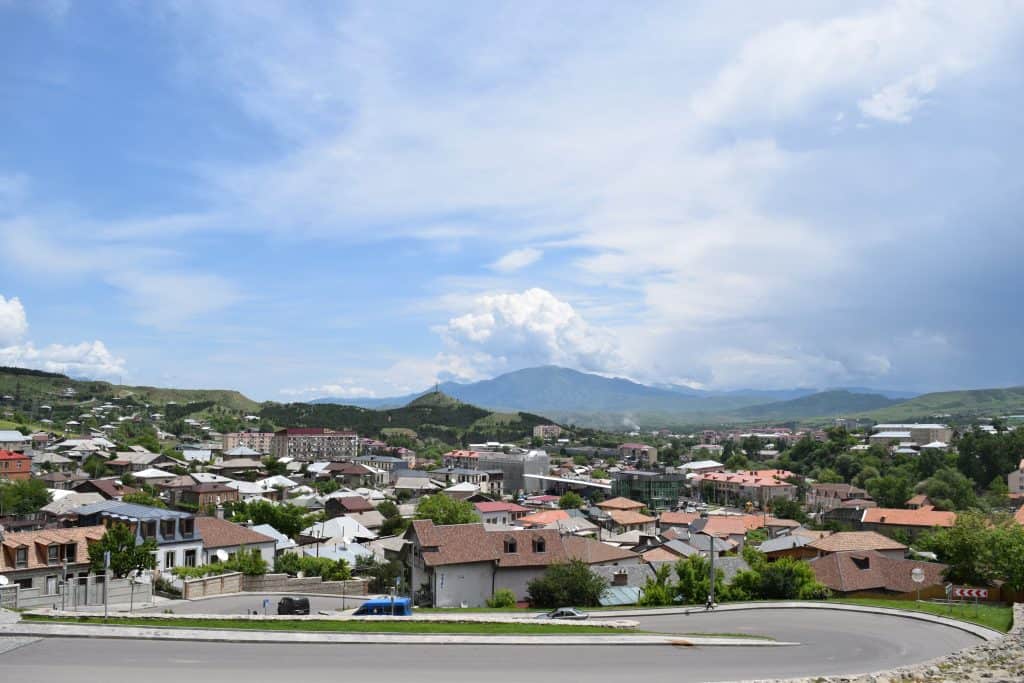
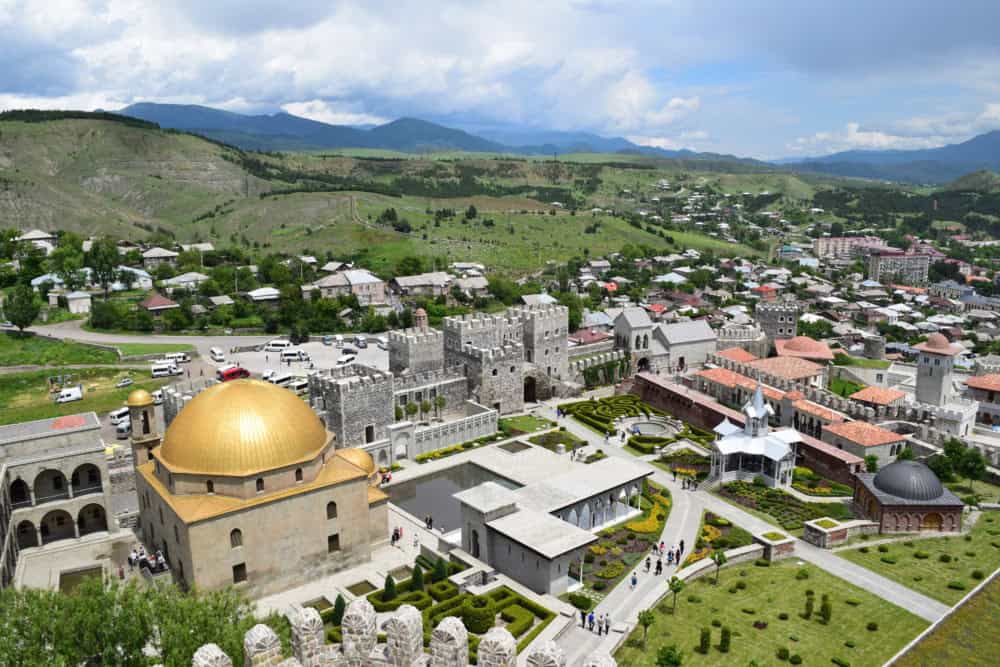
Rabati, also known as the Rabati Castle, is a large medieval fortress located in the city of Akhaltsikhe in southern Georgia. The name “Rabati” is of Arabic origin and means a fortified place, a name that reflects its long history as a defensive stronghold. The fortress is situated on a high, rocky hill on the banks of the Potskhovi River. With its massive walls, towers, churches, and a mosque, Rabati is a testament to the diverse cultural and religious influences that have shaped this region of Georgia over the centuries.
The identity of Rabati is that of a “city within a city,” a place where different cultures and religions coexisted. The fortress was the historical heart of the city of Akhaltsikhe, and it has been the site of many important historical events. After falling into disrepair for many years, the fortress underwent a major reconstruction in the 21st century, which has transformed it into one of Georgia’s most popular tourist destinations. Today, it is a vast museum complex that showcases the rich and multicultural history of the Samtskhe-Javakheti region.


History of Rabati
The history of Rabati Castle stretches back to the 9th century, when a fortress was first built on this site by a local Georgian prince. The fortress was expanded and rebuilt over the following centuries, and it became a major administrative center for the Samtskhe region. The castle’s most significant period of development was during its time under the control of the powerful Jakeli family of Georgian nobles. The fortress was later conquered by the Ottoman Empire, and then by the Russian Empire, with each new ruler leaving their mark on its architecture and character.
The Era of the Jakeli Princes
The castle rose to prominence in the 12th century under the rule of the powerful Jakeli princely family. They made Akhaltsikhe their capital and transformed the fortress into a grand residence and a formidable stronghold. For several centuries, the Jakelis ruled over the semi-independent principality of Samtskhe, and Rabati Castle was the center of their power. During this period, the fortress was a major center for Georgian culture and politics. The Jakelis successfully defended the region against numerous invasions, and their rule is considered a golden age for the city.
The Ottoman Conquest
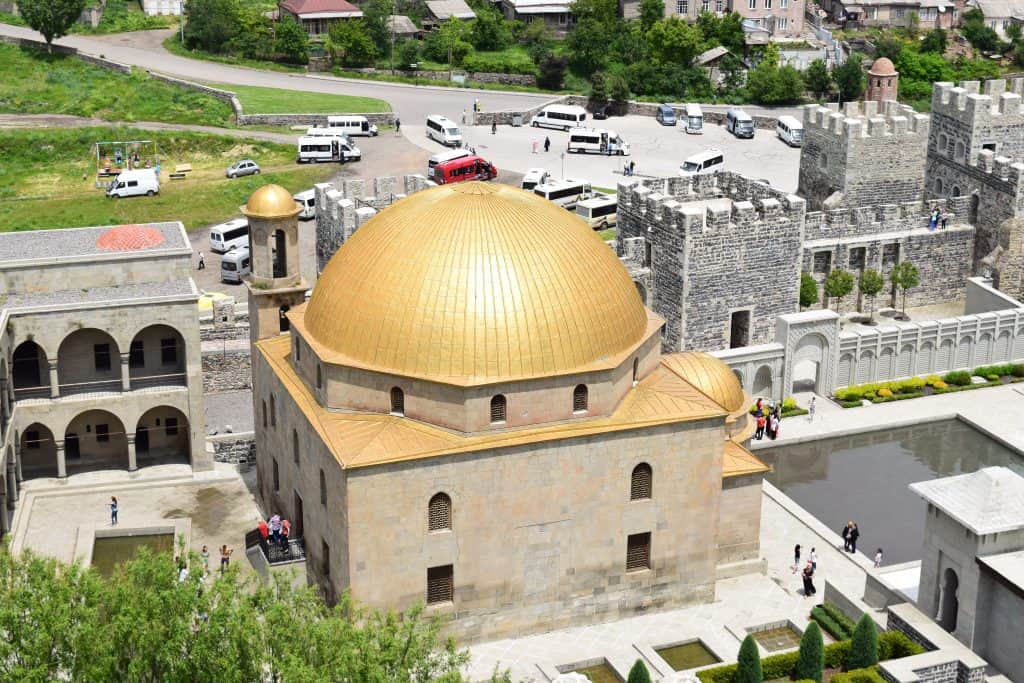
In the 16th century, the entire region of Samtskhe was conquered by the expanding Ottoman Empire. The Ottomans captured Rabati Castle in 1578 and transformed it into a major administrative and military outpost on the frontier of their empire. They built a large mosque within the castle walls, which still stands today and is one of the most prominent features of the complex. The city of Akhaltsikhe became the center of an Ottoman province. For the next few centuries, the region was a mix of Christian and Muslim cultures under Ottoman rule.
Russian Rule and Modern Era
In the early 19th century, the Russian Empire expanded into the Caucasus, and they fought several wars with the Ottoman Empire for control of the region. The Russian army captured Rabati Castle in 1828 after a major battle. Under Russian rule, the fortress lost much of its military significance. In the modern era, after the establishment of independent Georgia, the fortress had fallen into a state of disrepair. A major and controversial restoration project was undertaken in 2011-2012. This project rebuilt large parts of the fortress and transformed it into the major museum and tourist complex that it is today.


Sights in Rabati
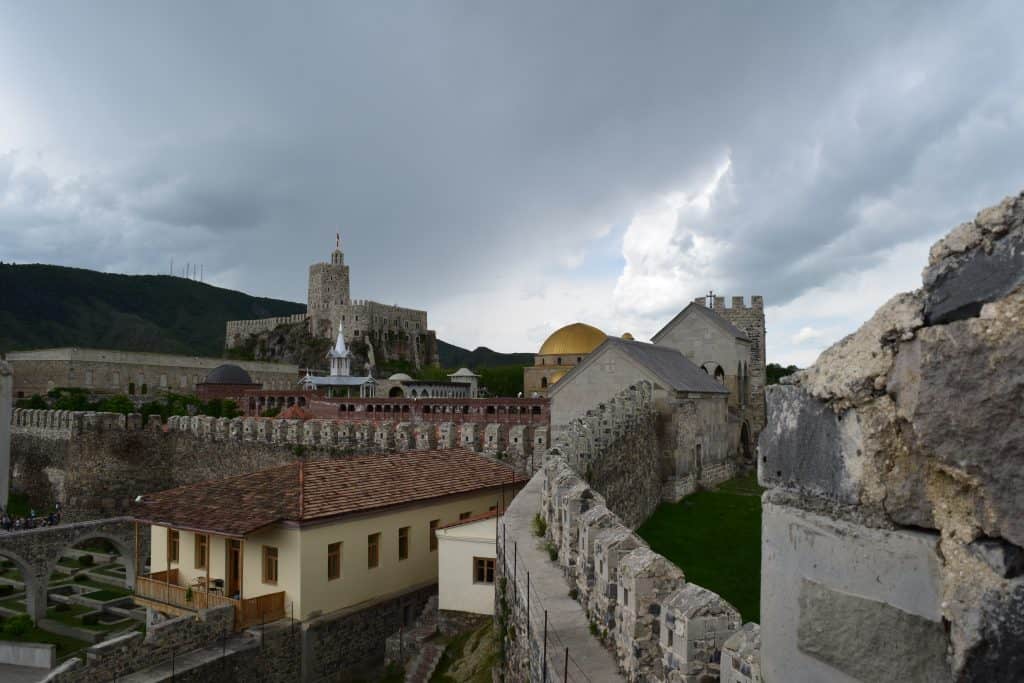
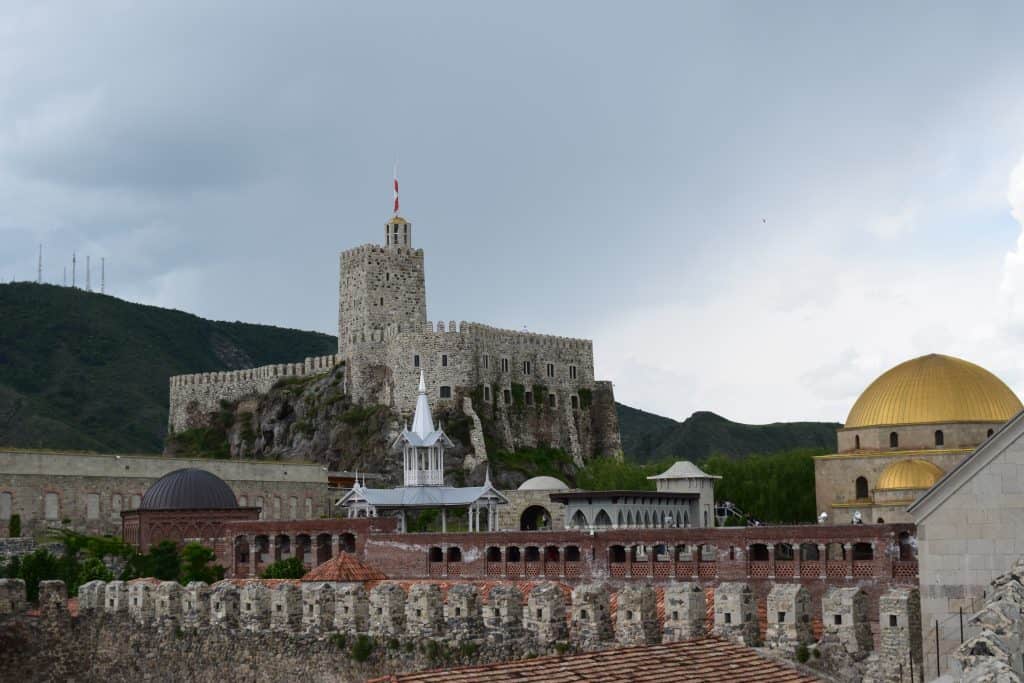
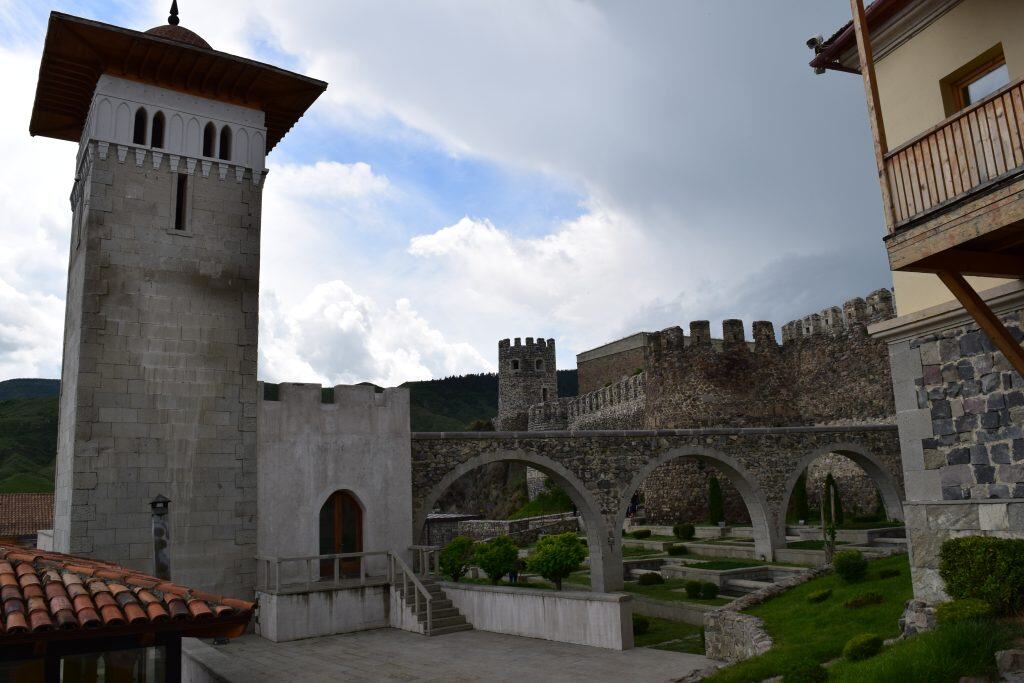
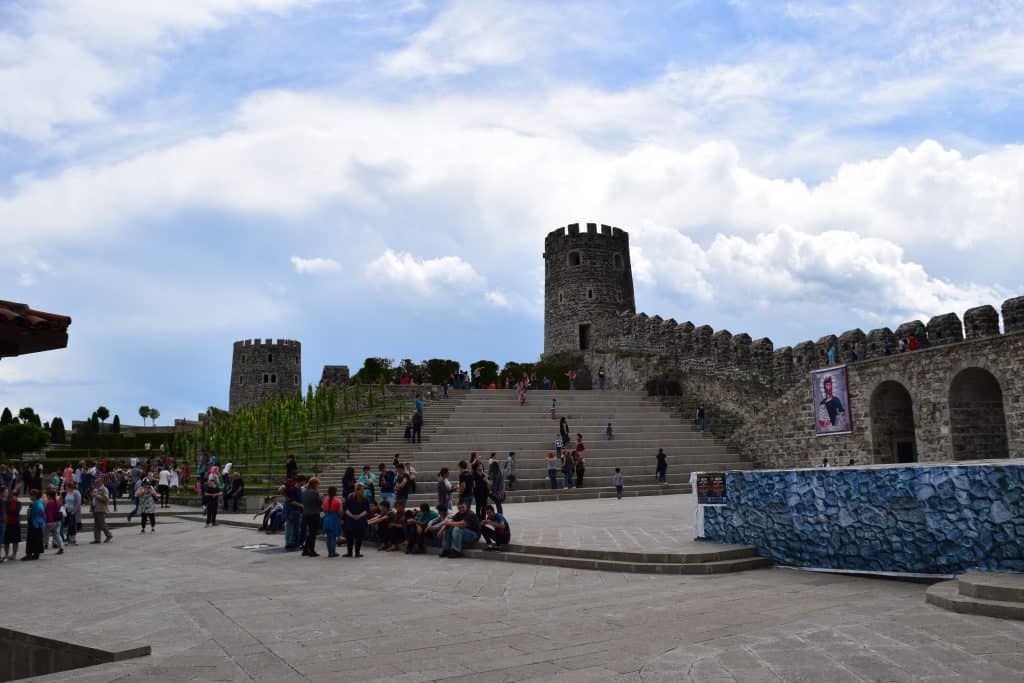
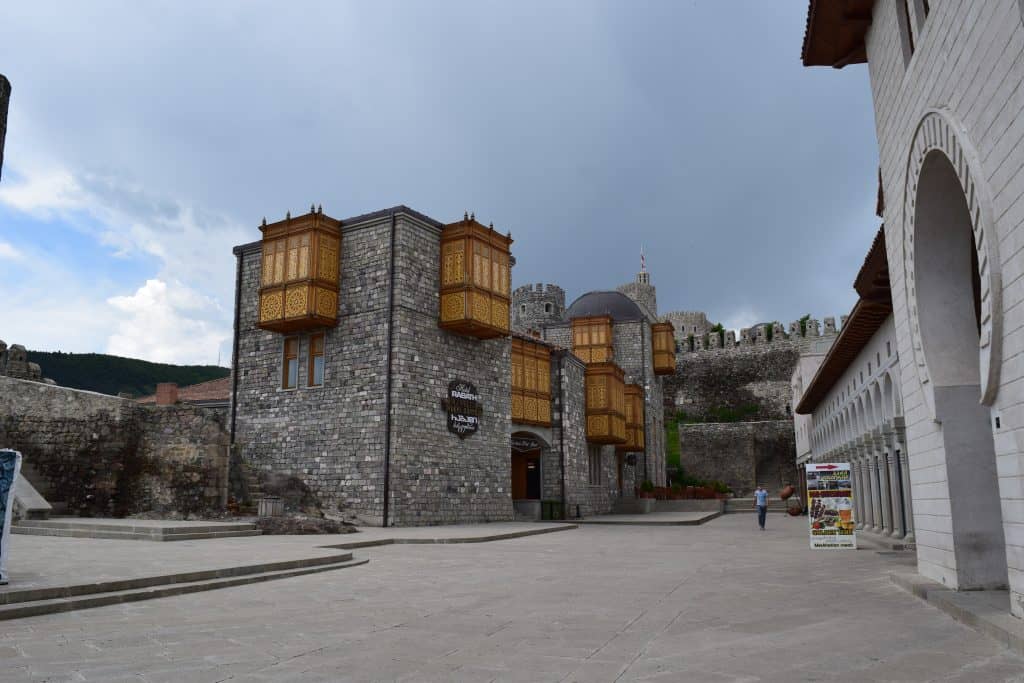
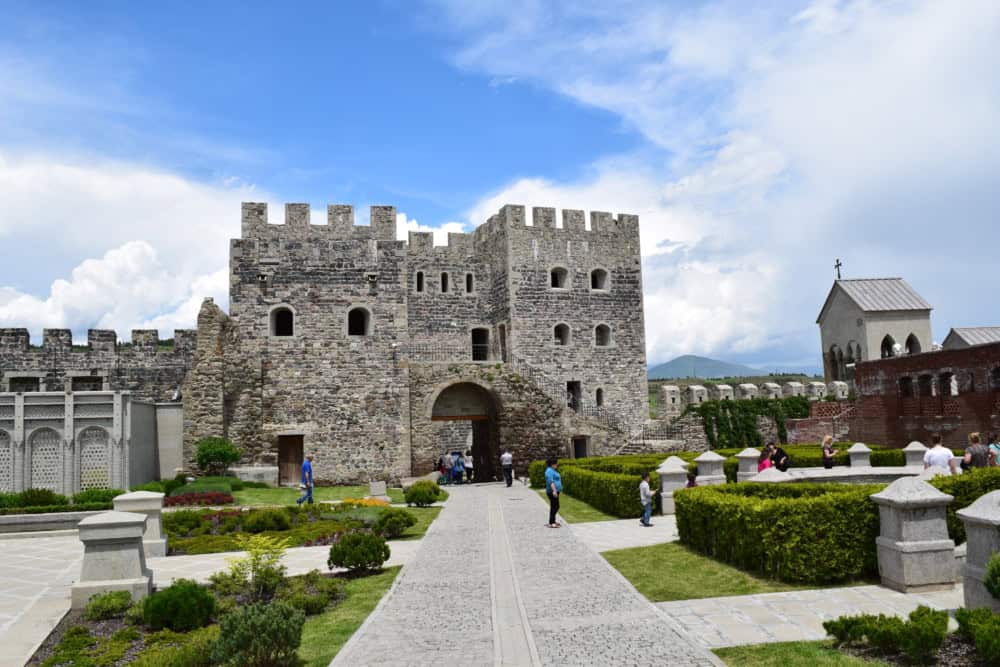
The sights in Rabati are all contained within the magnificent and sprawling fortress complex. The castle is divided into two main parts: the lower, modern section and the upper, historical section. The lower section is open to the public and features shops, cafes, and a hotel. The upper, historical section requires an entrance ticket and contains the main museum, the mosque, the church, and the Jakeli family’s castle. A walk through the complex is a journey through different architectural styles and historical eras, from the medieval Georgian to the Ottoman and Russian imperial periods.
The Fortress Walls and Towers
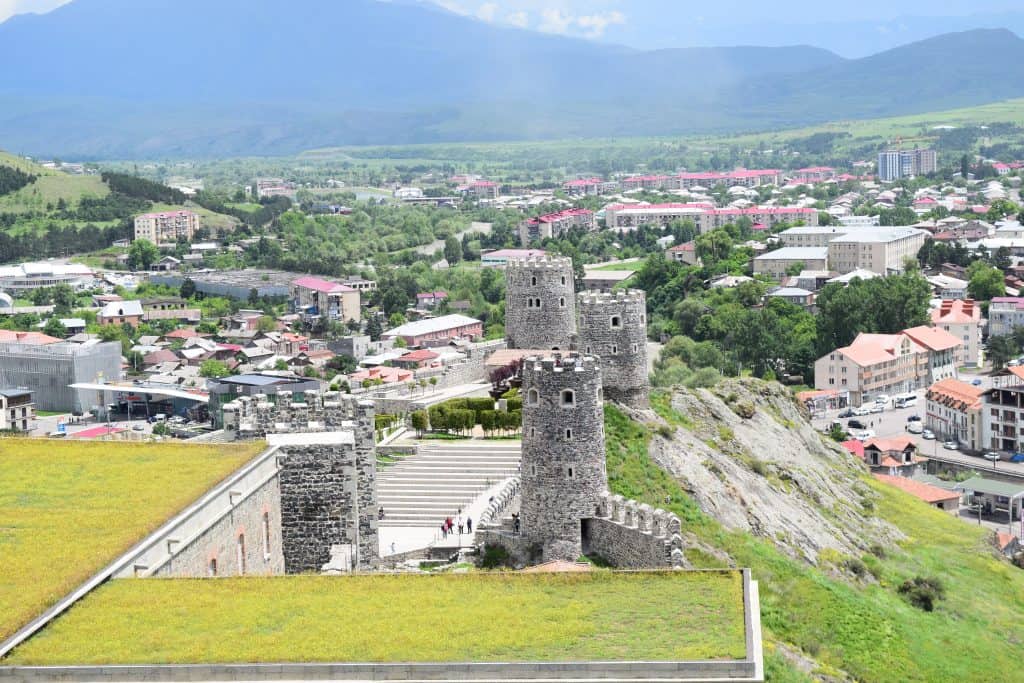
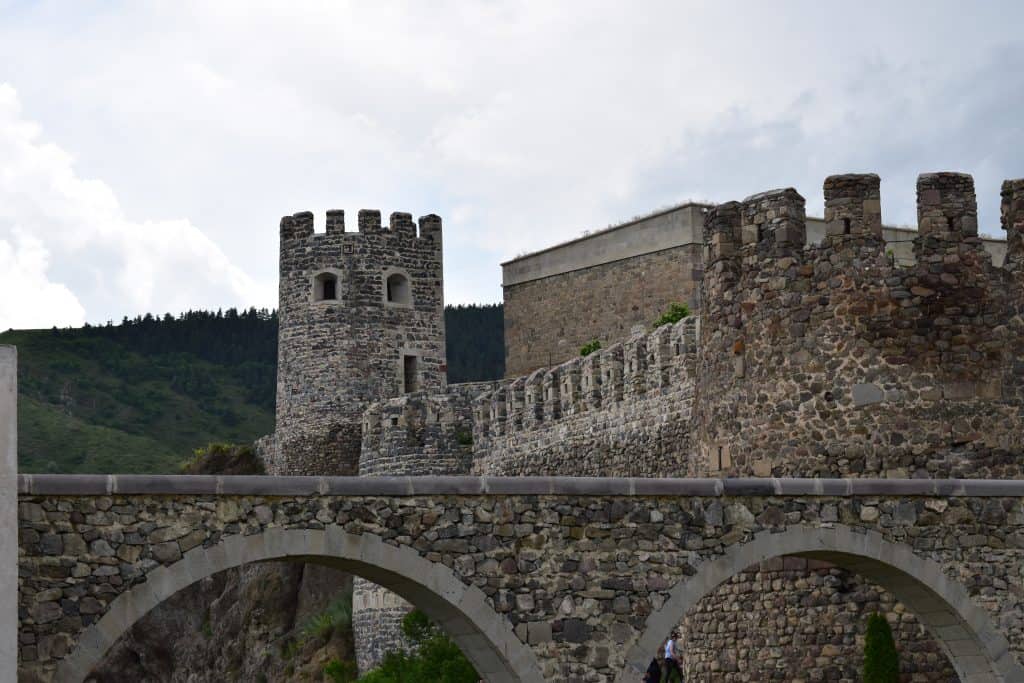
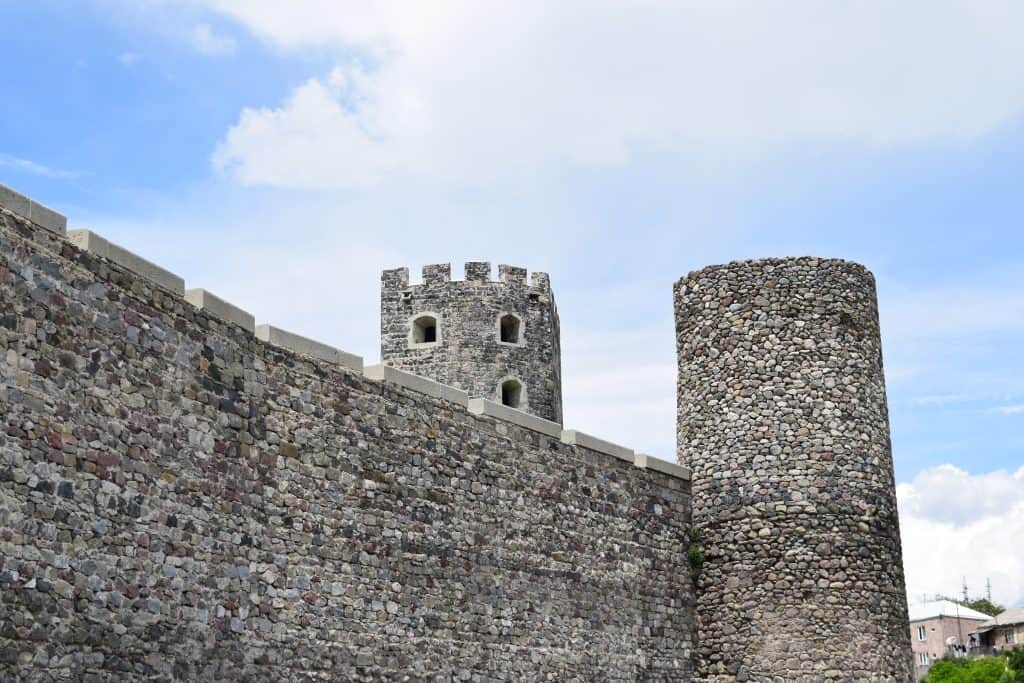
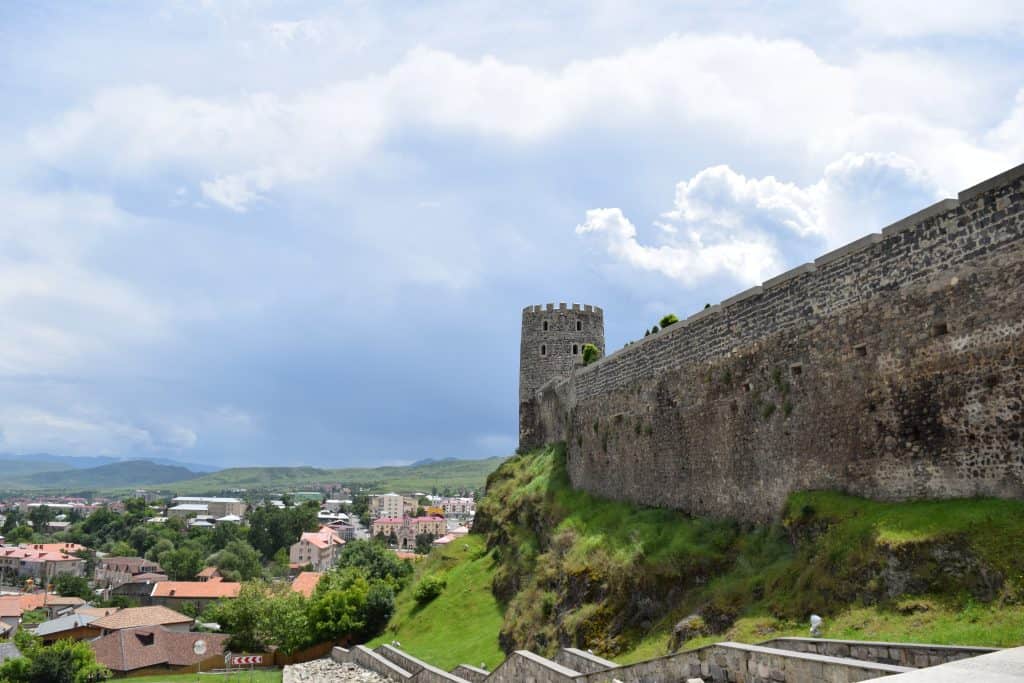
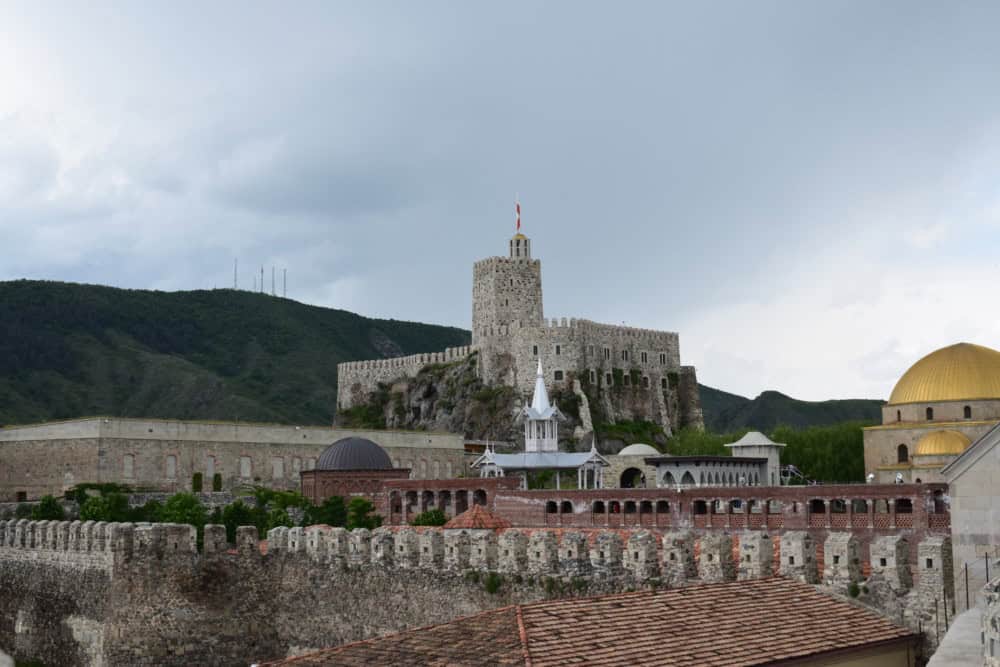
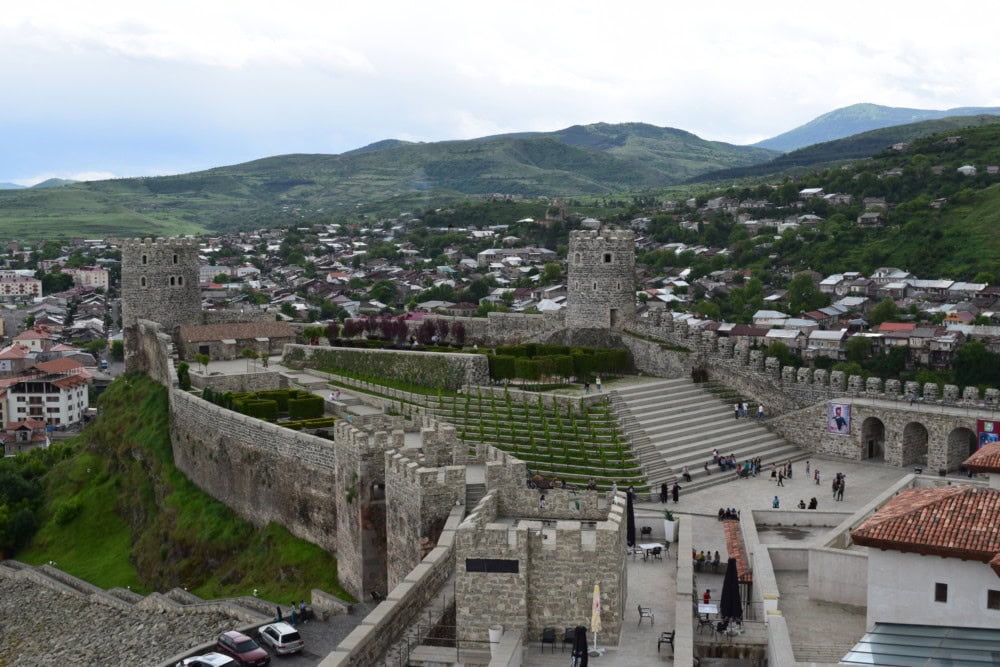
The massive stone walls and defensive towers of the Rabati Castle are its most impressive feature. The fortress covers a large area of about seven hectares. Visitors can walk along the top of large sections of the restored walls. This provides spectacular panoramic views of the entire castle complex and the surrounding city of Akhaltsikhe. The four main towers at the corners of the fortress can also be climbed. A walk along the ramparts is a great way to appreciate the scale and the strategic location of this historic stronghold.
The Akhmediye Mosque and Madrasa
The Akhmediye Mosque is one of the most prominent and beautiful buildings within the Rabati Castle complex. The mosque was built in the 18th century in the Ottoman style, and it is topped by a striking golden dome. Next to the mosque is a madrasa, which was an Islamic school. The mosque and the madrasa are a testament to the long period of Ottoman rule in the region. The mosque has been beautifully restored and stands as a symbol of the multicultural and multi-religious history of the fortress.
The Orthodox Church
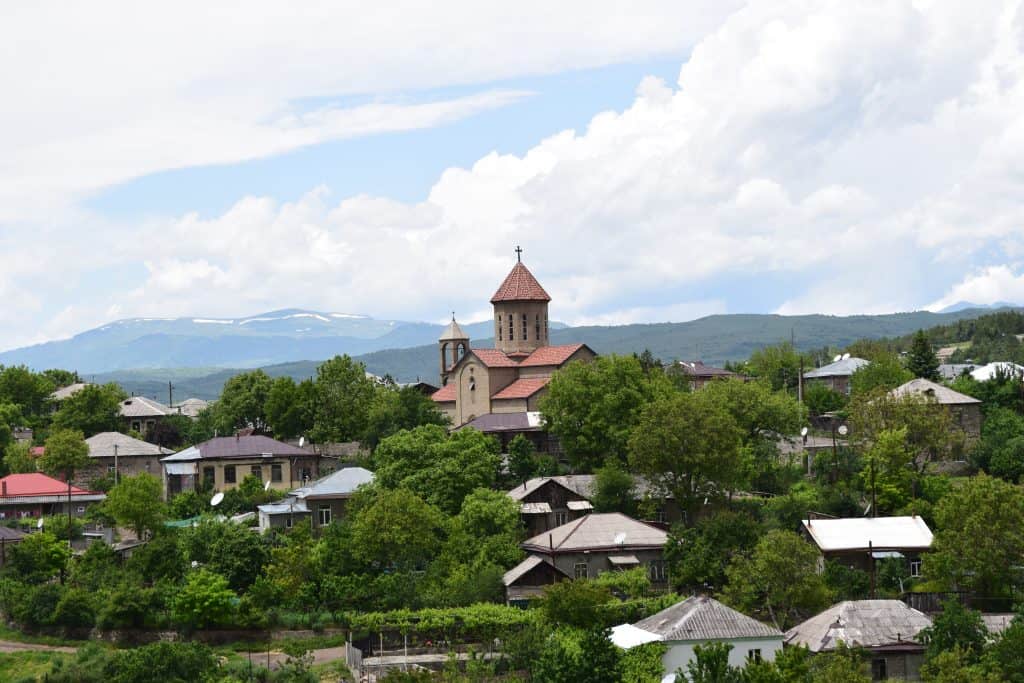
Located in the upper part of the fortress is a 19th-century Orthodox Christian church. This church was built after the Russian Empire conquered the region from the Ottomans. The simple, elegant design of the church stands in contrast to the more ornate style of the mosque. The presence of both a major mosque and a Christian church within the same fortress walls is a unique feature of Rabati. It highlights the different layers of history and the different empires that have controlled this strategic location.
The Samtskhe-Javakheti History Museum
The main museum of the region, the Samtskhe-Javakheti History Museum, is located within the restored palace of the Jakeli family in the upper part of the fortress. The museum’s extensive collections showcase the rich history and archaeology of the region, from the Bronze Age to the modern era. The exhibits include ancient artifacts, medieval manuscripts, traditional costumes, and historical photographs. A visit to the museum provides a comprehensive overview of the long and fascinating history of this part of Georgia.
How to Get to Rabati?
Rabati Castle is located in the city of Akhaltsikhe, in the Samtskhe-Javakheti region of southern Georgia. The most common way to get to Akhaltsikhe is to first travel from the capital city, Tbilisi. The journey can be done as a very long day trip, but it is often better to stay overnight in the region to fully appreciate the castle and the other nearby sights. The region is accessible by road from all other parts of Georgia.
Arriving by Air
The main international airport for the country is Tbilisi Shota Rustaveli International Airport (TBS). The airport is located on the eastern outskirts of the capital city, Tbilisi. From the airport, you would need to continue your journey to Akhaltsikhe by road. The drive from Tbilisi to Akhaltsikhe takes approximately three hours. Another option is Kutaisi International Airport (KUT) in western Georgia, which is also about a three-hour drive away.
Driving to the Site
Driving to Rabati Castle is a scenic journey through the heart of Georgia. From Tbilisi, you would take the main east-west highway towards the city of Khashuri. From there, you turn south towards the spa town of Borjomi and then continue on to Akhaltsikhe. The entire journey from Tbilisi takes around three hours without stops. The roads are generally in good condition.
Connecting by Marshrutka or Bus
Marshrutkas and buses are the main form of public transport for reaching Akhaltsikhe. There are frequent marshrutka and bus services from the Didube Bus Station in Tbilisi to the town of Akhaltsikhe. The journey takes about three hours. This is the most common and affordable option for visitors who are relying on public transport to reach the site. From the bus station in Akhaltsikhe, it is a short walk up the hill to the Rabati Castle.
Journey by Rail
It is also possible to reach the region by train. The main railway line runs through the nearby spa town of Borjomi. From Borjomi, you would then need to take a bus or a marshrutka for the remaining one-hour journey to Akhaltsikhe. For this reason, the train is generally not the most direct or practical option for reaching the site, as the bus connections from Tbilisi are more frequent and direct.
Driving Distances
The driving distance from 20 regional cities, according to Google Maps:
- Akhaltsikhe, Georgia – 1 kilometer (0 h 05 min)
- Borjomi, Georgia – 50 kilometers (0 h 50 min)
- Gori, Georgia – 110 kilometers (1 h 40 min)
- Kars, Turkey – 140 kilometers (2 h 40 min)
- Kutaisi, Georgia – 150 kilometers (2 h 30 min)
- Gyumri, Armenia – 150 kilometers (2 h 50 min)
- Batumi, Georgia – 165 kilometers (3 h 00 min)
- Tbilisi, Georgia – 210 kilometers (3 h 00 min)
- Erzurum, Turkey – 270 kilometers (4 h 30 min)
- Yerevan, Armenia – 300 kilometers (5 h 00 min)
- Trabzon, Turkey – 280 kilometers (4 h 30 min)
- Vladikavkaz, Russia – 350 kilometers (6 h 00 min)
- Sochi, Russia – 420 kilometers (8 h 30 min)
- Baku, Azerbaijan – 790 kilometers (9 h 00 min)
- Ankara, Turkey – 940 kilometers (13 h 00 min)
- Tehran, Iran – 1050 kilometers (14 h 30 min)
- Istanbul, Turkey – 1390 kilometers (18 h 00 min)
- Kyiv, Ukraine – 1650 kilometers (24 h 30 min)
- Moscow, Russia – 2050 kilometers (27 h 00 min)
- Warsaw, Poland – 2350 kilometers (30 h 30 min)
Looking to Explore more of Georgia and Europe?