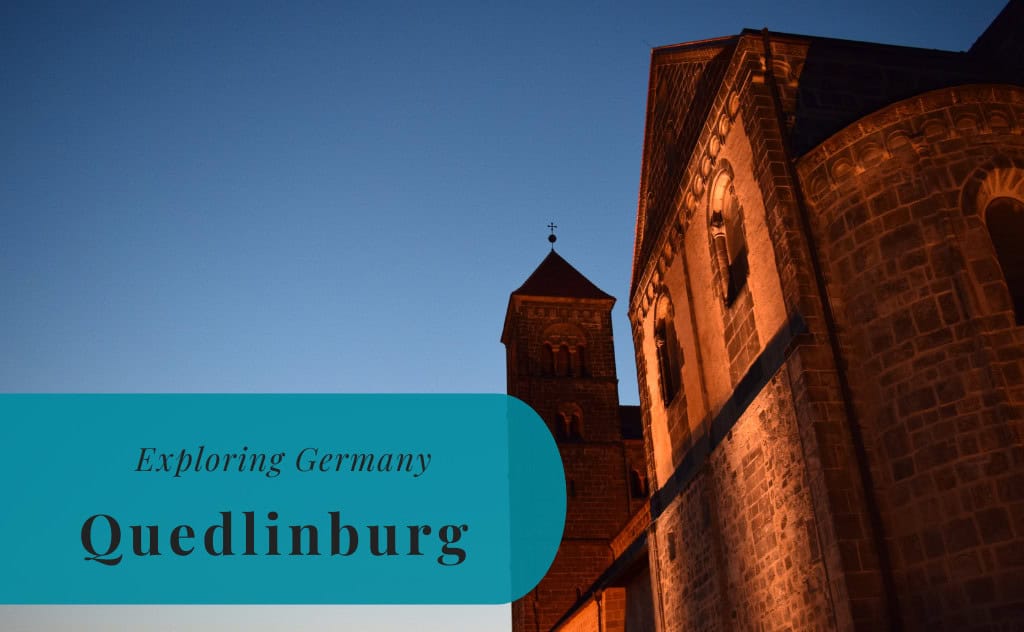
Quedlinburg, Saxony-Anhalt | Exploring Germany
Quedlinburg is a historic town in the state of Saxony-Anhalt, Germany. It is located just north of the Harz Mountains, a significant low mountain range, and sits on the banks of the River Bode. With a population of approximately 23,000 residents, Quedlinburg is known for its exceptionally well-preserved medieval and Renaissance architecture. Nearby towns include Wernigerode and the city of Halberstadt.
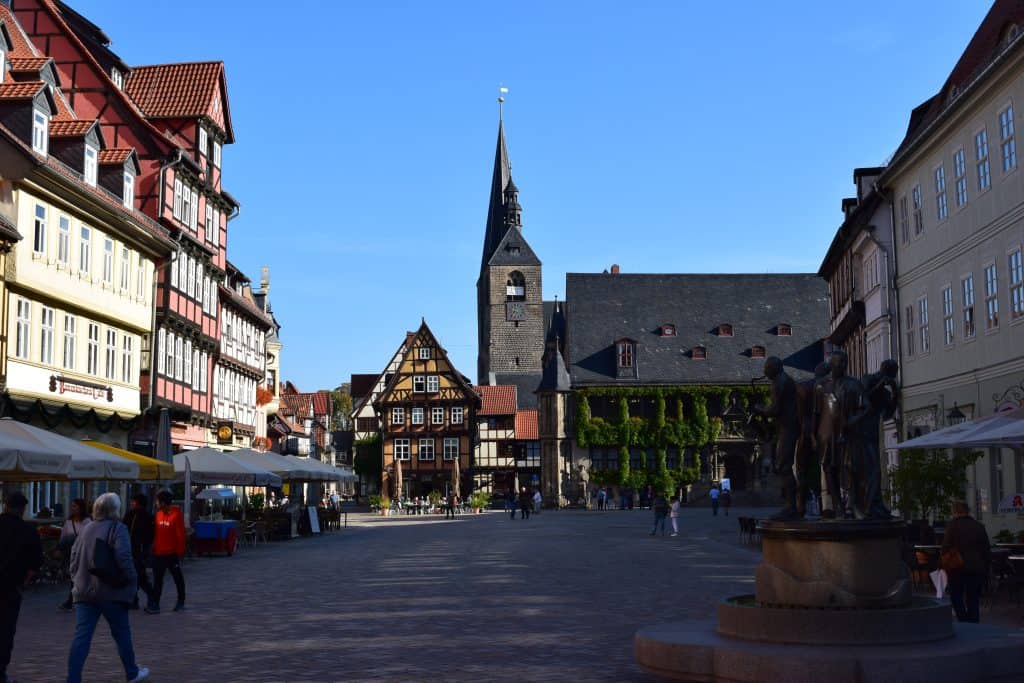
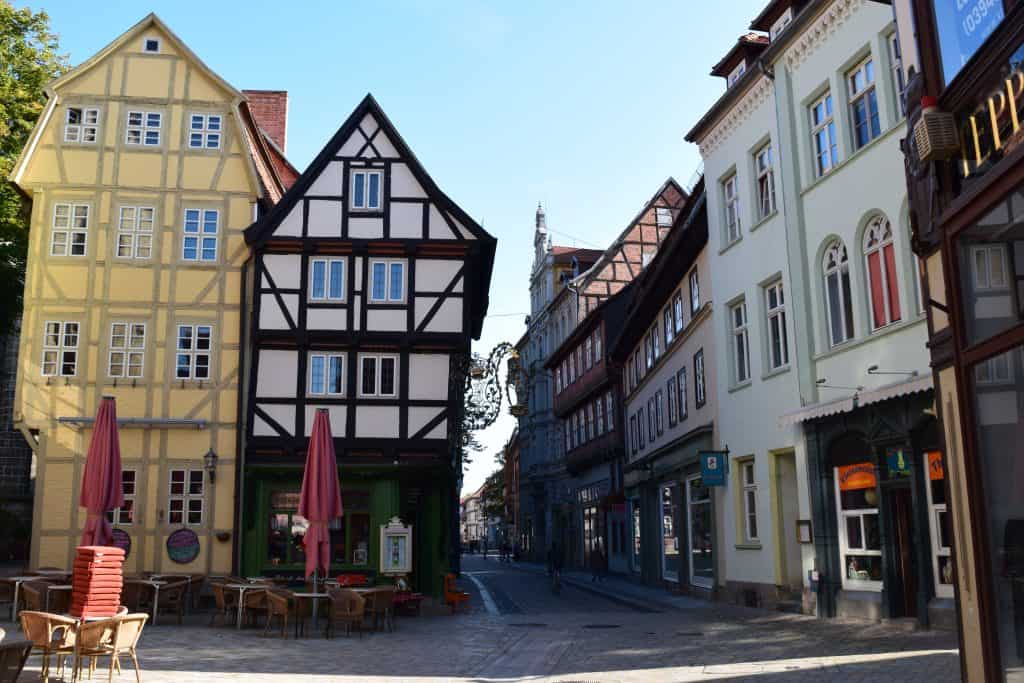
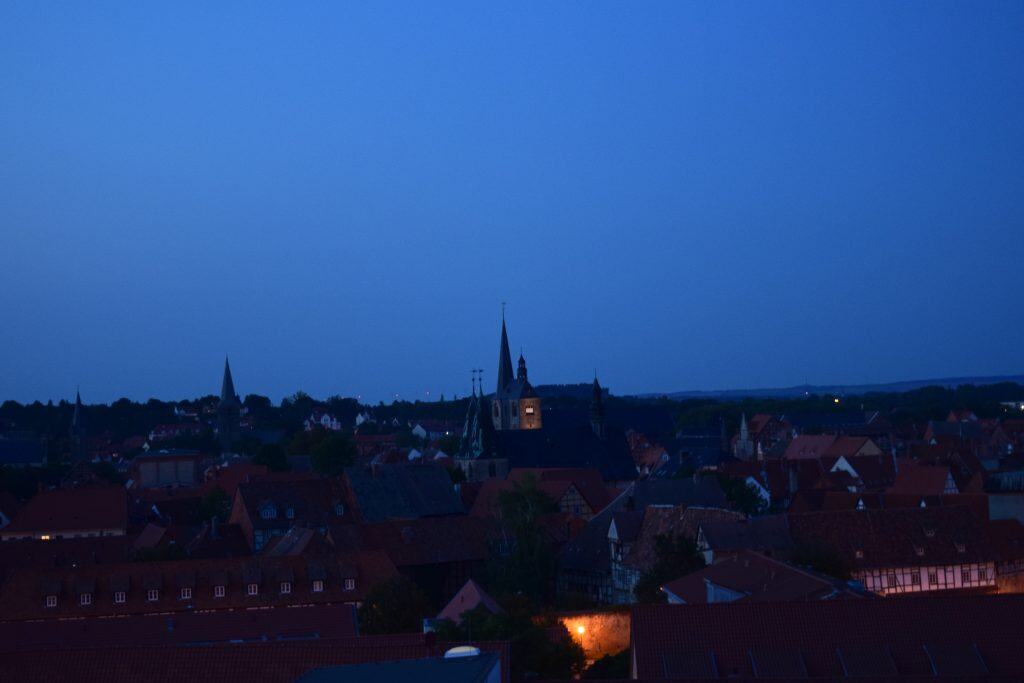
The town’s character is defined by its architectural heritage. The Collegiate Church, Castle, and Old Town are collectively designated as a UNESCO World Heritage Site. Quedlinburg contains one of Germany’s largest collections of half-timbered houses, with over 2,000 examples spanning eight centuries. This creates a townscape that reflects a long and continuous history of urban development from the early Middle Ages to the present day.

A Short History of Quedlinburg
The history of Quedlinburg is deeply connected to the origins of the German nation and the Ottonian dynasty. For nearly 900 years, its development was overseen by a powerful imperial abbey, which preserved its unique character.
Royal Origins and the Imperial Abbey
The history of Quedlinburg gained prominence in the 10th century. The first documented mention of the town was in 922 AD. King Henry I (Henry the Fowler), the first German king of the Saxon dynasty, established a royal residence here. After his death in 936, his widow, Saint Mathilda, founded a convent for noblewomen, Quedlinburg Abbey, on the castle hill in his memory. This imperial abbey was granted significant power and privileges, ruling Quedlinburg as a free imperial town.
Hanseatic Trade and Regional Power
For centuries, the abbesses of Quedlinburg ruled the town. They were powerful political figures in the Holy Roman Empire, often hosting Imperial Assemblies for the Ottonian dynasty. In 1426, Quedlinburg joined the Hanseatic League, a powerful medieval trading confederation. The town flourished through trade in cloth, metalwork, and agricultural produce during this period. The wealth generated from trade contributed to the construction of many of the half-timbered houses seen today.
Annexation and Modern Preservation
Despite its status, the town had frequent disputes with the abbesses over control. Quedlinburg was later annexed by Brandenburg in the 17th century and then by Prussia. Its medieval and Renaissance character was largely preserved through the centuries, partly due to economic stagnation. After a period of neglect during the GDR era, extensive restoration work began after German reunification in 1990. This led to its designation as a UNESCO World Heritage Site in 1994.



Things to Do and See
Quedlinburg’s sights are centered on its unparalleled collection of medieval and Renaissance architecture. The main points of interest include the castle hill complex, the vast old town with its half-timbered houses, and several specific museums.
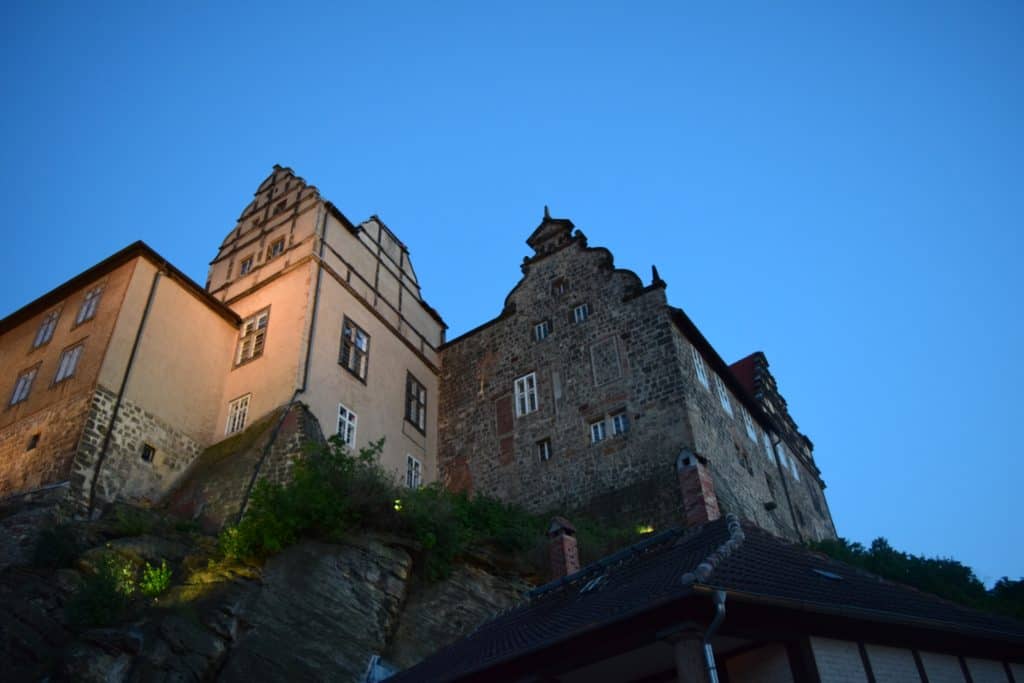
Quedlinburg Abbey and Schlossberg
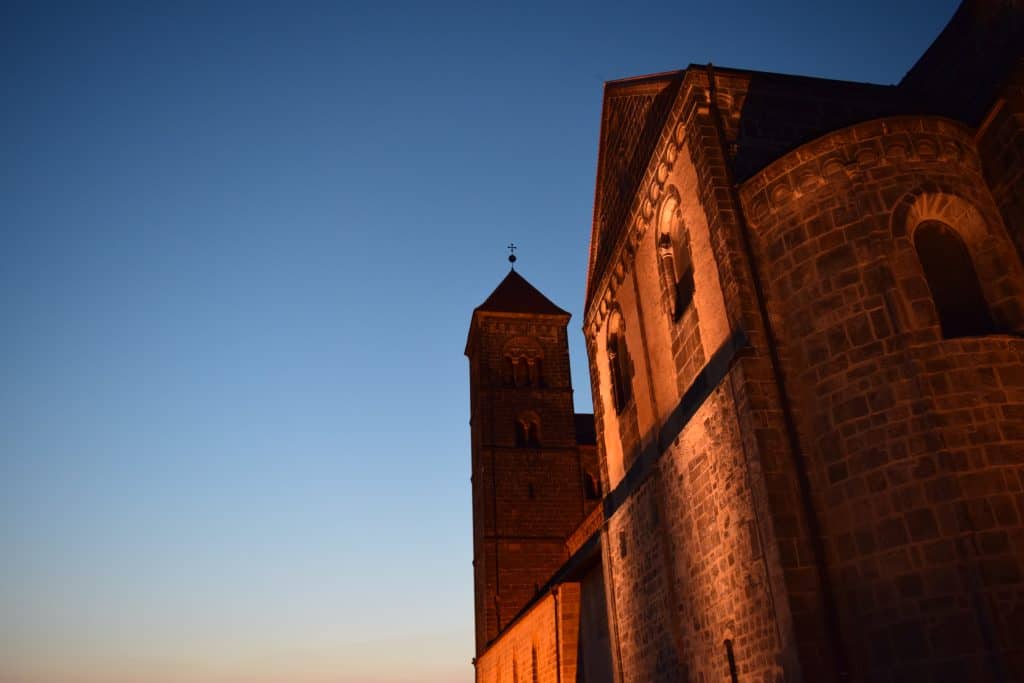
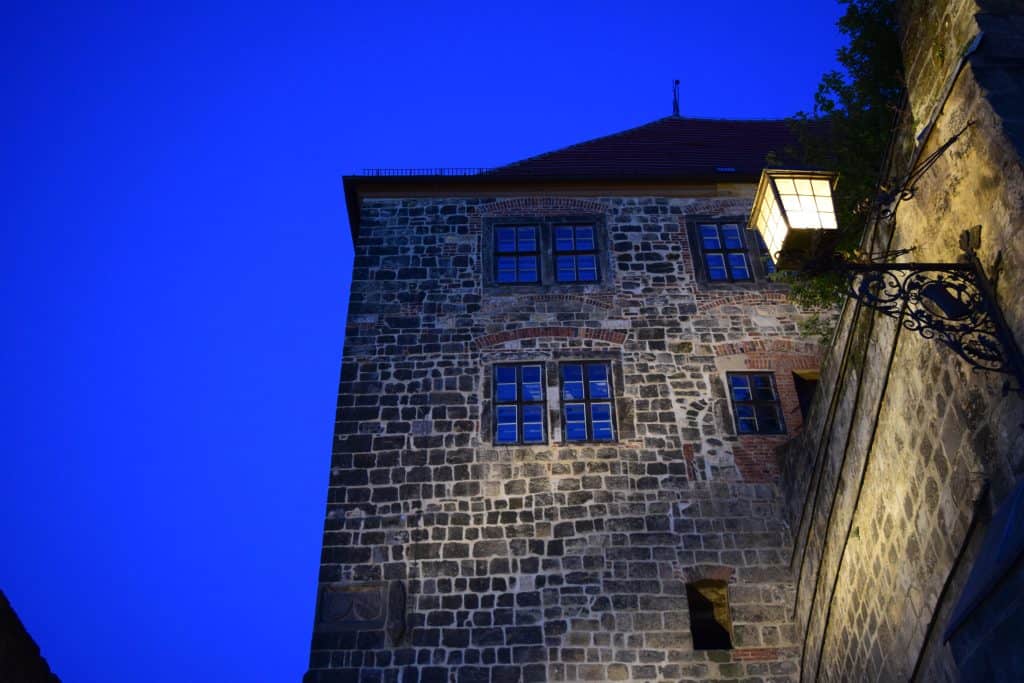
The Quedlinburg Abbey and Schlossberg (Castle Hill) form the town’s primary landmark. The complex includes the Collegiate Church of St. Servatius (Stiftskirche St. Servatii), a key example of Romanesque architecture consecrated in 1129. The church houses the tombs of King Henry I and Queen Mathilda. The abbey also holds the Quedlinburg Treasure (Domschatz), a collection of medieval manuscripts and religious artifacts. The adjacent castle buildings house a museum on the town’s history.
Quedlinburg Old Town
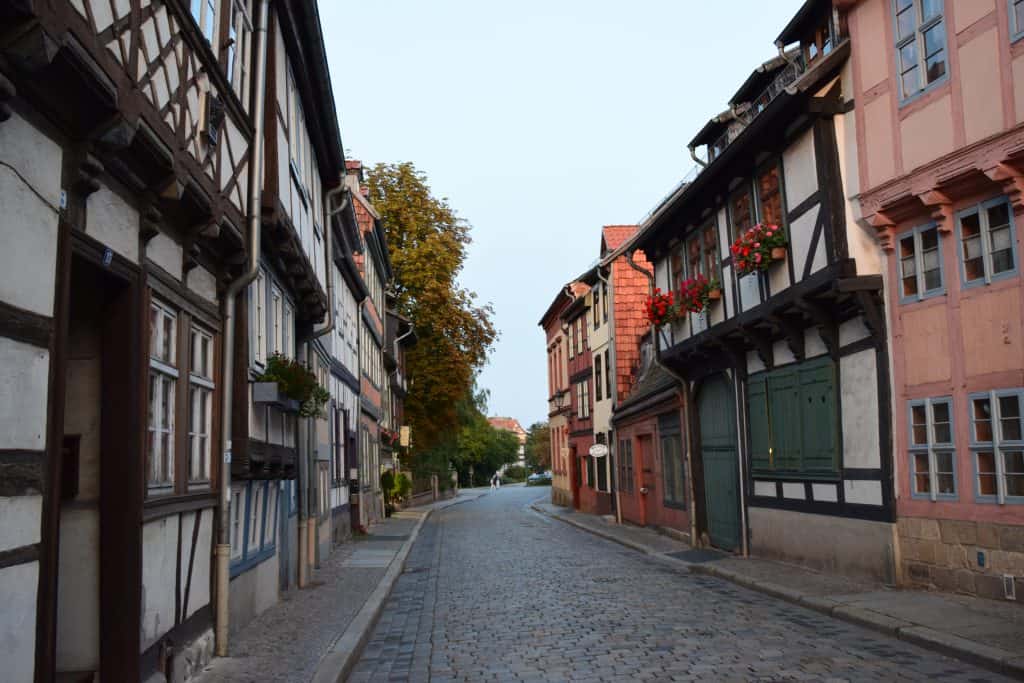
Quedlinburg’s Old Town (Altstadt) is known for its state of preservation. It boasts over 2,000 half-timbered houses, spanning eight centuries of architectural development. These houses, many dating from the 16th and 17th centuries, create a living museum of German architectural history. Winding cobblestone alleyways and small squares characterize the townscape. The Old Town covers nearly 90 hectares and was the primary reason for the town’s UNESCO designation.
Quedlinburg Town Hall
The Quedlinburg Town Hall (Rathaus) is an early Gothic building located on the main market square. First mentioned around 1300, its facade features Renaissance alterations from a later period. A key feature is the large stone statue of Roland, which stands on the front of the building. This statue symbolizes the town’s historic trading rights and civic independence. The Town Hall continues to be the seat of the town’s administration.
Fachwerkmuseum im Ständerbau
The Fachwerkmuseum im Ständerbau is a museum dedicated to half-timbered construction. It is housed in one of Germany’s oldest surviving half-timbered houses, with parts of the structure dating to 1346-47. The museum provides detailed information on the evolution of half-timbered buildings. Exhibits and original building elements explain various construction techniques used over the centuries. It highlights the craftsmanship involved in building Q_uedlinburg’s houses.
Lyonel Feininger Gallery
The Lyonel Feininger Gallery (Feininger-Galerie) is a significant art museum in Quedlinburg. It holds a large collection of works by the German-American artist Lyonel Feininger, who was associated with the Bauhaus movement. The gallery, opened in 1986, showcases his prints, including engravings, lithographs, and woodcuts, as well as paintings. A large part of the collection was hidden from the Nazis by a local resident, Hermann Klumpp, preserving it through World War II.



Getting Around in Quedlinburg
Quedlinburg’s historic Old Town is compact and almost entirely a pedestrian zone, making it ideal to explore on foot. For destinations slightly further afield, local buses and a tourist road train are available.
On Foot: The Cobblestone Center
Walking is the best way to explore Quedlinburg. The entire Altstadt, with its winding cobblestone alleys and squares, is best experienced at a slow pace. All the main sights, including the market square, the Fachwerkmuseum, and the base of the Schlossberg, are easily reachable on foot. Comfortable shoes are highly recommended for navigating the uneven streets.
Local Buses and Tourist Train
A local bus network, operated by Harzer Verkehrsbetriebe (HVB), connects the train station with the town center and surrounding areas. For visitors, a small tourist road train (Bimmelbahn) also operates. This train runs on a circuit through the Old Town and up to the base of the castle hill. It provides a simple way to see the main sights without extensive walking.
How to Get to Quedlinburg
Reaching Quedlinburg is straightforward by road and rail, with good connections to Germany’s main transport networks. The town is a key destination in the Harz region.
Arriving by Air: Regional Gateways
Quedlinburg does not have its own airport. The closest major airport is Leipzig/Halle Airport (LEJ), located approximately 100 kilometers away. Other nearby options include Hannover Airport (HAJ), about 150 kilometers away, and Berlin Brandenburg Airport (BER), which is over 200 kilometers distant. From any of these airports, the journey to Quedlinburg must be completed by train or car.
The Open Road: Driving to the Harz
Driving to Quedlinburg offers flexibility for exploring the surrounding Harz region. The town is directly accessible via the A36 motorway (formerly the B6n road), which connects it to major cities like Braunschweig and Halle. This motorway provides a fast and direct link to the wider German Autobahn network. Parking facilities are available on the outskirts of the Old Town.
Connecting by Coach
Long-distance bus services provide an economical way to reach Quedlinburg. The main bus stop is located near the train station. Companies like FlixBus operate routes connecting Quedlinburg with major cities across Germany, including Berlin and Magdeburg. Local buses also provide connections to nearby Harz towns like Wernigerode and Thale.
On Track: Regional and Steam Trains
Traveling to Quedlinburg by train is a popular option. The Quedlinburg station is well-connected to the regional rail network. Regional trains operated by Abellio Rail Mitteldeutschland provide frequent services, with direct connections from the major city of Magdeburg. Quedlinburg is also a terminus for the historic Harz Narrow Gauge Railways (HSB). These steam trains provide a scenic journey into the Harz mountains.
Driving Distances
The driving distance from 6 major German cities as well as 4 regional metropolises, according to Google Maps:
- Berlin – 216 kilometers (2 h 30 min)
- Munich – 535 kilometers (5 h 50 min)
- Stuttgart – 485 kilometers (5 h 10 min)
- Frankfurt – 312 kilometers (3 h 20 min)
- Cologne – 367 kilometers (3 h 50 min)
- Hamburg – 243 kilometers (2 h 50 min)
- Amsterdam, Netherlands – 536 kilometers (5 h 40 min)
- Prague, Czech Republic – 339 kilometers (3 h 40 min)
- Copenhagen, Denmark – 575 kilometers (6 h 40 min)
- Warsaw, Poland – 788 kilometers (7 h 50 min)
Looking to Explore more of Germany and Europe?