

Lübeck, Schleswig-Holstein | Exploring Germany
Lübeck, a historic city in northern Germany, is known as the “Queen of the Hanseatic League.” The city is located in the state of Schleswig-Holstein. It sits on the River Trave, which flows into the Baltic Sea at the city’s coastal resort of Travemünde. With a population of approximately 217,000 residents, Lübeck is a key cultural and economic hub. Its location near Hamburg and the Danish border has made it an important center for trade and travel in the Baltic Sea region for centuries.
The character of Lübeck is defined by its extensive Brick Gothic architecture, which is concentrated in its well-preserved Old Town. The entire Old Town is situated on an island surrounded by the River Trave and its connecting canals, giving it a distinct outline. This architectural and historical ensemble was designated a UNESCO World Heritage Site in 1987. It was the first time an entire old town in Northern Europe received this status.
The city’s identity is deeply connected to its past as a powerful free imperial city and the de facto capital of the Hanseatic League. This medieval trading confederation dominated commerce in the Baltic and North Seas for centuries. Beyond its history, Lübeck is also globally known for its culinary specialty, Lübeck Marzipan. Today, the city combines its function as a major tourist destination with its role as a modern port and regional center.


Good to Know When Visiting Lübeck
To help with planning a visit, here are several practical points covering daily essentials, timing, and efficient exploration of the city. Understanding these details can make a trip to Lübeck more convenient. This information is intended to provide a general overview for travelers preparing to visit this major German city.
The Daily Essentials
The official currency used in Lübeck is the Euro (EUR). Credit and debit cards are widely accepted in most hotels, restaurants, and shops. However, it is advisable to carry some cash for smaller purchases at markets or smaller cafes. The official language is German. English is widely spoken in tourist areas, hotels, and restaurants. Tipping is not obligatory, as service is included in the bill, but it is common to round up the bill or leave a small tip of 5-10% for good service. The tap water in Lübeck is safe to drink. The electrical system uses Type F sockets with a standard voltage of 230V. Lübeck is generally a very safe city, with low crime rates.
Planning Your Calendar
Lübeck is a year-round destination. The summer months (June-August) are the most popular time to visit, with pleasant weather for exploring the Old Town on foot and visiting the nearby beach at Travemünde. The spring and autumn months offer cooler temperatures and fewer crowds. The winter is cool and can be damp, but the city is known for its extensive and atmospheric Christmas markets (Weihnachtsmärkte), which take over the Old Town in December. Key public events include the Nordic Film Days Lübeck, a major film festival held annually in November. For a first visit, two to three full days is generally sufficient to explore the Old Town and its main museums.
A Tourist’s Toolkit for Exploration
The historic Old Town of Lübeck is an island and is very compact, making it ideal to explore on foot. Most of the major sights are located within a short walking distance of each other. For visiting the coastal district of Travemünde, the local bus and regional train network is efficient. Tickets for the local bus system, operated by Stadtverkehr Lübeck, can be purchased on the bus or via a mobile app. It is advisable to book tickets for some cultural performances or special exhibitions online in advance, especially during the peak season. Many of Lübeck’s museums are part of the Museumsverbund LÜBECK, and combination tickets may be available. It is also important to check the opening hours for specific museums, as many are closed on Mondays.
A Short History of Lübeck
The history of Lübeck is the story of its rise as the dominant power in the Hanseatic League. It became one of the most important commercial and political centers in medieval Northern Europe. Founded as the first German city on the Baltic coast, its strategic location and its status as a Free Imperial City allowed it to flourish for centuries. The wealth generated during this period is still visible in the city’s monumental Brick Gothic architecture. The city’s subsequent decline, its damage during World War II, and its meticulous post-war reconstruction are also key parts of its long history.
Foundation and Hanseatic Power
The modern city of Lübeck was founded in 1143 by Adolf II, Count of Schauenburg and Holstein. This was the first German city established on the Baltic coast, and its strategic location on the River Trave provided access to the sea. In 1226, Lübeck was granted the status of a Free Imperial City by Emperor Frederick II. This meant it was directly subordinate to the Holy Roman Emperor, giving it significant political and economic autonomy.
This status allowed Lübeck to become the leading city of the Hanseatic League, a powerful medieval trading confederation of merchant guilds and market towns. From the 13th to the 16th centuries, the Hanseatic League dominated trade in the Baltic and North Seas. Lübeck was its de facto capital. The city developed a comprehensive legal code, known as Lübeck Law, which was adopted by over 100 other cities in the Baltic Sea region, showcasing its immense influence.
Decline and Rebuilding
Lübeck’s power began to decline in the 16th century with the weakening of the Hanseatic League and shifts in global trade routes. The city’s fortunes were further impacted by the Thirty Years’ War. While it remained neutral, the war disrupted trade and diminished its influence. A key event in the city’s history was the Great Fire of 1659, which destroyed many buildings, although it was less devastating than in some other Hanseatic cities.
During its long history, the city maintained its independence until it was incorporated into the German Confederation. It continued as a major port and commercial center. The city’s architectural character, dominated by the Brick Gothic style of its Hanseatic heyday, was largely preserved through these centuries of relative decline.
Modern Era and UNESCO Status
In the 20th century, Lübeck faced another major challenge. In 1942, during World War II, it became the first German city to suffer a substantial bombing raid by the Royal Air Force. The raid caused severe damage to the historic center. Over one-fifth of the Old Town was destroyed, including major parts of its three main churches: St. Mary’s, the Cathedral, and St. Peter’s.
After the war, a massive effort was undertaken to reconstruct the historic city. The churches and many of the historic burgher houses were meticulously rebuilt, preserving the medieval character of the Old Town. This successful preservation and reconstruction effort was a key reason for its designation as a UNESCO World Heritage Site in 1987. The designation recognized its outstanding universal value as a former capital of the Hanseatic League and for its collection of Brick Gothic architecture.


Things to Do and See
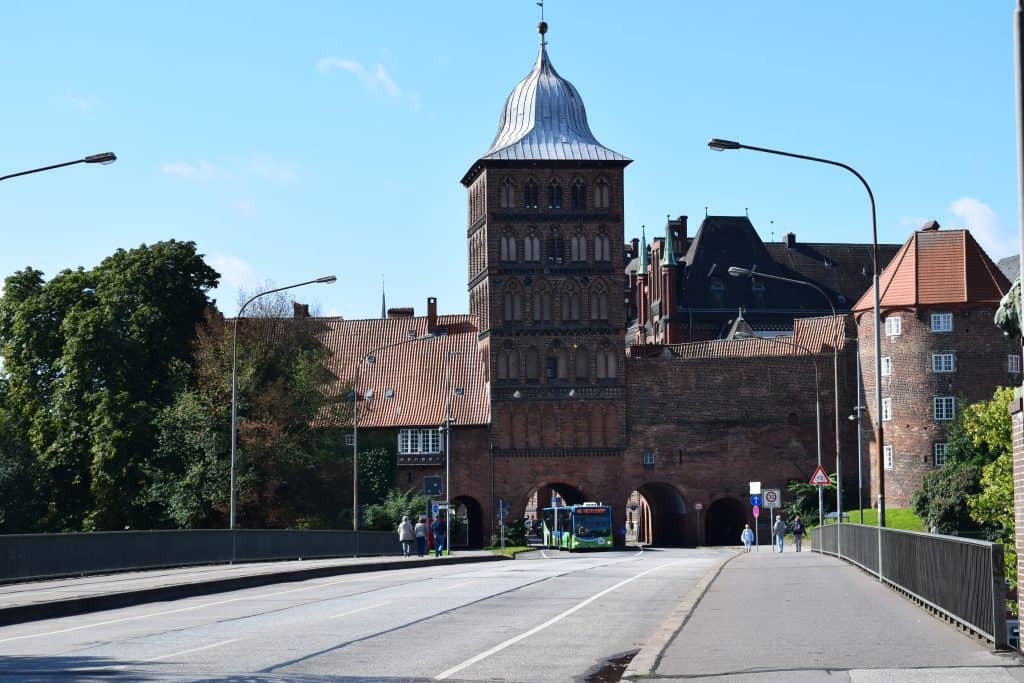
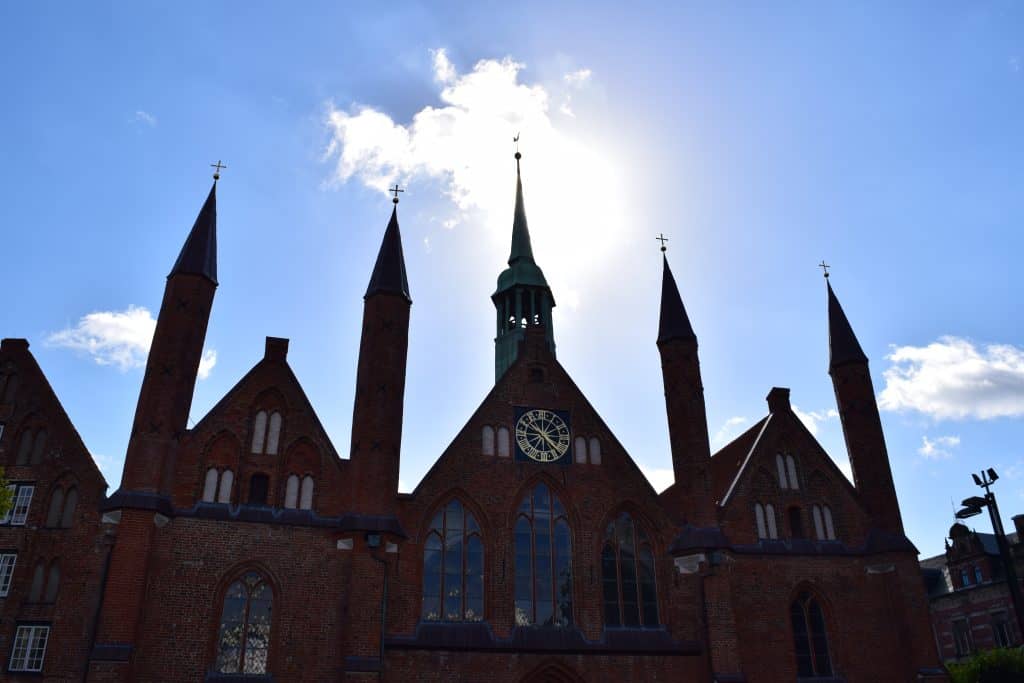
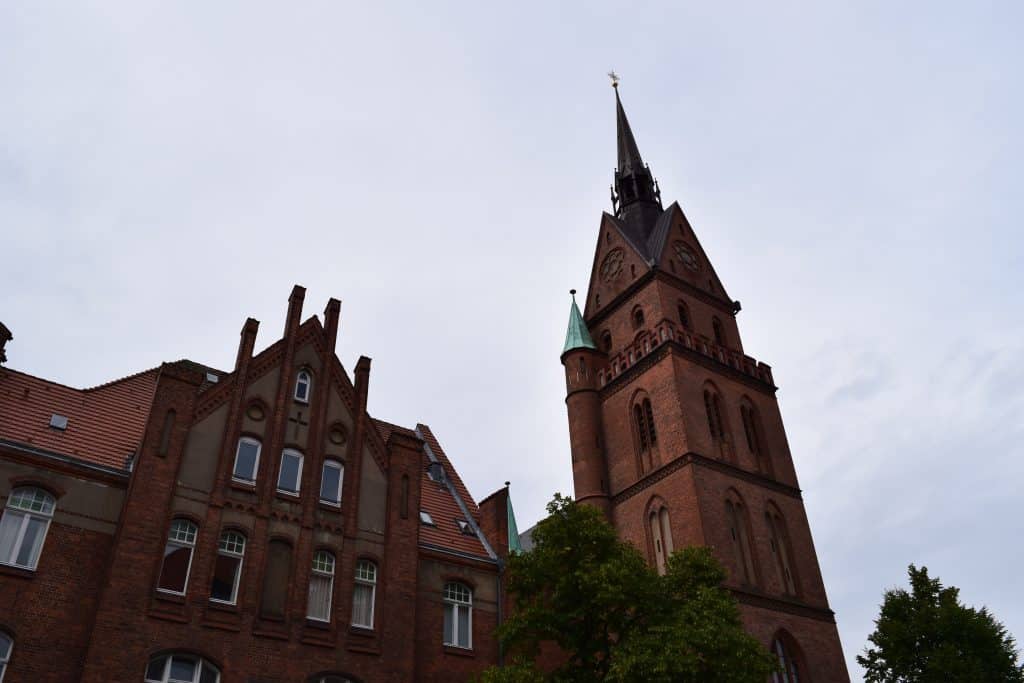
Lübeck offers a range of attractions that showcase its medieval architecture and its history as the capital of the Hanseatic League. Visitors can explore the Holstentor, the city’s famous gate, and wander through the Old Town, which is a UNESCO World Heritage site. The city’s skyline is defined by the seven spires of its five main churches. Engaging museums and literary landmarks also provide a rich journey through time.
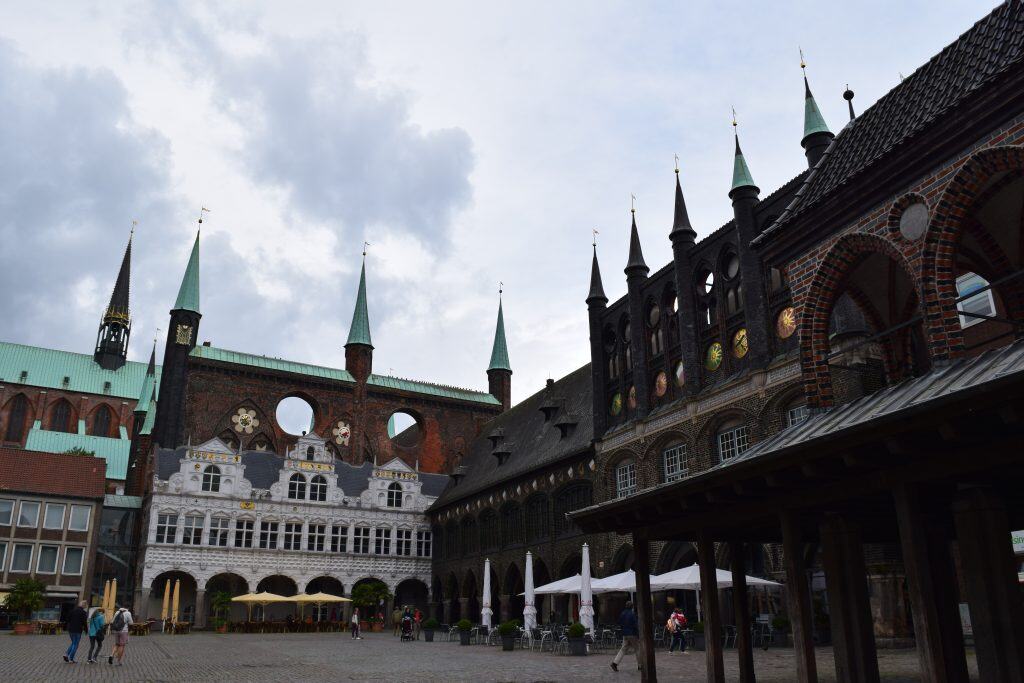
The Old Town is an island surrounded by the River Trave, and it is compact enough to be explored on foot. The sights are concentrated here, from the Market Square with its historic Town Hall to the narrow lanes and hidden courtyards that characterize the medieval city plan. These landmarks collectively tell the story of Lübeck’s rise as a powerful trading city.
Holstentor (Holsten Gate)
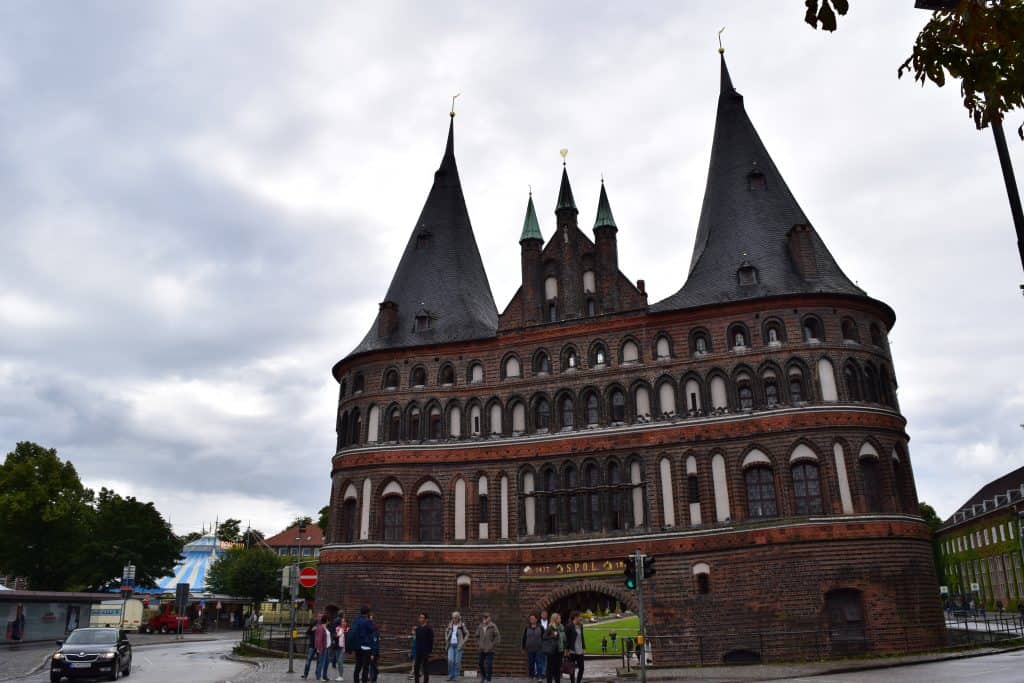
The Holstentor is Lübeck’s most famous landmark and a symbol of the city. This imposing Brick Gothic city gate was built between 1464 and 1478. It features two distinctive round towers and a central arched entrance. The gate once formed part of Lübeck’s extensive medieval fortifications and served as the main western entrance to the city. Today, it houses a museum, the Museum Holstentor. The museum’s exhibition, “The Power of Trade,” explores the history of the Hanseatic League. An inscription on its field side reads “CONCORDIA DOMI FORIS PAX” (“Harmony at home, peace abroad”).
Lübeck Old Town
Lübeck’s Old Town (Altstadt) was designated a UNESCO World Heritage Site in 1987. It is situated on an island surrounded by the River Trave. The Old Town boasts a collection of over 1,000 listed historic buildings. These include merchant houses, churches, and alleyways spanning centuries of architecture. The narrow lanes and courtyards, known as Gänge and Höfe, offer a look into medieval urban living conditions. It was the first time that an entire city district in Northern Europe received this award from UNESCO.
Marienkirche
St. Mary’s Church (Marienkirche) is a key example of North German Brick Gothic architecture. Built between 1265 and 1352, it stands on the highest point of Lübeck’s Old Town island, next to the Town Hall. Its design set the standard for over 70 other churches in the Baltic region. The church features the tallest brick vault in the world, with the central nave reaching 38.5 meters high. Its two imposing towers rise nearly 125 meters. The church was heavily damaged in the 1942 bombing raid; two bells fell to the stone floor and were left there as a memorial.
Lübecker Dom
The Lübeck Cathedral (Lübecker Dom) is one of the city’s oldest sacred buildings. It was founded in 1173 by Henry the Lion. The cathedral showcases a blend of Romanesque and Gothic architectural styles. It was also heavily damaged in the 1942 bombing raid. However, significant medieval artworks, including a large triumphal cross by Bernt Notke, survived. The cathedral’s reconstruction was a long process, finally completed in 1982. At 131 meters long, it is a grand example of brick architecture in the region.
European Hansemuseum
The European Hansemuseum is the largest museum in Europe dedicated to the history of the Hanseatic League. Located in the northern part of the Old Town, it opened in 2015. The museum complex integrates modern architecture with the historic Castle Friary (Burgkloster), a former monastery. It offers an immersive journey through the history of the Hanseatic League. Interactive exhibits and recreated historical scenes bring the stories of medieval merchants to life. The museum also includes an archaeological site.
Buddenbrookhaus
The Buddenbrooks House (Buddenbrookhaus) is a famous literary landmark. It was the ancestral home of the Mann family of writers. This 18th-century building became renowned as the setting for Thomas Mann’s Nobel Prize-winning novel “Buddenbrooks” (1901). The novel chronicles the decline of a wealthy Lübeck merchant family over several generations. The house now functions as a museum dedicated to the writers Thomas and Heinrich Mann, showcasing their lives and works. Although the original building was destroyed in WWII, its facade was rebuilt.
Niederegger Marzipan Salon
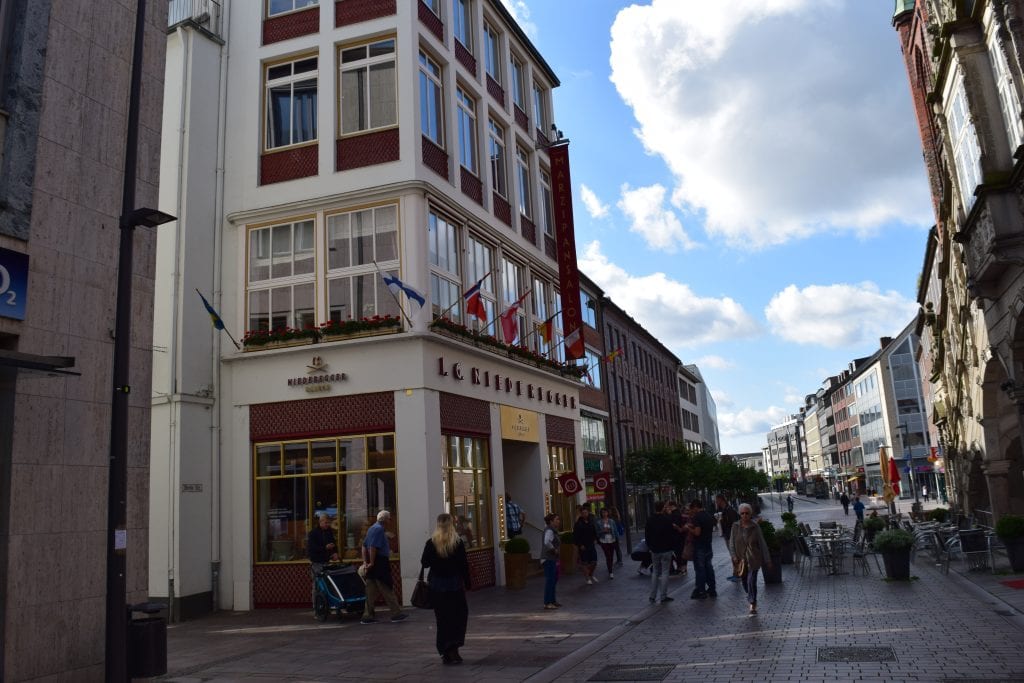
The Niederegger Marzipan Salon is a must-visit for lovers of the city’s famous sweet treat. The Niederegger company, founded in 1806 by Johann Georg Niederegger, is world-renowned for its high-quality marzipan. The main salon is located opposite the historic Town Hall. It features a large shop on the ground floor, a cafe on the upper floor, and a marzipan museum on the top floor. Visitors can learn about the history of marzipan, which has its roots in the Orient. The museum also displays historical marzipan molds and life-sized marzipan figures.



Sports in Lübeck
The sporting life in Lübeck is focused on its main professional football club and a successful handball team. The city provides facilities for a range of sports at the community level. The surrounding area, with its proximity to the Baltic Sea and various lakes, also offers many opportunities for recreational sports like sailing and rowing.
Football
Football is a popular sport in Lübeck. The city’s primary football club has a long history and commands a loyal local following. The club has experienced periods of competing at a higher level in the German league system. The team’s matches are a key part of the local sporting landscape and draw dedicated supporters to their home stadium.
VfB Lübeck
The city’s most prominent football club is VfB Lübeck. Founded in 1919, the club has a long history in German football. They play their home matches at the Stadion an der Lohmühle. The stadium has a capacity of over 17,000. VfB Lübeck has had several seasons in the 2. Bundesliga, the second tier of German football. The club currently competes in the Regionalliga Nord, the fourth tier.
Handball
Handball has an exceptionally strong and successful presence in the Lübeck region. The local professional team is a dominant force in the second tier of German handball. The sport has a dedicated following in the city. Home games are major events that draw large and enthusiastic crowds to the main indoor arena.
VfL Lübeck-Schwartau
The professional handball team is VfL Lübeck-Schwartau. The club was formed from a merger of the handball sections of two local sports clubs. They compete in the 2. Handball-Bundesliga, the second-highest professional league in Germany. They have a history of competing for promotion to the top tier. They play their home games at the Hansehalle in Lübeck.
Running
The Lübeck Marathon is a major annual running event. The race takes place in October. It attracts thousands of participants from across Germany and other countries. The course is known for being unique, as it runs from the historic Old Town of Lübeck to the seaside resort of Travemünde and back. The event includes a full marathon, a half marathon, and other shorter races.



Getting Around in Lübeck
Navigating Lübeck is straightforward due to its compact historic center. The Old Town is an island that is best explored on foot. For destinations in the wider city area and the coastal resort of Travemünde, a local bus network provides efficient public transport.
On Foot: The Old Town Island
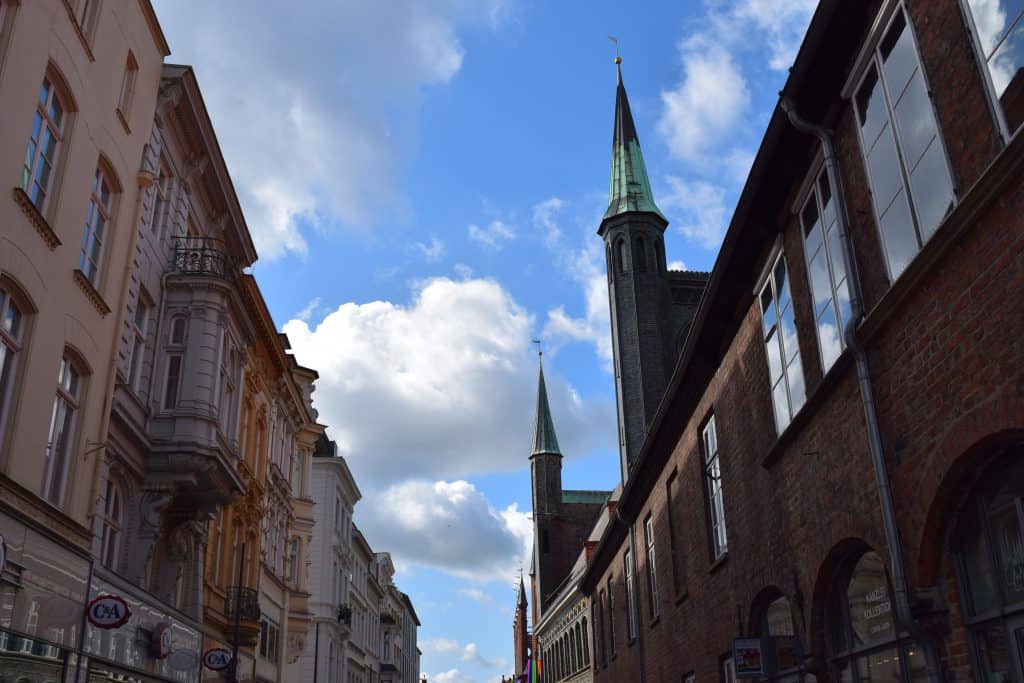
Walking is the best way to explore Lübeck’s historic Altstadt. The entire island is a UNESCO World Heritage site and is filled with narrow cobblestone streets, hidden courtyards, and alleys (Gänge). All the main sights, including the Holstentor, the Town Hall, and the major churches, are located within this compact area. This allows visitors to see the city’s architecture and visit local shops and cafes on foot. Comfortable shoes are highly recommended.
Local Buses
Lübeck has a comprehensive local bus network operated by Stadtverkehr Lübeck. The buses connect the city center with all residential districts and the seaside resort of Travemünde. The ZOB (Central Bus Station), located next to the main train station, is the central hub for the bus network. The buses are a key mode of transport for traveling between the Old Town and other parts of the city. Tickets can be purchased on the bus or via a mobile app.
How to Get to Lübeck
Reaching Lübeck is convenient by road, rail, and air. Its location in northern Germany, close to Hamburg and the Baltic Sea, makes it a key transport hub. The city is well-connected to the German and wider European transport networks.
Arriving by Air: Nearby Gateways
Lübeck has its own small airport, Lübeck Airport (LBC), located about 8 kilometers south of the city center. It serves a very limited number of flights. The closest major international airport is Hamburg Airport (HAM), located approximately 65 kilometers away. HAM offers extensive global connections. From Hamburg Airport, you can take the S1 S-Bahn train to Hamburg Hauptbahnhof (main station). From there, direct regional trains connect frequently to Lübeck.
The Open Road: Driving on the Autobahn
Driving to Lübeck offers flexibility for exploring the Baltic Sea coast and the surrounding Schleswig-Holstein region. The city is located directly on the A1 motorway (Autobahn). This major highway connects Lübeck directly with Hamburg to the south and with the island of Fehmarn to the north, which has a ferry link to Denmark. The A20 motorway links Lübeck to Rostock and the east. Parking facilities are available in public garages around the Old Town.
Connecting by Coach
Long-distance bus services provide an economical way to reach Lübeck. The main bus station is located near Lübeck Hauptbahnhof (central train station). Companies like FlixBus operate routes that connect Lübeck with major cities across Germany and Europe. Direct bus connections from Berlin, for example, take around 3.5 hours. Services also run from Hamburg and Kiel. These long-distance coaches often offer amenities like Wi-Fi.
On Track: A Mainline Rail Station
Traveling to Lübeck by train is highly efficient. The Lübeck Hauptbahnhof is the city’s main railway station and a major hub in Schleswig-Holstein. Regional trains (RE, RB) provide frequent services. Direct services run from Hamburg Hauptbahnhof, taking approximately 45 minutes. Direct connections are also available from Kiel and Lüneburg. Deutsche Bahn (DB) operates these services. The station is located just across the river from the Old Town.
The Baltic Sea Route: Arriving by Ferry
For travelers from Scandinavia or the Baltic Sea region, ferries are a convenient option. Lübeck’s port district, Travemünde, is a major ferry terminal on the Baltic Sea. It is located approximately 20 kilometers from the city center. Finnlines operates routes connecting Travemünde with Malmö (Sweden) and Helsinki (Finland). TT-Line also offers services from Trelleborg (Sweden). From the ferry terminal in Travemünde, regular local trains and buses provide direct connections to Lübeck city center.
Driving Distances
The driving distance from 10 regional cities, according to Google Maps:
- Hamburg, Germany – 67 kilometers (1 h 10 min)
- Berlin, Germany – 279 kilometers (3 h 10 min)
- Copenhagen, Denmark – 302 kilometers (4 h 30 min, includes ferry)
- Szczecin, Poland – 320 kilometers (3 h 40 min)
- Cologne, Germany – 471 kilometers (5 h 00 min)
- Amsterdam, Netherlands – 527 kilometers (5 h 30 min)
- Frankfurt, Germany – 554 kilometers (5 h 50 min)
- Brussels, Belgium – 648 kilometers (6 h 40 min)
- Stuttgart, Germany – 779 kilometers (8 h 00 min)
- Munich, Germany – 811 kilometers (8 h 10 min)
Looking to Explore more of Germany and Europe?




Lübeck is on the wish list.