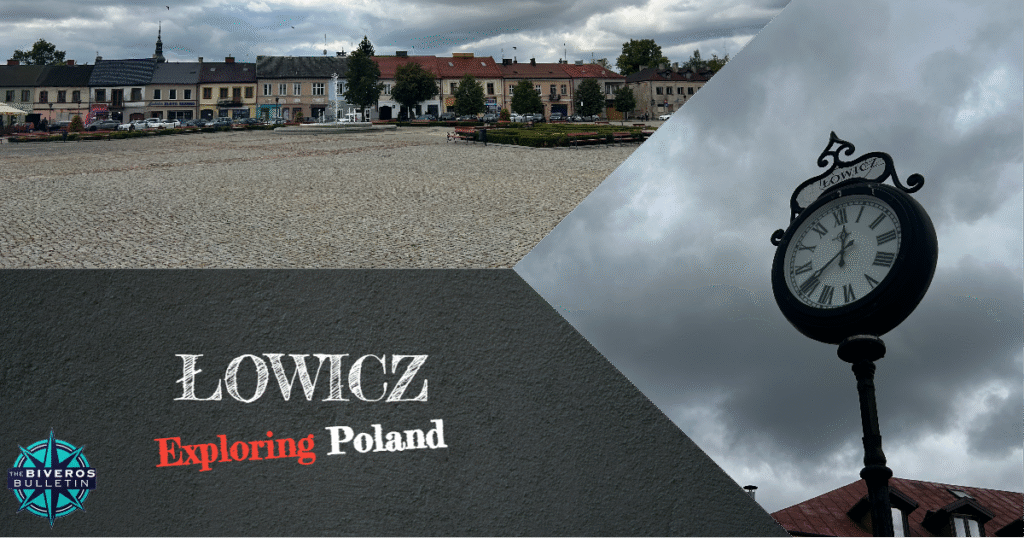
Łowicz, Łódzkie | Exploring Poland
Łowicz is a historic town in the Łódź Voivodeship of central Poland, and people throughout the country celebrate it as a vibrant heartland of Polish folk culture. The town is particularly famous for its incredibly colorful local traditions. For instance, these include the iconic striped woolen costumes known as pasiak łowicki and the intricate, multi-layered paper cut-outs called wycinanki. Residents most famously display this living heritage during the annual Corpus Christi procession, a UNESCO-recognized event where they parade in magnificent traditional dress. Consequently, with its unique triangular market square and rich history, Łowicz offers a charming glimpse into the cultural soul of the Mazovia region.
Located on the Bzura river, Łowicz is the historical capital of the Księstwo Łowickie (Duchy of Łowicz). This vast estate for centuries belonged to the Archbishops of Gniezno. The town itself covers an area of 23.42 square kilometers. Furthermore, as of the end of 2023, it had a population of approximately 27,500 residents. Its geography is defined by the flat, fertile plains of central Poland, which historically contributed to its wealth. The town’s demographics reflect its role as a regional center, with a strong local identity rooted in the unique traditions of the Łowiczanie ethnographic group.


History of Łowicz
The history of Łowicz deeply intertwines with the Catholic Church in Poland. For centuries, the town served as a residence and administrative center for the Archbishops of Gniezno, the primates of Poland. Its strategic location on trade routes certainly contributed to its growth. However, its status as an ecclesiastical capital ultimately defined its golden age. The town has witnessed periods of great prosperity and devastating wars. Despite this, it has preserved a cultural identity that has survived into the modern era. As a result, its well-preserved historical center and enduring folk traditions are a testament to this rich and complex past.
The Town of Archbishops
A papal bull from 1136 first mentioned Łowicz, which began its rise to prominence in the 12th century. This happened after it became the property of the Archbishops of Gniezno. From the 15th to the 17th century, the town experienced its golden age, becoming a major administrative, cultural, and religious center. During this time, the Archbishops built a magnificent Gothic castle as their main residence. Because the primate of Poland served as the interrex during periods without a king, Łowicz effectively became a secondary capital. Consequently, it hosted important state functions.
Decline and Partitions
The Swedish Deluge shattered the prosperity of Łowicz in the mid-17th century. At that time, invading Swedish forces plundered and burned the town and its castle. Although residents later rebuilt it, the town never fully regained its former prominence. Following the Partitions of Poland in the late 18th century, the archbishops’ estates were confiscated. As a result, Łowicz was incorporated first into Prussia, and later, the Russian Empire. Despite the loss of its political importance, residents maintained their strong local culture and traditions, which became a key element of their identity.
The Battle of the Bzura and Modern Times
In the 20th century, Łowicz was once again at the center of a major historical event. Specifically, in September 1939, the area around the town became the main theater for the Battle of the Bzura. This was the largest and most brutal battle of the German invasion of Poland. The town suffered significant damage during the intense fighting between Polish and German armies. After World War II, the town was rebuilt and developed as a regional center for the food processing industry. In recent decades, it has successfully leveraged its unique cultural heritage, becoming a popular tourist destination.


Sights in Łowicz
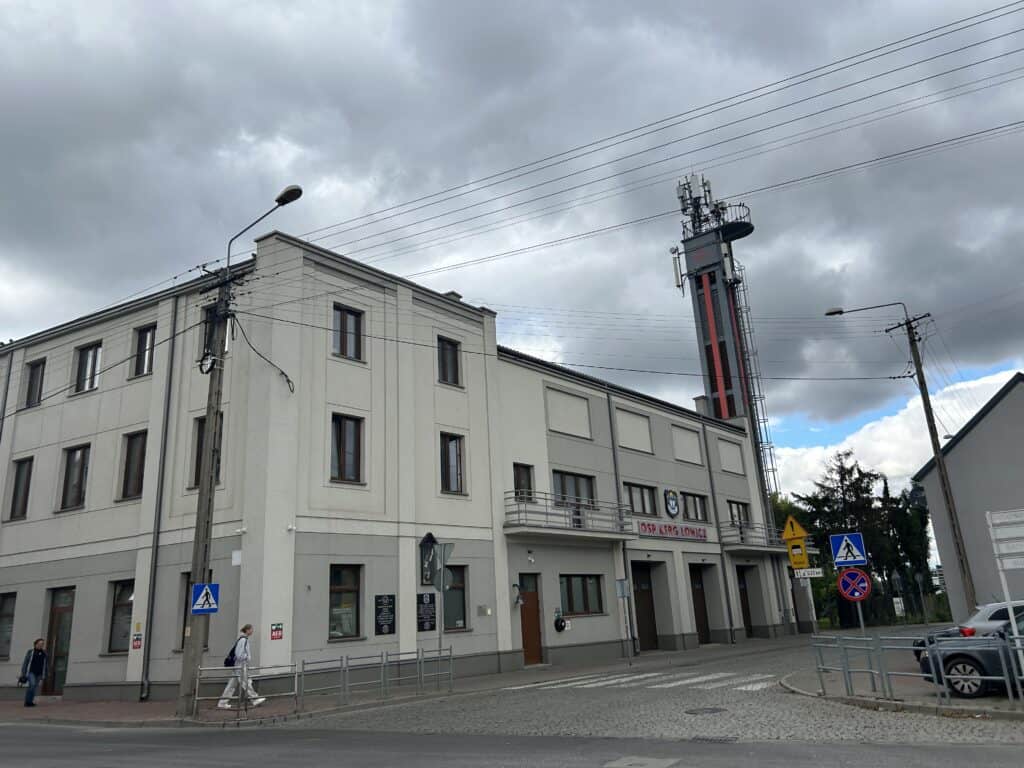
The sights of Łowicz center around its beautifully preserved historical core and rich ethnographic heritage. The town offers a journey back in time, featuring a unique triangular market square and a grand cathedral often called the “Wawel of Mazovia.” Unlike larger cities, Łowicz provides an intimate and walkable experience. In fact, the main attractions are all located within a short distance of each other. A visit here is a chance to see a different side of Polish history, one deeply connected to ecclesiastical power and vibrant folk traditions.
The town is a living museum of the Łowicz region’s unique culture. Beyond the architectural landmarks, one can find the true spirit of Łowicz in the colorful patterns of its folk art. These are visible in the local museum, in shops, and during its famous festivals. In addition, the town’s location on the Bzura river adds to its charm, with picturesque views and pleasant walking areas along its banks. This combination of significant historical monuments and a powerful, living culture makes Łowicz a unique and deeply rewarding destination.
The Old Market Square
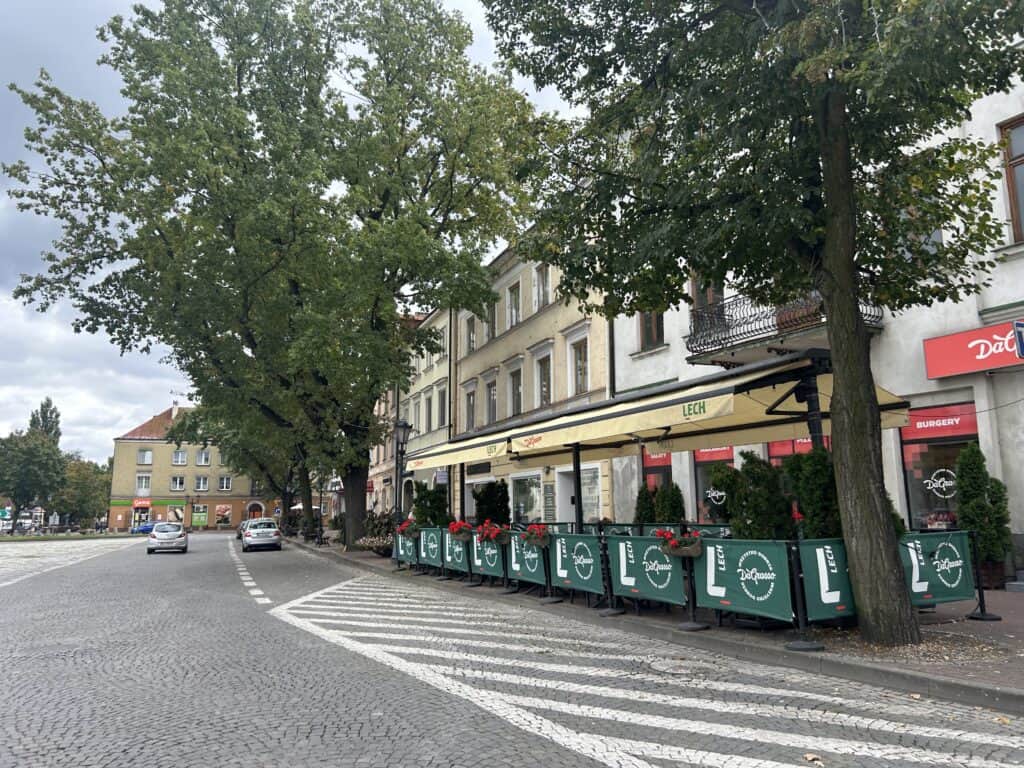
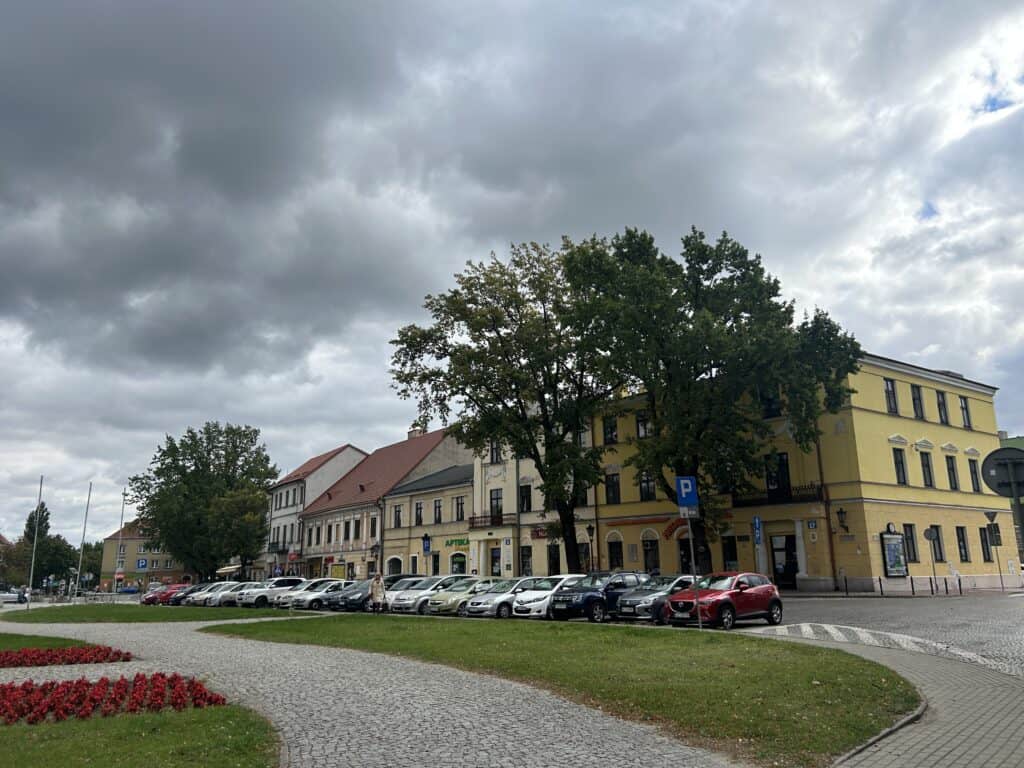
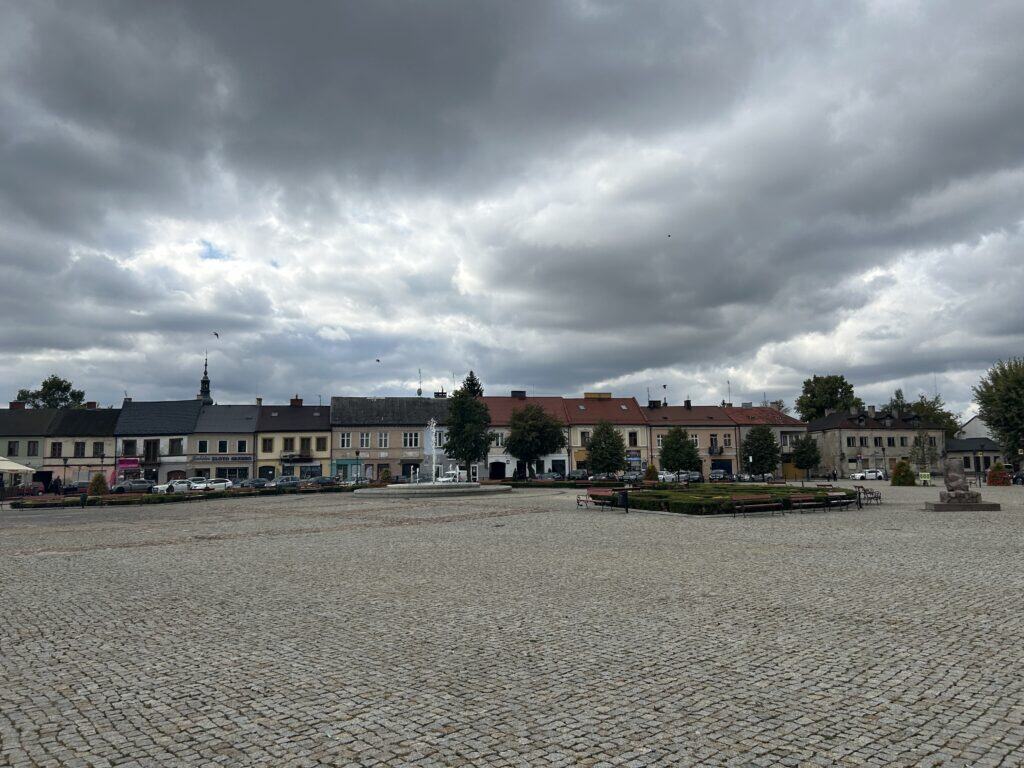
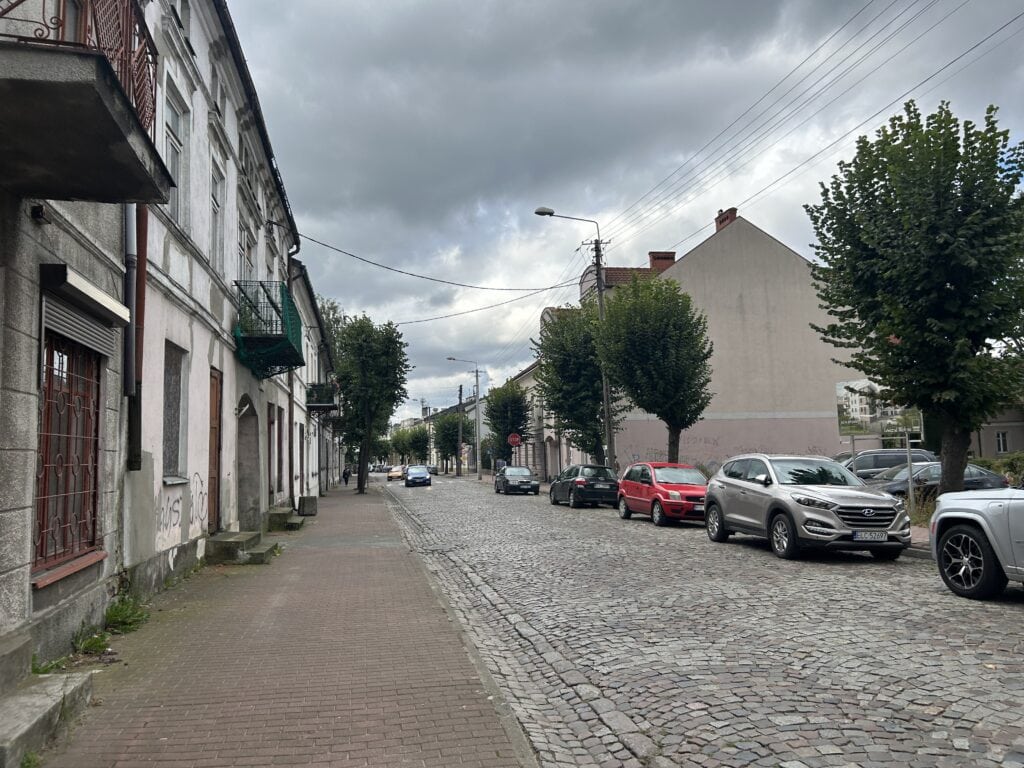
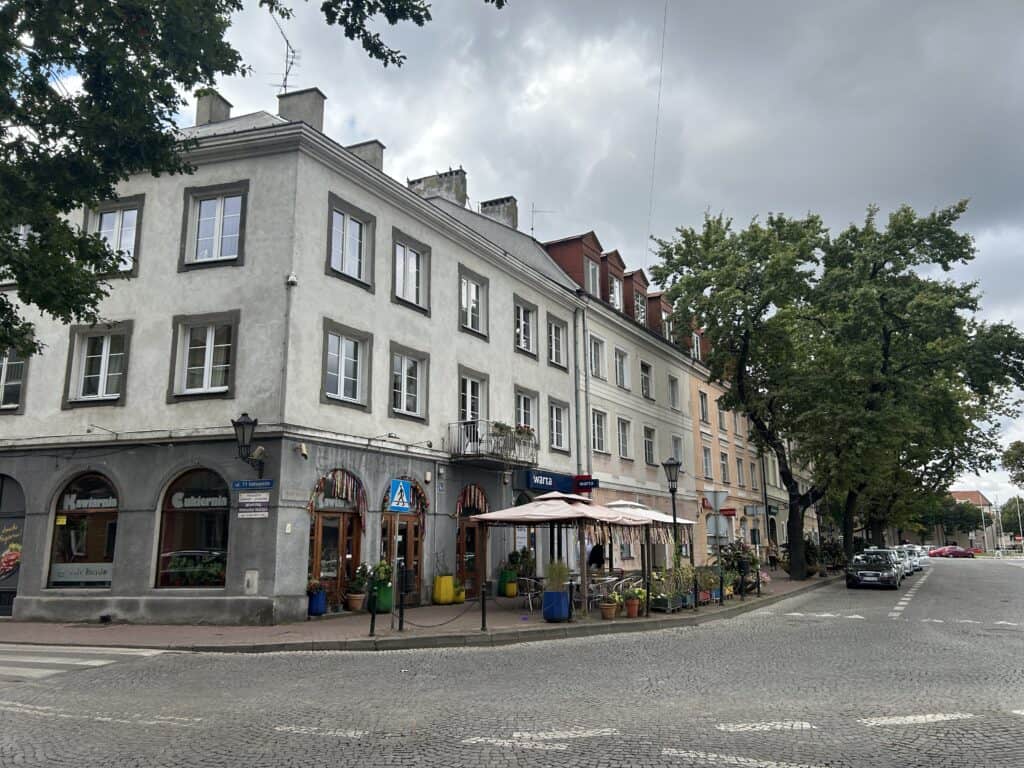
The Old Market Square (Stary Rynek) is the historic and social heart of Łowicz, and it is famous for its unusual triangular shape. This layout is a rare feature in European urban planning, making the square a unique landmark. It is surrounded by colorful, restored tenement houses from the 18th and 19th centuries. Today, these houses contain cafes, restaurants, and shops. Furthermore, the square is home to the impressive neoclassical Town Hall and the Łowicz Museum. It also serves as the main venue for markets and the famous Corpus Christi procession.
Łowicz Cathedral Basilica
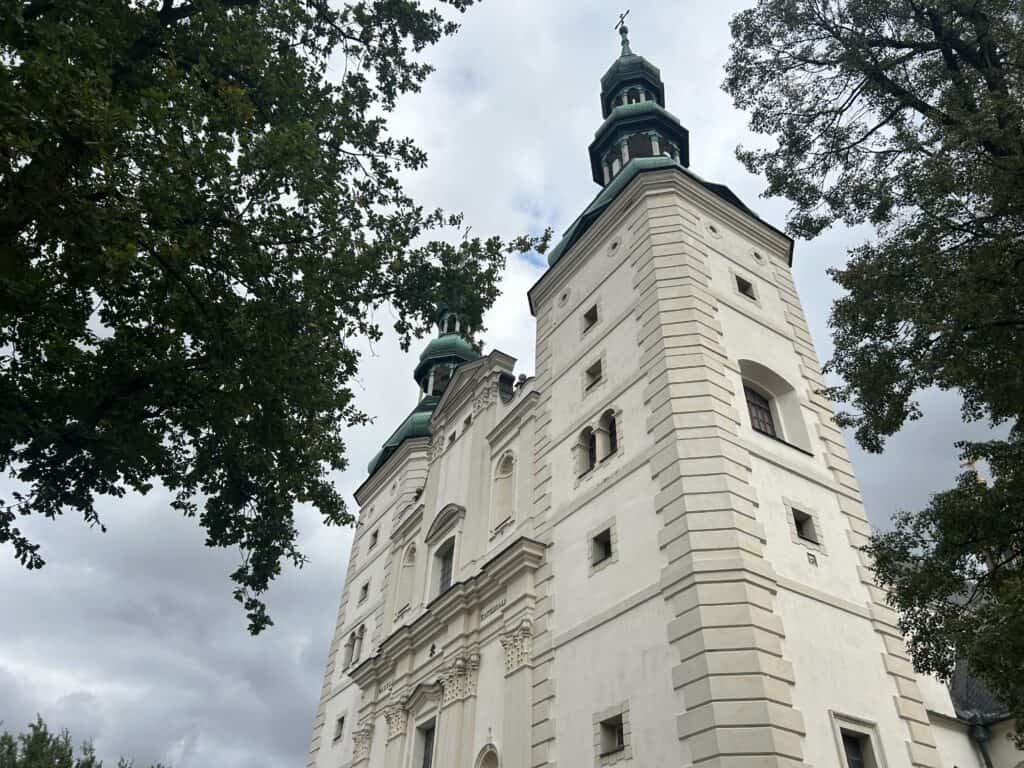
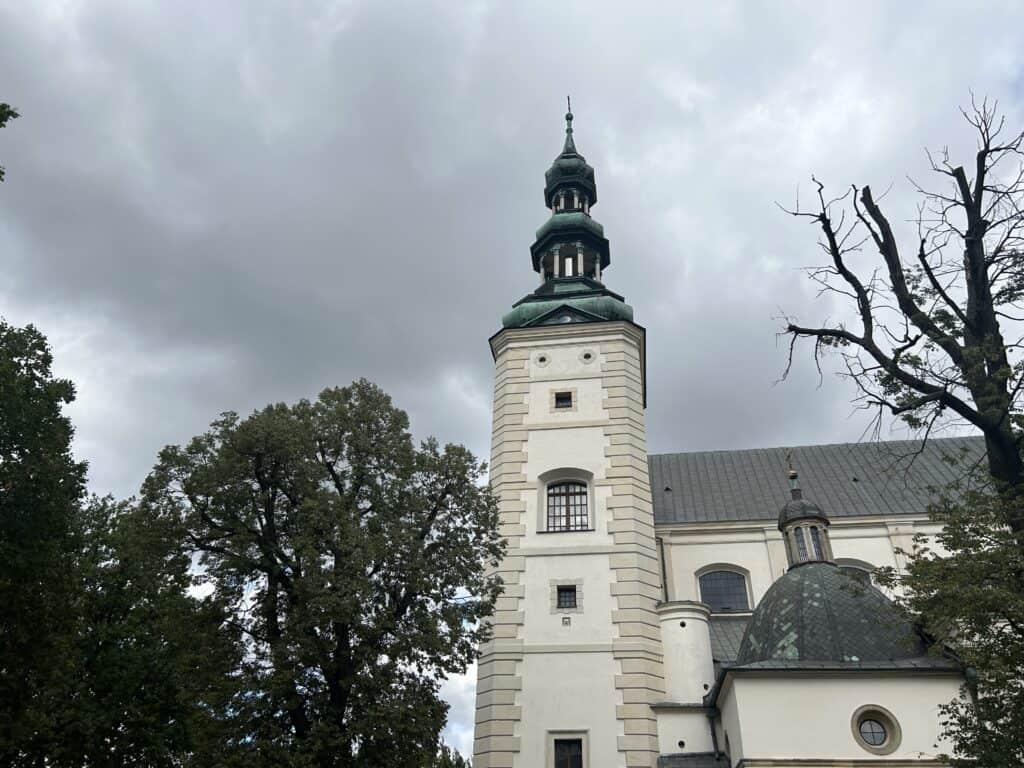
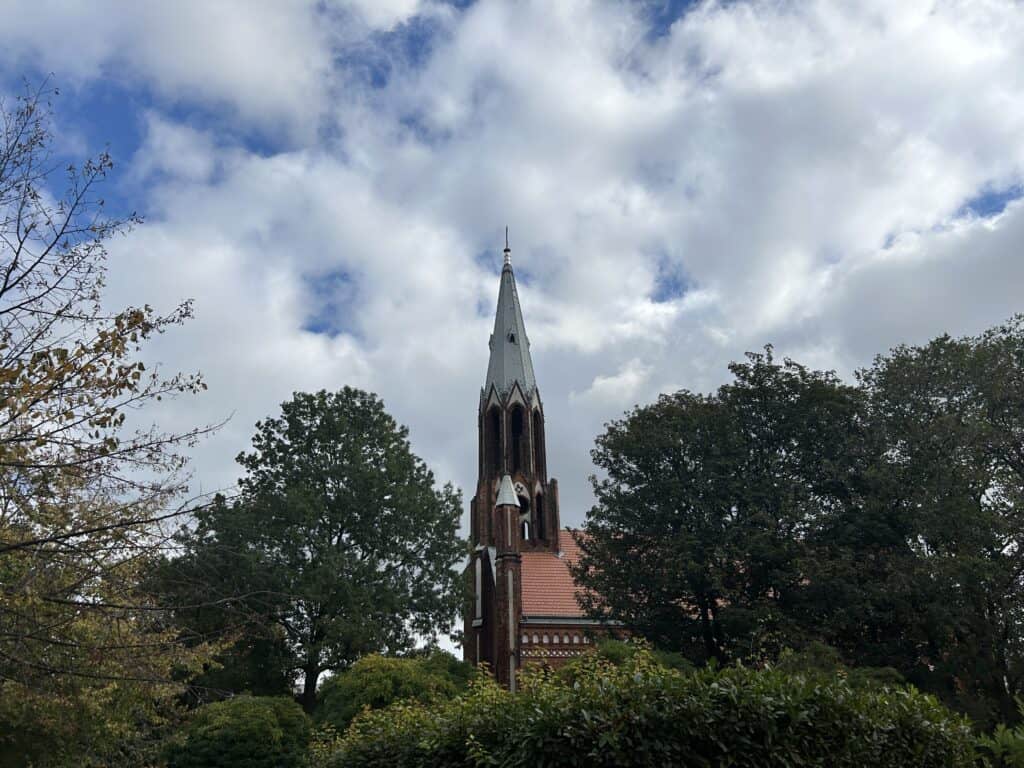
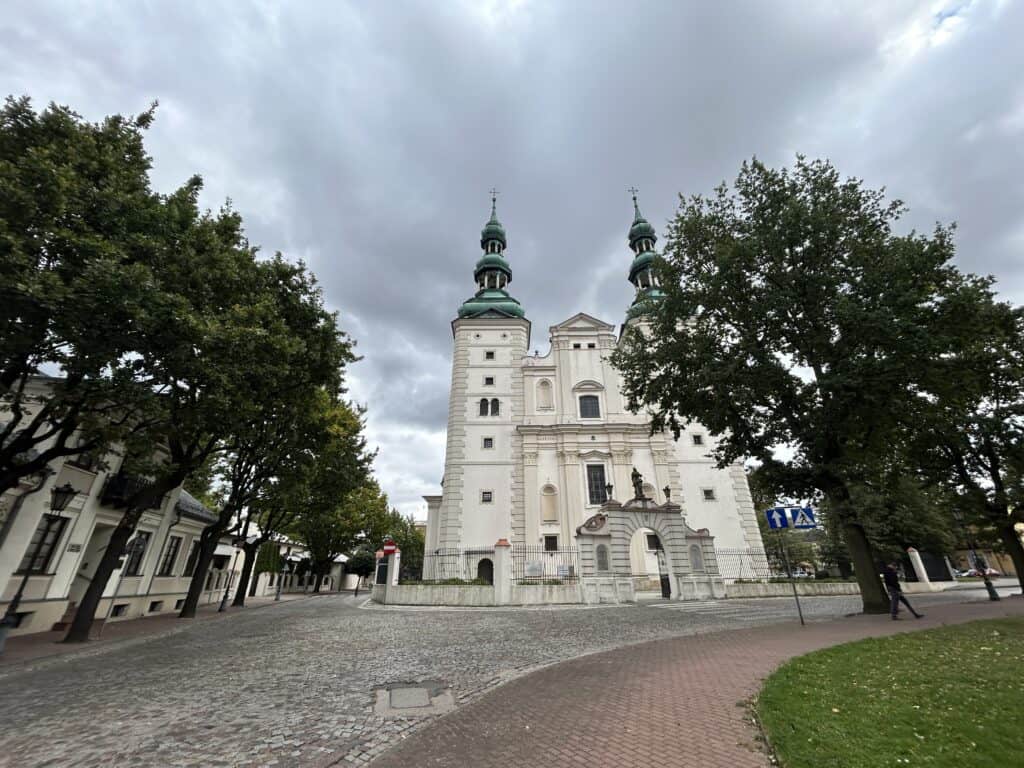
The Cathedral Basilica of the Assumption and St. Nicholas is the most important historical monument in Łowicz. People often call it the “Wawel of Mazovia.” The church served as the collegiate church for the Archbishops of Gniezno and is the final resting place for 12 primates of Poland. Its current magnificent Baroque form dates back to the 17th century, and its interior is lavishly decorated. A unique feature is the Open Chapel of the Uchański family. This chapel connects to the church and contains the primates’ tombs, designed in the Renaissance style.
The Łowicz Museum
The Muzeum w Łowiczu (Museum in Łowicz) is an essential destination for anyone wishing to understand the town’s unique heritage. Housed in a historic Baroque building on the Old Market Square, the museum has two main sections. The historical department covers the history of Łowicz and the region, with a focus on its time as the archbishops’ seat. However, the ethnographic department is the main attraction. It showcases a stunning collection of the region’s folk art, including colorful striped costumes, intricate paper cut-outs, and decorated furniture.
The Ethnographic Park
The Skansen Ziemi Łowickiej (Ethnographic Park of the Łowicz Land) is located just behind the main building of the Łowicz Museum. This open-air museum brings the region’s rural past to life. The park features a collection of original wooden buildings from the 19th and early 20th centuries. These buildings were moved from surrounding villages. Inside, visitors can explore fully furnished cottages, a windmill, a smithy, and a schoolhouse, among other structures. As a result, the park provides a tangible sense of how the people of the Łowicz countryside lived and worked.
The Town Hall
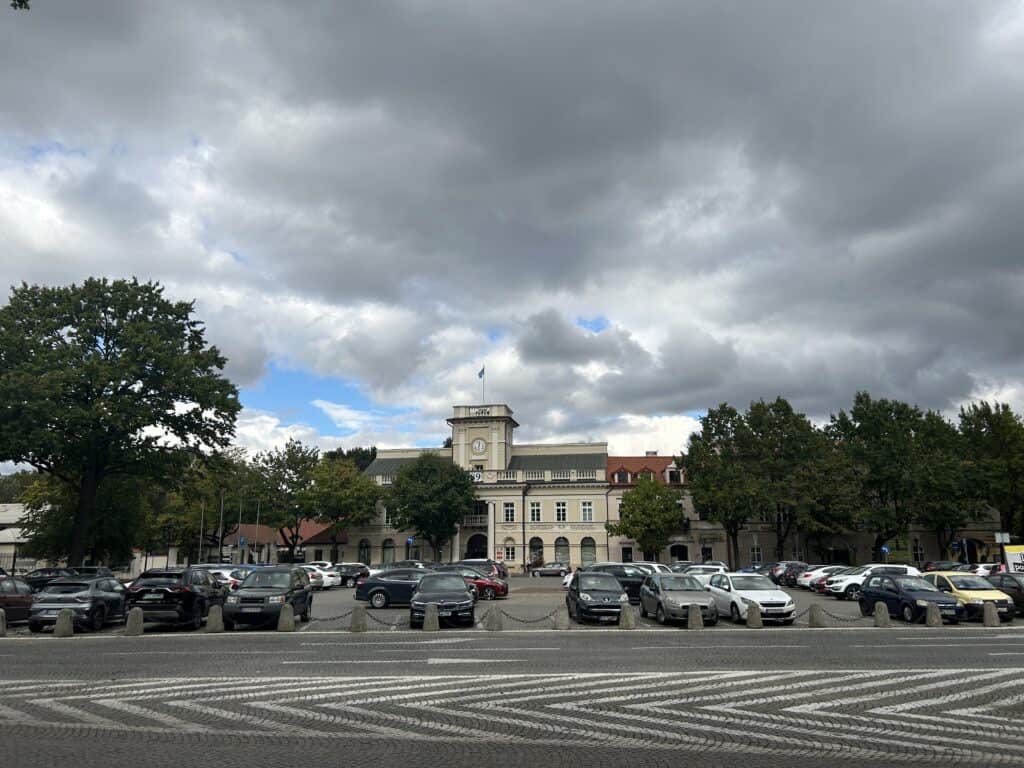
The Town Hall (Ratusz) is the grand, neoclassical building that dominates the western side of the Old Market Square. The renowned architect Bonifacy Witkowski designed it, and builders completed it in 1828. The building is distinguished by its tall central clock tower. From the top, it offers panoramic views of the town and the surrounding countryside. The Town Hall has served as the seat of the municipal government for nearly two centuries. Therefore, it remains a powerful symbol of the town’s civic pride and history.
Holy Spirit Church
The Church of the Holy Spirit is a small but historically significant church located just off the Old Market Square. The current Baroque structure dates back to the early 15th century, which makes it one of the oldest churches in the town. It was originally part of a hospital and shelter for the poor. Today, the church is known for its beautiful rococo interior and its historical role in the community. It now serves as the school church for the local youth and is a beloved local landmark.
Piarist Church and Monastery
The Piarist Church and Monastery complex is another fine example of Baroque architecture in Łowicz. The Italian architect Tomasz Poncino designed the complex, which was built in the late 17th century. The church is known for its elegant facade and its richly decorated interior. For centuries, the adjacent monastery building housed a prestigious Piarist college. This college was a leading educational institution in the region. Consequently, the entire complex is a testament to the cultural and educational importance of Łowicz during its golden age.
Remains of the Archbishops’ Castle
The magnificent Gothic castle of the archbishops was destroyed by the Swedes in the 17th century and never fully rebuilt. However, its remains can still be seen today. Located on a small hill near the cathedral, the ruins include fragments of the castle walls and foundations. The area has been converted into a park, and archaeological work has uncovered more of the castle’s layout. The ruins serve as a powerful reminder of Łowicz’s former glory as a major center of political and religious power.
Sienkiewicz Park
Sienkiewicz Park is the main municipal park in Łowicz. It offers a pleasant green space for recreation and relaxation. Located near the Bzura river, the park features walking paths, benches, and a playground for children. It is a popular spot for local families. In addition, it serves as a venue for various outdoor events and concerts during the summer months. The park provides a quiet and scenic retreat from the historic town center and is a lovely place for a stroll.
The Stone Bridge on the Bzura
The historic stone-and-brick bridge over the Bzura river is one of the oldest of its kind in the region. It is named after Napoleon Bonaparte, who is said to have crossed it. The bridge is a fine piece of 19th-century engineering. Furthermore, it offers picturesque views of the river and the Łowicz Cathedral in the distance. The bridge is a local landmark and a popular spot for photographs, representing the town’s connection to the river that has flowed through its history for centuries.



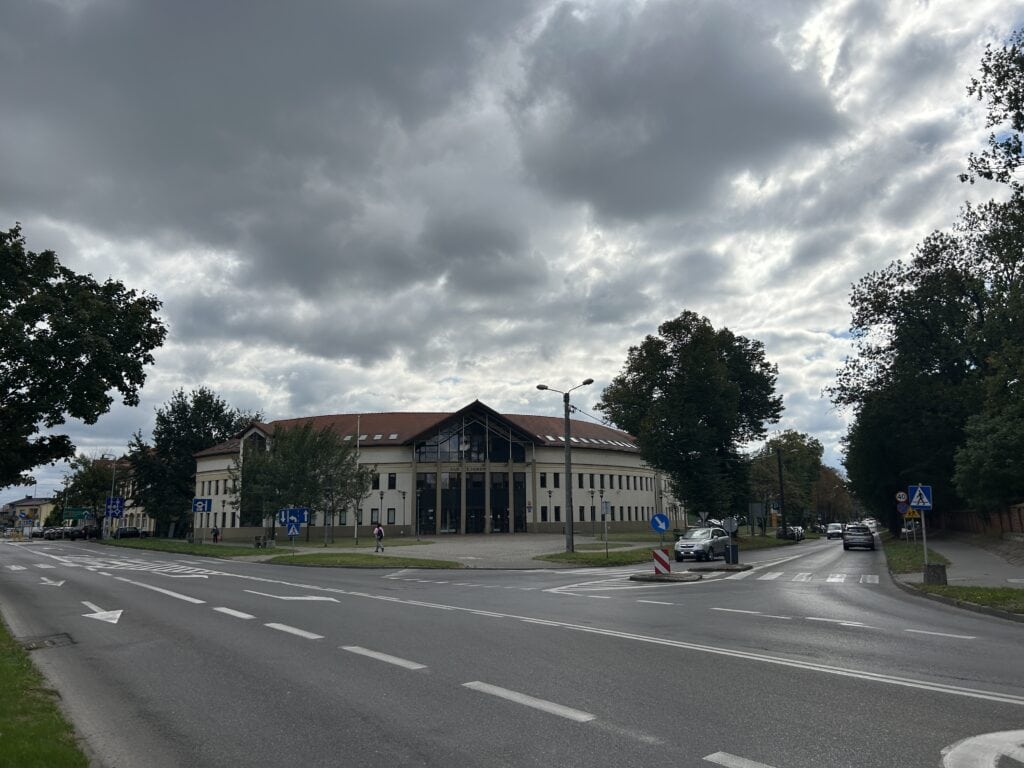
Sports in Łowicz
The sports scene in Łowicz is a vibrant and essential part of the town’s community life, centered around its local clubs that inspire great pride and have dedicated followings. While not a center for top-tier professional leagues, the town has a strong sporting tradition, especially in team sports like football and basketball. These clubs are more than just sports organizations; they are social hubs that bring the community together and provide important opportunities for young athletes to develop their skills. The main municipal stadium serves as the heart of this activity, hosting the town’s most important matches and events. Consequently, the local teams are a source of identity for the residents, and their games are popular, well-attended community gatherings.
Pelikan Łowicz (Football)
Klub Sportowy Pelikan Łowicz is the town’s main football club and a significant source of local pride. Organizers founded the club in 1945, and it has a long and storied history of competing in the Polish lower leagues. The team’s home games at the municipal stadium are popular community events that attract a passionate fanbase from the town and the surrounding region. Furthermore, the club runs a successful youth academy that provides sports training for hundreds of children. As a result, Pelikan Łowicz plays a vital role in the social and sporting life of the town.
Księżak Łowicz (Basketball)
Księżak Łowicz is the town’s successful and popular basketball club, which also enjoys strong support from the local community. The club’s name, “Księżak,” refers to the people of the historic Duchy of Łowicz, reflecting its deep local roots and identity. The team competes in the national leagues, and its home games in the local sports hall are well-known for their lively and enthusiastic atmosphere. The club is an important part of the town’s sporting fabric and a key outlet for local basketball players and their many fans.
Łowiczanka KKS (Women’s Football)
The Łowiczanka KKS is a local sports club that is particularly known for its successful women’s football team. The club is dedicated to developing women’s and girls’ football in the region, and its team competes in the national league system. The success of Łowiczanka represents the growing importance and popularity of women’s sports across Poland. Therefore, the club is a crucial part of the local sports community, providing important opportunities for female athletes to train and compete at a high level while representing their hometown.
Stadion OSiR w Łowiczu (Municipal Stadium)
The Stadion Ośrodka Sportu i Rekreacji w Łowiczu is the main sports stadium in the town and the central venue for local football. It serves as the home ground for both the Pelikan Łowicz and Łowiczanka KKS football clubs. The stadium has a capacity for several thousand spectators and features a main pitch and training facilities. Over the years, it has hosted countless league matches and local tournaments, making it the heart of the town’s football community. The stadium is an essential piece of local infrastructure and a place of great memories for generations of local sports fans.
UKS Jedynka Łowicz (Volleyball)
Uczniowski Klub Sportowy Jedynka Łowicz is a prominent youth sports club in the town with a strong focus on volleyball. The club provides professional training for children and teenagers, developing their skills from a young age. Its teams regularly compete in regional and national youth volleyball leagues, achieving considerable success. Consequently, UKS Jedynka plays a vital role in the development of young athletes in Łowicz. It provides a structured and positive environment for them to pursue their passion for the sport and is a key part of the town’s grassroots sporting foundation.






How to Get to Łowicz?
Łowicz is strategically located in the heart of central Poland. It is approximately halfway between the country’s two largest cities, Warsaw and Łódź. This prime location makes it very easy to reach by both train and car from all over the country. The town is situated on a major international railway line. In addition, it is just a short distance from the main A2 motorway. This excellent connectivity makes Łowicz a perfect destination for a day trip from either Warsaw or Łódź.
Access via Warsaw and Łódź Airports
The most convenient airports for reaching Łowicz are Warsaw Chopin Airport (WAW) and Łódź Airport (LCJ). From Warsaw Chopin Airport, the easiest way is to take a train to Warszawa Zachodnia (Warsaw West Station). While from there, travelers can transfer to a direct regional or intercity train to Łowicz. From Łódź Airport, one would typically take a bus to the Łódź Kaliska railway station and then catch a train. Overall, the journey from either airport is relatively straightforward.
Rail Connections on the Warsaw-Poznań Line
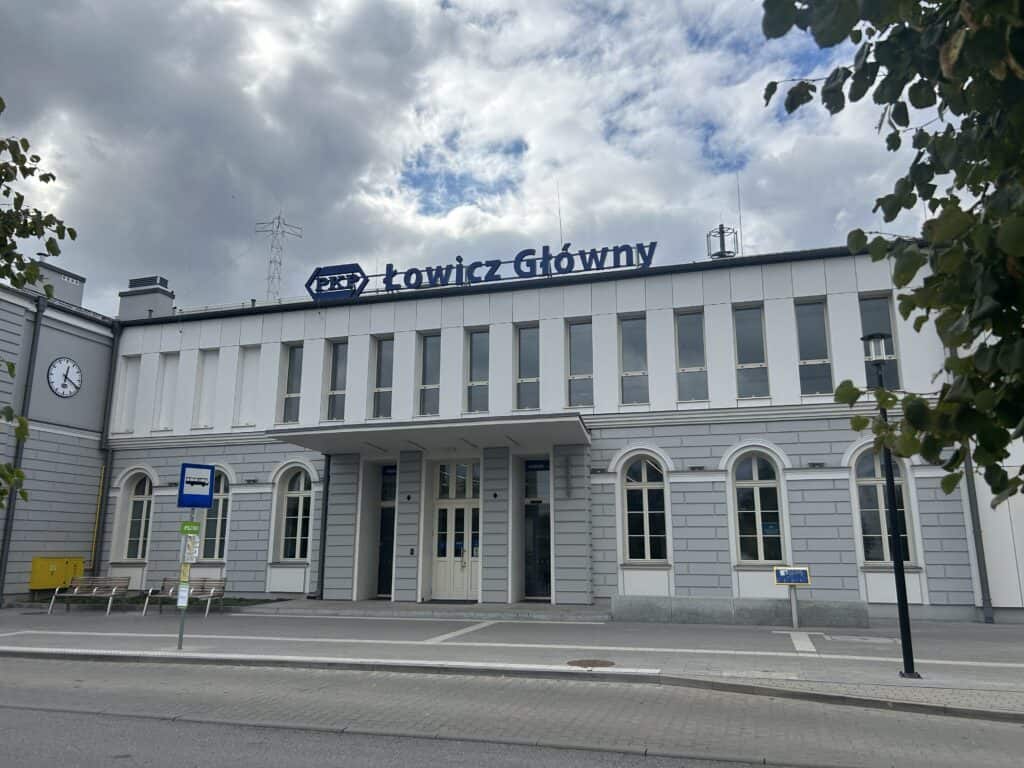
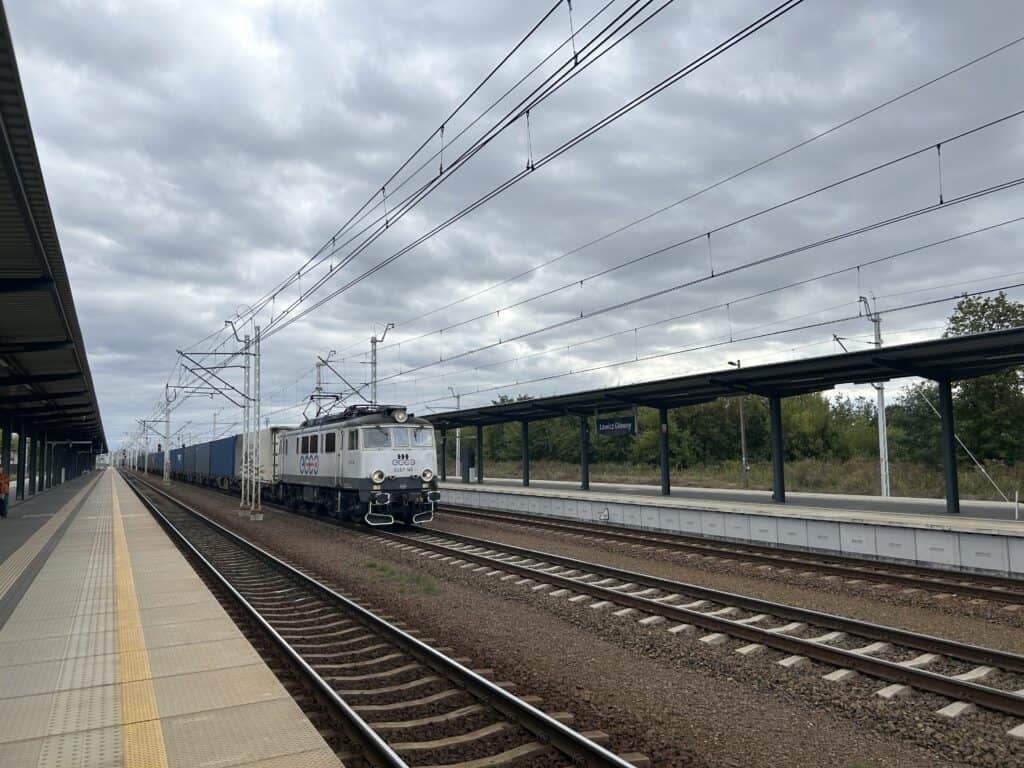
Łowicz is located on the crucial railway line that connects Warsaw with Poznań and ultimately Berlin. As a result, it is extremely well-served by trains. The main station, Łowicz Główny, is served by numerous regional and fast intercity trains. Frequent services connect Łowicz with Warsaw, with a journey time of approximately 45-60 minutes. The trip to Łódź takes approximately 1 hour. This makes arriving by train the fastest and most convenient option for most travelers.
Driving to Łowicz via the A2 Motorway
Driving to Łowicz is very simple, thanks to its proximity to the A2 motorway. This is the main east-west highway in Poland. The town is located just a few kilometers from the Łowicz exit on the A2. This provides a fast and direct road connection to Warsaw to the east and Poznań to the west. National roads DK14 and DK92 also run through the town, connecting it with Łódź and other regional centers. The excellent road network makes Łowicz easily accessible by car.
Regional and National Bus Services
Łowicz has a bus station that is served by a network of regional and national bus companies. Buses provide connections to many smaller towns and villages in the surrounding area that do not have direct rail links. In addition, long-distance bus services connect Łowicz with major cities like Warsaw, Łódź, and Płock. While train travel is generally faster for main routes, buses can be a convenient and budget-friendly option, especially for regional travel.
Connecting from Baltic Sea Ferry Ports
For travelers arriving in Poland by ferry to the Baltic Sea ports of Gdańsk or Gdynia, the journey to Łowicz can be completed by train or car. By car, the journey takes approximately 3.5 hours via the A1 and A2 motorways. Alternatively, one can take a fast express train from Gdańsk to Warsaw. From there, a connecting regional train goes to Łowicz. This combination of sea and land travel provides a convenient way to reach the heart of central Poland from Scandinavia.
Driving Distances
The driving distance from 20 regional cities, according to Google Maps:
- Sochaczew, Poland – 23 kilometers (0 h 25 min)
- Głowno, Poland – 25 kilometers (0 h 30 min)
- Skierniewice, Poland – 29 kilometers (0 h 35 min)
- Łęczyca, Poland – 43 kilometers (0 h 45 min)
- Kutno, Poland – 44 kilometers (0 h 45 min)
- Łódź, Poland – 58 kilometers (1 h 00 min)
- Warsaw, Poland – 80 kilometers (1 h 10 min)
- Bydgoszcz, Poland – 195 kilometers (2 h 10 min)
- Poznań, Poland – 225 kilometers (2 h 10 min)
- Gdańsk, Poland – 300 kilometers (3 h 00 min)
- Kaliningrad, Russia – 320 kilometers (4 h 30 min)
- Berlin, Germany – 495 kilometers (4 h 50 min)
- Bratislava, Slovakia – 500 kilometers (5 h 20 min)
- Prague, Czechia – 550 kilometers (5 h 30 min)
- Vilnius, Lithuania – 550 kilometers (6 h 40 min)
- Vienna, Austria – 640 kilometers (6 h 10 min)
- Budapest, Hungary – 825 kilometers (7 h 20 min)
- Copenhagen, Denmark – 965 kilometers (9 h 50 min)
- Amsterdam, Netherlands – 1150 kilometers (11 h 10 min)
- Rome, Italy – 1680 kilometers (16 h 40 min)
Looking to Explore more of Poland and Europe?