Krimulda | Exploring Latvia
Krimulda is a historic area located in the Vidzeme Region of Latvia. It is a part of the town of Sigulda, situated on the right bank of the scenic Gauja River. The area is most famous for the Krimulda Manor, a beautiful Neoclassical palace, and the nearby ruins of a medieval castle. Krimulda is located within the boundaries of the Gauja National Park, which is the largest national park in Latvia. It is a place of great natural beauty, with deep forests, steep ravines, and stunning views of the river valley.
The identity of Krimulda is defined by this combination of aristocratic history and dramatic natural scenery. For centuries, it was the site of a powerful medieval castle belonging to the Archbishopric of Riga. Later, it became a grand estate for the von Lieven noble family, who built the current manor house. Today, Krimulda is a popular destination for tourists, offering a mix of historical sights, health and wellness facilities, and outdoor recreation. Its location, directly opposite the town of Sigulda and near Turaida, makes it a key part of the “Switzerland of Vidzeme,” as the region is often called.


History of Krimulda
The history of Krimulda stretches back to the 13th century and is closely linked to the period of the German crusades in the Baltic region. The area was originally inhabited by the indigenous Livonian people. The construction of a stone castle by the Archbishopric of Riga established it as a major center of power in the region. The castle played a role in the many conflicts that defined the medieval period in Livonia. After the castle was destroyed, a new manor house was built, and Krimulda was transformed into a grand aristocratic estate in the 19th century.
The Medieval Castle of the Canons
The first written mention of Krimulda dates back to the early 13th century. The stone Krimulda Castle was built on the high bank of the Gauja River around the year 1255. It was constructed for the canons of the Riga Cathedral Chapter, which was a council of advisors to the Archbishop of Riga. The castle, known in German as Kremon, was a significant fortress and an administrative center for the Archbishop’s extensive land holdings. It played a strategic role in the ongoing power struggles between the Archbishop, the Teutonic Order, and the city of Riga.
The Swedish Wars and Destruction
The castle was heavily damaged during the Polish-Swedish War in the early 17th century. Swedish troops captured and burned the castle in 1601. Although it was partially restored, it never regained its former military importance. It was finally abandoned after a fire in the mid-17th century. The castle was left to fall into ruin, and for the next two centuries, its stone walls were slowly reclaimed by the forest. The ruins that are visible today are all that remain of this once-powerful medieval fortress.
The von Lieven Era and the Manor
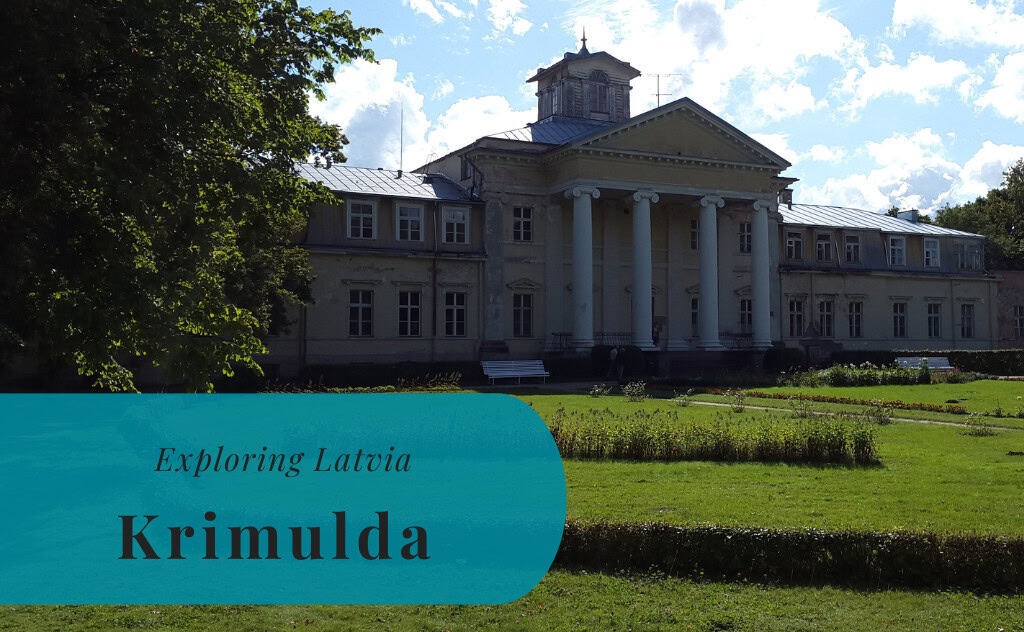
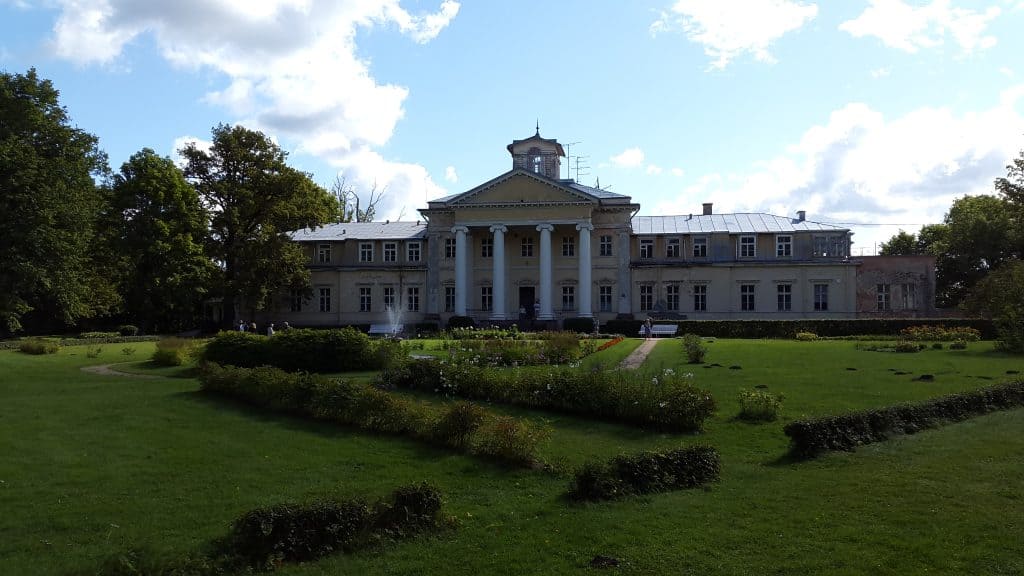
In the 19th century, the Krimulda estate was acquired by the noble von Lieven family, who were one of the most prominent aristocratic families in the Russian Empire. Prince Johann Georg von Lieven built a magnificent Neoclassical manor house, or palace, in 1822, not far from the site of the old castle ruins. The manor house, with its elegant architecture and beautiful surrounding park, became the new center of the estate. The von Lieven family also developed Krimulda as a health resort, which attracted wealthy visitors from St. Petersburg and other parts of the empire.

Sights in Krimulda
The sights in Krimulda are a captivating blend of historical ruins, aristocratic elegance, and stunning natural scenery within the Gauja National Park. The main attractions are the ruins of the medieval Krimulda Castle and the beautiful Neoclassical Krimulda Manor. The area is also famous for the Sigulda Cable Car, which provides a unique way to travel across the river valley and offers spectacular views. For those interested in nature, the steep ravines and the banks of the Gauja River provide a beautiful landscape for exploration.
Krimulda Castle Ruins
The ruins of the Krimulda Castle are located on the edge of the high bank of the Gauja River. While only fragments of the stone walls remain, the site is very atmospheric. Visitors can explore the ruins and imagine what the powerful medieval fortress once looked like. The site also offers some of the most beautiful panoramic views of the Gauja River valley and the town of Sigulda on the opposite bank. The ruins are easily accessible via a walking path from the Krimulda Manor.
Krimulda Manor
The Krimulda Manor is a beautiful Neoclassical palace that was built in 1822 by the von Lieven family. The elegant, yellow-colored manor house is set in a beautiful park with old, majestic trees. For many years, the manor has been used as a sanatorium and a rehabilitation center. Today, it houses a hotel and a restaurant, and it is a popular venue for weddings and other events. Visitors can admire the beautiful architecture of the manor house and enjoy a walk through its historic park.
Sigulda Cable Car
The Sigulda Cable Car is a famous attraction that connects the town of Sigulda with the area of Krimulda. The cable car spans the Gauja River valley and is the only one of its kind in the Baltic States. The ride offers breathtaking panoramic views of the entire valley, including the Turaida Castle, the Sigulda Castle, and the Krimulda Manor. The Krimulda station of the cable car is located very close to the manor house and the castle ruins, making it a fun and scenic way to arrive in the area.
Serpentīna Road
The Serpentīna Road is a historic and winding road that leads from the bottom of the Gauja River valley up the steep hill to Krimulda. The road was built in the 19th century to provide access to the health resort that was being developed at the Krimulda Manor. It features several hairpin turns as it climbs up the steep slope. A walk or a drive on the Serpentīna Road is a scenic experience, offering beautiful views of the valley below.
Gutman’s Cave (Gūtmaņa ala)
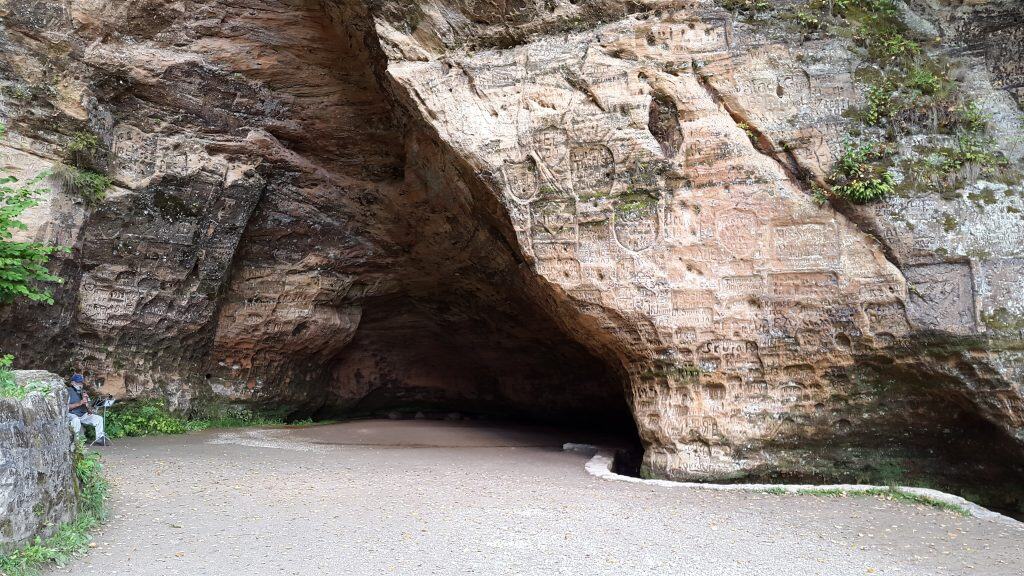
A visit to Gutman’s Cave, located at the bottom of the valley near Krimulda, is another great activity. It is the widest and highest cave in the Baltic States. The cave is most famous for its connection to the legend of the Rose of Turaida, as this is where the tragic heroine was said to have met her lover. The walls of the cave are covered in ancient inscriptions and coats of arms left by visitors over the centuries. A visit to the cave is a fun and easy walk from the Krimulda side of the valley.
Getting Around in Krimulda
The Krimulda area is a part of the town of Sigulda, and it is best explored on foot to fully appreciate its natural beauty. The main sights, such as the manor and the castle ruins, are connected by walking paths. A local bus service connects the different parts of Sigulda, including Krimulda. For travel between the Krimulda side of the river and the main town of Sigulda, the cable car provides a unique and scenic option. A car is convenient for exploring the wider Gauja National Park.
Exploring by Foot
The Krimulda area itself is best explored on foot. There is a network of well-maintained walking paths that connect the Krimulda Manor, the castle ruins, and the cable car station. The wider Gauja National Park is also a paradise for hikers, with a vast network of marked trails. It is possible to take a long and scenic walk from Krimulda, down the Serpentīna Road, across the river, and into the main town of Sigulda.
Using Local Buses
A local bus service connects the town of Sigulda with Krimulda and the nearby village of Turaida. The bus departs from the main bus station in Sigulda, which is located next to the train station. The bus stop for Krimulda is located near the manor house. The buses run regularly throughout the day, and the journey is short. This is a convenient public transport option for getting to the Krimulda side of the valley.
The Sigulda Cable Car
A unique and popular way to travel between the two sides of the Gauja River valley is the Sigulda Cable Car. The cable car connects the town of Sigulda with the area of Krimulda. The ride offers breathtaking panoramic views of the entire river valley, including the Turaida Castle, the Sigulda Castle, and the Krimulda Manor. The Krimulda station of the cable car is located very close to the manor house and the castle ruins, making it a fun and scenic way to arrive in the area.
How to Get to Krimulda?
Krimulda is located in the Vidzeme Region of Latvia and is a part of the town of Sigulda. Sigulda is the main gateway to the Gauja National Park and is easily accessible from the capital city, Riga. The primary way to get to the area is by train or bus from Riga. The journey is short and scenic. For international visitors, Riga International Airport is the main entry point to the country, and from there, it is a straightforward journey to Sigulda and then on to Krimulda.
Arriving by Air
The closest and most convenient airport is Riga International Airport (RIX), which is the largest airport in the Baltic States. The airport is located just outside the capital city, Riga. It offers a vast network of flights to destinations all over Europe and beyond, served by the national carrier airBaltic and numerous other airlines. From the airport, you would first need to travel to the Riga city center, and from there, you can take a train or bus for the final leg of the journey to Sigulda.
Journey by Rail
The train is one of the easiest and most popular ways to get to Sigulda from Riga. The trains depart regularly from Riga’s central train station. The journey is very scenic, especially as the train approaches the Gauja River valley. The trip takes approximately one hour and 15 minutes. From the train station in Sigulda, you can then take a local bus or a taxi for the short trip across the river to Krimulda, or you can choose to take the cable car.
Connecting by Bus
Buses are another very convenient option for traveling from Riga to Sigulda. The buses are frequent and depart from Riga’s main international bus station. The journey time is similar to the train, about one hour and 10 minutes. Once in Sigulda, you can connect to the local bus that runs to Krimulda. This is a very practical and affordable way to reach the area using public transport.
Driving into the Area
Driving to Krimulda is also a straightforward option. The area is located about 55 kilometers northeast of Riga. The main road is the A2 highway, which is a well-maintained road that leads directly to Sigulda. From Sigulda, you follow the local road P8 down into the valley, across the Gauja River, and then up the historic Serpentīna Road to Krimulda. Having a car provides the most flexibility for exploring the different sights within the vast Gauja National Park.
Driving Distances
The driving distance from 20 regional cities, according to Google Maps:
- Sigulda, Latvia – 2 kilometers (0 h 05 min)
- Cēsis, Latvia – 38 kilometers (0 h 35 min)
- Valmiera, Latvia – 50 kilometers (0 h 50 min)
- Riga, Latvia – 53 kilometers (1 h 00 min)
- Pärnu, Estonia – 135 kilometers (1 h 50 min)
- Šiauliai, Lithuania – 175 kilometers (2 h 30 min)
- Panevėžys, Lithuania – 185 kilometers (2 h 40 min)
- Tartu, Estonia – 200 kilometers (2 h 40 min)
- Tallinn, Estonia – 280 kilometers (3 h 50 min)
- Kaunas, Lithuania – 280 kilometers (3 h 40 min)
- Vilnius, Lithuania – 340 kilometers (4 h 20 min)
- Klaipėda, Lithuania – 350 kilometers (4 h 30 min)
- Kaliningrad, Russia – 380 kilometers (5 h 20 min)
- Helsinki, Finland – 385 kilometers (plus ferry)
- Minsk, Belarus – 520 kilometers (6 h 30 min)
- Stockholm, Sweden – 580 kilometers (plus ferry)
- Warsaw, Poland – 640 kilometers (8 h 00 min)
- Gdańsk, Poland – 650 kilometers (8 h 00 min)
- Berlin, Germany – 1000 kilometers (10 h 30 min)
- Prague, Czech Republic – 1000 kilometers (10 h 40 min)
Looking to Explore more of Latvia and Europe?